 The Rio, Las Vegas: A Walk Through an Off-Strip Resort
The Sure Thing Chapel, Las Vegas: A Walk Through a Las Vegas Chapel
A short booking is not less photography. It is the same photography with the decisions moved earlier.
The defining fact about a Las Vegas chapel wedding is the length of the booking. A slot may be thirty minutes end to end, with another ceremony before it and another after, and that single constraint determines everything a photographer does.
It does not mean fewer pictures. It means every decision that can be made in advance has to be — the camera position, the lens, the lighting configuration, the running order, the exterior positions and the route between them. What a photographer improvises at a four-hour wedding, they arrive already knowing at a thirty-minute one.
Done that way a chapel wedding produces a complete gallery. Done reactively it produces a handful of frames of the back of an officiant’s head.
This is the walk through in order, with the advance decisions named as they arrive. We have not photographed a wedding at the Sure Thing Chapel; small Las Vegas chapels behave consistently. Slot length, permitted camera positions, capacity and what outdoor areas may be used are questions for their team.
The Sure Thing Chapel at a glance
| Where | Las Vegas, Nevada |
| The constraint | A short slot with ceremonies before and after it |
| What that changes | Every decision moves earlier; nothing is improvised |
| Where the time is | Outside, before and after — that clock is the couple’s own |
| Ask first | Slot length, permitted positions, capacity, outdoor areas |
Before the door: the exterior, decided in advance
The exterior is where the time actually is, because the chapel interior is on the venue’s clock and the outside is on the couple’s. That inverts the usual priority: at a church wedding the building is the venue and the grounds are a bonus, while at a chapel wedding the exterior is the venue and the ceremony room is a fixed twelve-minute event inside it.
The first advance decision is therefore which exterior positions, and the shape that works is three: one with the building or the sign in it, one in full shade, and one enclosed — a porch, a canopy, a recessed entrance — which works in any weather. Those three cover identification, light and insurance, and they can be worked in fifteen minutes when they are known.
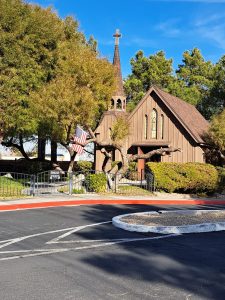
The building itself is worth one frame whole, which in Las Vegas is unusual: no Strip resort can be fitted into a frame from any standing position, and a small chapel can. The sign is worth two — a daylight version where the lettering reads as graphic, and an after-dark one where it is lit.
The after-dark version needs the rule that governs all Las Vegas signage: saturated coloured light is narrow-spectrum, so a face lit by it has almost no information in two of its three colour channels and no editing recovers what was never recorded. The sign goes behind or above the couple, and one gelled source of your own lights the faces — gelled warm to roughly match the sign, with white balance set to the gel.
The shade position is the one that requires local knowledge, because in this climate shade is scarce and partial shade is worse than none. At about thirty-six degrees north the June midday sun sits roughly seventy-seven degrees above the horizon, and with very dry air scattering almost nothing the light arrives hard and straight — so a subject half in sun and half in shade has a contrast ratio no sensor holds, while a subject in full shade has pale desert ground bouncing light up into exactly the shadows that sun would have carved.
The enclosed position is the insurance and it earns its place in every season. A roof above with walls to the sides and one open face is a directional soft source at exactly the right size for two people, and it works in a thunderstorm, in dust and in forty-degree heat. At a venue where the whole outdoor plan is fifteen minutes, having one position that cannot fail is worth more than having a better one that can.
And the hours: the first hour after sunrise, the last hour before sunset, and roughly twenty-five minutes after it. A chapel booking can be at any time of day, so this is a conversation to have when the slot is chosen rather than after.
Inside: one position, one configuration, one running order
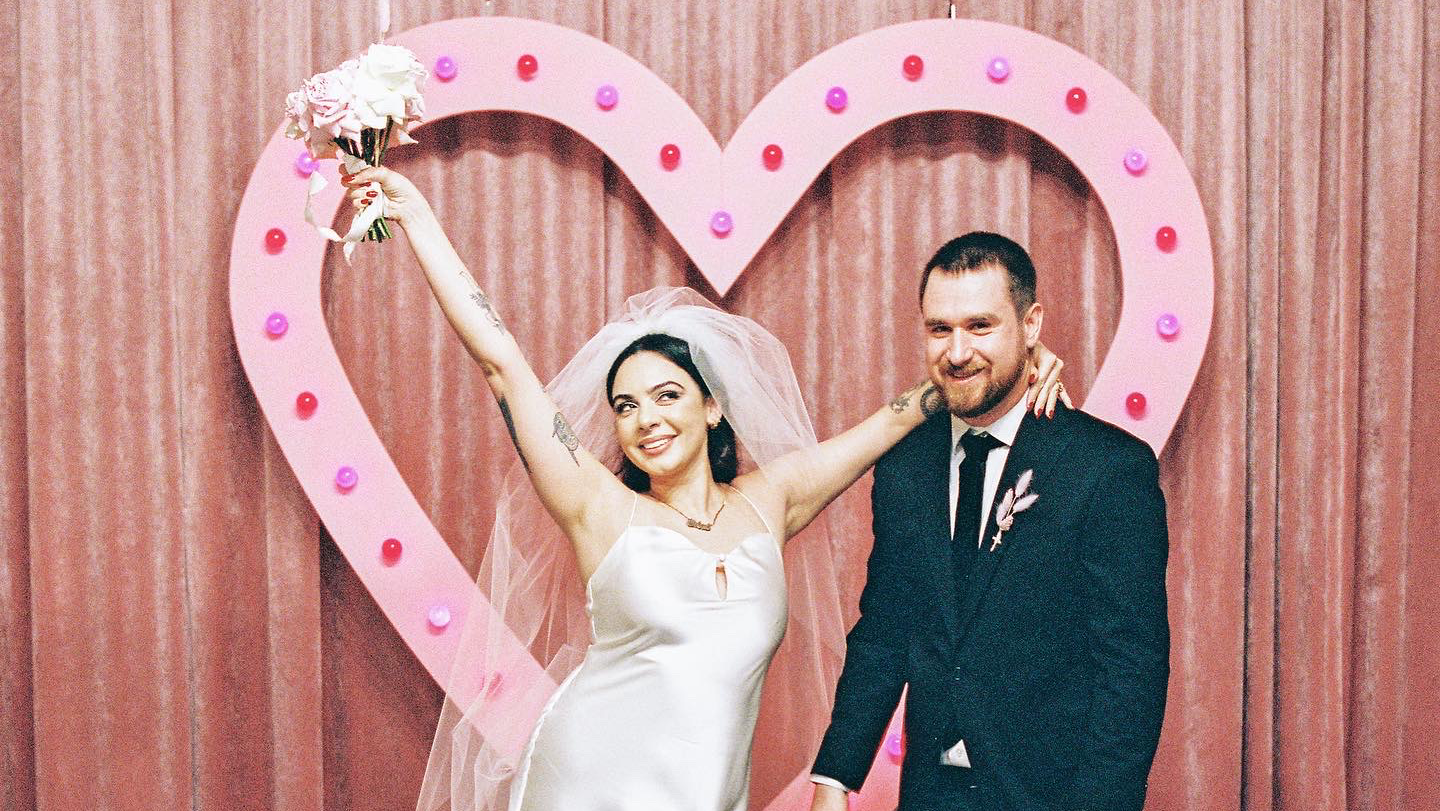
Inside, three things are decided before the couple arrives, and all three take about five minutes to establish.
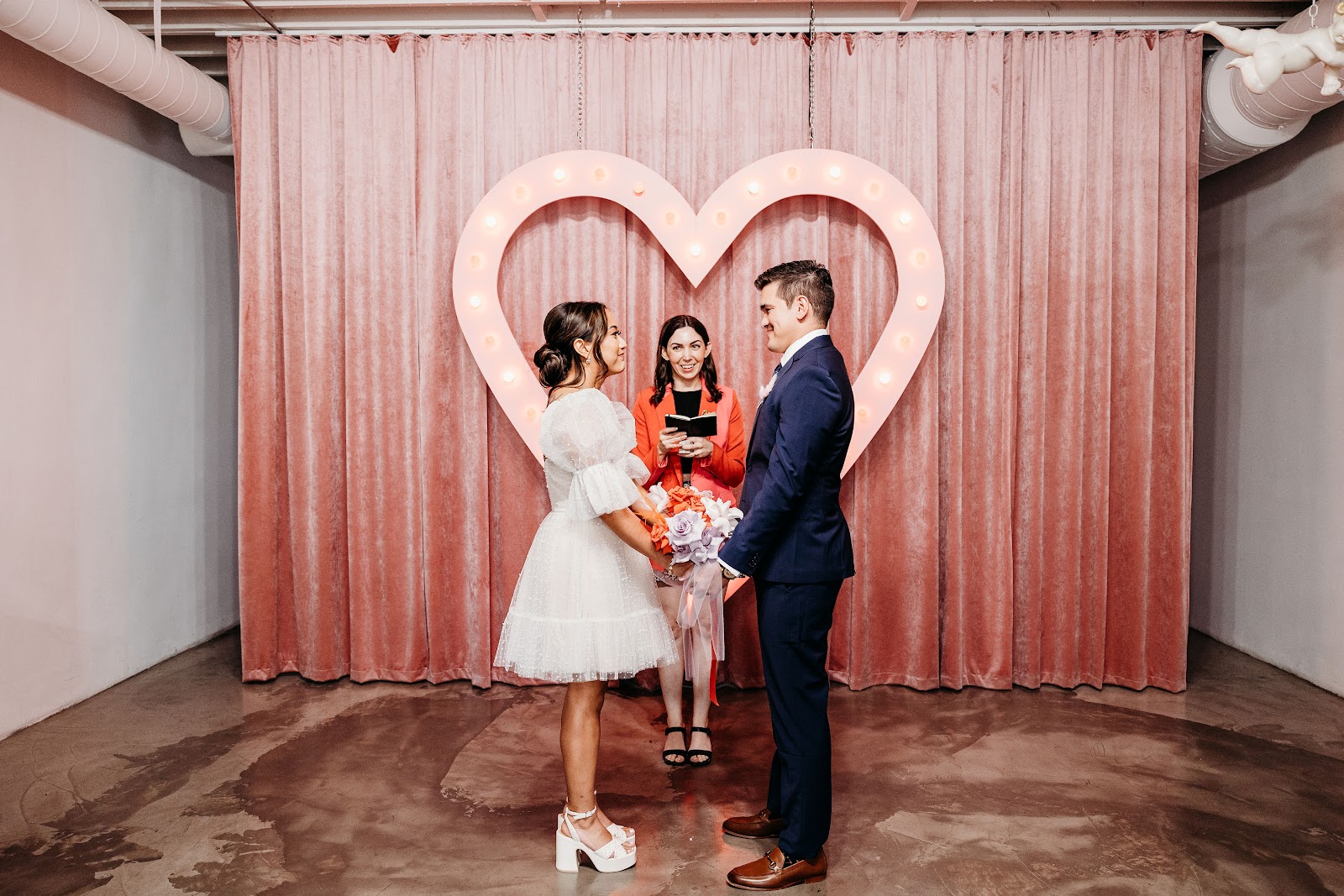
The first is the position. A small chapel has a fixed geometry — a short aisle, a few rows, and a front where the ceremony happens — which gives three candidate positions: the end of the aisle looking forward, a side aisle, and the front corner looking back. They are not equally available, because the aisle blocks the guests and the front corner may be inside the officiant’s working space. Ask which are permitted, pick one, and stay in it.
The second is the configuration. Changing lenses during a twelve-minute ceremony costs a meaningful fraction of it, so one lens has to cover both the wide frame and a tighter one — which in a small room means a moderate zoom from two or three metres out. ISO and aperture set, exposure confirmed with one test frame, and the source ready rather than in a bag.
The lighting itself is the easy part, which is worth saying because photographers arriving from large venues expect otherwise. A small room with a low pale ceiling is the best bounce environment there is: a ceiling two and a half metres up is a very large soft source, and one bounced flash lights a small chapel evenly with no aiming required — which matters when the alternative is aiming a light at a moving ceremony.
Two checks. The ceiling colour, because a coloured or dark one absorbs and tints, and one test frame settles it. And the mixed sources, which in a small room all land on the same face from different sides — warm fittings, cooler ones added later, decorative colour, and daylight through a door — so pick the temperature that should be correct, set white balance to it, and switch off or overpower whatever else reaches skin. Turning a fitting off is frequently the cheapest improvement available.
The third advance decision is the running order, and it is the most valuable of the three. Twelve minutes with no repeats means the entrance, the vows, the rings, the kiss and the turn to walk out have to be anticipated rather than reacted to — and the only way to anticipate them is to have asked what happens and in what order. That single conversation with the officiant, before the couple walks in, is worth more than any piece of equipment at this venue.
The last thing worth knowing is where the guests will be, because in a room this small they are in every frame. A chapel with a dozen people in it has no empty background, which means the frames are either tight enough to exclude them or wide enough to include them deliberately — and the tight ones need a position where the couple is not directly in front of a row of faces.
- The exterior is the venue; the ceremony room is a fixed short event inside it
- Three exterior positions: identification, full shade, and one enclosed
- Establish position, lens and running order before the couple arrives
- Bounce off a low pale ceiling — no aiming, and it covers a moving ceremony
- Ask where the guests will sit; in a room this small they are in every frame
Out again, and the desert year
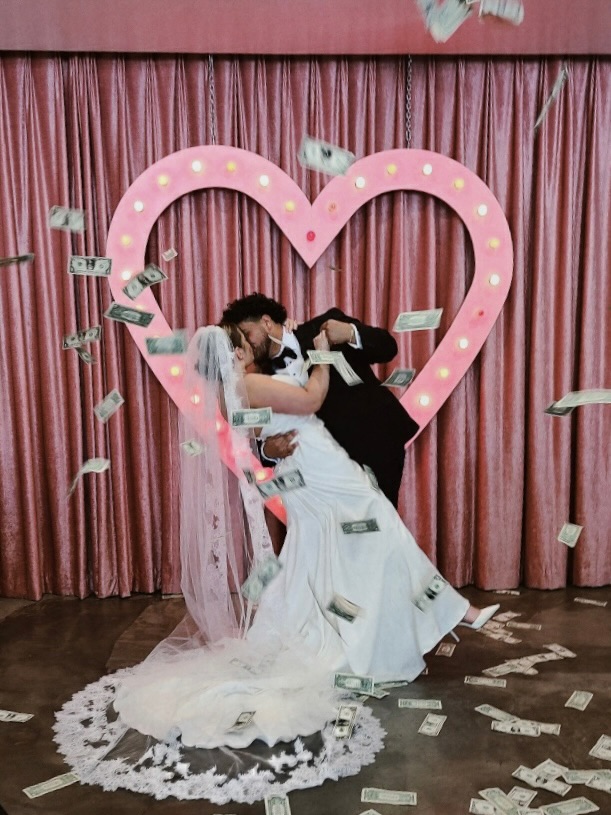
Out of the door, the fifteen minutes belong to the couple and the three positions get worked in the order the light dictates rather than the order they were listed.
The seasons decide how much of that is comfortable. Summer, June into September, has daytime highs regularly above forty degrees Celsius, which makes an outdoor block a matter of minutes rather than a quarter of an hour, and makes the enclosed position and the shade position the whole plan. A midday summer slot is effectively an indoor wedding with a brief exterior, and the honest advice is to book a slot at the edge of the day instead.
The monsoon from July into September brings occasional afternoon thunderstorms and blowing dust. For a chapel that is a small problem rather than a large one, because the ceremony is indoors and the enclosed position covers the rest — and wet ground reflecting a lit chapel sign is a better frame than the dry version, while a desert storm sky behind a small building is the most dramatic thing this city’s weather produces.
Winter is the good season and clearly so. Mild, the clearest air of the year, and sunset in the middle of the afternoon in December — which means an afternoon slot runs straight into the last hour of daylight and then into the crossing, the roughly twenty-five minutes after sunset when the sky still holds deep colour and the sign is lit. That sequence is the best a chapel wedding can have, and without a very late booking it is only available in winter.
That window is short here because the very dry air gives less afterglow than a humid sky — twenty-five minutes is generous, and it is a scheduled ten minutes rather than a wander.
Spring is windy, and wind here means dust: haze that flattens anything distant, grit that gets into everything, and a veil that behaves unpredictably. It also rules out anything held or stood — no diffusion panel, no lightstand — which at a venue where the source is going to be in a hand or on a bracket anyway costs nothing.
Three closing practicalities. Bodies bagged between positions in dust. Fogging runs one way only in this climate, so a cold body from an air-conditioned chapel taken into hot dry air fogs immediately and does not clear quickly — let it warm before going out, which at a venue where the whole exterior block is fifteen minutes is the difference between having those frames and not.
And the timing of the booking itself is the single biggest lever available. Everything above is easier at four in the afternoon in January than at one in the afternoon in July, and it costs nothing to choose. When a couple asks how to get the best photographs from a chapel wedding, the honest answer is not about equipment — it is about which slot they book.
More frames from The Sure Thing Chapel
The Sure Thing Chapel wedding photography: common questions
What does a short booking actually change?
Not the number of pictures — the timing of the decisions. Position, lens, lighting and running order are all settled before the couple arrives.
Where does the photography time come from?
Outside. The ceremony room is on the venue’s clock with ceremonies before and after; the exterior is on the couple’s own.
What three exterior positions are needed?
One with the building or sign in it, one in full shade, and one enclosed — a porch or canopy that works in any weather.
How should the ceremony be lit?
Bounced off a low pale ceiling, which needs no aiming and covers a moving ceremony. Check the ceiling colour with one test frame.
What is the most valuable advance question?
What happens in what order. Twelve minutes with no repeats means the moments have to be anticipated rather than reacted to.
What is the single biggest lever?
Which slot is booked. Four in the afternoon in January is a far better photographic proposition than one in the afternoon in July, and it costs nothing.
More Las Vegas, NV venue guides
We are writing a photographer’s guide to every venue we would happily shoot in Las Vegas, NV. Here are three more, plus the full index:
- Treasure Island, Las Vegas: One Frame, and How It Is Made
- The Vdara, Las Vegas: One Frame, and How It Is Made
- The Venetian, Las Vegas: A Resort Whose Logic Is Painted Sky
Planning a wedding at The Sure Thing Chapel?
Everything decided before you arrive. Tell us your slot and we will decide it.