 The Rio, Las Vegas: A Walk Through an Off-Strip Resort
Red Rock Canyon, Las Vegas: What It Suits, and What It Does Not
Red rock is the most photogenic surface in the region and the least forgiving light in it.
A desert canyon west of the city is the opposite of the Strip in every respect, and it is the one Las Vegas setting where the landscape rather than the architecture carries the pictures.
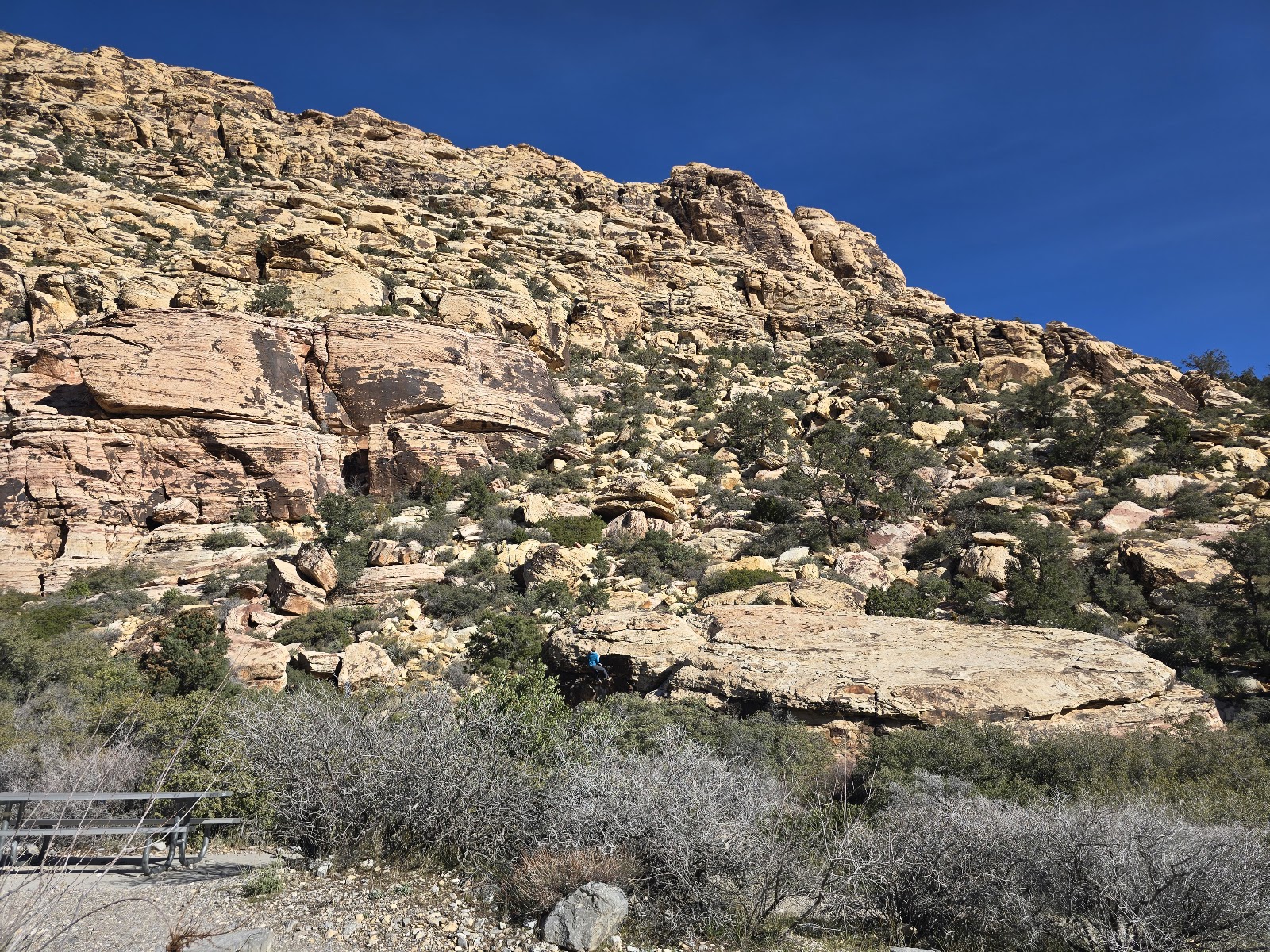
What it gives is red sandstone, enormous scale, and the cleanest air in the region — a combination that at the right hour produces frames of a kind no built venue can. The rock is warm, layered and strongly textured, and low sun on it is one of the genuinely great sights of the American southwest.
What it asks is more than most couples expect. The light is usable for about two hours of the day. The escarpment faces roughly east, which controls everything about when. Access to a protected desert area is governed by rules rather than by goodwill. And the environment itself — heat, distance, uneven ground, no shade, no shelter, no power — is a genuine constraint on what can be attempted in formal clothes.
We have not photographed a wedding at Red Rock Canyon; desert canyon light behaves predictably and the practical constraints are well documented. Permits, access, vehicle rules and which areas may be used are questions for the managing authority rather than for a photographer.
Red Rock Canyon at a glance
| Where | West of Las Vegas, Nevada |
| Suits | Red sandstone at low sun, enormous scale, the clearest air in the region |
| Resists | Midday, heat, distance, no shade and no shelter |
| The key geography | The escarpment faces roughly east, so it lights early and shades early |
| Ask first | Permits and access rules, vehicle and group limits, what may be brought |
What it suits
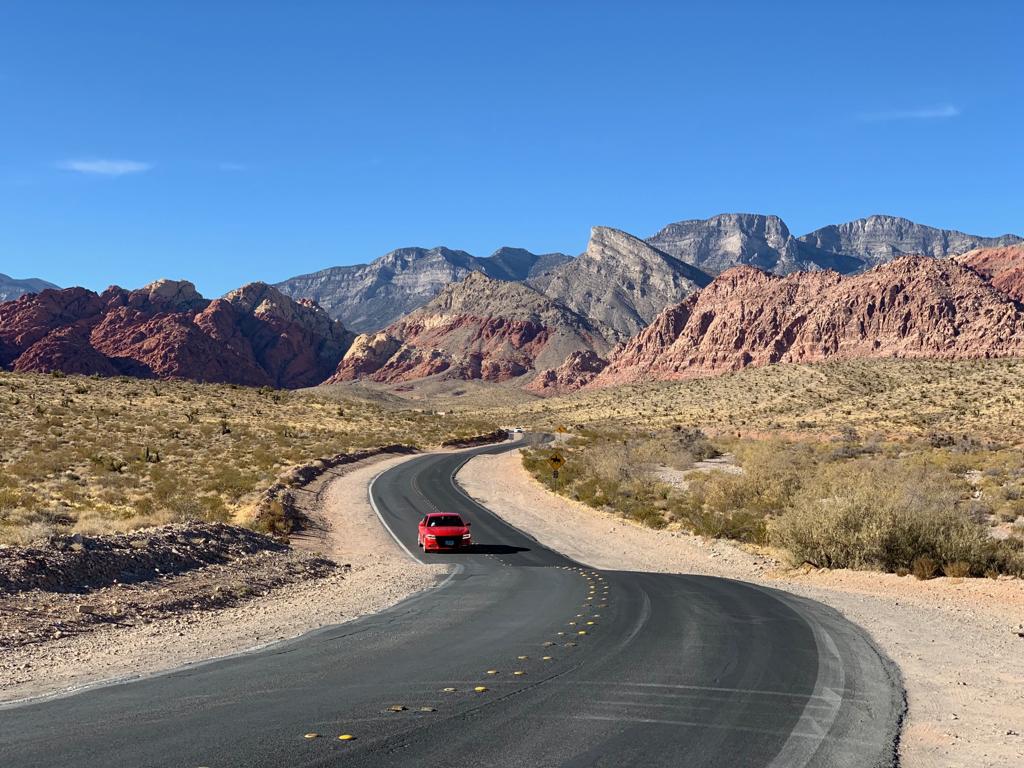
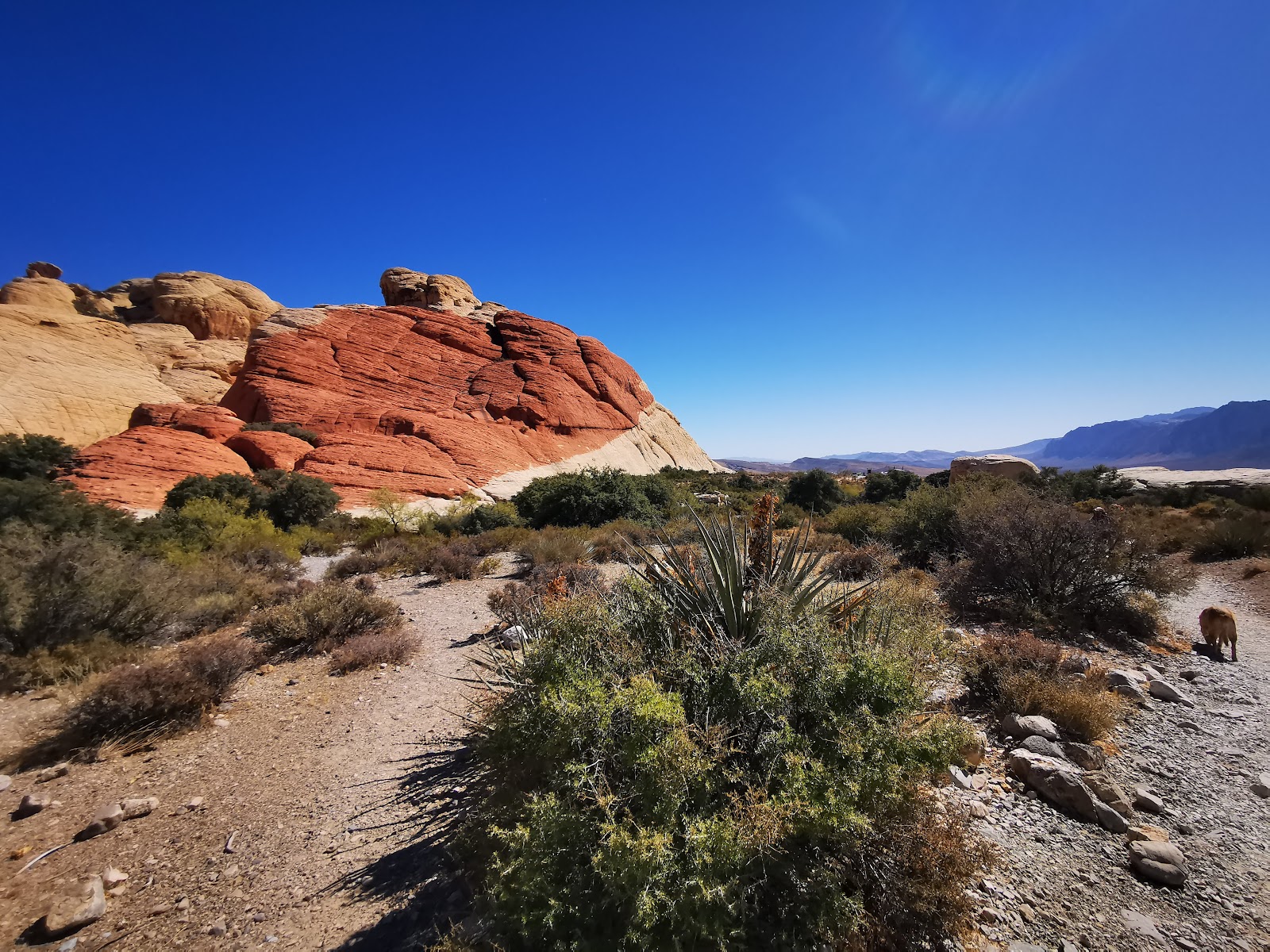
The rock at low sun is the whole case and it is a strong one. Red sandstone is a warm, strongly layered, deeply textured surface, and low-angle light does two things to it that no other light does: it saturates the colour, because the light itself is warm and the rock is warm, and it rakes the strata so that every band and fracture reads.
The escarpment on the western side of the valley faces roughly east, and that single geographical fact governs the whole schedule. It catches the first light of the day directly, which means sunrise here is the most spectacular light the site gets — the rock lights up while the valley behind is still in shadow. And it falls into its own shadow comparatively early in the afternoon, which means the golden hour on the rock face itself ends sooner than sunset time suggests.
The corollary is the one that catches people out: at sunset the escarpment is in shade, and the good late light is on the eastern side of the valley and on the desert floor, looking back at the rock rather than standing against it. Both are excellent and they are different frames, and knowing which is which decides where a wedding party stands at five in the afternoon.
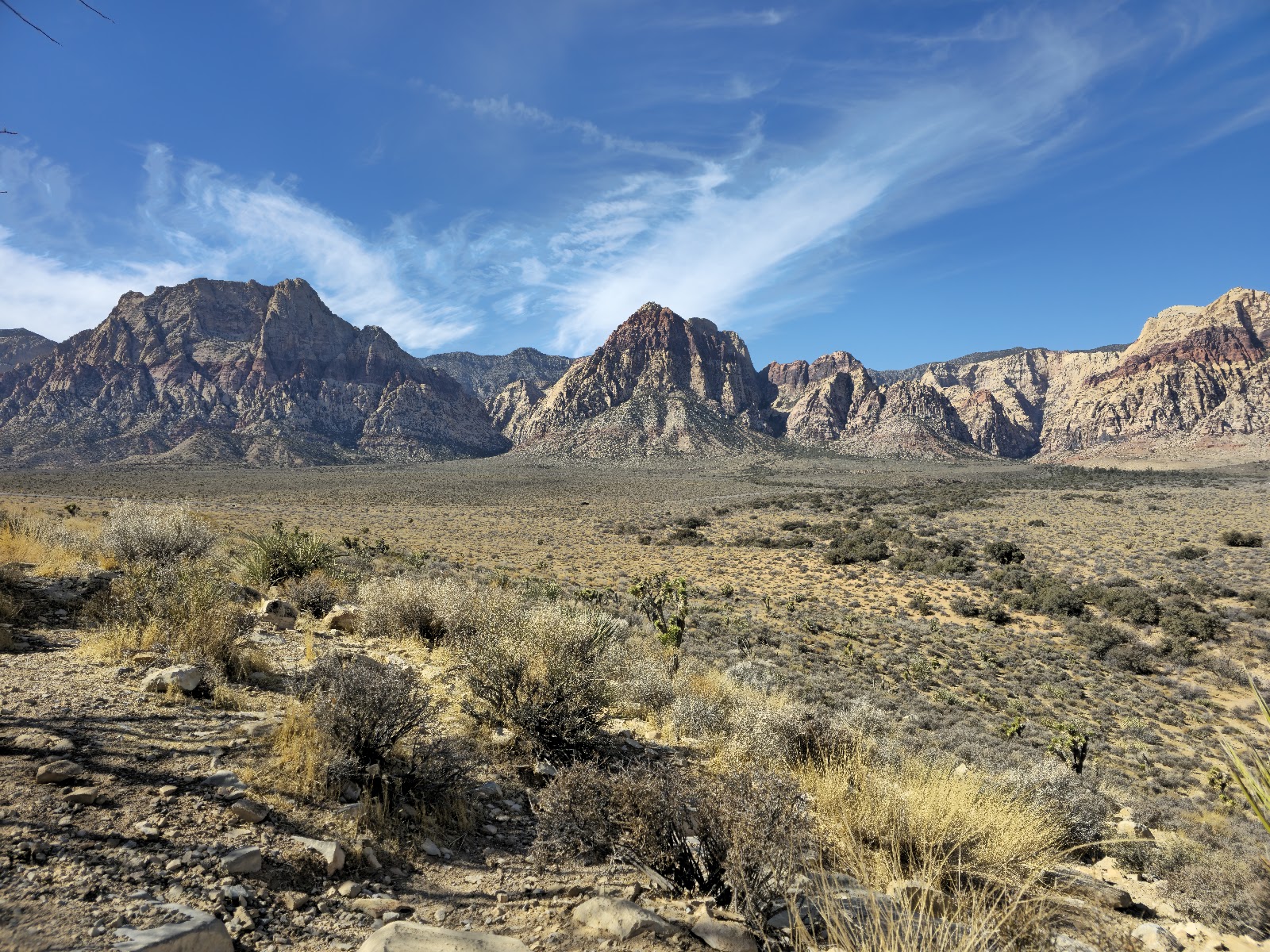
The clear air suits distance, which is the second thing. This is the least hazy environment most photographers will work in, and it means long views hold detail — a mountain range twenty miles away is legible rather than a grey suggestion. That makes the wide frame worth making here in a way it rarely is elsewhere, and it makes a long lens compressing distant ridges into layers a genuinely good picture.
The scale suits couples-as-figures compositions. Two people small in an enormous landscape is a real frame and this is where it works, because the landscape is genuinely enormous and the air is clear enough to show it. The requirement is that the figures be readable — separated by tone, placed where the eye lands — rather than merely present.
It suits the desert’s own fill, which is the pale ground. Sand and light rock reflect strongly upward, which fills exactly the shadows a high sun carves. In shade, and at low sun, that makes the natural light better here than the sun angle alone would suggest.
And it suits a plan with very few frames in it. This is not a venue for a two-hour portrait session; it is a venue for twenty deliberate minutes at the right time, which produces four or five extraordinary pictures. Treated that way it is superb. Treated as a place to wander, it is a hot walk.
What it does not suit
Midday is the first refusal and it is complete. At about thirty-six degrees north the June midday sun sits roughly seventy-seven degrees above the horizon, and with almost nothing in the very dry air to scatter it, the light comes down hard and straight. On faces that means black eye sockets and a hard shadow under every chin; on rock it means flat, washed colour with no texture at all, because the light is falling on the top of every surface rather than across it.
That is worth being blunt about: the same canyon that is magnificent at sunrise is photographically mediocre at noon, and no equipment changes it. The only midday positions are the shadow sides of large formations, where the rock blocks the overhead light and the pale ground bounces from below — real shade, directional, and worth locating in advance.
Heat is the second and it is a welfare issue rather than a photographic one. Daytime highs here run regularly above forty degrees Celsius from June into September, there is essentially no shade, no water beyond what is carried, and no shelter. A wedding party in formal clothes in those conditions is at genuine risk, and the honest advice for a summer date is sunrise or nothing.
Distance and ground are the third. This is a desert area reached by road from the city, which means the excursion is a real one — travel time each way, a walk from any vehicle to any position, and uneven, rocky, sandy ground throughout. Long dresses and formal shoes on that surface are a hazard, and the practical answer is short walks to close positions rather than the perfect view half a mile in.
It also means no power, no ceiling to bounce from, no walls to fill with, and no shelter from wind. Everything must be carried, a source has to be direct into a modifier at close range, and a lightstand in desert wind is a liability rather than a tool.
Access is the fourth and it is not negotiable. A protected desert area is managed under rules that govern permits, group sizes, vehicles, where people may walk, what may be set up and what may be left. Those rules exist to protect a fragile environment — desert soils and plants recover from damage over decades rather than seasons — and they should be established in advance with the managing authority. A photographer’s preference does not override them, and a wedding party is a different proposition from two people with a camera.
And the fifth is that this is not a venue in the sense a hotel is. There is no plan B, no indoor alternative, no facilities and no staff. Weather that would be an inconvenience at a resort — a thunderstorm, a dust storm, unexpected closure — ends the session here. That argues for treating the canyon as a twenty-minute excursion attached to a venue that does have a roof, rather than as the venue itself.
- The escarpment faces east: sunrise lights it, late afternoon shades it
- At sunset, stand on the valley floor looking at the rock, not against it
- Midday flattens both faces and rock; only formation shadow works
- Summer means sunrise or nothing — the heat is a welfare limit
- Establish permits, group and vehicle rules with the managing authority first
The year, and how to plan it
The seasons matter more here than at any other venue in the region, because there is no building to retreat into.
Summer, June into September, is genuinely difficult. Daytime highs regularly above forty degrees Celsius with no shade make anything but a sunrise excursion inadvisable, and sunrise in June is before six in the morning — which is a real scheduling conversation rather than a detail. The monsoon period from July into September adds afternoon thunderstorms, and a desert thunderstorm produces both the most dramatic sky the region offers and a genuine flash-flood hazard in low ground. Neither is a photographic matter; both are reasons to be off the site by early afternoon.
Winter is the good season and by a wide margin. Mild days, cool mornings, the clearest air of the year, and a sun that never climbs high — which means the light stays usable for far longer than in summer and the rock holds its texture through much of the day. Sunset in the middle of the afternoon in December also puts the excursion at a civilised hour. Cold at dawn in January is real, and coats are the answer.
Spring is the risk. Wind here means blowing dust, which flattens exactly the long views that are the site’s main asset, gets into every camera, and makes any held modifier useless. March and April can be beautiful and can also be a grey haze, and there is no way to know until the morning.
Autumn, particularly October and early November, is the other good window: clear, comfortable, and with sunset late enough to be convenient but not absurd. Between October and February the site is at its best.
The practical shape of a plan here is short and specific. One destination chosen in advance, close to a vehicle, reached in a few minutes’ walk on reasonable ground. Twenty minutes of photography at the right hour — the first light of the day on the escarpment, or the last hour from the valley floor looking at it. Water for everyone. Bodies bagged against dust. And a return to a venue with a roof.
Two equipment notes specific to this environment. Dust gets everywhere, so lens changes should be minimised and bodies bagged between positions — a sensor cleaned in a canyon is a sensor with more dust on it. And fogging runs one way only in a desert: a cold body carried from an air-conditioned vehicle into hot dry air fogs instantly and does not clear quickly, so twenty minutes with the bag open before the excursion is the whole fix.
Finally, a note on honesty with couples. Photographs of this place at dawn are among the best a Las Vegas wedding can produce, and the cost is getting up in the dark and accepting that the picture happens once. A couple told that in advance nearly always agrees; a couple told it at four in the afternoon does not.
More frames from Red Rock Canyon
Red Rock Canyon wedding photography: common questions
When is the best light?
Sunrise. The escarpment faces roughly east, so it catches the first light directly while the valley behind is still in shadow.
What happens at sunset?
The rock face is already in its own shadow. The good late frames are from the valley floor looking at the rock, not standing against it.
Is midday usable?
Not really. The light flattens both faces and rock. The only workable positions are the shadow sides of large formations, where pale ground fills from below.
What about summer?
Daytime highs above forty degrees with no shade make anything but a sunrise excursion inadvisable. It is a welfare limit rather than a photographic one.
Are permits needed?
A protected desert area is managed under rules covering permits, group size, vehicles and access. Establish them with the managing authority in advance.
What is the best season?
October to February. Clear air, mild conditions, and a low sun that keeps the rock’s texture readable for much of the day.
More Las Vegas, NV venue guides
We are writing a photographer’s guide to every venue we would happily shoot in Las Vegas, NV. Here are three more, plus the full index:
- The Rio, Las Vegas: A Walk Through an Off-Strip Resort
- The Strat, Las Vegas: What It Suits, and What It Does Not
- The Sure Thing Chapel, Las Vegas: A Walk Through a Las Vegas Chapel
Planning a wedding at Red Rock Canyon?
Twenty deliberate minutes at dawn. Tell us your date and we will plan the excursion.