 Overhills Mansion: Who This Venue Suits, and Who It Doesn’t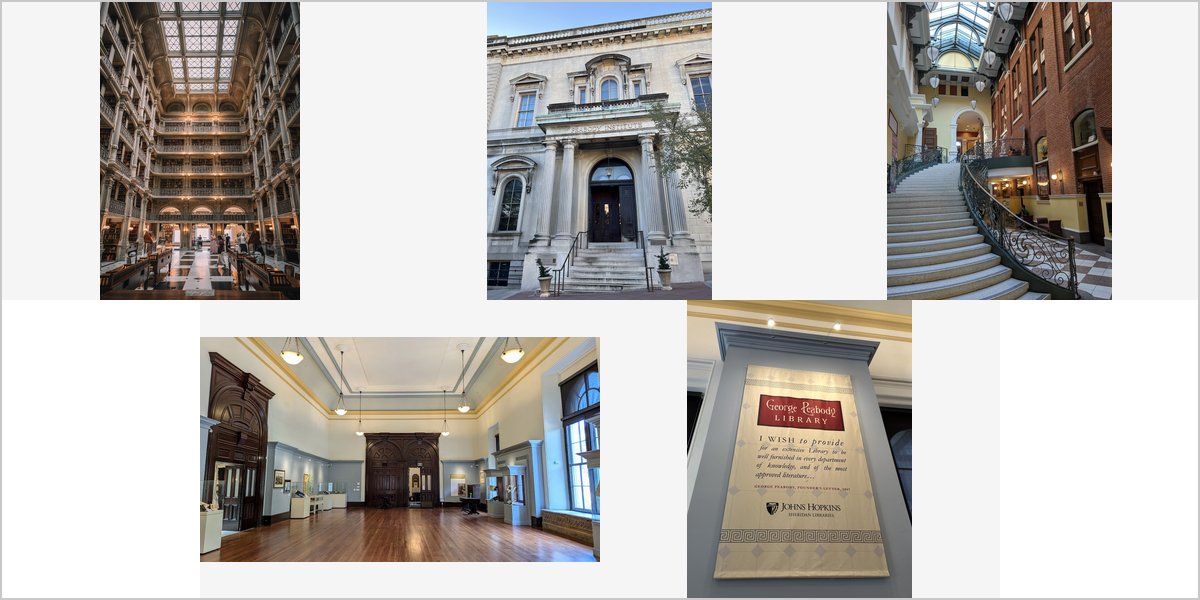
April 16, 2026
The George Peabody Library: Reading the Light in a Cathedral of Books
Five galleried tiers of books under a glass roof. The light comes from directly overhead, the room is enormous and the rules are strict — plan for all three.
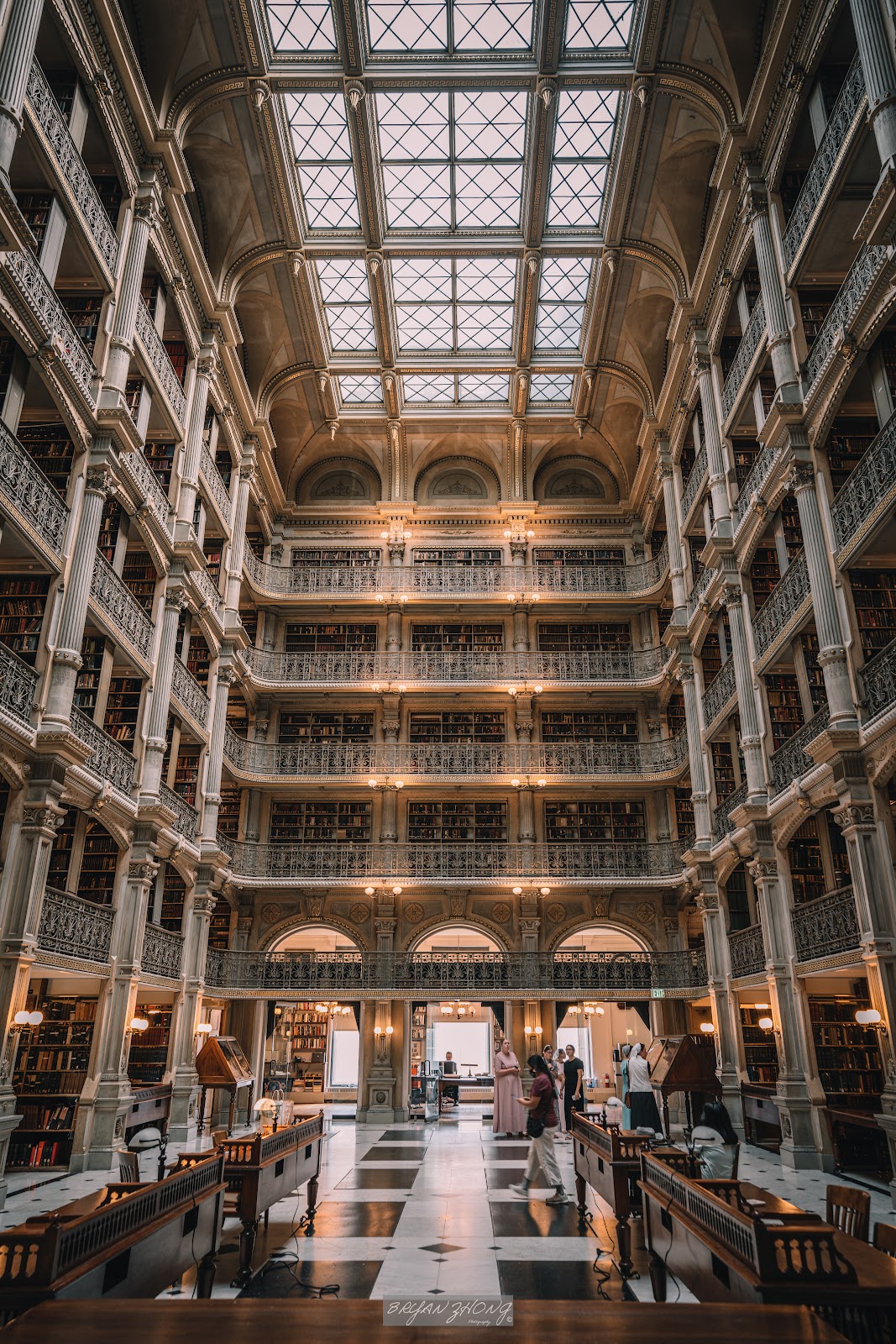
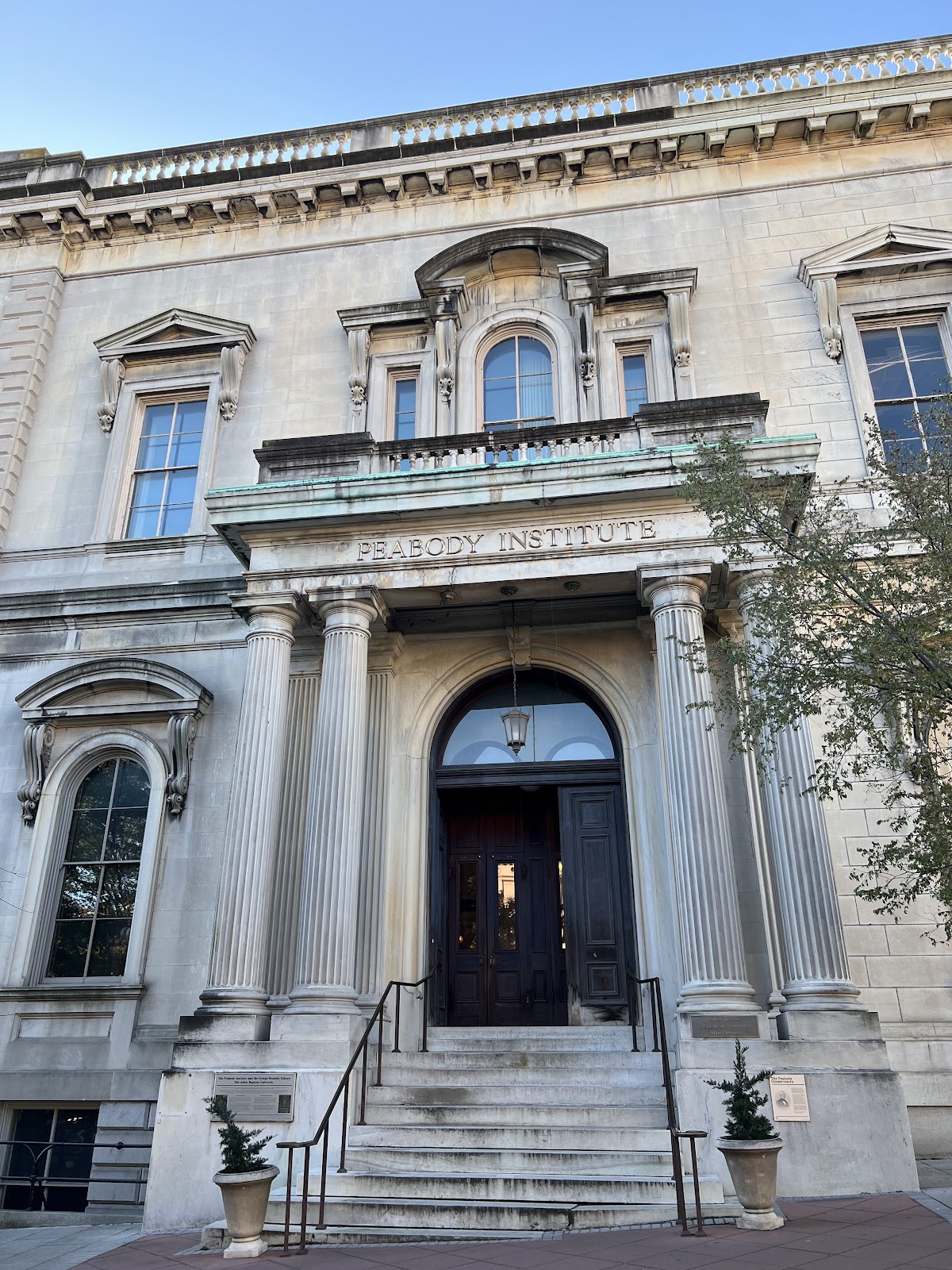
The George Peabody Library’s stack room opened in 1878, part of the Peabody Institute in Baltimore’s Mount Vernon. Five tiers of cast-iron balconies rise around a central atrium to a skylight roughly sixty feet above the floor, with the shelves — holding a nineteenth-century research collection — facing inward on every level. It is regularly named among the most beautiful library interiors in the world, and the description is earned.
For a photographer it combines the two things that make a space memorable and the two things that make it technically awkward. Memorable: extraordinary verticality, and repeating geometric pattern in the ironwork and shelving that fills a frame with texture. Awkward: the only significant light source is a skylight directly overhead, and the collection is old paper, which means conservation rules.
This is a light-and-timeline guide, because at the Peabody the light is the constraint and the timeline is the solution. We have not photographed a wedding here. The architecture and the behaviour of skylight illumination are matters of record; access, flash policy and what may be placed where are for the Peabody to confirm, and at a library of this significance the answers will be firm.
George Peabody Library at a glance
| Where | Mount Vernon, Baltimore, Maryland — part of the Peabody Institute |
| Opened | 1878; the stack room rises five tiers to a skylight about sixty feet up |
| Character | Cast-iron galleries, gold-tooled bindings, black and white marble floor |
| Light | A single overhead skylight — strongly top-down, entirely weather-dependent |
| Assume | Conservation rules: restrictions on flash, equipment and where people may stand |
How a sixty-foot skylight behaves
All the meaningful daylight enters at the top and falls down the atrium. That produces three effects worth planning for. The light is soft, because it has travelled a long way and bounced off pale surfaces. It is strongly directional downward, which shadows eye sockets. And it falls off with depth, so the upper galleries are considerably brighter than the marble floor at the bottom.
The weather matters far more than the hour. Overcast turns the skylight into a huge diffuser and fills the whole volume with even, gentle light — the best condition here by a clear margin. Bright sun sends a defined shaft down the atrium, which is spectacular on the ironwork and impossible across a face. If you get sun, use the shaft as a background element and keep people in the ambient.
Because the light is top-down, the corrections are the familiar ones: lift chins slightly, bounce light back up off the pale marble floor if you can position for it, or add a small warm-gelled fill. The floor genuinely helps here — a black and white marble floor under a skylight returns a useful amount of light upward, which is more than most venues offer.
Working the verticality, which is the whole point
The reason to photograph here is the height, and the frames that use it are the ones worth planning. Straight up the atrium from floor level, with the couple small at the bottom and five tiers of ironwork receding above them, is the signature image and it is genuinely breathtaking.
The reverse — down from an upper gallery — is equally strong and is the angle most photographers never secure, because it requires permission to be on a balcony level. Ask specifically. A frame looking down through the ironwork onto a couple on the marble floor explains the building better than any other single image.
Then there are the intimate frames. Gold-tooled spines at close range, a hand on a balcony rail, the pattern of the iron balustrade used as a foreground element with the couple soft behind it. These cost nothing in access and they give a gallery the close-range warmth that a vast atrium cannot.
Conservation rules and how to work with them
A nineteenth-century research collection is irreplaceable, and the rules that protect it are reasonable. Assume that flash may be restricted, that light stands and tripods may be limited, that certain galleries may be closed, and that there will be rules about food, drink and open flame anywhere near the shelves.
The productive approach is to arrive with a short, specific list rather than a general request. Asking for fifteen minutes on the floor and five on a named gallery level, with a camera and no stands, is easy to grant. Asking to photograph throughout the building with lighting invites a refusal, and rightly.
Practically, plan a natural-light method. Fast primes wide open, ISO set high and accepted in advance, and white balance decided per condition — skylight daylight is cool, and any artificial fixtures will be warm, so pick which you are honouring. Our preference is to let the room stay slightly warm, because gold tooling and old bindings are what give the Peabody its colour.
The timeline, and Mount Vernon outside
Because the light is weather-driven rather than hour-driven, the timeline is less about chasing a window and more about access. Institutional venues run on fixed slots with escorted movement, so the risk is over-ambition rather than bad light. Three locations done unhurried beat eight rushed.
Take the signature atrium frames first, while the schedule is intact and everyone is fresh. Leave the close detail frames until later — they are quick, they need no setup, and they survive a slipping timeline.
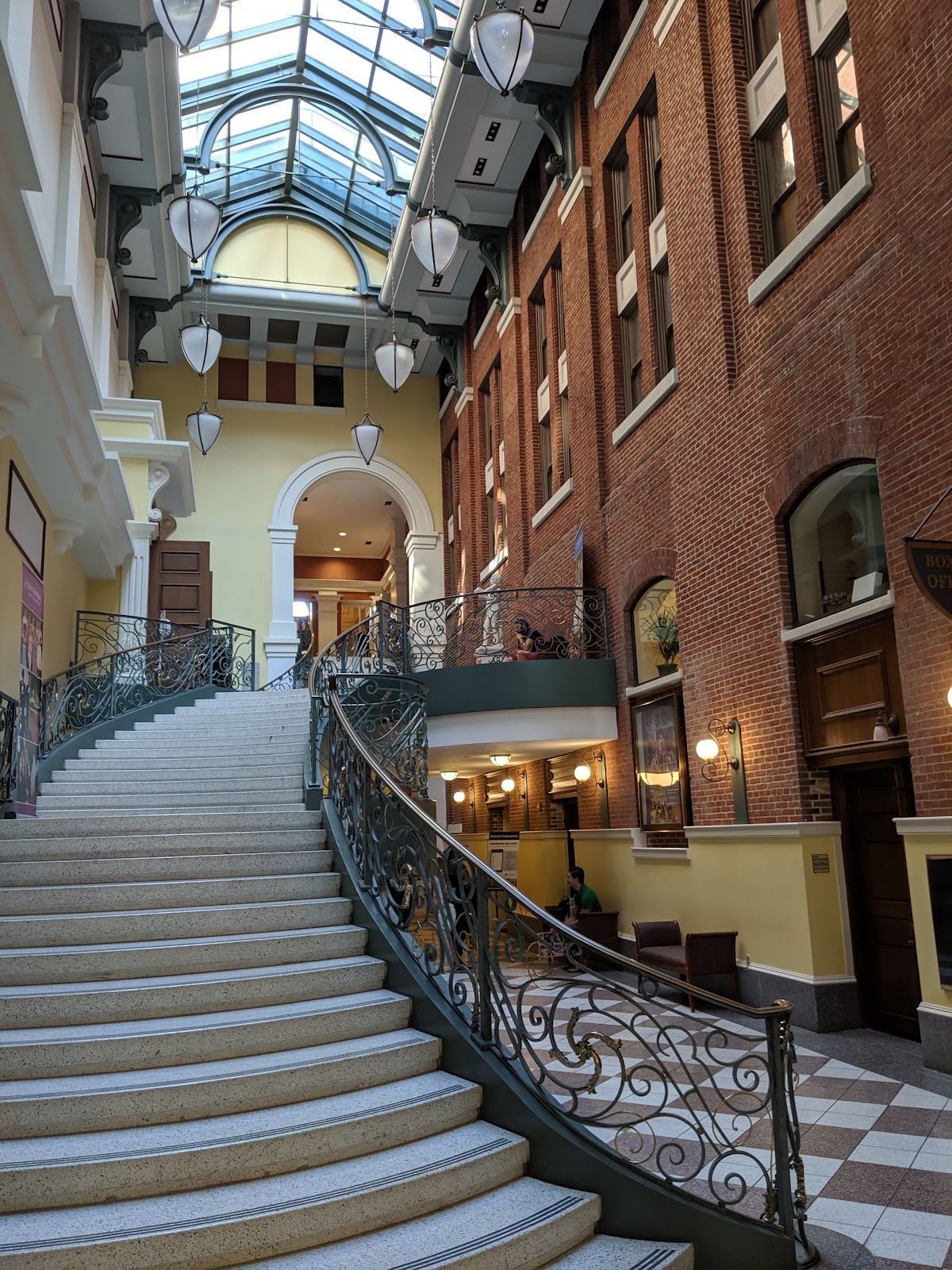
Outside, Mount Vernon is one of Baltimore’s best neighbourhoods for portraits: the Washington Monument and its square are immediately adjacent, with nineteenth-century townhouses, formal planting and mature trees. That gives you lateral daylight, warmth and straight architectural lines — precisely what the top-lit atrium withholds. Twenty minutes there balances the whole set, and late afternoon is the time to spend it.
What works in your favour
- One of the great library interiors in the world — five tiers of cast iron under a skylight
- Verticality available in almost no other venue, upward and downward
- Overcast conditions, common in Baltimore, are the ideal light here
- A pale marble floor returns useful light upward, unlike most top-lit spaces
- Mount Vernon Place and the Washington Monument immediately outside
What to plan around
- A single overhead skylight means strongly top-down light and shadowed eye sockets
- Bright sun produces a hard shaft that cannot cross a face
- Light falls off with depth — the floor is darker than the upper galleries
- Conservation rules on flash, stands and access should be assumed to be strict
- Upper-gallery access, which yields the best angle, needs specific permission
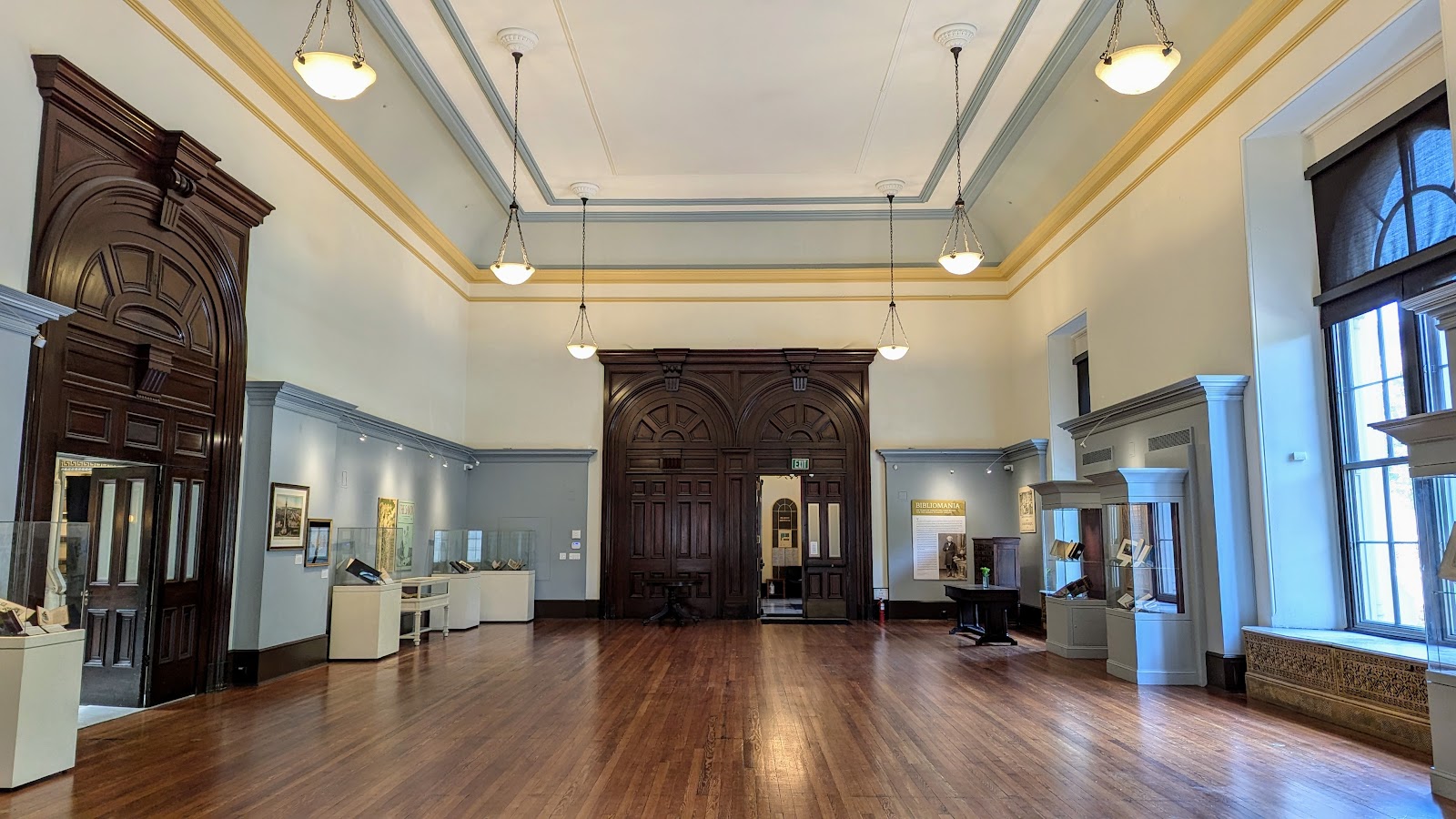
More frames from George Peabody Library
George Peabody Library wedding photography: common questions
Where does the light come from in the Peabody stack room?
A single skylight roughly sixty feet above the floor. It is soft because it has travelled far and bounced off pale surfaces, strongly top-down in direction, and it falls off with depth — so the upper galleries are brighter than the marble floor. Weather matters much more than time of day.
Is overcast or sunny better?
Overcast, clearly. Cloud turns the skylight into an enormous diffuser and fills the whole volume evenly. Bright sun sends a hard-edged shaft down the atrium, which looks spectacular on the ironwork and cannot be allowed to cross a face — on sunny days use the shaft as a background element.
What is the signature photograph?
Straight up the atrium from floor level, with the couple small at the bottom and five tiers of ironwork receding above. The reverse — looking down from an upper gallery — is just as strong and is the one most photographers never get, because it needs specific permission to be on a balcony level. Ask for it.
Can you use flash there?
Assume not until the library says otherwise. It holds a nineteenth-century research collection, and restrictions on flash, stands and tripods near old paper and bindings are standard and reasonable. Plan a natural-light approach with fast lenses and high ISO as the default.
What is outside the venue?
Mount Vernon Place and the Washington Monument are immediately adjacent, with nineteenth-century townhouses, formal planting and mature trees. That gives lateral daylight, warmth and straight architectural lines — exactly what a top-lit atrium cannot. Twenty minutes in late afternoon balances the whole gallery.
More Baltimore venue guides
We are writing a photographer’s guide to every venue we would happily shoot in Baltimore. Here are three more, plus the full index:
- Gramercy Mansion: Field Notes on a Country Estate
- The Ivy Hotel: Reading the Light in a Small Mansion Hotel
- The Lord Baltimore Hotel: Lighting a 1928 Art Deco Ballroom
All Baltimore Wedding Venues →
Planning a wedding at George Peabody Library?
At the Peabody, the permissions conversation decides the photographs. Tell us your date and we will help you arrive with a short, specific list — including the gallery-level access that produces the best frame in the building.