 The Whitby, New York: A Walk Through a Midtown Hotel
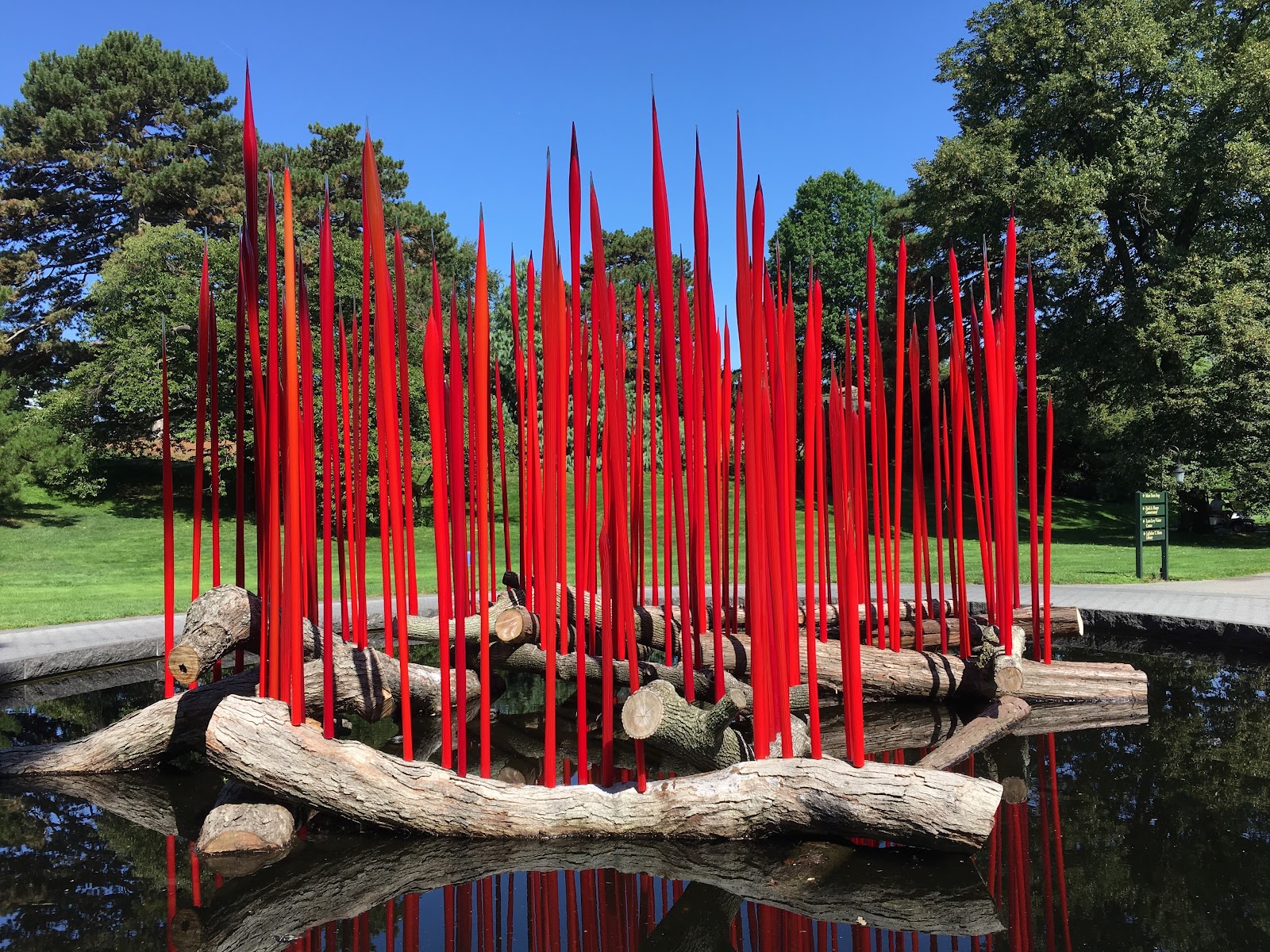
The New York Botanical Garden: Four Ways Out of the Scale Problem
At two hundred and fifty acres the problem is not scarcity. It is choosing, and walking.
Let us paint you a picture of the New York Botanical Garden, as its own description begins — which is an invitation rather than a description, and a fair one, because a garden of this size is more easily imagined than summarised.
The photographic problem at a botanical garden of this scale is not the one most venues present. There is no shortage of good settings: a garden of hundreds of acres has formal areas, woodland, water, a conservatory and specimen collections, any one of which would carry a day at a smaller venue. The problem is that they are far apart, that a wedding party in formal clothes moves slowly, and that a day spent visiting five of them is a day spent on paths.
So the governing decision is which two or three areas the day is for, made in advance and with travel time measured rather than estimated. Two areas plus the conservatory is a full day; five is a day of walking with photographs taken in the gaps.
This is written as that problem and four ways out of it. We have not photographed a wedding at the New York Botanical Garden; very large botanical gardens behave consistently. Which areas a booking includes, how long it takes to move between them, whether vehicles or carts are available, what the permit and photography rules are, and whether the conservatory is usable are the questions for their team.
The New York Botanical Garden at a glance
| Where | The Bronx, New York |
| Character | A very large botanical garden with designed areas, woodland and a conservatory |
| The problem | Too many good settings, too far apart |
| The decision | Two or three areas, chosen in advance with travel time measured |
| Ask first | Areas included, travel time, cart access, permits, conservatory |
Why scale is the problem
Distance is the first consequence and it is easy to underestimate from a map. Two areas that appear adjacent can be a substantial walk apart on paths that are not direct, and a wedding party moves at the speed of its slowest guest in the least practical shoes. Fifteen minutes each way is a realistic figure for a single move, and three moves consumes an hour of coverage.
The second consequence is that the light changes during the walking. A garden changes in three ways at once — level, because canopy and open planting are three or four stops apart; direction, because high sun comes down through leaves and low sun comes in underneath; and colour, because foliage bounces green onto anything near it. Spending twenty minutes walking between two areas in the last hour of light means arriving after the condition that made the destination worth visiting has changed.
The third is that a garden of this size is a public place with other visitors in it, and in New York that means many of them. Waiting for a gap does not work; long lenses and tight framing do.
The fourth is that the good settings are genuinely different from one another rather than variations, which means photographs made in them will not automatically belong together. Formal planting, deep woodland and a glasshouse are three registers, and a sequence that alternates between them frame by frame reads as inconsistent even when each picture is good. Splitting by time rather than interleaving is the answer, as it is in a building with several characters.
And the fifth is that permits and rules at a public garden are real and vary by area: what a wedding party may do, where, with how many people, and whether any equipment may be set up. Those belong in writing rather than in an assumption, because a group assembled in the wrong place is a problem in front of guests.
Four ways out
The first way out is the route, decided in advance and measured rather than estimated. Walk it with a stopwatch, choose two areas plus one indoor space, and leave with three or four known positions and the frame each one gives. Four known positions beat an hour of exploring anywhere, and at this scale they beat it by a very wide margin. Asking whether carts or vehicles are available for the party changes the calculation substantially and is worth asking rather than assuming.
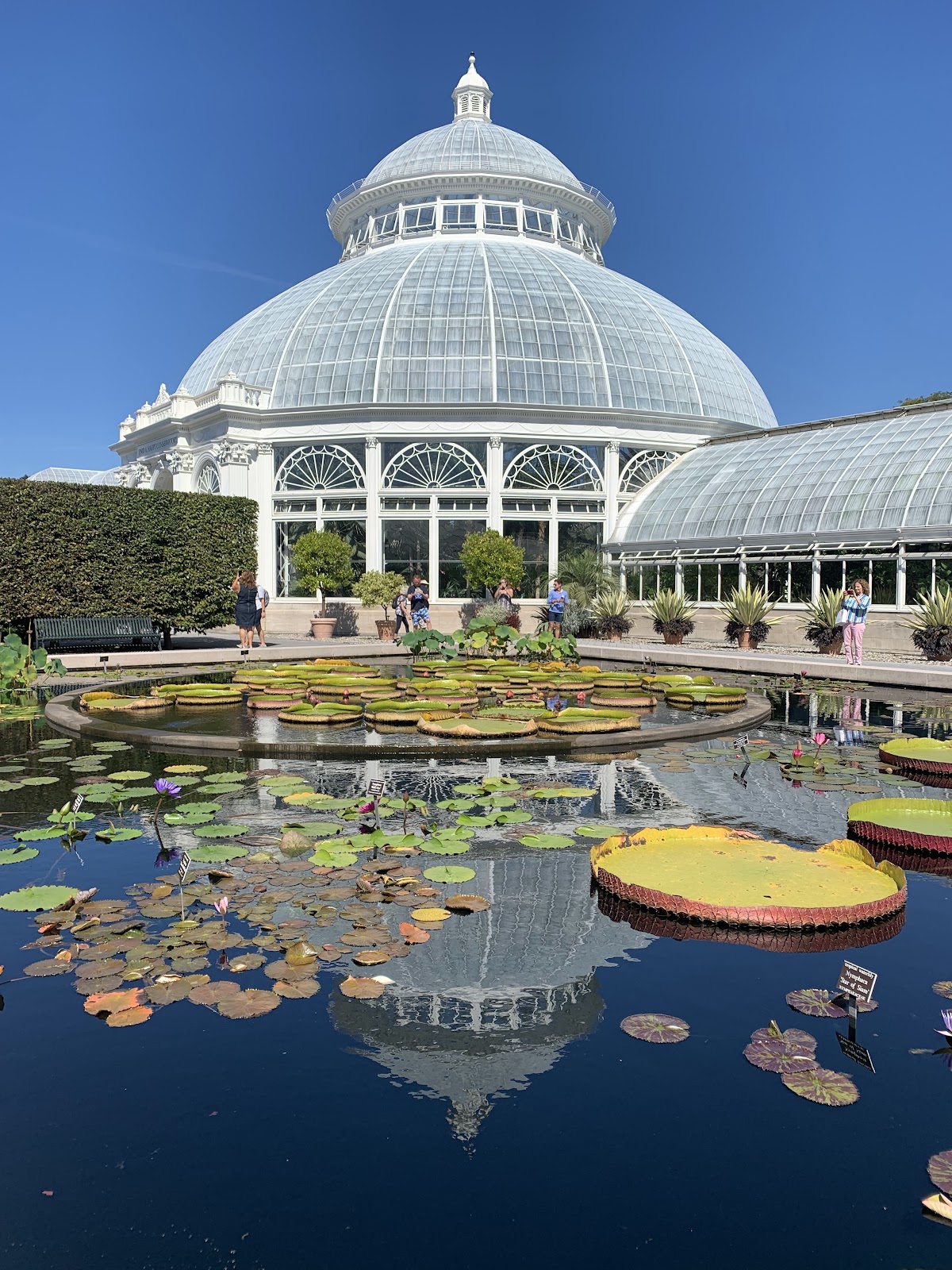
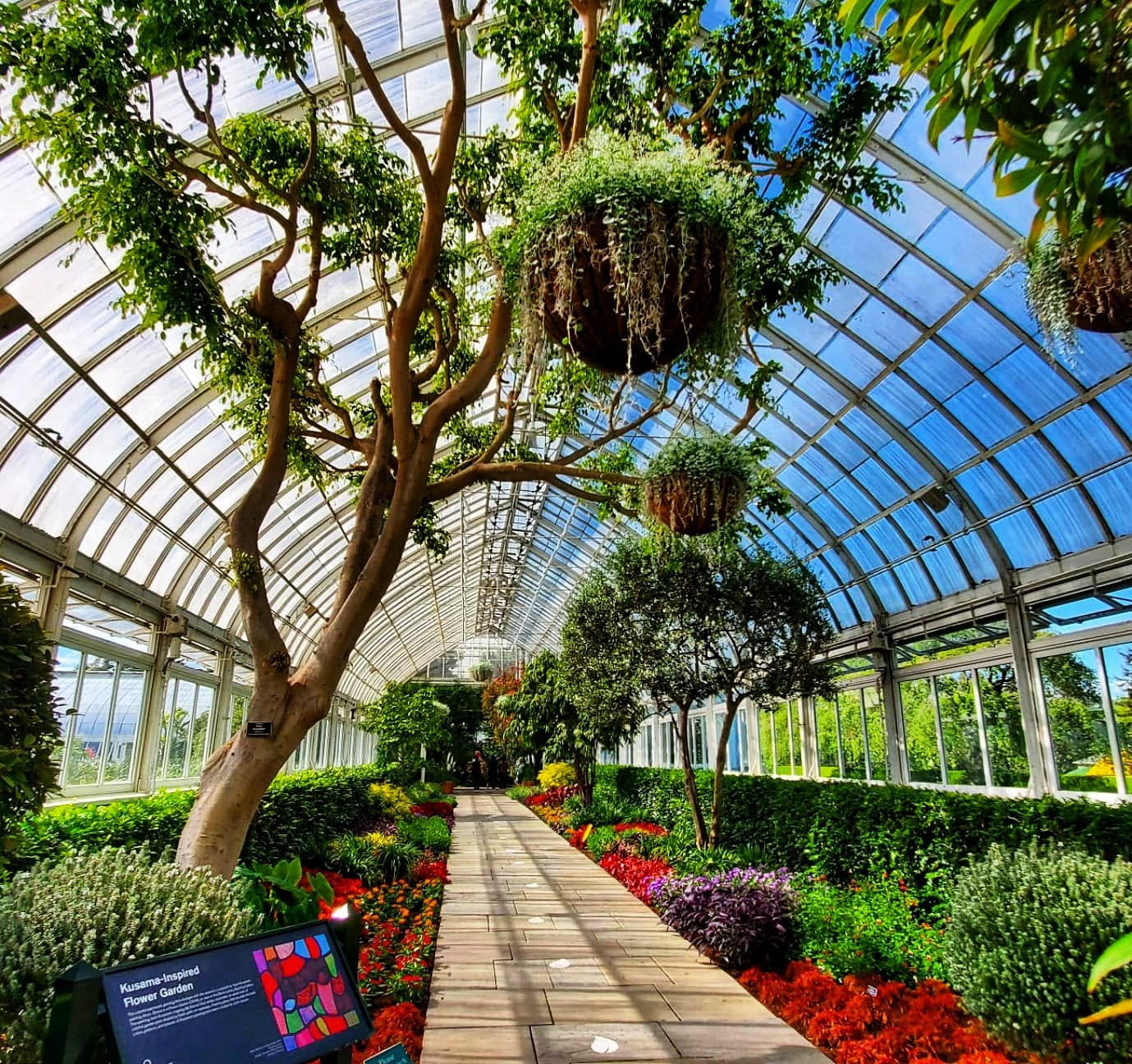
The second way out is the conservatory, which at a garden of this size is a genuine second venue rather than a fallback. Under overcast a glasshouse is one of the best photographic environments there is: light arrives through the whole roof and both flanks, diffused twice, from everywhere at once with no hard edge, and position stops mattering entirely.
Under direct sun the glazing bars print a lattice of hard shadow across everything including faces, which is a genuine exposure difference across the subject and cannot be corrected. On a sunny day the answers are the pockets under dense planting inside, the lattice used deliberately on a path rather than on skin, or shifting the hour so the sun comes through the flanks rather than the roof.
A conservatory in a New York summer is also warmer and more humid than outside, which means a camera carried in will fog immediately and may not clear while you remain inside. Let the kit acclimatise, and expect the reverse on the way out.
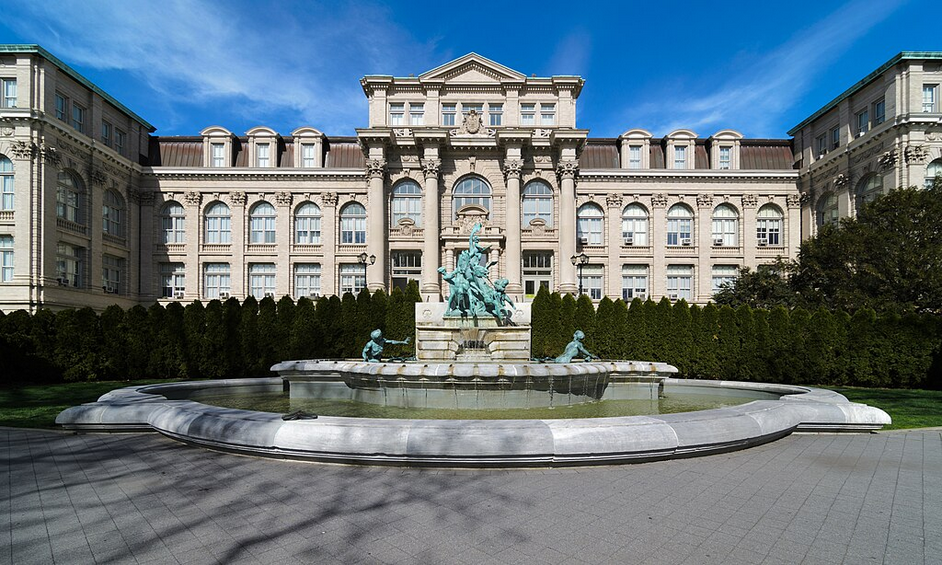
The third way out is to treat each chosen area on its own terms rather than as garden generally. Formal planting photographs best along an axis, which reinforces the design, or from a low camera, which drops the horizon and lets planting occupy the upper frame. Woodland wants the openings, because dense canopy is uniformly dark and uniformly green and the frames come from where it breaks — a clearing edge is a studio setup made by trees, with light arriving from a defined aperture above and falling off to near-black all around.
Water wants stillness for a reflection, which is a morning proposition because breeze builds through the day, and it gives fill from below that is useful at low sun and unflattering at high sun.
The fourth way out is the canopy, which is the resource that makes a humid New York afternoon workable at all. Continuous deep shade under mature trees is soft, cool and directional towards any opening, available for hours — and dapple is its hazard, putting hot spots several stops above the surrounding shadow and shifting with every breeze, so full shade, open light, or wait. Green bounce is localised and needs a custom white balance set on a face in the position being used, with any pale path as a neutral bounce.
- Walk the route with a stopwatch; two areas plus the conservatory is a day
- Ask whether carts are available — it changes the calculation substantially
- Split by time between registers rather than alternating frame by frame
- In woodland work the clearing edges; in formal areas work the axis
- Let the kit acclimatise before the conservatory, and after it
The year, and the bloom question
A botanical garden of this scale changes more through the year than any built venue, and the bloom question is the one worth raising with a couple rather than leaving to chance. The flowering phase of any particular collection is the most photogenic and the shortest, sometimes a week or two — which means a date chosen for it is chosen precisely, and a date near it may miss it entirely. Being honest about that in advance is better than explaining it afterwards.
Spring gives flowering and fresh foliage, and it is the season most people picture. Early summer gives full canopy and maximum continuous shade, which is the most reliable condition of the year and the one that makes a July afternoon workable.
Autumn is the best season for a garden with mature woodland: the clearest air of the year, genuine colour in late October, and low sun coming in under the canopy for longer than in summer, which extends the good hour rather than shortening it.
Winter strips most of it and turns a garden into structure — bare branch form, evergreen planting, stone, water and paths, all legible in a way they are not under leaf. That is a different photograph rather than a loss, and at a garden with a large conservatory winter shifts the centre of the day indoors, which is a coherent plan rather than a compromise.
Snow is the winter compensation and it is the best natural fill there is, lifting exactly the shadows a low sun carves while fooling a meter by about two stops — and snow on bare branch structure with a lit glasshouse behind it is one of the best frames a botanical garden ever gives.
Rain is the question every garden must answer and a conservatory answers it better than most: a glass building in rain is spectacular rather than compromised, with soft even light, water running down the panes as texture and frames better than a clear day gives. But the fallback still needs a capacity and a decision time, because a conservatory may not hold a full guest count and the walk to it from an outdoor ceremony position is the same walk as everything else here.
Summer thunderstorms in New York are a real possibility and they arrive quickly, which at a venue where shelter may be fifteen minutes away is a planning matter rather than a detail. Knowing the nearest covered point from the ceremony position, and the time by which the call gets made, is the practical version of a rain plan at a site this large.
And the last ninety minutes are the window the whole schedule should protect — which at this scale means being at the chosen area before it starts rather than walking to it while it passes.
More frames from The New York Botanical Garden
The New York Botanical Garden wedding photography: common questions
What is the problem at a garden this size?
Not scarcity but choice and distance. There are more good settings than a day can use and they are far apart, so a day visiting five of them is a day spent on paths.
What should the route be?
Two areas plus one indoor space, chosen in advance and measured with a stopwatch rather than estimated. And ask whether carts are available, because that changes everything.
Why not move between areas late in the day?
Because the light changes while you walk. Twenty minutes between two areas in the last hour means arriving after the condition that made the destination worth visiting has gone.
What does a conservatory depend on?
The sky. Under overcast it is an enormous diffuser where position stops mattering; under direct sun the glazing bars print a lattice of hard shadow that cannot be corrected.
How honest should the bloom conversation be?
Very. A particular collection’s flowering may last a week or two, so a date chosen for it is chosen precisely and a date near it may miss it entirely.
What is a rain plan at this scale?
Knowing the nearest covered point from the ceremony position and the time by which the call is made — because shelter may be fifteen minutes away rather than adjacent.
More New York venue guides
We are writing a photographer’s guide to every venue we would happily shoot in New York. Here are three more, plus the full index:
- The New York Public Library: Photographing a Building Made of Marble
- The Peninsula New York: What It Suits, and What It Does Not
- The Plaza Hotel, New York: Photographing a Grand Ballroom
Planning a wedding at The New York Botanical Garden?
Two areas, measured, and a bloom date checked. Tell us yours and we will check it.