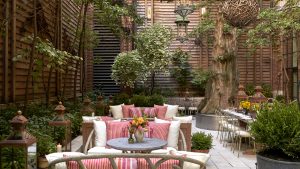
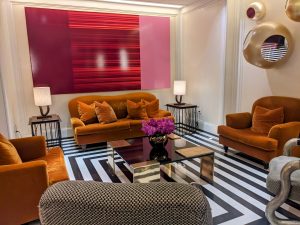
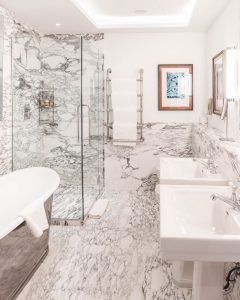
 The Whitby, New York: A Walk Through a Midtown Hotel
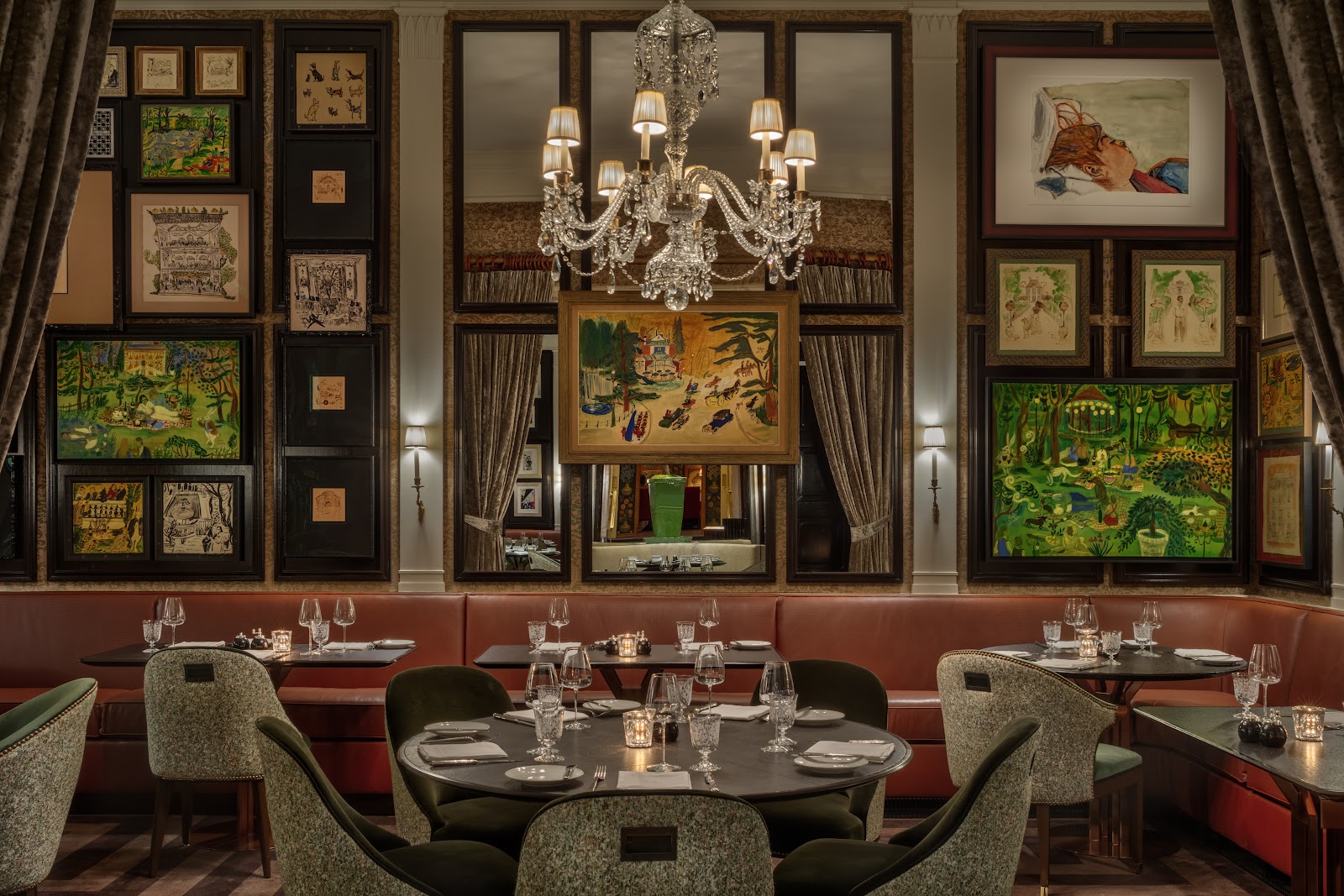
The Carlyle, New York: Photographing a Hotel of Individual Rooms
Each room has its own charm is a warning as well as a compliment. Different rooms are different galleries.
Each room has its unique charm, as the material on the Carlyle puts it — whether the grandeur of the ballroom with its chandeliers or the intimacy of a smaller suite.
That is a useful description and it should be read as a planning problem rather than only as a selling point. A hotel of individually characterised rooms is not one venue but several, and photographs made in them will not automatically belong together. A chandeliered ballroom is warm, dark, tall and high-contrast; a small suite is close, bright, low-contrast and detailed. Placed side by side in a sequence each makes the other look wrong — the ballroom reads as orange and heavy, the suite as pale and flat.
So the logic of a building like this is that variety must be organised rather than enjoyed. Choose which register leads, use the others where they are genuinely better, and split by time rather than alternating frame by frame — so the change in a gallery lands where the day naturally changed rather than in the middle of a sequence.
This follows the venue’s own logic. We have not photographed a wedding at the Carlyle; hotels of individually characterised rooms behave consistently. Which rooms are included, what the comfortable capacity of each is rather than the maximum, and whether the ballroom lighting is adjustable are the questions for their team.
The Carlyle at a glance
| Where | New York, New York |
| Character | A hotel of individually characterised rooms, from ballroom to suites |
| The problem | Different rooms are different galleries and will not match |
| The answer | Choose a register, and split by time rather than by frame |
| Ask first | Rooms included, comfortable capacity of each, ballroom lighting |
Why variety has to be organised
The clash is measurable rather than a matter of taste. A grand ballroom is lit low and warm and is high in contrast, because ornament, gilding and dark materials create strong tonal separation. A small suite is lit brighter and cooler and is low in contrast, because close pale walls bounce light into their own shadows.
Put a warm high-contrast frame next to a cool low-contrast one in a sequence and both look wrong. Neither photograph is at fault; the pairing is. And because a gallery is consumed as a sequence rather than as single images, the pairing is what matters.
Grading cannot reconcile them, because the warmth and darkness of one and the coolness and brightness of the other are what each room actually is. Remove both and nothing distinctive is left in either.
So the decision is a spine. In a hotel with a grand ballroom the ballroom usually leads, because it is what a smaller or plainer hotel cannot offer — but that is not automatic, and a couple whose references are bright, close and detailed will be better served by the suites as the spine, with the ballroom supplying two or three deliberate frames rather than a parallel set.
The split should be by time. Preparation and detail work in the bright close rooms in the morning, the ballroom and public rooms afterwards, so the change lands at the point where the day itself changes. Alternating frame by frame is what produces a gallery that looks inconsistent no matter how good each picture is.
One further practical consequence of a building of many rooms: capacity is set by circulation rather than floor area, and it varies room by room. A room at half occupancy photographs as half empty no matter how well it is dressed — so knowing the comfortable capacity of each space rather than its maximum decides which rooms are usable for which parts of the day, and it is the question least often asked.
What each register needs
The ballroom register is tall, dark and ornate, and it asks for three things. Assume no bounce, because the ceiling is far enough away to return nothing usable, and assume real distance, because a source adequate in a suite will be lost — one test frame in the first minute settles the first, and power settles the second.
Graze the ornament rather than facing it: mouldings, cornices and plaster relief are three-dimensional and read only when light crosses them at an angle, so a source placed close to parallel with a surface brings back what an even wash erases. It is a one-light problem.
And use the fall-off, which in a tall dim room gives free separation — a couple three metres in front of anything sits against natural darkness with no equipment at all. Chandeliers belong in that frame as background rather than as source: at a wide aperture they become warm points of light behind a subject, which is the most attractive thing the register does, provided a bright one is not beside a head.
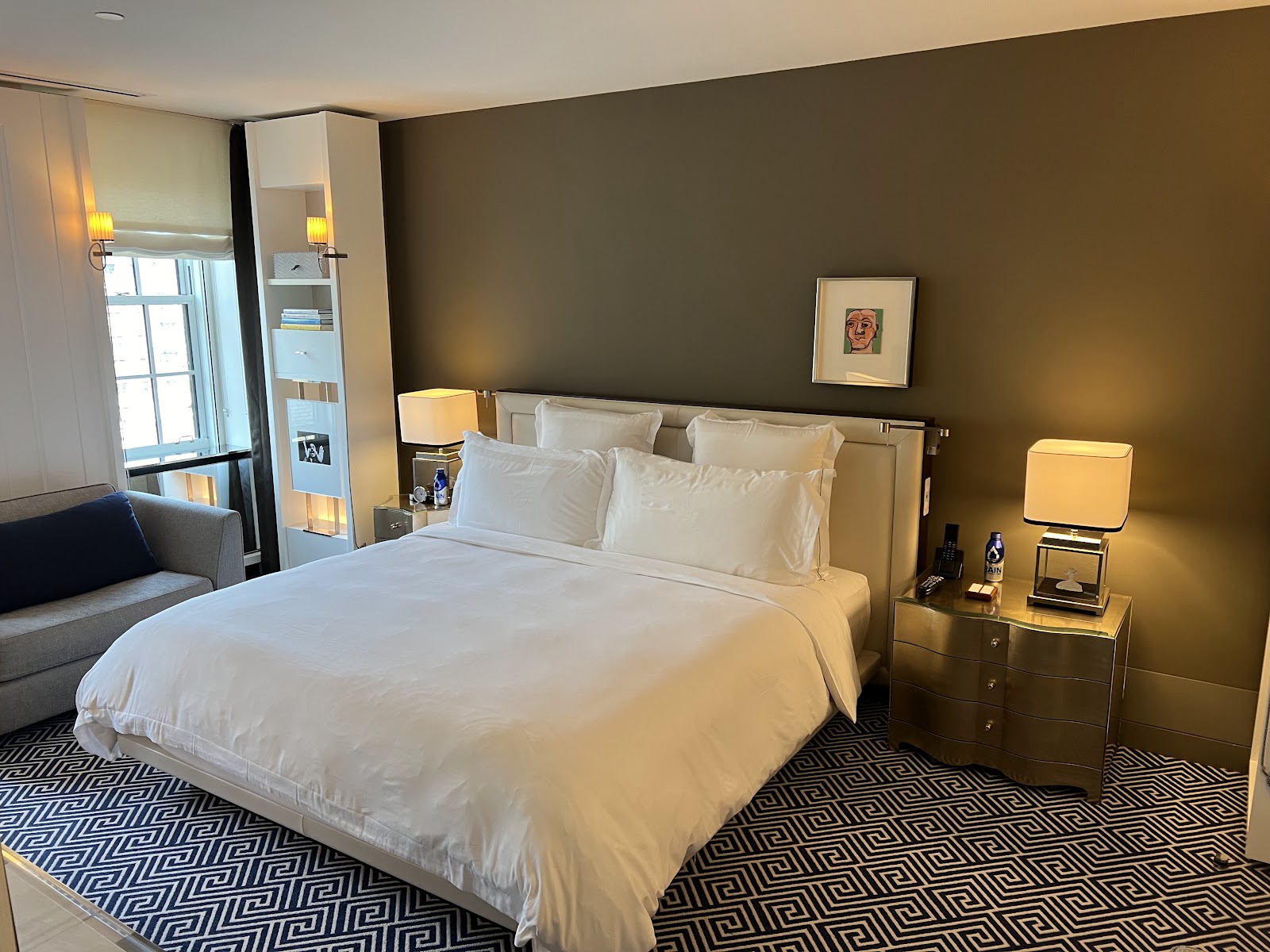
The suite register is the opposite on every point. Close walls bounce, which means the ambient is higher than the fittings suggest and a flash aimed at a pale ceiling is a genuinely good source — worth testing in the first minute, because it works here and fails in the ballroom.
Pale surfaces also fill their own shadows, which produces flat faces and no separation between a subject and a background. The answer is subtractive rather than additive: something dark on the shadow side of a face removes bounced light from that side and restores the gradient, and in a bright close room that works where adding another source does not.
And working distance is the suite’s limit. There is no room to step back for a wide view without a very wide lens, and a very wide lens close to a face stretches it — so the wide frame and the portrait frame are two different photographs, and photographing through a doorway from an adjoining room buys back what the walls took away.
Guest rooms and suites are also the best natural light in the building, as in any hotel: largest window on the shaded side, every overhead fitting switched off so the room has one colour of light rather than three, lamps moved out of frame. And in Manhattan it is worth asking for a high floor, because a high room has more sky reaching its window than a low one — and here, where the buildings opposite are very tall, that difference is larger than in most cities.
Mixed sources are certain in either register, and three colour temperatures in one frame cannot be resolved afterwards: pick the one that should be correct, set a manual white balance to it, and switch off or overpower whatever else lands on skin.
- Choose a spine and split by time, not by frame
- Ballroom: no bounce, real distance, graze the ornament, use the fall-off
- Suite: test ceiling bounce; here it works where the ballroom refuses
- In a bright close room, subtract with negative fill rather than adding light
- Ask for a high floor; in Manhattan that changes the window light materially
Outside, and New York's year
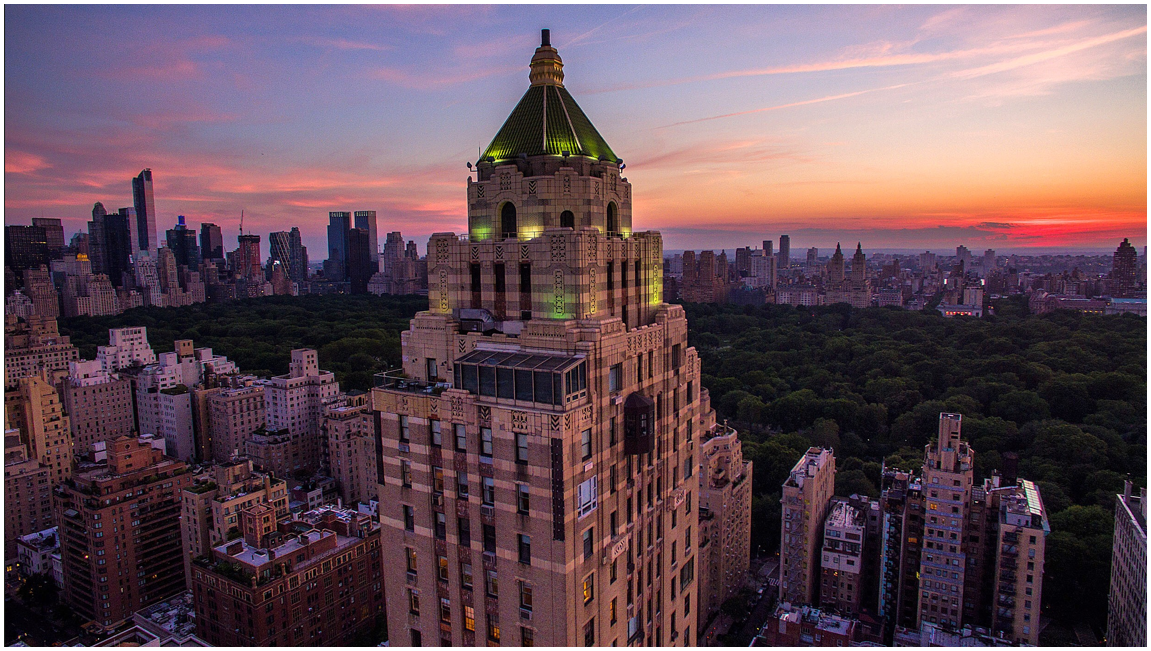
Outside, New York imposes the constraint that defines it: there is no room to stand back. A hotel facade cannot be photographed whole from a street narrower than the building is tall, so the exterior frames are fragments, details and looking up rather than establishing views. Accepting that produces better pictures than fighting it — a couple at the foot of a facade with the building rising out of frame reads as New York in a way a wide view never would.
Manhattan’s street grid is rotated about twenty-nine degrees from true north, and the practical consequence is that the cross streets run roughly east-north-east to west-south-west, so low sun runs down their length while the avenues stay in shadow. That alignment is closest around the ends of May and the middle of July, and for the rest of the year the cross streets remain the ones that take low light.
Most street-level light here is bounced down from lit facades above rather than direct, which is soft, directional and available for much of the day. It is genuinely good portrait light and it is not golden-hour light — a distinction worth making to a couple in advance.
Awnings, canopies and recessed entrances are the small-scale assets and they suit a hotel with a short excursion in mind: a canopy has a roof above and an open side, which makes it a directional soft source at exactly the right size for two people, and it works in rain.
Where a hotel is near a park, that is the other register — mature canopy for continuous shade in summer and genuine colour in late October, with dapple as the hazard and permits and people as the practical constraints.
New York’s seasons are four real ones. Summer is hot and humid with afternoon thunderstorms a real possibility, which for a hotel is almost entirely an advantage: the day continues indoors without a decision. Autumn gives the clearest air and the best street light of the year.
Winter is cold with short days, sunset in the middle of the afternoon in December, which compresses the outdoor window into a couple of hours and means the street frames must be decided in advance rather than explored.
Snow is the compensation and it does two things. Outdoors it is the best natural fill there is, lifting exactly the shadows a low sun carves while fooling a meter by about two stops. Indoors it turns the street into a very large reflector, so a guest room window gives softer, brighter and more even light in February than at any other time of year — which in a hotel of bright close rooms makes the suite register easier in winter than in summer.
And the fogging risk applies in both directions, so let a body come towards the temperature of where it is going before it gets there, and plan one outdoor excursion rather than several.
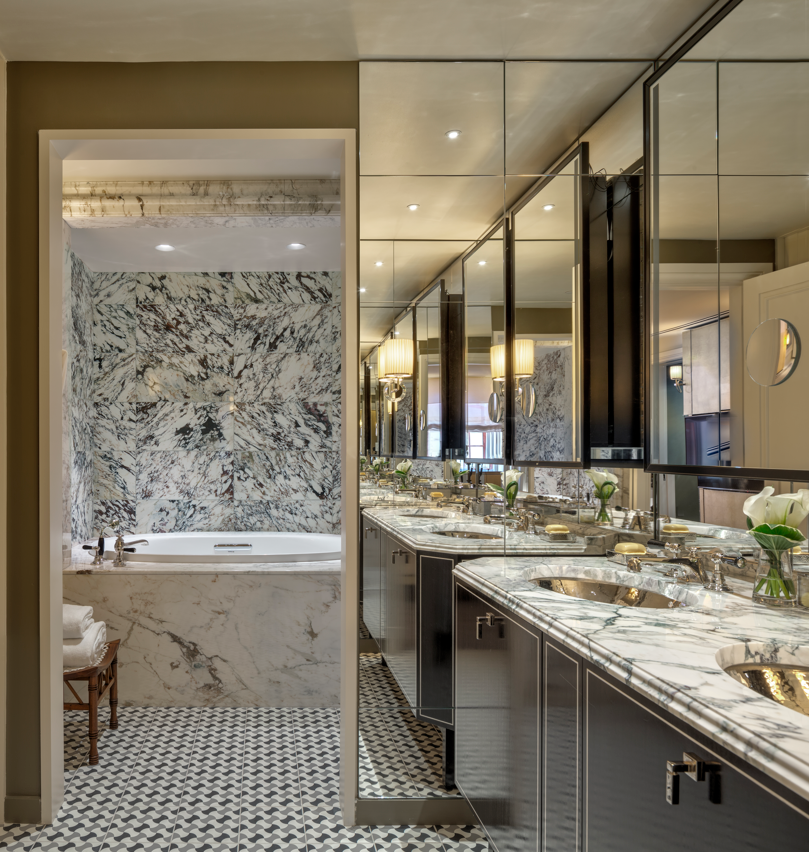
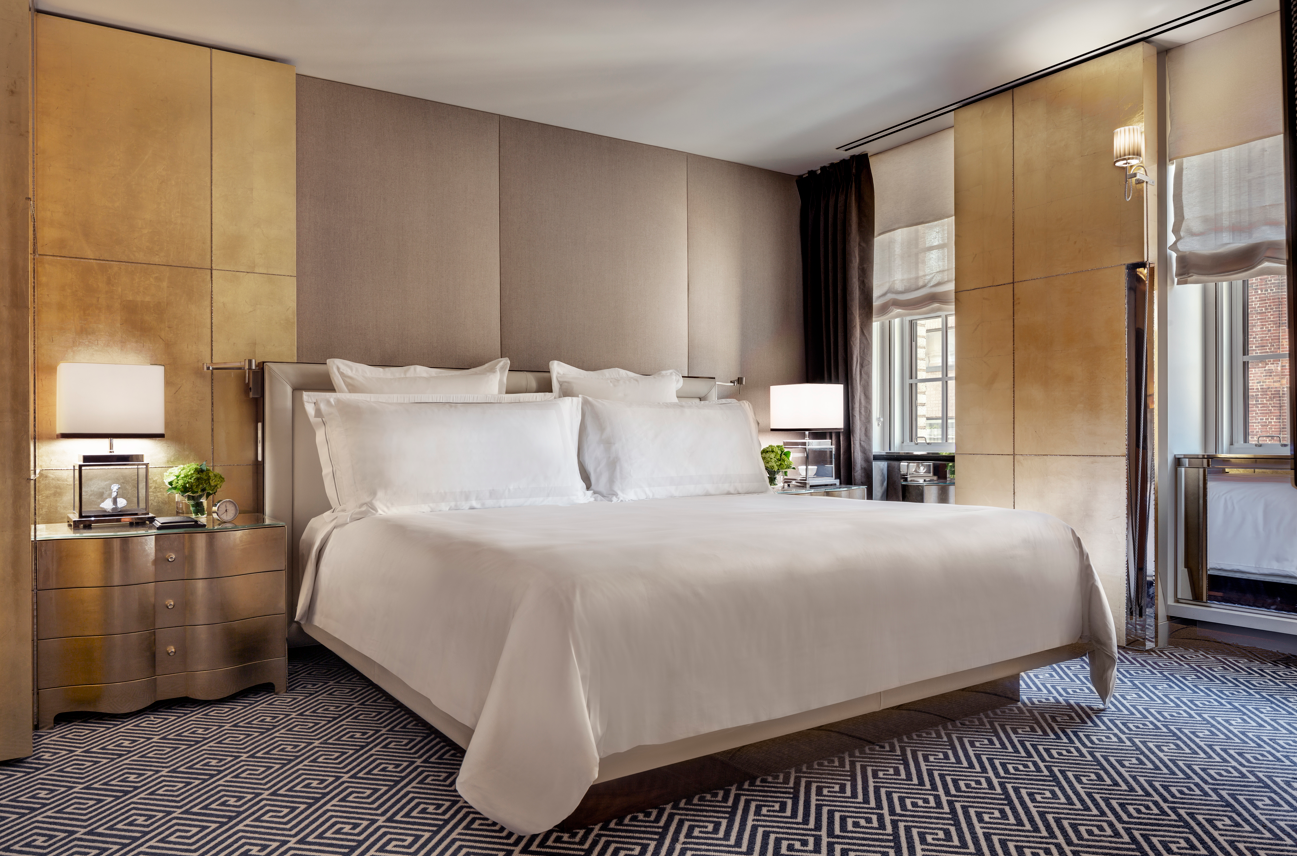
More frames from The Carlyle
The Carlyle wedding photography: common questions
Why is a hotel of varied rooms a planning problem?
Because different rooms are different galleries. A warm dark high-contrast ballroom and a bright close low-contrast suite make each other look wrong when placed side by side in a sequence.
What is the answer?
Choose which register leads, use the other where it is genuinely better, and split by time rather than alternating — so the change lands where the day itself changed.
Which register should usually lead?
The ballroom, because it is what a smaller hotel cannot offer. But a couple whose references are bright and close is better served by the suites as the spine.
What should be asked about capacity?
The comfortable capacity of each room rather than the maximum. A room at half occupancy photographs as half empty no matter how well it is dressed.
Does bounce flash work?
In the suites yes, in the ballroom no. Test with one frame in each — close pale walls return real light and a ballroom ceiling returns nothing.
Why ask for a high floor?
Because a high room has more sky reaching its window, and in Manhattan — where the buildings opposite are very tall — that difference is larger than in most cities.
More New York venue guides
We are writing a photographer’s guide to every venue we would happily shoot in New York. Here are three more, plus the full index:
- The Central Park Zoo: Four Ways Out of the Small Zoo Problem
- The Crosby Street Hotel, New York: A Walk Through a SoHo Hotel
- The Four Seasons New York: What It Suits, and What It Does Not
Planning a wedding at The Carlyle?
Choose the spine before the day. Tell us your date and we will choose it with you.