 The Van Dusen Mansion, Minneapolis: A Walk Through House and Grounds
The Guthrie Theater, Minneapolis: How the Light Moves
A modern theatre inverts the old one: the lobbies have the daylight and the auditoria have none.
The Guthrie Theater sits along the Mississippi and is, as its own description notes, a sought-after wedding venue as well as a theatre.
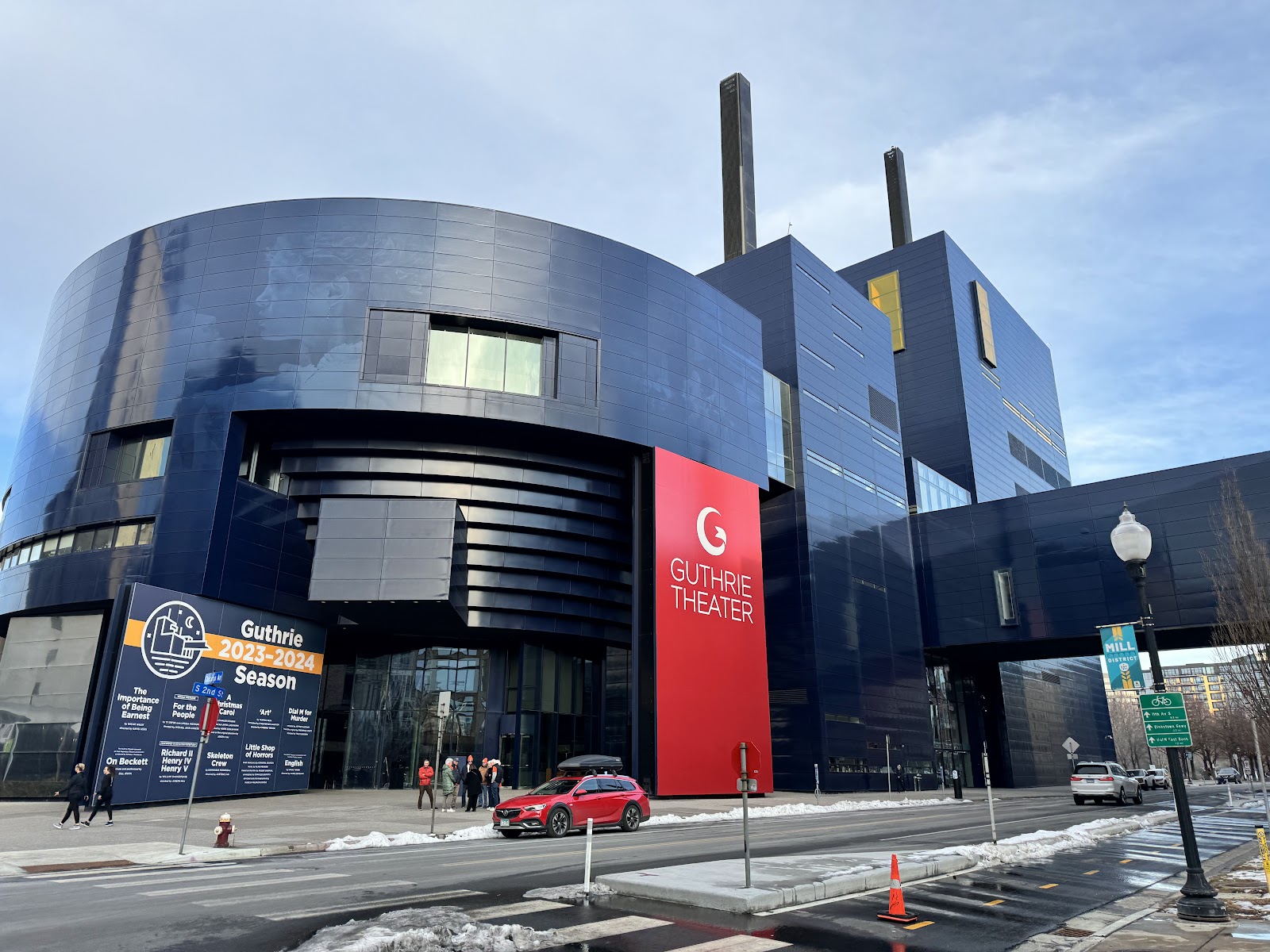
A contemporary theatre is the opposite of a historic one photographically, and the inversion is worth understanding before planning. A 1920s picture palace has ornate auditoria and modest lobbies; a modern theatre has plain auditoria — black boxes, because that is what a stage needs — and spectacular public spaces, because the architecture goes into the parts the public occupies. That means the daylight, the views and the good frames are all in the lobbies, the circulation and the terraces, and the auditoria supply two or three specific pictures at most.
It also means the day divides into spaces that change hour by hour and spaces that do not change at all, which makes the running order the most useful instrument available. This is written as a day. We have not photographed a wedding at the Guthrie; contemporary theatres with glazed public spaces behave consistently. Which spaces a booking includes, whether the auditoria and any bridge or cantilever are accessible, and whether the house lighting is adjustable are the questions for their team.
The Guthrie Theater at a glance
| Where | The Mississippi riverfront, Minneapolis, Minnesota |
| Character | A modern theatre with glazed public spaces and river outlook |
| The inversion | Daylight in the lobbies; the auditoria are black boxes |
| The instrument | The running order |
| Ask first | Spaces included, auditorium and bridge access, lighting control |
Daytime: the glazed public spaces
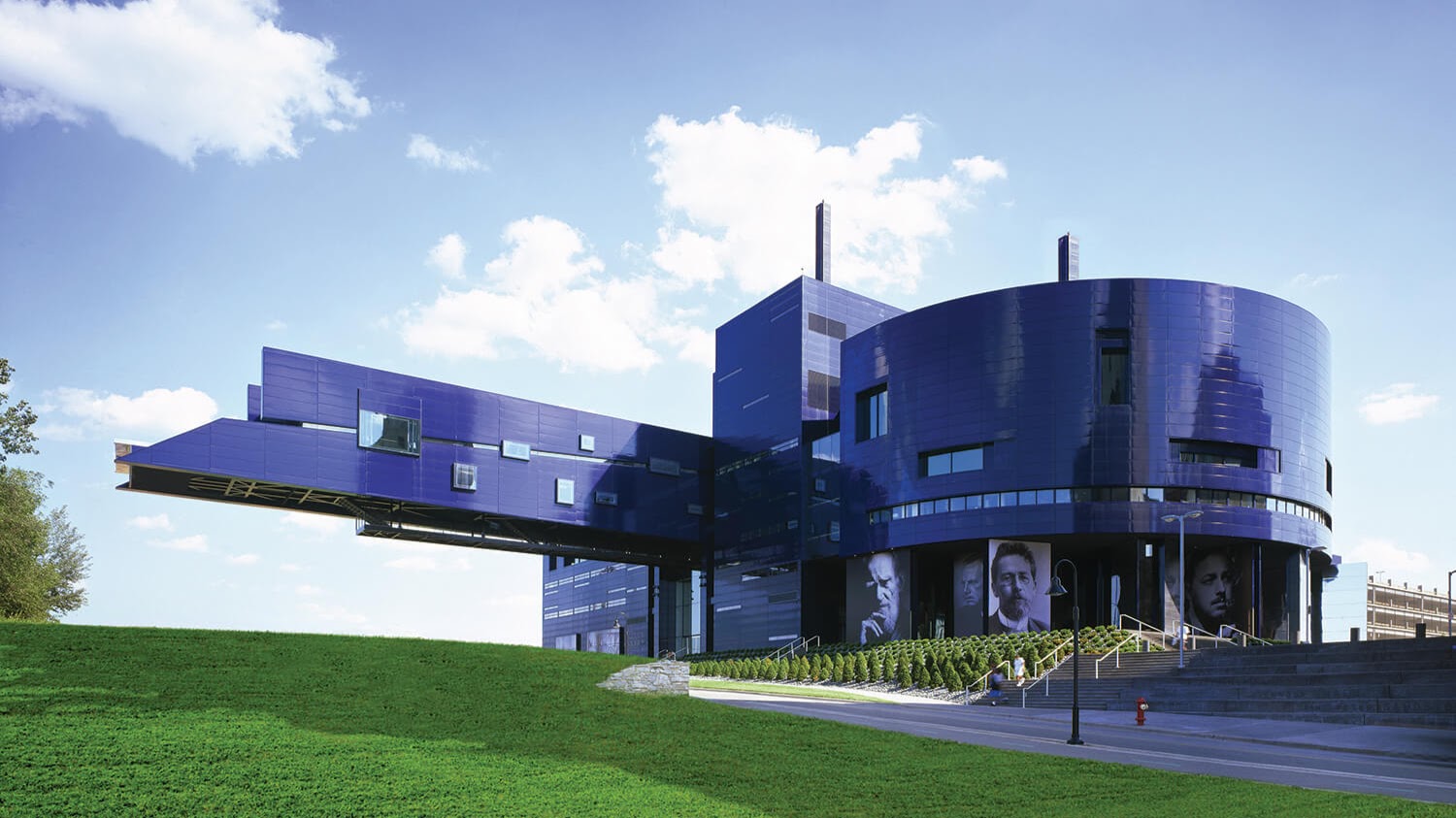
Glazed lobbies and circulation are the best light in a modern theatre and they behave as very large soft sources close to the subject. The position that unlocks that is two metres back from the glass rather than pressed against it: pressed against a window a subject is lit from a very oblique angle with the far side of the face falling away, while two metres back the same glazing covers them evenly, soft and still clearly directional, with the depth of the space still reading behind them.
Turning the subject then gives three genuinely different setups without moving anything: facing the glass, side-on, and back to it.
Which elevation the main glazing faces decides which hours work. A shaded elevation gives soft directional light all day with no hotspots anywhere in it; a sunlit one gives a hard patch several stops above the interior and, through structural mullions, a grid of hard shadow across anything in it — attractive on a floor and unusable on a face. In a building glazed on more than one side both conditions exist at once, and establishing which is which is the most useful five minutes of the day.
The brightness difference needs a decision rather than a discovery. In daylight the river and the city outside are four to six stops brighter than the interior, so either let the glazing blow to white shapes — legitimate if chosen, and it gives the cleanest background available — or light the couple to match the view, which needs real power because you are competing with daylight; or wait for the crossing.
Which answer is right depends on what is outside, and at a riverfront theatre the answer is usually to match or to wait, because a river gorge with bridges is a background worth recording. Water is also a broad reflector, so a glazed space facing it receives light twice — from the sky and bounced up off the surface — which raises ambient and fills faces from below, and is genuinely flattering.
Spare modern surfaces give no separation, so backgrounds have to be built: depth, a wide aperture, placement against the darkest element available, and negative fill, which is something dark on the shadow side of a face. In a pale bright lobby, subtracting beats adding.
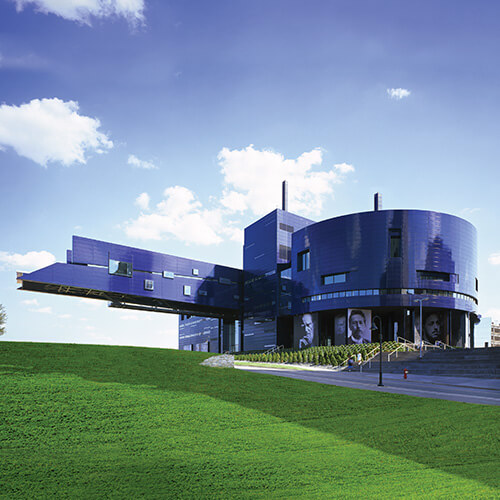
A cantilevered bridge or projecting terrace, where a building has one, is worth asking about specifically. It puts a couple out over the river with nothing beneath or beside them, which is a frame no interior can produce — and it is an outdoor position, which means nothing bounces, every source is direct, and wind is stronger than at street level.
Exposure needs half a stop to a stop of addition wherever bright glazing fills part of the frame, and a check that skin holds its tone rather than going grey.
The auditoria, and the two or three frames they give
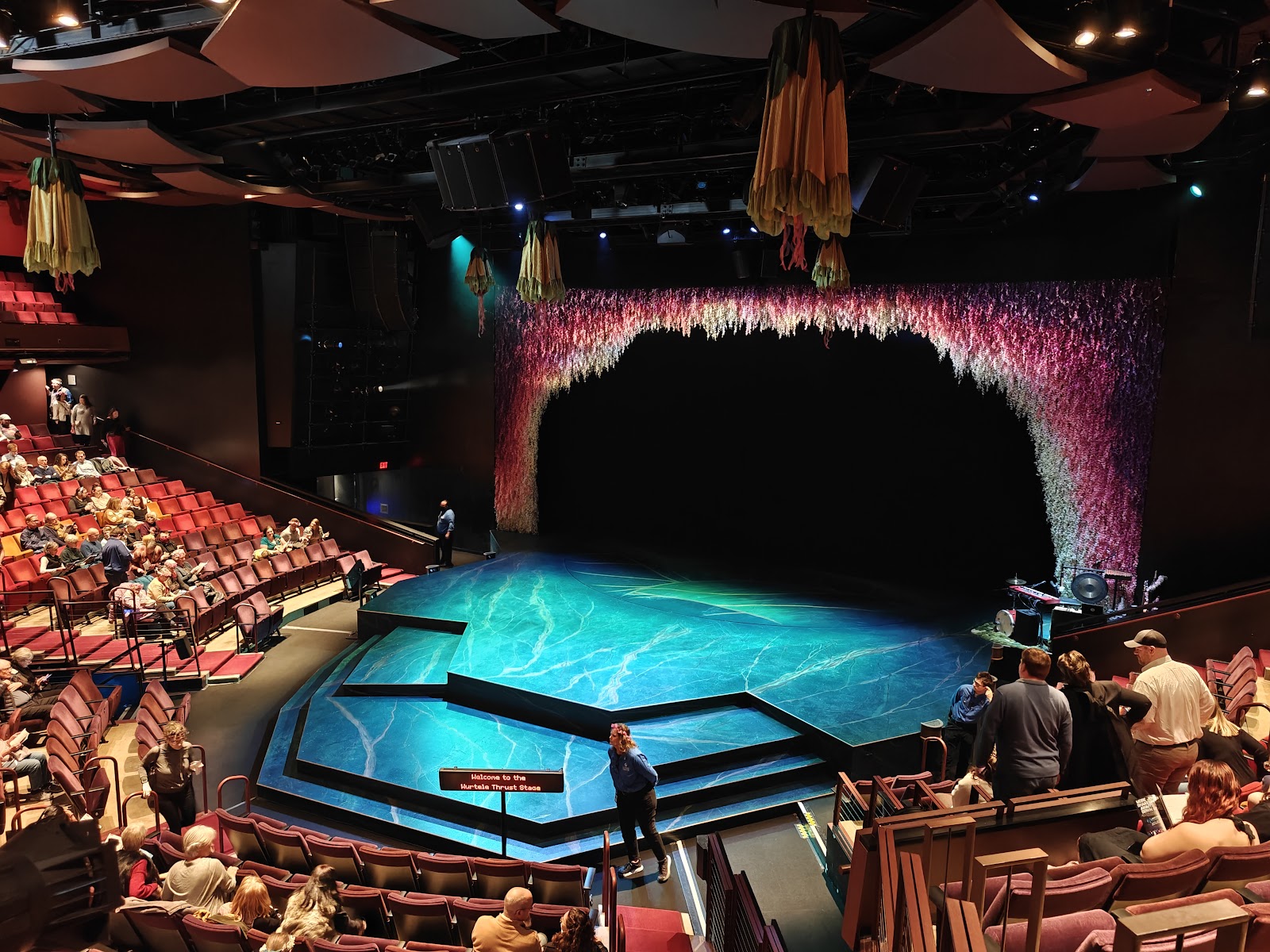
A modern auditorium is a plain dark room and it is not unusable — it gives a small number of strong frames and nothing else. Knowing which in advance is what makes twenty minutes there worthwhile rather than wasted.
The first is the long view down the house, or from the stage towards it. Rows of seating receding into darkness are pure repetition and the frame reads immediately as a theatre. It is usually symmetrical, so it rewards precision: off the centre line or a degree out of level and the convergence goes crooked. Level, centre exactly, take the two minutes.
The second is a couple standing in a single pool of light on an otherwise dark stage in front of an empty house. That is one of the strongest frames any venue type produces, it needs no equipment of yours, and it needs a board operator — which is why the stage rig belongs in the contract rather than in a conversation on the night.
Coloured washes are a separate matter: a saturated wash renders skin unrecoverably in its own colour and two coloured sources on one face have no single correction. Under one, commit to shape and silhouette, or add a neutral source on the faces and let the wash light the set behind.
The third is the room’s geometry, where a modern auditorium has any — a thrust stage, a steep rake, a distinctive seating curve. Those read as architecture rather than as decoration, and a long lens from the back of a rake compresses the seating into bands.
Beyond those, a black box absorbs everything: bounce returns nothing, the distances are real, and every source must be direct with enough power. The compensation is steep fall-off, which gives free separation with no equipment at all.
The rest of the evening belongs back in the public spaces, and the crossing is the one timed frame. For roughly fifteen to thirty minutes after sunset the river and city fall to about the brightness of the interior lighting, and one exposure holds the lit lobby, the couple and the water with a sky that still has colour in it. The water holds the same colour as the sky, which doubles the colour in the frame.
After it the glazing inverts completely and in a heavily glazed building the effect is total: whole walls reflect the room and the river disappears. Lights go off-axis, frames go oblique, and glazed corners reflect from both sides at once — check them before guests arrive.
- Two metres back from the glass, not pressed against it
- Work the shaded elevation; the mullion grid belongs on floors
- Know the auditorium’s two or three frames before going in
- Ask about any cantilever or projecting terrace — no interior matches it
- Sunset plus fifteen; on a river the water doubles the colour
Minneapolis weather, and the year
Minneapolis has the most demanding climate in this series and it changes a glazed building more than a masonry one, because so much of the character is daylight through glass.
Winter is severe and long. Days are short, with sunset in the middle of the afternoon in December, which means the daylit character of the lobbies may be gone before guests sit down and the crossing may fall before or during the ceremony rather than after. Temperatures are low enough that any outdoor or cantilever block becomes three or four minutes rather than twenty — a welfare decision as much as a photographic one.
Cold clear air does give the deepest and longest-lasting sky colour of the year, so the crossing itself is better in winter than in summer when it can be reached. And a frozen river gorge under snow, seen through large glazing from a warm lit lobby, is a frame very few venues in the country can offer — worth planning a winter date around rather than enduring one.
Snow is the best natural fill there is, lifting exactly the shadows a low sun carves while fooling a meter by about two stops.
The fogging risk is severe in both directions in this climate and it is worse than in a milder city. A camera taken from a heated lobby into subzero air and then brought back in will fog comprehensively and can take a long time to clear — long enough to lose the crossing. Let a body stay cold between outdoor visits rather than cycling it, and plan one excursion rather than several.
Summer is warm and humid with very long days: sunset falls late enough in June that the crossing lands well into the reception, which needs agreeing in advance as a short deliberate excursion because it is the one frame that cannot be moved. Thunderstorms are a real possibility, and from inside a glazed building a storm over a river is an asset rather than a problem: a cell crossing the gorge seen from a lit lobby with rain on the glass is a frame very few weddings have.
Autumn is the best season for a riverfront building: clear stable air, the sharpest views of the year, and genuine colour along the gorge in early October. It is a short window and worth building a date around.
Spring brings a high fast river, which changes what the water looks like rather than whether it can be photographed — and late snow remains possible into April, which is worth knowing when planning an outdoor component.
More frames from The Guthrie Theater
The Guthrie Theater wedding photography: common questions
How does a modern theatre differ from a historic one?
It inverts it. A historic theatre has ornate auditoria and modest lobbies; a modern one has black-box auditoria and spectacular glazed public spaces, so the daylight and the good frames are out front.
How far back from the glass should a subject stand?
About two metres. Pressed against it the light is very oblique and the far side of the face falls away; two metres back it is soft, still directional, and the space behind still reads.
What does the auditorium actually give?
Two or three strong frames: the long view down the house, a couple in a pool of stage light before an empty house, and the room’s geometry where it has any. Nothing else.
What should you ask about the architecture?
Whether any cantilever or projecting terrace is accessible. Putting a couple out over the river with nothing beneath or beside them is a frame no interior can produce.
When is the crossing, and why does the river help?
Fifteen to thirty minutes after sunset. The water holds the same colour as the sky, which doubles the colour in the frame and puts it below the horizon as well as above.
What is the winter fogging rule?
Let a body stay cold between outdoor visits rather than cycling it in and out. Bringing a cold camera back into a heated lobby fogs it comprehensively and can lose the crossing.
More Minneapolis, MN venue guides
We are writing a photographer’s guide to every venue we would happily shoot in Minneapolis, MN. Here are three more, plus the full index:
- The Hewing Hotel, Minneapolis: How the Light Moves
- The Ivy Hotel, Minneapolis: The One Decision That Governs Everything
- The Lumber Exchange, Minneapolis: One Frame and How It Is Made
All Minneapolis, MN Wedding Venues →
Planning a wedding at The Guthrie Theater?
The lobbies set the clock; the auditoria wait. Tell us your date.