 The Thunderbird Inn: Field Notes on a 1964 Motor Inn
The Ritz-Carlton Atlanta: Photographing a Downtown Luxury Hotel
A luxury interior never changes. Downtown Atlanta changes, but only in specific places.
The Ritz-Carlton Atlanta sits in the heart of downtown and exudes, by its own description, an air of sophistication that is nearly palpable.
The logic of a downtown luxury hotel is a constant paired with a variable, and knowing which is which is most of the planning. The interior is the constant: controlled, even, warm and unaffected by the sky from mid-morning to midnight. Nothing in a ballroom or a corridor is better at six than at two, which means interior coverage can go anywhere in the schedule.
The city is the variable, and in Atlanta it is a more particular variable than in most. Atlanta’s towers are clustered rather than continuous, so downtown streets are deep canyons where direct low sun rarely reaches ground level — while a few blocks away the scale drops and the light returns. Where the outdoor block happens matters more here than when, which is the reverse of most cities in this series.
So this follows the venue’s own logic. We have not photographed a wedding at the Ritz-Carlton; downtown luxury hotels behave consistently. Which rooms are included, whether the ballroom lighting is adjustable, and what upper-floor or terrace access exists are the questions for their team.
The Ritz-Carlton Atlanta at a glance
| Where | Downtown Atlanta, Georgia |
| Character | A luxury hotel with contemporary interiors and full service |
| The constant | The interior, from mid-morning to midnight |
| The variable | Downtown Atlanta — and it is about place more than hour |
| Ask first | Rooms included, ballroom lighting control, upper-floor access |
The interior: bringing contrast into a luxury building
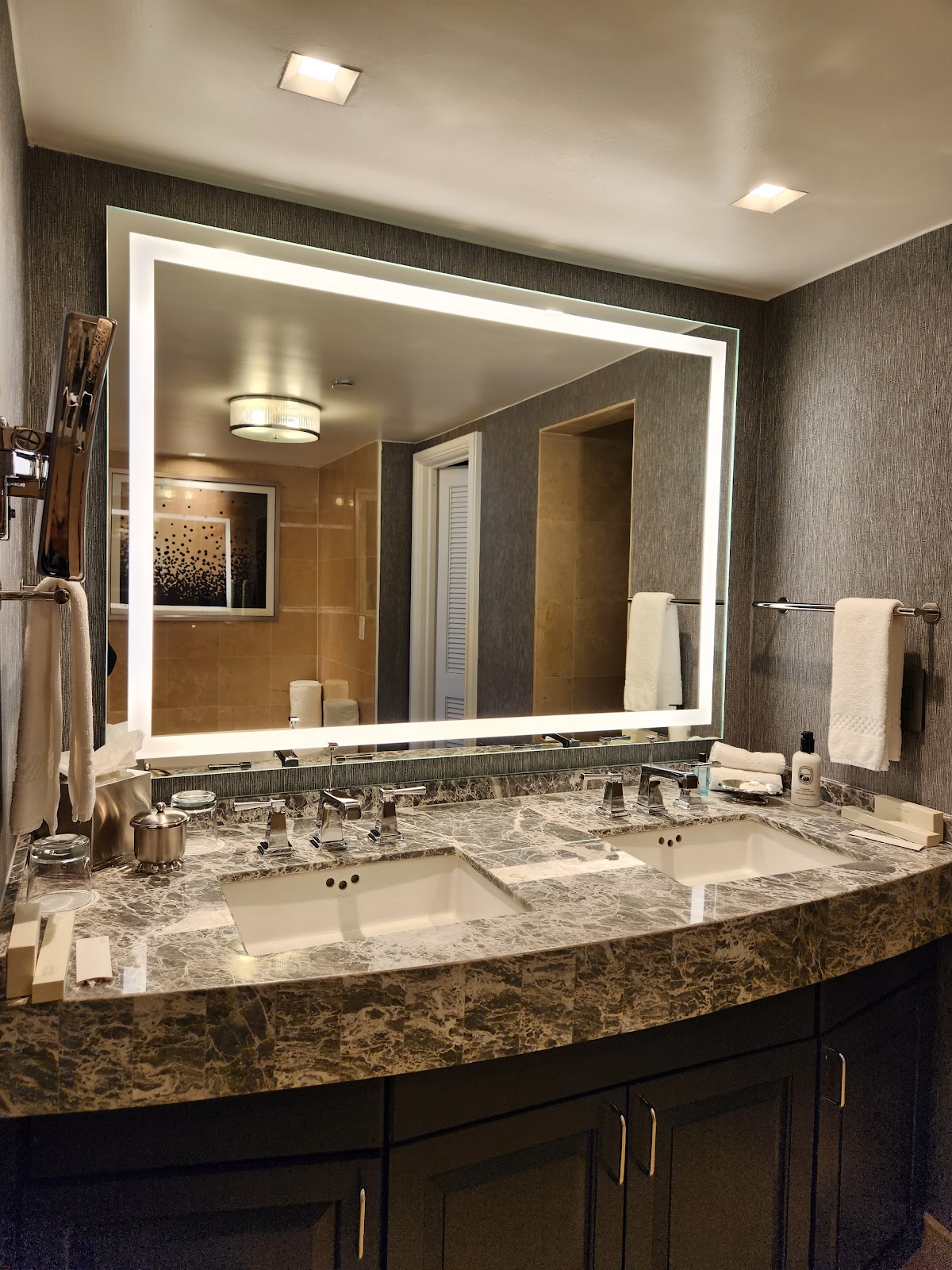
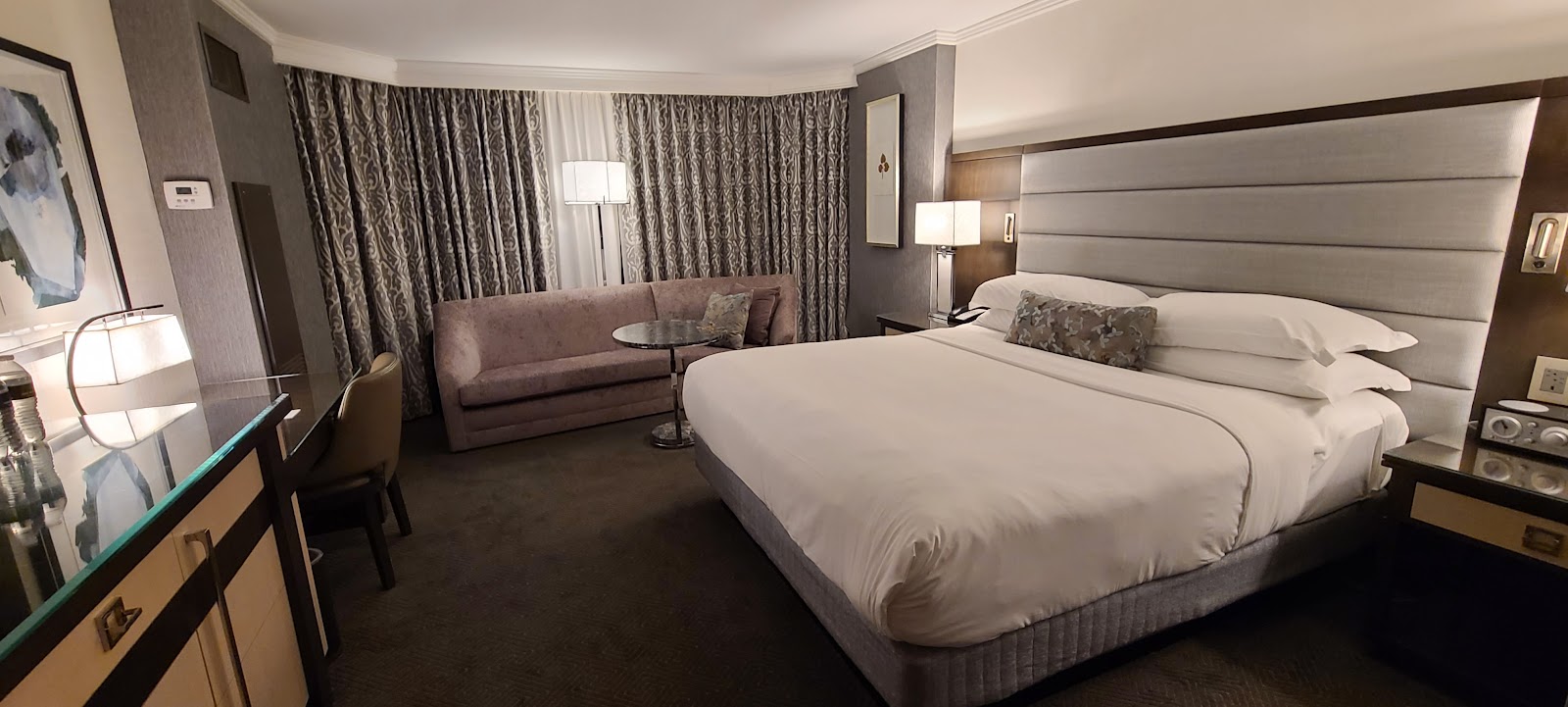
Luxury interiors are built on two principles and both are photographic problems disguised as qualities. Light should be even, because unevenness reads as cheap; surfaces should be pale and uncluttered, because that reads as calm and expensive.
Even light removes modelling. A face looks three-dimensional in a photograph because one side is brighter than the other, and the gradient between them is what the eye reads as shape — light arriving from many directions at similar intensity erases it, so a technically correct exposure can still produce a flat face.
The fix does not need to be strong. One directional source, off the camera axis at face height, set close to the ambient level rather than above it, restores a shadow side without making the frame look lit. In a room with high even ambient, adding half a stop in one direction does more than adding two stops overall.
Pale surfaces remove separation, which is the default failure in every hotel of this class. Four tools address it and they stack: depth, so the background sits well behind the subject; a wide aperture, so it goes soft; placement against the darkest element in the room; and negative fill.
Negative fill is the under-used one and it costs nothing. Placing something dark — a coat, a panel, an open doorway to an unlit space — on the shadow side of a face subtracts bounced light from that side and deepens the gradient. In a pale marble lobby that single move can be the difference between a flat frame and a modelled one.
Guest rooms remain the best portrait light in the building: domestic-sized windows with close walls that bounce and ceilings low enough that a flash aimed upward returns something usable. Ask for the largest window on the shaded side, switch off every overhead so the room has one colour of light rather than three, and move the lamps out of frame.
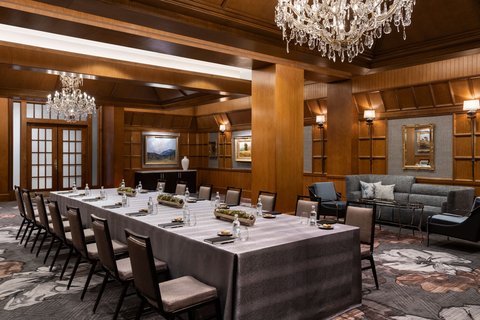
The ballroom is the exception to all of it, because a reception is lit low: a high ceiling with no usable bounce, warm fittings, overhead sources and steep fall-off — and that fall-off is the free separation the rest of the hotel refuses to provide. Expose for the room so it stays warm and dim, add one warm-gelled source at face height where legibility matters, set white balance to the gel and hold it. Ask whether the lighting can be dimmed to pools rather than set evenly; it usually can, and the difference exceeds any equipment decision.
Downtown Atlanta: where the light actually is
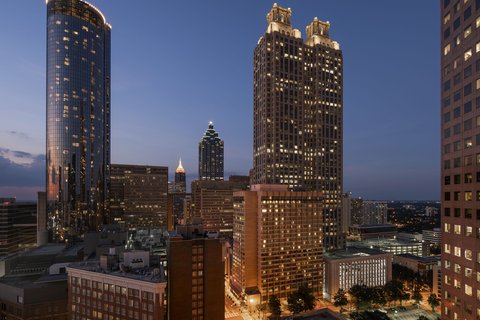
Atlanta’s downtown is not laid out like the older cities in this series and the difference is practical rather than aesthetic. The towers are clustered in a few groups rather than spread across a continuous core, which produces deep shaded canyons between them and abrupt transitions to lower-rise fabric a few blocks away.
In the canyons, direct low sun rarely reaches street level, so the last ninety minutes — the hour that carries most outdoor coverage everywhere else — may deliver nothing at all at ground level. What the canyons do give is soft, even, directional light bounced down from lit facades above, which is genuinely good portrait light and available for much of the day. That is worth knowing rather than discovering: a downtown canyon is a soft-light environment, not a golden-hour one.
Glass towers add something specific. In the last two hours a glazed facade reflects the sky as a large pale field, which turns a whole building into a soft source aimed down at the street — an underused effect that costs nothing and only exists where there is glass above.
The lower-rise fabric nearby is where the raking light is, and reaching it is usually a short walk. Brick and stone at a low-rise scale on a regular street will take low sun along a whole block, and both materials show their texture only when light runs along them — so a short walk to find which side is being raked is worth more than any accessory.
Elevation is the other Atlanta answer and it is worth asking about. From an upper floor or a terrace, the clustered-tower geography becomes an asset rather than an obstacle: separate groups of towers read as distinct masses at different distances, which a long lens stacks into layers. Low sun also reaches a height when the streets are already dark, so the golden window starts earlier up there.
The one timed frame is the dusk crossing, and it works at a window, on a terrace, or in the lobby. For roughly twenty minutes after sunset the city outside falls to about the brightness of the interior lighting, and one exposure holds the lit room, the couple and the skyline. Take the sunset time, add fifteen minutes, be in position with the couple already there.
- Guest room: biggest shaded window, overheads off, lamps out of frame
- In a pale room, subtract with negative fill rather than adding light
- Treat downtown canyons as a soft-light environment, not a golden-hour one
- Walk to the lower-rise blocks for raking light; it is usually five minutes
- Sunset plus fifteen, in position, couple already with you
Atlanta's weather, and the year
Atlanta’s climate governs the outdoor half of the day and it is more demanding than a mild-sounding southern city suggests. Summer heat and humidity together make long outdoor blocks genuinely difficult in formal clothes, so trips should be short and purposeful rather than exploratory, and a building’s own shadow is the reliable midday shade in a canyon that has any sun at all.
Afternoon thunderstorms in summer are close to a daily feature rather than an occasional event, and they build and clear quickly. For a hotel wedding that is almost entirely an advantage: the day continues indoors without a decision being needed, and the light after a cell passes — wet streets returning reflections of lit facades under a dark sky — is frequently the best of the day and worth stepping back out for.
Humidity produces the region’s specific equipment problem and a luxury hotel is where it bites hardest, because the air conditioning is most effective. A camera chilled indoors fogs comprehensively the moment it reaches the outside air and can take many minutes to clear — long enough to lose an arrival. Warm the kit towards outside temperature twenty or thirty minutes before the outdoor block, and plan one excursion rather than three, because every in-and-out cycle costs frames.
Spring brings the Atlanta specific that visitors do not expect: pine pollen. In late March and April it coats surfaces in a visible yellow film and hangs in the air, settling on cars, steps and anything left outside. It shows in photographs as a yellow cast on pale surfaces, it affects guests as much as equipment, and a cloth plus an awareness of which surfaces have been wiped is the whole of the answer.
Winter is mild by the standards of most of this series, which means outdoor coverage remains viable all year — a real advantage. Days are shorter but not dramatically so, and a clear winter afternoon in Atlanta gives low raking light for hours rather than for ninety minutes, which at street level in a low-rise block is the best condition the city offers.
Occasional winter ice storms are the exception and they are disruptive out of proportion to the amount of ice, because the city is not equipped for them. That is a logistics question for guests rather than a photographic one, but it belongs in a conversation about a January or February date.
More frames from The Ritz-Carlton Atlanta
The Ritz-Carlton Atlanta wedding photography: common questions
Why is the running order simpler here?
Because the interior is constant from mid-morning to midnight, so it can go anywhere in the schedule. The question in Atlanta is where the outdoor block happens rather than when.
What is unusual about downtown Atlanta?
The towers are clustered rather than continuous, so the streets between them are deep canyons where direct low sun rarely reaches ground level — while a few blocks away the scale drops and raking light returns.
So what light do the canyons give?
Soft, even, directional light bounced down from lit facades above. That is genuinely good portrait light and available for much of the day — a soft-light environment rather than a golden-hour one.
Why ask about upper-floor access?
Because from a height the clustered towers read as distinct masses at different distances, which a long lens stacks into layers — and low sun reaches a height while the streets below are already dark.
What is the best fix for pale-on-pale?
Negative fill. Something dark on the shadow side of a face subtracts bounced light and deepens the gradient, and in a pale marble lobby it beats adding light.
What happens in spring?
Pine pollen. In late March and April it coats surfaces in a visible yellow film and hangs in the air, showing as a yellow cast on pale surfaces and affecting guests as well as equipment.
More Atlanta, GA venue guides
We are writing a photographer’s guide to every venue we would happily shoot in Atlanta, GA. Here are three more, plus the full index:
- The St. Regis Atlanta: How the Light Moves
- The Swan House, Atlanta: One Frame and How It Is Made
- The Trolley Barn, Atlanta: What It Suits and What It Does Not
All Atlanta, GA Wedding Venues →
Planning a wedding at The Ritz-Carlton Atlanta?
In Atlanta the question is where, not when. Tell us your date and we will map it.