 The Thunderbird Inn: Field Notes on a 1964 Motor Inn
The Atlanta History Center: Photographing a Museum Campus
A campus is not a building with a garden. It is several venues joined by walking, and walking costs time.
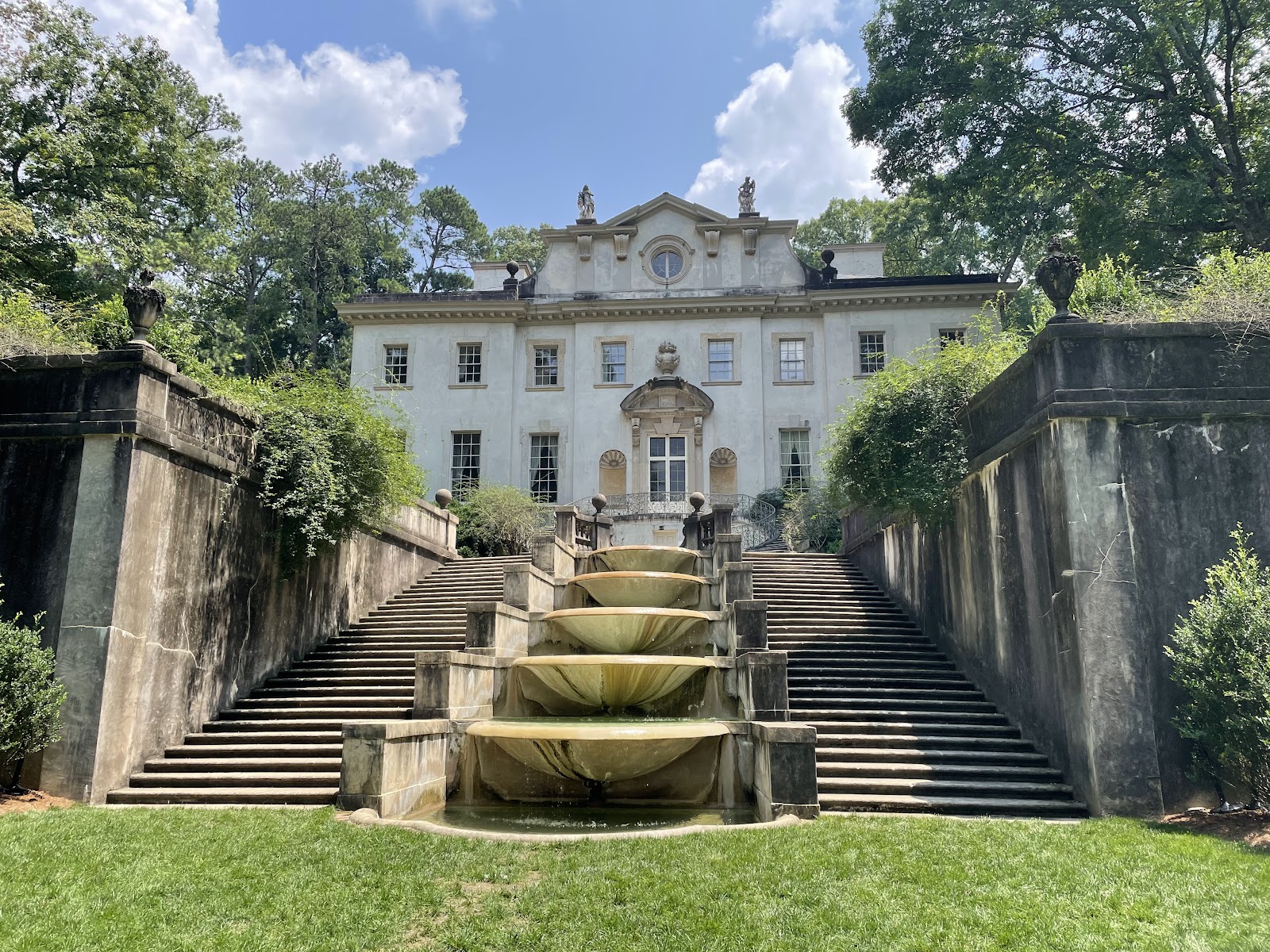
The Atlanta History Center combines a grand staircase and majestic fountains with — as its own description puts it — a touch of old-world glamour, across a site that is a campus rather than a single building.
That distinction is the venue’s own logic and it is worth taking seriously, because a campus behaves differently from a building in one specific way: everything is a walk. A museum, a historic house, formal gardens and wooded grounds on one site means several genuinely different settings within a booking, which is an unusual richness — and it also means that every move between them costs five or ten minutes, that a group has to be led rather than gathered, and that in an Atlanta summer each of those walks is a welfare consideration as well as a scheduling one.
So the plan here is a route rather than a shot list. We have not photographed a wedding at the History Center; museum campuses behave consistently. Which buildings and grounds a booking includes, whether photography is permitted inside the historic interiors, and what vehicle or cart access exists between areas are the questions for their team — the last one changes the schedule more than it sounds.
The Atlanta History Center at a glance
| Where | Atlanta, Georgia |
| Character | A museum campus with a grand staircase, fountains and wooded grounds |
| The logic | Several venues joined by walking, and walking costs time |
| The consequence | The plan is a route, not a shot list |
| Ask first | Which areas are included, interior photography, cart access |
The staircase and the fountains: two built assets
A grand staircase is the single most useful architectural feature any venue can have and it solves a problem that grand interiors otherwise handle badly. Steps make rows automatically: a group of thirty arranges itself in tiers with everybody visible, which no flat floor or lawn will ever do. Almost every group photograph on a site like this belongs on its stairs, and knowing that in advance saves ten minutes at exactly the moment people are least patient.
Stairs also give elevation without architecture, which changes the relationship of figure to space — standing above a subject or below them, both available within a few paces.
A staircase frame rewards precision and punishes near-misses. Symmetry is usually built into it, and the eye detects a two-degree error in a symmetrical composition instantly while forgiving a large one in an asymmetrical composition entirely. Level, and either centre exactly or step clearly to one side.
Fountains are the other built asset and they behave in three ways worth knowing. Moving water needs a shutter speed decision rather than a default: fast enough to freeze gives texture and detail in the spray, slow enough to blur gives a smooth veil that contrasts with sharp stone. Both are good and they are different photographs, so take one of each rather than choosing on the day.
A fountain basin is also a mirror when the surface is undisturbed, which it usually is not — so the reflection frame depends on whether the jets can be switched off, which is a question worth asking rather than assuming.
And water raises ambient from below, which fills the shadow under a chin usefully when the sun is low and unflatteringly when it is high. Backlit spray at the end of the day is the frame a fountain exists to give: low sun behind falling water turns every droplet into a point of light, and a couple placed in front of it reads against a field of sparkle rather than against stone.
The grounds, and Atlanta's canopy
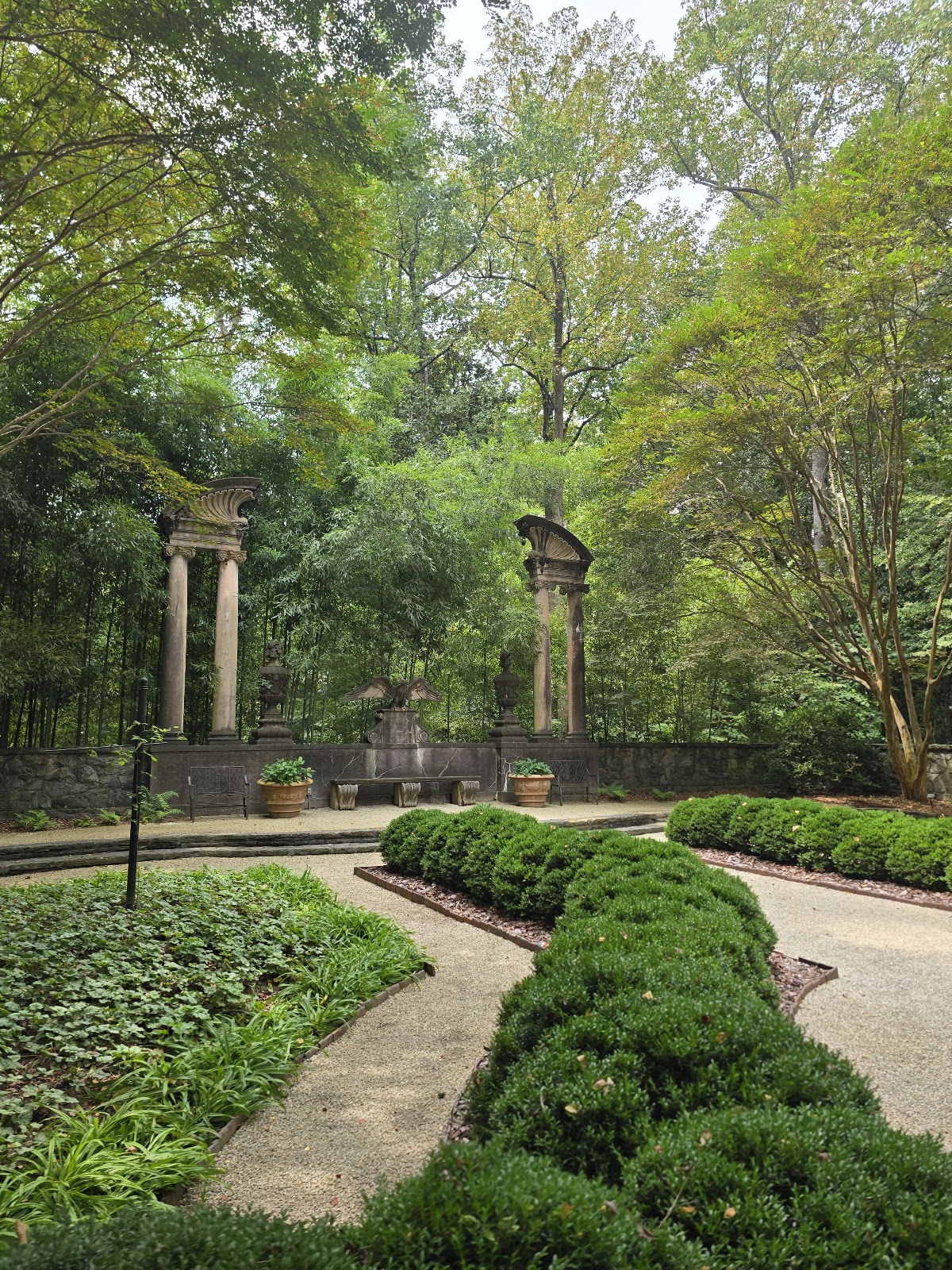
Atlanta is one of the most heavily wooded major cities in the country, and a campus of this kind will reflect that — mature canopy is the dominant condition of the grounds rather than an occasional feature. That matters more here than the planting does, because canopy is what makes a Georgia summer afternoon workable at all.
Continuous deep shade under mature trees is soft, cool and directional towards any opening, and it is available for hours rather than minutes. Locating the largest unbroken area of it on arrival is the most useful five minutes on the site, and it becomes the default position for anything that has to happen before the light drops.
Dapple is the corresponding hazard and it is the same canopy with the sun above rather than beside it: hot spots several stops above the surrounding shadow across a face, shifting with every breath of wind, impossible to correct and impossible to predict. Full shade, open light, or wait for the sun to drop below the canopy — but never a face in dapple.
Green bounce is the cost of all that foliage. Dense leaves reflect green onto nearby skin in a way that warm bounce off brick never does, and because the cast is localised, auto white balance cannot correct it. Set a custom white balance on a face in the position actually being used, and use any pale path, paving or stone as a neutral bounce surface.
Formal gardens are the counterweight to woodland and they photograph best along an axis, which reinforces the design, or from a low camera on a lawn, which pushes the horizon down and lets planting and building occupy the upper frame.
Georgia’s red clay is worth a practical mention, because it is the local soil and it stains. A white dress on a red-clay path after rain is a real risk rather than a theoretical one, and it is worth knowing which routes are paved before leading anyone along them.
The last ninety minutes are the window the whole schedule should protect. Low sun comes in under the canopy rather than through it, backlighting foliage so it glows, raking along stone and water, and lighting faces from the side. On a campus that window is also when the walking costs the most, so the route for it should be decided rather than improvised.
- Put the group on the stairs; a lawn or a floor will not make rows
- Take a fountain both ways — frozen spray and blurred veil
- Backlit spray at low sun is the frame a fountain exists to give
- Find the largest continuous canopy shade on arrival
- Never a face in dapple, and never a white dress on wet red clay
Interiors, and an Atlanta summer
Historic interiors on a museum campus follow the usual pattern: modest windows, dark or patterned surfaces that absorb, contents that do not move, and a ceiling height that may or may not return a bounced flash. Test bounce with one frame on arrival, because in a small pale room it works well and in a tall hall it does nothing.
Timber, plaster and patterned textiles all bounce warm and all need raking light to show what they are, so the positions worth finding are those where existing light grazes a surface rather than facing it. And one gelled source at face height, exposed a stop under the room, keeps faces consistent while letting the interior stay as warm as it is.
Museum galleries, where a booking includes them, carry the usual three-part problem — low conservation levels, fittings aimed down from the ceiling, and narrow-spectrum sources that render skin badly even at correct white balance. Where any light is permitted, keep it small and spilling onto nothing.
Atlanta’s climate governs the outdoor half of the day. Summer heat and humidity make long blocks in formal clothes genuinely difficult, and on a campus where everything is a walk that compounds — so trips should be short, purposeful and planned as a route rather than as a wander.
Afternoon thunderstorms in summer are close to a daily feature rather than an occasional event, which on a campus means the fallback is not one building but a decision about which building, and how long it takes to reach it from wherever the ceremony is. That is worth establishing with a time attached.
Humidity produces the region’s equipment problem: a camera chilled by a strongly air-conditioned museum interior will fog comprehensively the moment it reaches the outside air and can take many minutes to clear. On a campus, where the day alternates between conditioned interiors and humid grounds repeatedly, that is a recurring cost — so plan the route to minimise crossings rather than accepting several.
Spring brings the other Atlanta specific: pine pollen, which in late March and April coats surfaces in a visible yellow film and hangs in the air. It settles on cars, steps, tables and anything left outdoors, it shows in photographs as a yellow cast on pale surfaces, and it affects guests as well as equipment. A cloth and an awareness of which surfaces have been wiped is the whole of the answer, but it is worth knowing before the day rather than during it.
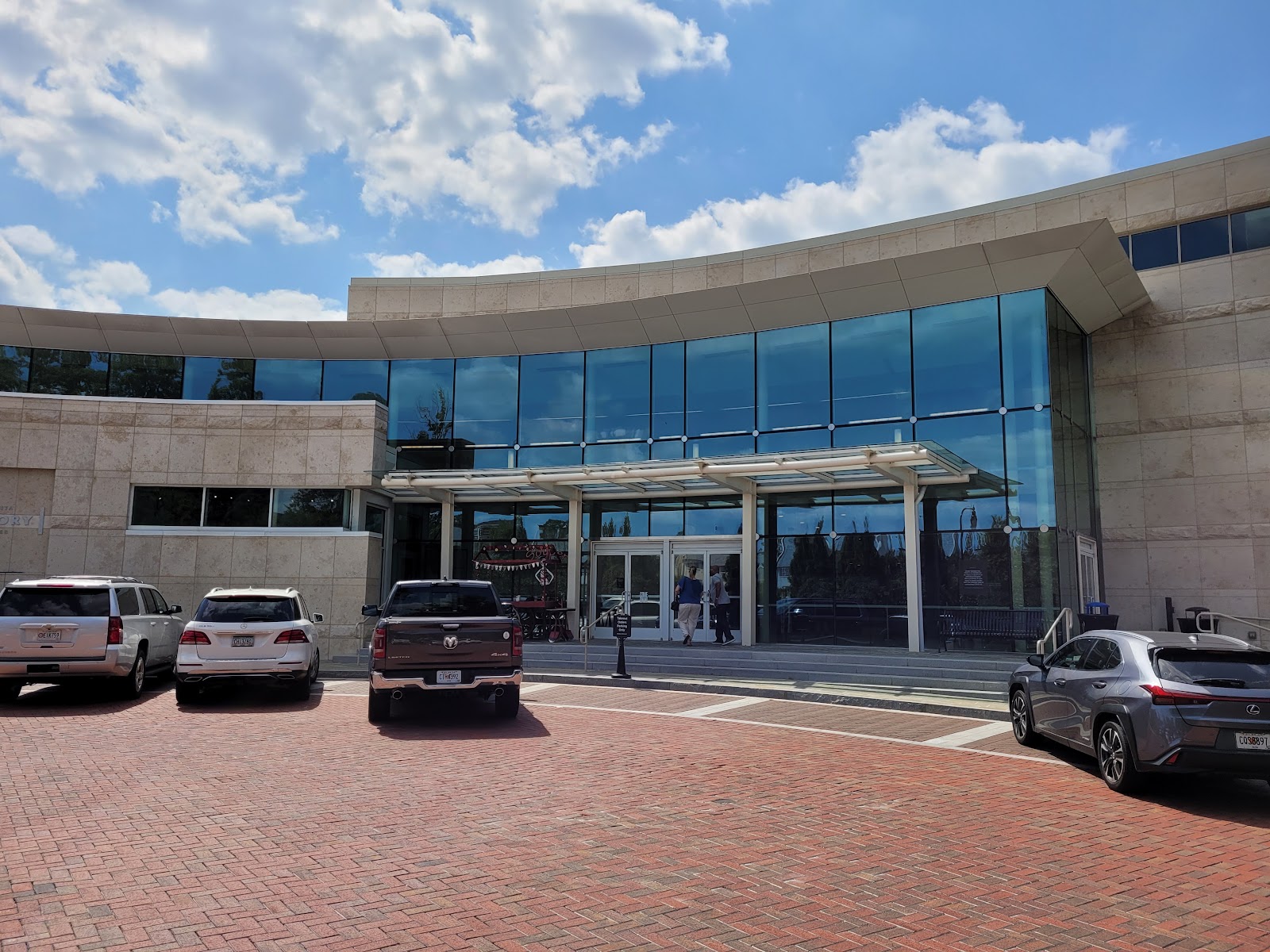
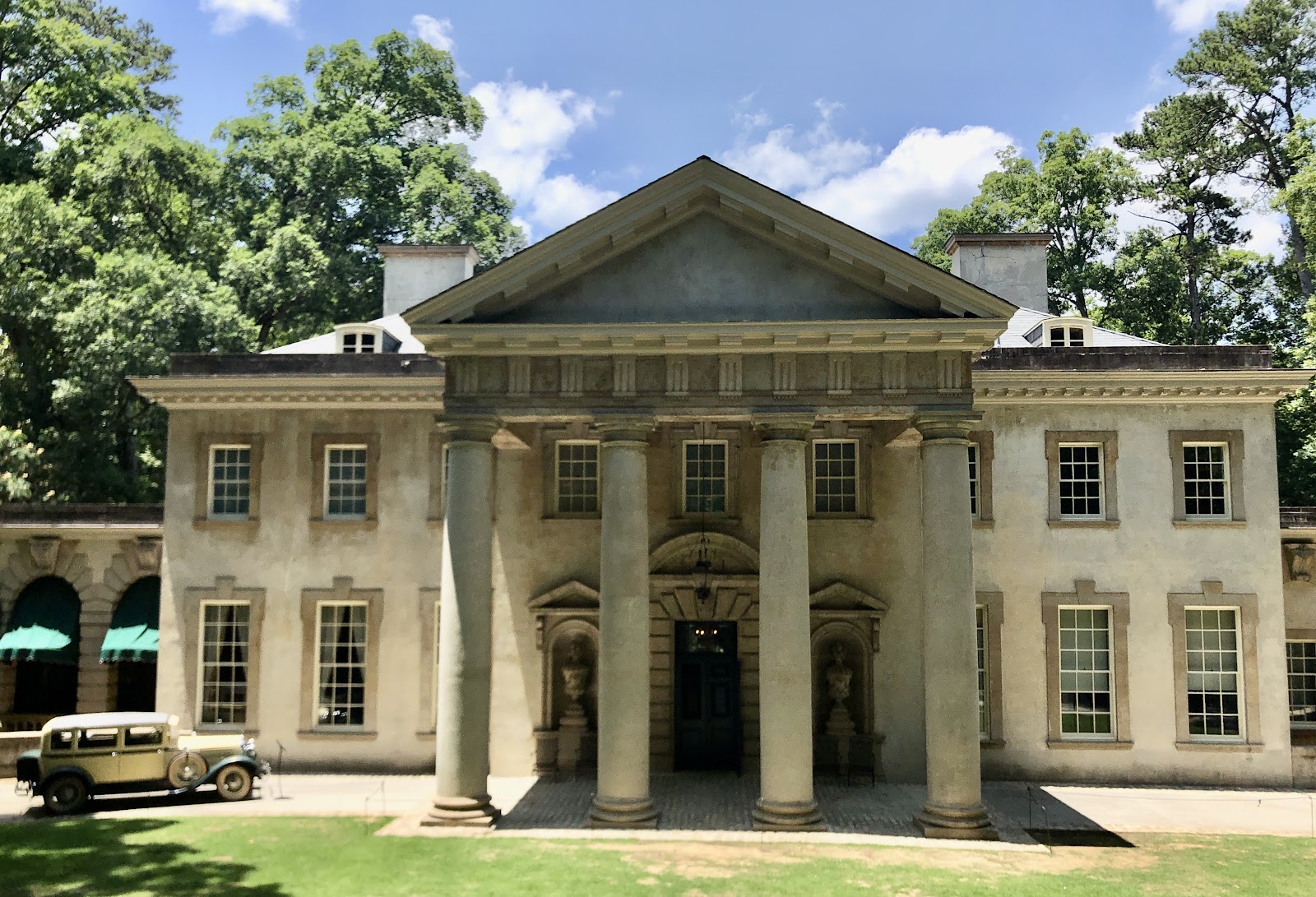
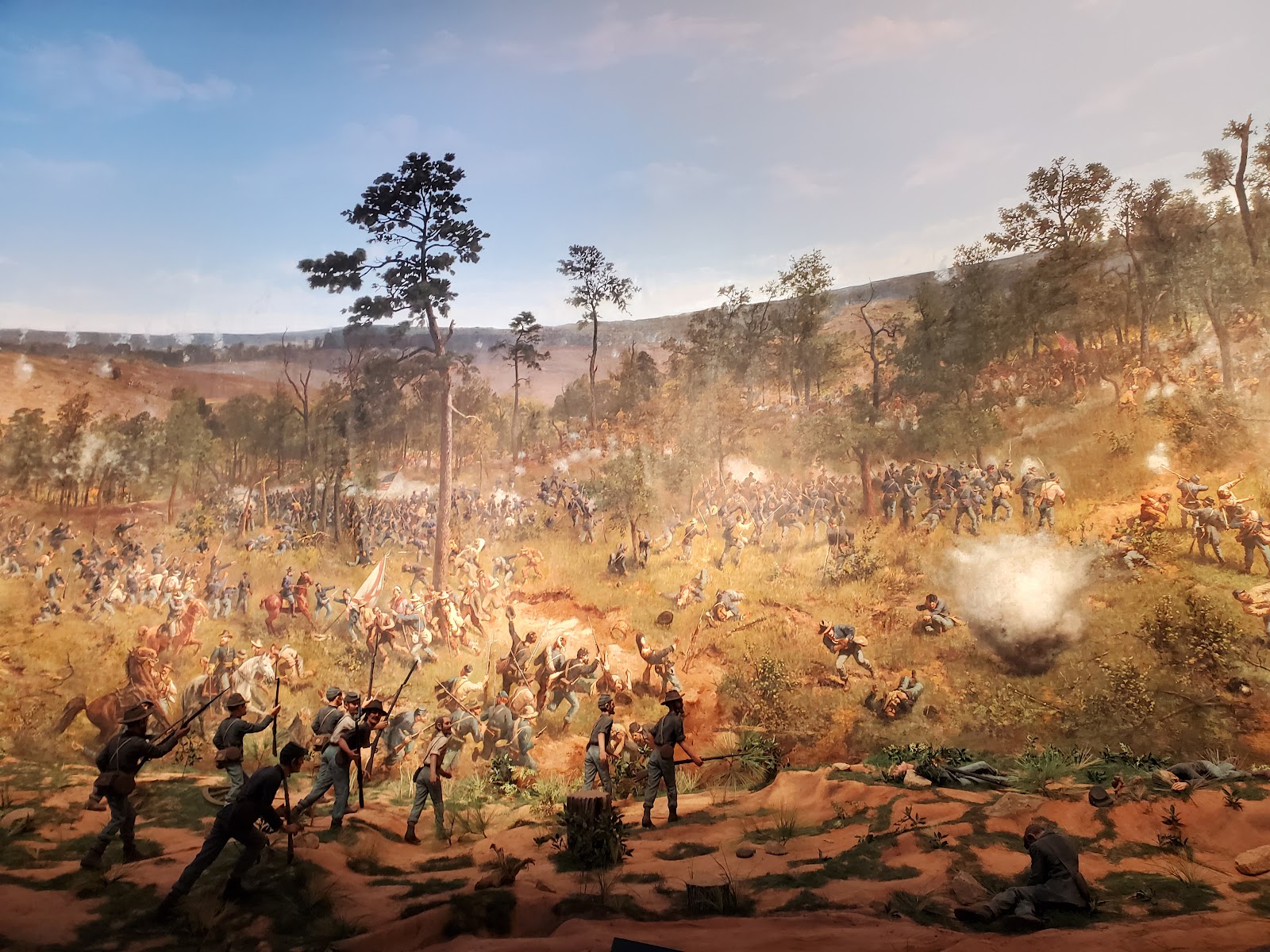
More frames from The Atlanta History Center
The Atlanta History Center wedding photography: common questions
What is different about a campus venue?
Everything is a walk. Several genuinely different settings in one booking is a real richness, but each move costs five or ten minutes and, in an Atlanta summer, a welfare consideration too.
Where should group photographs happen?
On the grand staircase. Steps make rows automatically, so thirty people arrange themselves with everybody visible — which no lawn or flat floor will do.
How should a fountain be photographed?
Both ways. Fast enough to freeze the spray gives texture; slow enough to blur gives a smooth veil against sharp stone. And backlit spray at low sun turns every droplet into a point of light.
Why does the canopy matter so much in Atlanta?
Because Atlanta is one of the most heavily wooded major cities in the country, and continuous deep shade is what makes a summer afternoon workable at all — soft, cool, directional, and available for hours.
What is the red clay warning?
Georgia’s soil stains, and a white dress on a wet red-clay path is a real risk rather than a theoretical one. Know which routes are paved before leading anyone along them.
What happens in spring?
Pine pollen. In late March and April it coats surfaces in a visible yellow film and hangs in the air, showing as a yellow cast on pale surfaces and affecting guests as well as equipment.
More Atlanta, GA venue guides
We are writing a photographer’s guide to every venue we would happily shoot in Atlanta, GA. Here are three more, plus the full index:
- The Biltmore Ballrooms, Atlanta: What They Suit and What They Do Not
- The Callanwolde Fine Arts Center, Atlanta: The One Decision That Governs Everything
- The Fox Theatre, Atlanta: Four Ways Out of the Atmospheric Theatre Problem
All Atlanta, GA Wedding Venues →
Planning a wedding at The Atlanta History Center?
On a campus the plan is a route. Tell us your date and we will walk it first.