 The Thunderbird Inn: Field Notes on a 1964 Motor Inn
The Swan House, Atlanta: One Frame and How It Is Made
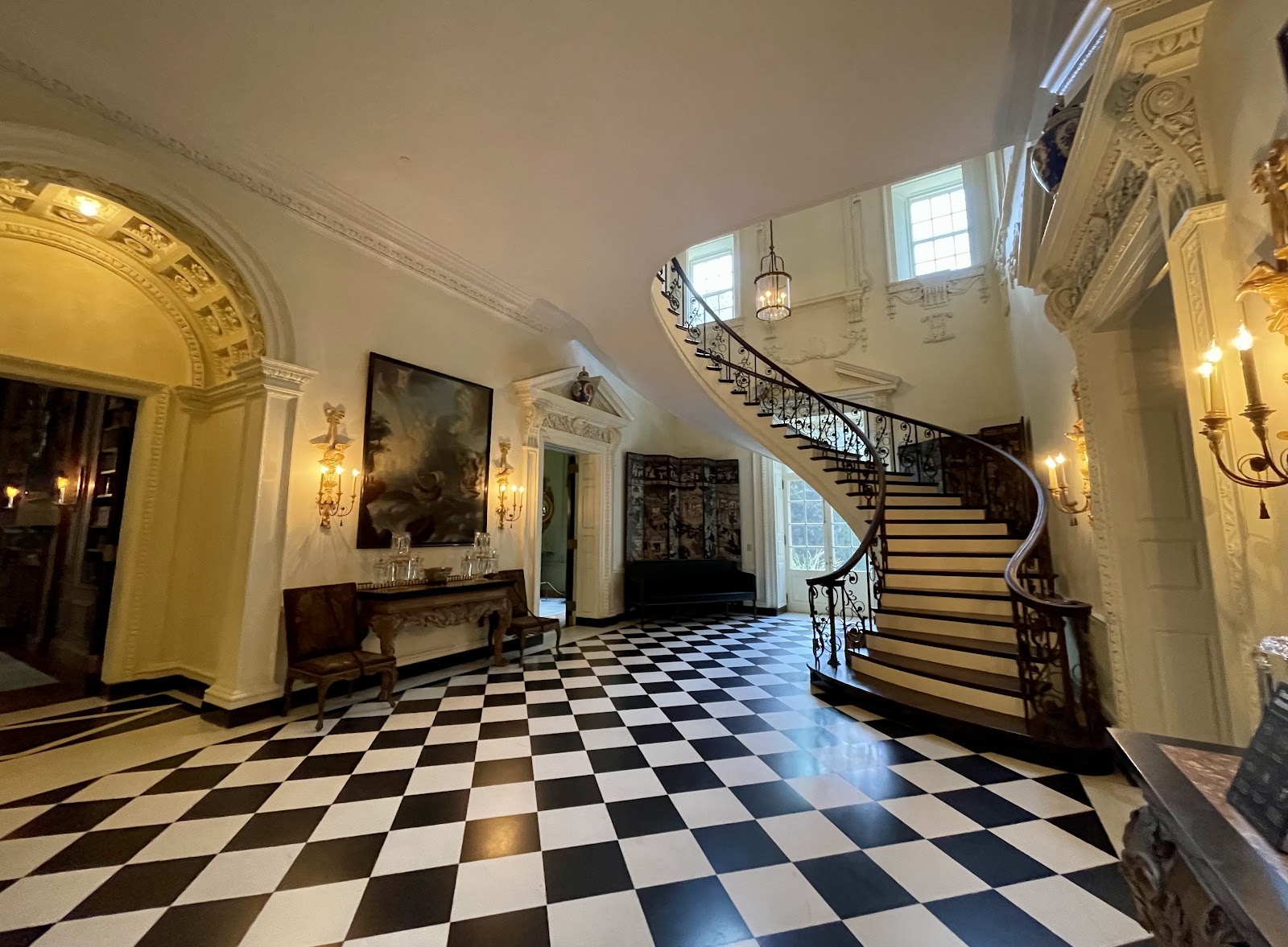
A grand staircase is the frame this house is known for, and it is unforgiving.
The Swan House’s grand staircase is, by its own description, nothing short of spectacular — ideal for the cinematic frames a couple might have imagined for an album.
That is the right assessment and it is worth taking literally, because a staircase of this kind is not simply a nice feature: it is a composition waiting to be made, and it is the one frame the house gives that no other venue in the city can. A sweeping stair in a classical interior provides four things at once — elevation, a curve, a handrail as a continuous leading line, and vertical depth, which is the rarest of the four because almost no other architectural element gives a photographer height inside a room.
So the frame worth building the day around is on the stairs, and it needs three specific things. We have not photographed a wedding at the Swan House; classical mansions with grand staircases behave consistently. Whether interior photography is permitted and with what equipment, what may be touched, and what the guest limit is are the questions for their team — at a historic house museum they are firm rather than negotiable.
The Swan House at a glance
| Where | Atlanta, Georgia |
| Character | A classical mansion with formal grounds and a grand staircase |
| The frame | On the stairs: elevation, a curve, a rail and vertical depth |
| It needs | Precision, a fix for the overhead light, and a decided viewpoint |
| Ask first | Interior photography and equipment, what may be touched, guest limit |
The frame, and the three things it needs
The first requirement is precision, and a staircase is less forgiving than it looks. Classical interiors are symmetrical, and the eye detects a two-degree error in a symmetrical composition instantly while forgiving a large error in an asymmetrical one entirely — so the near-miss is the only failure available. Use the electronic level, decide whether the frame is exactly on the centre line or clearly off it, and take the extra thirty seconds. On a stair there is a second axis to watch: the handrail’s curve will read as a smooth sweep or as a kink depending on where the camera stands, and that is worth a step either way to check.
The second requirement is a decided viewpoint, because a staircase offers three genuinely different frames and they are not variations. From the bottom looking up, the stair rises away and the couple is above the camera, which reads as arrival or ascent. From the top looking down, the stair falls away and the curve of the rail spirals below, which reads as a graphic composition with the couple small inside it. And from the landing at mid-height, level with the couple, the frame is a portrait with architecture around it.
All three are worth taking, and the one most often missed is from the top — because it requires going up, waiting, and then coming back down, which nobody wants to do in the middle of a day. It is also frequently the best of the three.
The third requirement is a fix for the overhead light. A grand stair hall is usually lit from above, by a lantern, a skylight or a chandelier, and light from directly above darkens eye sockets and marks the line under the nose on everybody in the frame. The cheap fixes should be ready every time: a reflector held low bouncing light back up, a pose with the chin lifted, or one small source at face height. For a group on stairs, a single source at the camera position but raised slightly is usually more practical than trying to light from the side.
Stairs also solve the group problem that grand houses otherwise handle badly. Steps make rows automatically, so a group of thirty arranges itself with everybody visible, which no flat floor or lawn will ever do. Almost every group photograph at a house like this belongs on its stairs, and knowing that in advance saves ten minutes at the worst possible moment.
Exposure needs a small deliberate adjustment if the hall is pale, which classical interiors usually are: pale walls and a lit ceiling push the whole frame bright, so a meter will want to darken it. Add half a stop to a stop and check the plasterwork still holds texture rather than clipping.
The rest of the house, and the grounds
Classical interiors are axial, and the second-best frame in a house like this is the view through aligned doorways from one room to the next. That enfilade gives depth, repetition and a vanishing point in one move, and it is available in houses of very modest size. It is unforgiving in exactly the same way as the stair: off the centre line by half a metre and the doorways stop aligning.
The couple belongs in the depth of such a frame rather than at the front — placed two-thirds of the way along they become the vanishing point of the architecture, which is the point of the picture.
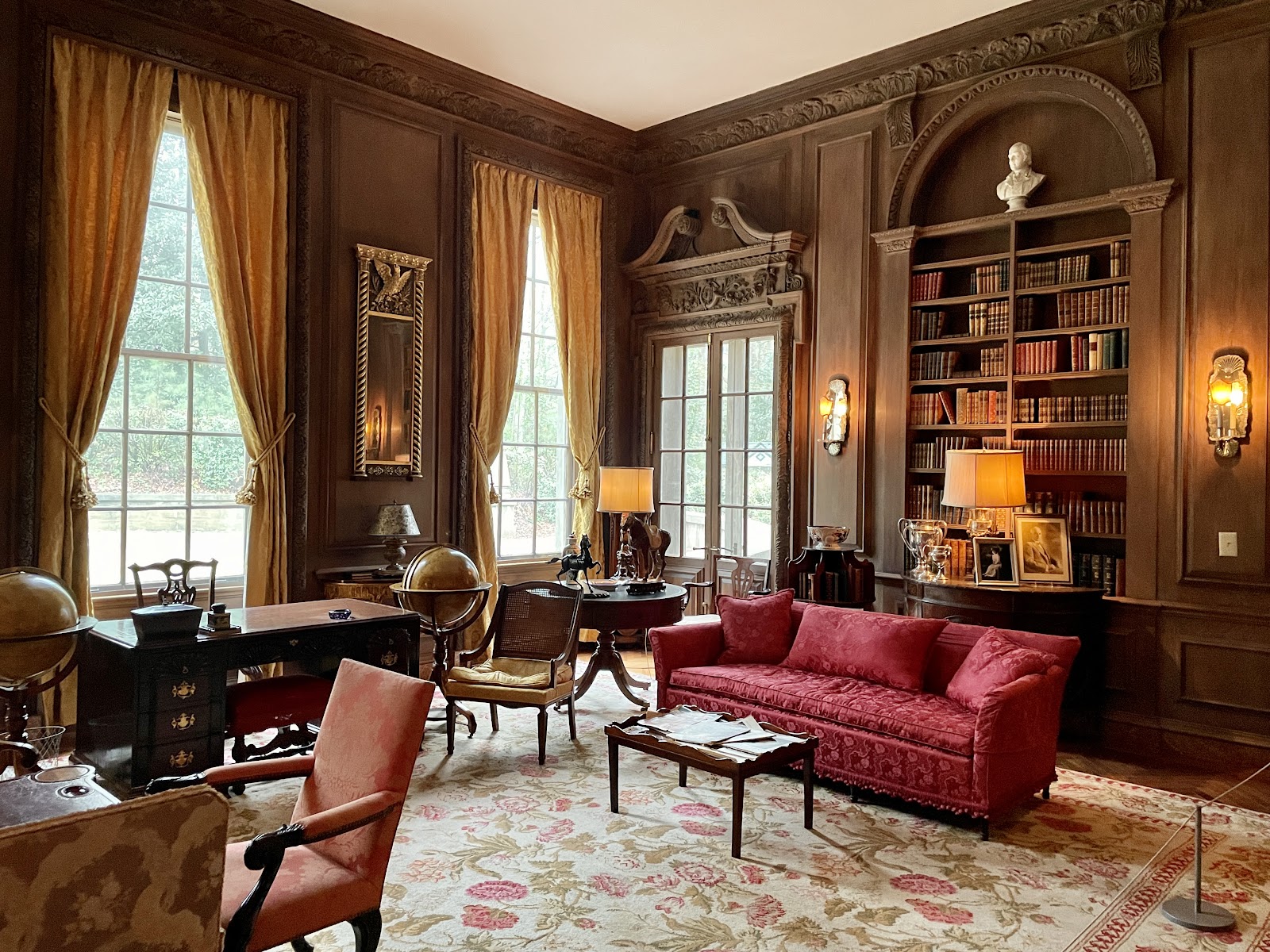
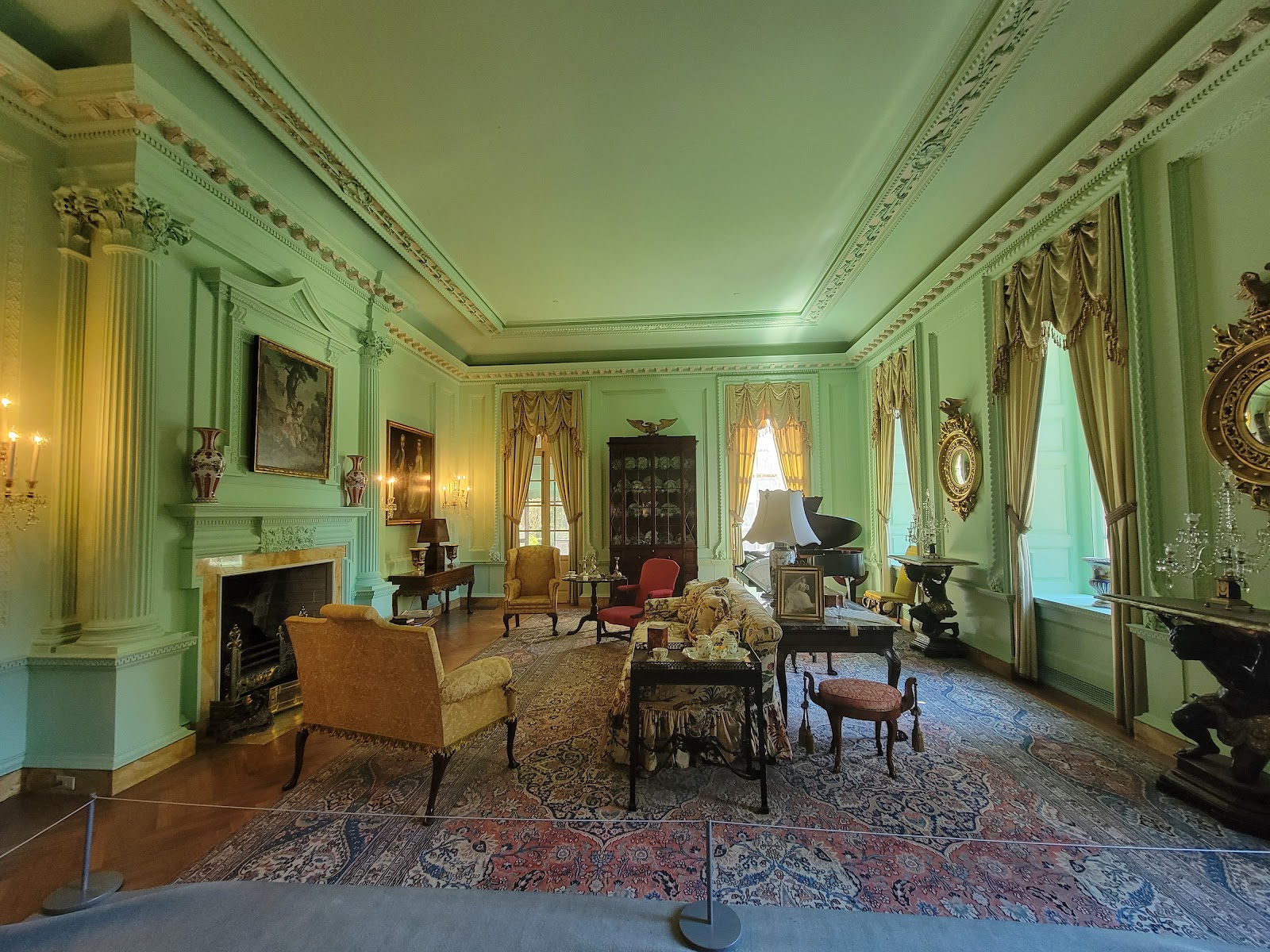
Ornament in a classical house is concentrated at the cornice, the doorcases and the chimneypieces, and all of it is three-dimensional, so it reads only when light crosses it at an angle. Under even light the same plasterwork flattens into a pale field; one source placed to graze a surface rather than face it brings the detail back, and it is a one-light problem rather than a big-kit one.
Windows in a house of this period are likely to be tall, which sends light further into a room and higher up a standing figure than a modern window does. Two or three steps back from a tall window on the shaded elevation is the position, rather than beside it.
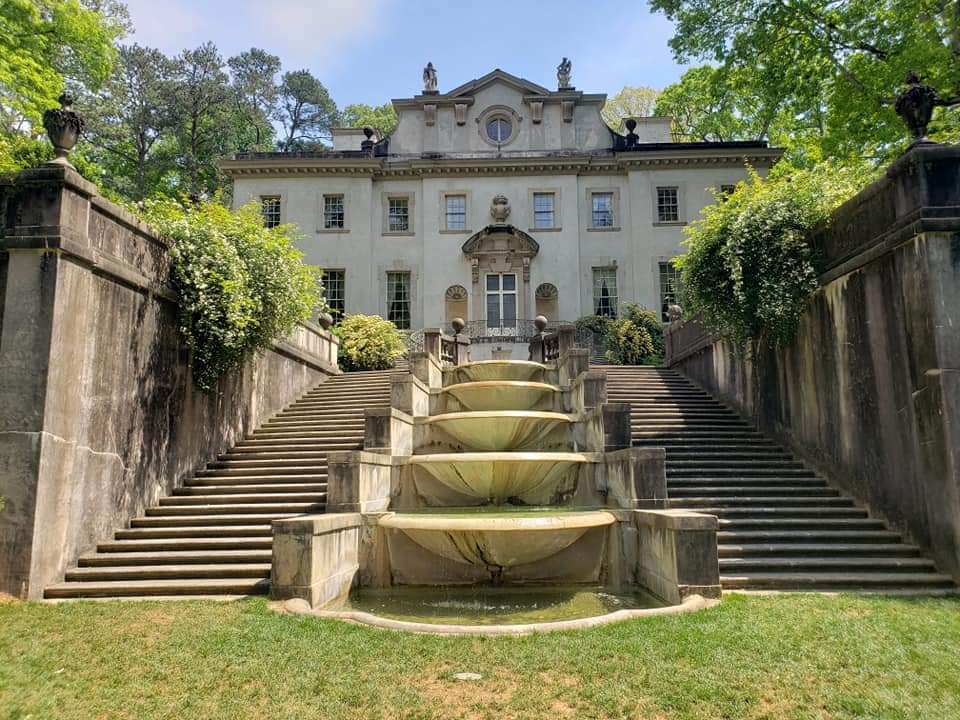
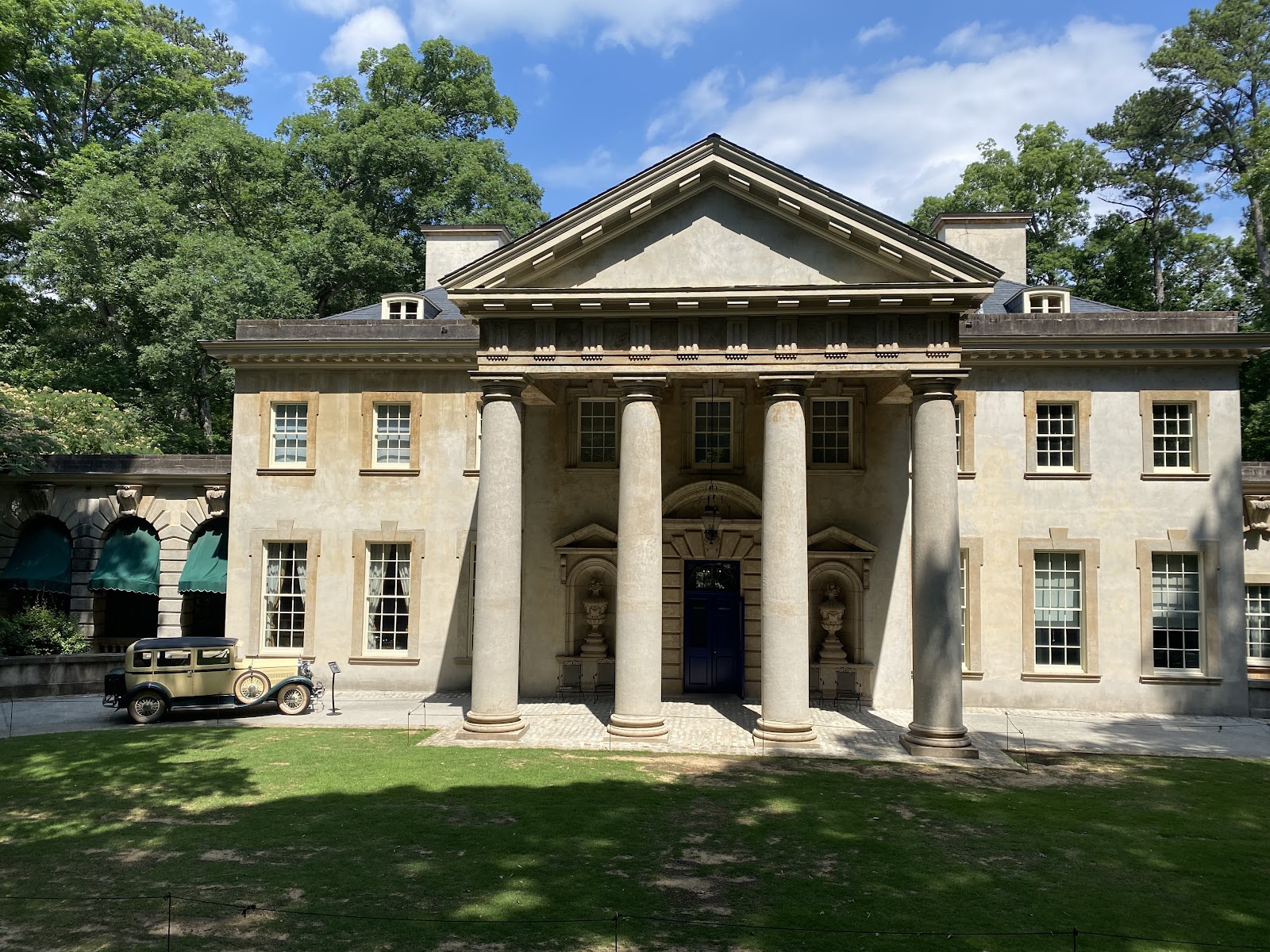
The grounds are the counterweight and a formal approach is the house’s other set-piece. Formal landscape photographs best along its axis, which reinforces the design, or from a low camera, which drops the horizon and lets the house occupy the upper frame. A cascading or terraced approach gives natural elevation changes, which means the camera can be genuinely above or below a subject without architecture.
Mature canopy around the grounds is the summer resource — Atlanta is one of the most heavily wooded major cities in the country, so it is likely to be abundant — with dapple as its hazard: hot spots several stops above the surrounding shadow, shifting with any breeze, so full shade, open light, or wait for the sun to drop.
Green bounce from dense planting throws green onto nearby skin, and because the cast is localised, auto white balance cannot fix it. Set a custom white balance on a face in the position being used, and use pale paving or stone as a neutral bounce.
And the last ninety minutes are when the exterior becomes worth photographing: classical stone and render show their texture only when light runs along them, and a facade that looks flat and chalky at noon separates into planes in raking light. Which elevation receives it depends on orientation, so one walk around the house is worth more than any accessory.
- Level and centre the stair frame; the near-miss is the only failure
- Take all three stair viewpoints — the one from the top is usually best
- Fix the overhead light with a low reflector or a lifted chin
- Put the group on the stairs; a lawn will not make rows
- Add half a stop or more in a pale classical hall
Atlanta's weather, and the practicalities
A historic house museum imposes real constraints and they are not adjustable on the day. Furniture may be in a documented position, textiles are fragile, and objects are accessioned — so the assumption should be that nothing moves, nothing is leaned on, nothing is sat on unless offered, and no stand goes down without asking. Whether photography is permitted inside at all, and whether stands and flash are allowed, are three separate questions and venues frequently answer them differently.
Working distance is the other interior constraint. Rooms in a classical house are generous by domestic standards and small by venue standards, which means the wide frame and the portrait frame are two different photographs. Photographing through a doorway from an adjoining room buys back much of what the walls take away.
Atlanta’s climate governs the outdoor half of the day. Summer heat and humidity make long blocks genuinely difficult in formal clothes, so trips should be short and purposeful, and mature canopy is the reliable midday resource.
Afternoon thunderstorms in summer are close to a daily feature rather than an occasional event, which at a house with formal grounds makes the wet-weather plan a real question: a historic interior may have a strict capacity, so the fallback needs a number and a decision time attached.
Humidity produces the region’s equipment problem, and a climate-controlled historic interior makes it worse: a camera chilled inside fogs comprehensively the moment it reaches the outside air and can take many minutes to clear. Plan one outdoor excursion rather than several, because each crossing costs frames.
Spring brings pine pollen in late March and April, coating surfaces in a visible yellow film and hanging in the air — it lands on pale stone and steps, shows as a yellow cast, and affects guests as much as equipment. April is also when azalea and dogwood bloom, which is the most photogenic fortnight in the southern year, so a spring date carries both facts at once.
Georgia’s red clay stains, and a white dress on a wet unpaved path is a real risk rather than a theoretical one — know which routes are paved before leading anyone along them.
And Atlanta’s winters are mild enough that the grounds stay usable all year. A clear winter afternoon gives low raking light for hours rather than for ninety minutes, which on classical stone is the best condition the material ever gets.
More frames from The Swan House
The Swan House wedding photography: common questions
Why is the staircase the frame?
Because it gives elevation, a curve, a handrail as a continuous leading line, and vertical depth — and almost no other architectural element gives a photographer height inside a room.
How many stair frames are there?
Three genuinely different ones: from the bottom looking up, which reads as ascent; from the top looking down, which is graphic with the couple small inside the curve; and from the landing, level with them.
Which is most often missed?
The one from the top, because it means going up, waiting and coming back down. It is also frequently the best of the three.
Why does a staircase frame need such precision?
Because classical interiors are symmetrical, and the eye detects a two-degree error instantly while forgiving a large one in an asymmetrical composition. The near-miss is the only failure available.
How do you fix the overhead light?
A low reflector, a lifted chin, or one source at face height. For a group on stairs, a single raised source near the camera position is usually more practical than lighting from the side.
What has to be asked in advance?
Whether interior photography is permitted, whether stands are permitted, and whether flash is permitted — three separate questions that venues frequently answer differently — plus the guest limit.
More Atlanta, GA venue guides
We are writing a photographer’s guide to every venue we would happily shoot in Atlanta, GA. Here are three more, plus the full index:
- The Trolley Barn, Atlanta: What It Suits and What It Does Not
- The Westside Cultural Arts Center, Atlanta: Four Ways Out of the Blank Box Problem
- The Wimbish House, Atlanta: The One Decision That Governs Everything
All Atlanta, GA Wedding Venues →
Planning a wedding at The Swan House?
One staircase, three frames, and permissions first. Tell us your date.