 The Venue, Asheville: A Season-by-Season Guide
Haywood Hall: What an Eighteenth-Century House Can and Cannot Do
Houses this old have small windows and low ceilings for good reasons, and both constrain what can be photographed indoors.
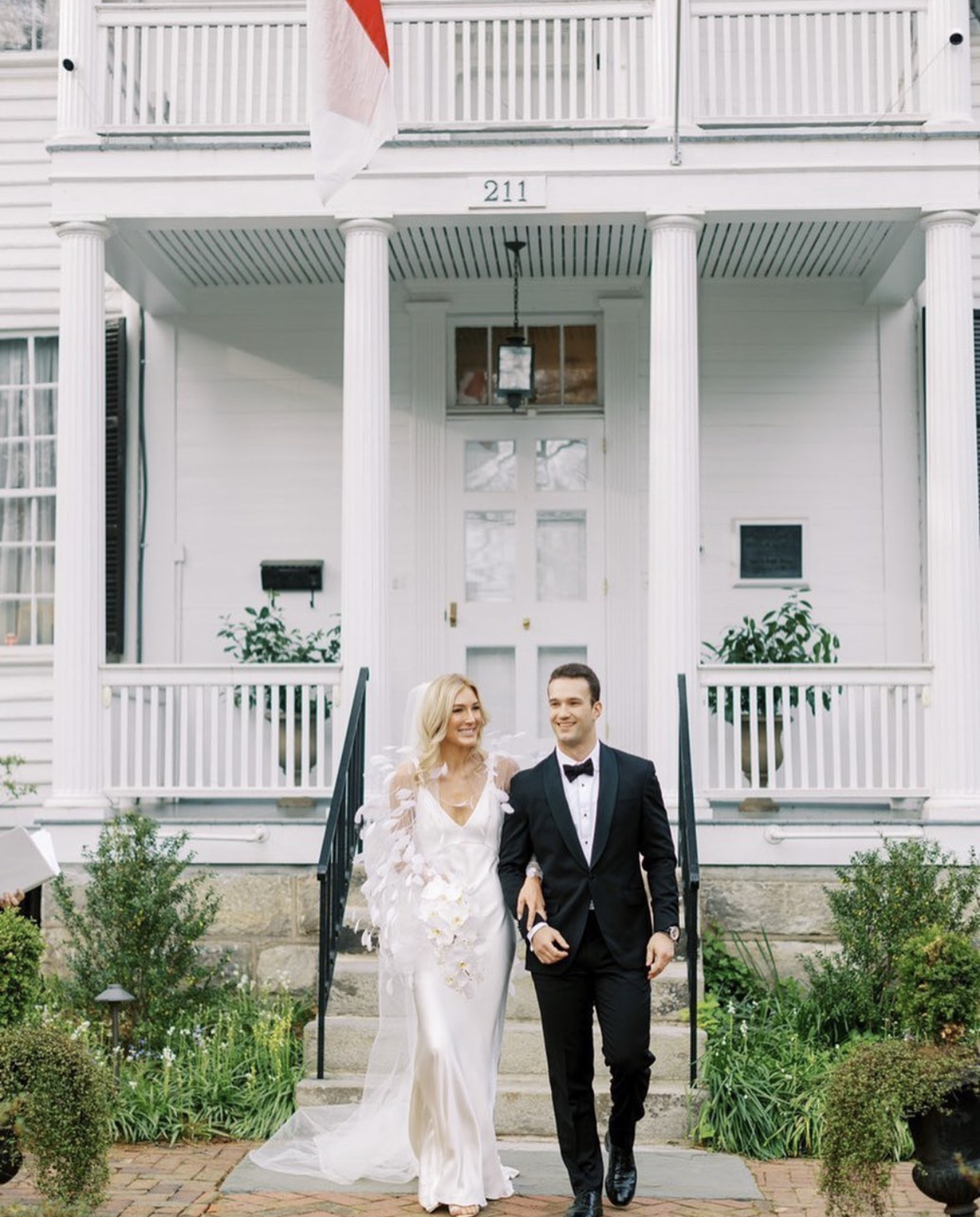
Haywood Hall stands in downtown Raleigh, North Carolina, a house of the late eighteenth century with period gardens, operated as a historic property rather than as a purpose-built event venue.
Early houses are a distinct category and it is worth separating them from the Victorian and Edwardian properties that make up most historic wedding venues. A house from the 1790s was built when window glass was expensive and heating was a fireplace, which means the windows are small and the ceilings are low — the opposite of the tall-windowed, high-ceilinged nineteenth-century rooms photographers are used to. That has direct consequences: interiors are dim, camera positions are tight, and a group of any size simply will not fit.
None of that is a criticism, but it does mean the venue suits some weddings very well and others not at all. This is an honest account of which. We have not photographed a wedding at Haywood Hall; late-Georgian interiors and period gardens behave the same wherever they survive. Real capacity, which rooms may be used, and what interior access and restrictions apply are questions for their team — and with a house of this age those answers are usually quite specific.
Haywood Hall at a glance
| Where | Downtown Raleigh, North Carolina |
| Character | A late eighteenth-century house with period gardens |
| The constraint | Small windows and low ceilings — dim interiors, tight positions |
| Consequence | Groups of any size have to happen outside |
| Ask first | Real capacity, and what interior access is permitted |
What an eighteenth-century interior actually gives
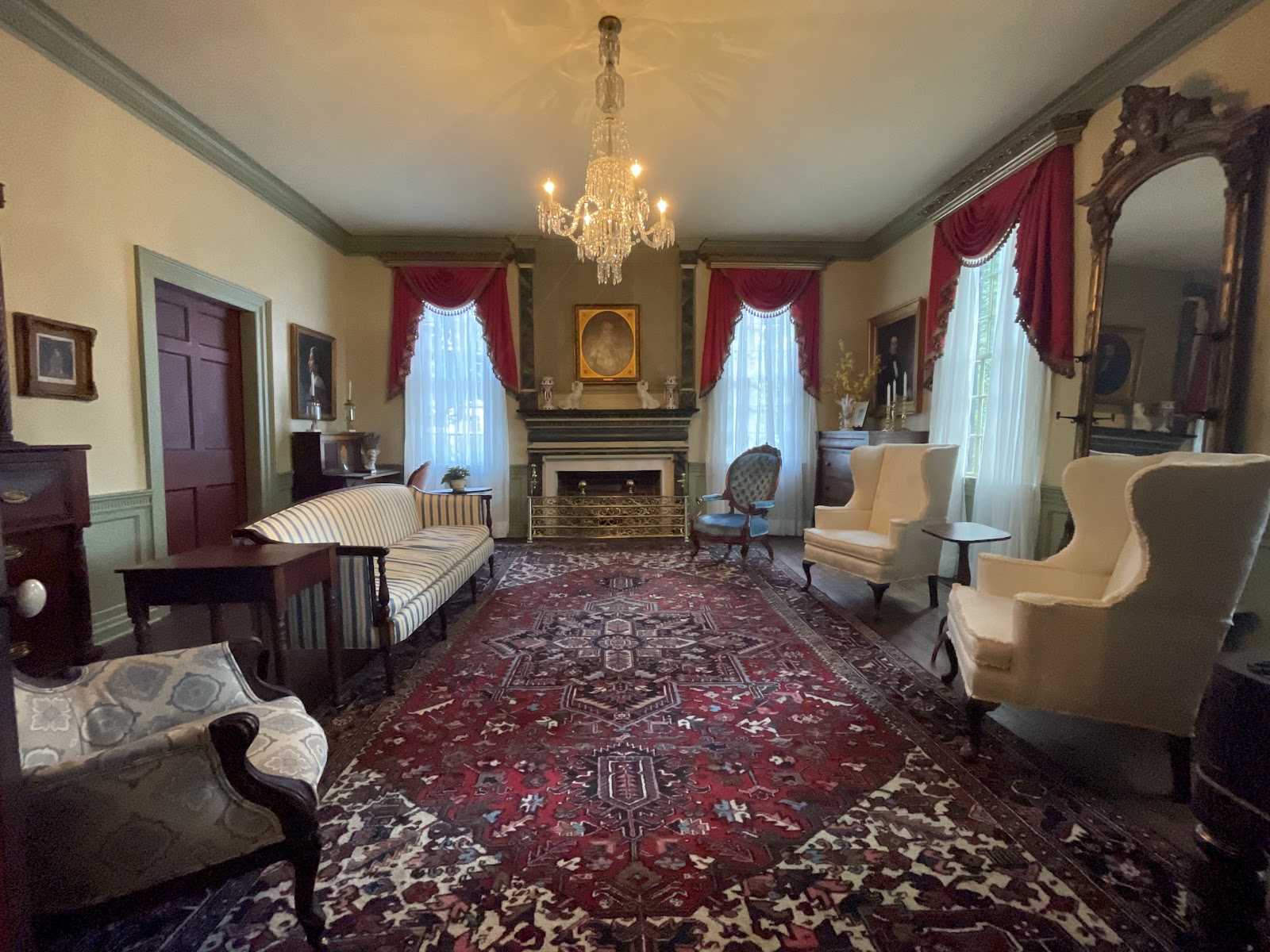
Small windows mean a small light source, and a small source is a hard one. That is the first surprise for anyone expecting the soft generous window light of a Victorian house: here a single sash throws a defined patch of light into a dim room with a steep fall-off, which is dramatic rather than gentle. Used deliberately it is excellent — a face at the edge of that patch with the room falling away dark behind is a strong, almost painterly frame, and it is the register the architecture naturally produces.
Low ceilings are the second constraint and they cut both ways. They rule out anything tall, and they make a room feel enclosed in wide frames. But they also put the ceiling within easy reach of a bounced flash, which turns the whole room into a soft source — larger than any modifier that would fit through a period doorway. So the kit needed here is very small, provided the ceiling is pale. If it is dark timber it will absorb and tint, and a pale wall becomes the better surface.
Dark timber, small-paned glass and deep-coloured walls all absorb, so the ambient is low and fall-off is steep. Expect to work at settings that suit an indoor reception even in the middle of the day, and place people near the windows because a metre of position is worth more than a stop of ISO.
Set a custom white balance per room and keep the warmth. Old glass, timber and paint all tint the light warm, and neutralising it entirely makes a period room look grey and wrong — the warmth is the character.
Who this venue suits
The fit is specific and, when it lands, nothing else compares:
- Small guest counts — genuinely small, meaning the number the venue states
- Couples who want a documentary, close-in, candlelit register rather than grand formality
- Anyone drawn to real period texture: old glass, hand-worked joinery, worn floors, original paint
- Elopements and second weddings, where the priority is the two people rather than the production
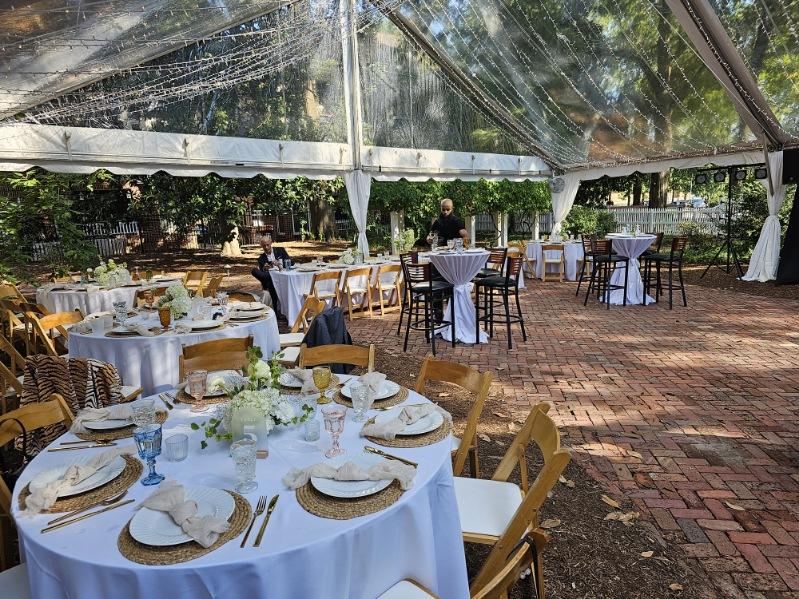
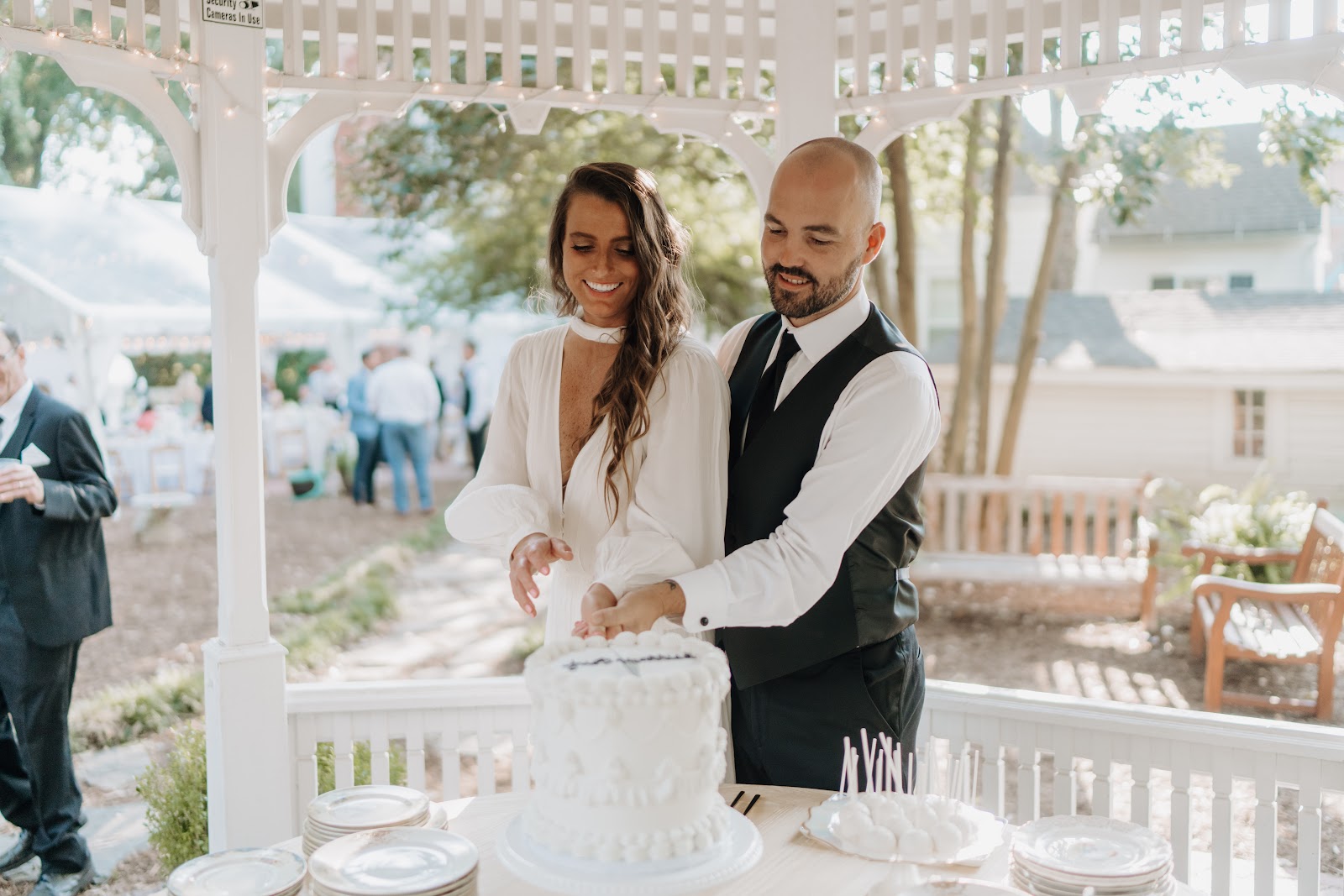
- Couples happy for the garden to carry the outdoor frames at garden scale, not landscape scale
Who should look elsewhere
And the mismatches are just as clear:
- Large guest lists — an early house at over-capacity photographs as a crowded room and no lens fixes it
- Anyone planning substantial formal group photographs, which need floor and ceiling this house does not have
- Briefs built on bright, airy, pale imagery, since these interiors are dim and warm by construction
- Weddings with a band, a dance floor and a production, which will not fit and will not read
- Anyone unwilling to work at high ISO, because natural light alone will not carry an evening here
The garden, the groups and the Raleigh conditions
Because the interiors cannot take groups, the garden is not an optional extra but a structural part of the plan, and it should be treated that way. Period gardens are typically laid out with paths, beds and structure rather than open lawn, which makes them good for composition and limited for arranging thirty people — so the useful question on a site visit is simply where the largest workable flat area is, and whether the group can stand there.
The other option is the house front. Steps and a period doorway arrange people at different heights automatically and frame them, which solves the two hardest things about a group photograph at once, and it is usually the best group location a town house has.
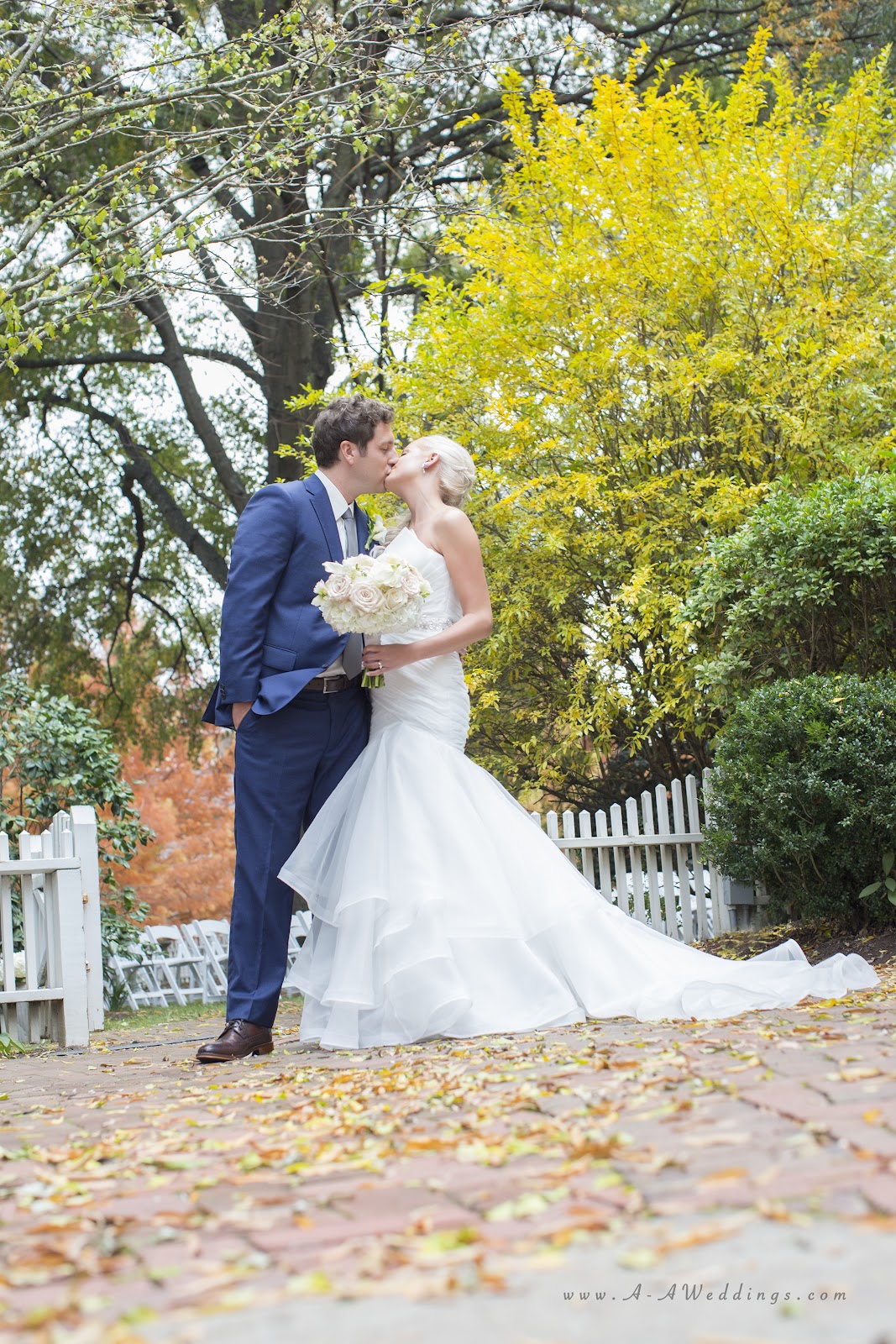
For couple work the garden is generous. Structured planting gives foreground: something half a metre from the lens with the couple two metres beyond gives depth and softness with no equipment, and a walled or hedged garden contains the background so there is no blown sky to manage.
The North Carolina conditions apply and both are worth planning for. Summer humidity is high enough that a lens carried from an air-conditioned interior into garden air fogs for ten to twenty minutes, and wiping the front achieves nothing — acclimatise the body you intend to use outside before you need it. And summer afternoon thunderstorms build fast, rain hard and clear, which means an outdoor plan needs a decision point; with interiors this small, the fallback is genuinely constrained, so the decision matters more here than at a venue with a hall.
The last ninety minutes are the block to protect. Low sun arriving under the planting rather than down through it turns leaves translucent and rims figures, and in a downtown garden it also rakes across brick and old paint in a way flat midday light does not. Everything indoors can move; that cannot.
The end of the night is where a small early house genuinely beats a large venue. In a hall the last hour disperses; here it concentrates — everyone in one low warm room lit by whatever lamps and candles are present. Shoot it wide open at high ISO and keep the grain. Those frames are the ones couples keep, and they exist only at this scale.
What works in your favour
- Real eighteenth-century texture — old glass, hand-worked joinery, worn floors
- Small hard window light that produces a painterly, dramatic register
- Low ceilings put bounce within reach, so the kit stays tiny
- Structured period garden giving contained backgrounds and free foreground
- The end of the night concentrates rather than disperses
What to plan around
- Small windows make interiors dim even at midday
- Low ceilings and small rooms rule out groups indoors entirely
- A dark timber ceiling removes the bounce advantage
- Constrained fallback if a summer storm comes through
- No landscape scale; the garden is garden scale only
More frames from Haywood Hall
Haywood Hall wedding photography: common questions
Is the window light in an eighteenth-century house soft?
No — the windows are small because glass was expensive, and a small source is a hard one. A single sash throws a defined patch into a dim room with steep fall-off. Used deliberately that is excellent and almost painterly, but it is not the soft generous light of a Victorian house.
Are low ceilings a problem?
Both ways. They rule out anything tall and make wide frames feel enclosed, but they put a pale ceiling within easy reach of a bounced flash — which turns the whole room into a source larger than any modifier that fits through a period door.
Can you hold group photographs indoors?
No. Formal groups need floor area and ceiling height and an early house has neither. Groups happen outside, and the front steps with a period doorway are usually the best option — they sort out the heights and frame the group.
Should the warm tone be corrected?
Not entirely. Old glass, timber and paint all tint the light warm, and neutralising it makes a period room look grey and wrong. Set a custom white balance per room and keep the warmth, because it is the character of the place.
What is the weather risk?
Summer thunderstorms, which build fast and clear fast. That matters more here than at most venues because the interiors are small, so the fallback is genuinely constrained. Agree a decision point rather than hoping.
What does a small early house do better than a large venue?
The end of the night. A hall disperses; a small house concentrates — everyone in one low warm room lit by lamps and candles. Shoot wide open at high ISO and keep the grain. Those frames only exist at this scale.
More North Carolina venue guides
We are writing a photographer’s guide to every venue we would happily shoot in North Carolina. Here are three more, plus the full index:
- The JC Raulston Arboretum: Four Ways Out of the No-Shelter Problem
- The Longleaf Hotel: Photographing a Mid-Century Building Reworked
- Marbles Kids Museum: Four Ways Out of the Bright-Colour Problem
Planning a wedding at Haywood Hall?
An early house rewards a small guest list and a small kit. Tell us your numbers and we will be honest about the fit.