 The Thunderbird Inn: Field Notes on a 1964 Motor Inn
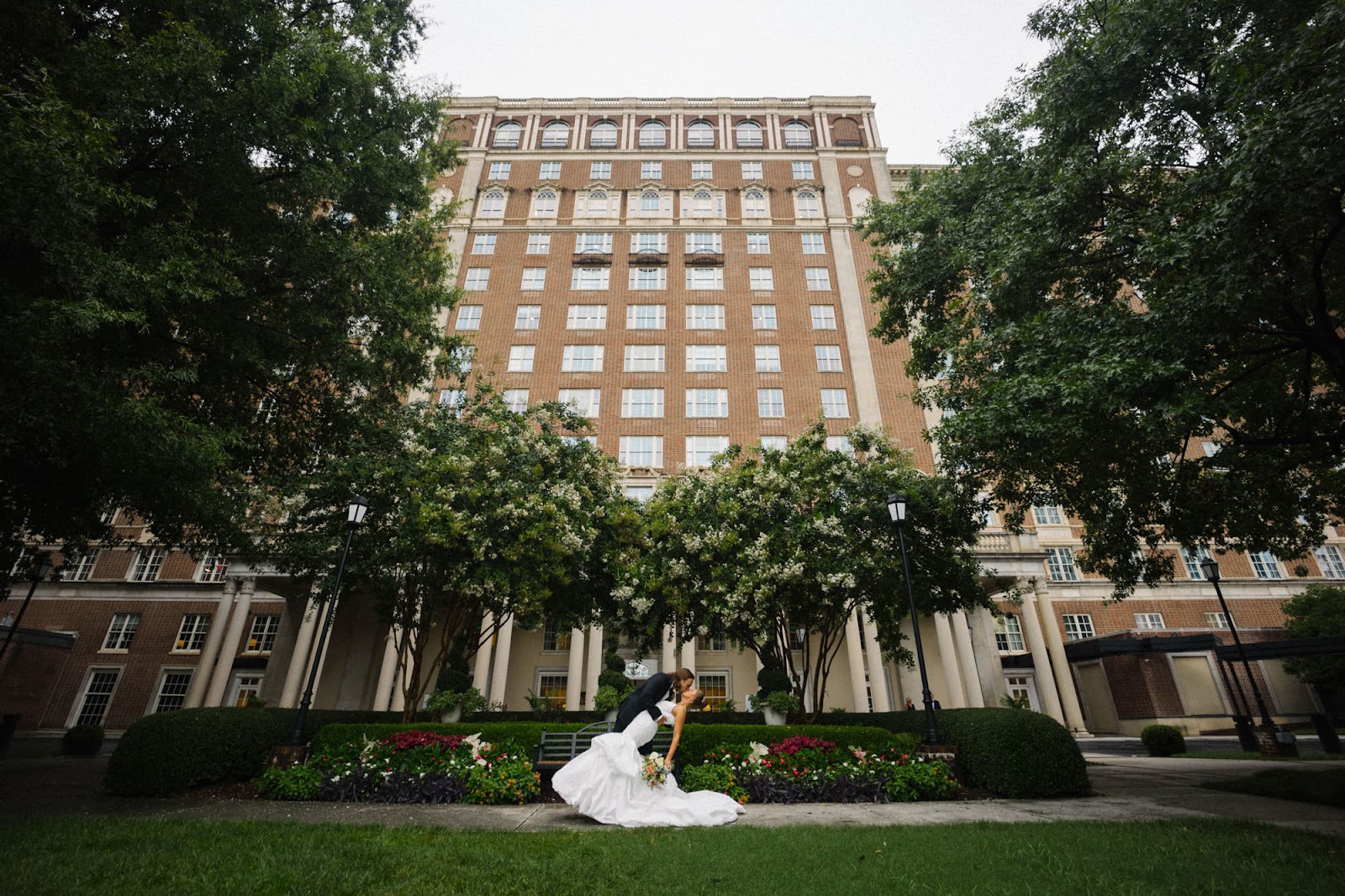
The Biltmore Ballrooms, Atlanta: What They Suit and What They Do Not
A ballroom is a room with no daylight and a lot of ceiling. Both of those decide what it suits.
The historic charm of the Biltmore Ballrooms is, by their own description, undeniably magnetic — which is fair, and which is a description of a very specific venue type rather than of a building.
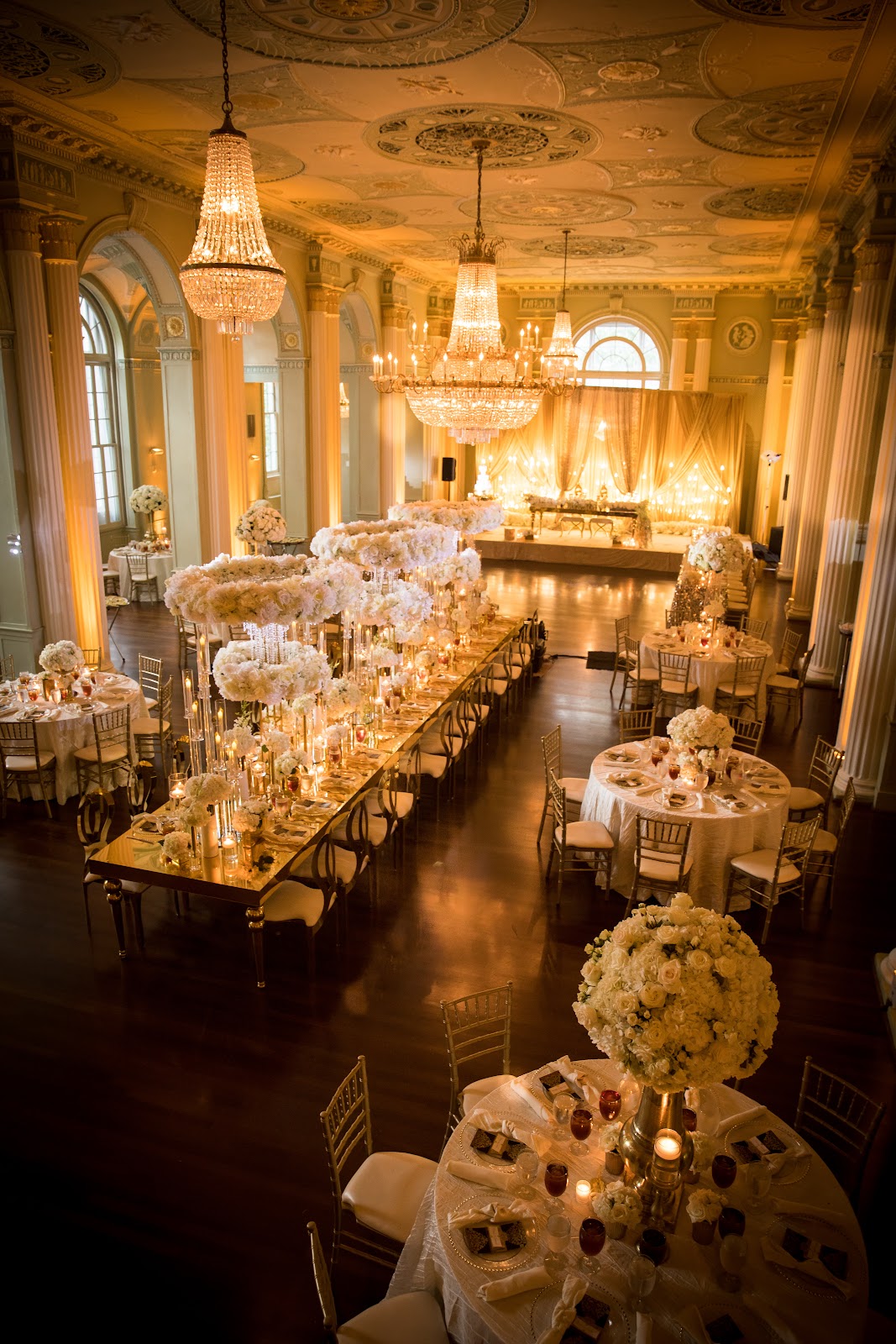
A historic ballroom is the most purpose-built space in this whole series and it is worth assessing on its own terms. It was designed to hold several hundred people in evening dress under artificial light, to look impressive from the doorway, and to be indifferent to the time of day — and every one of those design decisions has a photographic consequence. There is little or no usable daylight. The ceiling is high and ornate, which means no bounce and detail that needs raking light. The floor is large and clear, which means no natural framing. And the lighting is warm, overhead and dimmable, which is both the problem and the best tool available.
So this is written as suits and does not suit, because a ballroom is excellent for some briefs and structurally wrong for others. We have not photographed a wedding at the Biltmore Ballrooms; historic ballrooms behave consistently. Whether the house lighting can be dimmed to pools and who operates it, what may be attached to period fabric, and whether there is any daylight at all are the questions for their team.
The Biltmore Ballrooms at a glance
| Where | Atlanta, Georgia |
| Character | Historic ballrooms with period ornament and a large clear floor |
| Suits | Scale, formality, evening events, weatherproofing, large counts |
| Does not suit | Daylight, intimacy, small groups, bright and airy references |
| Ask first | Lighting control and operator, fixings, whether any daylight exists |
The four conditions of a historic ballroom
No daylight is the first condition and it is the one that reshapes a schedule. A ballroom looks the same at two in the afternoon and eleven at night, which is convenient — interior coverage can go anywhere — and it means everything that needs daylight has to happen somewhere else. Establish on arrival whether there is any window, and if there is, it is the most valuable thing in the building.
A high ornate ceiling is the second, and it does two things at once. It removes bounce, because a flash aimed upward returns almost nothing usable, so the substitutes are a pale wall at a sensible distance, a reflector, or direct modified light. And it holds the venue’s best detail, which is three-dimensional and therefore reads only when light crosses it at an angle — under the flat downward wash of house lighting, the most elaborate ceiling in a building photographs as a pale field.
One source placed to graze a cornice, a column or a doorcase brings that detail back, and it is a one-light problem rather than a big-kit one. If the house lights can be brought up plain for a few minutes before guests arrive, that is when the room can be photographed as a room.
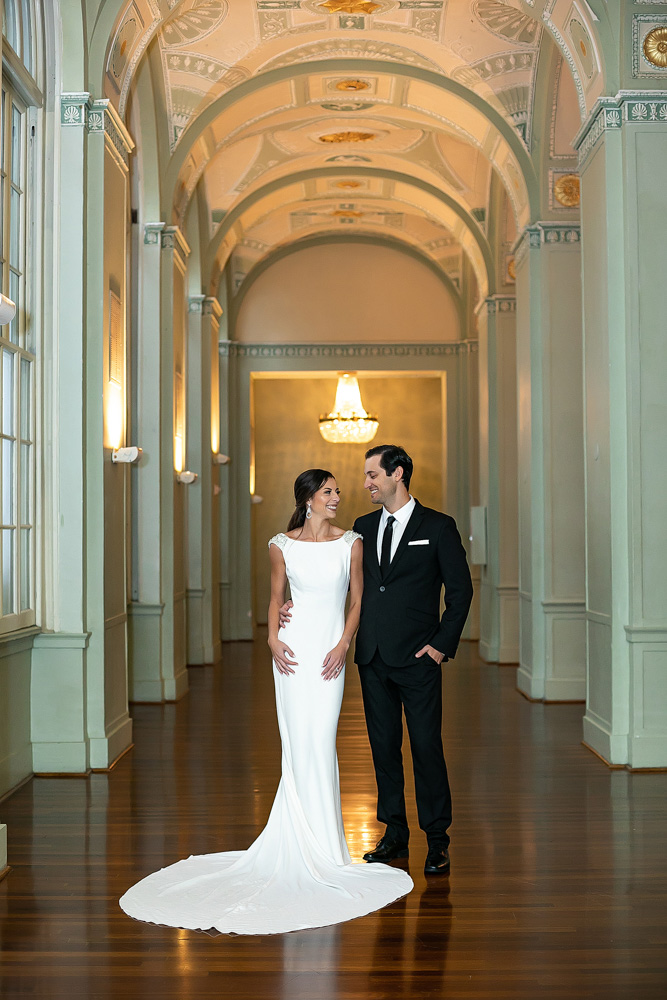
A large clear floor is the third condition and it is a compositional problem rather than a technical one. There is no framing, no corners to place people in and no fixed points, so every frame has to be constructed — from depth, from the room’s own columns or doorways, and from light fall-off. Symmetry is usually available and worth using, because a ballroom is generally axial and a levelled centred frame down its length reads as deliberate where an off-axis one reads as accidental.
Warm dimmable lighting is the fourth, and it is the single most useful thing in the building once it is understood. Expose for the room so it still reads as the warm dim ballroom it is; add one warm-gelled source at face height, off the camera axis, for anything that must be legible; set white balance to the gel and hold it for the whole block. And use the steep fall-off as free separation — in a large dim room a subject three metres from anything else sits against natural darkness with no equipment at all.
Decorative fittings at a wide aperture become warm points behind a subject, which is what a period ballroom does beautifully — provided a bright fitting is not sitting immediately beside a head, where it pulls the eye off the face every time.
The most valuable request is whether the lighting can be dimmed to pools rather than set evenly. It usually can, and the difference is larger than any equipment decision: a room with a few areas lit and the rest falling away is dramatically better than a room lit uniformly.
Who it suits
A ballroom is unbeatable at the thing it was built for, and where a couple wants that thing there is no substitute.
These briefs are well served here:
- Larger guest counts, which a purpose-built ballroom absorbs without strain
- Formal evening weddings, which is exactly what the room was designed for
- Couples who want period ornament and grandeur in the photographs
- Anyone who wants Atlanta’s summer storms to be irrelevant to the day
- Photographers comfortable bringing light, because the room requires it
Who should look elsewhere
The reverse list is not a criticism. A ballroom is succeeding when it is large, warm and indifferent to the weather; the only question is whether that is what the day is meant to be.
Several reasonable briefs fight the room from the first frame:
- Couples whose references are bright, pale and daylit, which the room cannot give
- Small intimate weddings, which read as sparse on a floor built for hundreds
- Anyone wanting an outdoor ceremony space of the venue’s own
- Briefs needing natural-light preparation coverage on site
- Photographers working with one small flash, which the volume defeats
Where the daylight comes from, and Atlanta's weather
The honest plan at a ballroom venue is that the daylight comes from outside it, and in Atlanta that means a short walk rather than a journey. The city’s towers are clustered rather than continuous, which produces deep canyons where direct low sun rarely reaches street level — good soft bounced light for much of the day, which is not the same as golden-hour light — and lower-rise fabric a few blocks away where raking light returns.
Brick and stone at that lower-rise scale show their texture only when light runs along them, so a short walk to find which side is being raked is worth more than any accessory. Alleys are the most dependable positions: walls on both sides give directional light, a contained background with nothing distracting in it, and shelter.
Atlanta’s tree canopy is the other resource and it is abundant, because this is one of the most heavily wooded major cities in the country. Mature shade is rarely far from any address and it is the midday answer outdoors; dapple is its hazard, putting hot spots several stops above the surrounding shadow and shifting with any breeze, so full shade, open light, or wait.
Because the ballroom does not change, the outdoor block can be placed exactly where the light is best — which at a venue with no daylight of its own is a real freedom rather than a compromise. The last ninety minutes, and then the twenty minutes after sunset for anything that needs a coloured sky, and the ballroom will look identical whenever you come back.
Summer heat and humidity make long outdoor blocks genuinely difficult in formal clothes, so trips should be short and purposeful. Afternoon thunderstorms are close to a daily feature rather than an occasional event, which for a sealed ballroom is almost entirely an advantage: the day continues without a decision being needed while every garden venue in the city is making one.
The light after a cell passes is frequently the best of the day — a dark sky, low sun underneath, and wet streets returning reflections of lit facades — and worth stepping back out for even after the schedule has closed.
Humidity produces the region’s equipment problem: a camera chilled by a strongly air-conditioned ballroom fogs comprehensively the moment it reaches the outside air and can take many minutes to clear. Warm the kit twenty or thirty minutes before the outdoor block and plan one excursion rather than three. And spring brings pine pollen in late March and April, coating pale surfaces in a visible yellow film and affecting guests as much as equipment.
More frames from The Biltmore Ballrooms
The Biltmore Ballrooms wedding photography: common questions
What is the first thing to establish?
Whether there is any daylight at all. A ballroom looks identical at two in the afternoon and eleven at night, so if there is a window it is the most valuable thing in the building.
Why does the ceiling detail look flat?
Because house lighting is a flat downward wash, and three-dimensional ornament only reads when light crosses it at an angle. One source placed to graze a cornice brings it back.
Does bounce flash work?
No. The ceiling is too far away to return anything usable. Use a pale wall at a sensible distance, a reflector, or direct modified light with enough power for the distance.
What is the most valuable request?
That the lighting be dimmed to pools rather than set evenly. A room with a few areas lit and the rest falling away is dramatically better, and it is a request rather than equipment.
How do you compose on a large clear floor?
From depth, from the room’s own columns and doorways, and from light fall-off. And use the axis: a levelled centred frame down the length of a ballroom reads as deliberate.
What is the freedom a ballroom gives?
The outdoor block can be placed exactly where the light is best, because the room will look identical whenever you come back. At a venue with no daylight that is a real advantage.
More Atlanta, GA venue guides
We are writing a photographer’s guide to every venue we would happily shoot in Atlanta, GA. Here are three more, plus the full index:
- The Callanwolde Fine Arts Center, Atlanta: The One Decision That Governs Everything
- The Fox Theatre, Atlanta: Four Ways Out of the Atmospheric Theatre Problem
- The Georgian Terrace, Atlanta: Field Notes on a Historic Hotel
All Atlanta, GA Wedding Venues →
Planning a wedding at The Biltmore Ballrooms?
A ballroom leaves the outdoor block entirely free. Tell us your date and we will place it.