 The Venue, Asheville: A Season-by-Season Guide
The Duke Energy Center: How the Glass Lobby Frame Is Made
A glass lobby at dusk gives one frame that nothing else does, and it lasts about twenty minutes.
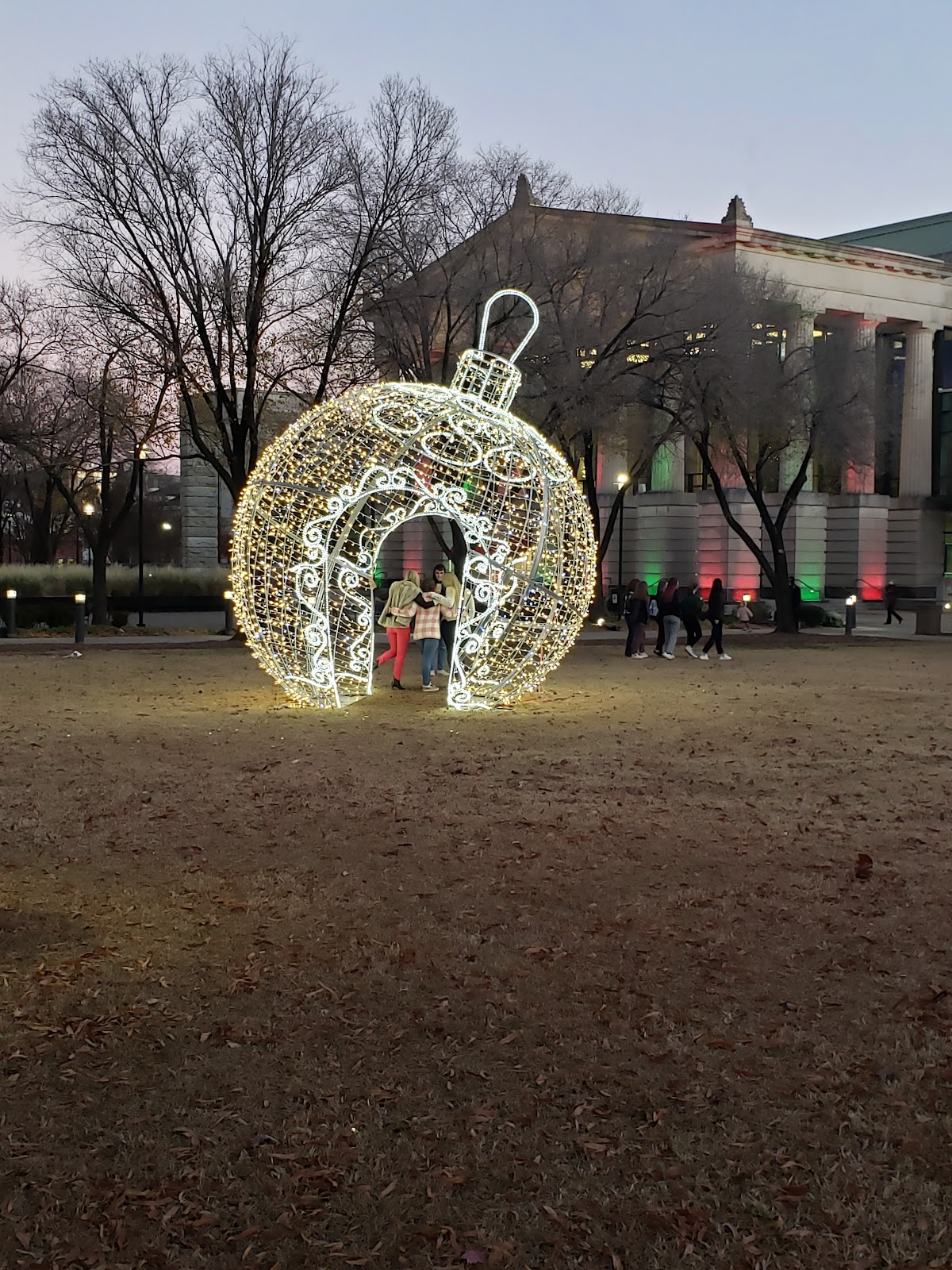
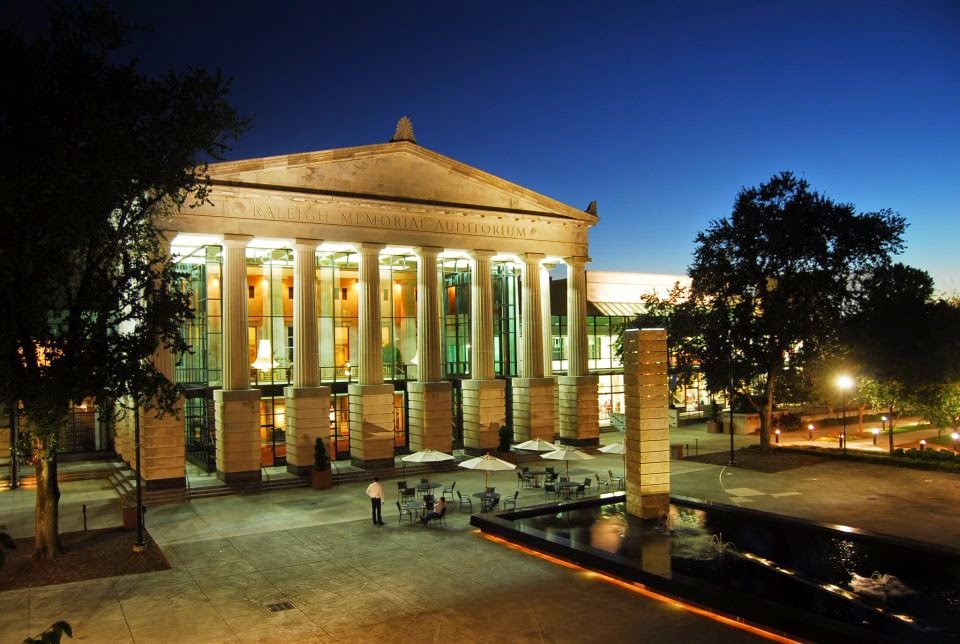
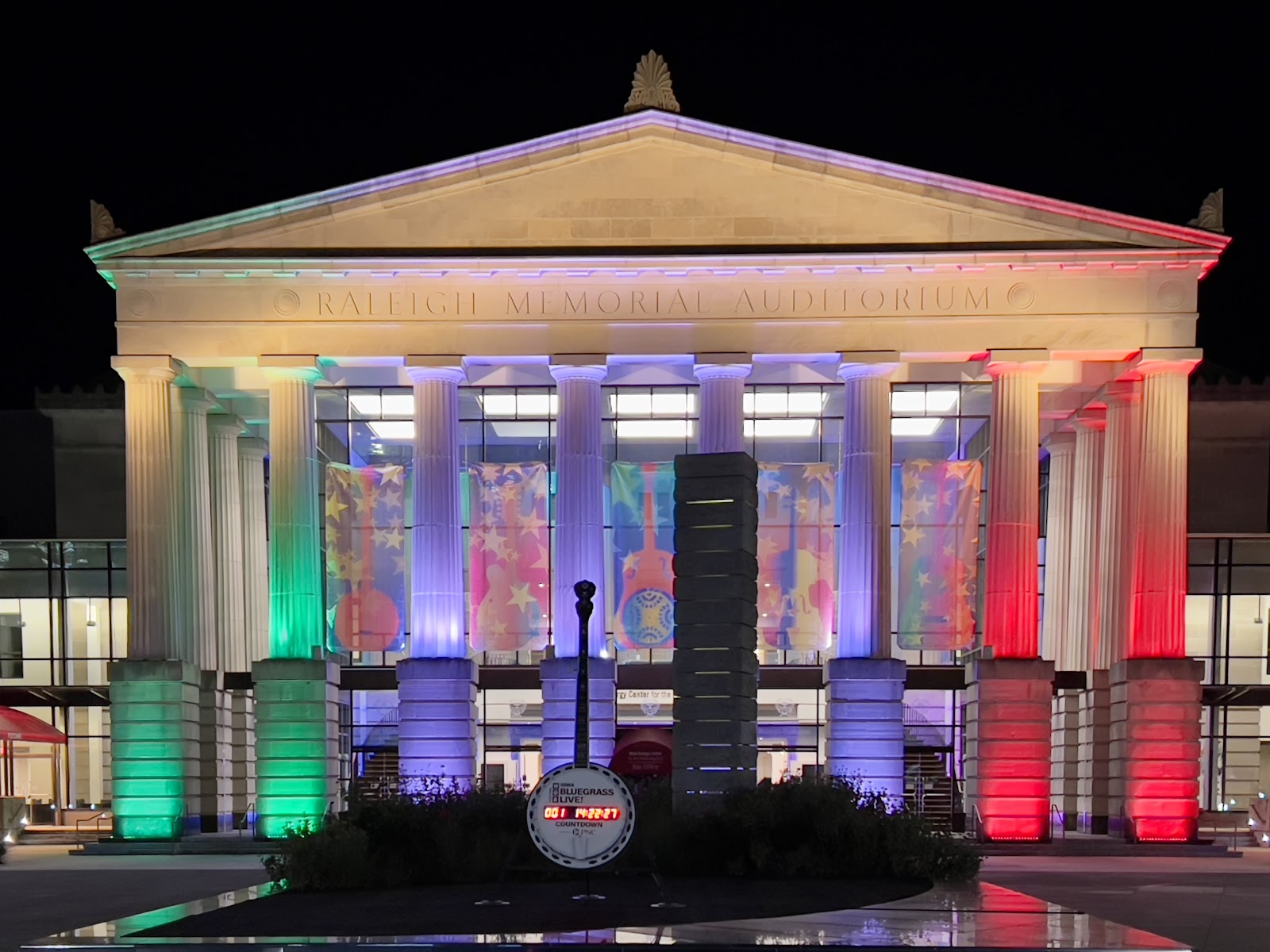
The Duke Energy Center for the Performing Arts occupies a site in downtown Raleigh, North Carolina, combining theatre auditoria with extensively glazed public lobbies and rooftop space looking over the city.
Performing arts centres of this type are built with large glazed foyers on purpose — an audience arriving in the evening should be visible from the street, and the city should be visible from inside. For a photographer that produces one specific and rather good frame: the couple inside a lit glass lobby with the city beyond, at the moment when the interior lighting and the outside sky are balanced against each other.
It lasts about twenty minutes and it is dictated by sunset rather than by the running order. This is an account of making it, and of what the rest of the building offers around it. We have not photographed a wedding at the Duke Energy Center; glazed foyers, auditoria and city rooftops behave the same wherever they occur. Which lobbies, halls and roof areas are available, and whether auditorium lighting can be operated, are questions for their events team.
The Duke Energy Center for the Performing Arts at a glance
| Where | Downtown Raleigh, North Carolina |
| Character | Performing arts centre with glazed lobbies, auditoria and rooftop space |
| The frame | Couple in a lit glass lobby with the city beyond, at dusk |
| The window | About twenty minutes, taken from sunset, not from the schedule |
| Also ask | Whether auditorium lighting can be operated |
Step one: understand what glass does across the day
A large glazed lobby passes through three distinct states in a day and only one of them gives the frame. In daylight the outside is far brighter than the interior, so the glass reads as a bright wall — expose for the couple and the view blows out, expose for the view and the couple are silhouettes. There is no version of a daytime frame that holds both without lighting the interior up towards the outside, which is possible but requires real power over a large area.
After dark the relationship inverts completely. The lit interior is now brighter than the black sky outside, which turns every pane into a mirror: the view disappears and is replaced by a reflection of the lobby, the guests and your lighting. Wide frames that worked earlier become cluttered.
Between those two states there is a crossing point, and that is the frame. For roughly twenty minutes around and after sunset, the sky outside falls to approximately the brightness of the interior lighting — and for that period a single exposure holds the lit lobby, the couple and the city beyond with colour still in the sky. It is the only time all three are available together.
So the instruction is simple and it is a scheduling one: take sunset for the date, work out the clock time, and treat it as an appointment rather than a slot. A two-minute interruption to a reception buys the frame the building exists to give, and being ten minutes late means it is gone.
Step two: make the frame properly
Position first. Shoot obliquely to the glass rather than square on, because an angled frame sends your own reflection off to the side instead of back into the lens, and it also gives the glazing structure a receding line rather than a flat grid. Square-on to a large glass wall is the least interesting composition available and the most prone to reflections.
Light the couple, but lightly. The lobby’s own lighting is usually enough to render them at this hour, and adding a strong source defeats the balance you came for by making the interior brighter than the sky again. If a source is needed, gel it warm to match the lobby and keep it well off the camera axis so it does not appear in the glass.
Focal length matters for the city. A long lens compresses the buildings beyond into a substantial presence behind the couple; a wide lens renders them at true angular size, which in practice is a thin band of distant shapes with a lot of empty glass around them. If the city is the point, go long and stand further back inside the lobby.
And watch the glazing structure. Mullions, transoms and structural members will cut across the frame and, unhelpfully, across faces if you are not deliberate. Place people in the middle of a pane rather than against a mullion, and level the camera carefully, because with that much straight architecture a degree of tilt is visible.
- Take the clock time from sunset and treat it as an appointment
- Shoot obliquely to the glass, never square on
- Add light sparingly and gel it warm; too much defeats the balance
- Long lens if the city matters; a wide one reduces it to a strip
- Place people mid-pane, away from mullions, and level the camera
Step three: the auditoria, the roof and the rest of the day
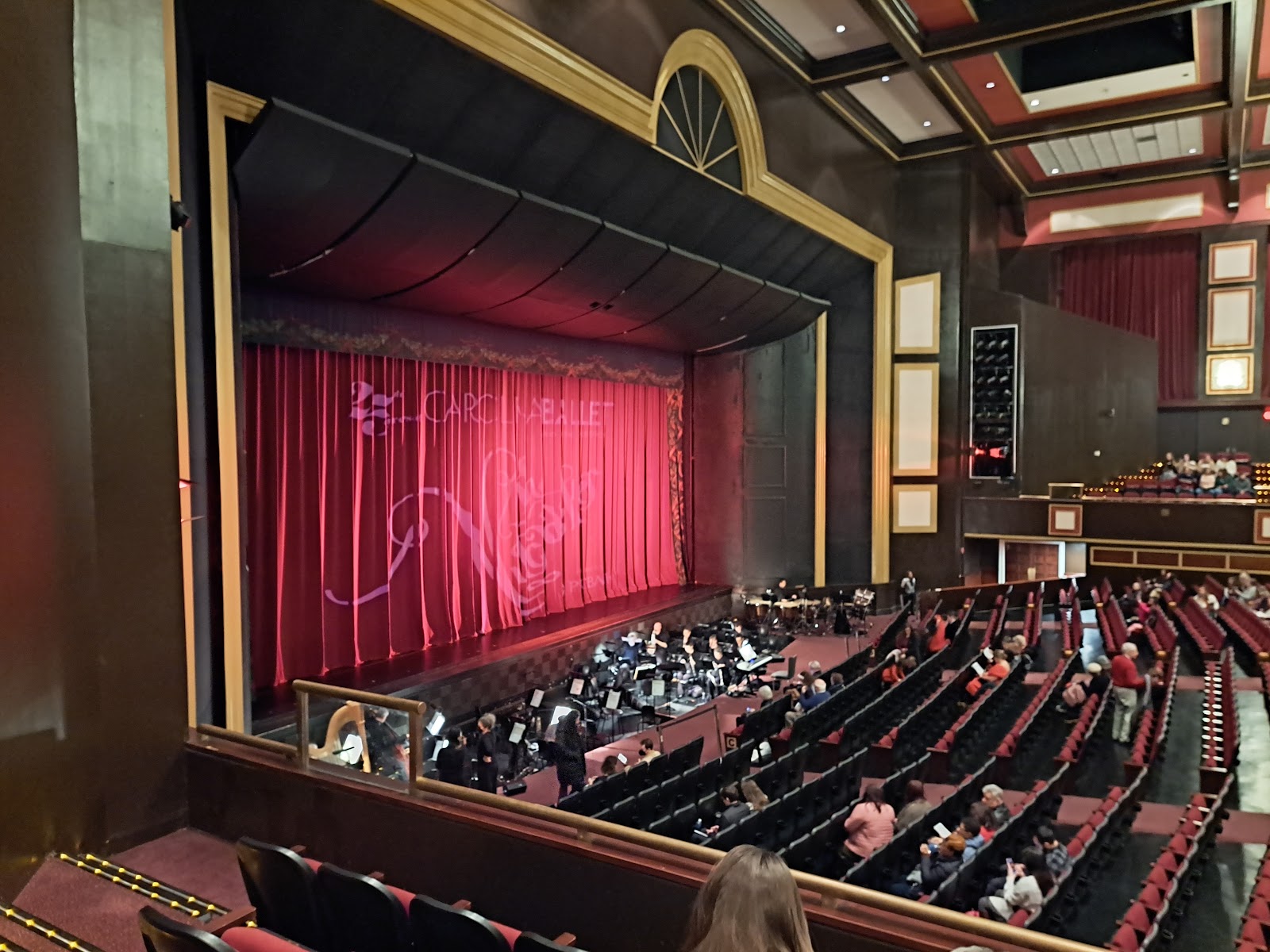
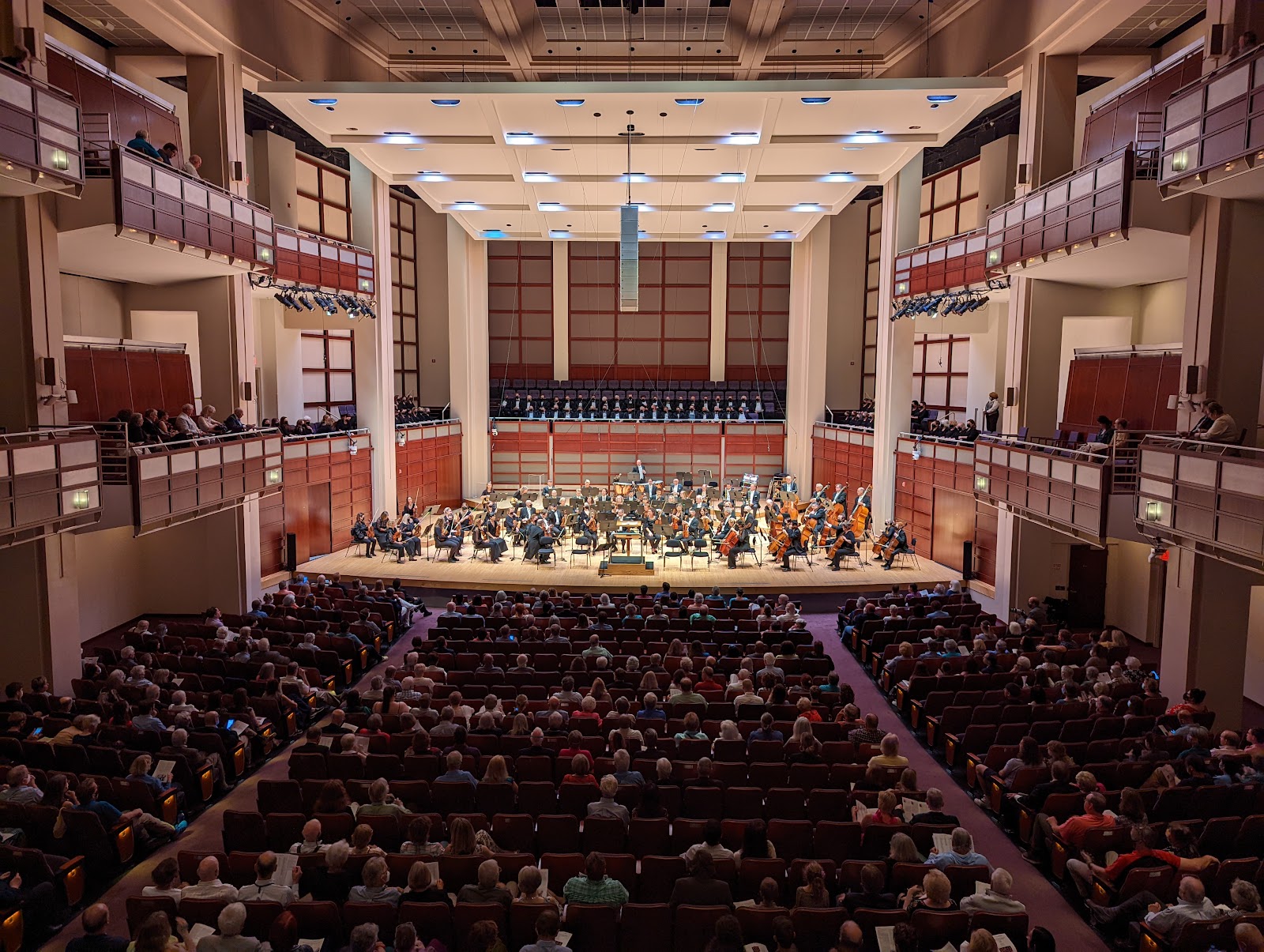
The theatres are the building’s other asset and they offer the frame that only theatres can: a couple in stage light seen from a dark auditorium. It depends on someone being able to operate the lighting, which means asking the events team weeks ahead rather than on the day — a warm front wash plus a backlight if possible, and house lights low rather than off so the rows read faintly as context instead of disappearing into a void.
If the lighting desk is not available, light the stage yourself. A dark auditorium is the most forgiving environment there is for added light, because there is nothing nearby to bounce off and therefore no spill to manage: one gridded source at forty-five degrees and one behind, both at low power, gets close to the same result.
The balcony is worth asking about too. Looking down over rows towards a lit stage gives a geometric composition no ground-level position offers, and it is a much easier exposure because the background becomes a distant tone rather than a space to fill.
Rooftop space follows the standard city-roof rules: no ceiling to bounce from, wind stronger and gustier than at street level, almost no ambient after dark, and a narrow window of good light — the last forty minutes of daylight and again twenty minutes after sunset. Long lens, weighted stands, and short decisive visits.
The practical sequencing is unusually clean here because three different things peak at three different times. Auditorium and interiors through the middle of the day, when they are unaffected by the sun and outside is harsh. The roof in the last forty minutes of daylight. The glass lobby at the dusk crossing. That is a plan with two fixed appointments in it and everything else flexible, which is exactly the right shape.
One North Carolina note: summer humidity fogs a lens carried from a heavily air-conditioned lobby onto a warm roof for ten to twenty minutes. Acclimatise the body you intend to use outside before the roof block, not during it.
More frames from The Duke Energy Center for the Performing Arts
The Duke Energy Center for the Performing Arts wedding photography: common questions
What is the frame this venue gives?
The couple inside a lit glass lobby with the city beyond, at the dusk crossing point where the sky outside falls to roughly the brightness of the interior lighting. It is the only time a single exposure holds the lobby, the couple and the view together.
How long does that last?
About twenty minutes, dictated by sunset rather than by the running order. Take the clock time from sunset on the date and treat it as an appointment — ten minutes late and the glass has turned into a mirror.
Why does the glass become a mirror?
Because after dark the lit interior is brighter than the black sky outside, so every pane reflects the lobby, the guests and your lighting rather than showing the view. Wide frames that worked at dusk become cluttered an hour later.
How should the glass be approached?
Obliquely, never square on. An angled frame sends your reflection off to the side rather than back into the lens, and it gives the glazing structure a receding line instead of a flat grid. Square-on is both the dullest composition and the most reflective.
Should you add flash for that frame?
Sparingly if at all. The lobby’s own lighting usually renders the couple at that hour, and a strong source makes the interior brighter than the sky again, which destroys the balance you came for. If needed, gel warm and keep it off the camera axis.
What about the theatres?
They give the frame only theatres can — a couple in stage light seen from a dark house. It needs someone rostered to operate lighting, so ask weeks ahead for a warm front wash, a backlight if possible, and house lights low rather than off.
More North Carolina venue guides
We are writing a photographer’s guide to every venue we would happily shoot in North Carolina. Here are three more, plus the full index:
- Haywood Hall: What an Eighteenth-Century House Can and Cannot Do
- The JC Raulston Arboretum: Four Ways Out of the No-Shelter Problem
- The Longleaf Hotel: Photographing a Mid-Century Building Reworked
Planning a wedding at The Duke Energy Center for the Performing Arts?
Two fixed appointments and everything else flexible. Tell us your date and we will set both clock times.