 The Thunderbird Inn: Field Notes on a 1964 Motor Inn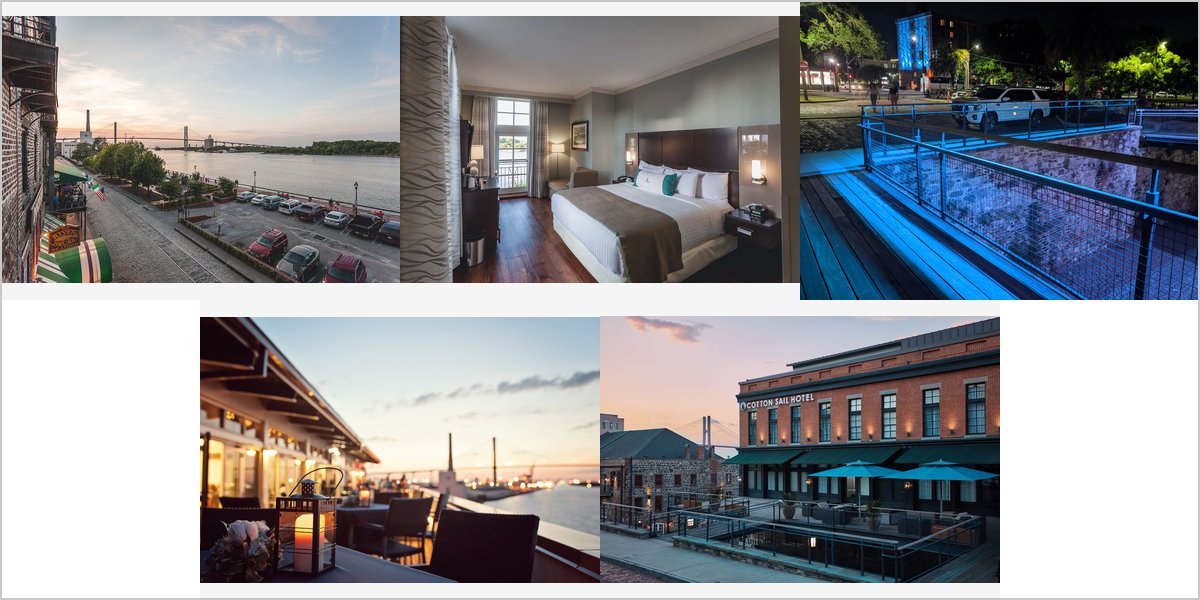
June 27, 2026
The Cotton Sail Hotel: Building the Shot List on River Street
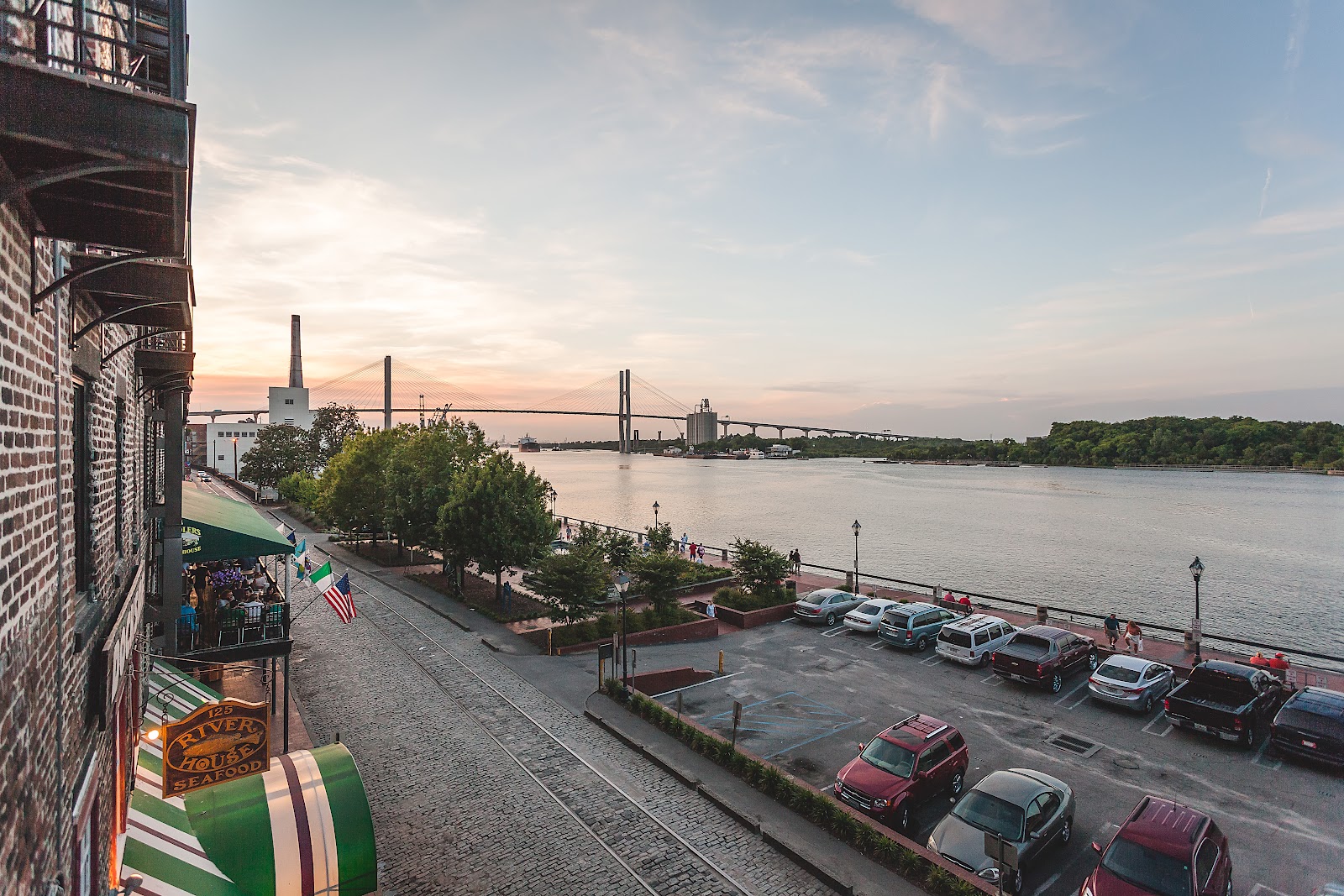
The rooftop is the venue. Everything else — brick, timber, the cobbled ramps below — is supporting material for the frames you get from up there.
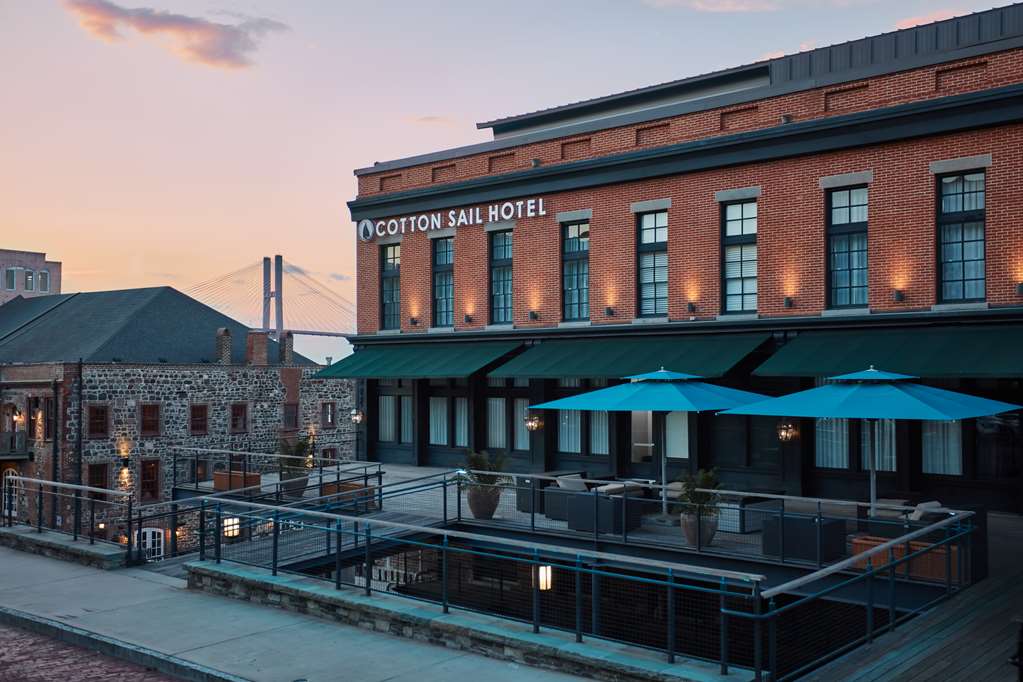
The Cotton Sail Hotel occupies a converted nineteenth-century cotton warehouse on Savannah’s River Street, retaining exposed brick and heavy timber from its working life, with a rooftop terrace overlooking the Savannah River and the port beyond.
River Street is the historic waterfront: a row of former cotton warehouses built into the bluff, with cobbled ramps running down from the higher city level and Factors Walk’s iron bridges above. Those materials — old brick, cobbles, ironwork, heavy timber — are the visual character of the area and they photograph well.
What makes this venue specifically worth planning around is the roof. A rooftop over a river gives you elevation, an open horizon, and low directional light that no interior in a warehouse conversion can offer. This guide is built as a shot list starting there. We have not photographed a wedding at the Cotton Sail; the geography and the optics of brick and rooftops are predictable, while which spaces your booking includes is for their team.
Cotton Sail Hotel at a glance
| Where | River Street, Savannah, Georgia — a converted cotton warehouse |
| Character | Exposed brick and heavy timber; rooftop terrace over the river |
| Light | Rooftop gives open sky and low sun; interiors are dark brick and warm |
| The asset | Elevation over the Savannah River and the historic waterfront |
| Ask first | Rooftop access and timing, and whether it is exclusive during your event |
Establish the rooftop access first
Rooftop bars are commercial spaces with their own trade, and a wedding does not automatically get exclusive use of one. Ask directly whether the roof is yours, for how long, and at what time — because if it is open to the public during your event, the coverage changes substantially.
Then ask which way the terrace faces relative to the river. The Savannah River here runs broadly east to west, so a north-facing terrace looks across the water with the sun travelling from right to left through the day. That side-lights the water and the far bank, which is considerably easier and more attractive than shooting into a setting sun over water.
With those two answers you can plan the whole day. Without them you are improvising on a roof in whatever light you find, which is how rooftop venues end up producing one usable frame instead of five.
The shot list, in shooting order
Six frames. The roof supplies three of them, which tells you where the priority sits.
- Rooftop wide, with the river. Couple small in frame, water and the far bank behind, shot when the light is across the water rather than into it.
- Rooftop portrait, tight. Longer lens, wide aperture, the river compressed into a band of soft tone behind them. This is the frame that makes the venue worth booking.
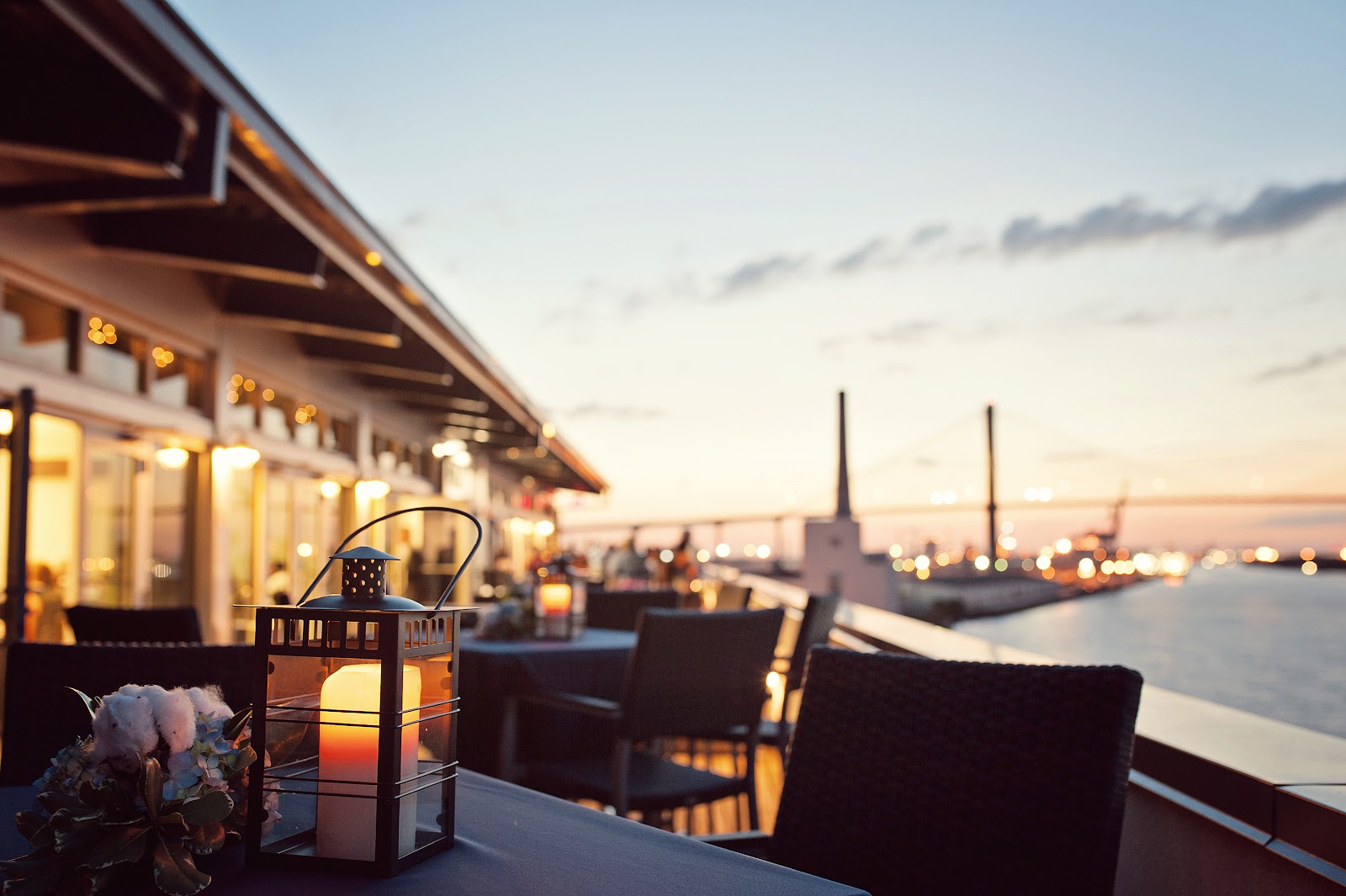
- Rooftop at dusk. Twenty minutes after sunset with the port lights and the bridge coming up. Best frame of the evening, and it requires being on the roof at a specific time.
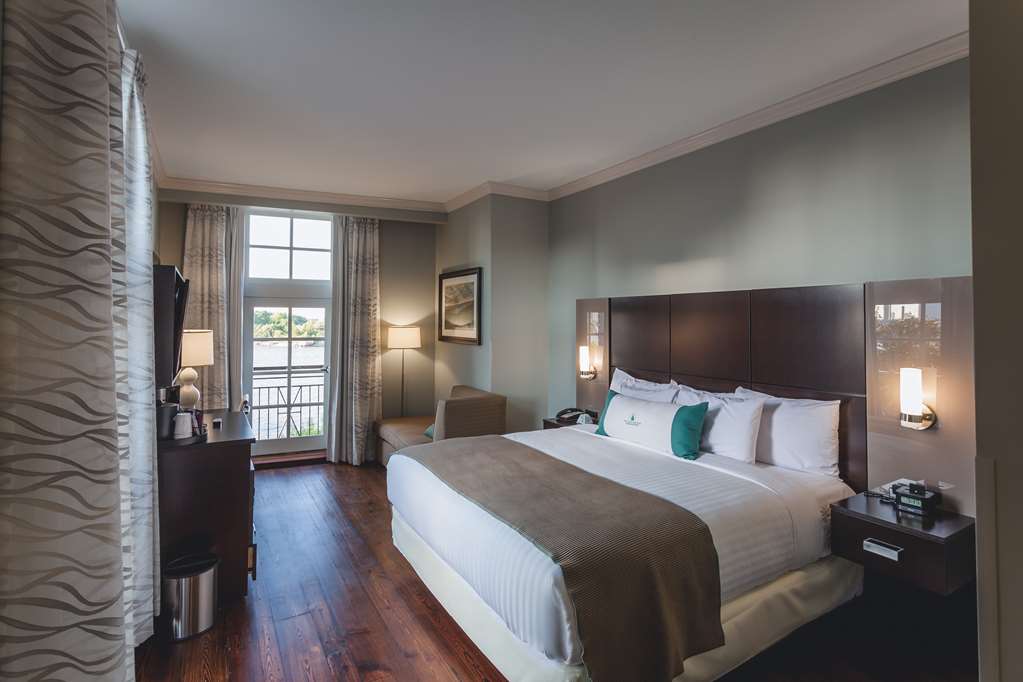
- Exposed brick and timber interior. Warm, dark and textured. Work near a window if there is one, or light it yourself with a slightly cooler key against the warm brick.
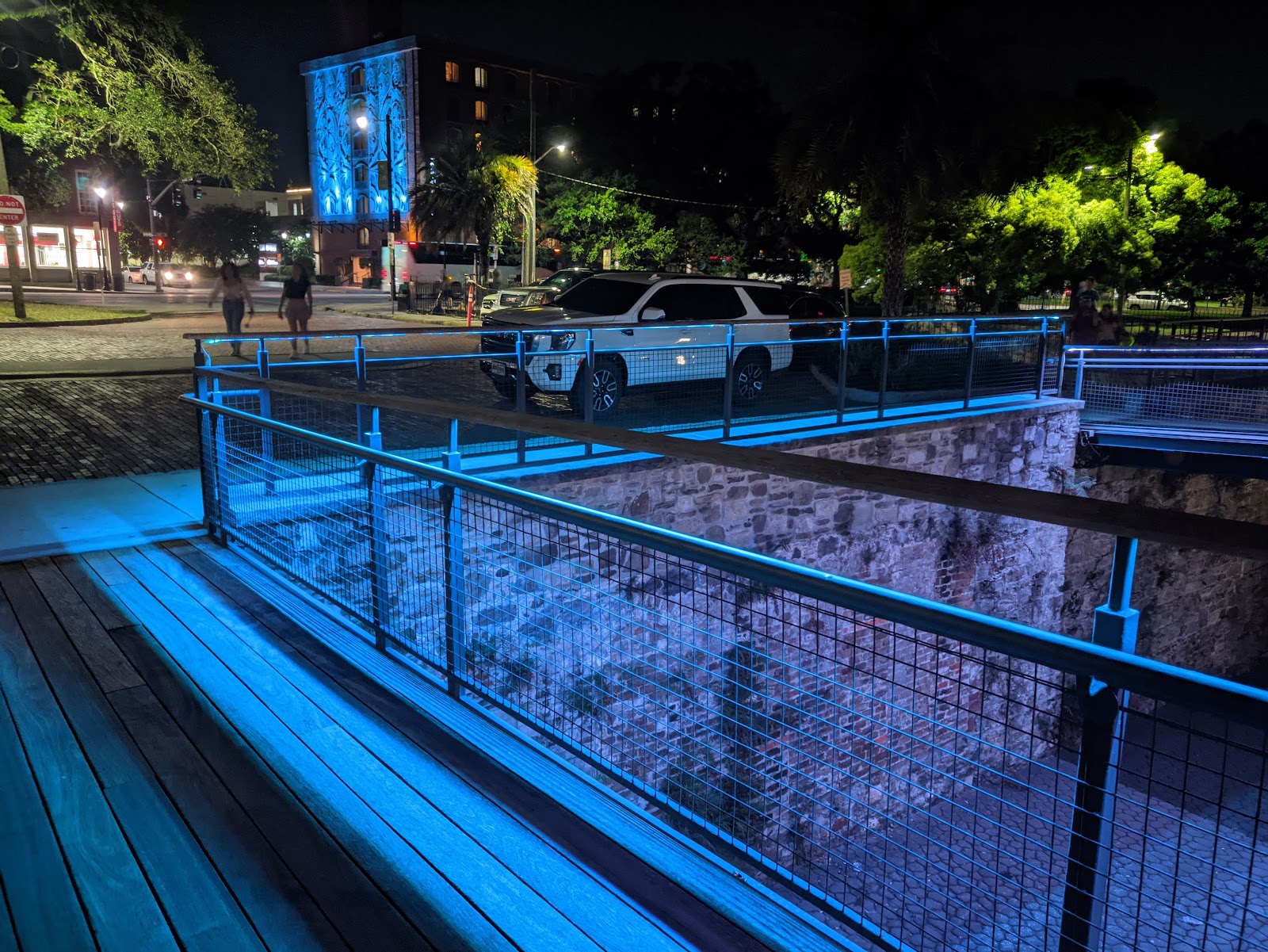
- The cobbled ramps and Factors Walk. Steep cobbles, old brick walls and iron bridges overhead — a genuinely distinctive Savannah frame, five minutes below.
- River Street frontage. The warehouse row itself, shot along the street in raking late light so the brick texture reads.
Exposed brick: darker and warmer than it looks
Old brick sits two to three stops below a white wall and it is red, which has two consequences. First, a flash that would adequately light a pale room underexposes a brick one, so you need more power, higher ISO or closer light placement. Second, whatever light does bounce comes back warm-red and lands on skin.
That warmth is not a fault — a converted warehouse is supposed to look warm, and amber reads as intimate. It becomes a problem only when it is the sole light on a face, because skin with no cool component in it looks artificial. Keep the room warm in white balance and light faces with something closer to neutral.
Heavy timber overhead compounds the darkness and makes bounce flash largely useless. So interior light comes from stands with modifiers, or from a window if the conversion left any usable ones. Ask about that, because a warehouse floor with real windows is a very different proposition from one without.
Practical cautions: wind, heat and cobbles
A rooftop over a river is exposed. Wind is constant and stronger than at street level, which rules out large light modifiers — a softbox on a stand up there is a hazard rather than a tool. Plan for bare or minimally modified flash. Wind also moves hair and veils continuously, which is an asset if you shoot bursts rather than single frames.
Savannah’s heat and humidity are severe from late spring to early autumn, and a roof has no shade. That limits how long anyone will comfortably stay up there in formalwear, so the rooftop block should be short and well-timed rather than open-ended. Humidity also fogs a lens moving from an air-conditioned interior to the roof — allow ten to twenty minutes to acclimatise, or keep one body dedicated to each.
The cobbled ramps are genuinely steep and genuinely uneven. They are one of the best backgrounds in Savannah and they are hard work in heels. Flag it in advance, allow extra time, and consider whether the couple go down alone rather than the whole party.
Finally, River Street is a busy tourist area. Expect people in frames at street level and plan longer lenses accordingly. Early morning is the only time it is genuinely quiet.
What works in your favour
- A rooftop over the river — elevation, open horizon and low directional light in one place
- North-facing river aspect side-lights the water rather than backlighting it
- Exposed brick and heavy timber give authentic warehouse texture
- Cobbled ramps and Factors Walk ironwork five minutes below — a distinctive Savannah frame
- Dusk from the roof with port and bridge lights is the best evening frame available
What to plan around
- Rooftop exclusivity is not automatic — confirm it or expect the public present
- Exposed brick is dark and warm; needs more light and a cooler key on faces
- Heavy timber ceilings make bounce flash ineffective indoors
- Constant rooftop wind rules out light modifiers entirely
- No shade on the roof, in severe summer heat and humidity
- Steep uneven cobbles, and a busy tourist street at ground level
More frames from Cotton Sail Hotel
Cotton Sail Hotel wedding photography: common questions
What should we confirm before booking?
Whether the rooftop is exclusively yours, for how long and at what time — rooftop bars have their own trade and a wedding does not automatically get exclusive use. Also confirm which way the terrace faces relative to the river, because that determines whether your light comes across the water or into the lens.
When is the best time on the roof?
Late afternoon when the light travels across the water rather than into it, and then the twenty minutes after sunset, when the port lights and the bridge come up. That dusk frame is the best of the evening and it requires being up there at a specific time, so schedule it rather than hoping.
Why is the exposed brick harder to light?
Because it sits two to three stops below a white wall and it is red. The darkness means you need more power or higher ISO than a pale room would take, and the colour means whatever bounces comes back warm-red onto skin. Keep the room warm and light faces with a cooler key.
Can you use lighting equipment on the roof?
Not modifiers. Wind over a river is constant and stronger than at street level, so a softbox on a stand is a hazard rather than a tool. Plan for bare or minimally modified flash. The wind does give you continuous veil and hair movement, which is worth shooting in bursts.
Are the cobbled ramps worth doing?
They are one of the best backgrounds in Savannah — steep cobbles, old brick and iron bridges overhead. They are also genuinely difficult in heels. Flag it in advance, allow extra time, and consider taking just the couple down rather than the whole party.
More Savannah venue guides
We are writing a photographer’s guide to every venue we would happily shoot in Savannah. Here are three more, plus the full index:
- The Forsyth Park Fountain: A Photographer Answers Your Questions
- The Hamilton-Turner House: A Season-by-Season Guide
- The Kehoe House: Who This Savannah Inn Suits
Planning a wedding at Cotton Sail Hotel?
The roof is the reason to book this hotel, so the roof is where the planning goes. Tell us your date and we will work out which way it faces, when the light crosses the water, and exactly when to be up there.