 The Redd on Salmon Street: Building the Shot List
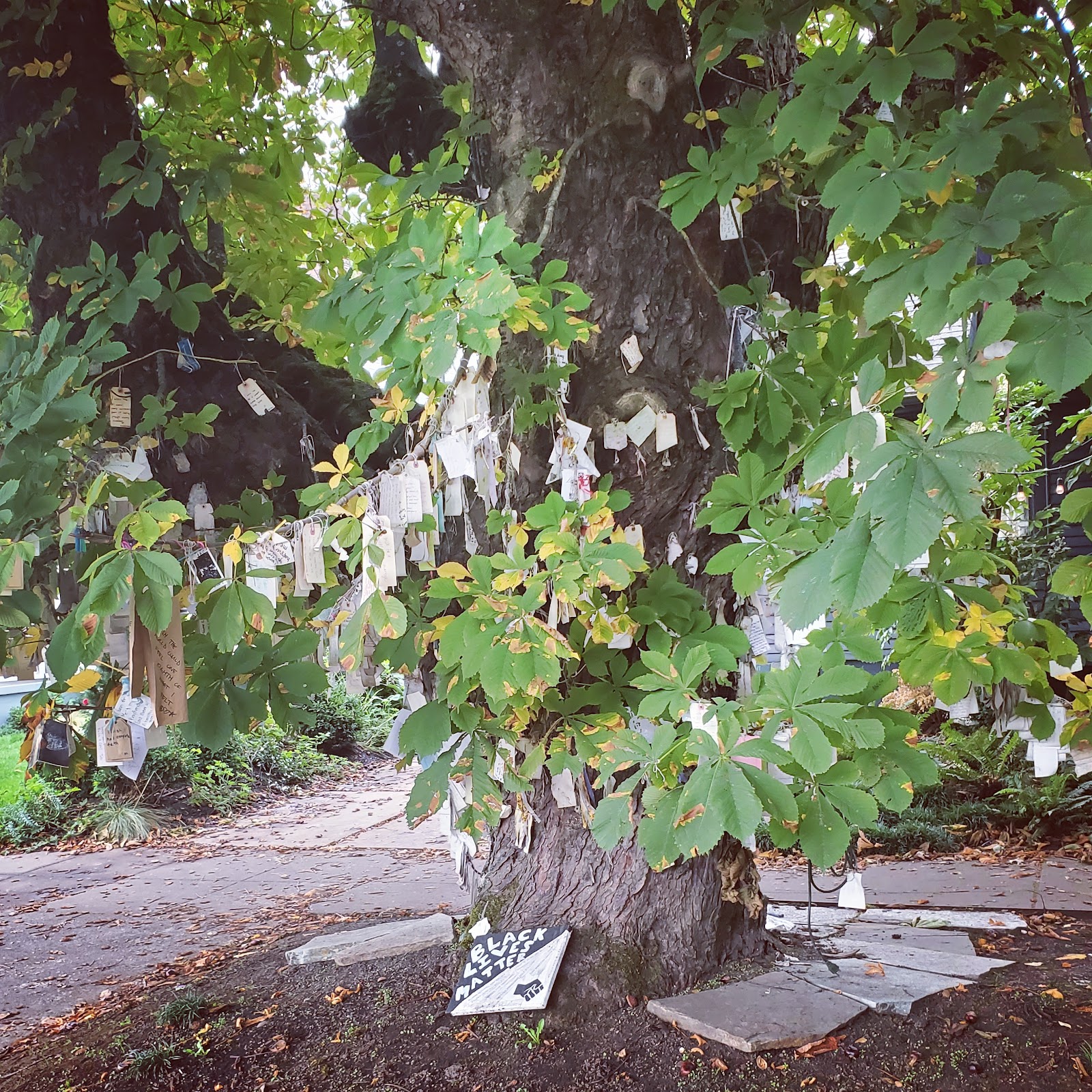
The Wishing Tree Estate, Portland: One Frame and How It Is Made
A stone path with wooden structures alongside it is one frame. Everything else supports it.
The Wishing Tree Estate offers, in its own description, the play of light and shadow across stone pathways and wooden structures during the golden hour — an ideal setting for soft-lit portraits.
That description names the frame precisely, and it is worth building a day around rather than hoping to catch. The frame is the path: camera low on the stone, the path running away from the viewer into the depth, wooden structures and planting closing in on both sides, and the couple placed somewhere along it in a pool of low light. It works because a path is the most reliable compositional device in any garden — long, unbroken, separating two planted masses, and ending in something rather than nothing.
So this is written as one frame and the three conditions it needs. We have not photographed a wedding at the estate; stone paths and timber structures behave the same wherever they are built. What the capacity is, which parts of the grounds are included, and what the wet-weather plan holds are the questions for their team — the last matters more here than at most venues.
The Wishing Tree Estate at a glance
| Where | Near Portland, Oregon |
| Character | An estate with stone pathways, wooden structures and mature planting |
| The frame | Low on the path, running away, timber and planting closing both sides |
| It needs | Low light along the path, a low camera, and one colour decision |
| Ask first | Capacity, which grounds are included, and the wet-weather plan |
The frame, and the three conditions
The first condition is that the light runs along the path rather than across it, and this is the whole reason the frame is a golden-hour frame rather than an any-time one. Stone has real texture — tooling marks, joints, weathering, moss in the gaps — and that texture reads only when light rakes across the surface at a shallow angle. Under a high sun the same path photographs as a flat grey ribbon; with the sun low and aligned with the path, every stone separates and the surface becomes the subject.
That means the path has a direction, and which way it runs relative to the setting sun decides everything. One walk at approximately the right hour establishes whether the light will come down the path towards the camera, along it from the side, or across it — and only the first two produce the frame. It is worth knowing before the day rather than discovering at seven o’clock.
The second condition is a low camera. How long the path appears in a photograph depends entirely on viewing height: dropping close to the stone stretches it towards the horizon, gives it depth and makes the texture run towards the viewer, while standing at eye level compresses it into a band across the middle of the frame. This is the single most consequential decision in the picture and it costs nothing but kneeling.
A low camera also lifts the timber structures and planting into the upper frame, which is where they belong — framing the top and sides rather than sitting below the horizon as background.
The third condition is a colour decision, because there are two conflicting influences. Weathered timber bounces strongly warm; dense planting bounces strongly green; and a stone path is a neutral reflector between them. Which one is filling a face depends on where the subject stands, and because the casts are localised rather than global, white balance cannot separate them. Set a custom white balance on a face in the position actually being used, and reset it when the position changes materially — a sequence that fails to match itself in a garden is nearly always auto white balance drifting between wood and foliage.
The couple belongs in the depth of the frame rather than at the front. Placed two-thirds of the way along, they become the focal point of the perspective, which is what the frame is for; placed close to the camera they block the path and it becomes an ordinary portrait with some planting behind.
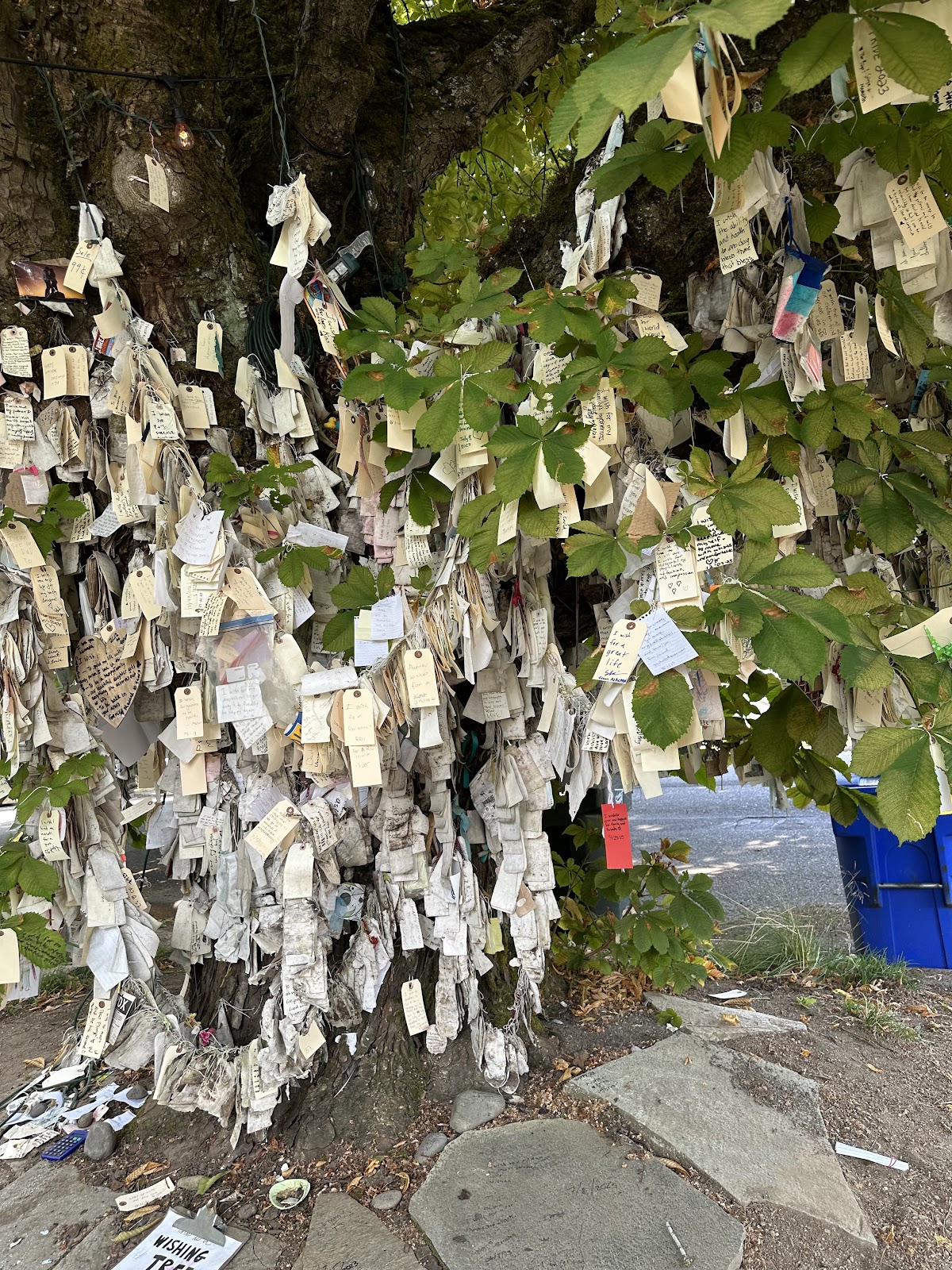
The timber, the planting and the rest of the grounds
Weathered timber is among the most forgiving surfaces a venue can have: a mid-tone that meters predictably, with grain, splits and weathering that hold detail at almost any sensible exposure. Like stone, it demands raking light — light running along a timber wall or post lifts the grain, light pointed at it flattens the board into a plain brown field.
Timber structures also give the thing an open garden lacks: overhead cover. A pergola, arbour, pavilion or covered deck blocks the sky above and leaves the sides open, which turns it into a large directional source — the architectural equivalent of a softbox, available all day regardless of what the sun is doing, and working in rain. At a garden venue that is the most valuable position on the property and it is worth locating first.
Mature planting is the summer resource and the standing hazard in the same object. Continuous deep shade is soft and directional; dapple, where sun comes through leaves, puts hot spots several stops above the surrounding shadow across a face and shifts with every breath of wind, impossible to correct or predict. Full shade, open light, or wait for the sun to drop below the canopy.
Green bounce is the accompanying cost and it is stronger in this region than in most, because Pacific Northwest planting is dense and moss is abundant. A pale stone path is the natural counter — it is a neutral reflector, so standing a couple on the path rather than on grass beside it puts neutral fill into the shadows for free.
Group photographs need a decided position rather than an improvised one, because a path is too narrow to line people up on and planting interrupts rows. The candidates are usually the widest area of lawn, a set of steps or the front of a timber structure — find the one that works and know it before it is needed.
Lawn, where there is any, behaves predictably: a dependable mid-tone that meters well, showing mowing pattern only in raking light, and offering an unobstructed foreground that rewards a low camera. The same low-camera logic as the path applies.
- Establish which way the path runs relative to the setting sun, in advance
- Get low: viewing height decides how long the path reads
- Put the couple two-thirds along, not at the front
- Set white balance on a face in position; timber fills warm, planting fills green
- Stand people on the stone rather than the grass to get neutral fill free
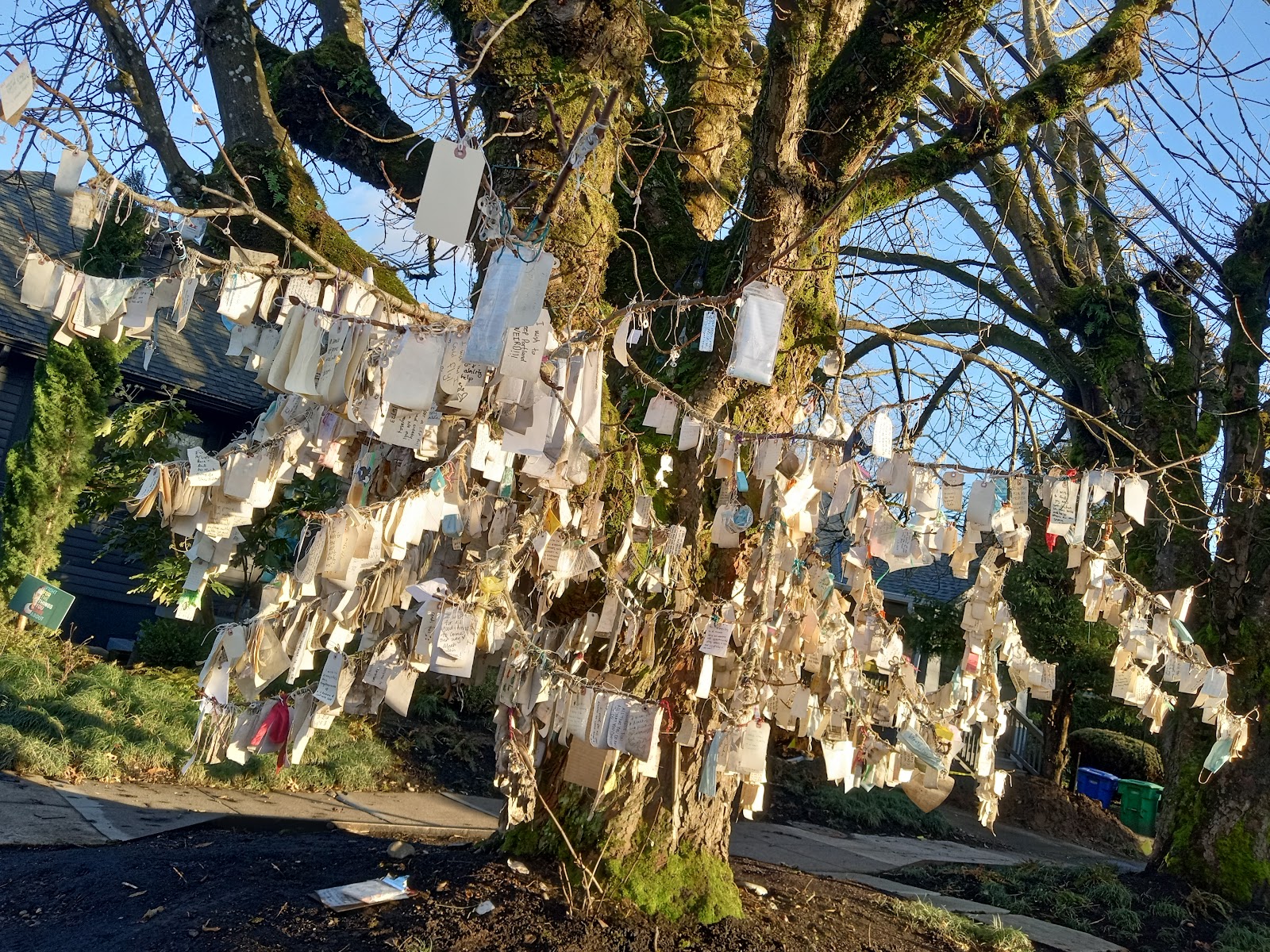
Portland light through the year, and rain
Portland’s light governs this venue in two opposite ways depending on the season, and both need saying plainly to a couple.
Overcast is the default for much of the year and for most purposes it is the best portrait light there is — an enormous diffuser giving soft even light with open shadows and no hard edge anywhere. Under it, position matters far less, groups are easy, and nothing needs carrying. Add half a stop for the bright grey sky and fix the slightly overhead direction with a low reflector or a lifted chin.
But overcast removes the one frame this venue is named for. Raking light across stone and timber requires a directional source, and a uniformly grey sky has no direction. On an overcast day the path is a flat grey ribbon and the timber is a flat brown plane — perfectly usable for portraits, and not the photograph the venue’s own description promises. That is an honest thing to establish in advance rather than to explain afterwards.
The partial answer on a grey day is to build direction: a single source placed low and to one side, aligned along the path rather than pointed at it, produces the raking effect artificially over a limited area. It works, and it needs to be planned rather than improvised.
Summer here is long-day country. Sunset falls late enough in June that the golden hour — the hour this venue exists for — arrives well after the reception has started. At this venue more than most that needs agreeing with a couple in advance as a short, deliberate excursion, because the frame cannot be moved earlier and it will not happen by accident.
Winter is the reverse: days are short and the sun stays low whenever it appears, which means raking light is available all day rather than for ninety minutes. A clear winter afternoon is arguably the ideal condition for this venue, and it is worth saying so.
Rain is workable rather than disabling. Portland rain is persistent and light rather than violent, and a wet estate is genuinely better in several ways: wet stone goes dark and every joint and tooling mark reads, timber darkens and shows grain, moss saturates, and the path holds reflections. What rain does not solve is seated guests in the open, so the fallback, its capacity and the decision time still need agreeing — and any covered timber structure is both the best rain position and the best light position on the property.
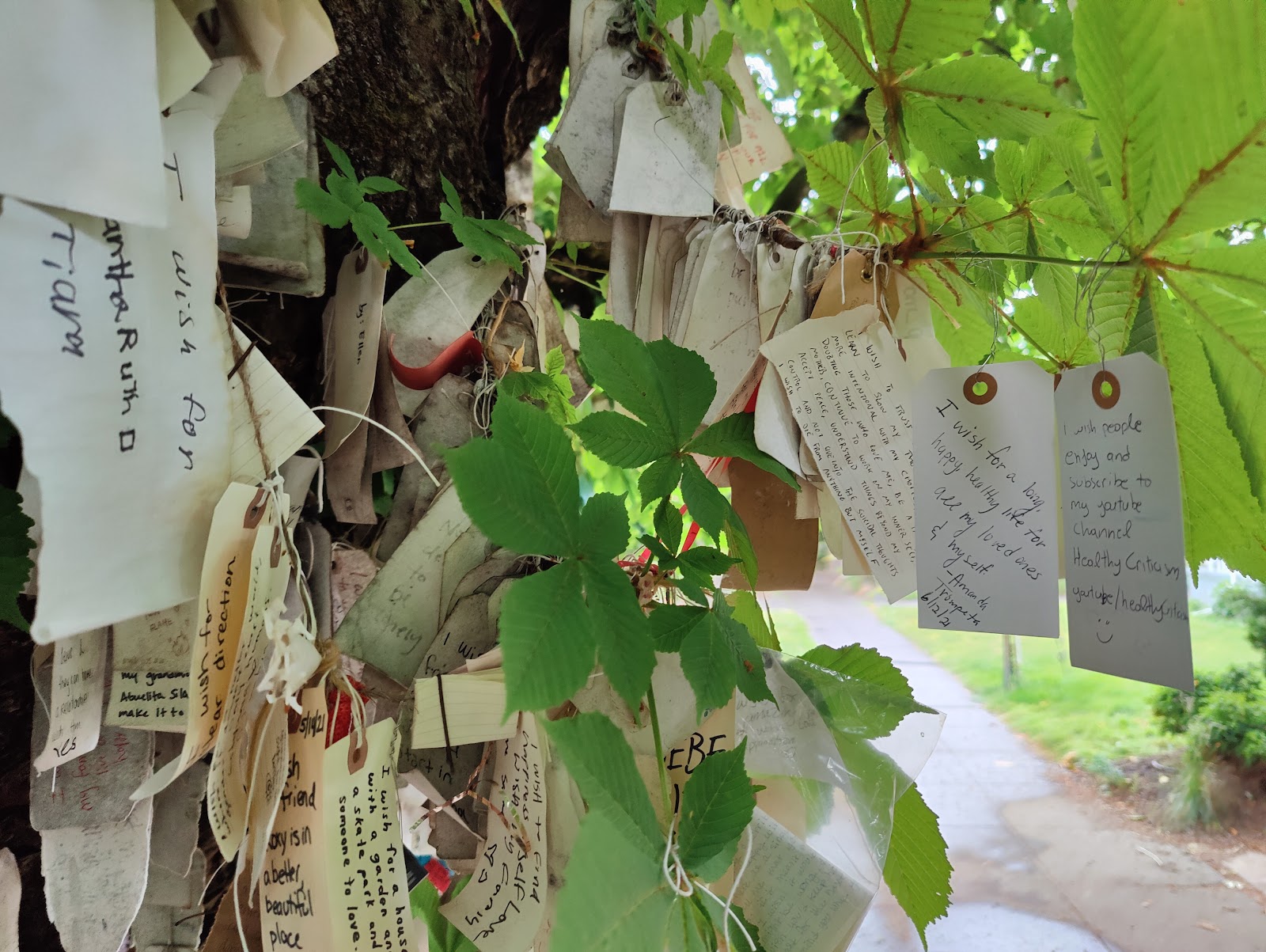
More frames from The Wishing Tree Estate
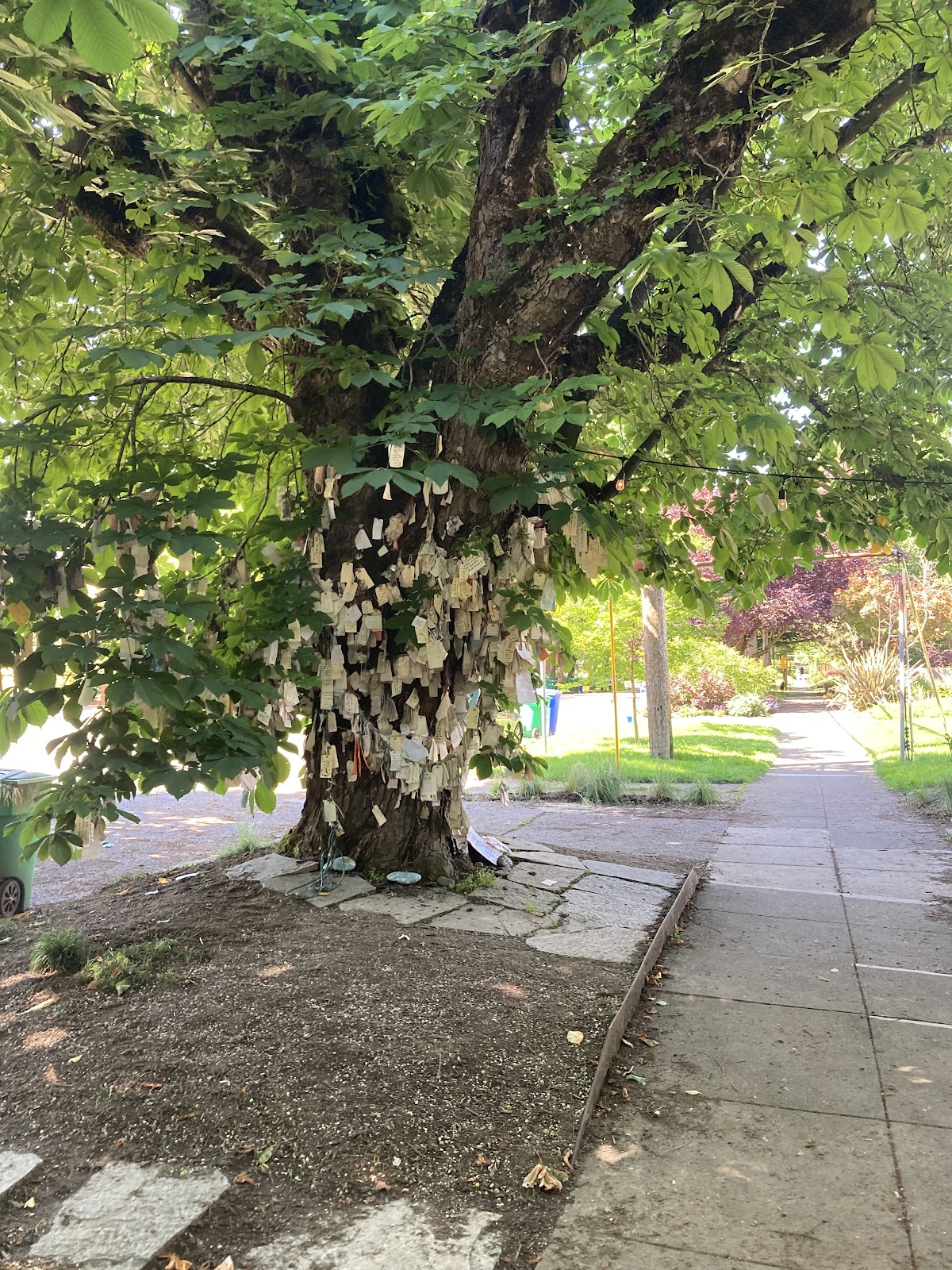
The Wishing Tree Estate wedding photography: common questions
What is the defining frame?
The stone path: camera low, the path running away into the depth, timber and planting closing both sides, and the couple placed two-thirds along in low raking light.
Why is it a golden-hour frame specifically?
Because stone texture only reads when light rakes across it at a shallow angle. Under a high sun the path photographs as a flat grey ribbon; with the sun low and aligned, every stone separates.
What should be established in advance?
Which way the path runs relative to the setting sun. Light coming down the path or along it produces the frame; light across it does not.
Why get the camera low?
Because how long the path reads depends entirely on viewing height. Low stretches it towards the horizon and makes the texture run towards the viewer; eye level compresses it into a band.
How do you handle the colour?
Set a custom white balance on a face in the position being used and reset it when the position changes. Timber fills warm and planting fills green, and both casts are localised.
What happens on an overcast day?
Portraits are excellent and the signature frame disappears, because raking light needs direction and a grey sky has none. A single low side source aligned along the path recreates it over a limited area.
More Oregon venue guides
We are writing a photographer’s guide to every venue we would happily shoot in Oregon. Here are three more, plus the full index:
- The Woodlark Hotel, Portland: How the Light Moves
- The McMenamins Edgefield, Troutdale: Field Notes, Problem and Solution
- The Smith Rock State Park, Terrebonne: The Problem, and Four Ways Out of It
Planning a wedding at The Wishing Tree Estate?
One frame, one direction, one agreed hour. Tell us your date and we will fix all three.