 Overhills Mansion: Who This Venue Suits, and Who It Doesn’t
The Hotel Monaco, Baltimore: Field Notes on a Restored Early-1900s Building
Grand early-1900s architecture with a deliberately bold modern fit-out is two strong voices in one room.
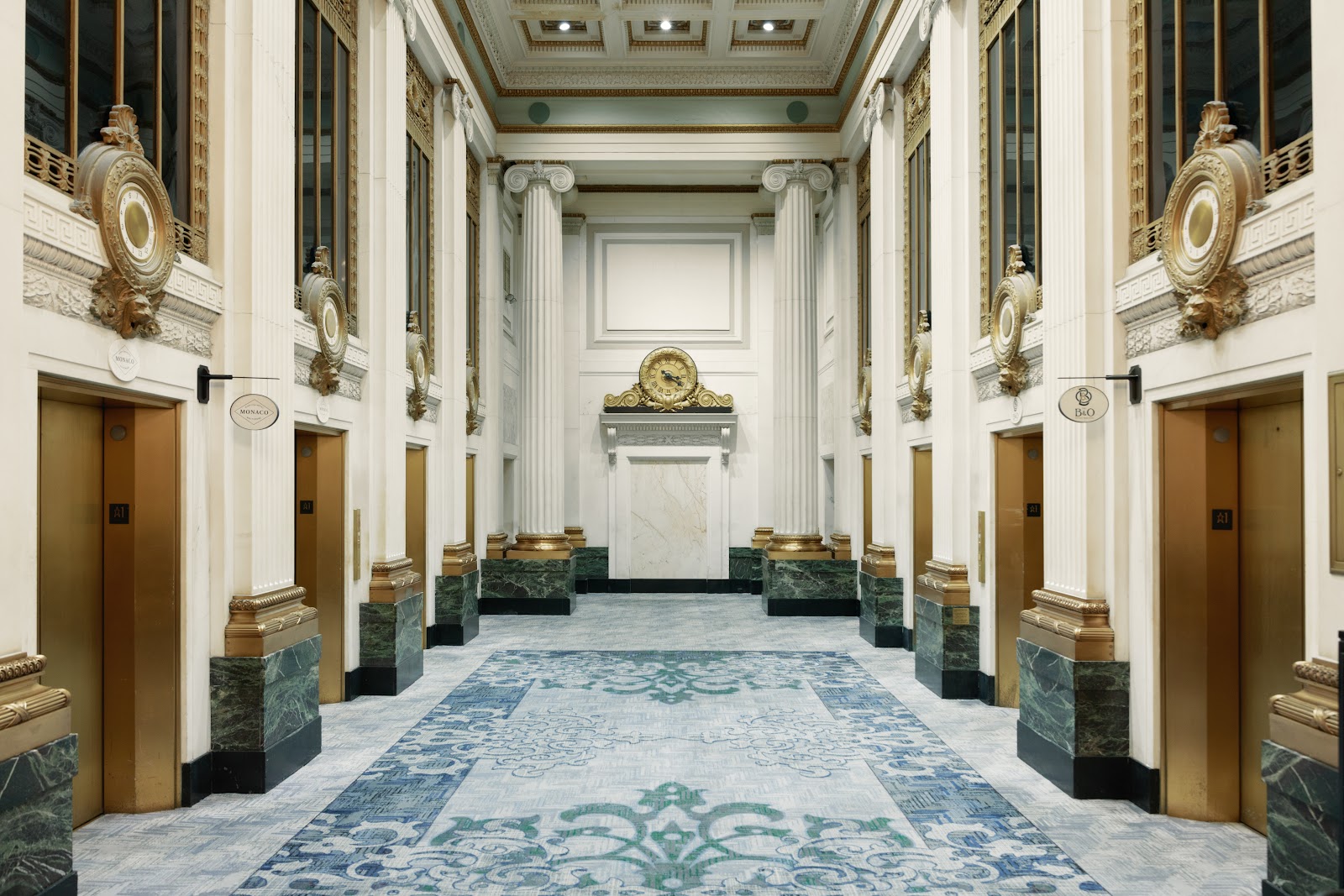
The Hotel Monaco occupies a beautifully restored building in downtown Baltimore dating from the early 1900s, and the contrast between that shell and its interior decoration is the thing to plan around.
Buildings of this period and purpose were built to impress from the pavement inwards: tall ground-floor volumes, generous stairs, marble or stone, plasterwork, and windows sized for an age before electric light was taken for granted. Contemporary boutique fit-out goes the other way — saturated colour, pattern, strong furniture and decorative lighting chosen to be noticed. Both are good, and both are assertive, which means almost every frame in the building involves a decision about which one is the subject.
These are field notes: the conditions you will meet and what each one needs. We have not photographed a wedding at the Monaco; restored early-century buildings with boutique interiors behave consistently. Which rooms are included, whether the function room lighting is adjustable and what may be attached to restored fabric are the questions for their team — restored stone and plaster usually take no fixings at all.
The Hotel Monaco at a glance
| Where | Downtown Baltimore, Maryland |
| Character | A restored early-1900s building with bold contemporary interiors |
| The friction | Period architecture and strong decor both want to be the subject |
| Best light | Tall period windows, and the guest rooms |
| Ask first | Rooms included, lighting control, fixings to restored fabric |
What you meet, and what each one needs
Tall period windows are the first condition and the best thing in the building. A window sized for an era with weak artificial light is generous by modern standards, which makes it a very large soft source close to the subject with natural fall-off into the room behind. A subject two metres inside a tall window on the shaded elevation has architectural-scale lighting that needs no permission, no stand and no cable.
Which elevation is shaded matters and changes through the day, so one walk on arrival to establish it is the most valuable five minutes available. A sunlit tall window gives a hard patch and, through glazing bars, a grid of hard shadow — attractive on a stone wall and unusable on a face.
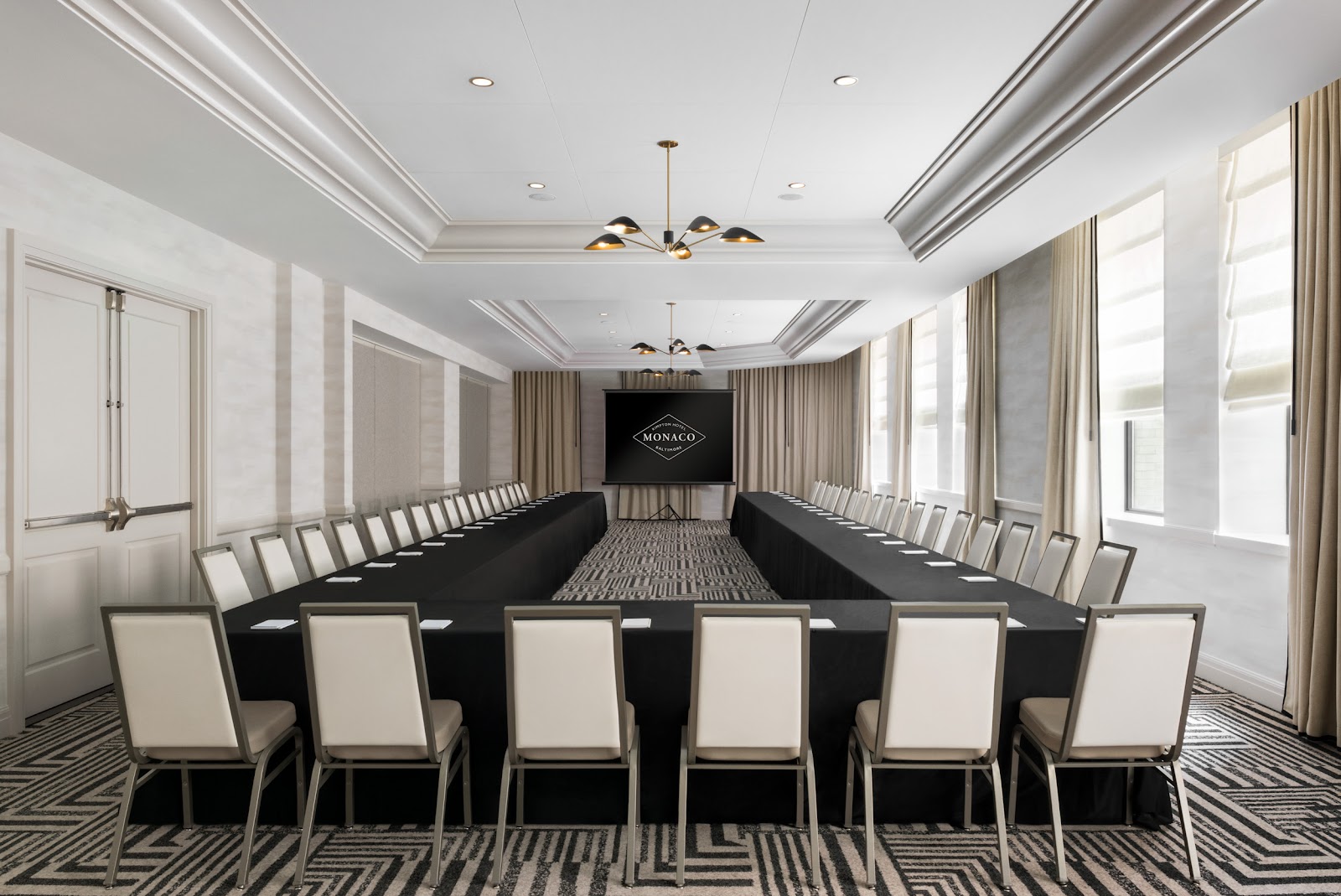
High ceilings are the second condition and they remove bounce. A restored ground-floor volume has a ceiling far enough away that a flash aimed at it returns almost nothing usable, so the substitutes are a pale wall at a sensible distance, a reflector, or direct modified light. Test with one frame in the first minute rather than discovering it later.
Plasterwork and stone are the third, and they need the opposite of what hotel lighting provides. Mouldings, cornices and columns are three-dimensional, so they read only when light crosses them at an angle and casts small shadows. Under the even downward light a modern fit-out installs, the same ornament flattens into a pale field and the room photographs blander than it looks. Place a single source to graze a surface rather than face it and the detail returns.
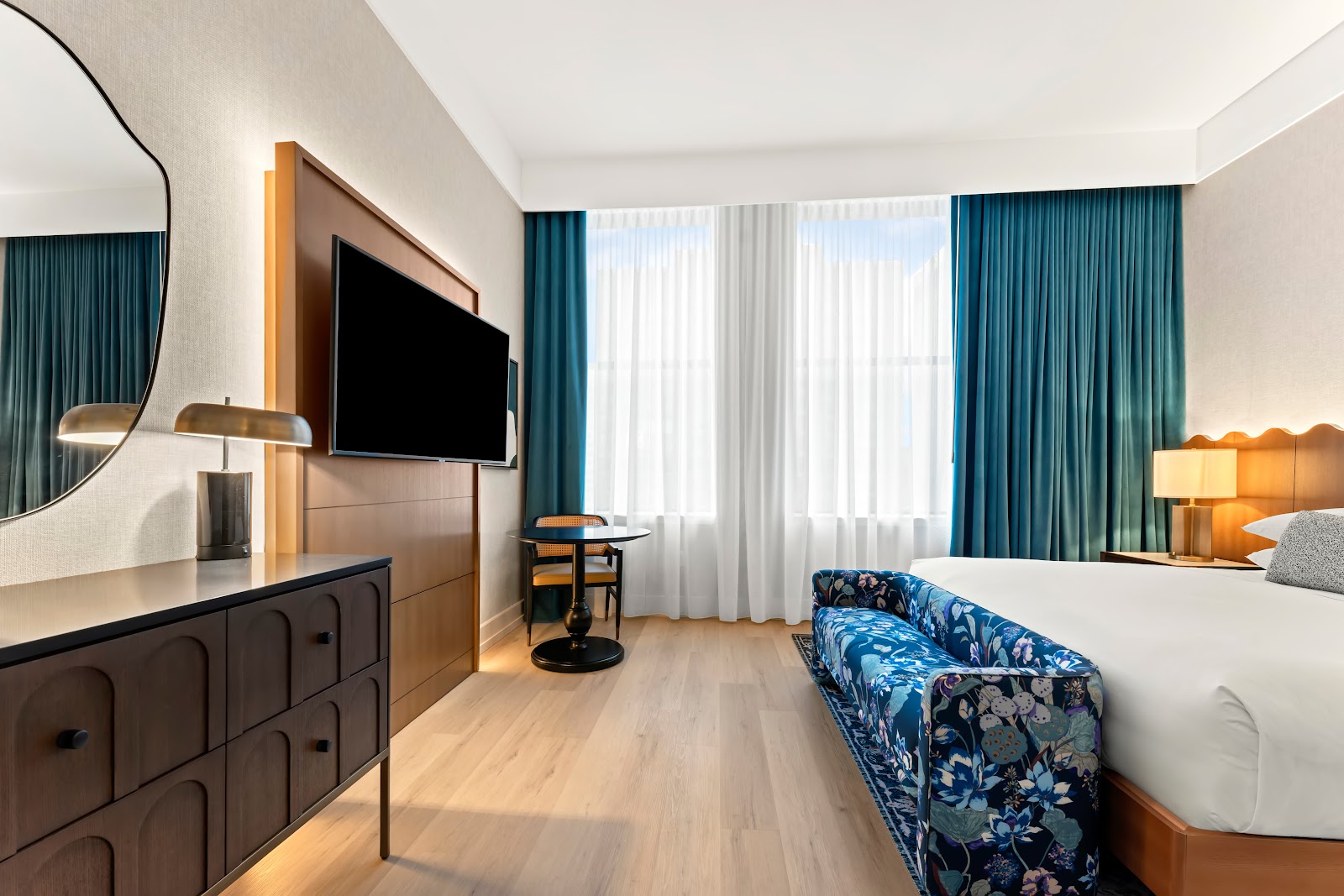
Saturated decor is the fourth and it is the colour problem. Strong wall colour, patterned textiles and coloured decorative lighting all throw their own cast onto nearby skin, and because the cast is localised rather than global, white balance cannot correct it. Make your own light the authority on faces — one source, gelled to a chosen temperature, with white balance set to it — and let the room be as coloured as it is behind.
Bold pattern is the fifth and it is a composition problem rather than a technical one. Strong pattern behind a subject competes for attention, and the tool is a long lens at a wide aperture so the pattern becomes a soft field of colour rather than a legible design. Or commit deliberately, placing the couple in relation to it so both read. Half-in — pattern partly sharp, partly not — fails.
The stair, the guest rooms and the evening
A generous stair is the frame a building of this period reliably gives, and it is worth seeking out early. A stair provides elevation, a diagonal or a curve, a handrail as a leading line, and a natural place for people to arrange themselves at different heights without being posed into tiers. It is the most useful single architectural feature in any hotel of this class.
Stairs also solve the group problem, which high-ceilinged hotels otherwise handle badly: steps give rows automatically, so a group of twenty arranges itself in a way that a flat ballroom floor never does.
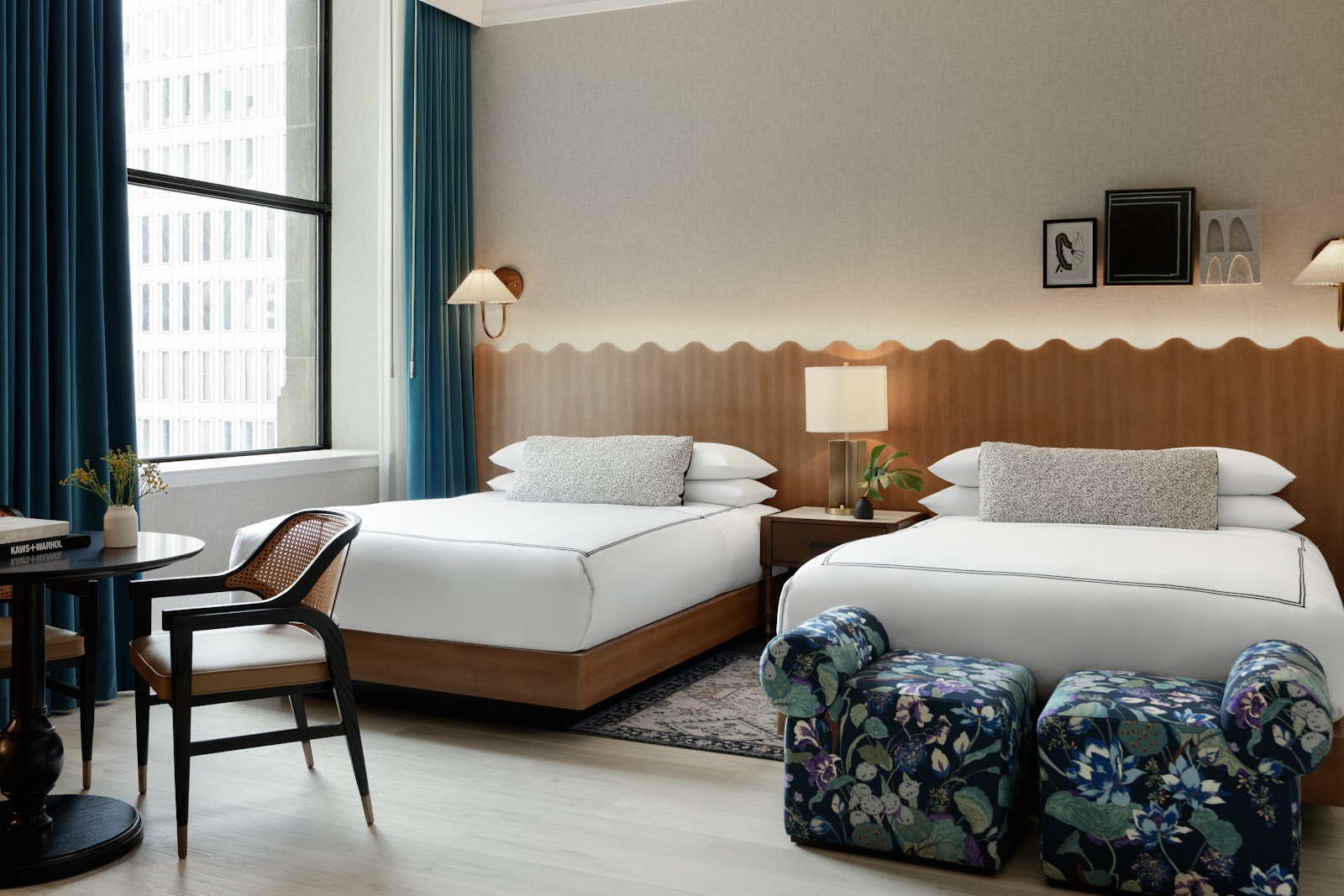
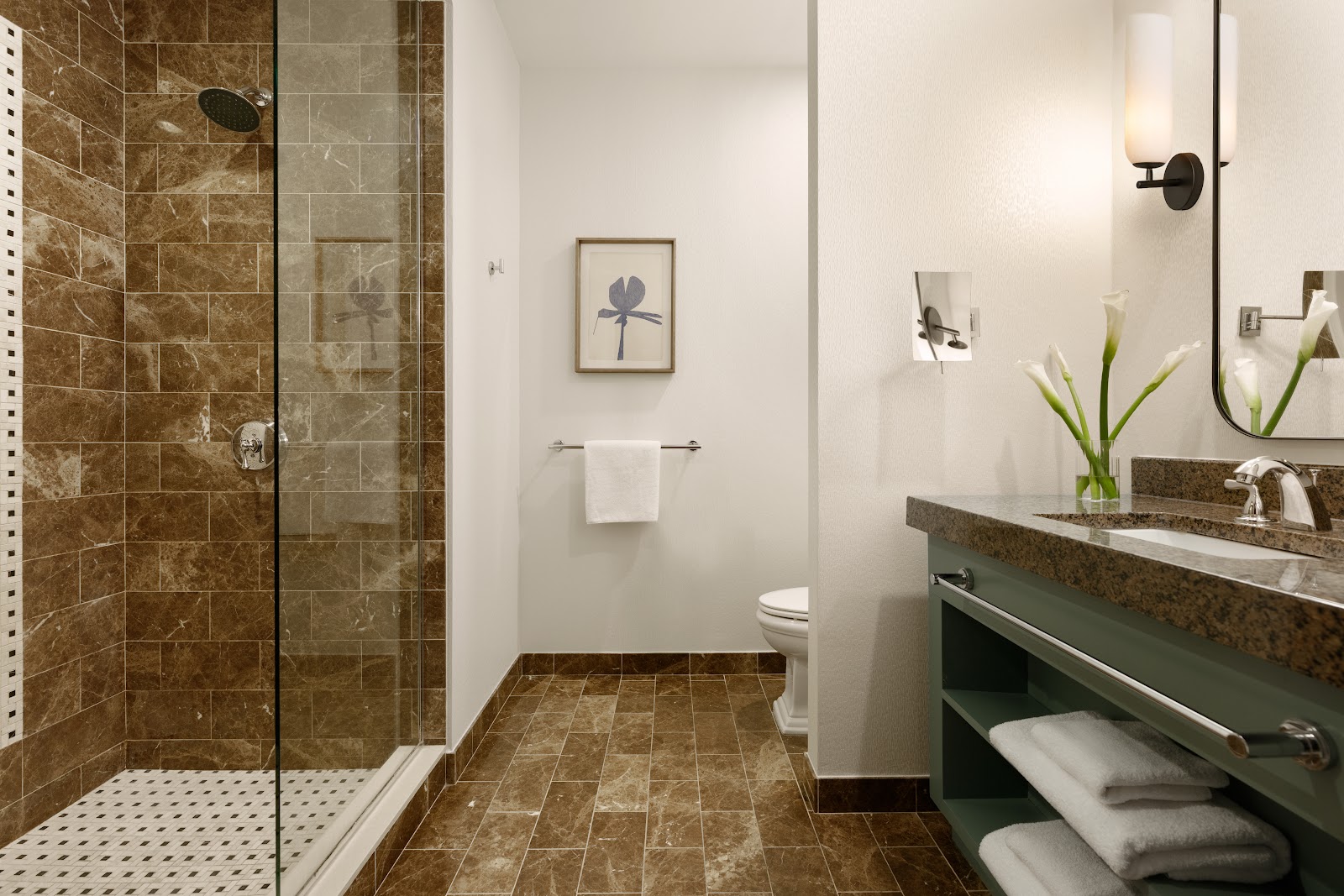
Guest rooms are where the best portrait light is, for the same reason as in any hotel. Domestic-sized windows with walls close enough to bounce give soft directional light with usable fill, and low enough ceilings that a flash aimed upward actually returns something. Ask for the largest window on the shaded side, switch off every overhead so the room has one colour of light, and move the lamps out of frame — mixed sources are the commonest reason preparation coverage looks worse than the room did.
In a boutique hotel there is one extra step: find the plainest patch of wall in a boldly decorated room for the dress and the detail shots, because strong pattern behind a hanging dress competes with it and cannot be removed afterwards.
The evening is a warm low-light interior and should be allowed to look like one. Fast lenses wide open at a raised ISO give frames that match the rooms; one small warm-gelled source at face height fixes the overhead problem wherever legibility matters. Set white balance for the faces and hold it through the block, because everything in a warm interior bounces warm and auto white balance drifting between frames is the usual reason a sequence fails to match itself.
The dusk crossing is the one timed frame. For roughly twenty minutes after sunset the street outside falls to about the brightness of the interior lighting, and one exposure at a tall window holds the lit room, the couple and downtown Baltimore beyond. Take the sunset time, add fifteen, be in position. After it, tall windows become tall mirrors: lights off-axis, frames oblique, reflections used deliberately.
- A tall shaded window is architectural lighting with no permission needed
- Test bounce once on arrival; a period ceiling usually returns nothing
- Place light to graze plaster and stone, or the ornament disappears
- Find the plainest wall in a bold room for the dress and the details
- Sunset plus fifteen at a tall window, then the glass turns to mirror
Downtown Baltimore, and the weather
Downtown Baltimore is a coherent extension of an early-1900s hotel rather than a third register, which makes it useful. Commercial architecture of the same period in brick and stone, on a regular grid, at a scale that is low-rise over much of it — which means low evening sun reaches street level and runs the length of a street rather than being cut off by towers.
That gives ninety minutes of raking light down whole blocks at no equipment cost, and brick and stone are forgiving mid-tones that hold detail across a wide exposure range. They only show texture when light runs along them, so the useful move is a short walk to find which side is being raked rather than photographing the first wall you reach.
The white marble steps fronting Baltimore rowhouses are a genuine local signature and behave as low reflectors, bouncing light up into a face and filling the shadow that overhead sun creates. A frame on them is located and lit at the same time — a combination that is rare at street level anywhere.
Alleys and side streets are the most dependable positions in any downtown: walls on both sides give directional light and a contained background, and service elevations hold the most texture because nobody ever tidied them.
Mid-Atlantic conditions apply. Summer heat and humidity make long outdoor blocks difficult in formal clothes, so trips should be short and purposeful, and the building’s own shadow across the street is the reliable midday shade. Afternoon thunderstorms are common rather than rare, which makes a hotel an excellent fallback — the day continues indoors without a decision.
Humidity is the season’s equipment risk and it works in both directions: kit chilled by air conditioning fogs comprehensively on reaching warm damp air, and in winter cold kit fogs on coming in. Both take many minutes to clear, and both are avoided the same way — let equipment come towards the temperature of where it is going before it gets there. And the light after a summer cell passes, with wet streets returning reflections of a stone facade under a dark sky, is frequently the best of the day.
More frames from The Hotel Monaco
The Hotel Monaco wedding photography: common questions
What is the best light in the building?
A tall period window on the shaded elevation. Windows sized for an era of weak artificial light are generous by modern standards, so two metres inside one is architectural-scale lighting with nothing to set up.
Does bounce flash work?
Not in the tall ground-floor volumes — the ceiling returns almost nothing. Use a pale wall, a reflector or direct modified light, and test with one frame in the first minute.
Why does the plasterwork look flat?
Because modern fit-out lighting is even and downward, and three-dimensional ornament only reads when light crosses it at an angle. Place a single source to graze the surface rather than face it.
How do you handle saturated decor?
Let your own gelled light own the faces, with white balance set to it, and allow the room to be as coloured as it is behind. The cast from a coloured wall is local, so global white balance cannot fix it.
What about bold pattern behind people?
Subordinate it with a long lens at a wide aperture so it becomes a soft field of colour, or commit deliberately so both read. Half-in — partly sharp pattern — fails.
Why is the stair so useful?
It gives elevation, a diagonal or curve, a handrail as a leading line, and rows for a group automatically. It is the most useful single feature in a hotel of this class.
More Baltimore, MD venue guides
We are writing a photographer’s guide to every venue we would happily shoot in Baltimore, MD. Here are three more, plus the full index:
- La Banque de Fleuve, Baltimore: Photographing a Bank Building by the Water
- The Maryland Science Center, Baltimore: A Walk Through a Science Museum
- The National Aquarium, Baltimore: Four Ways Out of the Blue Light Problem
All Baltimore, MD Wedding Venues →
Planning a wedding at The Hotel Monaco?
One decision per room about which voice wins. Tell us your date and we will make them.