 Choctaw Hall: What a Gazebo Ceremony Does to the Photographs
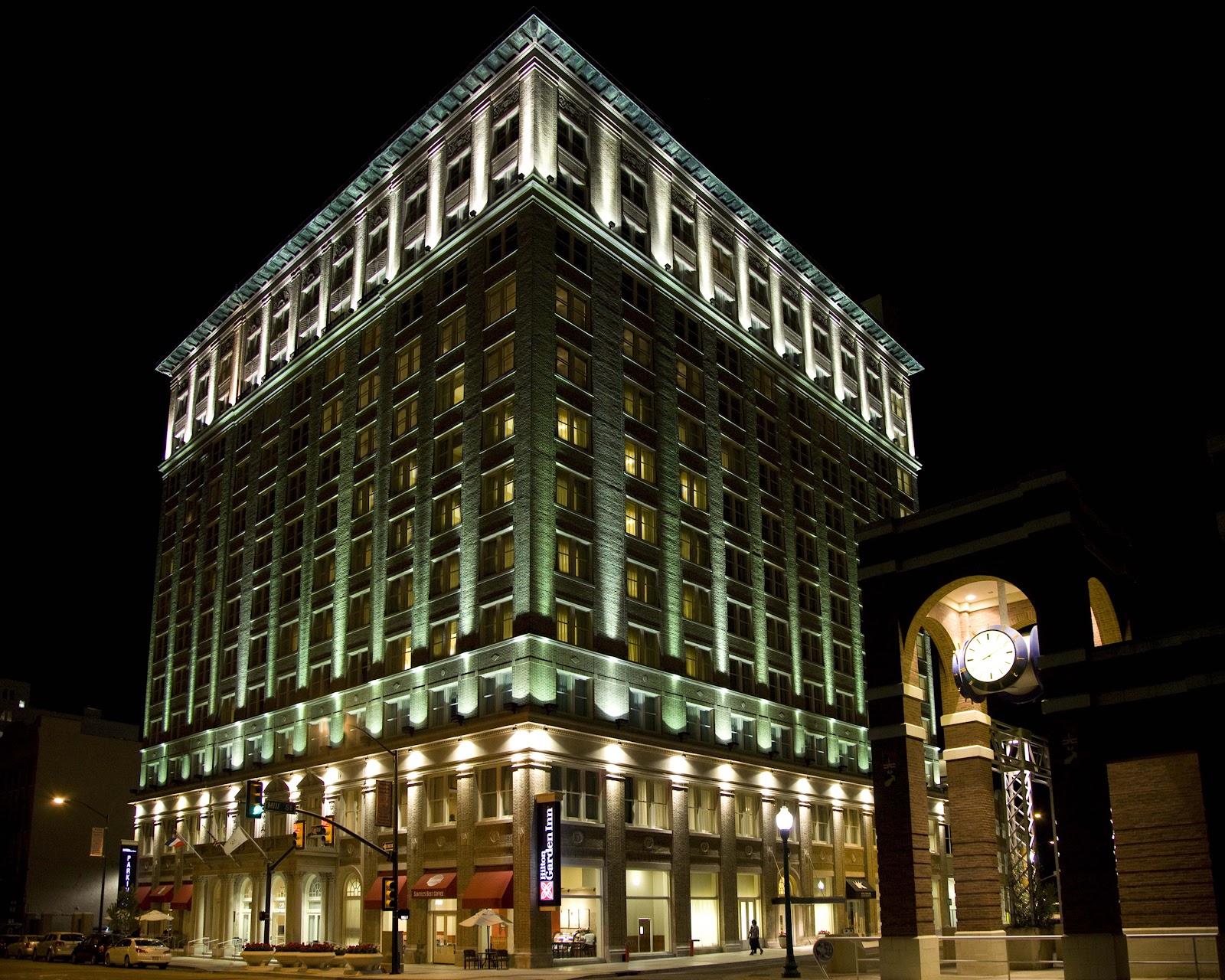
The King Edward Hotel, Jackson: Field Notes on a Restored Grand Hotel
Restored means two things at once: the architecture is old and the lighting is new. They do not agree.
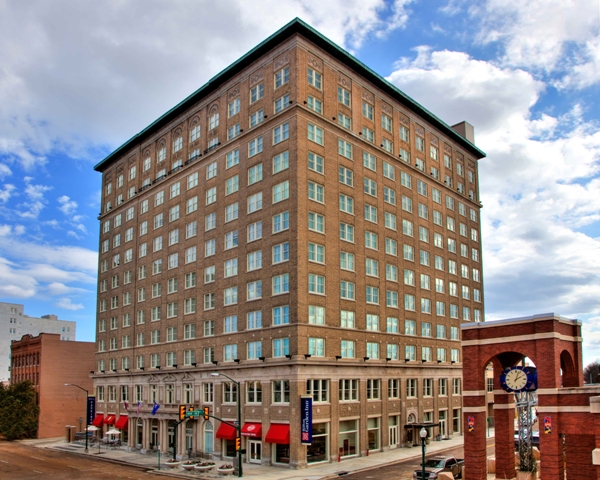
The King Edward Hotel in downtown Jackson is a restored historic hotel where period architecture and contemporary decor sit together — which the venue describes, accurately, as a versatile canvas.
Versatile is the right word and it is also the thing to plan around. A restored grand hotel gives you period volume and period ornament — high ceilings, plasterwork, a lobby built to impress, a ballroom sized for a period idea of an event — fitted out with modern lighting, modern finishes and modern service spaces. Each half is good. The friction is that period architecture wants raking light to show its ornament, while modern hospitality lighting is designed to be even and unobtrusive, and even light on ornament makes it disappear.
These are field notes: the conditions you will meet and what each one needs. We have not photographed a wedding at the King Edward; restored grand hotels behave consistently. Which rooms a wedding includes, what the ballroom lighting can be set to and whether the lobby may be used for portraits are the questions for their team.
The King Edward Hotel at a glance
| Where | Downtown Jackson, Mississippi |
| Character | A restored historic hotel — period architecture, contemporary interiors |
| The friction | Ornament needs raking light; modern hotel lighting is deliberately even |
| Best asset | A period lobby built to impress, which photographs as one |
| Ask first | Which rooms, ballroom lighting control, lobby portrait access |
What you meet, and what each one needs
High ceilings are the first condition and they remove the move most photographers make first. A period ballroom or lobby ceiling is far enough away that a flash aimed at it returns almost nothing usable, so bounce — reliable in an ordinary room — barely functions. The substitutes are a pale wall at a sensible distance, an assistant with a reflector, or direct modified light, and it is worth finding out which works in the first five minutes rather than the fiftieth.
Plasterwork and ornament are the second, and they need exactly the opposite of what hotel lighting provides. Mouldings, cornices, columns and coffers are three-dimensional, so they read only when light comes across them at an angle and casts small shadows. Under the even, downward, low-contrast lighting a modern hotel installs, the same ornament flattens into a pale field and the room photographs as blander than it looks. So the positions worth finding are near windows, near wall fittings, or wherever a single source can be placed to graze a surface rather than face it.
Modern fit-out is the third and the colour problem comes with it. A restored hotel typically has several generations of light in one room — daylight through tall windows, warm decorative fittings, cooler recessed downlights, sometimes coloured accent lighting on architecture. Three colour temperatures in one frame cannot be fixed afterwards, so pick the source that should be correct, set a manual white balance to it, and either switch off or overpower whatever else lands on skin.
A period lobby is the fourth and it is the best thing in the building. Lobbies of this era were built as public theatre: tall, symmetrical, with a stair or a strong axis and materials chosen to impress. That gives a frame that is immediately legible and specific to the place — and symmetry means it rewards precision, so level carefully and either centre exactly on the axis or clearly do not.
Guest floors are the fifth and they are where the daylight is. Rooms have domestic-sized windows with walls close enough to bounce, which gives soft directional light with usable fill — usually the best portrait light in a hotel. Ask for the largest window on the shaded side, turn the overheads off so the room has one colour of light, and move lamps out of the frame.
The ballroom, and the shape of the evening
A period ballroom is a large volume with a high ceiling, decorative fittings and — usually — a house lighting scheme on a dimmer that will be set low for a wedding. That produces a predictable set of conditions: low ambient, warm colour, sources overhead, no usable bounce, and steep fall-off from the fittings.
The solution is a small number of deliberate decisions rather than a lot of equipment. Expose for the room so it still reads as the warm dim ballroom it is; add one warm-gelled source at face height, off the camera axis, for anything that has to be legible; set white balance to the gel and hold it for the whole block. And use the fall-off as free separation — in a large dim room a subject three metres from anything else sits against natural darkness with no work at all.
Chandeliers and decorative fittings in frame are composition rather than clutter if handled as such. At a wide aperture they become warm points behind a subject, which is why a period ballroom photographs so well on a fast lens; the failure is placing a bright fitting immediately beside a head, where it pulls the eye off the face every time.
Tall period windows are worth planning around because they are the only thing in the room that changes. In daylight they are four or more stops brighter than the interior, so choose deliberately: let them blow to white shapes, light the couple to match the view, or wait for the crossing. That crossing — roughly twenty minutes after sunset when the outside falls to interior brightness — is the only time the room and the city outside both sit in one exposure, and it is worth an appointment in the plan.
After it, tall windows become tall mirrors. Lights go off-axis, frames go oblique, and the reflection becomes usable material rather than a defect, provided there is no stand in it.
- Assume no ceiling bounce; find the pale wall or go direct in the first five minutes
- Place light to graze plasterwork, not to face it, or the ornament disappears
- One source correct, manual white balance, overpower or kill the rest
- Guest rooms are the best portrait light: biggest shaded window, overheads off
- Sunset plus fifteen for the one frame that holds room and city together
Downtown Jackson, and a Mississippi summer
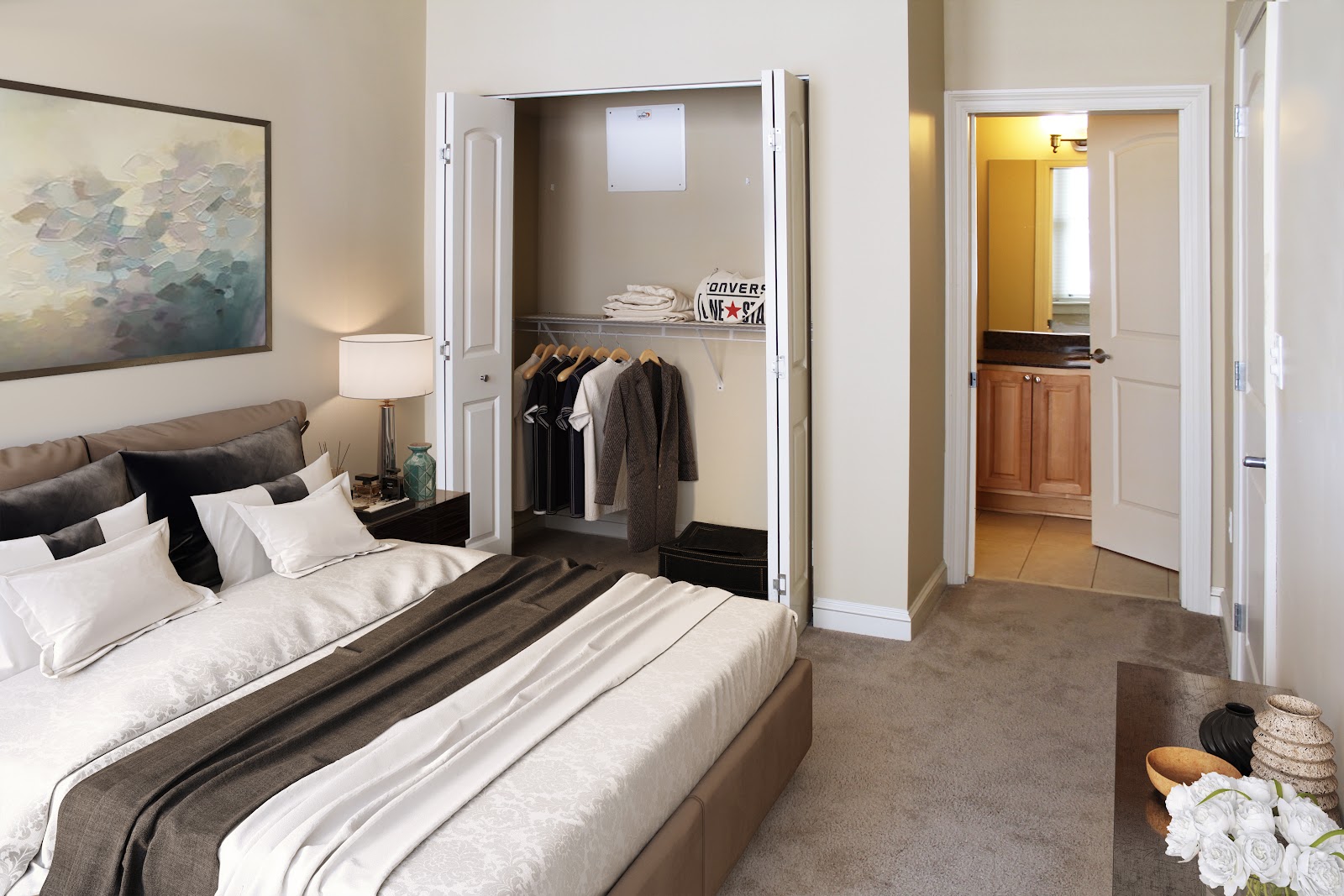
Downtown Jackson is a coherent outdoor extension of a historic hotel rather than a third register, which is the useful thing about it. Early twentieth-century commercial architecture in brick and stone, on a regular grid, at a scale that is largely low-rise — which means low evening sun reaches street level and runs the length of a street rather than being cut off by towers.
That gives ninety minutes of raking light down whole blocks at no equipment cost, and brick and stone are forgiving mid-tones that hold detail at almost any sensible exposure. They only show texture when light runs along them, so a short walk to find which side the light is raking is worth more than any accessory.
Alleys and side streets are the most dependable positions: walls both sides give directional light and a contained background with nothing distracting in it, and they hold the most texture because service elevations were never tidied.
A Mississippi summer sets firm limits on all of that. Heat and humidity together make an outdoor block in July genuinely difficult in formal clothes, so trips should be short and purposeful; the building’s own shadow across the street is the reliable midday shade.
Fogging is the climate’s specific equipment risk and it is the reverse of the cold-weather one. A camera chilled by a strongly air-conditioned hotel interior fogs comprehensively the moment it reaches warm damp air and can take many minutes to clear — long enough to lose an arrival or a departure. Warm the kit towards outside temperature before it goes out, which means thinking twenty minutes ahead rather than at the door.
Afternoon thunderstorms are routine rather than exceptional in the season, which is the practical argument for a hotel: the day continues indoors without a decision being needed. And the light after a cell passes — dark sky, wet streets returning reflections of the building, low sun underneath — is frequently the best of the day, and worth going back out for even if the plan had closed.
More frames from The King Edward Hotel
The King Edward Hotel wedding photography: common questions
Why does bounce flash fail here?
Period ceilings are too high to return usable light. The substitutes are a pale wall at a sensible distance, a reflector, or direct modified light — and which one works should be established in the first five minutes.
Why does the ornament look flat?
Because modern hotel lighting is designed to be even and downward, and three-dimensional plasterwork only reads when light crosses it at an angle and casts small shadows. Place light to graze surfaces rather than face them.
How do you handle several colours of light?
Pick the source that should be correct, set a manual white balance to it, and switch off or overpower whatever else lands on skin. Three colour temperatures in one frame cannot be fixed afterwards.
Where is the best portrait light in a hotel?
A guest room. Domestic-sized windows with close walls that bounce give soft directional light with usable fill. Ask for the largest window on the shaded side, kill the overheads, move the lamps out.
How do you photograph a period ballroom?
Expose for the room so it stays warm and dim, add one warm-gelled source at face height for legibility, set white balance to the gel, and use the natural fall-off as free separation.
What is the one timed frame?
Sunset plus about fifteen minutes, at a tall window. It is the only moment the lit interior and the city outside both sit inside one exposure; afterwards the windows become mirrors.
More Jackson, MS venue guides
We are writing a photographer’s guide to every venue we would happily shoot in Jackson, MS. Here are three more, plus the full index:
- LeFleur’s Bluff State Park, Jackson: One Frame and How It Is Made
- The Manship House, Jackson: Four Ways Out of the Small-House Problem
- The Mississippi Civil Rights Museum, Jackson: The One Decision That Governs Everything
All Jackson, MS Wedding Venues →
Planning a wedding at The King Edward Hotel?
A restored hotel needs one decision per room about which light wins. Tell us your date.