 The Omaha Children’s Museum: A Photographer Answers Your Questions
The Nebraska State Capitol: How the Rotunda Frame Is Actually Made
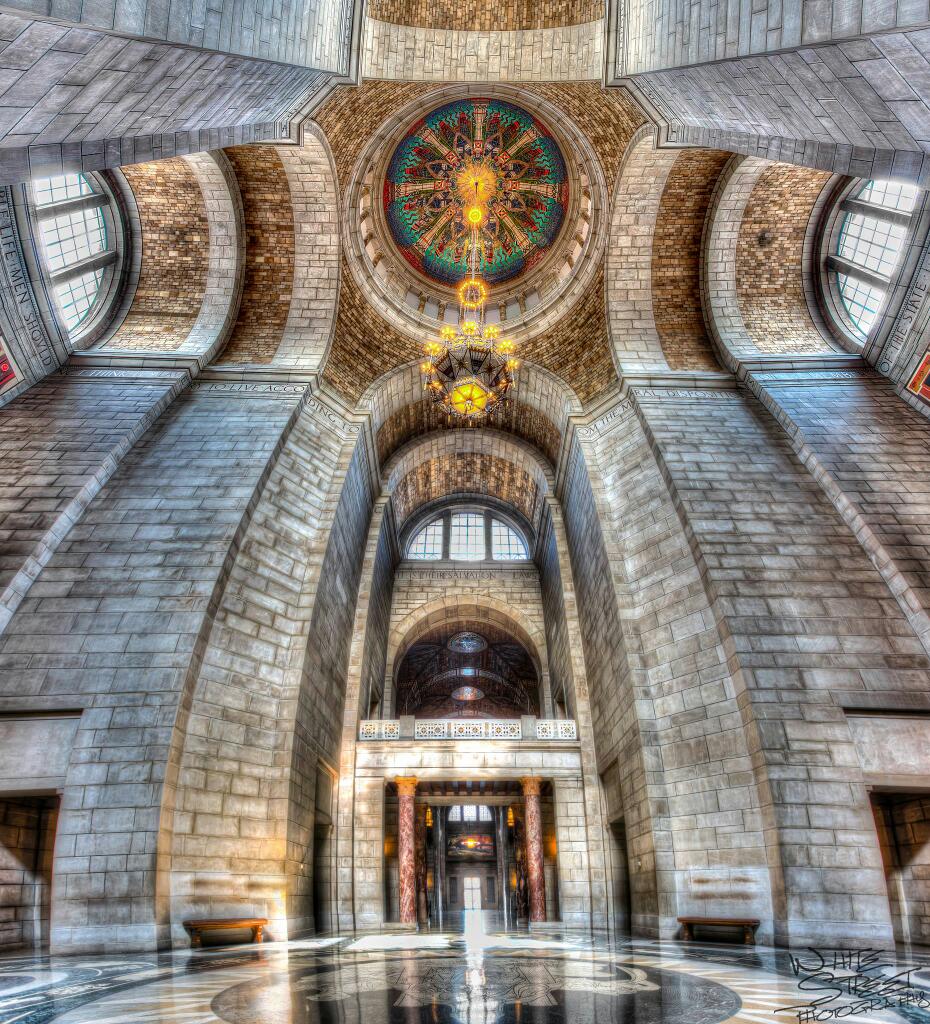
The rotunda is the frame, it is made looking straight up on the axis, and the floor is half of it.
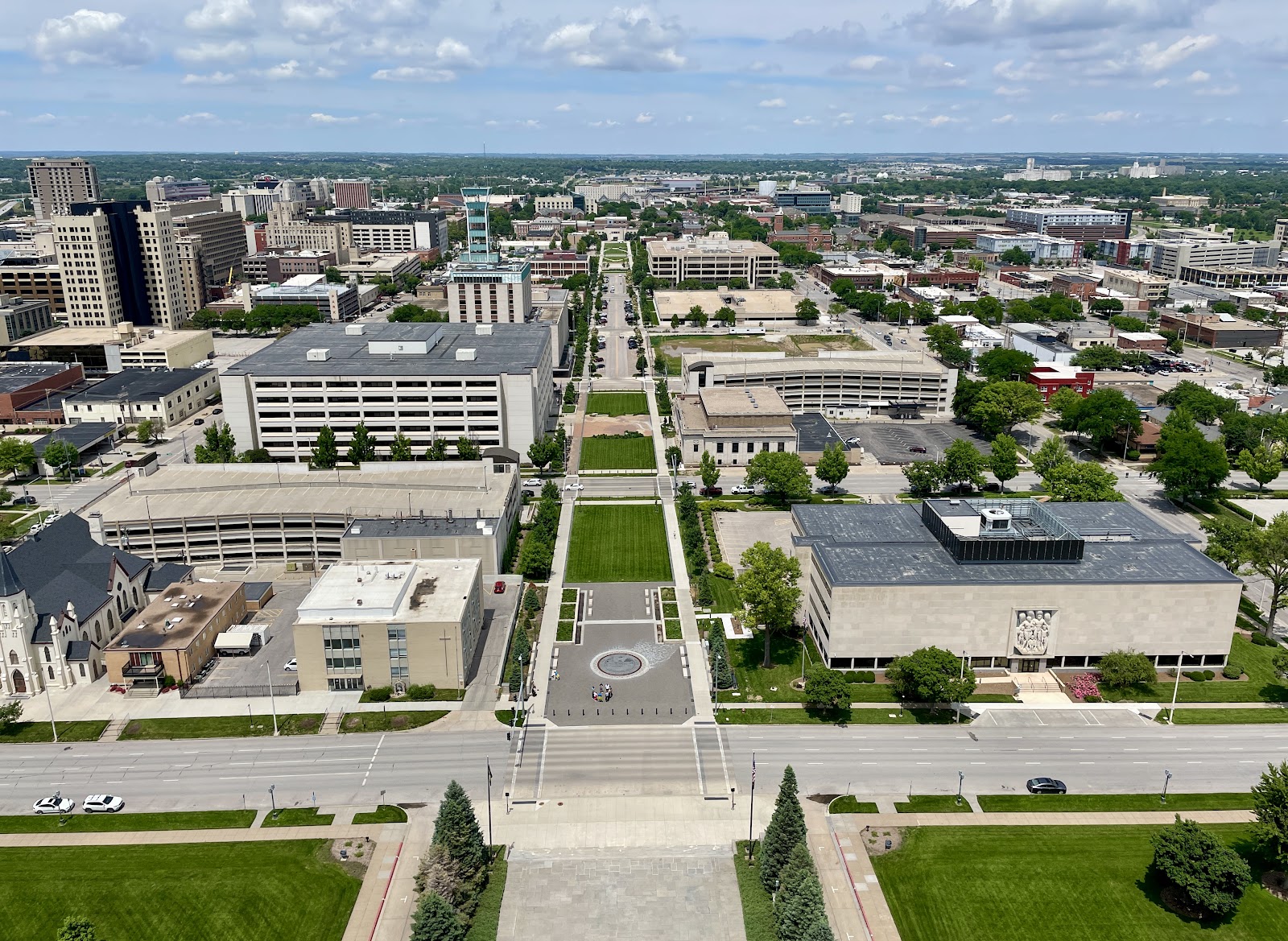
The Nebraska State Capitol was completed in 1932 in Lincoln, a building unlike any other American capitol — Art Deco rather than classical, built around a tall central tower rather than a low dome, with a rotunda beneath it floored and vaulted in mosaic.
That rotunda produces one frame and it is worth understanding precisely, because it is a specific geometric situation rather than a general one. A tall shaft rising from a patterned floor, seen from directly beneath on the building’s own axis, resolves into a concentric composition where the floor mosaic and the vault above share a centre. Off that axis, or off that centre, the whole thing goes lopsided in a way that reads as an error rather than as a style.
It is also a building with a civic function and a considerable amount of Deco symbolism, which raises questions of appropriateness that a private venue does not. This is an account of making the frame and of asking the right questions first. We have not photographed a wedding at the Nebraska Capitol; mosaic rotundas and tall shafts behave the same wherever they are built. What is permitted, where, and when are questions for the building’s own administration, and those answers take precedence over any frame.
The Nebraska State Capitol at a glance
| Where | Lincoln, Nebraska |
| Character | A 1932 Art Deco capitol with a tower and a mosaic rotunda |
| The frame | Looking straight up on the axis, floor and vault concentric |
| Half of it | The floor mosaic, which shares the vault’s centre |
| Ask first | What is permitted in a working civic building, and when |
Step one: find the centre, and prove it
A rotunda under a tower is built on a vertical axis, and the floor almost always marks it — a mosaic medallion, a stone inlay, a change of pattern. That point is the only position from which the composition resolves, because from there the floor pattern, the drum and the vault are all concentric with each other and with the frame.
Finding it is not a matter of standing roughly in the middle. Set up, look through the camera pointed straight up, and adjust until the rings of the floor pattern and the rings of the vault are concentric with each other and with the frame edges. If they are not, you are not on the axis, and the difference between on and near is immediately visible in the finished image.
Level is the other half and it is harder than usual, because pointing a camera vertically removes every horizontal reference the eye normally uses. The electronic level is the right tool, and a tripod makes it repeatable. Handheld and pointed at the ceiling, a photographer will be off by two or three degrees without noticing.
The focal length wants to be wide enough to hold the full circle of the vault and the surrounding floor, which in a tall rotunda usually means very wide. Distortion is not a problem in this frame because there are no faces near the edges — the subject is geometry, and a wide lens exaggerating the recession up the shaft actually strengthens it.
Step two: place the couple, and expose for the mosaic
With the camera pointing up, the couple can be in the frame in two ways and they are different photographs. Standing on the centre point looking up, they appear small at the bottom of a rising shaft, which is dramatic and abstract. Lying or seated on the floor centre, seen from directly above with the vault behind them, is the other version, and it is the one people remember — although whether lying on a civic floor is appropriate is exactly the sort of question to ask rather than assume.
Either way the direction is unusual: faces will be small and foreshortened, so what reads is the shape the two figures make and their placement relative to the pattern. Tell them where the camera is, because from directly beneath or above, people instinctively look at the lens and the angle is unflattering.
Exposure is decided by the mosaic. Mosaic is made of glazed tesserae, which are individually reflective, so a mosaic vault lit from below or from windows contains many small specular highlights — and those clip long before the overall exposure suggests a problem. Watch the highlights rather than the average, and err darker than instinct, because a mosaic with its highlights intact reads as glass and gold while a clipped one reads as flat pattern.
Colour: Deco mosaic schemes are usually strongly coloured, often in gold, blue and earth tones, and they will tint any light bouncing off them. Set a custom white balance in the rotunda rather than carrying one in, and set it so the scheme reads as itself rather than neutralising it.
- Find the true axis by matching the floor and vault rings in the viewfinder
- Use a tripod and the electronic level; pointing up defeats the eye
- Go wide — the subject is geometry, so distortion strengthens it
- Expose for the mosaic highlights, not the average; they clip early
- Ask what is permitted before planning anyone onto the floor
Step three: a working civic building, and the rest of the site
This is a functioning seat of government, not an event venue with a civic past, and that changes the questions. What may be photographed, in which spaces, on which days and at what times are all matters for the building’s administration rather than for a photographer’s judgement — and the answers are frequently specific, with some areas open, some restricted and some unavailable while the legislature sits.
There may also be views about what is appropriate in a civic and commemorative building: where celebration is welcome, which spaces are for quiet, and how the building should appear in published photographs. Asking early is both the respectful approach and the practical one, because a plan built around a space that turns out to be unavailable collapses on the day.
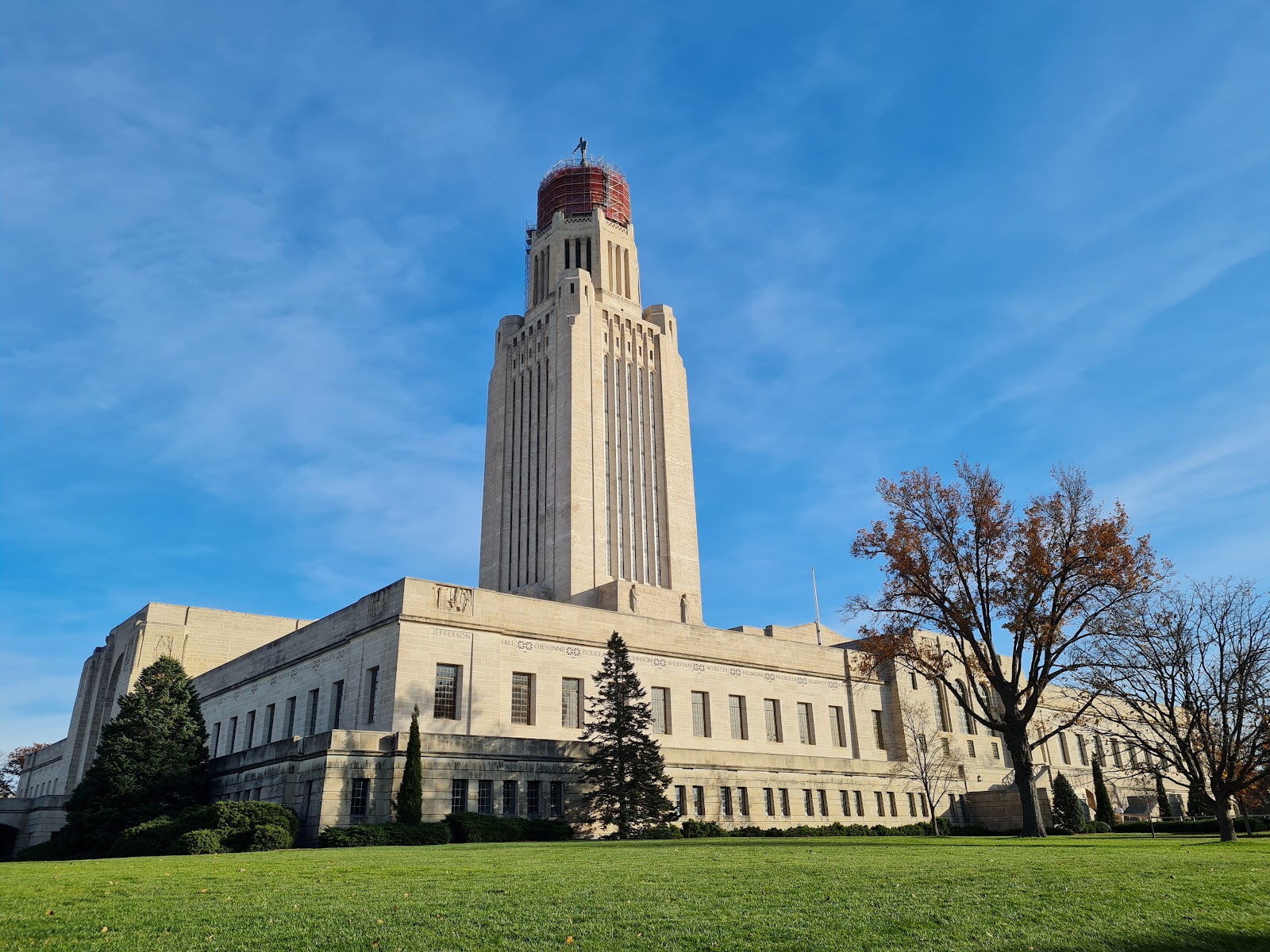
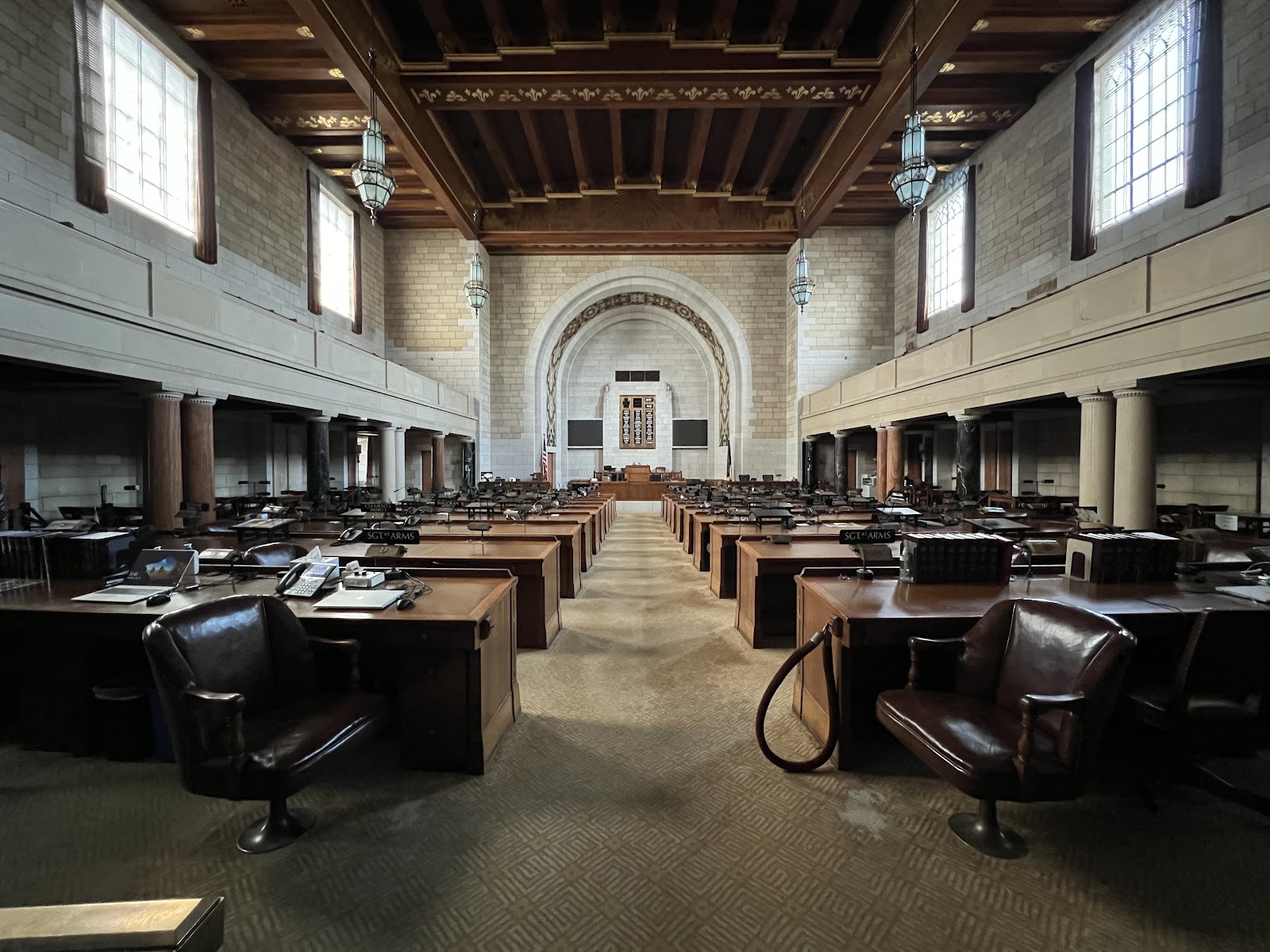
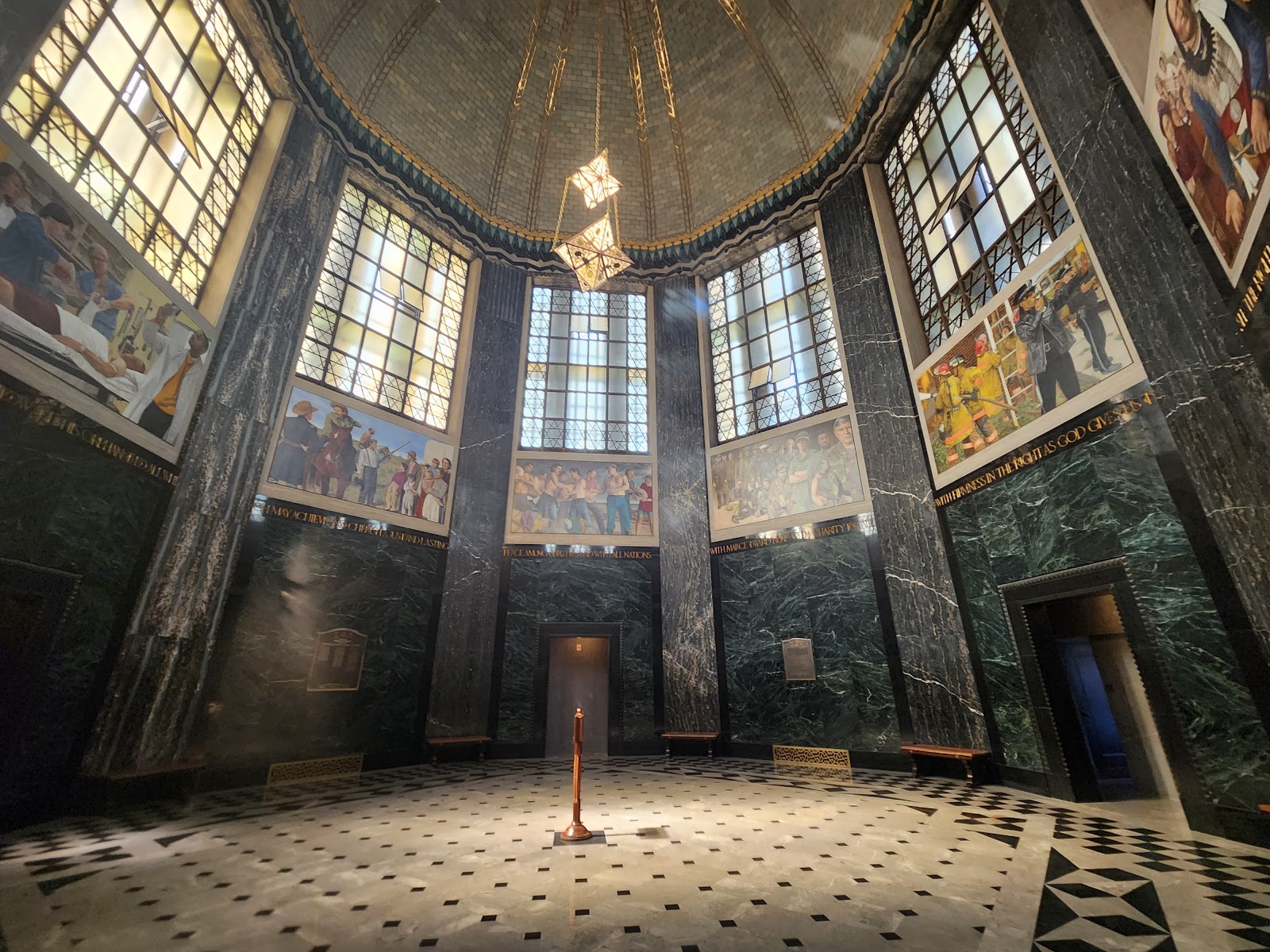
Beyond the rotunda, the building is Art Deco throughout, which brings the register’s characteristics: geometric ornament that reads as line and pattern rather than texture, metalwork that is specular rather than diffuse, and stone that needs raking light to show its surface. Precision matters — Deco geometry either lines up in a frame or it visibly does not, so level deliberately and commit to an axis or offset clearly.
The tower is the exterior set piece and it behaves like any tall isolated building on flat ground: it is visible from a long way off, which means a long lens from a distance compresses it against the sky more effectively than a wide lens from the base, where the perspective throws the top away from the camera.
Nebraska is plains country, so the outdoor conditions are the plains ones: wind as a constant rather than an occasional event, very little natural shade, a long low golden hour because nothing intercepts the sun near the horizon, and an enormous sky that fills the upper two-thirds of any wide frame. Grounds around a capitol are usually open and formal, which means building shadows are the reliable midday shade and the last ninety minutes are when the stone and the lawns both come alive.
More frames from The Nebraska State Capitol
The Nebraska State Capitol wedding photography: common questions
How do you find the rotunda's axis?
Not by standing roughly in the middle. Point the camera straight up and adjust until the rings of the floor pattern and the rings of the vault are concentric with each other and with the frame edges. On and near are visibly different in the finished image.
Why is levelling so hard pointing upward?
Because aiming a camera vertically removes every horizontal reference the eye normally uses. Handheld, a photographer will be two or three degrees off without noticing. Use the electronic level and a tripod so it is repeatable.
Does the wide lens distort the frame?
Not harmfully — the subject is geometry rather than faces, and there is nothing near the frame edges to stretch. A wide lens exaggerating the recession up the shaft actually strengthens the composition.
How should a mosaic be exposed?
For the highlights, not the average. Glazed tesserae are individually reflective, so a mosaic contains many small specular highlights that clip long before the overall exposure looks wrong. Err darker — intact highlights read as glass and gold.
What should be asked before planning?
What is permitted, where and when. This is a working seat of government, so access varies by space and by day, some areas may be unavailable while the legislature sits, and there may be views about what is appropriate in a commemorative building.
How should the tower be photographed?
From a distance with a long lens. It is visible from far off on flat plains ground, and compression sets it against the sky, where a wide lens from the base throws the top away from the camera.
More Lincoln, NE venue guides
We are writing a photographer’s guide to every venue we would happily shoot in Lincoln, NE. Here are three more, plus the full index:
- The Rococo Theatre: Photographing an Ornate 1929 Auditorium
- Turbine Flats: Reading a Converted Industrial Building Through the Day
- The Zoo Bar: Four Ways Out of the Small-Bar Problem
All Lincoln, NE Wedding Venues →
Planning a wedding at The Nebraska State Capitol?
The rotunda frame is one position and one exposure decision. Tell us your date and we will confirm access first.