 Discover Portsmouth Center: Field Notes on a Small Museum Venue
The Sheraton Portsmouth: What a Conventional Hotel Actually Buys You
Nobody books this kind of venue for the ballroom. They book it because everything works, and that is worth more than it sounds.
The Sheraton Portsmouth sits beside the Piscataqua River in Portsmouth, New Hampshire, a full-service hotel with ballroom space, guest floors and the infrastructure that comes with the type.
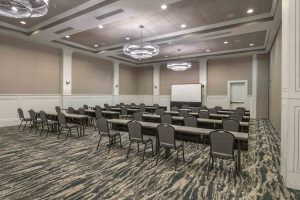
It is worth being straightforward about what this venue is. A conventional hotel ballroom is not a distinctive photographic environment — it is a room with a patterned carpet, a neutral palette, warm overhead lighting and no daylight, and rooms like it exist in every city. What it is instead is reliable, and reliability at a wedding is genuinely undervalued.
That is the venue’s own logic and it is what this piece follows: what reliability buys, where the actual photographs come from in a building like this, and what the surroundings add. We have not photographed a wedding at the Sheraton Portsmouth; hotel ballrooms and guest floors behave the same everywhere, which is precisely the point. Which rooms are allocated and which way they face are questions for their events team.
The Sheraton Portsmouth at a glance
| Where | Beside the Piscataqua River, Portsmouth, New Hampshire |
| Character | Full-service hotel with ballroom space and guest floors |
| What it is not | A distinctive interior; ballrooms like it exist everywhere |
| What it is | Reliable — fixed light, real power, weatherproof, no timing pressure |
| Where the photographs are | Guest-floor windows, the river, and the old town |
What reliability actually buys
A windowless ballroom has one lighting condition that is identical at four in the afternoon and one in the morning. That means you light it once, confirm it, and know the setup holds for hours. There is no convergence moment to hit, no window to balance, no glass turning into a mirror after dark, no weather dependency, and no penalty at all for the reception running forty minutes late.
That is worth stating plainly because it is usually written up as a limitation. In practice it removes most of the ways a wedding day goes wrong photographically. Every venue with a view has a twenty-minute window that a delayed running order can destroy; this one does not.
It also means the empty-room frame — set, lit, symmetrical, before the doors open — can be taken at leisure rather than squeezed. That image is in almost every gallery a couple keeps and it exists only in those twenty minutes before guests arrive. Ask the coordinator for access; it costs nothing.
The infrastructure matters too, and photographers notice it mostly when it is absent: reliable power near where you need it, somewhere to leave cases, staff who have run hundreds of weddings, and a room that does not care what the weather is doing. Those things do not appear in photographs but they change how many photographs get made.
Lighting the room, which is the whole interior job
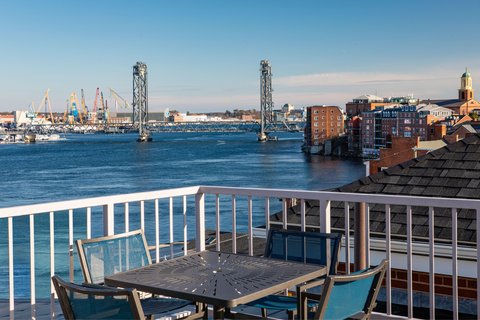
Hotel ballroom house lighting is always the same problem: warm, dim, and coming from directly overhead via chandeliers or downlights. Overhead light shadows the eye sockets, marks the lines under the nose and chin, and produces a top-lit look that flatters nobody — the room looks pleasant and the people in it do not.
One source at face height, gelled warm to match the room, at roughly forty-five degrees, fixes it entirely: modelling restored, catchlights in the eyes, and the ceiling fittings left as glowing detail in the upper frame rather than as the key. A second light behind the couple as a rim finishes the dance floor for the night, and because the ambient never changes, neither does the setup.
Coloured uplighting is nearly universal in rooms like this and it needs the same treatment as any narrow-band source: let it be background. Saturated uplighters will not resolve to neutral, so if they are the only light on a face the skin goes with them. Once your own key owns the faces, coloured walls become atmosphere — which is usually exactly what the couple pictured when they chose the colour.
One technique worth using here more than anywhere: shutter drag. Because the ambient is low and fixed, a slow shutter with flash gives very predictable results — the flash freezes the couple while the ambient trails the moving lights and the room. It works anywhere, but in a sealed ballroom it repeats reliably rather than being a lottery.
Patterned carpet deserves a mention because it is the one background element that consistently harms frames in hotels. Busy carpet in a wide frame draws the eye and dates the image. Shoot tighter, shoot from a lower angle so less floor is in shot, or compose so a table, a dance floor or people occupy the lower frame instead.
- Light it once; a sealed room holds the same setup for hours
- One warm source at face height at forty-five degrees kills the top-light look
- Let coloured uplighting be background; your key owns the faces
- Use shutter drag freely — fixed ambient makes it repeatable
- Keep patterned carpet out of frame; it draws the eye and dates the image
Where the real photographs are: windows, the river and the town
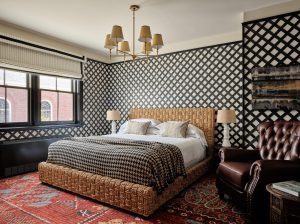
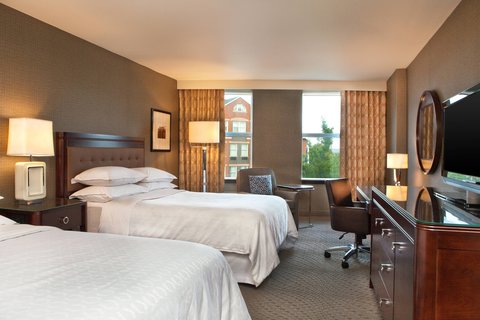
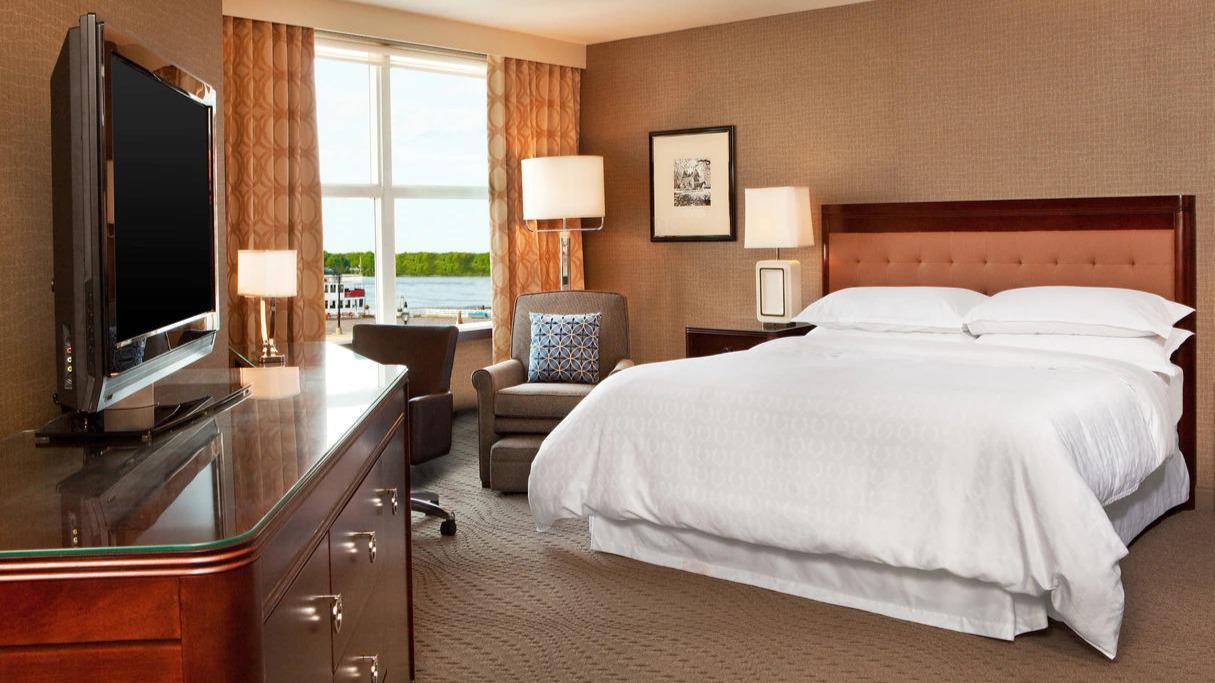
Since the ballroom supplies no daylight and no location, the guest floors have to. A large window on the shaded side is a big soft directional key with a natural fall-off, and it is the best light in the building by a wide margin — better than anything in the public spaces, and free. Ask for that room specifically for the preparation block, then switch off the overheads and move the lamps out, because mixed tungsten and daylight in one room is the commonest cause of inconsistent skin tone across a morning.
River-facing rooms have an additional advantage worth requesting: with open water rather than buildings opposite, there is no shadowing and no colour bouncing in, so the light is cleaner and more directional than a town-facing window at the same hour. The water also reflects light upward, which fills the eye sockets an overhead source would carve.
The Piscataqua itself is the venue’s locating asset. A frame with the river, the bridges or the working waterfront places the gallery in Portsmouth, which a ballroom cannot do. Two things govern it: a long lens, because compression stacks the bridges into layers where a wide lens flattens them into a distant strip, and the tide, because high water gives a full channel with reflections while low water gives mudflats, weedy pilings and hulls on the bottom. Tide times are published; checking them takes two minutes and no brochure will do it.
Downtown Portsmouth is the other half, and it is unusually good material for a photographer. Narrow streets of brick and painted clapboard behave like large soft boxes — light from the strip of sky above bouncing between facing elevations, soft and even, with a mid-toned building rather than a blown sky behind the subject. And because the centre is low-rise, low evening sun reaches street level and runs the full length of a street, so a genuine street-level golden hour exists.
That gives a clean plan: preparation at a river-facing window, interiors and the ballroom whenever suits since nothing there is tied to the sun, and one deliberate outdoor block in the last ninety minutes covering an east-west street and the waterfront. The ballroom is where the wedding happens; the window and the town are where the photographs that could only have been taken here get made.
More frames from The Sheraton Portsmouth
The Sheraton Portsmouth wedding photography: common questions
Is a windowless ballroom a disadvantage?
Less than it sounds. It removes the timing pressure, the window balance, the mirror problem after dark and the weather dependency — you light it once and it holds for hours, and a late running order costs nothing. What it costs is that nothing says where or when.
How should the ballroom be lit?
One warm-gelled source at face height at about forty-five degrees, so overhead house lighting stops being the key. That restores modelling and catchlights and leaves the ceiling fittings as detail. A second light behind as a rim finishes the dance floor.
What about coloured uplighting?
Let it be background. Saturated uplighters are narrow-band and will not resolve to neutral, so if they are the only light on a face the skin goes with them. Once your key owns the faces, the coloured walls become atmosphere — usually what the couple pictured.
Where is the best light in the building?
A guest-floor window on the shaded side, and river-facing if possible. With open water rather than buildings opposite there is no shadowing and no colour bouncing in, plus the water reflects light upward to fill the eye sockets.
What locates the gallery in Portsmouth?
The river and the old town. For the river, a long lens to stack the bridges, and check the tide — high water gives reflections, low water gives mudflats and hulls on the bottom. For the town, an east-west street in the last ninety minutes.
Is there anything in the room to avoid?
Patterned carpet. It draws the eye in a wide frame and dates the image. Shoot tighter, drop the camera lower so less floor is in shot, or compose so a table, the dance floor or people occupy the lower frame.
More New Hampshire venue guides
We are writing a photographer’s guide to every venue we would happily shoot in New Hampshire. Here are three more, plus the full index:
- Strawbery Banke Museum: Photographing an Outdoor Museum of Houses
- The Music Hall, Portsmouth: How the Lit-Stage Frame Is Made
- Portsmouth Harbor Events: What a Very Bright Room Actually Gives
Planning a wedding at The Sheraton Portsmouth?
The ballroom is the easy part; the locating frames take planning. Tell us your date and we will build a window and a street into the timeline.