 Choctaw Hall: What a Gazebo Ceremony Does to the Photographs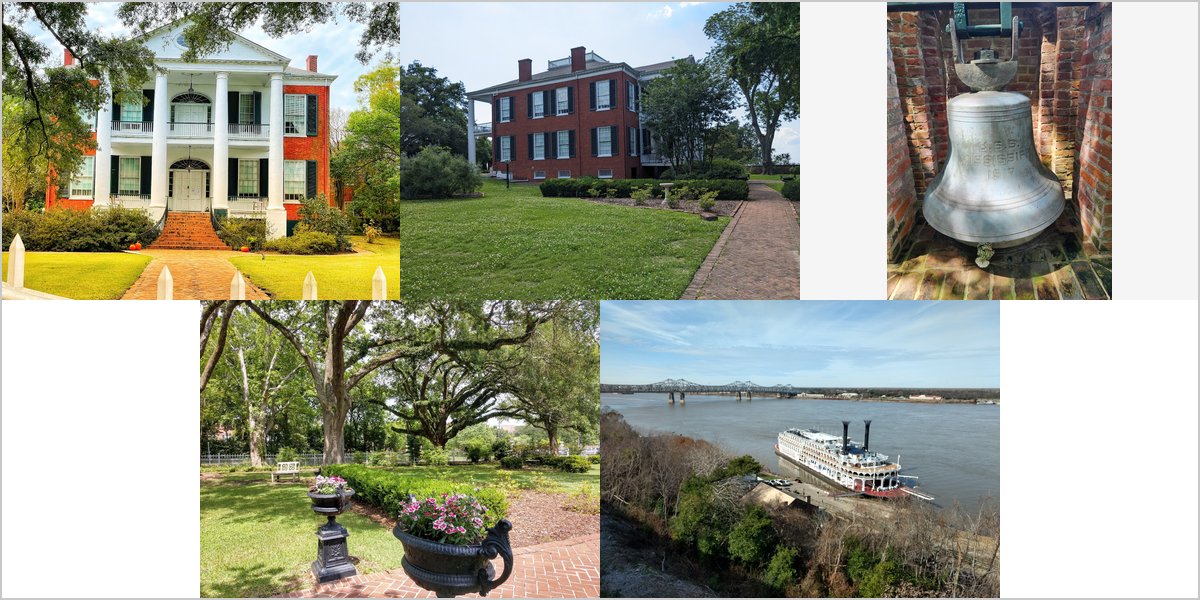
Rosalie Mansion: Reading the Light on a West-Facing Bluff
West-facing, high above a mile-wide river. That geography decides every hour of the day here.
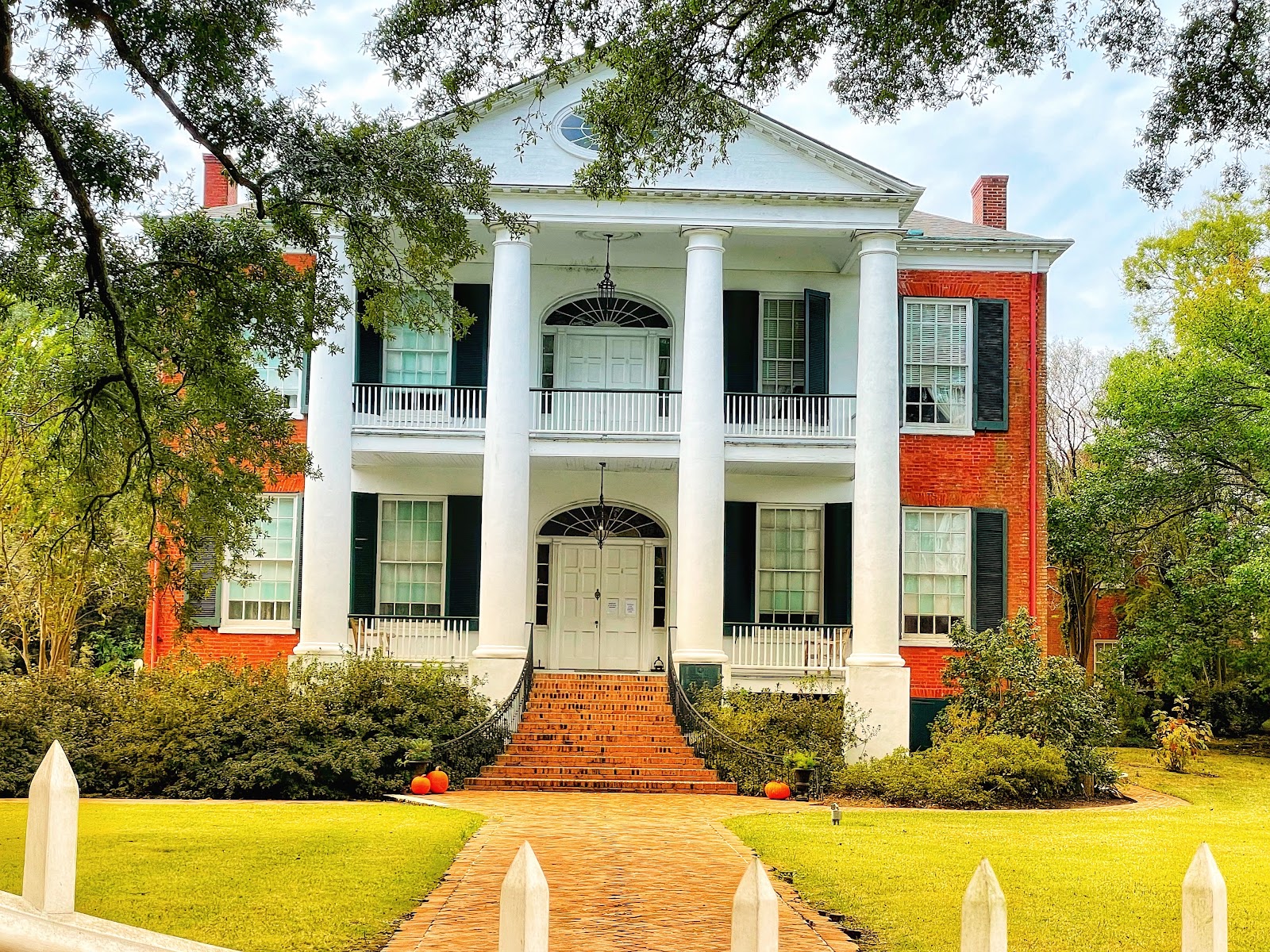
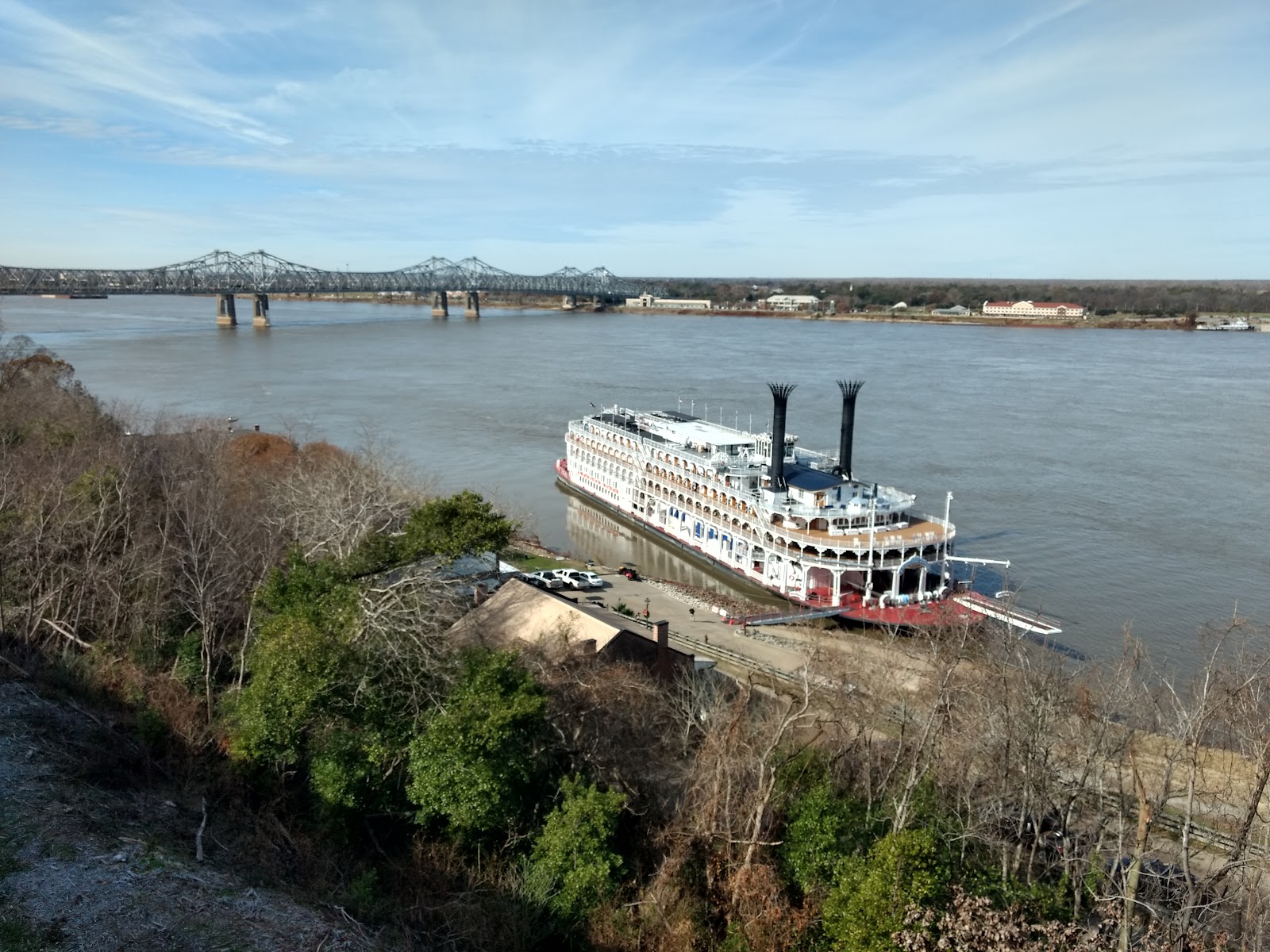
Rosalie Mansion sits on the bluff at Natchez, Mississippi, an 1820s brick house with a columned portico and lawns running towards the edge, looking west across the Mississippi River where it is close to a mile wide.
Two facts of geography govern photography here and nothing else comes close in importance. The house and its lawns face west, which means they are in their own shade for the whole morning and in direct sun for the whole late afternoon — there is no gentle middle. And the river below is an enormous, unobstructed, west-facing water surface, which puts the sunset directly in front of the building and gives the site the best evening light of any venue in the town.
So this follows the light through the day, because at this venue the day really is the plan. We have not photographed a wedding at Rosalie; west-facing bluffs and wide rivers behave the same anywhere they occur. Which rooms and what part of the grounds a wedding may use are questions for their events team.
Rosalie Mansion at a glance
| Where | The bluff above the Mississippi River, Natchez, Mississippi |
| Character | 1820s brick mansion with a columned portico and river-facing lawns |
| Orientation | West-facing — own shade all morning, direct sun all late afternoon |
| The asset | A mile-wide river with the sunset directly in front of the house |
| Plan for | Severe humidity, and a lens that fogs leaving air conditioning |
Morning: the house is in its own shadow, and that is useful
A west-facing elevation gets no direct sun until the afternoon, so through the whole morning the front of the house and the lawns before it sit in the building’s own shade with open sky above. That is a large, soft, even light with a cool cast from the sky, and it is the easiest condition the site offers.
It is genuinely good for groups. Nobody squints, nobody is half-lit, and the light is the same wherever people stand, which means a forty-person photograph can be arranged for composition rather than for light. If formal groups are on the list, the morning is when they should happen, and that is worth saying to a couple early because it runs against the usual habit of doing groups after the ceremony.
The limitation is drama: even shade is flattering and undramatic, and a portico in flat light reads as a flat white shape. Columns in particular need directional light to show their roundness, so the architecture photographs poorly in the morning even though the people photograph well. That split — good for faces, poor for the building — is the characteristic of the hour and it is worth knowing which you are after.
One colour note: shade under open sky is distinctly cool, and it sits beside a warm brick house. Set white balance for the faces rather than the brick, and expect the brick to read warmer than it does at midday.
Midday: the hardest hour, and where to hide
Around the middle of the day the sun is overhead, the west elevation is still not directly lit but the lawns are, and the combination is the worst of both: harsh top light on anyone outside, and a building that is still not modelled. In a Mississippi summer it is also genuinely dangerous heat, and that is a practical constraint rather than an aesthetic one — nobody in formal clothes will stand on an open lawn at one in the afternoon in August for longer than a couple of minutes.
The shelter is the architecture. A deep columned portico or a galleried verandah is one of the best photographic assets a Southern house has: it gives full, even, hard-edged shade with a bright open view in front, which is exactly the condition that produces clean directional light on a face. Standing a couple two metres inside the shade line, facing out, gives a large soft key from the open sky beyond and a dark surround behind — close to studio light, for nothing.
Interiors are the other answer, and the interior of an 1820s house brings the usual pattern: tall windows, dark furnishings, small rooms, restricted positions. Switch off the lamps, work the windows, bounce off a pale ceiling where more is needed. Warm brick and dark wood bounce strongly warm, so a custom white balance in the room rather than a carried-over one.
Humidity deserves its own note in this town because it will cost you frames. Moving a camera from a heavily air-conditioned interior into Mississippi summer air fogs the lens, inside and out, for ten to twenty minutes, and wiping the front does nothing. The answer is to acclimatise the body and lens you intend to use outside before you need it, or dedicate one body to each environment. This is not a minor inconvenience; it is the difference between having the arrival frames and not having them.
What works in your favour
- The sunset lands directly in front of the house across a mile-wide river
- Morning shade on a west elevation is ideal for large formal groups
- A deep portico gives hard-edged shade with a bright open view in front
- An 1820s interior with tall windows as a genuine weather plan
- Water that reflects the whole sky at the end of the day
What to plan around
- West-facing means flat shade all morning and hard sun all late afternoon
- Columns need directional light, so the architecture photographs badly early
- Severe summer heat limits how long anyone will stand on an open lawn
- Humidity fogs lenses moving out of air conditioning, for up to twenty minutes
- The best light of the day is very late, which pushes against the running order
Evening: why this site has the best light in Natchez
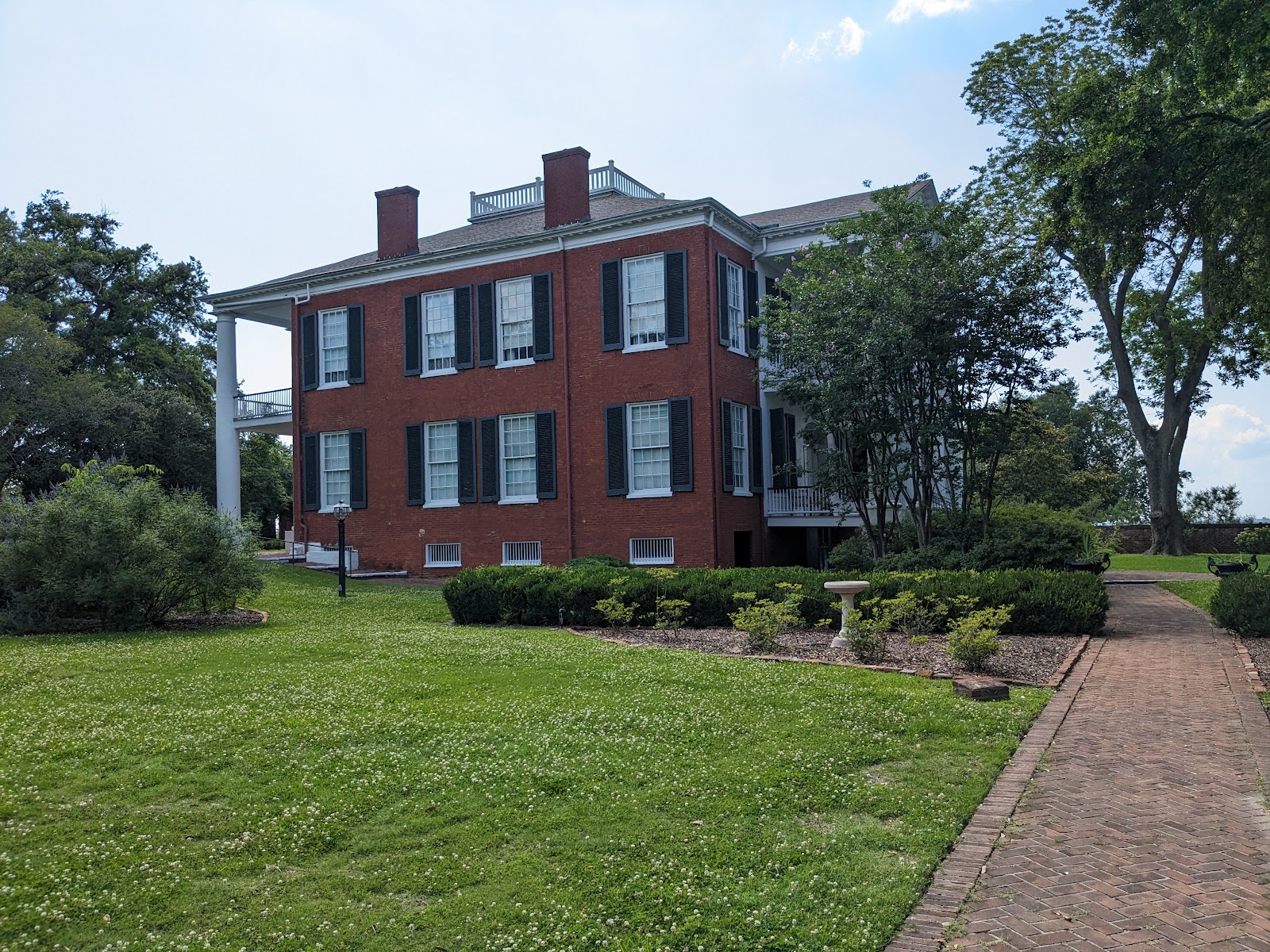
The last ninety minutes are what the venue is for. A west-facing house on a bluff above a mile of open water has an unobstructed view of the setting sun, and three things happen at once. The brick elevation takes low raking light, which turns it warm and finally models the columns properly. The lawns light up from a low angle, so grass glows and every figure gets a rim. And the river becomes an enormous reflector, holding the whole colour field of the sky and bouncing soft light back up onto the bluff.
That third effect is the one photographers underestimate. A mile of water at sunset does not merely look good behind a couple; it lights them. The fill coming up off the river fills shadow under chins and in eye sockets at exactly the hour when a low sun would otherwise be carving them, which is why bluff-top light at sunset is unusually flattering as well as unusually beautiful.
It also means the light continues well after the sun has gone. With that much reflective water facing west, the afterglow is prolonged and the whole scene holds a soft warm-to-blue gradient for twenty or thirty minutes past sunset. That is a genuine extra block of usable time and it is worth planning for rather than packing up at sunset.
The scheduling consequence is unavoidable and should be stated to couples early: the best light at this venue arrives at the end of the day, which at a summer wedding in Mississippi is well into the reception. The fix is the same one that works everywhere — a planned ten-minute departure from the reception, agreed in advance with the couple and the coordinator, timed from sunset on the actual date. Ten minutes on that bluff is worth more than an hour of the afternoon.
One final frame worth naming. Shot from the lawn looking back at the house with the low sun behind you, the brick is lit and warm; turned around, the same sun is behind the river and the house is a silhouette against colour. Both are good and they are opposite. Taking both means the gallery has the house and the view, which a single direction cannot give.
More frames from Rosalie Mansion
Rosalie Mansion wedding photography: common questions
What time is best at Rosalie?
The last ninety minutes. A west-facing house above a mile of open water has an unobstructed view of the sunset, so the brick takes raking light, the lawn glows, and the river reflects the whole sky. Nothing else in the day comes close.
Does the river actually change the light?
Yes, and it is underestimated. A mile of water at sunset lights the couple as well as sitting behind them — the fill coming up off it fills shadows under chins and in eye sockets exactly when a low sun would carve them. That makes bluff-top sunset light flattering as well as pretty.
When should formal groups happen?
In the morning, which runs against habit. A west-facing elevation sits in its own even shade all morning, so nobody squints and the light is identical wherever people stand — a forty-person photograph can be arranged for composition rather than for light.
Why does the house photograph poorly in the morning?
Because even shade is undramatic and columns need directional light to show their roundness. The morning is good for faces and poor for the architecture. The building is not properly modelled until low sun rakes across it late in the day.
How do you handle the humidity?
Acclimatise the body and lens you intend to use outside before you need it, or dedicate one body to each environment. Moving from air conditioning into Mississippi summer air fogs a lens inside and out for up to twenty minutes, and wiping the front does nothing.
Is it worth staying past sunset?
Definitely. With that much west-facing water the afterglow is prolonged and the scene holds a soft warm-to-blue gradient for twenty or thirty minutes after the sun has gone. That is a genuine extra block of usable light most people pack up before.
More Natchez, MS venue guides
We are writing a photographer’s guide to every venue we would happily shoot in Natchez, MS. Here are three more, plus the full index:
- Stanton Hall: Four Ways Out of the White-Column Problem
- The Auburn Museum: Field Notes on a Freestanding Spiral Stair
- Choctaw Hall: What a Gazebo Ceremony Does to the Photographs
All Natchez, MS Wedding Venues →
Planning a wedding at Rosalie Mansion?
The best light here is very late and the river does half the work. Tell us your date and we will time a ten-minute bluff block from sunset.