 Tulsa Country Club: Field Notes on a 1908 Club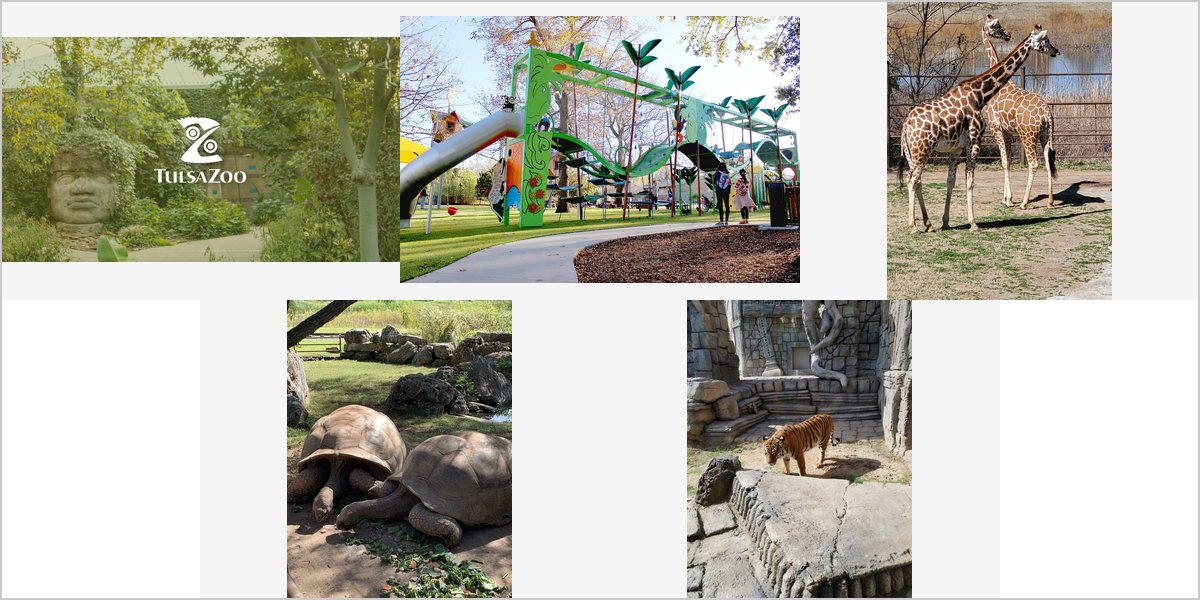
June 5, 2026
The Tulsa Zoo: A Photographer Answers Your Questions
Set inside one of America’s largest municipal parks. After-hours access is the whole question, and Mohawk Park is the answer to most of the others.
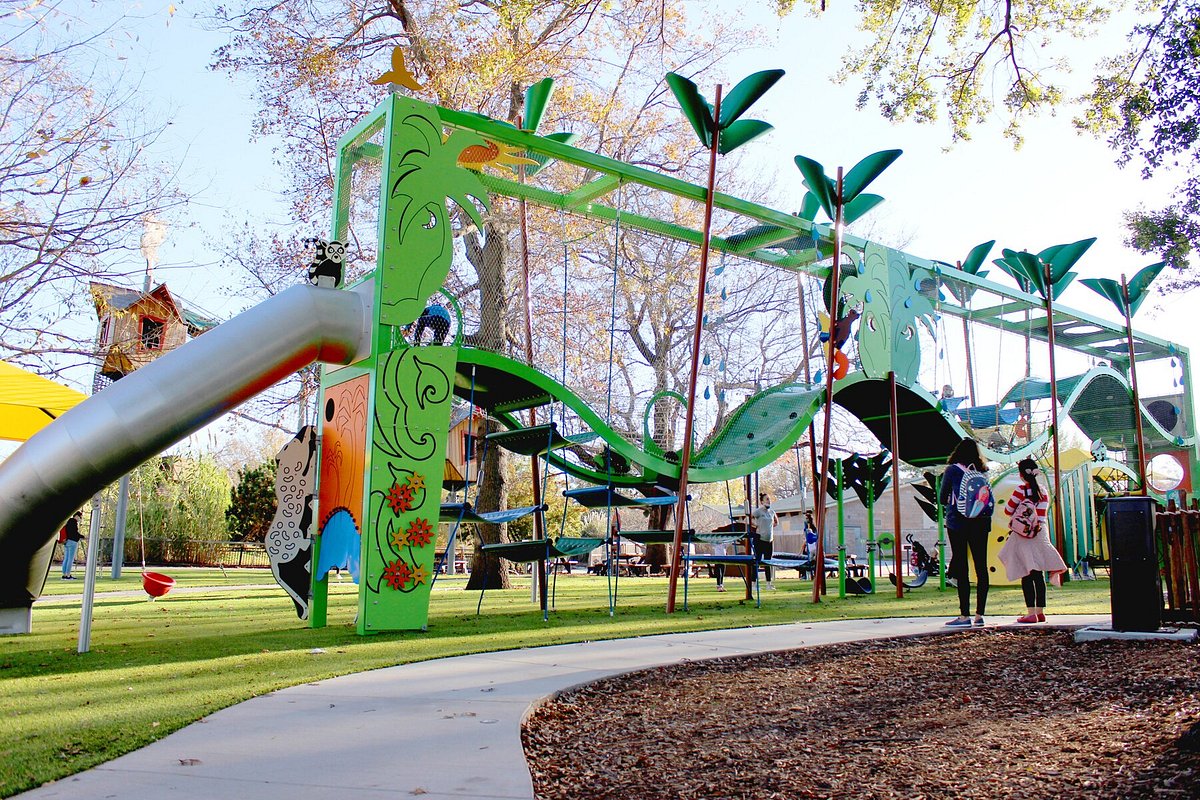
The Tulsa Zoo sits within Mohawk Park in north-east Tulsa, which is among the largest municipal parks in the United States. The zoo has indoor habitat buildings, mature grounds with established planting, and event spaces used for private functions.
Photographically a zoo is a distinctive proposition with one dominant variable: whether you are there during public hours or after closing. During opening hours it is a busy family attraction and wide frames are unusable. After closing it becomes a large private park with unusual architecture and nobody in it. Those are completely different assignments.
The second useful fact here is the surrounding park. Mohawk Park’s scale means that if the zoo’s own areas are restricted, there is an enormous amount of mature parkland immediately outside — a fallback of real quality that costs nothing. These are the questions couples ask. We have not photographed a wedding at the Tulsa Zoo; enclosure glass, habitat light and Oklahoma conditions behave predictably. Access times and which areas are available are for their events team.
Tulsa Zoo at a glance
| Where | Mohawk Park, north-east Tulsa, Oklahoma |
| Setting | Inside one of the largest municipal parks in the United States |
| Spaces | Indoor habitat buildings, mature grounds, event spaces |
| The dominant variable | Public hours versus after-closing access |
| The fallback | Mohawk Park itself, immediately outside and enormous |
How much difference does after-hours access make?
It is the difference between two entirely different venues. During opening hours the zoo is busy, largely with families and children, and there is no arrangement that removes them from wide frames — you would work tight with longer lenses all day and accept strangers in anything broader.
After closing the same grounds become effectively a private park: mature planting, wide paths, unusual buildings, and complete quiet. That is genuinely appealing, and it happens to align with the light, because an evening slot puts you in the last ninety minutes of daylight and the twenty minutes after sunset — the best light of the day regardless.
So one request solves two problems. Ask about it first, and treat the access window as the foundation of the plan rather than a detail to confirm later.
Do animals work as backgrounds?
Less often than couples hope, and the reasons are structural rather than a matter of skill. Modern enclosures are designed for animal welfare and public viewing, which means glass, mesh, moats and safety barriers. Glass produces reflections that are extremely hard to control with a wedding party in tow. Mesh reads as a grey haze over everything behind it. Barriers put distance between you and anything of interest.
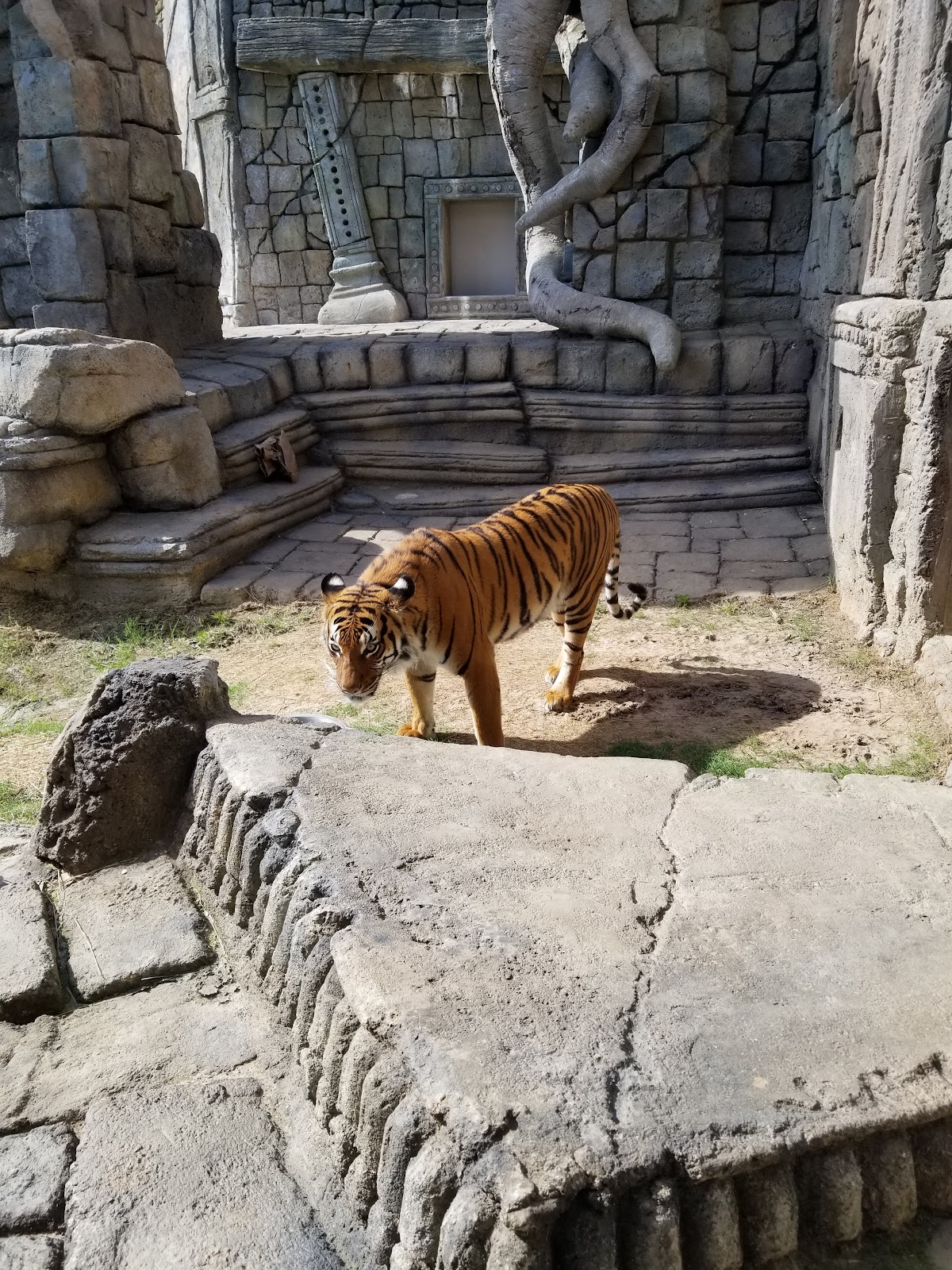
Where enclosure areas do work is when the architecture or the landscaping is the subject rather than the animals — rockwork, planting, constructed habitat structures, water features. Those photograph well and they still say zoo without requiring an animal to cooperate.
The honest recommendation is to treat a zoo as a park with unusual architecture rather than as a venue where animals appear in the photographs. If animals do feature it will be through something the zoo arranges deliberately, not opportunistically — so ask, because some zoos offer this and it changes the gallery entirely.
What is the light like in the indoor habitats?
It depends entirely on how they are glazed, and it is worth asking. A habitat building with substantial roof glazing gives you scattered, diffuse, fairly even light — soft and forgiving, though often greener than you expect once planting is bouncing into it. A building lit mainly artificially gives you the usual overhead problem: light dropping onto foreheads with eye sockets in shadow.
Either way, two standard cautions apply. Humidity in a tropical habitat will fog a lens brought from cooler air, taking ten to twenty minutes to clear, so acclimatise equipment first — in an Oklahoma winter that differential is larger and the problem worse. And dense planting bounces green onto skin, so set a custom white balance inside rather than trusting auto and keep a metre of separation from heavy foliage.
The upside of indoor habitats is weather independence, which in a climate with Oklahoma’s summer heat and frequent storms is worth real money. A venue with genuinely usable interior space is a safer booking than one relying on open ground.
What about the heat, the wind and Mohawk Park?
Oklahoma summers are hot and humid and zoo grounds have variable shade — good under mature planting, none on open paths. Between roughly eleven and five, open areas are unusable for faces and uncomfortable in formalwear. Mature planting is the answer for those hours and it is genuinely good light.
Wind is the persistent factor. Oklahoma is windy and open ground offers no shelter, which makes large light modifiers impractical outdoors and moves veils and hair continuously. Plan for bare or minimally modified flash and shoot bursts.
Mohawk Park is the asset couples overlook. Its scale means mature trees, open ground, water and long sightlines immediately outside the zoo, with no restrictions and no admission. If the zoo’s own areas are limited, that is a substantial fallback — and even if they are not, it gives you room for a large group and a golden-hour location that the zoo paths cannot match.
For the timeline: indoor habitats during the day, when outdoor light is poor and the interiors are weather-proof; mature planting for portraits through the afternoon; and the open park in the last ninety minutes and at dusk.
What works in your favour
- After-hours access turns it into a large private park with unusual architecture
- An evening slot aligns with the best light of the day anyway
- Indoor habitats give genuine weather independence in a difficult climate
- Rockwork, planting and habitat structures photograph well without needing animals
- Mohawk Park immediately outside — enormous, free and unrestricted
What to plan around
- During opening hours families and children are unavoidable in wide frames
- Enclosure glass, mesh and barriers make animals poor backgrounds in practice
- Humidity in tropical habitats fogs lenses for ten to twenty minutes
- Dense planting bounces green onto skin; custom white balance required
- Oklahoma heat and persistent wind limit open-ground work and rule out modifiers
More frames from Tulsa Zoo
Tulsa Zoo wedding photography: common questions
Should we ask for after-hours access?
It is the first thing to ask. During opening hours the zoo is busy with families and wide frames are unusable; after closing the same grounds become a quiet private park. An evening slot also puts you in the last ninety minutes of daylight and the dusk window, so one request solves two problems.
Will animals be in the photographs?
Probably not, unless the zoo arranges it deliberately. Enclosures use glass, mesh, moats and barriers for welfare and viewing, all of which are hostile to photography — glass reflects, mesh hazes, barriers add distance. Treat a zoo as a park with unusual architecture instead, and ask whether anything is offered.
What is the light like in the indoor habitats?
It depends on the glazing, so ask. Substantial roof glazing gives soft, diffuse, fairly even light, though greener than expected once planting bounces into it. Artificially lit buildings give the usual overhead problem. Either way, acclimatise your gear — tropical humidity fogs a lens for fifteen to twenty minutes.
Is Mohawk Park worth using?
Very much so, and it is the thing couples overlook. It is among the largest municipal parks in the country, immediately outside, with mature trees, open ground, water and long sightlines — free, unrestricted, and better for a large group and golden hour than the zoo paths.
When should we work outdoors?
The last ninety minutes and the twenty minutes after sunset. Oklahoma summer middays are unusable on open paths and uncomfortable in formalwear, and the persistent wind rules out large modifiers. Use mature planting for shade through the afternoon and save open ground for the end of the day.
More Tulsa venue guides
We are writing a photographer’s guide to every venue we would happily shoot in Tulsa. Here are three more, plus the full index:
- Union Plaza: A Season-by-Season Photography Guide
- The Ambassador Hotel: A Walk-Through of a 1929 Boutique Building
- Cain’s Ballroom: Field Notes on a 1924 Dance Hall
Planning a wedding at Tulsa Zoo?
Ask for evening access and the venue changes completely. Tell us your date and we will plan the habitats for the day, the planting for the afternoon and Mohawk Park for golden hour.