 Tulsa Country Club: Field Notes on a 1908 Club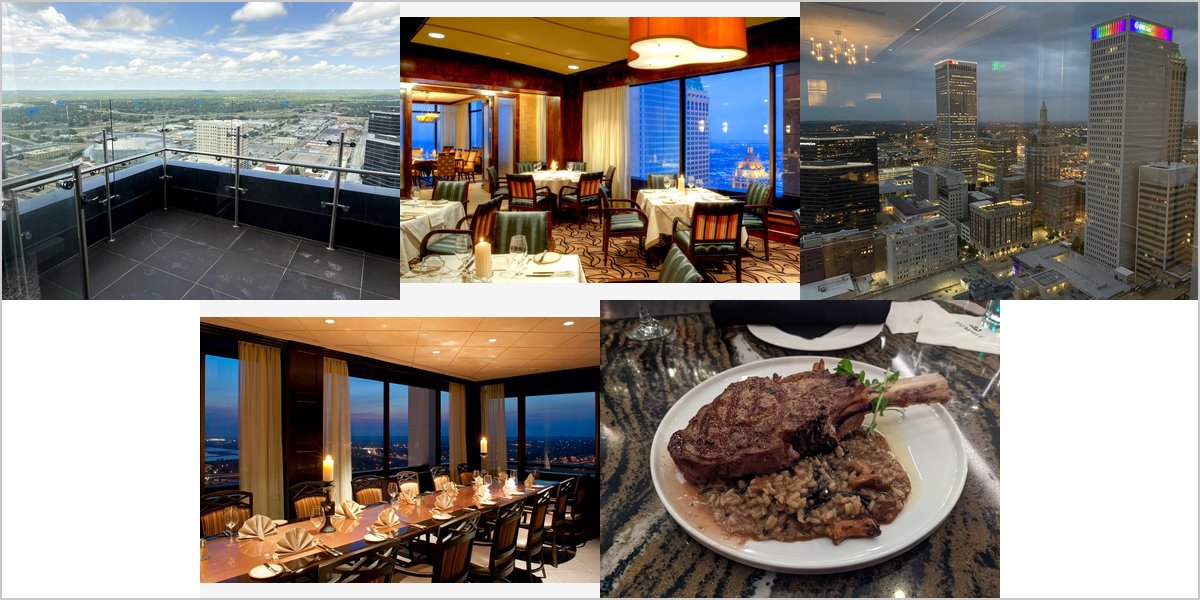
June 12, 2026
The Summit Club: Working a Private Club at the Top of a Tower
A private club at the top of a tower, walled in glass. That is a rare and genuinely excellent photographic situation, with one hard exposure problem in it.
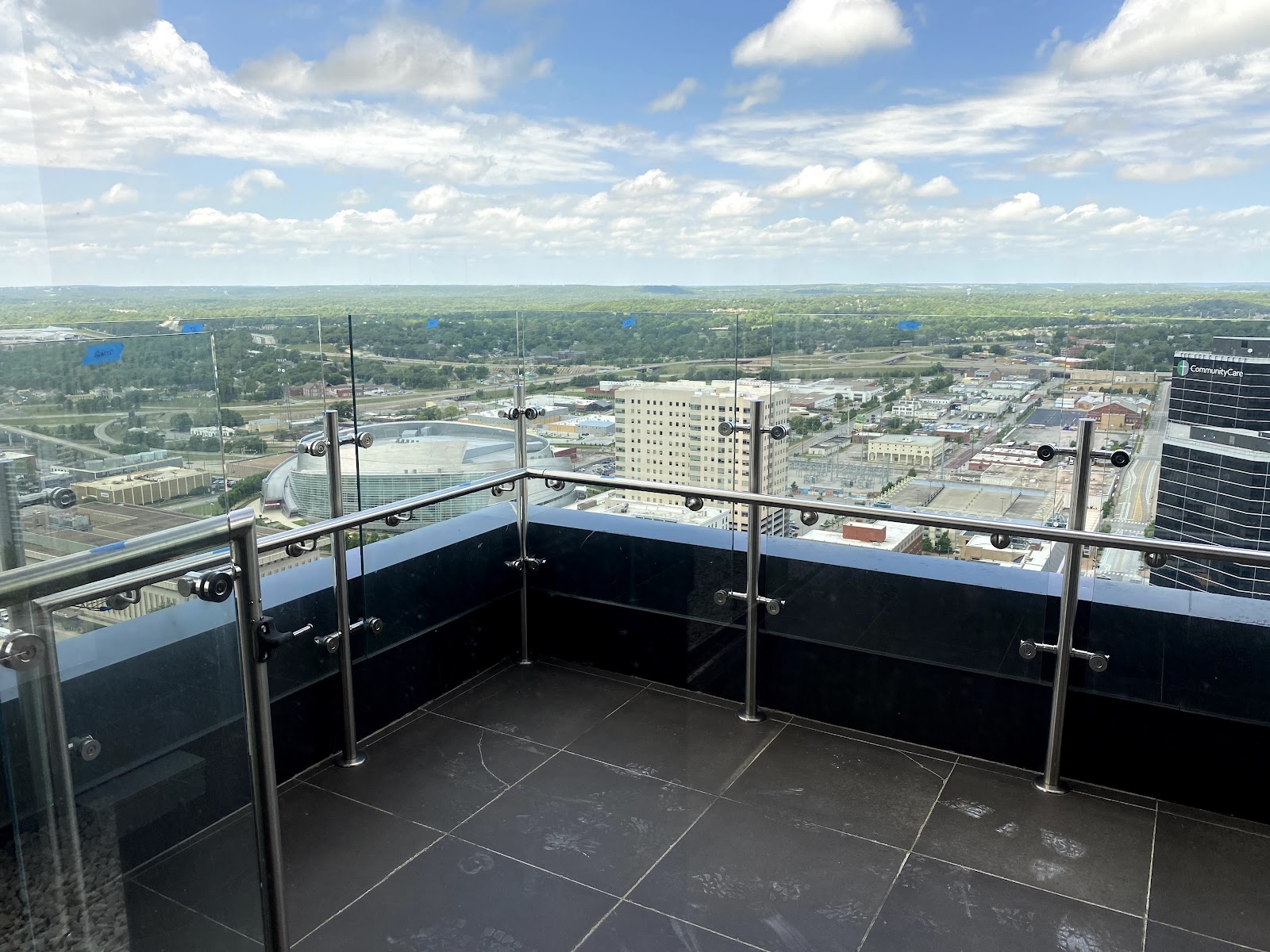
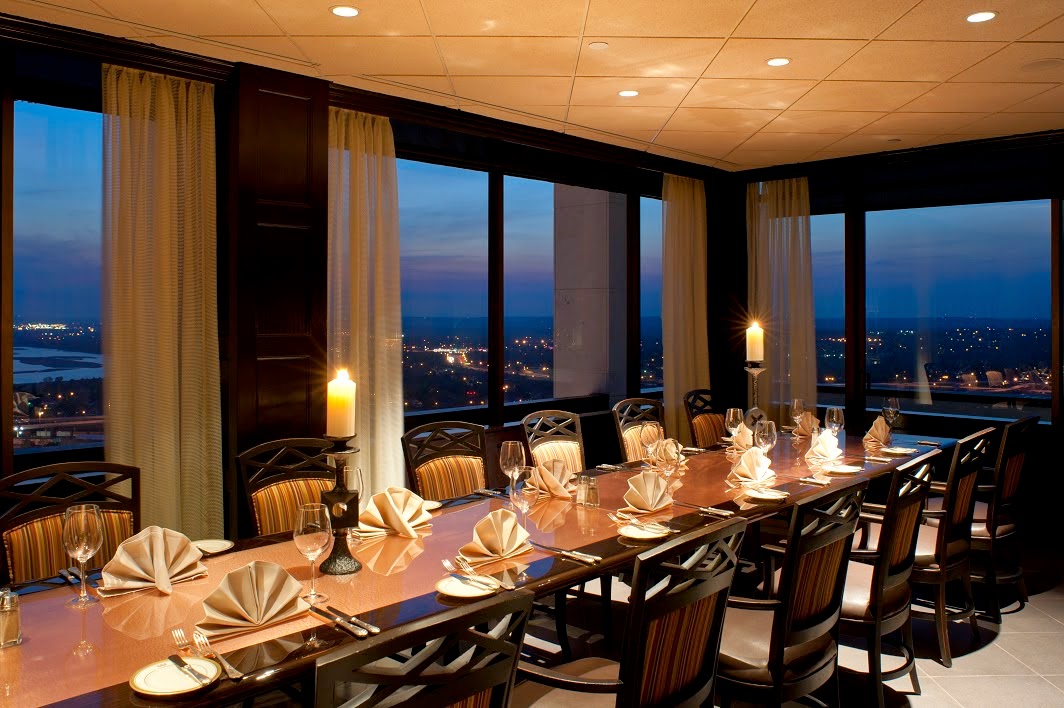
The Summit Club occupies upper floors of a tower in downtown Tulsa, a private members’ club with floor-to-ceiling windows and panoramic views over the city and the surrounding plains. It is a club in the traditional sense — dining rooms, private function space, members’ areas — but in a modern high-rise rather than a historic building.
Photographically this is an unusual and favourable combination. Most private clubs are handsome but visually anonymous, with the photographer supplying all the light and all the interest. A glass-walled room at height gives you three things instead: abundant natural light from the sides, a genuine horizon as a background, and the elevation that makes a city read as a landscape rather than as a street.
This is a light-and-timeline guide. We have not photographed a wedding at the Summit Club; glass-walled high-rise interiors behave predictably. Membership requirements, which floors and rooms are included, and photography rules in member areas are for the club, and private clubs are typically stricter than hotels.
The Summit Club at a glance
| Where | Upper floors of a tower, downtown Tulsa, Oklahoma |
| Character | Traditional private club in a modern high-rise; floor-to-ceiling glazing |
| The asset | Abundant lateral daylight, a real horizon, and elevation over the city |
| The problem | Windows several stops brighter than any interior face |
| Ask first | Sponsorship, which rooms are included, and photography in member areas |
Why glass at height is such good light
Floor-to-ceiling glazing on multiple sides of a room admits a great deal of daylight, and — crucially — it admits it laterally, at head height, rather than from above. That is the distinction that matters more than any other in interior photography: lateral light fills eye sockets while overhead light shadows them.
At height there is a second advantage. A room on an upper floor has an unobstructed view of the sky, with no facing buildings or trees blocking or tinting the light, so what comes in is clean, bright and neutral. That is rarer than it sounds — most ground-floor city interiors receive light that has already bounced off a brick building opposite.
The result is that a glass-walled club at height is among the best interior portrait environments available anywhere, and during the day it needs no added light at all. Place people parallel to the glazing, facing along it, and the window wall acts as an enormous soft side light with the room’s interior falling away behind them.
The exposure problem, and how to solve it
The corollary of all that light is a hard contrast problem. A bright sky and a lit city outside sits several stops above an interior face, so anyone posed against the glass silhouettes and the view blows out. This is the single most common failure in glass-walled venues and it is entirely avoidable.
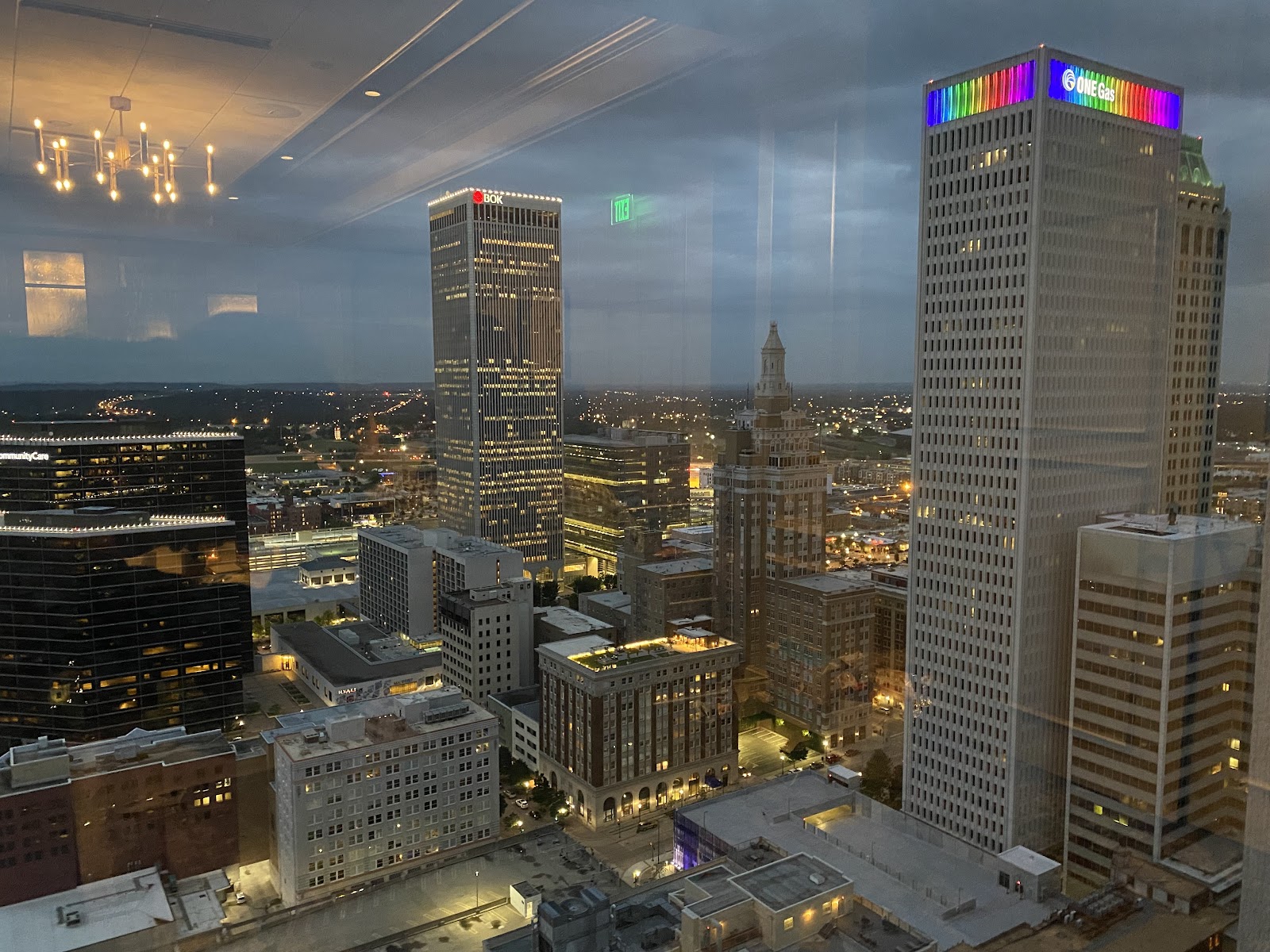
Three approaches, all deliberate. Turn people parallel to the glass and use it as a side light, which sidesteps the problem completely and gives the best light in the room. Or shoot the silhouette on purpose — a couple as dark shapes against a panoramic city is a strong graphic image, and at dusk it is genuinely beautiful. Or light the faces with flash to bring them within a few stops of the view, which is the only way to get both lit faces and a legible city in one frame.
That third option is the one worth planning for at dusk, because the frame everybody wants is the couple with the city lights behind them. Expose for the exterior, put a small flash on faces, and it works. Without fill you get a silhouette, which should be a choice rather than an accident.
Reflections, and the one thing to check
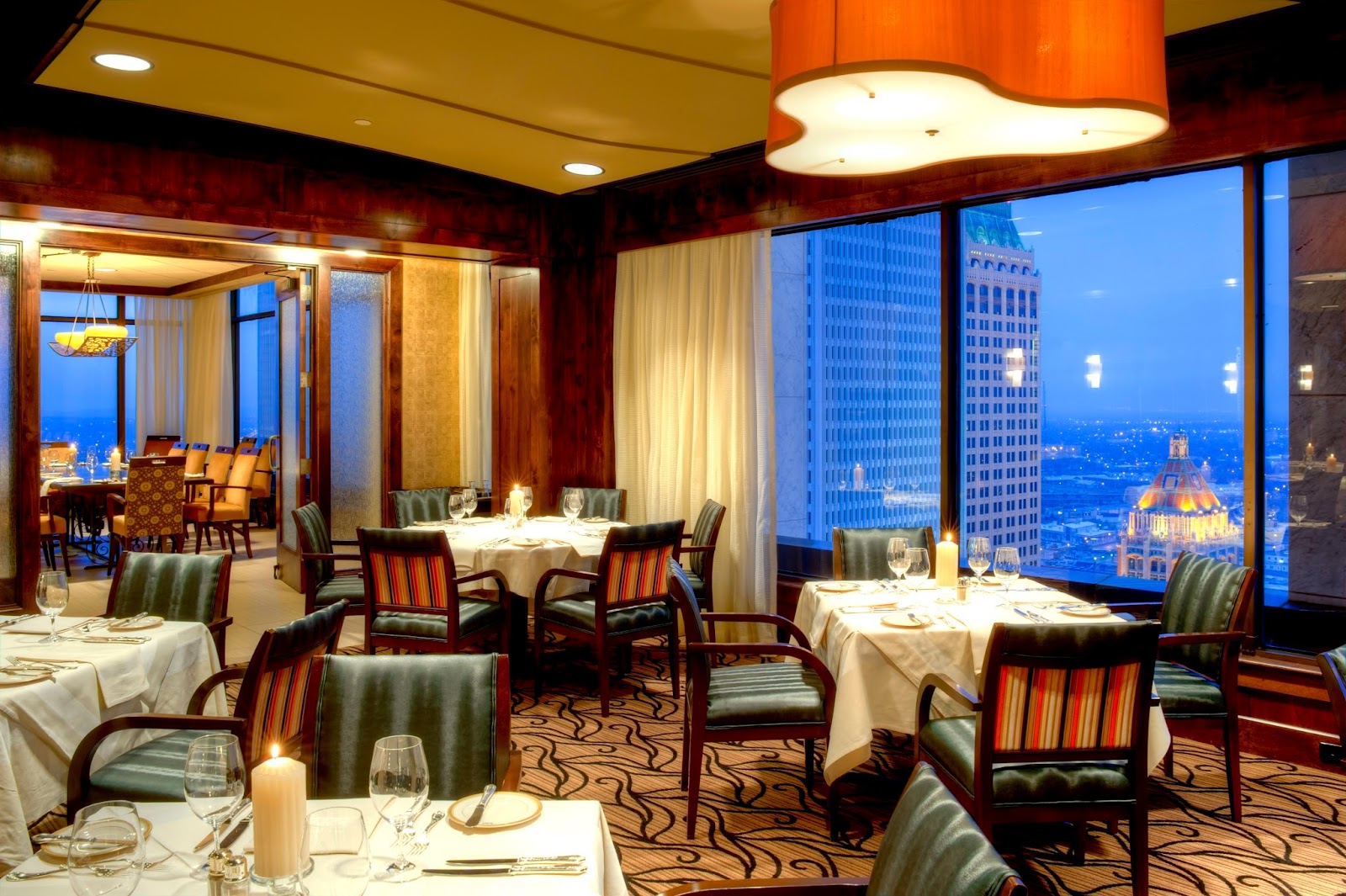
Glass at night becomes a mirror, and that is the technical detail that catches people out. Once it is dark outside and lit inside, the windows reflect the room — including your lights, your stands, and you. A flash fired anywhere near the axis of a window will appear in it as a hard bright spot.
The controls are angle and placement. Shoot obliquely to the glass rather than square-on, so the reflection shows the room’s depth rather than your equipment. Keep lights well off axis and, where possible, behind the plane of the camera relative to the window. And check the frame edges before committing, because a stand leg reflected in a window is very hard to remove.
Used deliberately, night reflections are an asset — a couple and their reflection in a dark window with city lights beyond is a frame that only exists in a building like this. The difference between that and a mess is entirely about where the lights are.
The timeline, built around one moment
At a venue like this the timeline has one fixed point and everything else arranges around it.
- Daylight portraits parallel to the glazing. No equipment needed, and the best light in the building. Any time the sun is up.
- Groups in the brightest room, positioned so the glass is a side light rather than a background.
- The dusk frame is the fixed point. Twenty minutes after sunset, city lights up, sky still holding colour, flash on faces. This is the photograph the venue exists to give you.
- After dark, mind the reflections. Oblique angles, lights well off axis, and check the frame edges.
- Confirm the club rules first. Sponsorship, dress codes that may apply to suppliers, and where photography is permitted when members are present.
What works in your favour
- Floor-to-ceiling glazing gives abundant lateral daylight — among the best interior light anywhere
- At height the light is clean and neutral, unobstructed by facing buildings
- A real horizon and elevation make a city read as a landscape
- The dusk frame with city lights is a photograph few venues can offer
- Night reflections in the glass are a genuine asset if the lights are placed well
What to plan around
- The view sits several stops above any interior face; posing against the glass silhouettes
- Glass becomes a mirror after dark and will show your lights and stands
- Private club rules on sponsorship, dress codes and member-area photography are strict
- The dusk window is about twenty minutes and does not wait
- Lift journeys in a tower quietly consume timeline; build them in
More frames from The Summit Club
The Summit Club wedding photography: common questions
Why is a glass-walled club such good light?
Because floor-to-ceiling glazing admits daylight laterally at head height rather than from above, which fills eye sockets instead of shadowing them. At height the light is also clean and neutral, unobstructed by facing buildings — unlike a ground-floor city interior, where the light has already bounced off the brick opposite.
How do you avoid silhouetting people against the view?
Three deliberate options. Turn them parallel to the glass and use it as a side light, which sidesteps the problem and gives the best light in the room. Shoot the silhouette on purpose, which at dusk is genuinely beautiful. Or put a flash on faces and expose for the exterior, which is the only way to get both.
What is the frame the venue exists for?
The couple at dusk with the city lights behind them, about twenty minutes after sunset with the sky still holding colour. Expose for the exterior and put a small flash on faces. It is the fixed point of the timeline because it is short, unrepeatable and the best photograph the building offers.
What happens to the glass after dark?
It becomes a mirror, reflecting the room including your lights, stands and you. Shoot obliquely rather than square-on, keep lights well off axis, and check the frame edges — a reflected stand leg is very hard to remove. Used deliberately, a couple and their reflection with city lights beyond is a frame unique to this kind of building.
What should we settle with the club first?
Whether member sponsorship is required, what the dress code is and whether it applies to suppliers, and exactly where photography is permitted when members are present. Private clubs are stricter than hotels, and a restriction discovered on the day removes a location with no time to replace it.
More Tulsa venue guides
We are writing a photographer’s guide to every venue we would happily shoot in Tulsa. Here are three more, plus the full index:
- Tulsa Country Club: Field Notes on a 1908 Club
- The Tulsa Zoo: A Photographer Answers Your Questions
- Union Plaza: A Season-by-Season Photography Guide
Planning a wedding at The Summit Club?
One frame defines this venue and it lasts twenty minutes. Tell us your date and we will give you the exact dusk window, plus a plan for the daylight glazing and the night reflections.