 The Henry Clay: Lighting a 1920s Lodge Building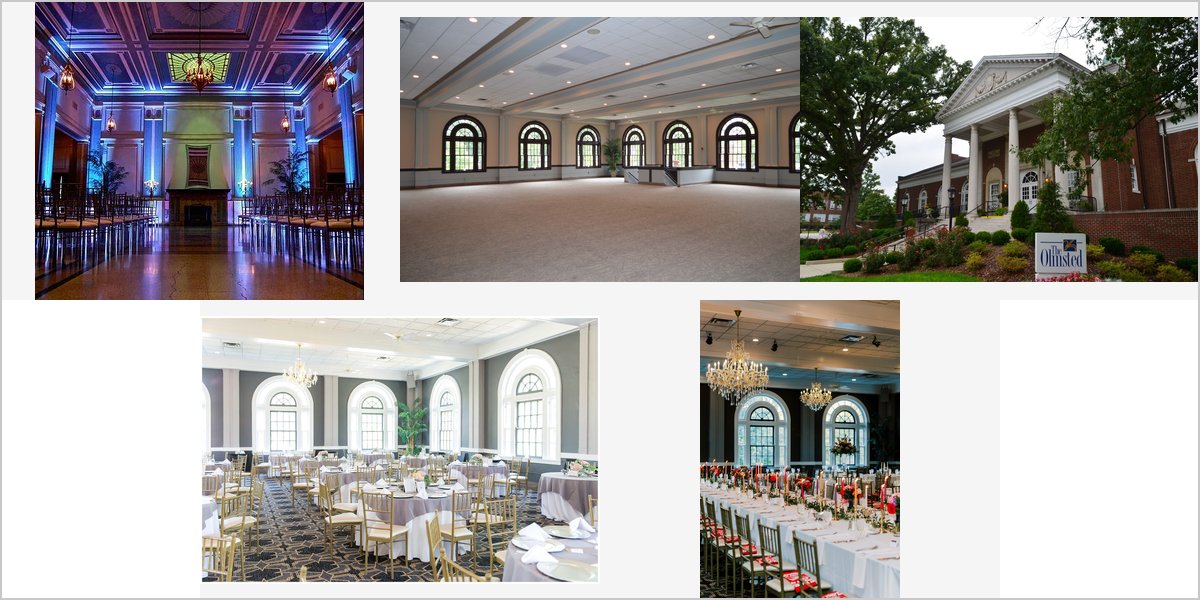
June 12, 2026
The Olmsted: A Photographer Answers Your Questions
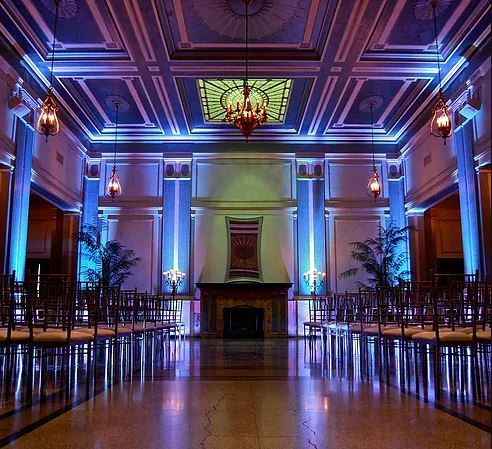
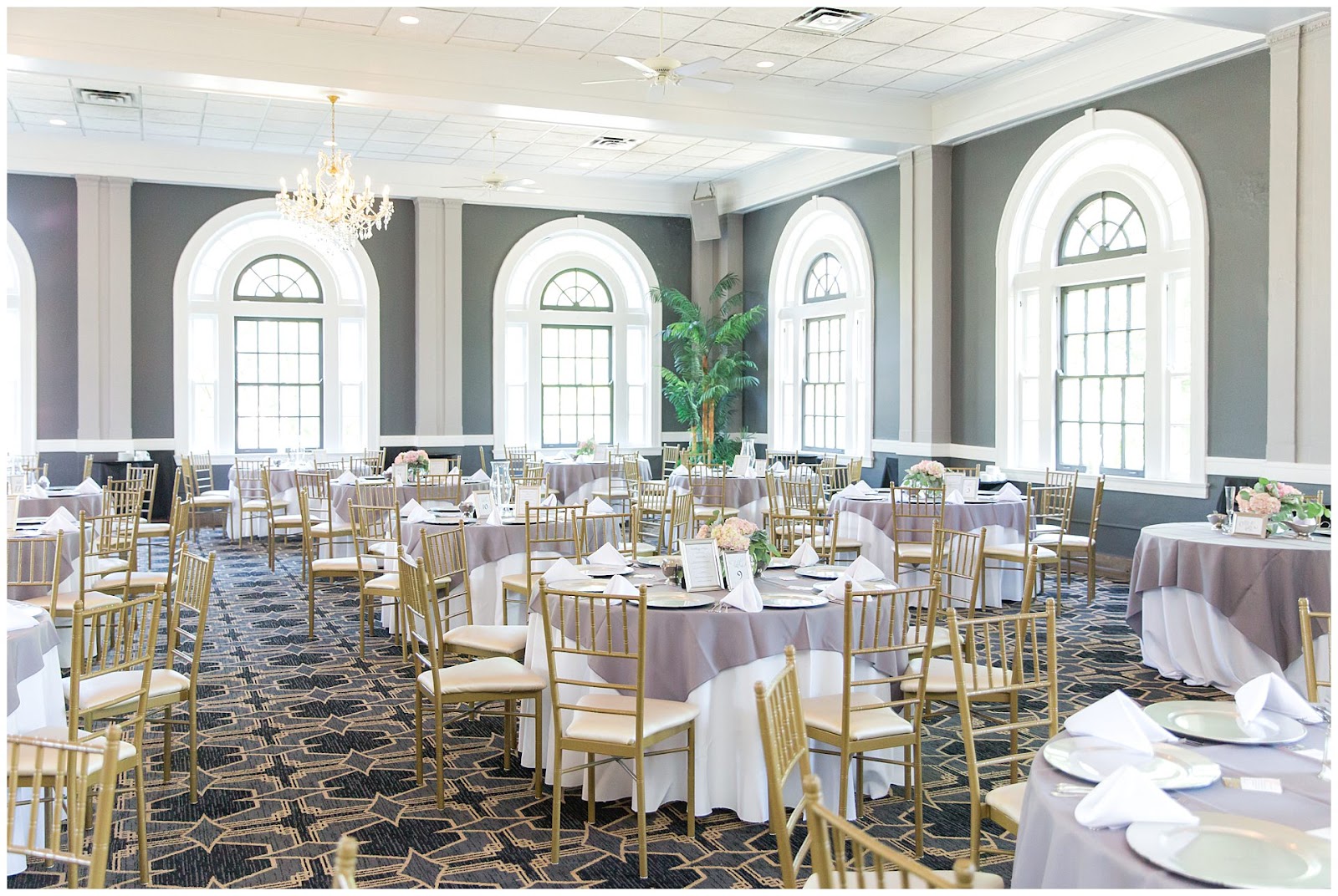
Tall arched windows down both sides of a barrel-vaulted hall. That is an unusually good combination — daylight from two directions in a room big enough to matter.
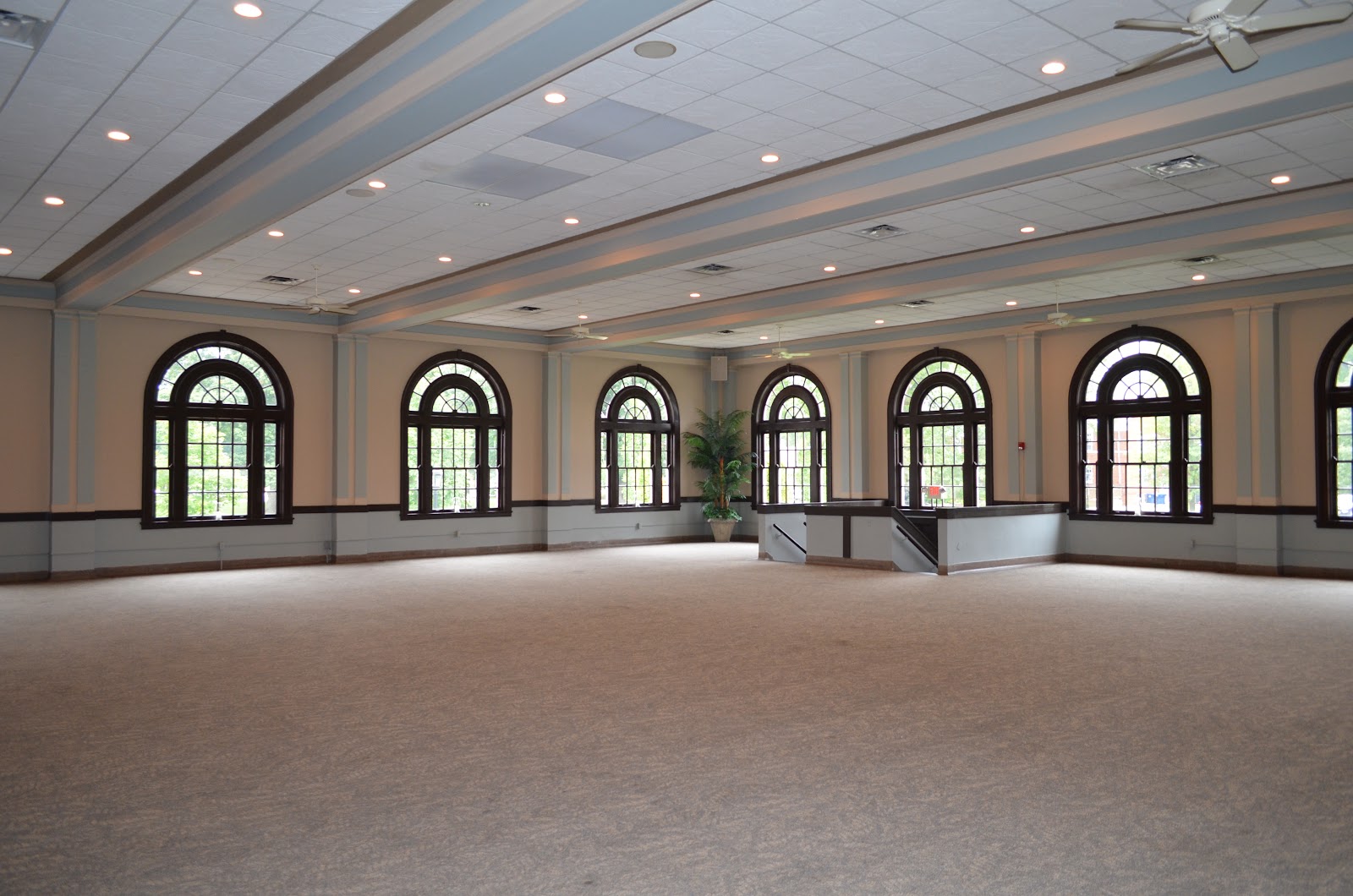
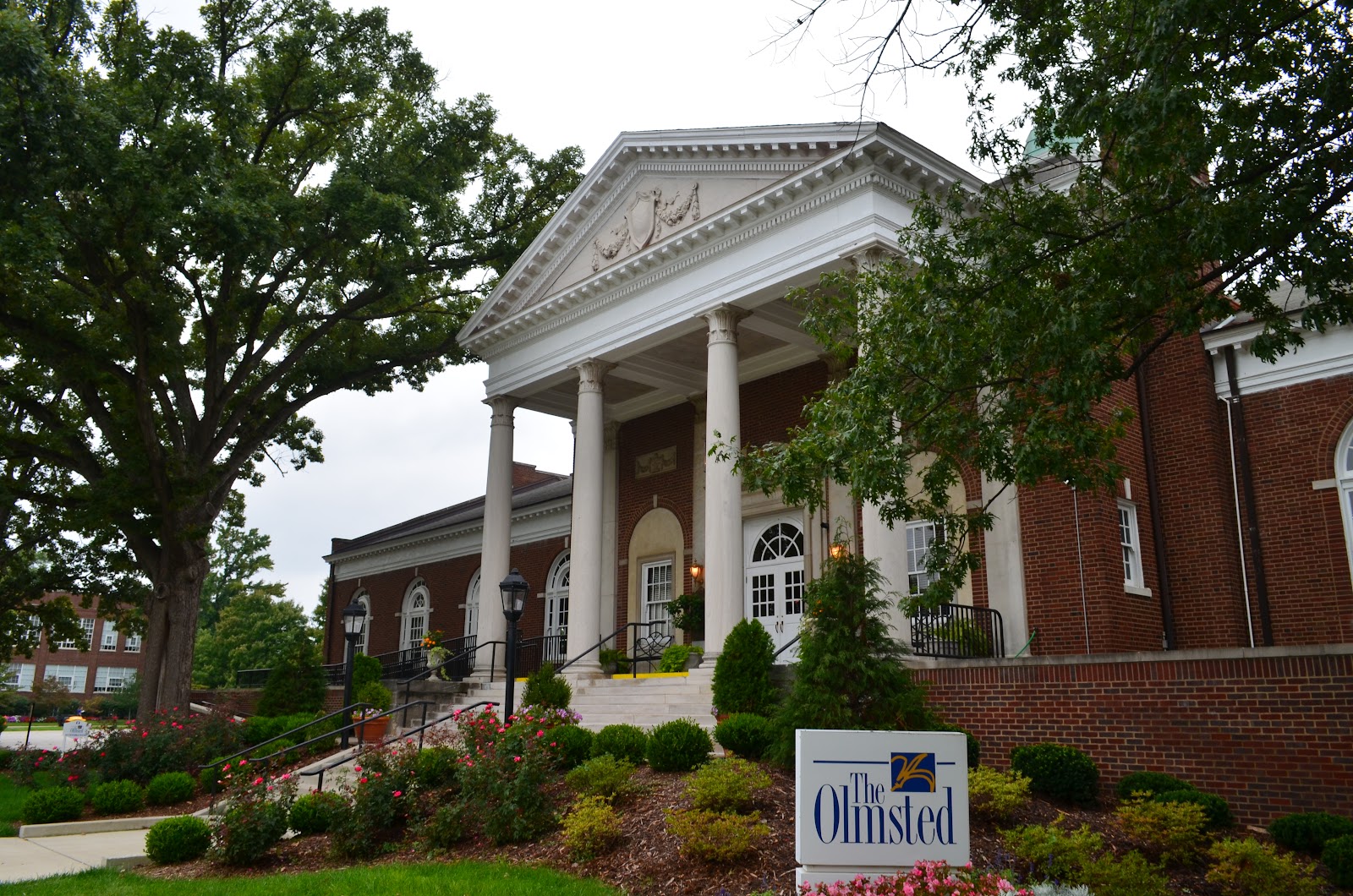
The Olmsted occupies a former 1920s school building in Louisville, with the old gymnasium converted into the main event hall. The architecture is characteristic of institutional buildings of that era: a large volume, a barrel-vaulted or coved ceiling, and tall arched windows running down both long walls.
That window arrangement is the reason this venue is worth a photographer’s attention. Most large event halls are either windowless boxes or have glazing on one side only. Windows down both sides give you cross-lighting — daylight arriving from two opposing directions — which fills shadows naturally and produces something very close to studio light across the whole room.
These are the questions couples ask, answered from the craft side. We have not photographed a wedding at the Olmsted. The behaviour of cross-lit halls and vaulted ceilings is predictable; room configuration, capacity and what the venue permits are for their team, and rigging and power are the two answers worth having early in any converted building.
The Olmsted at a glance
| Where | The Highlands, Louisville, Kentucky — a converted 1920s school |
| Character | Former gymnasium with a barrel-vaulted ceiling and tall arched windows both sides |
| Light | Cross-lit by day from opposing windows; nothing after dark without installation |
| The advantage | Daylight from two directions in a hall large enough for a full reception |
| Ask first | Rigging points, power, and whether daytime access to the hall is included |
Why windows on both sides matter so much
With glazing on one side only, everyone in the room has a lit side and a dark side, and the further from the window they are, the darker the whole subject becomes. You spend the day positioning people relative to a single light source and adding fill.
With windows on both long walls, light arrives from two opposing directions. Each subject gets a key from one side and a natural fill from the other, which is the classic portrait lighting arrangement — and here it exists for free, across the entire floor area, without a single piece of equipment.
The practical upshot is that daytime photographs in a hall like this are exceptionally easy and exceptionally good. You can place people almost anywhere, shoot in any direction, and get even, flattering, dimensional light. Very few large venues offer that.
What does the vaulted ceiling do?
Two useful things and one awkward one. It gives the room height, which means a wide frame including the ceiling has scale and reads as architecture rather than as a function room. And a curved ceiling is a strong compositional element — an arc framing the couple in a wide shot is a naturally satisfying composition.
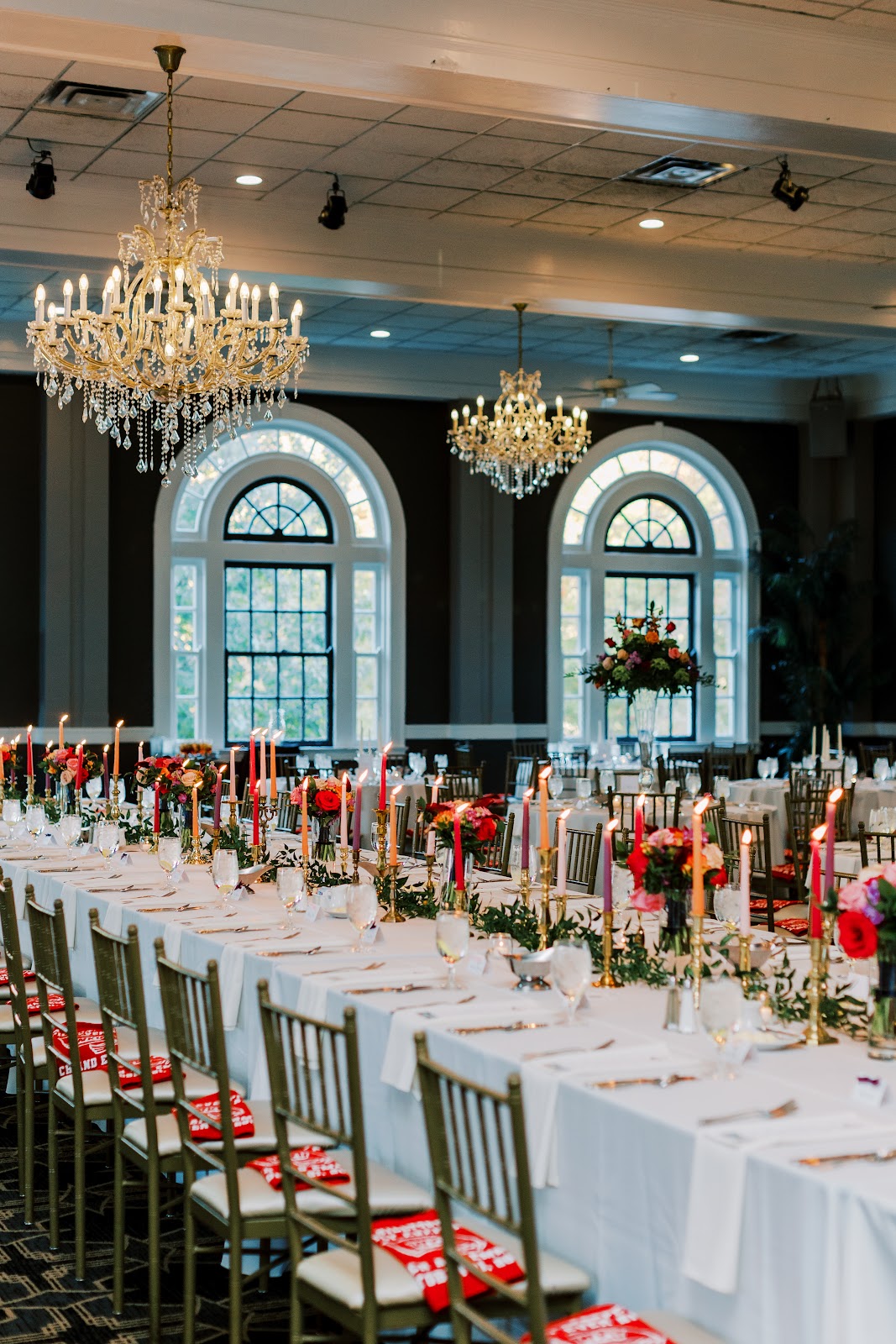
The awkward part is flash. A high curved ceiling scatters bounced light rather than returning it, so the standard technique of firing a flash upward is largely ineffective here. After dark, light has to come from stands with modifiers.
There is a compensation, though: curved surfaces distribute installed lighting beautifully. Festoons strung along a barrel vault, or uplighting washing up into the curve, spread light around in a way a flat ceiling does not. If the planner is installing ambient lighting, a vaulted room repays it more than most.
What happens once the sun goes down?
Everything that makes this venue good during the day disappears. Tall windows become dark rectangles, the cross-lighting vanishes, and the room reverts to being a large hall with whatever has been installed in it. That is the single most important planning fact about the venue.
So the timeline should front-load anything that benefits from daylight. Couple’s portraits, group photographs and ideally the ceremony belong in the window-lit hours. Saving portraits until after dinner throws away the venue’s main asset.
For the evening itself, plan two off-camera flashes gelled warm to match the installed ambient, with one behind the dancefloor as a rim light to separate people from a dark background. And have the conversation about installed lighting early — festoons and uplighting are what make a converted hall look intentional after dark rather than merely dim.
Is there anything to watch out for?
Three things. First, on a bright day the arched windows are very bright relative to the room, so a couple standing against them will silhouette. Turn people parallel to the window wall rather than against it and the glazing becomes a large side light instead of a background you cannot expose for.
Second, institutional buildings of this era often have hard floors and hard walls, which means sound carries. That does not affect photographs directly, but it affects how a ceremony is run and where people stand, so it is worth asking about.
Third, a converted school has limited ancillary space. Ask where the wedding party can get ready, and whether there is a room with a decent window — because if the answer is no, preparation photographs should happen at a hotel beforehand rather than in a windowless side room.
Finally, as with any converted venue, confirm rigging points and available power circuits. Those two answers determine what lighting is possible, and a lighting supplier will ask them immediately.
A last note on the windows themselves as subject matter. Tall arched institutional glazing has a strong repeating rhythm, and shot down the length of the hall with a longer lens the arches compress into a series of receding frames. It is the one composition that states what the building used to be, and it works whether the room is empty or full. Take it early, before the floor plan is set out, because once tables and a dancefloor are in place the line of sight down the hall disappears.
What works in your favour
- Windows on both long walls give cross-lighting — free studio-quality light across the whole floor
- Daytime photographs need no equipment at all and work anywhere in the room
- A barrel-vaulted ceiling gives scale and a natural compositional arc
- Curved ceilings distribute installed festoons and uplighting unusually well
- A large hall with genuine daylight, which most reception venues of this size lack
What to plan around
- Everything good about the light disappears after sunset
- High curved ceiling makes bounce flash ineffective; evening lighting comes from stands
- Bright arched windows will silhouette anyone posed against them
- Converted school buildings have limited getting-ready space; check for a window
- The evening look depends entirely on installed ambient lighting
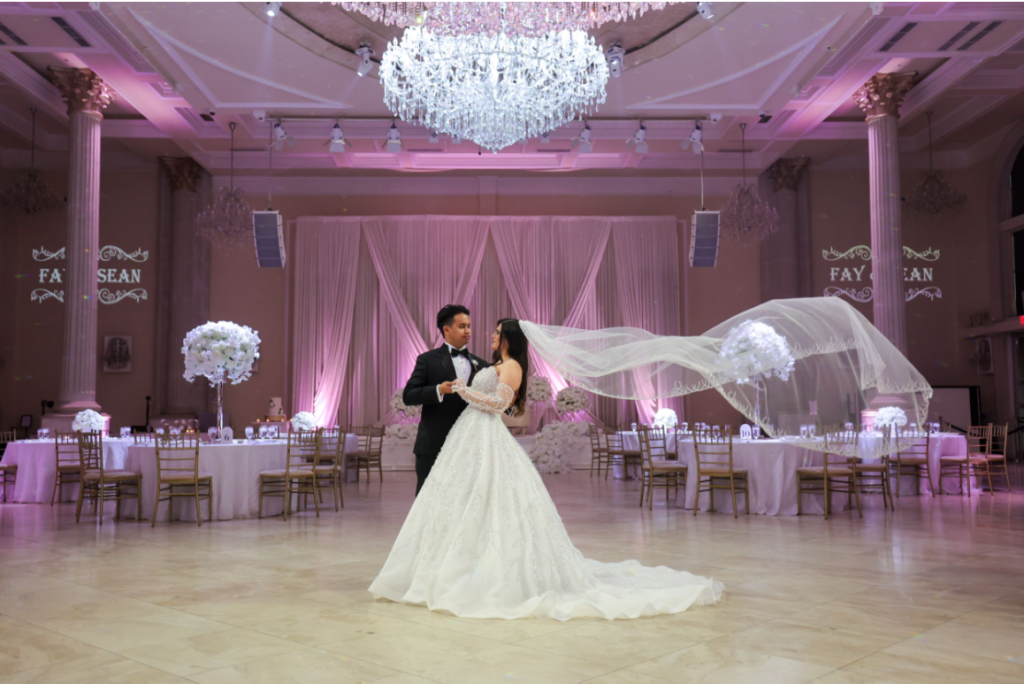
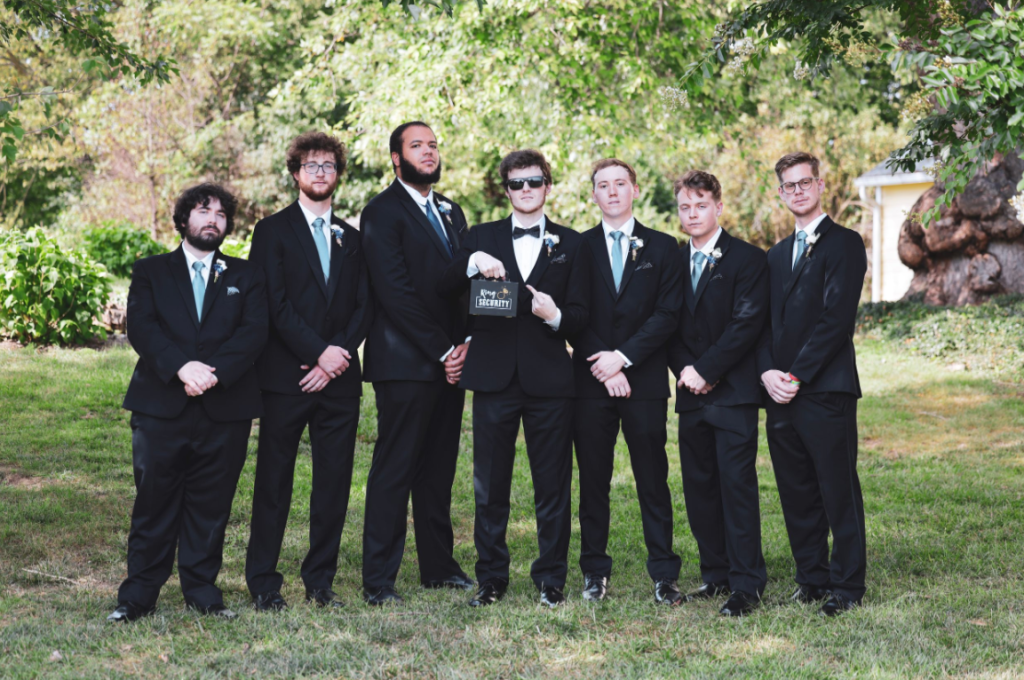
More frames from The Olmsted
The Olmsted wedding photography: common questions
What makes the light here better than most large venues?
Windows on both long walls. That gives cross-lighting — a key from one side and a natural fill from the other — which is the classic portrait arrangement, and here it exists for free across the entire floor. Most big halls are windowless or glazed on one side only, where everyone has a lit side and a dark side.
When should the portraits happen?
During daylight, without question. The cross-lighting is the venue’s main asset and it vanishes at sunset, when the windows become dark rectangles and the room reverts to whatever has been installed in it. Saving portraits for after dinner throws away the reason to book the place.
Can you bounce flash off the vaulted ceiling?
Not effectively — a high curved ceiling scatters light rather than returning it. Evening light has to come from stands with modifiers. The flip side is that a barrel vault distributes installed festoons and uplighting beautifully, so it repays a lighting design more than a flat ceiling would.
How do you handle the bright arched windows?
Turn people parallel to the window wall rather than posing them against it. Against the glass they silhouette, because the windows are several stops brighter than the room. Parallel to it, the glazing becomes an enormous side light — which is the best frame the room offers.
Is there somewhere to get ready?
Ask specifically, because converted school buildings often have limited ancillary space. What matters is whether any available room has a decent window. If not, preparation photographs are better done at a hotel beforehand than in a windowless side room.
More Louisville venue guides
We are writing a photographer’s guide to every venue we would happily shoot in Louisville. Here are three more, plus the full index:
- The Thomas Edison House: Field Notes on a Shotgun Cottage
- Whitehall: A Season-by-Season Photography Guide
- The Brennan House: Who This Small Venue Suits
All Louisville Wedding Venues →
Planning a wedding at The Olmsted?
This venue is genuinely excellent in daylight and ordinary after dark, which makes the timeline the whole game. Tell us your date and we will work out exactly how long the good light lasts and put the portraits inside it.