 The Venue, Asheville: A Season-by-Season Guide
The Bradford: What a Purpose-Built Venue Gets Right and Wrong
A building designed for weddings removes every logistical problem and leaves one photographic one: it has no history.
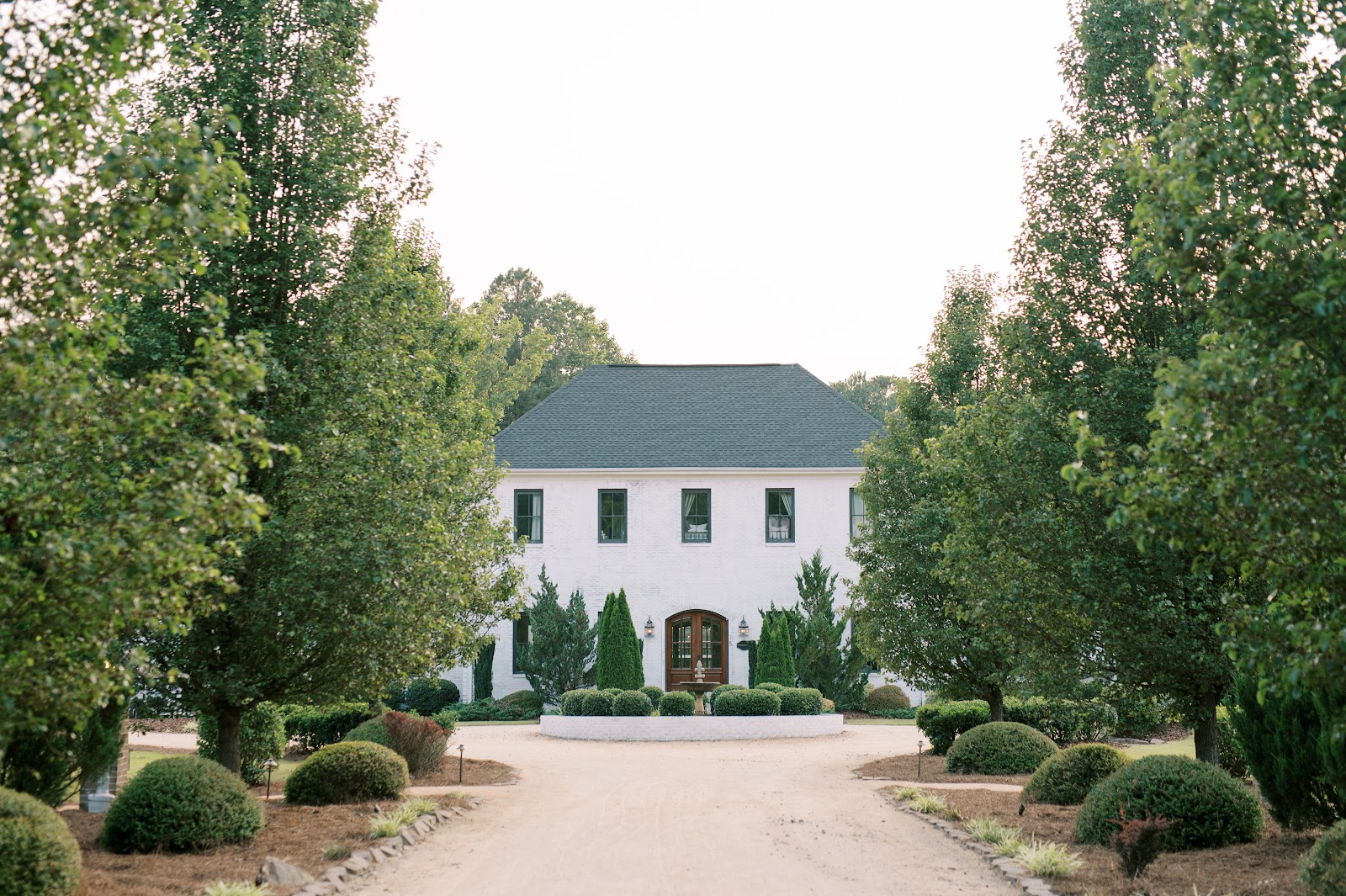
The Bradford is a purpose-built wedding venue on open land outside Raleigh, North Carolina, with a ballroom, outdoor ceremony ground, preparation suites and grounds — designed from the start for the event it hosts rather than converted to it.
That distinction is the venue’s logic and it cuts both ways in a way worth being straight about. Purpose-built venues are extremely good at the things that go wrong elsewhere: there is power where you need it, a preparation room with a decent window because someone thought about it, a covered option that is genuinely covered, level ground, parking, and staff who do this every weekend. Those are not photographic features but they change how many photographs get made.
What a purpose-built venue does not have is accumulated character. A converted mill, a period house or a museum supplies texture, patina and incident for free; a new building supplies clean surfaces and a neutral palette, which means the photographer has to bring the interest. This is about working with both halves of that. We have not photographed a wedding at The Bradford; purpose-built venues on open land behave the same wherever they are. Which spaces are available and which way the ceremony ground faces are questions for their events team, and the second is the useful one.
The Bradford at a glance
| Where | Open land outside Raleigh, North Carolina |
| Character | Purpose-built venue with a ballroom, ceremony ground and suites |
| What it gets right | Power, preparation windows, real cover, level ground, experienced staff |
| What it lacks | Accumulated texture and character; the photographer supplies it |
| Ask first | Which way the outdoor ceremony ground faces |
What the design gets right, and how to use it
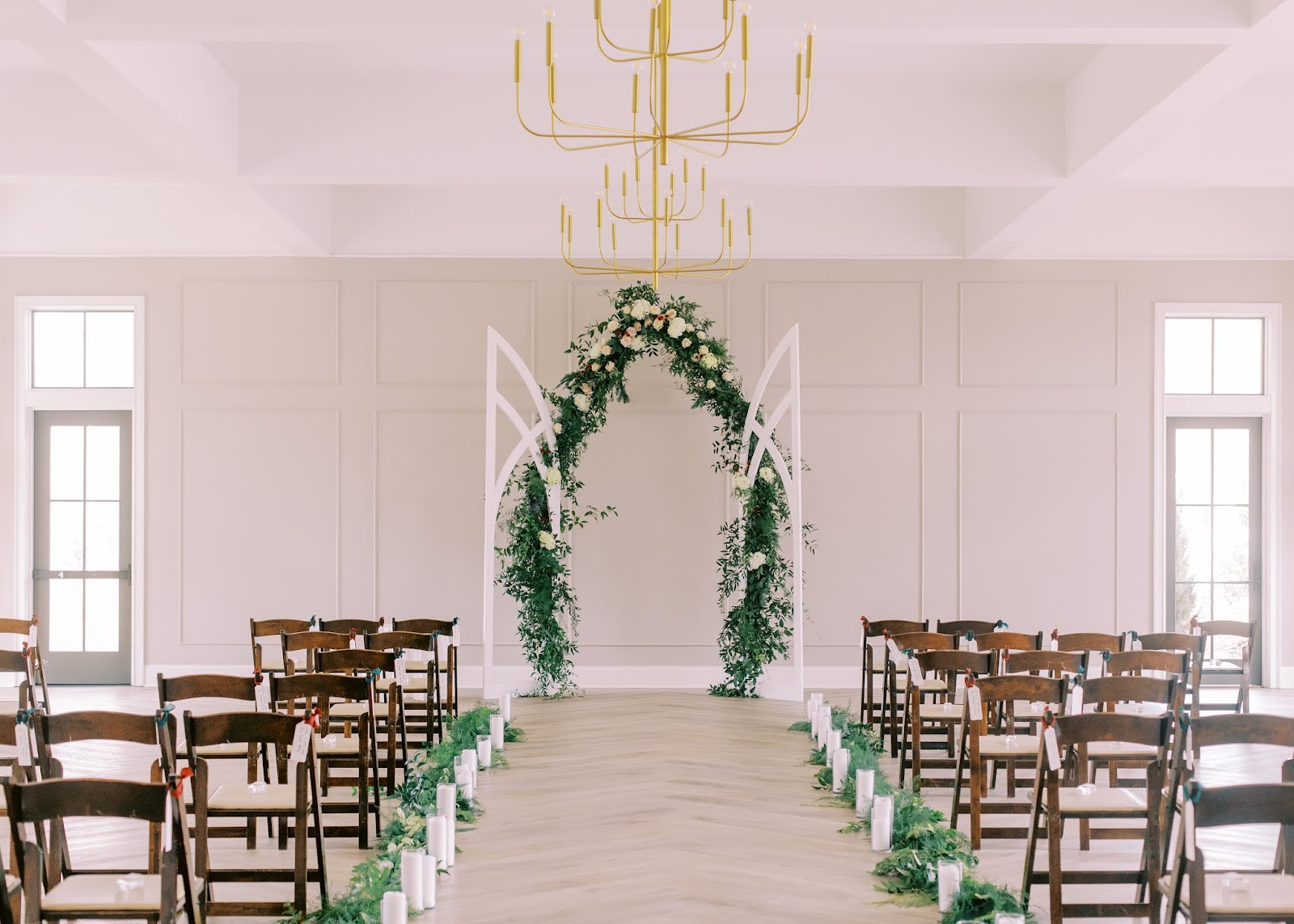
Preparation rooms in purpose-built venues are usually the best-designed spaces in the building, because whoever planned them knew what happens in them. That typically means large windows, pale walls, mirrors and room to move — which is exactly what a photographer wants and rarely gets. A large window on the shaded side with pale walls bouncing fill is close to ideal light for a dress, hair and detail work, and it needs nothing carried.
Two things still need doing. Switch off the overhead lighting and move the lamps out, because mixed tungsten and daylight in one room is the commonest cause of inconsistent skin tone across a morning. And use the room’s own pale walls as a reflector by placing the subject so a wall is on their shadow side — in a well-designed prep room that alone is often all the fill required.
The other genuine advantage is that the cover is real. At a converted venue the wet-weather plan is often a compromise — a room with no windows, or a marquee that leaks light. Here it is usually a designed space with an actual roof and actual power, which means a storm is an inconvenience rather than an emergency. In a climate with regular summer afternoon thunderstorms, that is worth a great deal.
And the ground is level, which sounds trivial until you have arranged a large group on a sloping lawn. Level ground with a clear background makes a forty-person photograph a five-minute exercise, and it is one of the few places a purpose-built venue simply beats a historic one outright.
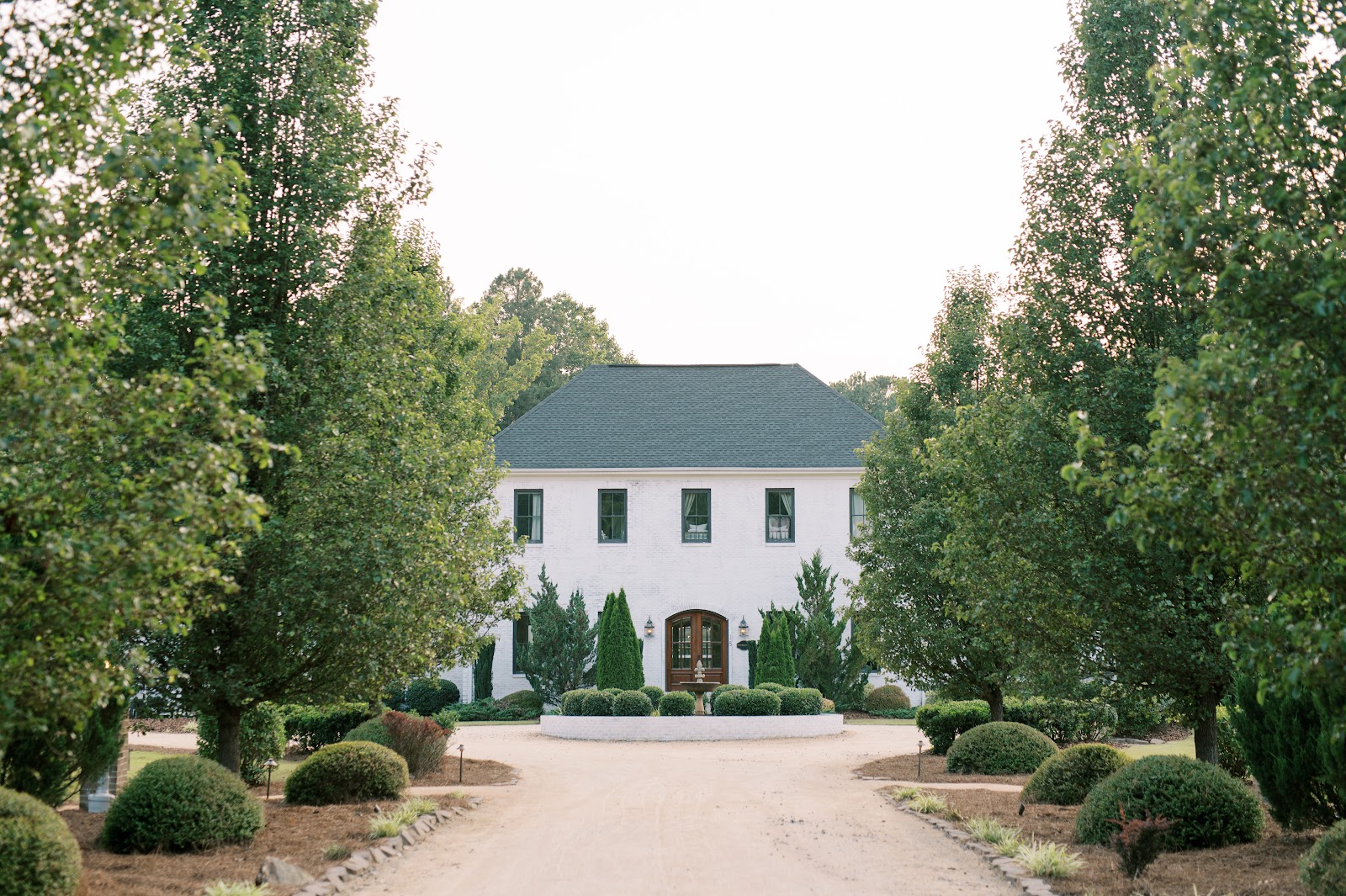
The problem: clean surfaces and a neutral palette
A new building has no patina. Walls are flat and evenly painted, floors are uniform, and the palette is deliberately neutral so that any colour scheme works in it. That means nothing in the frame supplies texture, incident or character, which is the opposite of the problem a period venue presents.
The consequence is that frames can be technically perfect and visually inert — correctly exposed, sharp, and saying nothing. The tools for fixing that are the same ones any spare interior needs, and they all have to be brought deliberately.
Directional light is the first. Even ambient gives no modelling, so one source from the side creates a shadow side on a face and an edge where there was none. In a neutral room that single change is the difference between a snapshot and a portrait.
Negative fill is the second and it is free. Putting something dark on the shadow side of a subject subtracts light where the room insists on adding it, which manufactures contrast the venue will not provide. A dark panel, a doorway into an unlit room, even a jacket held out of frame.
Colour is the third, and a neutral venue is the best possible surface for it. Gelled light renders accurately on neutral walls rather than muddying, so a warm key on the couple against a cool wash behind gives colour separation where tonal separation is impossible. And precision is the fourth: in a spare room a crooked line or an ambiguous near-symmetry is glaring, because there is nothing else in the frame to distract from it.
- Prep room: biggest shaded-side window, overheads off, lamps out
- Use pale walls as free fill by placing the shadow side towards them
- Bring directional light; even ambient will not model a face
- Use negative fill — subtracting beats adding in a neutral room
- Gels render accurately on neutral walls; use colour for separation
Open land, orientation and the hours that matter
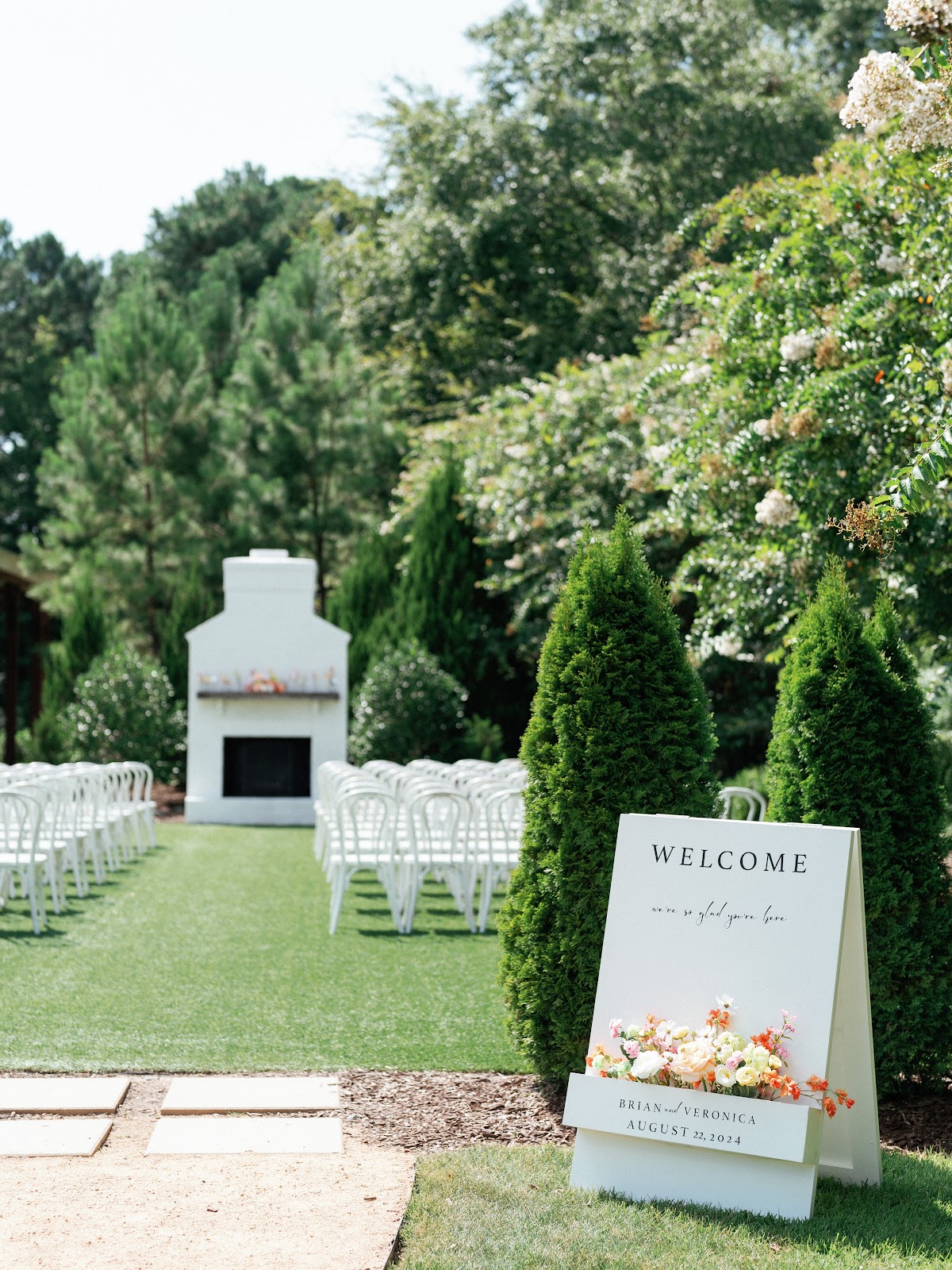
The grounds are the venue’s real character, and open land has one governing variable: which way the ceremony site faces. That single fact decides whether a late-afternoon ceremony has the sun behind the couple, in their faces, or across them, and it is the most useful question to ask before anything else is scheduled. Sun behind the couple gives rim light and a manageable exposure with fill; sun in their faces gives squinting and shadowed eyes; sun across them is usually best of all.
Open ground also means no shade. In a North Carolina summer that makes the middle of the day genuinely difficult, with high sun, squinting and a bright sky that clips if you expose for skin — and unlike a wooded venue there is no positional fix. The building’s own shadow is the best shade available, and finding where it falls at the ceremony hour is a site-visit job rather than a guess.
The compensation is that open land gives an unobstructed horizon, which means two things a treed venue cannot offer. Low sun reaches the ground for the full last ninety minutes rather than being blocked, so backlit grass and rim-lit figures are available right up to sunset. And the twenty minutes after sunset fill the whole frame with sky colour rather than showing it in gaps between trees — a genuine extra block of usable light that most people pack up before.
Weather needs a decision point rather than a hope. Summer afternoon storms here build fast, rain hard and clear, and on open land there is nowhere to shelter between the building and the ceremony site. Agree in advance who decides and when, and note that the twenty minutes after a storm passes often give the best light of the day: wet grass, dramatic cloud and clean air.
Two final practicalities. Humidity fogs a lens carried from an air-conditioned suite into outdoor air for ten to twenty minutes, so acclimatise before the ceremony rather than during it. And on open land in the evening, dew returns as the ground cools — a dress on wet grass at ten at night is worth mentioning before the late portrait block rather than after.
What works in your favour
- Power, level ground and real cover — the things that fail elsewhere
- A preparation room designed with a proper window and pale walls
- Level ground makes a forty-person group a five-minute exercise
- An unobstructed horizon, so low sun reaches the ground until sunset
- Twenty minutes of full-frame sky colour after the sun has gone
What to plan around
- No patina; flat painted walls supply no texture or incident
- Even ambient gives no modelling, so light must be brought
- No shade anywhere on open land except the building’s own shadow
- Nowhere to shelter between the building and the ceremony site
- Returning dew makes a dress on late-evening grass a real issue
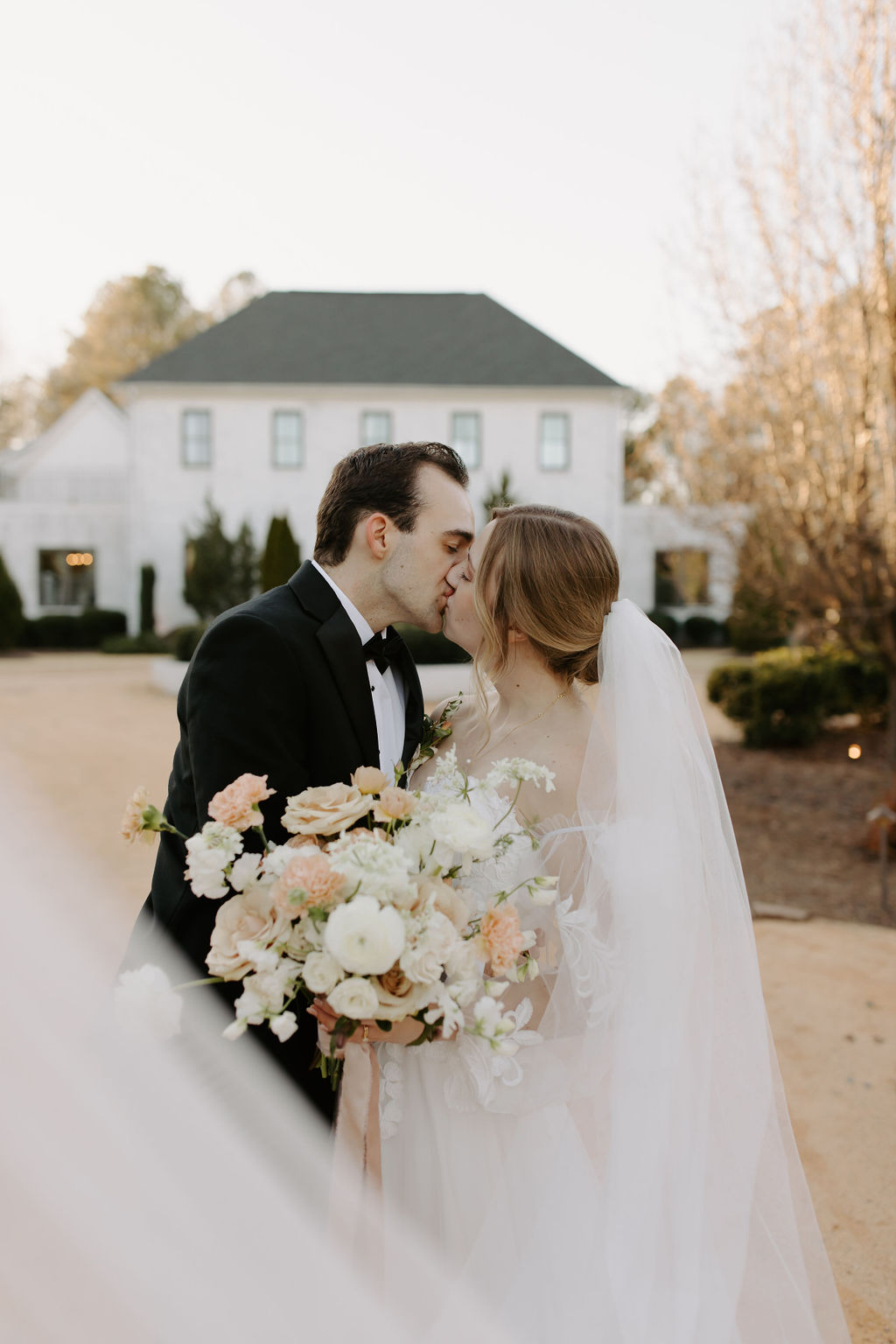
More frames from The Bradford
The Bradford wedding photography: common questions
What do purpose-built venues get right?
The things that go wrong elsewhere — power where you need it, a preparation room with a proper window, cover that is actually covered, level ground for groups, and staff who do this weekly. None of it is photographic, but it changes how many photographs get made.
What do they get wrong?
They have no patina. Flat evenly painted walls and a deliberately neutral palette mean nothing supplies texture or incident, so frames can be technically perfect and visually inert. The photographer has to bring all the interest.
How do you fix a neutral interior?
Directional light for modelling, negative fill to manufacture contrast, and gels — neutral walls render coloured light accurately rather than muddying it, so a warm key against a cool wash gives colour separation where tonal separation is impossible.
What is the most useful question to ask?
Which way the outdoor ceremony ground faces. That decides whether the sun is behind the couple, in their faces, or across them at the ceremony hour — and sun across them is usually best, while sun in their faces is the one to avoid.
Where is the shade on open land?
The building’s own shadow, and nowhere else. Unlike a wooded venue there is no positional fix at midday, so finding where that shadow falls at the ceremony hour is a site-visit job rather than a guess.
What does open land give in return?
An unobstructed horizon. Low sun reaches the ground for the full last ninety minutes instead of being blocked by trees, and the twenty minutes after sunset fill the whole frame with sky colour — a genuine extra block most people pack up before.
More North Carolina venue guides
We are writing a photographer’s guide to every venue we would happily shoot in North Carolina. Here are three more, plus the full index:
- The Barn at Old Fort, Old Fort: The Venue’s Own Logic
- The Farm at Swan’s Crossing, Waynesville: One Frame, and How It Is Made
- The Duke Energy Center: How the Glass Lobby Frame Is Made
Planning a wedding at The Bradford?
Purpose-built solves the logistics and leaves the character to us. Tell us which way the ceremony ground faces and we will plan from there.