 Indianapolis Zoo: Reading a Day From Open Grounds to Underwater Glass
The Studebaker Mansion, South Bend: The Light Through a Day
In a house with windows on four sides, the good room moves every two hours — and the schedule changes with the month.
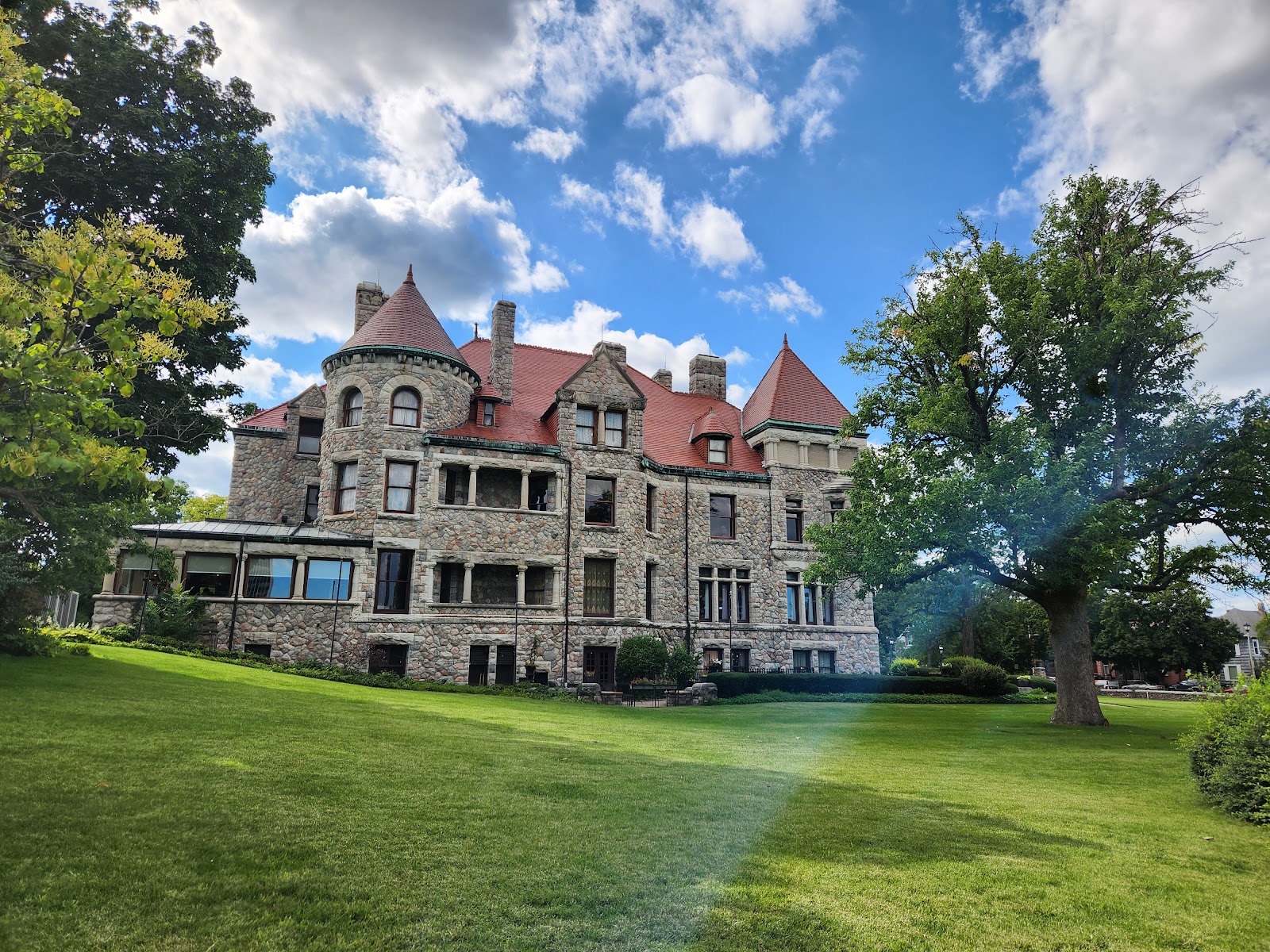
A large house with windows on all four elevations has a property most wedding venues do not: the best room in it changes through the day, and it changes predictably enough to be planned.
That is different from a hotel, where a ballroom is a ballroom at any hour, and different from a barn, where there is one space and one condition. Here the east rooms are soft early and hard by mid-morning; the north rooms, if the house has any, are soft all day and all year; the west rooms are soft until the afternoon and then difficult; and the south rooms swing from a high summer source to a low winter one.
A photographer who has that map walks into the right room at the right time. One who does not spends the day following light that has already moved.
This is the day in order, with the seasonal variation named where it matters. We have not photographed a wedding at the Studebaker Mansion; grand houses of this period behave consistently, and orientation is geography. Which rooms are included, what the rules are on flash and furniture, and whether the grounds are available are questions for their team.
The Studebaker Mansion at a glance
| Where | South Bend, Indiana |
| Morning | The rooms facing away from the rising sun, which changes by month |
| All day | Any north-facing room — soft and directional in every season |
| Afternoon | The east side, now in its own shadow |
| Evening | Outside: the raked facade, then the crossing after sunset |
Morning, and the room that is always right
The first job on arrival is a map of the house’s orientation, and it takes one look outside rather than any calculation. South Bend sits at about forty-two degrees north, which means the sun rises well north of east in June and well south of east in December — so the room shaded at eight in the morning in July is not necessarily the one shaded at eight in January, and a plan made in the abstract will be wrong half the year.
Whichever room it is, the method is constant. Largest window on the shaded side, every overhead and lamp fitting switched off so the room has one colour of light rather than two landing on the same face, and two to three metres back from the glass — at half a metre the fall-off across two faces darkens the far one, while at two or three it is directional and even across both.
A tall nineteenth-century sash has a specific advantage over a modern window: because it extends close to the floor, the light wraps upward as well as sideways and fills under the chin, which a small high casement cannot do.
The room that is always right is any north-facing one, and it is worth identifying first because it removes the whole timing problem. At this latitude a north window never receives direct sun, which makes it a permanently soft, permanently directional source at every hour of every day of the year. That is the light painters’ studios were built for and it is the most reliable portrait source in existence.
If the house has a north room among the spaces on offer, that is where the deliberate portraits belong, and the rest of the house can be used for whatever the schedule dictates rather than whatever the sun permits.
Through mid-morning the sun climbs and the shaded side shrinks, which is the moment to move rather than to fight. And the thing to move towards, in a house of this scale, is frequently a doorway rather than another room: standing in a doorway gains two or three metres of distance at no cost, and in a furnished house that is the difference between a wide lens distorting a face at two metres and a moderate lens at four.
It also gives the best background in the building. Where rooms open into one another, a subject photographed from the next room has two or three planes of depth behind them and the far room darkens by itself — separation with no equipment, and a frame that reads as a house rather than as a wall.
Afternoon: the inversion, and the interior conditions
Through the afternoon the house’s logic inverts. The west rooms, soft all morning, now carry direct sun — and a tall west window with afternoon sun in it is one of the hardest sources a photographer meets, because the beam is strong and the furnished room around it is dark by comparison. A brilliant stripe across a carpet and a face half blown, half black.
So the afternoon belongs to the east side, which is now in its own shadow, and it is the same soft directional source the west rooms were in the morning. That symmetry is what makes a house with windows on four sides workable all day, and it is the reason to have the map.
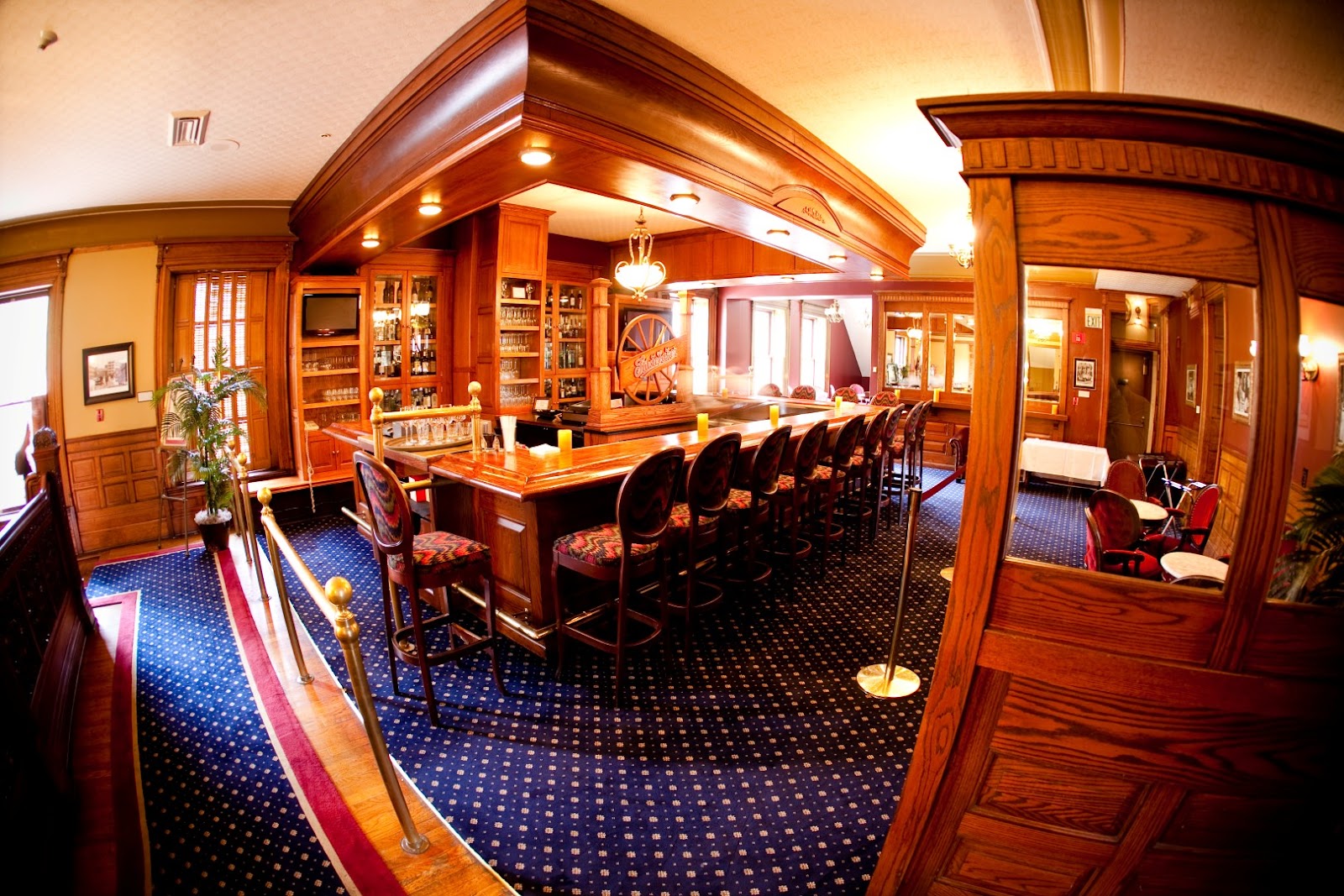
The interior conditions are constant regardless of which room is in use, and they follow from the period’s materials. Timber panelling, deep paint, heavy drapery, patterned carpet and dense upholstery all absorb, which puts a room a stop or two below a pale one with identical fittings and returns very little to a bounced flash.
Measure it rather than estimating, because eyes adapt and meters do not. And test bounce with one frame per room, because the answer varies within the house: grand ground-floor reception rooms have tall ceilings that return little, while upstairs rooms are lower and frequently bounce well. Thirty seconds per room changes what has to be carried.
Warm bounce is the colour problem and it is the one that cannot be fixed afterwards. Timber, brass, deep paint and warm textiles reflect strongly warm, and the cast arrives on the shadow side of a face from several directions at once — localised and bounced, so global white balance cannot separate it from the subject. One warm-gelled source with white balance set to the gel is the method; a global correction turns skin grey and the timber the colour of ash.
The source should be close and modest, because in a furnished room there is nowhere to put a light back and no need: a modifier at a metre and a half is a large soft source relative to a face. Distance is what makes a source soft, not the size of the modifier.
Steep fall-off is the compensation and it is genuinely useful — a subject three metres in front of anything else sits against natural darkness with no equipment, which is free separation and the opposite of a modern room’s problem.
Texture is the last condition. Panelling, plaster moulding, carved timber and patterned textile read only when light runs along them, so the positions where the window light already grazes a wall are the ones worth finding on arrival — and in a house with tall windows there are usually several per room.
And the practical rules are worth settling in advance: a grand historic interior generally restricts flash near finishes, stands on floors, and moving furniture. The working assumption is no stands, nothing moved, a source in a hand, and the large formals in the largest single space or outdoors.
- Map the orientation on arrival; the shaded side changes by month
- Find the north room first — soft and directional at every hour, all year
- Work from doorways; two or three metres gained at no cost
- Test bounce per room; grand ground floors return little, upstairs usually works
- One warm-gelled source, close and modest, a stop above the room

Evening, the grounds, and Indiana's year
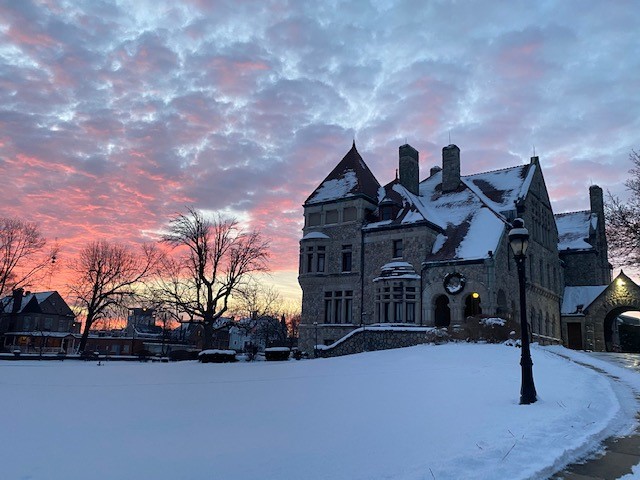
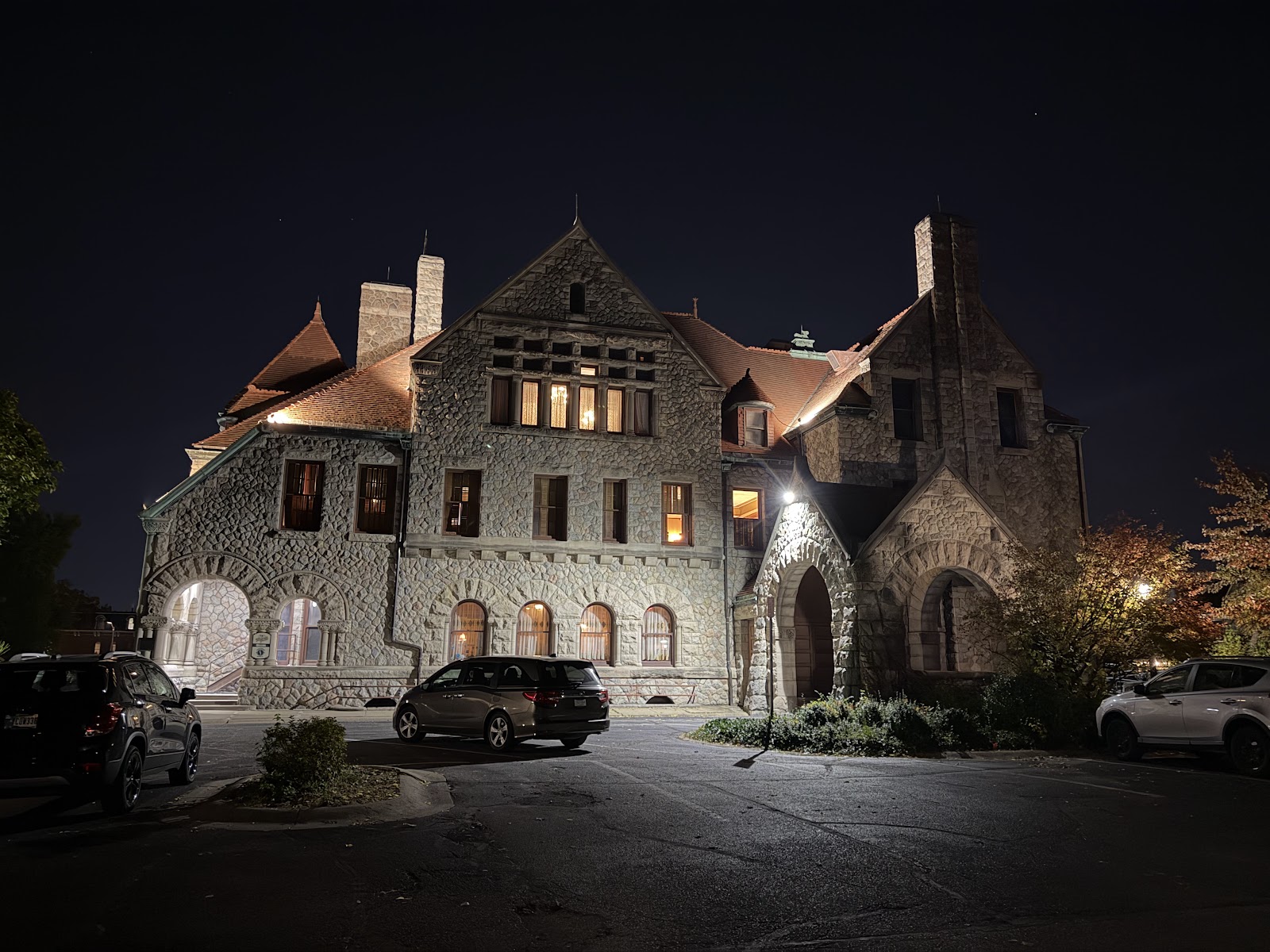
The evening belongs outside. The last hour of daylight rakes whichever elevation faces it, making brick, stone dressings, carved timber and ironwork read in a way flat light never does — and in a residential setting there is usually room to stand back, so unlike a city venue the whole house can be photographed.
Then the crossing: twenty-five to forty minutes after sunset, when the sky still holds colour while the house’s own lights come up, so one exposure holds couple, house and sky. That is the one frame the interior cannot give, and it is worth ten scheduled minutes — which costs nothing, because the rooms are available at other hours and this is not.
The grounds are the other exterior asset. A house of this period sits in planting put in when it was built, which means mature trees — the most useful outdoor asset a venue in this region can have, because they give full shade across a large area. The rule is absolute: full shade under a dense canopy is excellent, while dappled light through a thin one puts bright patches and deep shadow on the same face at a ratio nothing holds.
South Bend’s distinguishing climatic feature changes what to expect for months: it sits in the lake-effect snowbelt southeast of Lake Michigan. Cold air crossing relatively warm lake water picks up moisture and drops it downwind, which means substantially more snow than places at the same latitude away from the lake, and persistent winter overcast — among the cloudiest winters anywhere in the country outside the Pacific Northwest.
For a house of this type that is genuinely good rather than merely tolerable. Overcast is the best soft source there is, which means the tall windows give even, shadowless, flattering light with no direct-sun problem at all — and the whole timing map above collapses into a simpler one, because on a grey day every room is the north room.
Winter is in fact the best season here, for three reasons. The persistent overcast, as above. The December midday sun at this latitude reaching only about twenty-five degrees, which means it comes into tall windows at a low angle rather than from overhead, so interior light is directional and usable through the whole short day instead of for two hours at each end. And snow, which turns the ground into an enormous reflector so every window is brighter and softer in February than in June, with light arriving from below as well as above.
The bare deciduous canopy contributes too, letting more light reach the windows than summer foliage does. And snow outdoors is the best natural fill available, lifting exactly the shadows a low sun carves while fooling a meter by about two stops — so a snow frame needs deliberate overexposure relative to what the camera suggests.
Summer is hot and humid, and the humidity rather than the heat is the photographic fact: moist air softens shadows and slightly flattens distance. Severe afternoon thunderstorms are a real possibility from late spring, which at a house with a full interior costs a decision rather than a picture. The humid fogging problem is the equipment issue that matters — a body carried from an air-conditioned interior into July air fogs on every surface and does not clear quickly, so a bag opened twenty minutes early is the whole fix.
Autumn is the best exterior light of the year: humidity down, the air clear, the mature planting turning, and low sun at a civilised hour, usually mid-to-late October.
More frames from The Studebaker Mansion
The Studebaker Mansion wedding photography: common questions
Why does the good room change through the day?
Because a house with windows on four elevations has a shaded side that moves. East rooms are soft in the morning, west rooms in the afternoon.
Which room is always right?
Any north-facing one. At this latitude it never receives direct sun, so it is a permanently soft, permanently directional source at every hour of every day.
Why does the map change by season?
Because the sun rises well north of east in June and well south of east in December, so the room shaded at eight in July is not the one shaded at eight in January.
How should the warm interiors be handled?
One warm-gelled source with white balance set to the gel, close and modest. A global correction turns skin grey and the timber the colour of ash.
Which frame should be protected?
The crossing, twenty-five to forty minutes after sunset. The rooms are available at other hours; that one is not.
What is the best season?
Winter. On a grey lake-effect day every room is the north room, the low sun comes in at an angle all day, and snow makes every window brighter and softer.
More Indiana venue guides
We are writing a photographer’s guide to every venue we would happily shoot in Indiana. Here are three more, plus the full index:
- Abe Martin Lodge, Nashville: The Venue’s Own Logic
- Aberdeen Manor, Valparaiso: How the Light Moves
- The Barn at Bay Horse, Valparaiso: A Walk Through the Site
Planning a wedding at The Studebaker Mansion?
A map of the house by hour and month. Tell us your date and we will draw it.