 Woodwinds, Branford: The Problem, and Four Ways Out
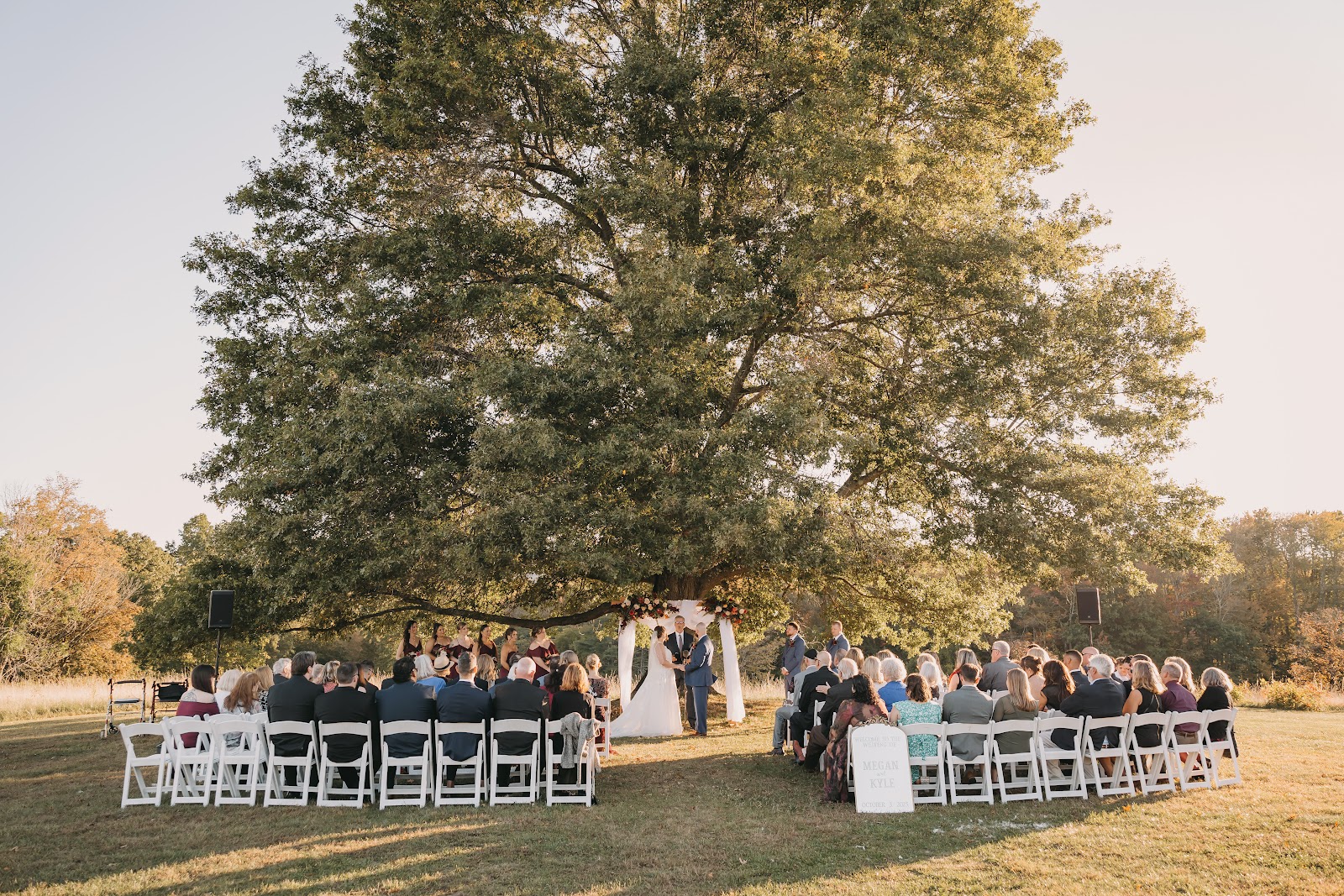
Red Barn at Hampshire Hills, Milford: What It Suits and What It Does Not
A painted barn and an unpainted one behave completely differently. That is not a detail.
A barn venue is one of the most reliable kinds of wedding location there is, and the honest way to describe this one is by distinguishing it from the other sort — because a painted barn and a weathered barn are not the same photographic proposition.
An unpainted barn is dark grey-brown timber that absorbs almost everything, which means a near-black interior and free separation behind any subject. A painted barn is different. Red barn paint is a saturated mid-tone with real reflectance: it bounces light, and it bounces it coloured.
Three consequences follow, and they run through the whole property.
The interior is lighter than an unpainted barn’s, because painted walls return light rather than swallowing it. That is easier to work in and it gives less separation for free — the background does not simply go black, and if a dark background is wanted it has to be found or built.
Everything near a lit red wall is lit red. A subject standing in a red barn’s shade with a sunlit red wall opposite is filled with warm red-tinted light, which on a daylight preset renders skin ruddy. That is either the best free light on the property or a colour problem, depending entirely on whether it was noticed.
And in a photograph a red barn is a large area of highly saturated colour, which is the first thing in any frame to lose its detail: it clips in one channel while everything else still looks correctly exposed. Exposing for the red is the rule, and skin can be lifted afterwards.
We have not photographed a wedding at the Red Barn at Hampshire Hills; painted barn venues in this region behave consistently. Which buildings and outdoor areas are included, whether the interior lighting can be dimmed, the covered alternative, and whether there is usable power at the outdoor positions are questions for their team.
Red Barn at Hampshire Hills at a glance
| Where | A painted barn venue in southern Connecticut |
| Suits | Weather resilience, warm colour, and a bright workable interior |
| Does not suit | Dark low-key frames, cool colour palettes, or an all-outdoor plan |
| The paint | Red bounces light and bounces it coloured — set white balance for it |
| Ask first | Buildings included, lighting control, covered alternative, outdoor power |
What it suits
It suits weather resilience above everything, and in inland southern Connecticut that is worth more than any view.
A barn is a large covered space with a big door, which means an outdoor ceremony has a real alternative rather than a hope — and afternoon thunderstorms here are a genuine feature from June into August, building fast and arriving without much warning. A property whose primary space is under a roof is the right answer to that climate.
The photographic version of that resilience is that the barn’s main frame is weather-independent. A subject two or three metres inside the big doorway is lit horizontally from one direction regardless of what the sky is doing — and under cloud or in rain that frame is better rather than worse, because the exterior through the door is no longer four stops brighter than the interior.
Rain at a barn is genuinely good. The doorway frame improves, the yard and the ground saturate, wet timber and wet paint darken and enrich, and there is somewhere for a hundred and fifty people to be. Very few venues can say that.
It suits a warm colour palette and this is the painted barn’s real distinction. Red walls, warm timber inside, string lighting and low sun all pull the same direction, which means the whole set of pictures has a consistent warmth to it that is difficult to achieve deliberately anywhere else.
Using that well means committing to it. Set the white balance so skin is correct in the red-bounced light — set on a face in the position it will occupy, not on a preset — and let the warmth be the character of the frame rather than something to be corrected out. A red barn photographed neutrally looks wrong in a way that is hard to name, and a red barn photographed warm looks like itself.
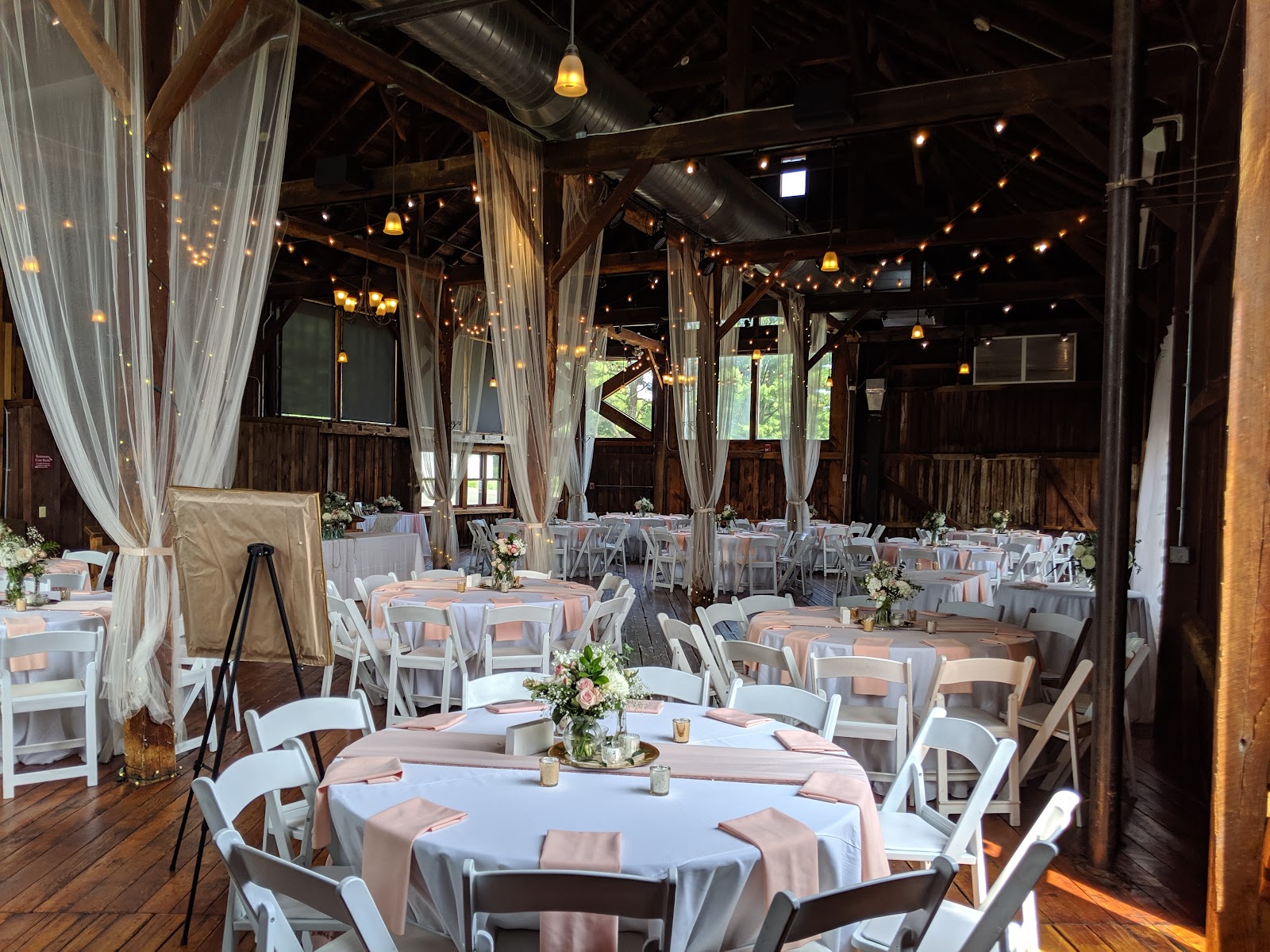
It suits a bright workable interior, which is the second half of the paint’s effect. Painted walls return light, so the interior is a stop or so lighter than an unpainted barn’s — which means less added light is needed, hand-held work is easier, and the space does not require the same discipline to keep from turning muddy.
The exposure trap runs a specific way inside a painted barn and it is worth naming because it differs from the unpainted case. A meter looking at saturated red walls behaves unpredictably: red is dark in the green and blue channels and bright in the red one, so an averaging meter tends to overexpose the red while the frame looks correct. Metering on skin and checking that the red holds texture is the working habit.
It suits large groups better than most barn venues, because a big barn floor is level, covered and evenly lit once the house lighting is on — and everyone in the same light is the first requirement of a large group portrait. Outdoors on a farm property, dappled shade makes that arrangement impossible.
And it suits October, which is the honest reason most barn venues in this region sell out their autumn dates. A red barn against New England foliage in full colour is the single strongest exterior frame a painted barn produces, and it is the pairing that defines this region’s autumn.
What it does not suit
It does not suit dark, moody, low-key photographs, and that is the honest limitation relative to an unpainted barn.
That look depends on a background two or three stops below the subject, and painted walls do not provide it: red paint under any illumination is a mid-tone, and it bounces enough to lift the whole interior. Where an unpainted barn gives a near-black background for nothing, a painted one gives a coloured mid-tone.
It can be built — a dark corner, an unpainted interior partition, a doorway with darkness behind it, or an added source strong enough to let the ambient fall several stops — but that is work rather than something the building offers. A couple who wants dark romantic barn frames should know that the red barn aesthetic is warm and open rather than dark and enclosed.
It does not suit a cool colour palette, which is the same point from the other side. Everything on the property pulls warm: the paint, the timber, the string lights, the low sun on a field. A set of pictures with a cool, clean, grey-and-white character is not what this site produces, and attempting it means correcting the colour of the venue out of its own photographs.
It does not suit an all-outdoor plan in summer, and this is the practical limit. The grounds of a barn property are field and yard — level, open and with nothing overhead — which in inland Connecticut summer sun means high light, vertical shadows, hard lines under chins and squinting.
The shade outdoors is whatever trees are on the property and the building’s own north side. Trees here are the New England mix — maple, oak, birch — which filter as much as they block, so they dapple: look at the face rather than the ground, and a bright patch on skin means move a metre. Conifer, where there is any, gives the real full shade.
The building’s shaded wall is the more dependable answer and it works in an unexpected way. A large red wall in shade, facing open sky, is a soft directional source with a warm cast — and it is the one outdoor position on a barn property available at any hour. Standing in front of the shaded side with the subject facing out is flat; standing in that shade facing the lit side of an adjacent structure is directional, which is the better version.
Two further notes on the limits. Farm ground is uneven, can be soft after rain, and in a working or semi-working setting will have equipment, fencing and utility in view — which is either composed out or accepted as what the place is. Accepting it is more honest, and a longer lens with closer framing handles the rest.
And power is a real question at field positions: whether anything usable exists, or whether the plan is battery sources only. Worth resolving in advance rather than at six in the evening.
The evening reception is where the technical work concentrates, and a painted barn presents a slightly easier version of the standard problem than an unpainted one. String lights and festoon lighting are decorative rather than functional — bright in frame, contributing little to a face — but painted walls bounce what they give, so the room is less of a void than a weathered barn’s.
The approach is still the same: expose the ambient about a stop under what skin needs, so the lights keep their presence and the space keeps depth, then add one source for the faces, gelled warm to match the string lights, set just above what the ambient gives the skin, and diffused so it does not read as flash. The white balance goes to the gel.
The instinct to raise sensitivity until the room is bright is the thing to resist, and it produces a specific failure in a red barn: a flat, uniformly orange frame in which the red walls have lost all their texture. Exposing for the red is what prevents it.
- Suits weather resilience, warm colour and a bright workable interior
- Does not suit low-key frames, cool palettes or an all-outdoor summer plan
- Set white balance on a face in the red-bounced light; do not correct the warmth out
- Expose for the red — it clips in one channel while the frame looks fine
- The shaded red wall outdoors is the one position available at any hour
The southern Connecticut year
Southern Connecticut has four genuine seasons with some moderation from its proximity to the Sound, and at a barn venue the calendar changes the exterior completely while barely touching the interior.
Winter is cold with snow in most years, and the practical question is heating: a barn is an unheated building by origin, so whether the space is properly heated decides whether a February wedding is comfortable. It is a question with a definite answer.
Photographically winter is excellent at a red barn and it is the pairing that this region does best. Snow against red paint is the strongest colour contrast available anywhere on the property — a saturated warm mid-tone against a bright cool white — and it is a frame that exists nowhere else in this guide.
Snow is also the best natural fill available outdoors, lifting every shadow and throwing light upward into faces. It fools a meter by about two stops toward underexposure, so deliberate overexposure relative to the camera is the rule — and with red paint in the frame, checking that the red still holds texture is the second half of the check.
Snow brightens the doorway frame dramatically, because the light arriving through the big door has bounced off snow before it got there. A snowy day makes the barn’s signature frame better rather than worse.
The December sun at this latitude reaches only about twenty-six degrees above the horizon, so the whole short day rakes rather than floods — which means light comes through the big door almost horizontally and reaches much further into the building than a summer sun does. For a barn, winter light is the best of the year.
The costs are a short day, cold hands, batteries draining faster, and a cold camera fogging when carried into a heated space. Spares in an inside pocket and bodies bagged until they warm.
Early spring is mud season and the weakest part of the year for the exterior: bare trees, brown ground and soft footing on farm ground. The interior is unaffected, which is a legitimate reason to weight an April wedding indoors.
Late spring is genuinely good: new foliage transmits light beautifully, temperatures are comfortable, and the light is lengthening. Fresh green against red paint is a strong pairing and it is available for about a month.
Summer is warm and humid — mid to upper eighties Fahrenheit with high humidity — with afternoon thunderstorms a real feature from June into August. The barn handles that completely, which is the site’s central virtue; the exterior does not, which pushes the outdoor work to the ends of the day.
The humidity has one compensating effect: it warms and diffuses the light at the ends of the day, which suits a warm-toned property and flatters skin.
Autumn is the season and everything else leads to it. Foliage in southern Connecticut peaks from the middle of October into early November, and because the species turn at different rates — sugar maple scarlet, red maple crimson, birch and hickory yellow, oak russet — the window runs two or three weeks rather than one.
A red barn against that colour is the defining New England autumn frame and it is genuinely worth planning a date around. The one technical caution is that red paint and scarlet foliage are close in hue, which means they can merge rather than contrast — so the stronger frame uses the yellow and gold end of the foliage against the red, or puts the barn against a russet oak background rather than a scarlet maple one.
Autumn also brings the clearest air, the most settled weather and the most comfortable temperatures of the year, which makes October the most reliable month on the property as well as the most beautiful.
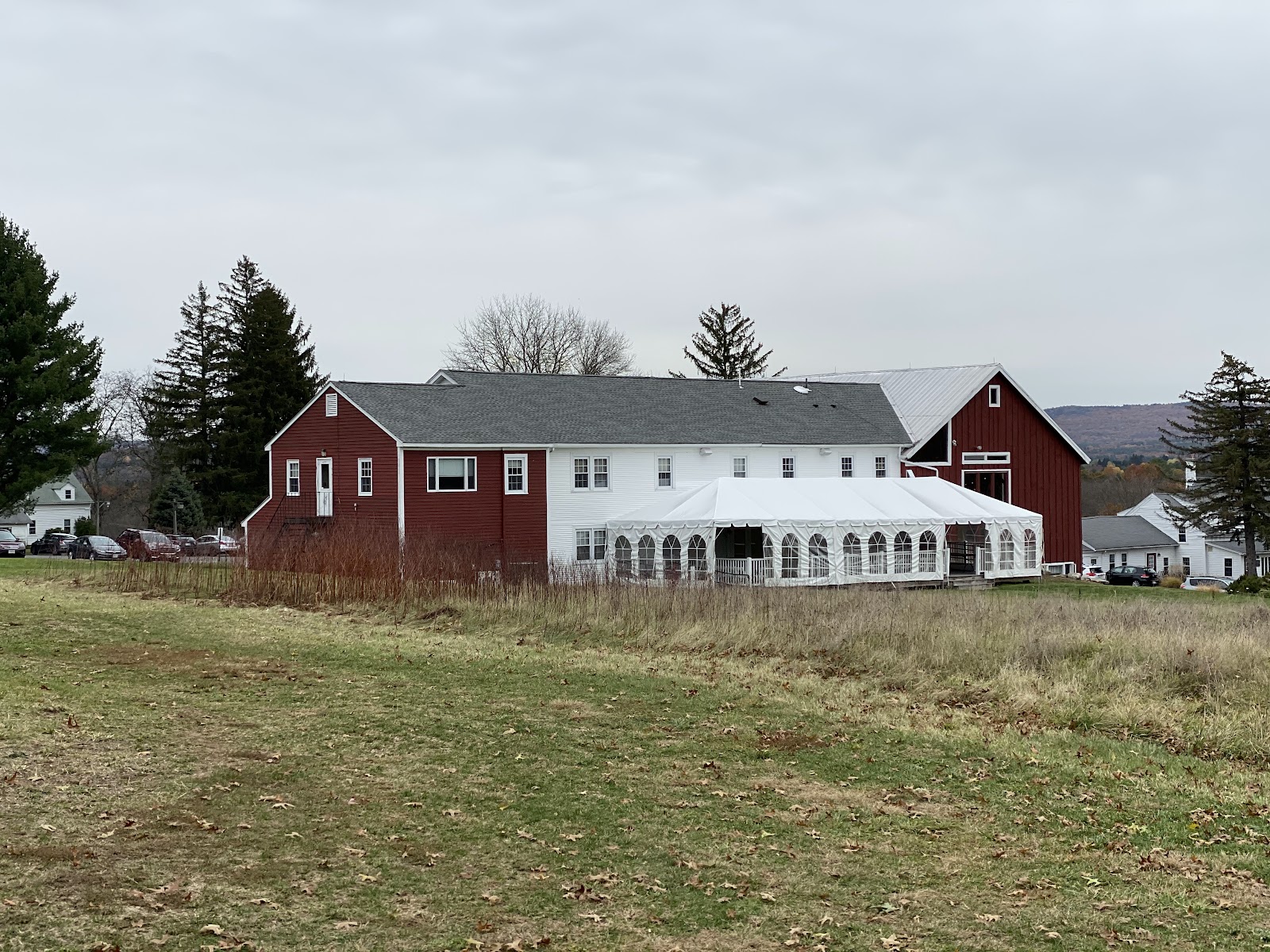
More frames from Red Barn at Hampshire Hills
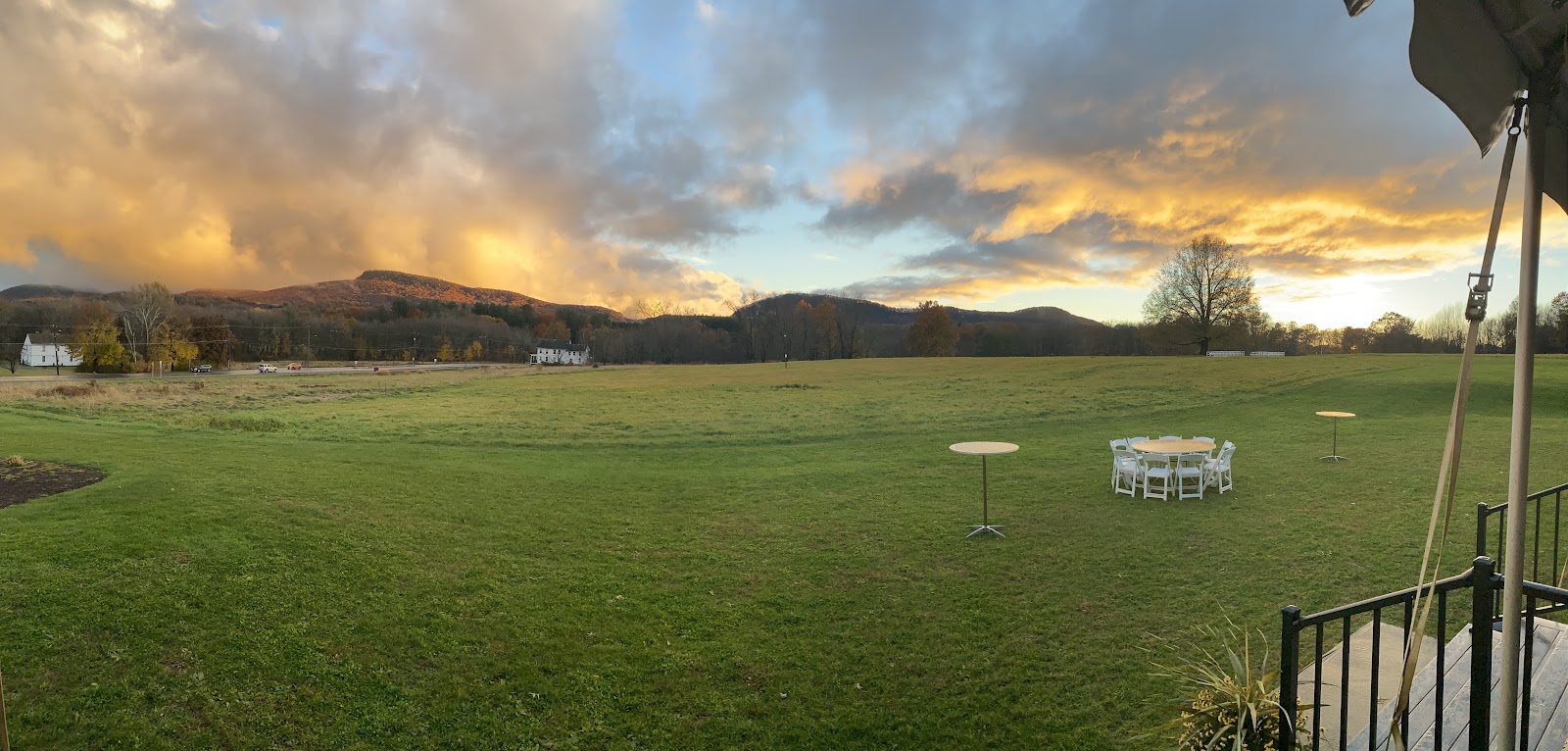
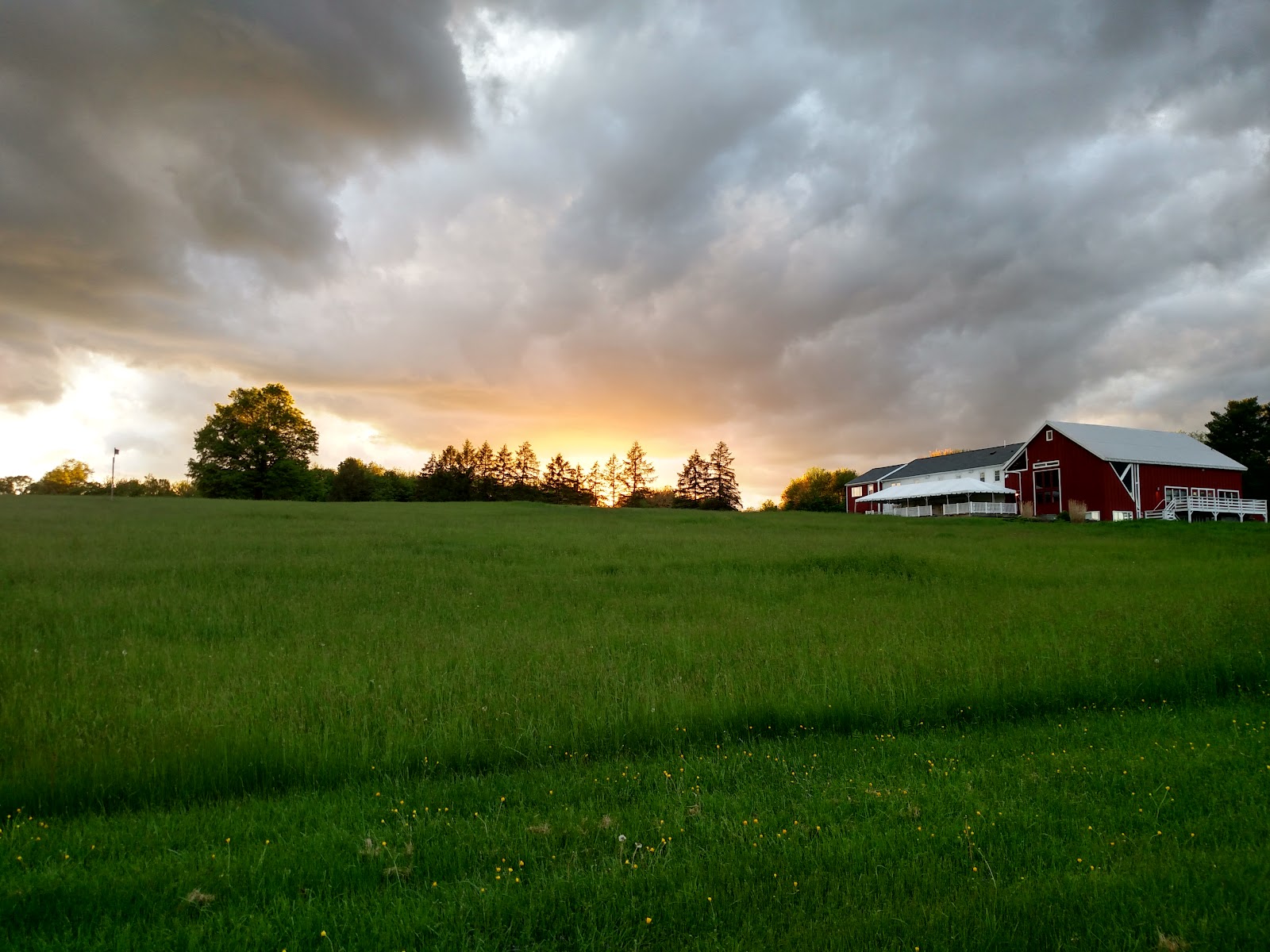
Red Barn at Hampshire Hills wedding photography: common questions
How does a painted barn differ from a weathered one?
Paint reflects where bare timber absorbs. The interior is lighter, the background does not go black on its own, and everything near a lit red wall is lit red.
What is the main colour rule?
Set the white balance on a face in the red-bounced light so skin is correct, and let the warmth be the character rather than correcting it out.
Why expose for the red?
A saturated red clips in one channel while the rest of the frame still looks correctly exposed, and that is not recoverable. Skin can be lifted afterwards.
Can we get dark moody photographs here?
Only by building them. Red paint is a mid-tone that bounces, so the near-black background an unpainted barn gives for free is not available.
Where is the shade outdoors?
The building’s own shaded wall, which works at any hour, and conifer where there is any. Deciduous canopy dapples and the field has nothing.
When is the barn at its best?
October, with the caution that red paint and scarlet maple can merge — use the gold and russet end of the foliage. And any snowy day, for the strongest contrast there is.
More Connecticut venue guides
We are writing a photographer’s guide to every venue we would happily shoot in Connecticut. Here are three more, plus the full index:
- Riverhouse at Goodspeed Station, Haddam: A Walk Through the Site
- Saybrook Point Inn, Old Saybrook: The One Decision That Governs Everything
- Simsbury Inn, Simsbury: Field Notes
Planning a wedding at Red Barn at Hampshire Hills?
A warm building that works in any weather. Tell us your date.