 The Venetian, Garfield: The Building’s Own Logic
Meadow Wood, Randolph: What It Suits and What It Does Not
A small sheltered lake is a mirror. That is the whole reason to choose this over a dry site.
A banquet venue with a small lake is a specific proposition and the honest way to describe it is by what water suits and what it does not.
The governing fact is that a small inland lake behaves better than a large body of water for photography, and for one reason: it is sheltered. A small pond surrounded by trees has almost no wind fetch, which means it goes genuinely flat far more often than a coast or a large lake — and flat fresh water with no swell in it is the best mirror available anywhere.
A mirror doubles whatever is composed above it. Trees, sky, a building, a couple at the margin — all of it appears twice, which roughly doubles the interest in a frame and gives depth that no dry site can. That is the reason to choose a water venue and it is worth building the day around.
The second fact is that water changes with the sun’s angle rather than staying constant. At a low angle it reflects almost everything falling on it, which makes it a mirror. At a high angle it reflects very little and absorbs the rest, which makes it a dark surface with specular glare on the surface ripples. So the same view is luminous at seven in the morning, a hard dark glare at one in the afternoon, and a sheet of reflected colour at seven in the evening.
The third is the wooded edge, which is where the shade is. A small lake in northern New Jersey is ringed by oak-dominated woodland with maple, beech and tulip poplar — which means the shade, the background and the autumn colour are all at the water’s margin.
We have not photographed a wedding at Meadow Wood; venues with small inland lakes behave consistently. Which rooms and outdoor areas are included, what access there is to the water’s edge, whether the ballroom lighting can be dimmed, the covered alternative, and what the actual timings are are questions for their team.
Meadow Wood at a glance
| Where | A banquet venue with a small lake at Randolph, Morris County |
| Suits | Reflections, doubled backgrounds, and the ends of the day |
| Does not suit | Midday water frames, large open group ground, or a windy plan |
| The edge | Woodland margin — where the shade, the background and the colour are |
| Ask first | Areas included, water’s edge access, lighting control, timings |
What it suits
It suits reflections and that is the venue’s central asset. A small sheltered lake goes flat regularly, and a flat surface doubles everything above it — which means the composition a photographer builds is immediately worth twice as much.
The technical thing to know is that a reflection runs about a stop darker than what it reflects, which matters when metering a frame containing both. Exposing for the reflected version leaves the real one bright; exposing for the real one leaves the reflection dark. Neither is wrong and the choice depends on which is the subject.
It suits the ends of the day better than almost any dry venue, and the reason is the reflection again. In the last hour the low sun rakes across the surface and the whole lake takes the colour of the sky rather than a narrow strip of it — because a sheltered lake is flat enough to reflect broadly. A couple at the margin with an entire lake of colour behind them is the frame the property exists for.
That frame is exposed for the water and the sky rather than on skin, with the faces lifted by a close warm-gelled source. Metering on faces gives a white sky and a flat grey lake, which throws the whole thing away. Close matters because nothing over water bounces enough to lift a face: a source at two metres needs roughly a quarter of the output it needs at four.
The window after sunset is longer here than at an exposed site, because a sheltered lake holds its reflection while the wind drops — and it is frequently the calmest and most colourful part of the whole day. It belongs in the running order explicitly rather than being hoped for.
It suits the early morning, which almost nobody uses. Two things coincide: the water is at its calmest because wind builds through the day, and mist forms on a lake when the air is cooler than the water — which in this region happens through much of the year and most heavily in autumn.
Mist on water is the most atmospheric condition this kind of site produces. It separates the far shore from the near one, which gives depth a clear morning does not; it makes shafts of low sun visible in the air; and it renders everything in tonal layers rather than in detail. A longer lens is the right instrument, because mist rewards compression — layers of receding tone read as layers only when the distances are stacked.
It suits the woodland edge, which is the property’s most reliable outdoor position at any hour. Standing a metre or two inside the canopy at the margin of an opening gives soft directional light from the open side and near-darkness behind — three or four stops of free separation and no equipment.
That carries the standard trap in a pronounced form, because woodland beside water is dark and water is bright: a meter looking at the canopy overexposes the face by a couple of stops and a meter looking at the lake five paces later fools it hard the other way. Manual exposure, metered on skin, reset at every transition, is the discipline of any water site.
And it suits autumn more than any dry venue, for a reason specific to water: a flat lake doubles the colour. Reflected foliage is roughly twice the foliage, which is why lake venues in this region photograph better in October than any other kind of site.
What it does not suit
It does not suit midday water frames, and that is the honest limitation of any lake.
With the sun high, water reflects very little and absorbs most of what falls on it, so the surface goes dark — and the small ripples that are always there reflect the sun as thousands of specular points, which is glare. A frame across a lake at one in the afternoon contains a dark surface with bright pinpoints in it, which clips easily and holds no colour.
There is no technique for that and the answer is the hour. In the middle of the day the water is a place to walk past and the work happens at the woodland edge or under cover.
It does not suit large open group ground. A venue built around a lake has its ground organised around the water, which usually means a lawn or terrace of moderate size rather than the broad level expanse a very large group portrait wants — and the woodland edge that gives such good light for two people gives dappled light for forty.
The group requirement is the one that cannot be negotiated: everyone in the same light. Full even shade, full overcast, or full sun with the sun behind the camera. At a wooded water site the dappled option is the default unless the position is chosen deliberately, and the test never changes — look at the face rather than the ground, and a bright patch on skin means move a metre.
It does not suit a plan that depends on wind cooperating. Wind removes the reflection, which is the site’s main asset — and while a small sheltered lake is calm more often than not, a breezy afternoon flattens the water into texture rather than mirror.
The honest response is scheduling rather than equipment: the calm periods are the morning and the evening, and the middle of the day is when the surface is most likely to be broken. Where the reflection matters to a couple, that argues for an early or late portrait session.
Wind also makes a lightstand a liability near open water and a held modifier a sail, so handheld or bracketed sources are the working configuration at the margin.
Two further limits worth naming. The waterside ground is frequently soft, uneven or stepped, which is a real consideration for a party in formal shoes and worth raising in advance. And the lake’s own margin may have reeds, docks, aerators, fountains or maintenance equipment in it — which is either composed out or accepted as what the place is, and a low camera with the water’s edge across the bottom of the frame handles most of it.
Indoors, the standard problem applies. If the function room is pale and evenly lit, the difficulty is separation rather than light: soft bounced light against pale walls gives no fall-off and no shadow side. Find something genuinely dark to put behind the subject, use whatever glazing exists as a directional source at forty-five degrees, or add a source at a stop above the ambient to create the contrast the room’s own bounce has filled in.
A water-facing window is the best light in the building, and it has a colour note: light off water is noticeably cool, because it is sky light reflected from a surface that adds nothing warm. A custom white balance set on a face in position fixes it; a daylight preset renders skin blue-grey.
For the evening, expose the ambient about a stop under what faces need so the room keeps depth, then add one warm-gelled source just above skin level with the white balance set to the gel. A lower ceiling is a usable bounce surface, which is a real advantage.
- Suits reflections, doubled backgrounds, mist, and the ends of the day
- Does not suit midday water, very large groups, or a windy afternoon
- A reflection runs about a stop darker than what it reflects
- Evening: expose for the water and sky, lift faces close and gelled
- Woodland edge for the shade; manual metering, reset between canopy and water
The Morris County year
Northern New Jersey has four genuine seasons, and a small lake responds to each of them more visibly than most landscapes do.
Winter is cold with snow in most years, and a lake in winter is a different subject entirely. It freezes in cold spells, which turns a mirror into a flat pale plane — sometimes snow-covered, sometimes wind-scoured and dark — and that is graphic rather than reflective, and genuinely striking. It also means no reflection, which removes the site’s principal asset.
Snow is the best natural fill available outdoors and against dark water or dark bare woodland it gives the widest brightness range on the property: expose for the snow and let the rest go black. Snow fools a meter by about two stops toward underexposure, so deliberate overexposure relative to the camera is the rule.
The December sun at this latitude reaches only about twenty-six degrees above the horizon, which at a lake is decisive: water reflects at a low angle, so in winter it is reflecting all day rather than only at the ends of it. A cold clear winter afternoon gives the mirror condition for hours instead of twenty minutes — and in leafless woodland the low sun comes horizontally through the trunks at the same time.
On the light alone, winter is the easiest and arguably the best season at a lake, and almost nobody books it. The costs are ice, a short day, cold hands, batteries draining faster, and a cold camera fogging when carried into a heated room.
Early spring is the weakest part of the year: bare trees, brown ground, wet footing and a soft lake margin. Late April into May is when it turns.
Late spring is undervalued and it is when the morning mist is most frequent, because the water is still cold and the air is warming. New foliage transmits light beautifully and the woods are at their most luminous — with the note that transmitted green light needs a custom white balance.
Summer is hot and humid — commonly upper eighties Fahrenheit and above with high humidity — and it is the lake’s worst season photographically for the reasons above: high sun, dark water, glare. Afternoon thunderstorms are a real feature from June into August, which makes a named covered alternative a requirement.
What summer gives is the compensating one: haze and humidity warm and diffuse the light at the ends of the day, and a long evening means the good hour is genuinely late. A July wedding here should be weighted toward the evening rather than the afternoon, and at a venue with fixed timings that is worth negotiating in advance.
Autumn is the season and at a lake it is exceptional. Foliage in Morris County peaks from the middle of October into early November, with oak russet, maple scarlet, beech bronze and tulip poplar yellow arriving over two or three weeks — and a flat lake doubles all of it.
Autumn is also when the morning mist is heaviest, because the water is still warm from summer and the mornings have turned cold. An October morning here can give mist, a flat mirror and full foliage in one frame, which is the single best thing this property produces — and it is available at seven in the morning rather than in any slot a schedule offers.
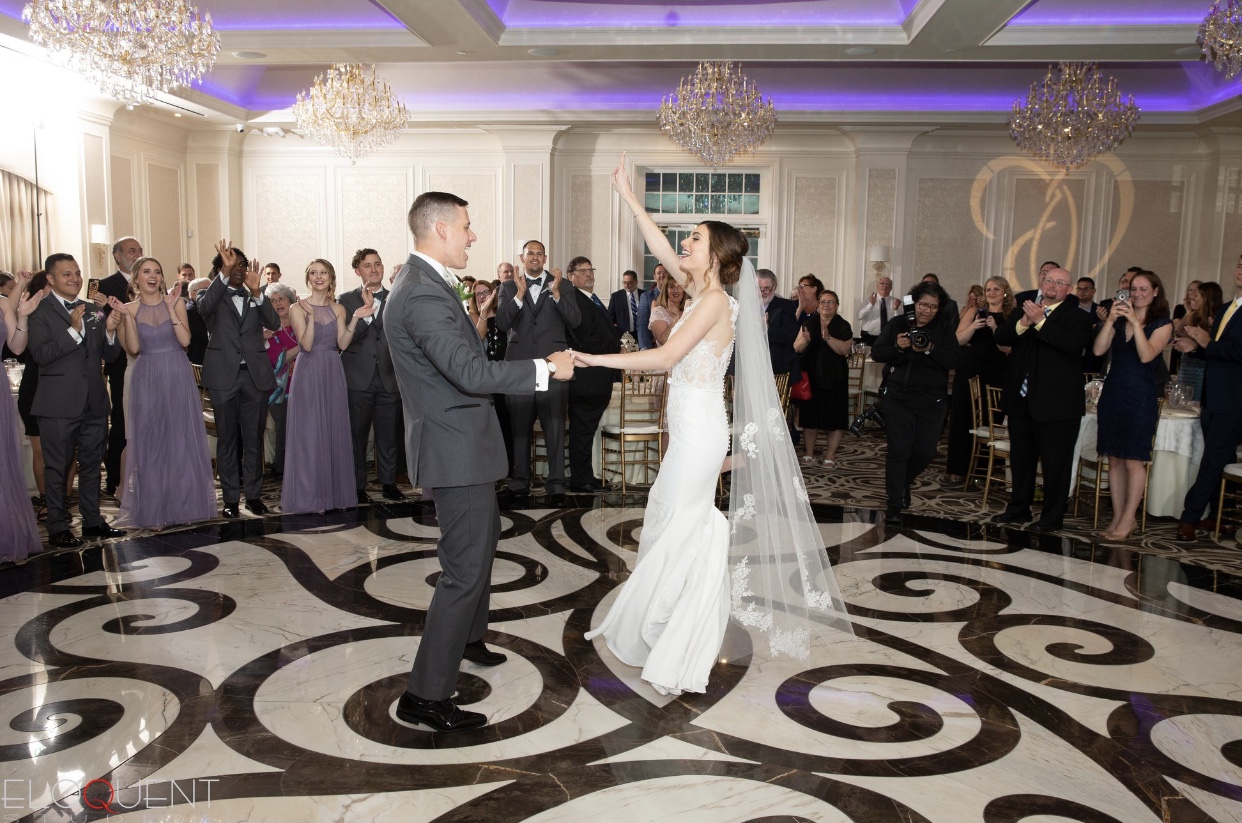
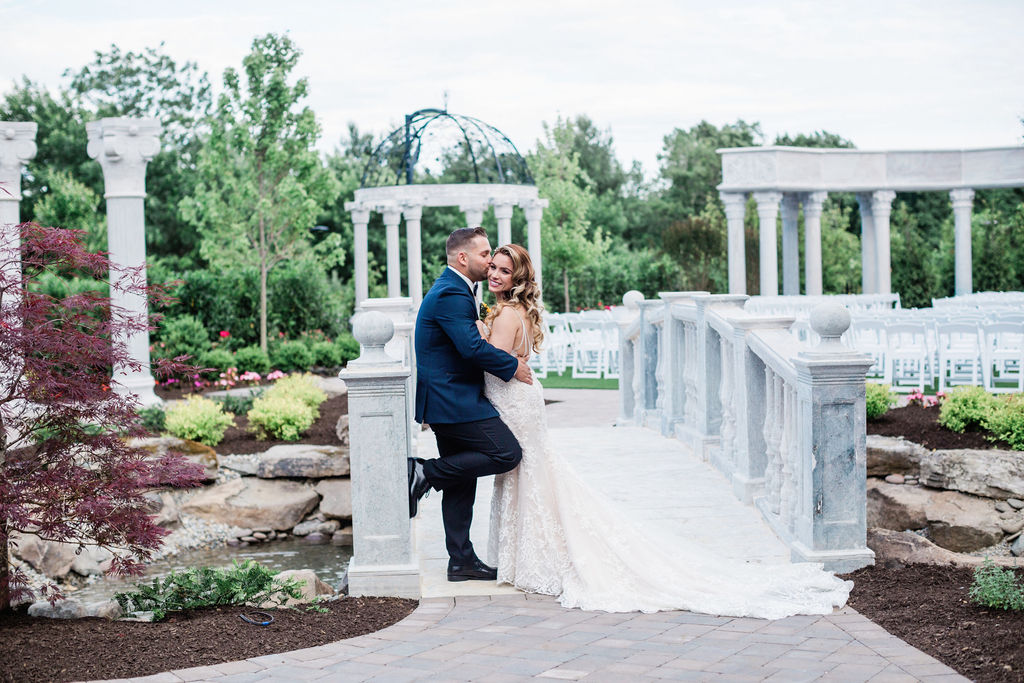
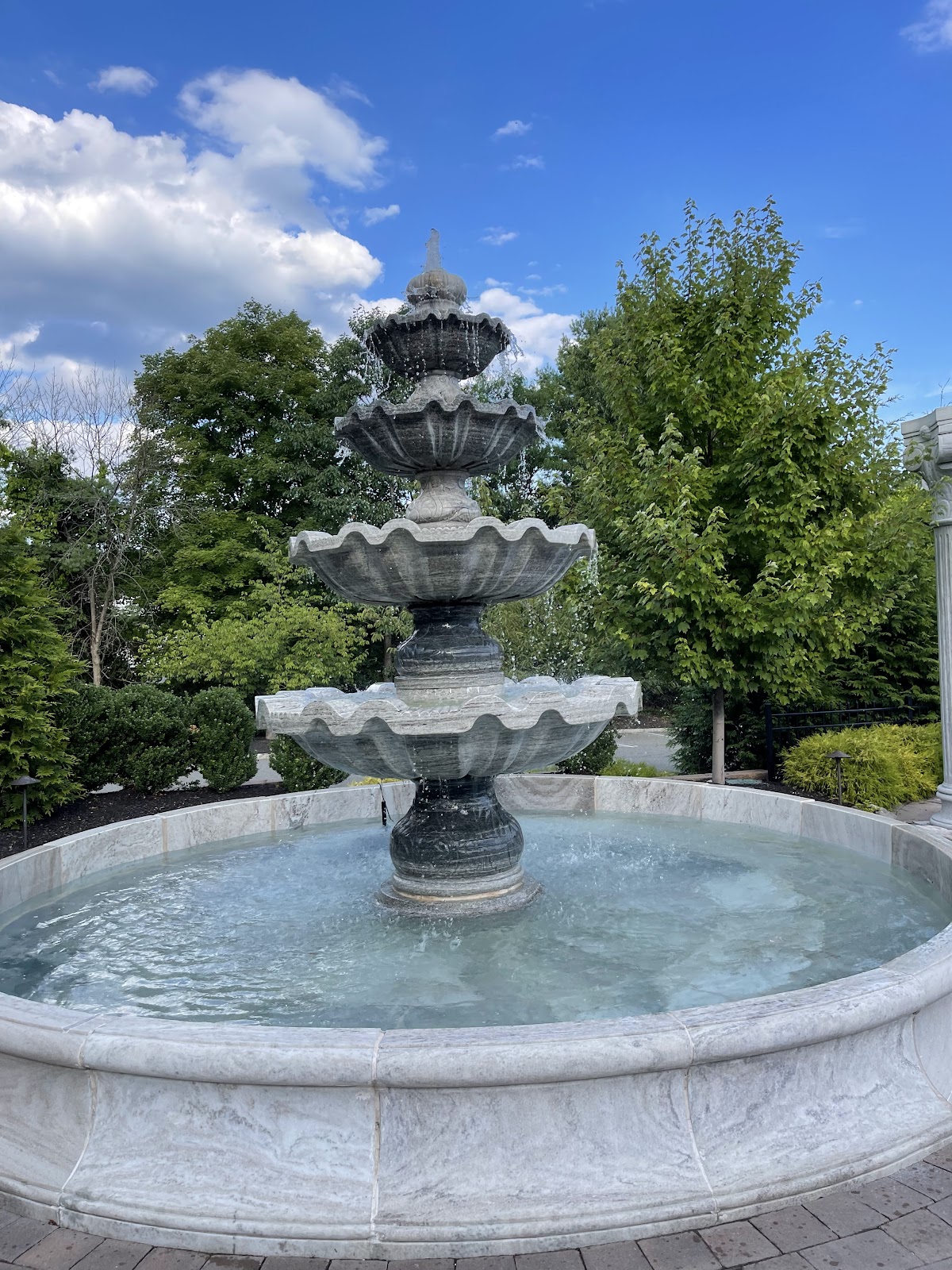
More frames from Meadow Wood
Meadow Wood wedding photography: common questions
Why is a small lake better than a large one?
It is sheltered, so it has almost no wind fetch and goes genuinely flat far more often. Flat fresh water with no swell is the best mirror available.
When is the water at its best?
The first two hours and the last, plus the window after sunset. In the middle of the day it goes dark and glares.
How is the evening lake frame exposed?
For the water and the sky, with the faces lifted by a close warm-gelled source. Metering on skin gives a white sky and a flat grey lake.
What about large group photographs?
They need level ground with everyone in the same light, which a wooded water site supplies in limited amounts. Choose the position by the light first.
What removes the site's main asset?
Wind, which flattens the reflection into texture. The calm periods are the morning and the evening rather than the afternoon.
When is the site at its best?
An October morning: mist over warm water in cold air, a flat mirror, and full foliage doubled in it. Winter gives the longest mirror hours of the year.
More New Jersey venue guides
We are writing a photographer’s guide to every venue we would happily shoot in New Jersey. Here are three more, plus the full index:
- Morristown Hyatt: The Problem, and Four Ways Out
- Morven Museum, Princeton: A Walk Through the Site
- New Jersey Performing Arts Center, Newark: The Building’s Own Logic
Planning a wedding at Meadow Wood?
Water is the reason. Tell us your date and we will plan for the calm hours.