 The Venetian, Garfield: The Building’s Own Logic
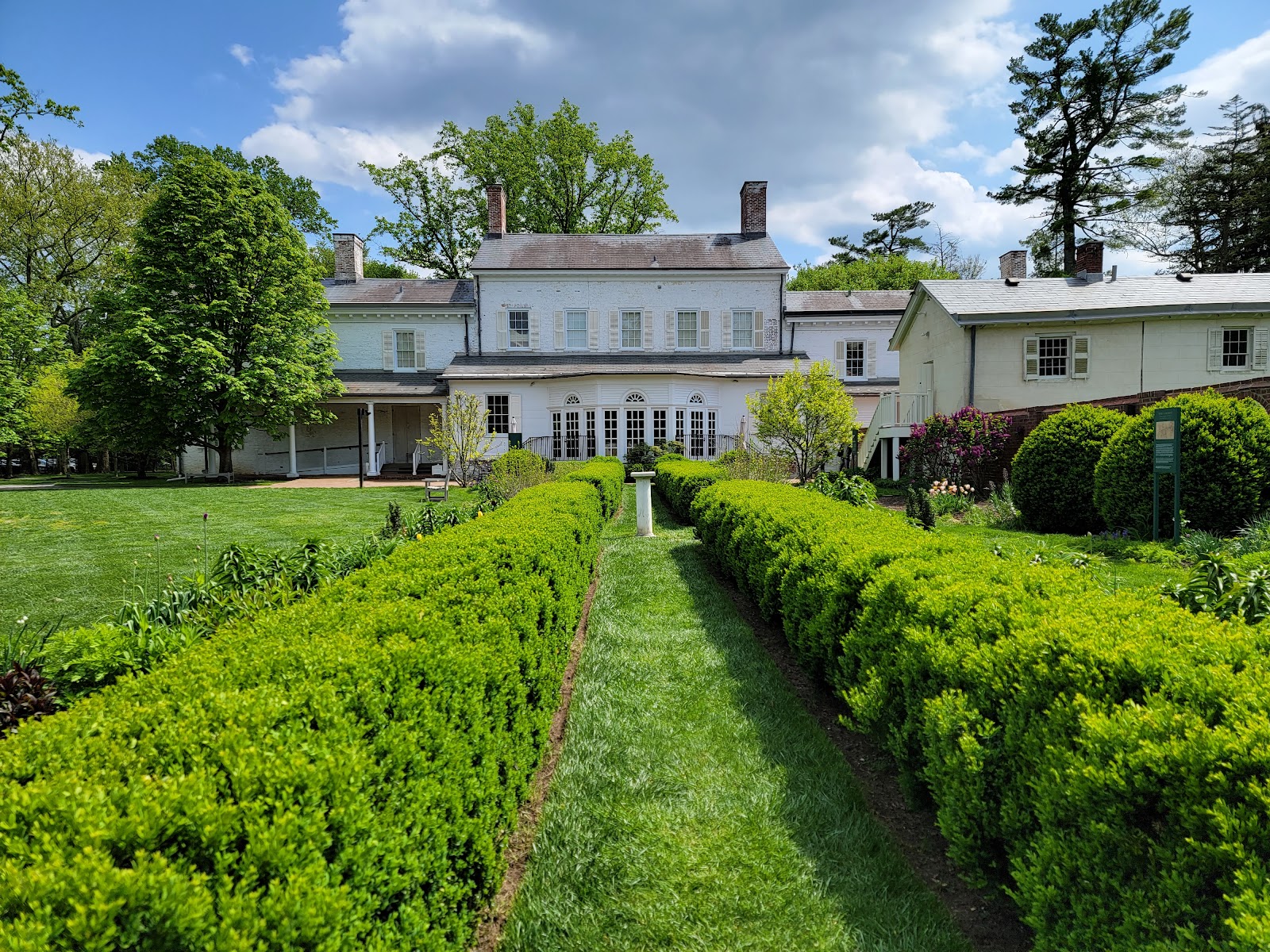
Morven Museum, Princeton: A Walk Through the Site
Brick is not neutral. Everything standing near a sunlit brick wall is lit orange.
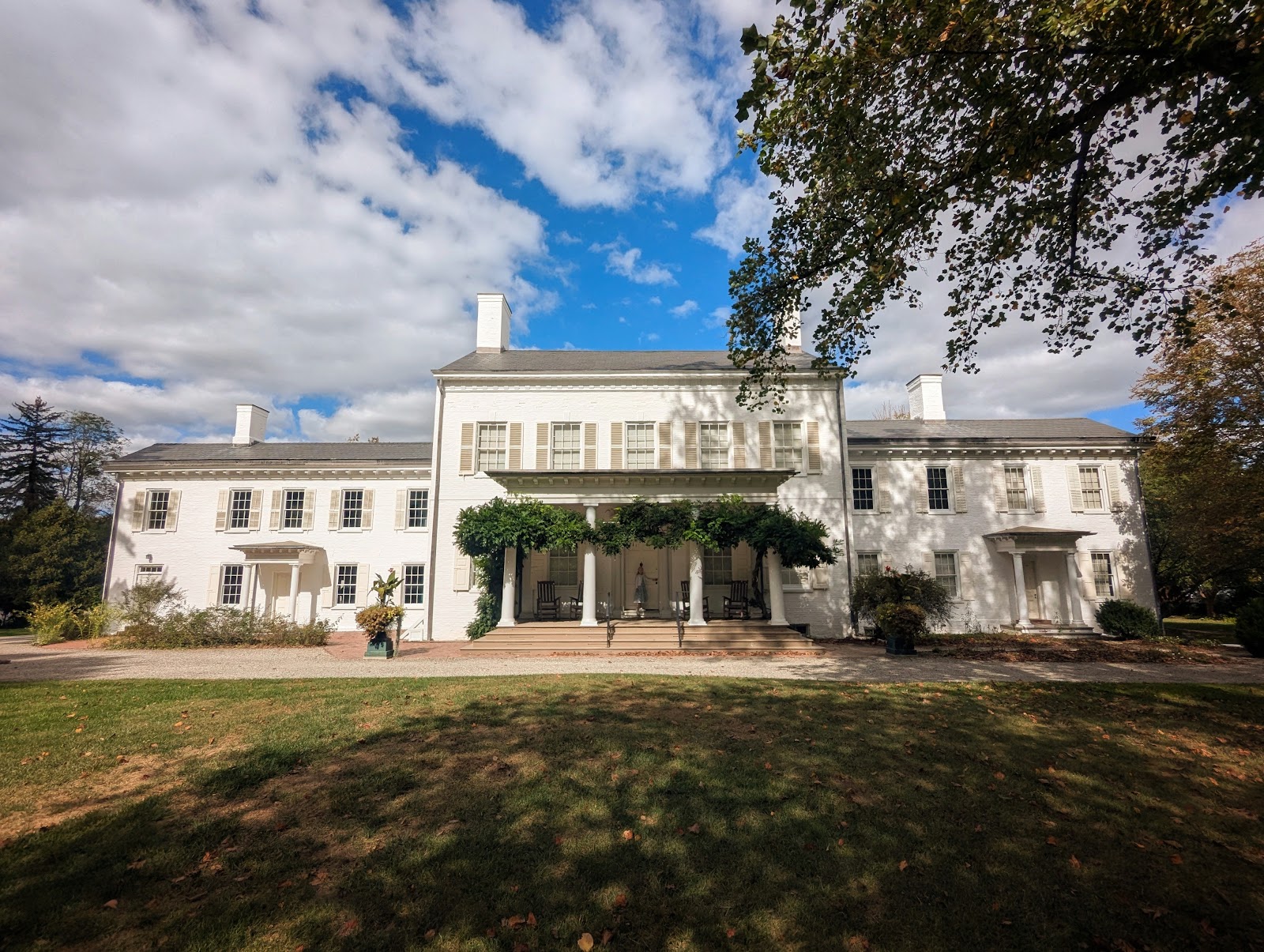
This is a walk through the site in the order a wedding day tends to use it, and two facts about a Georgian brick house govern everything on it.
The first is symmetry. A house of this period is built about a central axis: the door in the middle, equal bays either side, matching windows, a balanced roofline. That means it has one correct camera position — square on the axis, level in both planes — and a metre off it reads as a mistake rather than a choice. The approximate middle position is the only real error and it is the commonest one.
The second is the brick, and it is the thing most often missed. Brick is not a neutral material. A sunlit brick wall reflects a great deal of light and reflects it strongly warm, which means anyone standing in the shade of such a building with a lit brick face opposite is lit orange — and on a daylight preset that renders as ruddy skin.
A custom white balance set on a face in the position it will occupy fixes it in thirty seconds, and it has to be reset when the position changes. Set properly, brick-bounced light is genuinely good: soft, directional and pleasantly warm, which is better light than most equipment produces.
The third element is scale. A Georgian house is domestic rather than monumental — rooms of ordinary height with sash windows of modest size — which means the interiors are intimate, the window light does not travel far, and a large wedding does not fit inside.
We have not photographed a wedding at the Morven Museum; Georgian houses with gardens behave consistently. Which rooms and garden areas are available, guest limits, whether the interiors may be used and under what conditions, what the conservation and photography rules require, the covered alternative, and whether the museum is open to visitors on the date are questions for their team — and the guest limit in particular shapes the day more than anything below.
Morven Museum at a glance
| Where | A Georgian brick house and garden at Princeton, central New Jersey |
| Symmetry | One correct camera position; anything approximate looks wrong |
| The brick | A sunlit brick wall lights everything near it strongly warm |
| The scale | Domestic — small rooms, modest windows, and a real guest limit |
| Ask first | Rooms and areas available, guest limits, photography rules, public access |
The house: the axis, the windows, and the brick
Start with the façade, because it is the one frame the building is designed to give and it is easy to get wrong.
Square on the axis, level in both planes, and far enough back that the verticals are close to parallel — that is the frame. A camera at eye level close to the house has to tilt up, which makes the building converge and appear to lean backwards. Standing further back with a longer lens keeps the verticals nearly parallel and is the better answer.
Where the couple stands in that frame is the next decision. A Georgian house is not monumental, which means it does not dwarf people the way a great stone mansion does — so a couple can be a reasonable size in the frame without making the building incidental. Centred on the axis, or deliberately off to one side against a single bay, both work. What does not is centred-but-not-quite.
Inside, the sequence is the thing. A Georgian plan is a central hall with rooms either side, which means the interiors are a set of similar-sized rooms rather than a processional sequence — and the hall and the stair are the only spaces with any height in them.
The stair is the best interior position for the same reasons it is anywhere: height without equipment, a frame on both sides, and a subject on a different level from everyone else. A Georgian stair is usually lit from a window on the landing, which means the light comes from above and behind — so a subject looking up the stair catches it in the eyes and one looking down is in their own shadow.
The windows are the interior’s main resource and their limitation is size. A Georgian sash window is modest and the ceilings are ordinary, which means the light enters at a lower angle than in a grand building and does not travel far into the room. A metre from the glass is the working distance, turned about forty-five degrees to it, and drifting to two loses much more here than it would in a house with tall windows.
The glazing bars cut direct sun into small hard-edged patches, which are handsome on a wall and unusable on a face — a bright band across an eye is not correctable. A sheer curtain turns the window into a diffuser; a shaded or north-facing window avoids it. Half a metre either way is frequently the fix.
Two free rules: turn the room lights off, because warm bulbs against cool daylight put two colours on one face and no white balance renders both; and set a custom white balance on a face in position, because in this house a window facing a sunlit brick wall delivers warm light and one facing the garden delivers green.
The metering indoors runs the dark-room way and it is pronounced in a period house with dark finishes and small windows: a meter looking at the interior overexposes the face by a couple of stops. Metering on skin, in manual, with the room allowed to stay dark — that near-black is the picture.
An ordinary domestic ceiling is the interior’s genuine advantage and it should be used. A ceiling under three metres is a large usable bounce surface, so a flash aimed into it returns soft overhead-forward light across a whole room — which in a tall mansion or a gallery is simply not available. The caution is colour: a warm-painted ceiling colours the bounce and the white balance has to follow it.
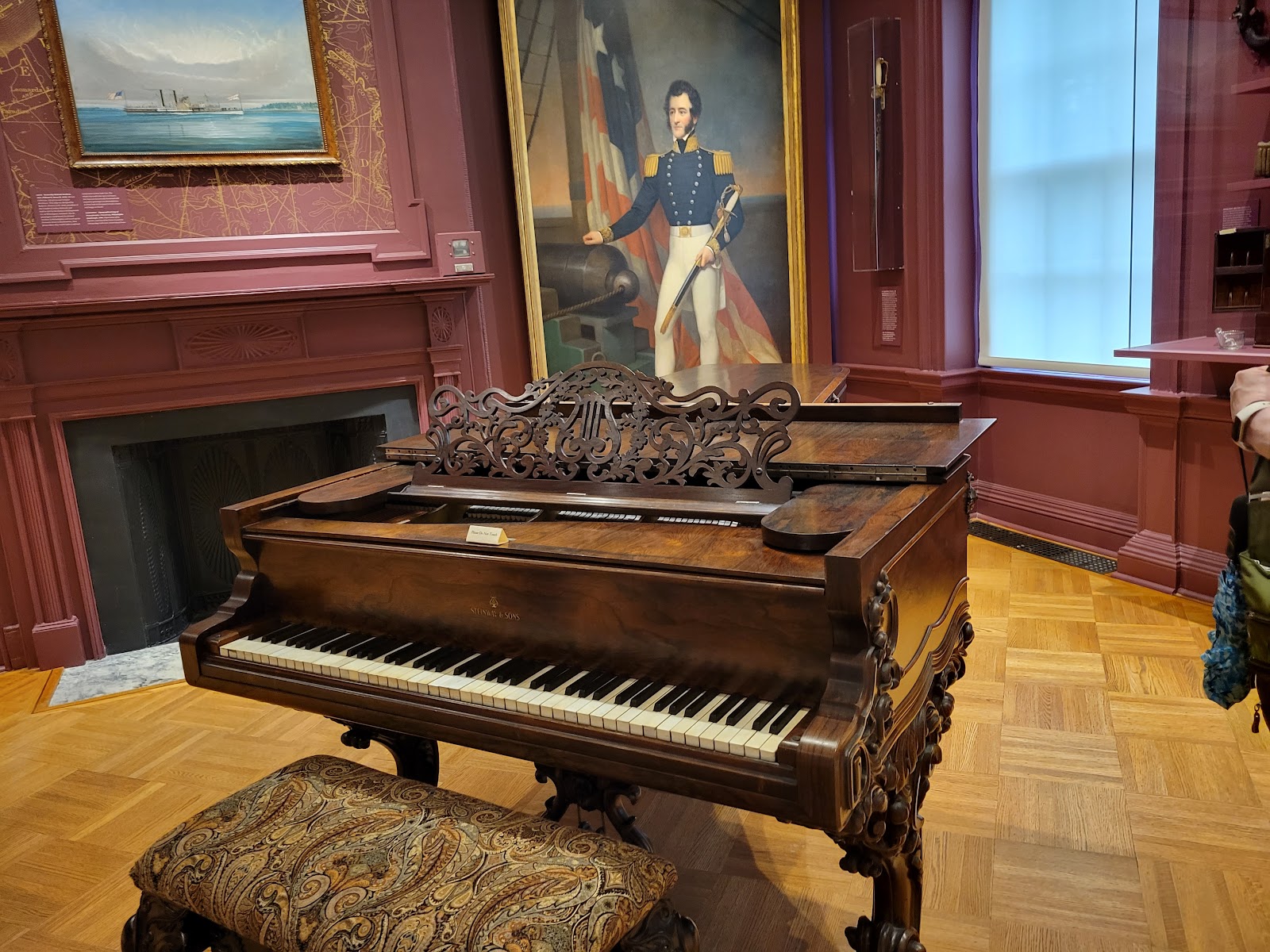
And the house’s contents are what make it worth photographing rather than any technical property. A museum house has furniture, textiles, mirrors, paintings and objects at human scale, which give a frame texture and incident — and a mirror in particular is a resource, because it doubles a room and gives depth that a small space does not otherwise have.
Whether the furnished rooms may be used, and under what conditions, is a question with a definite answer and it decides whether any of that is available.
The garden: walls, hedges, and the hour
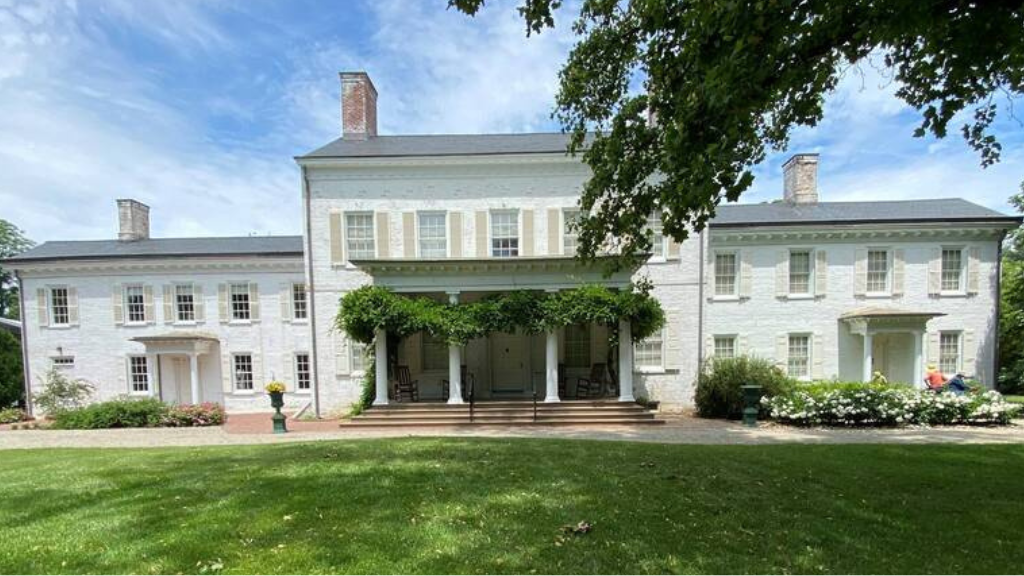
Outside, a garden behind a house of this period is usually walled or hedged into rooms, and that is the most useful thing about it.
A wall does two jobs at once. It casts genuine shade on its shaded side, and it acts as a soft source on its lit side — which means a subject standing in the shade of one wall, facing another that is lit, gets soft directional light in front and a dark surround behind. That is the best free frame on the property and it exists wherever two walls face each other.
In a brick-walled garden that light is warm, for the same reason the house’s shade is warm — so the custom white balance applies out here too, and it changes between a brick-walled corner and an open lawn.
Dense clipped hedge is the other structure and it is the best background in any garden: a dark, even, textureless mass two or three stops below a subject with nothing in it to distract. The metering correction is the standard one — a meter looking at a hedge overexposes the face by a couple of stops, so metering on skin in manual, particularly because a bright lawn a few paces away fools it the other way.
What does not give shade is the garden itself. Beds and borders are open by design, a lawn has nothing overhead, and an arbour or pergola with gaps between its members is not shade but a striped dappling machine. The test is universal: look at the face rather than the ground, and any hard edge on skin means move.
Mature specimen trees, where they exist, are the real canopy — and on a property of this age they are usually old and substantial. A mature specimen gives a broad crown, a canopy edge that works exactly as a woodland margin does, and a shape that reads as an object in a frame. The central New Jersey mix is oak-dominated with maple, beech, tulip poplar and sweetgum, and broad-leaved canopy filters as much as it blocks, so the dappling test applies.
The hour matters as much as the position. A lawn at midday is flat and green with no modelling anywhere; in the last hour low sun rakes across it and puts texture into every blade, and any mown line or path edge becomes a graphic element that leads into a frame or cuts across it depending on where the camera stands. Two steps either way is the difference.
And low sun on brick is the site’s best exterior condition. Brick is a textured material — every course, every joint, every irregularity — and texture shows only when light crosses a surface rather than falling onto it. A brick façade at midday is a flat orange-red plane; the same façade at seven has relief in every brick and the colour at its richest.
Central New Jersey is flat enough that the sun sets at roughly the time the table predicts, which means that hour is reliable rather than curtailed by terrain — a genuine advantage over the ridge and valley sites elsewhere in this guide.
The practical matters of a museum property deserve naming because they shape the day. Guest limits in furnished historic rooms are real and usually low. There may be restrictions on which rooms may be used, on food and drink, on equipment and on numbers. And if the museum is open to visitors during the day, the garden and the house will have other people in them.
None of that prevents a good set of pictures and all of it is much easier known in advance. A longer lens and closer framing handles most of it, and a route planned around three or four positions close together produces more than an ambitious circuit of the whole property.
- Square on the axis or deliberately off it — nothing in between
- Custom white balance per position; sunlit brick lights faces orange
- A metre from a sash window, and half a metre either way for the bars
- Walls facing each other give the best free frame: light in front, dark behind
- Low sun on brick brings out every course; midday flattens it completely
The central New Jersey year
Central New Jersey has four genuine seasons with hot humid summers and cold winters, and a brick house with a garden responds visibly to all of them.
Winter is the best season for the house on both sides of its walls. The December sun at this latitude reaches only about twenty-six degrees above the horizon, so the whole short day rakes rather than floods — which means the brick is modelled from morning to evening rather than for one hour, and indoors the same low sun enters sash windows almost horizontally and travels much further into the rooms than a summer sun does.
For a house with modest windows that last point is decisive: the narrow usable band beside the glass widens considerably in winter, which makes a January interior brighter and more workable than a June one.
Snow adds to both. Outdoors it is the best natural fill available, lifting every shadow and throwing light upward into faces, and snow against warm red brick is one of the strongest colour contrasts in this guide — a cool white against a warm mid-tone, with the brick’s colour at its most saturated by comparison. Snow fools a meter by about two stops toward underexposure, so deliberate overexposure relative to the camera is the rule.
Indoors, a snow-covered garden reflects light up into every window and measurably brightens the rooms.
The costs are cold, a short day, batteries draining faster, and a cold camera fogging when carried into a heated house. A historic house may also be heated conservatively for the sake of its contents, which is worth asking about.
Early spring is the weakest part of the year: bare trees, brown lawn and wet footing. Late April changes it decisively, because a garden of this age and kind will have flowering trees, magnolias and bulbs planted deliberately and in quantity — and blossom against red brick is the strongest short-lived pairing the site produces, lasting a week or two.
Late spring is when the garden rooms close up and the light under new canopy is at its most flattering, with the note that transmitted green light needs a custom white balance.
Summer is hot and humid — commonly upper eighties Fahrenheit and above with high humidity — and afternoon thunderstorms are a real feature from June into August. For a property whose outdoor spaces are lawn and beds, a named covered alternative with real capacity is a requirement rather than a courtesy, and at a museum with guest limits indoors that is a question with a definite answer.
The humidity has a specific cost on brick: it reduces the definition of the texture, which is the opposite of what the material wants. The compensation is that it warms and diffuses the light at the ends of the day, which flatters skin — and a walled garden holds still air, which makes it more comfortable than an open site in a breeze and warmer than one in a heatwave.
Autumn is the best season overall. The humidity breaks in September, the air reaches its clearest of the year — restoring the definition on the brickwork — and foliage in central New Jersey peaks from the middle of October into early November.
On a garden property the effect is composed rather than continuous: mature specimens turn as whole objects, each a distinct mass of scarlet, gold or russet with room around it. Against warm red brick the yellow and gold end of that range works better than the scarlet, because scarlet and brick are close in hue and can merge — which is worth knowing when choosing where to stand.
More frames from Morven Museum
Morven Museum wedding photography: common questions
What does Georgian symmetry demand?
One correct camera position — square on the axis, level, far enough back that the verticals stay parallel. Anything approximate looks like an error.
Why does brick matter?
A sunlit brick wall reflects strongly warm light, so anyone in shade opposite it is lit orange. A custom white balance on the face fixes it in thirty seconds.
What is different about the windows?
They are modest and the ceilings are ordinary, so the light enters low and does not travel far. A metre from the glass, and drifting costs more here.
What is the best free frame outdoors?
A subject in the shade of one garden wall facing another that is lit — soft warm light in front, a dark surround behind.
What limits a wedding here?
Scale. A Georgian house is domestic, and a museum with furnished rooms will have a real guest limit and restrictions worth establishing early.
Which season is best?
Late October for composed autumn colour — favouring gold over scarlet, which merges with brick — and December, when a low sun rakes the brick and reaches deep inside.
More New Jersey venue guides
We are writing a photographer’s guide to every venue we would happily shoot in New Jersey. Here are three more, plus the full index:
- New Jersey Performing Arts Center, Newark: The Building’s Own Logic
- Newark Museum of Art: A Walk Through the Site
- Olde Mill Inn, Basking Ridge: One Frame, and How It Is Made
Planning a wedding at Morven Museum?
A symmetrical house and a walled garden. Tell us your date and we will walk the axis.