 Woodwinds, Branford: The Problem, and Four Ways Out
Madison Beach Hotel, Madison: The Building’s Own Logic
Every room in a shore hotel faces the water. That is the whole design, and the whole problem.
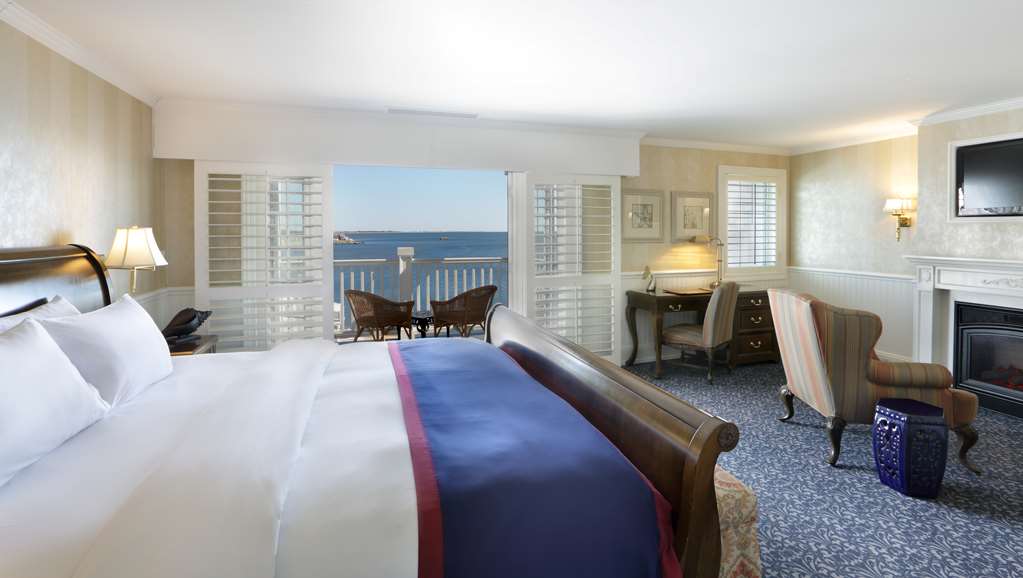
A hotel built directly on a beach has an internal logic that comes from one design decision made before anything else: every room that can face the water does.
That is why such a building exists and it is worth taking seriously, because it means the light in almost every space on the property comes from the same direction and has the same character. In most buildings a photographer moves from room to room and finds different conditions. Here the conditions are the same everywhere, and what changes is only the hour.
The character of that light is specific. Light arriving off water is bright, because a water surface reflects the sky and doubles it. It is cool, because it carries the colour of the sky rather than of any surface. And it is low in contrast and slightly mobile, because the water’s brightness changes with wind, cloud and the state of the surface.
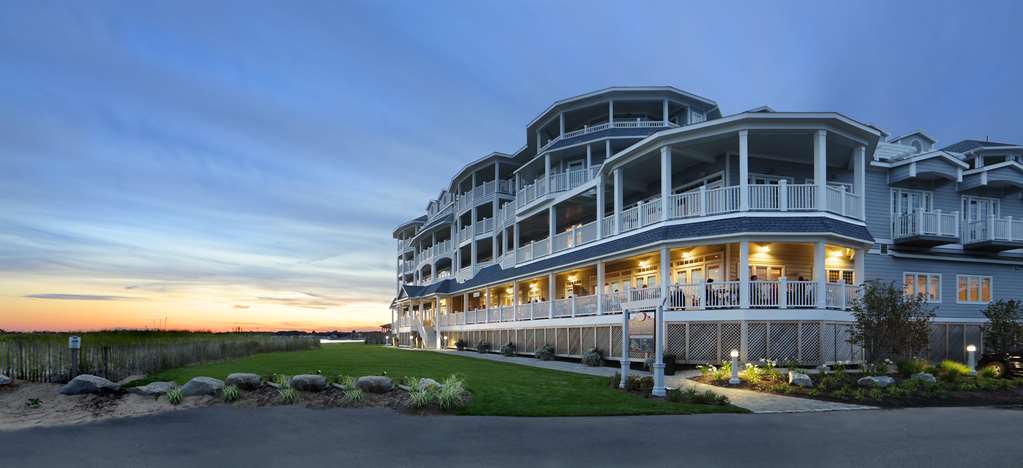
The second part of the logic is the shingled New England exterior. Weathered cedar shingle is mid-toned and matte rather than bright — unlike white clapboard, which dominates most of this coast’s architecture — which means the building reads warm grey-brown and gives a usable mid-tone background rather than a blinding one.
The third part is the orientation, and on the Connecticut shore it is the fact that governs the day: this coast faces south. So the sun crosses the water through the whole day rather than arriving or leaving across it, which means there is no backlit sunset over the sea and the seaward side of the building is lit from morning to evening.
We have not photographed a wedding at the Madison Beach Hotel; shingled shore hotels on this coast behave consistently. Which rooms and terraces are included, what beach access and permits apply, the covered alternative, whether the function-room lighting can be adjusted, and what the tide does to the usable beach on a given date are questions for their team.
Madison Beach Hotel at a glance
| Where | Directly on a Long Island Sound beach at Madison, Connecticut |
| The logic | Every room faces the water, so the light is the same everywhere |
| The light | Bright, cool and mobile — it is the sky, doubled by the water |
| The orientation | A south-facing coast: sun crosses the water all day |
| Ask first | Rooms and terraces included, beach access, covered alternative, tide |
The water-facing rooms, and the terraces
Indoors, the building’s logic gives one condition repeated, and knowing how to use it well is most of the interior work.
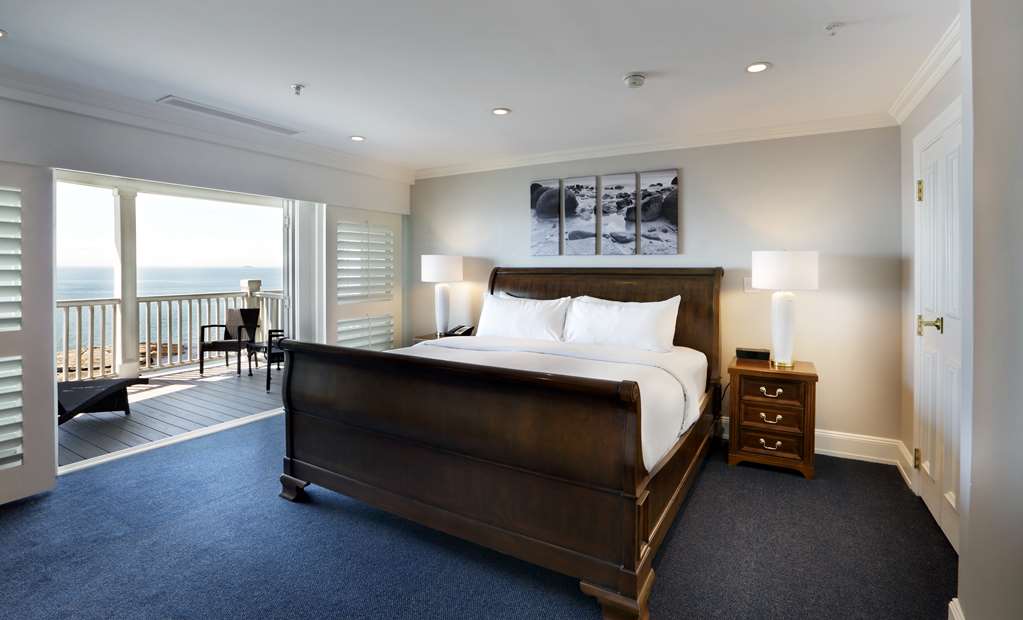
A room with a large water-facing window gets abundant soft light from a source the size of the sky, doubled by the surface below it. A subject a metre from that glass, turned about forty-five degrees to it, gets horizontal light at head height with a lit side, a shadowed side and a gradient between — which is real modelling, and it is available in every water-facing room on the property.
The one thing to know about this light rather than ordinary window light is its colour. Light off water is noticeably cool, because it is sky light reflected from a surface that adds nothing warm — so a daylight preset renders skin slightly blue-grey, and a custom white balance set on a face in position renders it correctly. Thirty seconds, in every room.
The second thing is that it is mobile. The water’s brightness changes with the surface state and with cloud, which means a room metered twenty minutes ago is not metered now. Checking rather than assuming is the habit, particularly in changeable weather on a coast.
Turning the room lights off is the free improvement and it matters more here than in most places, because warm interior bulbs against cool water light are about as far apart in colour as two sources get. Two colours on one face cannot be reconciled by any white balance, and switching them off costs nothing.
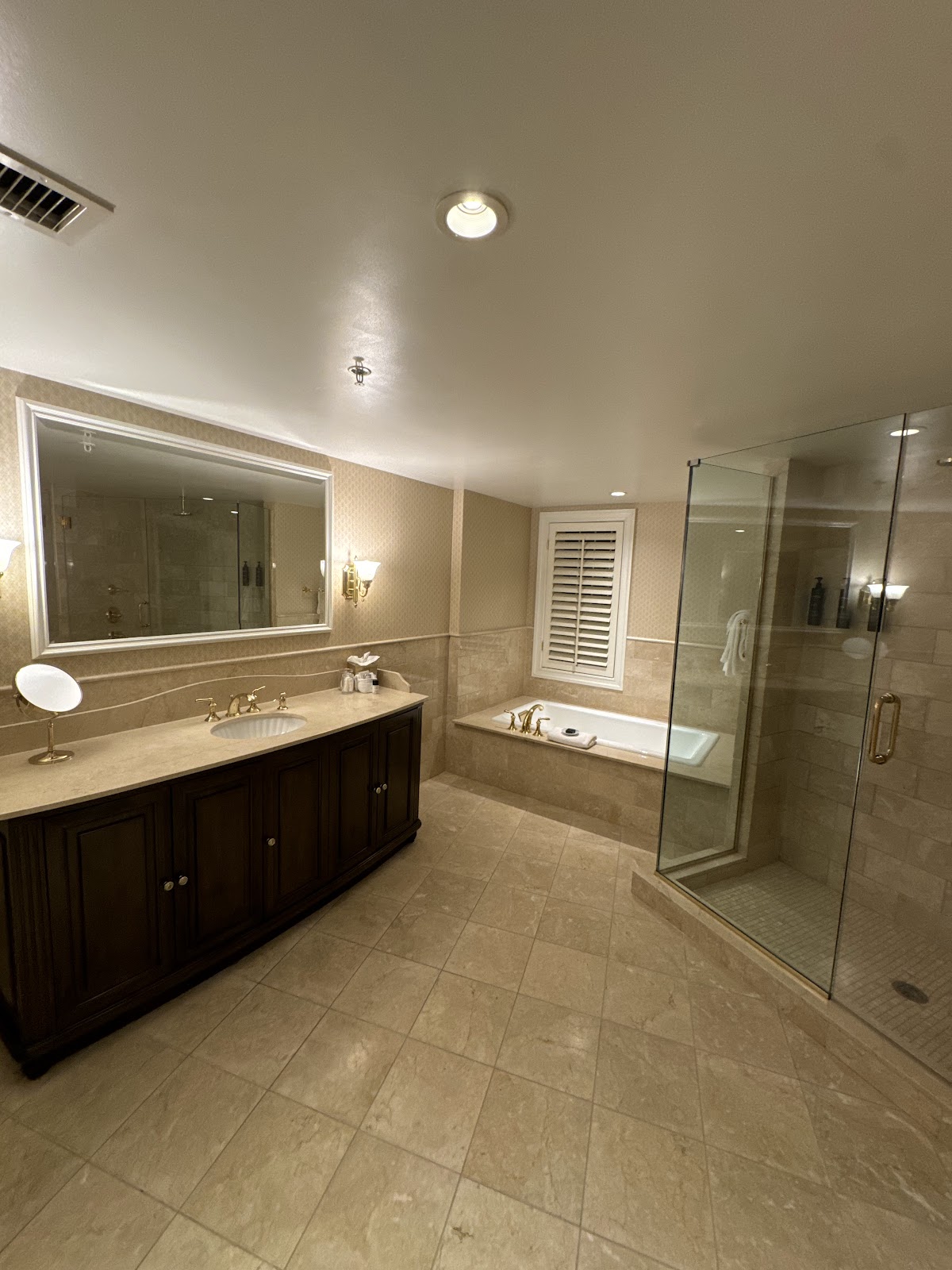
The separation problem is the interior’s real difficulty and it comes from the same logic. A room designed to face the water is usually pale-walled and bright, which means the light bounces around, fills every shadow and does not fall off — so a subject against a pale wall in soft even light has nothing distinguishing them from the background.
The three fixes are consistent. Find the dark — a doorway, a corridor receding away, a dark piece of furniture, the shaded side of a room away from the window — and put it behind the subject. Use the window as a directional source rather than a background, which is what the forty-five degree position does. Or add a source at a stop above the ambient specifically to restore the shadow side that the room’s own bounce has filled in, which is adding light for contrast rather than for illumination.
The window is also a subject rather than only a source, and on a water-facing property that decision comes up constantly. Exposing for the view silhouettes the subject; exposing for the subject whites out the view; and the resolution when both are wanted is a close source at roughly the window’s brightness, with the choice made deliberately rather than averaged. Automatic metering produces the compromise that fails at both ends.
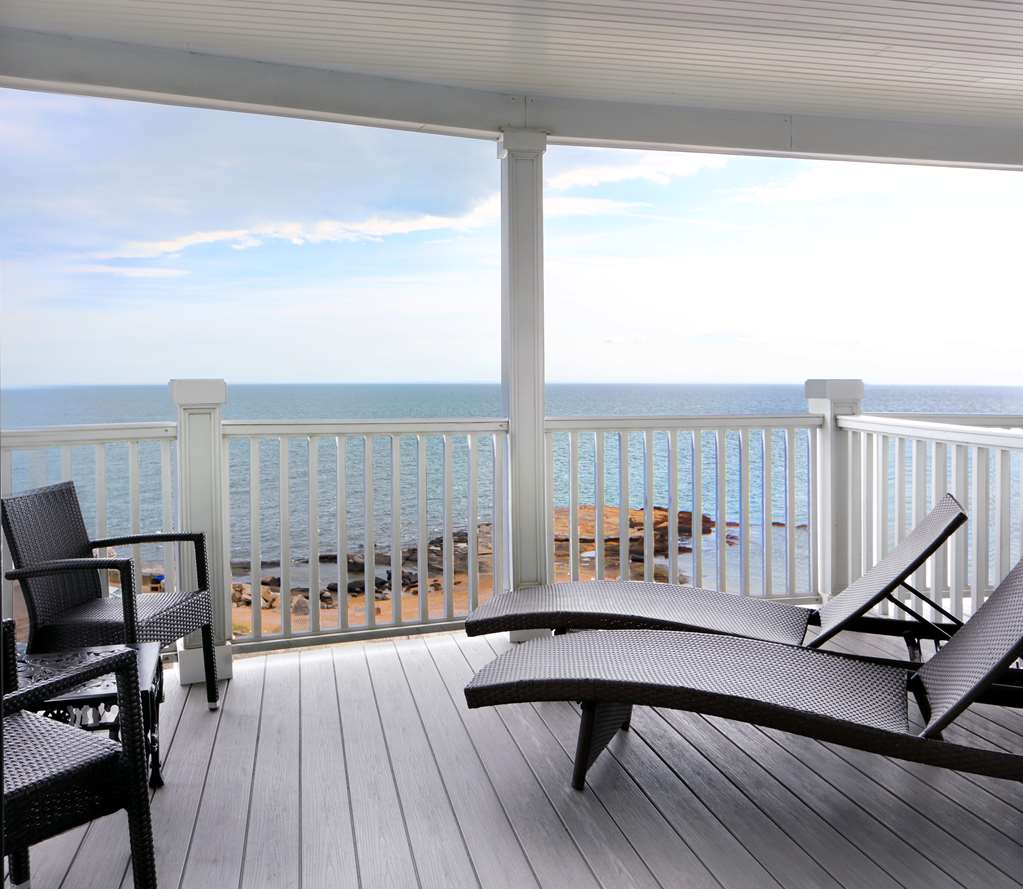
Terraces and decks are the building’s transitional spaces and they are the most dependable outdoor positions. A deck with a solid roof or a deep overhang blocks the overhead component, restricts the light to a horizontal band that models a face properly, bounces off the decking to fill from below, and cannot dapple. Two or three metres in from the open edge is the working position, and it works at any hour of any day.
The shingled walls are the useful background the building gives, and this is where it differs from a white-clapboard venue. Weathered cedar is mid-toned, which means a subject in front of it is neither lost against a bright surface nor silhouetted against a dark one — it sits in the middle, and the separation comes from light rather than tone. That makes it a forgiving background and an unremarkable one, which is an honest description.
The beach, the tide, and the south-facing day
The beach is the reason the building exists and it has the standard set of beach problems.
Dry pale sand bounces a great deal of light upward, which fills the shadows a high sun carves under eyes and chins — genuinely useful, at the cost of lighting the underside of the chin and the brow. The diagnosis is to look at the chin in the first frame, and something solid on one side corrects it, or a position angled so the bounce lights one side of the face rather than the front.
Wet sand is a different surface and it is worth walking to. It is darker, so it bounces less, and it is specular rather than diffuse, so it mirrors the sky and the figures on it. A couple on wet sand at the end of the day has a reflection beneath them, which is the strongest frame the beach gives.
Midday on a beach is the hardest light on the property: high sun, no shade anywhere, sand bouncing from below and water glaring in front. There is no technique for it, and the honest answer is not to schedule portraits then.
Tide is the variable that decides how much beach exists, and on this coast the range is two or three feet with a cycle of about six hours — which is enough to change the width of usable sand substantially, to expose or cover rocks and margins, and to alter how far a party has to walk. It is knowable in advance and checking it takes a minute.
Long Island Sound behaves unlike open ocean and it is worth understanding why. It is shallow and sheltered by Long Island to the south, so there is very little surf — which means no breaking waves as a subject, and equally no wind-driven chop most days, so the water goes genuinely flat and mirrors properly. A calm Sound on a still morning is one of the best reflective surfaces in this guide.
The orientation is the day’s governing fact and it has to be planned around rather than discovered. Because the shore faces south, the sun rises to the left along the beach, crosses the water through the day, and sets to the right over land — which means there is no sunset-over-the-water frame of the kind a west-facing coast gives.
What there is instead is arguably more useful. Side light across the water all day, which puts texture on the surface rather than glare on it. A long slanting path of broken reflection in the afternoon rather than a single blinding one. And in the evening, a sun off to one side, which means a subject can be front-lit, side-lit or rim-lit simply by being turned rather than by adding light.
The practical consequence is that the frame at the end of the day here frequently does not need to be exposed for a bright sky, which means a single exposure holds the whole scene and the close gelled source that a backlit coast requires is often unnecessary. That is a genuine simplification and the strongest technical argument for a south-facing shore.
The colour frame, when the couple want sky colour behind them, therefore looks along the beach to the west rather than out to sea — and finding the position that puts the colour behind them is ten minutes of walking beforehand.
Wind is the constant practical fact. A sea breeze builds most summer afternoons and eases in the evening, which means a lightstand on a beach is a liability twice over — unstable footing and a sail above it — so handheld or bracketed sources are the configuration, planned from the start. A veil on a beach is unpredictable, which means shooting many more frames than usual.
Sound carries poorly into onshore wind, which makes amplification a more important question for a beach ceremony than the setting suggests. And salt and sand are the maintenance note: lens changes away from the beach, a cloth in a pocket, and nothing set down on the sand.
- Set a custom white balance in every room — light off water is markedly cool
- A metre from the glass at forty-five degrees, with the room lights off
- Indoors the problem is separation: find the dark, or build a shadow side
- Check the tide; it decides how much beach there is and how far anyone walks
- The sun sets over land here, so the colour frame looks along the beach
The Connecticut shore year
This shore keeps a maritime version of the New England calendar. The Sound moderates it, so summers are cooler and winters milder than inland Connecticut, and both spring and autumn run later on the water than up the valley.
Winter is cold with snow in most years, and a shore hotel in January is a genuinely different place: an empty beach, bare structure, sometimes ice at the margins, and a Sound that is dark and often very still. For an indoor wedding almost none of it matters, which is the honest argument for a hotel on a February date.
Outdoors, snow on a beach is an unusual and striking condition and it is the best natural fill available — it lifts every shadow and throws light upward into faces. Snow against dark winter water is the widest brightness range the site offers: expose for the snow, let the Sound go black. Snow fools a meter by about two stops toward underexposure, so deliberate overexposure relative to the camera is the rule.
The December sun at this latitude reaches only about twenty-five degrees above the horizon, so the whole short day rakes rather than floods. On a south-facing beach that is decisive, because the site’s central summer problem is high sun with no shade — and in December there is no hour at which the sun is high enough to flatten a face on the sand. Winter is the easiest light of the year here by a clear margin.
Indoors the same low sun enters the water-facing windows almost horizontally and travels much further into the rooms than a summer sun does, which widens the usable area near the glass considerably. A shore hotel is better lit in December than in June.
Winter is also the clearest air of the year, and nor’easters bring the heaviest and most dramatic weather the site sees — with the honest caveat that wind-driven rain on an exposed beach removes every outdoor option at once.
Spring is late and slow on the shore, because the water keeps the land cool: raw wet weather into May is genuinely possible, and the beach is at its emptiest. Late spring is the first reliably good season and the light is lengthening fast.
Summer is the hotel’s own season and it is comfortable rather than hot: the Sound keeps the shore several degrees below inland temperatures and the afternoon sea breeze is reliable. Low eighties Fahrenheit with high humidity is typical, and afternoon thunderstorms are a real feature from June into August — which for a site whose outdoor spaces are a beach and a deck makes a named covered alternative a requirement.
Humidity is the summer photographic factor and it is more pronounced on the water than inland: haze reduces clarity at distance, which softens any long view across the Sound, and it warms and diffuses the light at the ends of the day in a way that flatters skin.
Tropical storm season runs from roughly August into October on this coast. Direct hits are uncommon and the effects of a passing system are not — heavy rain, strong onshore wind, a Sound that stops being calm, and a beach that may be underwater at high tide. It cannot be planned for, only acknowledged, and it is why a real covered alternative matters for a September date.
Autumn is the best season and by a clear margin. The heat and humidity break, the air reaches its clearest, the water is at its calmest, the weather is at its most settled, and the beach is quiet again. Foliage on the shore turns from the middle of October into early November, later than inland — and while a beach itself has no foliage, the trees behind it and along the shore do, which gives warm colour reflected in calm water.
For a hotel whose interiors are all lit by the same cool water light, that autumn warmth outside is the one seasonal change that alters the interior character too — because the light coming off a calm Sound under a warm October sky is warmer than the same light in July.
More frames from Madison Beach Hotel
Madison Beach Hotel wedding photography: common questions
What is the building's logic?
Every room that can face the water does. So the light is the same in almost every space — bright, cool and mobile — and only the hour changes.
Why set a custom white balance indoors?
Light off water is markedly cool, because it is sky light reflected from a surface that adds nothing warm. A daylight preset renders skin blue-grey.
What is the problem in the rooms?
Separation rather than light. Pale walls facing the water bounce it around and fill every shadow, so a subject has nothing distinguishing them from the background.
Does this coast have a sunset over the water?
No — the shore faces south, so the sun crosses the water and sets over land. The colour frame looks along the beach rather than out to sea.
Is that a disadvantage?
Not really. Side light all day, a broken reflection path instead of glare, and an evening sun off to one side that often needs no added light at all.
Which season is easiest?
Winter. A low sun never gets high enough to flatten a face on the sand, and it reaches much deeper into the water-facing rooms than a summer sun does.
More Connecticut venue guides
We are writing a photographer’s guide to every venue we would happily shoot in Connecticut. Here are three more, plus the full index:
- Mohegan Sun, Uncasville: The One Decision That Governs Everything
- Pond House Cafe, West Hartford: One Frame, and How It Is Made
- Red Barn at Hampshire Hills, Milford: What It Suits and What It Does Not
Planning a wedding at Madison Beach Hotel?
A building that faces one way. Tell us your date and we will use the hours.