 The Venetian, Garfield: The Building’s Own Logic
Laurita Winery, New Egypt: Field Notes
Pale sandy ground bounces light upward and pitch pine gives almost no shade. Both matter here.
These are field notes on a vineyard at the edge of the New Jersey Pine Barrens, and the first note is about the ground rather than the vines.
The soil here is sand. The Pine Barrens is a vast area of sandy, acidic, fast-draining ground — the reason it was never good farmland and the reason it suits vines — and pale sand is an efficient reflector. Which means the ground throws light upward into faces, fills the shadows a high sun carves under eyes and chins, and lifts the whole exposure of an open frame.
That is useful and it has a cost: uplight under the chin and the underside of the brow, which is the characteristic look of pale open ground. The diagnosis is to look at the chin in the first frame, and something solid on one side corrects it.
The second note is the vegetation, and it is the disappointment. Pine Barrens woodland is pitch pine and scrub oak: small, open, thin-crowned trees on sandy ground, adapted to fire and poor soil. They are nothing like a New England maple canopy — they filter rather than block, the crowns are sparse, and the trees are short. A pitch pine stand dapples and gives very little real shade.
The third note is the topography, which is that there is none. This is flat country with a very large sky, which means long sightlines, no interval frame from a ridge, a sunset that happens at the time the table says, and weather visible from a long way off.
We have not photographed a wedding at Laurita Winery; vineyards on the Pine Barrens edge behave consistently. Which buildings and outdoor areas are included, the covered alternative, what the vineyard work schedule is on the date, whether there is usable power at the field positions, and whether the property is open to visitors are questions for their team.
Laurita Winery at a glance
| Where | A vineyard on the Pine Barrens edge at New Egypt, central New Jersey |
| The ground | Pale sand: it bounces light upward and fills every shadow |
| The trees | Pitch pine and scrub oak — thin, short and dappling, not shade |
| The land | Flat, with a very large sky and long sightlines |
| Ask first | Areas included, covered alternative, vineyard work, field power |
The ground and the vines: the problems, and the solutions
The problem with pale sandy ground is that it lies to a meter and it lights faces from below.
A meter looking at bright sand pulls it toward mid-grey, which underexposes the whole frame and produces grey ground with dark faces. The correction is to meter on skin, work in manual, and expose deliberately brighter than the camera suggests — often by a stop when a lot of pale ground is in frame. The check is the highlights: sand should read pale with texture in it, not grey and not blank.
The uplight is the second half and it is easier to fix than to notice. Light bouncing off the ground reaches the underside of the chin and the brow, which reads as slightly odd rather than obviously wrong — so the habit is to look at the chin in the first frame of every new position. A solid object on one side, or turning the subject so the bounce lights one side of the face rather than the front, corrects it.
Used deliberately, though, sand is a large free reflector. A subject standing in the shade of a building or a vehicle, on open sand, is filled from below without any equipment — which in the middle of a bright day is genuinely useful and better than nothing.
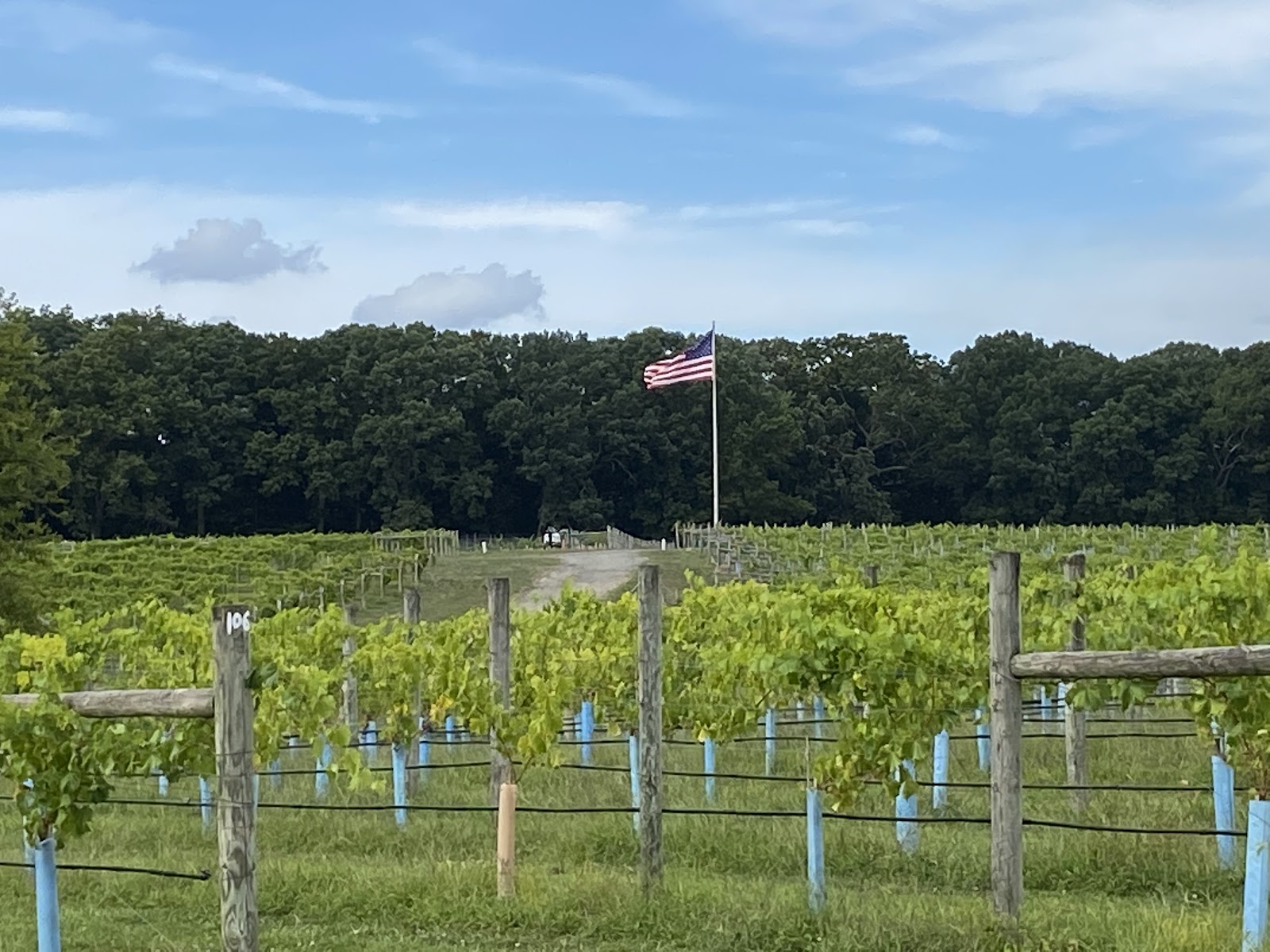
The vines are the second condition and they have the standard vineyard problem: no shade in them at all. Vines are trained at waist to chest height, so between the rows a subject is in full sun with nothing overhead.
New Jersey summer sun is high and, unlike the dry western sun in this guide, humid — which softens the edges of shadows slightly and reduces contrast a little, but does not fix a face. A face half in sun at midday here is still unrecoverable, and the vineyard is a morning and evening proposition.
Under overcast it changes completely: the range collapses, the green saturates rather than glaring, and every row becomes usable at any hour. A grey day in a vineyard is straightforwardly better than a bright one, and it is worth saying so.
The rows are the compensation and they have to be used deliberately. A vineyard row is a strong perspective line, and where the camera stands decides whether it converges into the frame or repeats across it. Down a row gives a corridor with depth; across the rows gives banded texture. Both work. The diagonal accident in between does not, and two steps either way is the whole difference.
Rows run to a compass direction chosen decades ago for the vines rather than for photography, which means the light along a row and the light across it differ at every hour. Nothing on a map tells you this — walking the vineyard once at the hour the portraits will happen does, and it takes ten minutes.
The last hour is what the vineyard is for. Low sun rakes along and across the rows rather than falling onto them, which puts texture in every leaf and turns the canopy into a translucent green-gold layer — because vine leaves are thin enough to transmit light, which is why a backlit vineyard glows in a way a backlit hedge never does.
That frame is exposed for the background with the faces lifted by a close warm-gelled source, because metering on skin gives a white sky and a flat vineyard. Close matters because sand bounces some light but not enough to lift a backlit face: a source at two metres needs roughly a quarter of the output it needs at four.
And because the land is flat, that hour arrives at the time the table predicts and lasts its full length — which is a real advantage over the ridge and valley sites elsewhere in this guide, where terrain takes the sun early.
The pines, the buildings, and the sky
The pitch pine is the third condition and the honest note about it is that it does not solve the shade problem.
Pitch pine has an open, irregular crown of long needles on a relatively short tree, and scrub oak beneath it is low and sparse. Light comes through a Pine Barrens stand almost unimpeded in patches, which means it dapples — and the patches are hard-edged because the needles are fine. The test never changes: look at the face rather than the ground, and a bright patch on skin means move a metre, which in a thin stand frequently does not help.
What the pines give instead is character and a background. A stand of dark irregular pines against a very large sky is a landscape that exists nowhere else in this guide, and it reads as this place rather than anywhere generically rural. Used as a dark background on a longer lens rather than as shade, it is genuinely useful — and pine needles are dark enough to give two or three stops of separation.
The exposure trap goes with it: a meter looking at a dark pine stand overexposes the face by a couple of stops, while the bright sandy ground a few paces away fools the same meter the other way. Manual, metered on skin, reset at every transition.
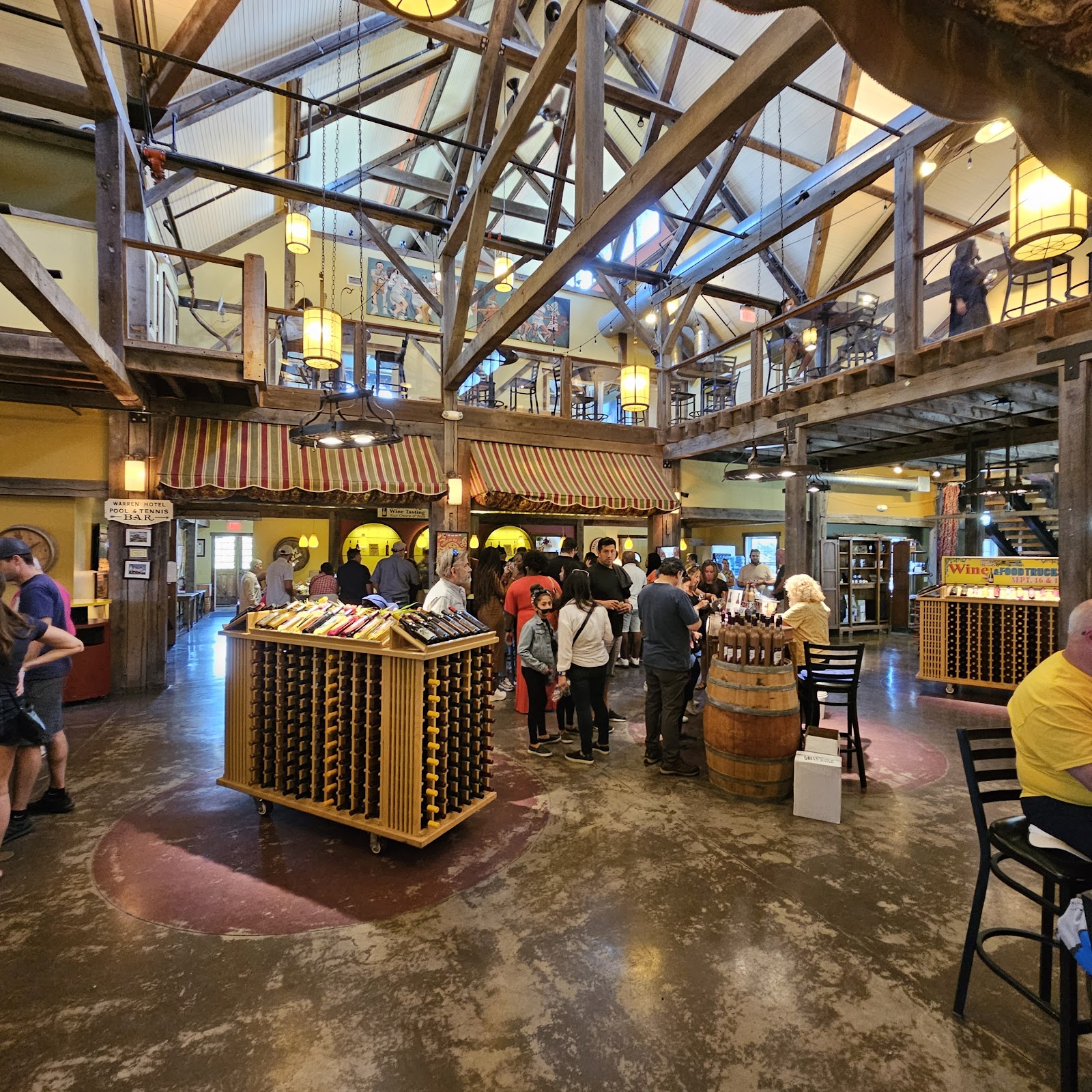
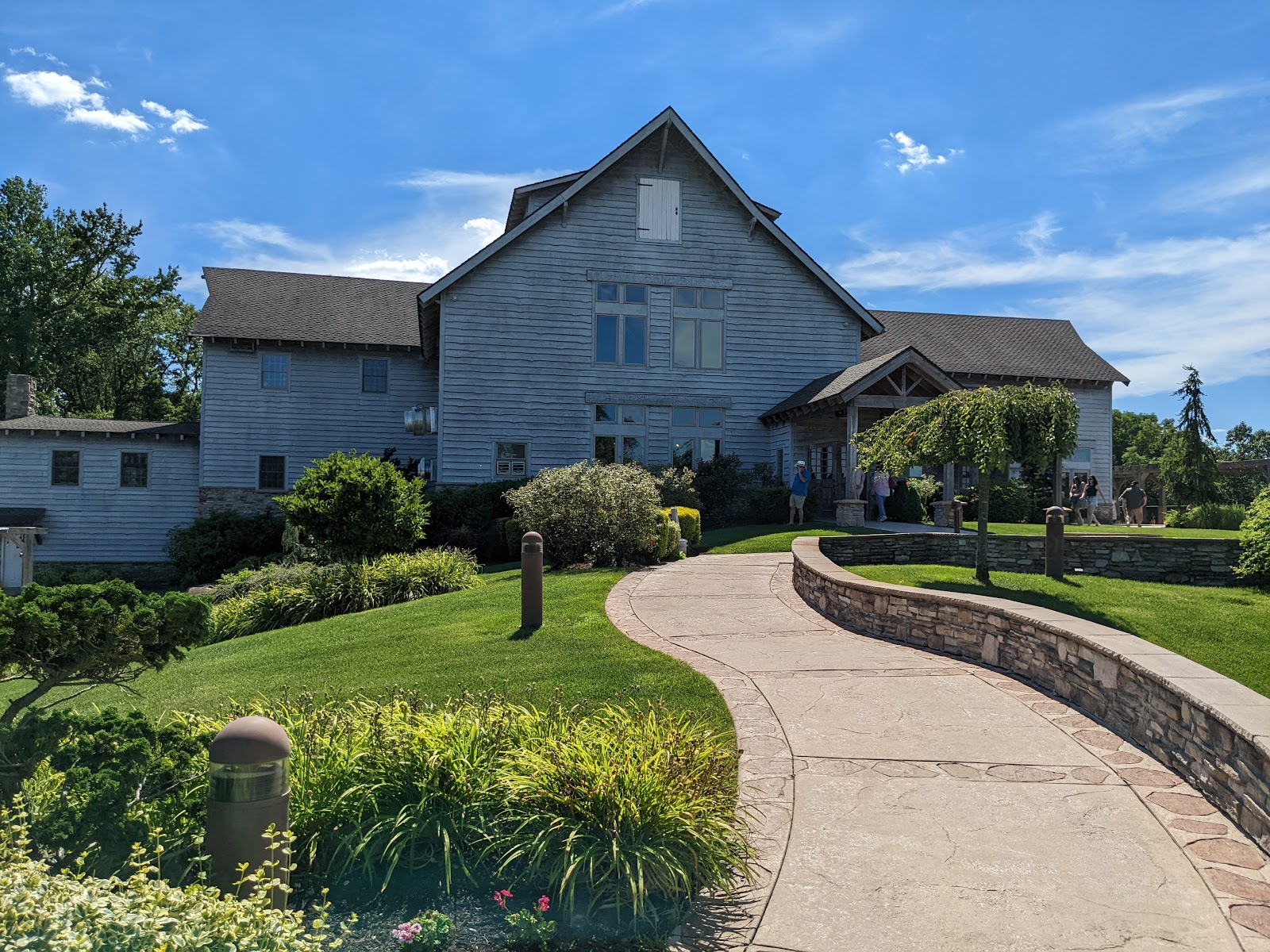
The buildings are the real shade and the most dependable positions. A barn or winery building with a large opening does what such buildings do everywhere: a dark interior with one big door gives horizontal light and steep fall-off, so a subject two or three metres inside is lit from one side with nothing behind them. Unpainted timber absorbs almost everything, which means the interior is a stop or two darker than it looks and the background is free.
A porch, overhang or covered terrace is the other version: a solid roof restricting light to a horizontal band, bouncing off the ground — and here the sand bounces generously — and incapable of dappling. Two or three metres in from the open edge is the working position, at any hour in any weather.
A winery’s cellar or tank room, where it is available, is the best low-light space on any vineyard property: dark, cool, with one or two openings, which gives steeply falling light and free separation. One warm-gelled source at about a stop above the ambient, white balance set to the gel, keeps the character of the room.
The sky is the last condition and on flat land it is the site’s biggest single element. A very large sky means two things worth planning for.
Weather is visible from a long way off, which is both warning and subject. A storm building over flat country — and afternoon thunderstorms are a real feature here from June into August — is visible twenty or thirty minutes before it arrives, which is useful for the party and dramatic for the camera. A dark cloudbase over a lit vineyard is the most striking frame this landscape produces, and the clearing immediately after a storm is the most saturated light of the day.
And the after-sunset window is long and clean on flat land, because there is no terrain to cut it short. The sky holds colour across a wide arc rather than in a narrow gap, which means a frame with a couple against a low horizon and a full sky behind them is available for a good twenty minutes after the sun has gone — and it needs no added light once the range has collapsed.
The Pine Barrens is also one of the darker night skies in this densely populated region, which makes a night frame a genuine possibility rather than a hope: a tripod, a wide fast lens, twenty or thirty seconds, and a party willing to stand still.
The practical notes are the ordinary farm ones. Sandy ground is soft underfoot and easy on drainage but dusty in dry weather and a real consideration in formal shoes. Vineyard work continues, and what will be happening on a given date is a question for the estate. And power at a field position may be absent, which means battery sources only.
- Meter on skin and expose brighter — pale sand fools every meter
- Check the chin: sandy ground lights faces from below
- Stand in a vineyard row or across it deliberately, never diagonally
- Pitch pine is a dark background, not a shade. The buildings are the shade
- Flat land means a long clean after-sunset window — use it
The Pine Barrens edge year
Central New Jersey has four genuine seasons with hot humid summers and cold winters, and the sandy soil here changes how a couple of them behave.
Winter is cold with snow in some years and less reliably than in the north of the state. Sandy ground drains fast, which means the site is firm and usable when heavier soils elsewhere are waterlogged — a real practical advantage for a winter or early spring date.
Photographically winter is excellent. Pitch pine is evergreen, so the dark pine background is unchanged in January — which means the site’s best background works identically all year, and that is unusual. Snow against dark pine gives the widest brightness range on the property: expose for the snow and let the pines go black, with deliberate overexposure relative to the meter, which snow fools by about two stops.
The December sun at this latitude reaches only about twenty-seven degrees above the horizon, so the whole short day rakes rather than floods, which removes the vineyard’s midday problem entirely and makes the rows usable from morning to evening. Bare trained vines in ruler-straight rows across pale ground, raked by a low sun, is a graphic landscape that the leafy version does not give.
And flat land plus clear winter air gives the longest sightlines and the largest skies of the year.
Early spring is mud season everywhere else and less so here, because sand drains — but the vines are bare and the landscape is pale and dormant, which means it is the thinnest part of the year for content. Late April brings bud break and the first green in the rows.
Late spring is comfortable and green, with the canopy filling in through May and June. The light under new vine leaves is soft and transmitting, and the ground has not yet baked pale and dusty.
Summer is hot and humid — commonly upper eighties Fahrenheit and above with high humidity — and on open sandy ground with no shade that is a genuine welfare consideration rather than a detail. A party in formal clothes between vine rows at three in the afternoon is uncomfortable in a way that shows in the pictures.
Afternoon thunderstorms are a real feature from June into August and on flat land they are visible coming, which is the site’s compensation: a named covered alternative with real capacity is a requirement, and the storm itself is the most dramatic subject the landscape offers.
The humidity softens contrast and reduces clarity at distance, which on flat land with long sightlines matters — a July horizon is a pale haze where an October one is sharp.
Late summer into autumn is harvest, and it is the best time to be here. Crush runs from roughly late August into October, which turns the vineyard from scenery into a working place: fruit on the vines, bins in the rows, activity in the winery. Photographed honestly rather than tidied away, that is a far better background than an empty one — and what will be happening on a given date is a question for the estate.
Autumn is the best season overall. The humidity breaks in September, the air reaches its clearest of the year, and the vines turn through late October into November. Because a vineyard is planted in blocks of a single variety, the colour comes in large uniform panels of yellow, orange or red rather than tree by tree — and against dark evergreen pitch pine that is the strongest colour combination the property produces.
The surrounding Pine Barrens contributes less autumn colour than New England woodland, because pitch pine is evergreen and scrub oak turns a modest russet — which makes the vineyard’s own colour the subject rather than a detail in a wider landscape. That is worth knowing rather than expecting a Vermont hillside.
More frames from Laurita Winery
Laurita Winery wedding photography: common questions
Why does sandy ground matter?
It is an efficient reflector. It fills every shadow and lifts the exposure — and it makes a meter underexpose, so meter on skin and go brighter than the camera says.
Does pitch pine give shade?
Very little. The crowns are open and irregular on short trees, so a Pine Barrens stand dapples. It is a good dark background, not a place to stand in sun.
Where is the real shade?
The buildings — a barn doorway, a porch, a covered terrace, or the winery’s cellar. Nothing in the vineyard or the pines blocks properly.
How should vineyard rows be used?
Down a row for a corridor with depth, or across them for banded texture. The diagonal accident between the two is the only real error.
What does flat land give?
A sunset at the time the table says, a long clean window after it, and weather visible twenty or thirty minutes before it arrives.
When is the site at its best?
Late October into November: vineyard blocks turned uniform gold against dark evergreen pine, in the clearest air of the year.
More New Jersey venue guides
We are writing a photographer’s guide to every venue we would happily shoot in New Jersey. Here are three more, plus the full index:
- Madison Hotel, Morristown: The Building’s Own Logic
- Meadow Wood, Randolph: What It Suits and What It Does Not
- Morristown Hyatt: The Problem, and Four Ways Out
Planning a wedding at Laurita Winery?
Sand, vines and a very big sky. Tell us your date and we will plan for the hour.