 The Audubon Aquarium: Field Notes on Photographing Through Glass
The Laura Plantation, Vacherie: Suits and Does Not Suit
Not a white-columned mansion. That changes everything, including the colour in your files.
Most people arrive on the River Road expecting white columns, and this is not that.
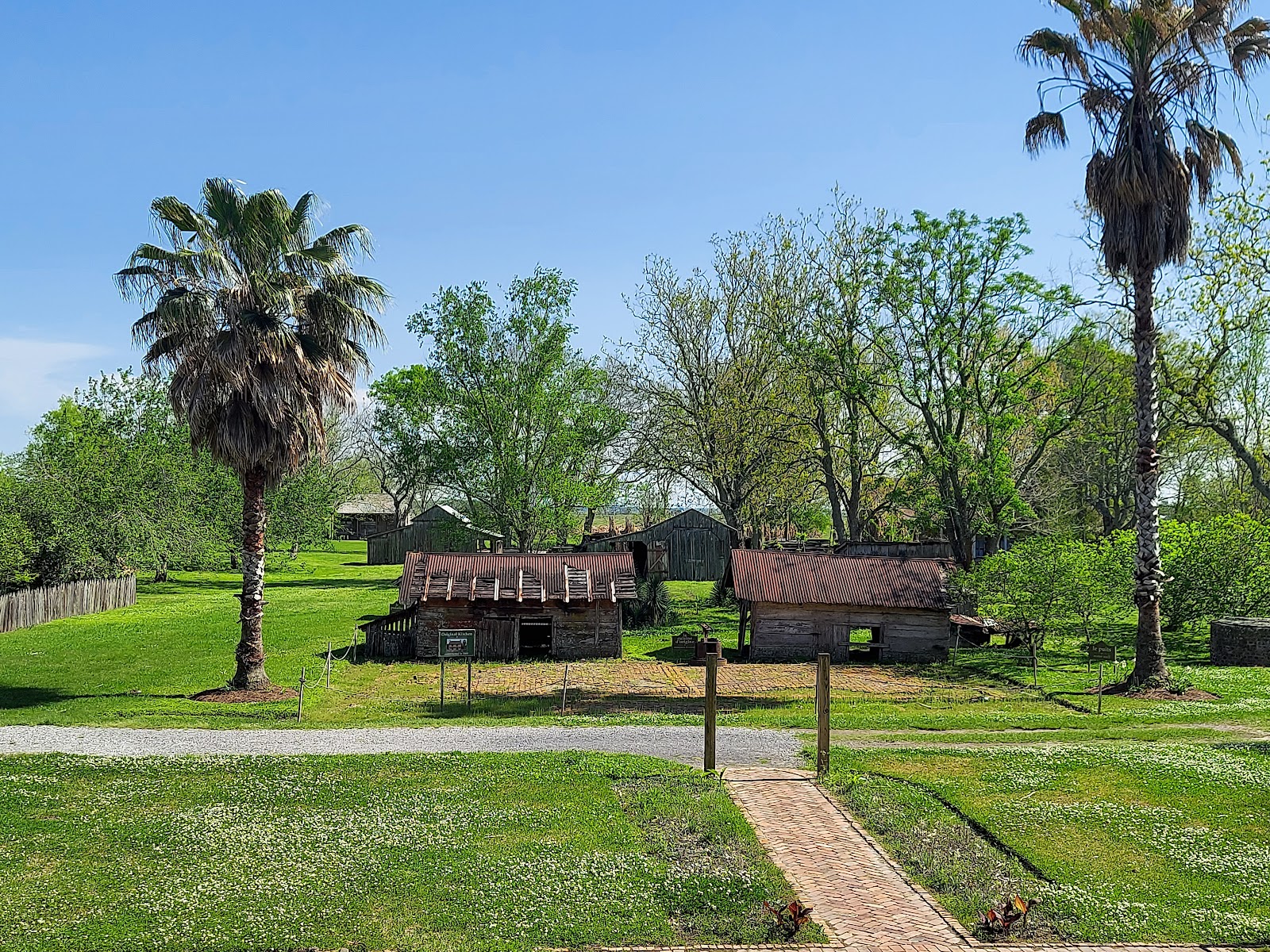
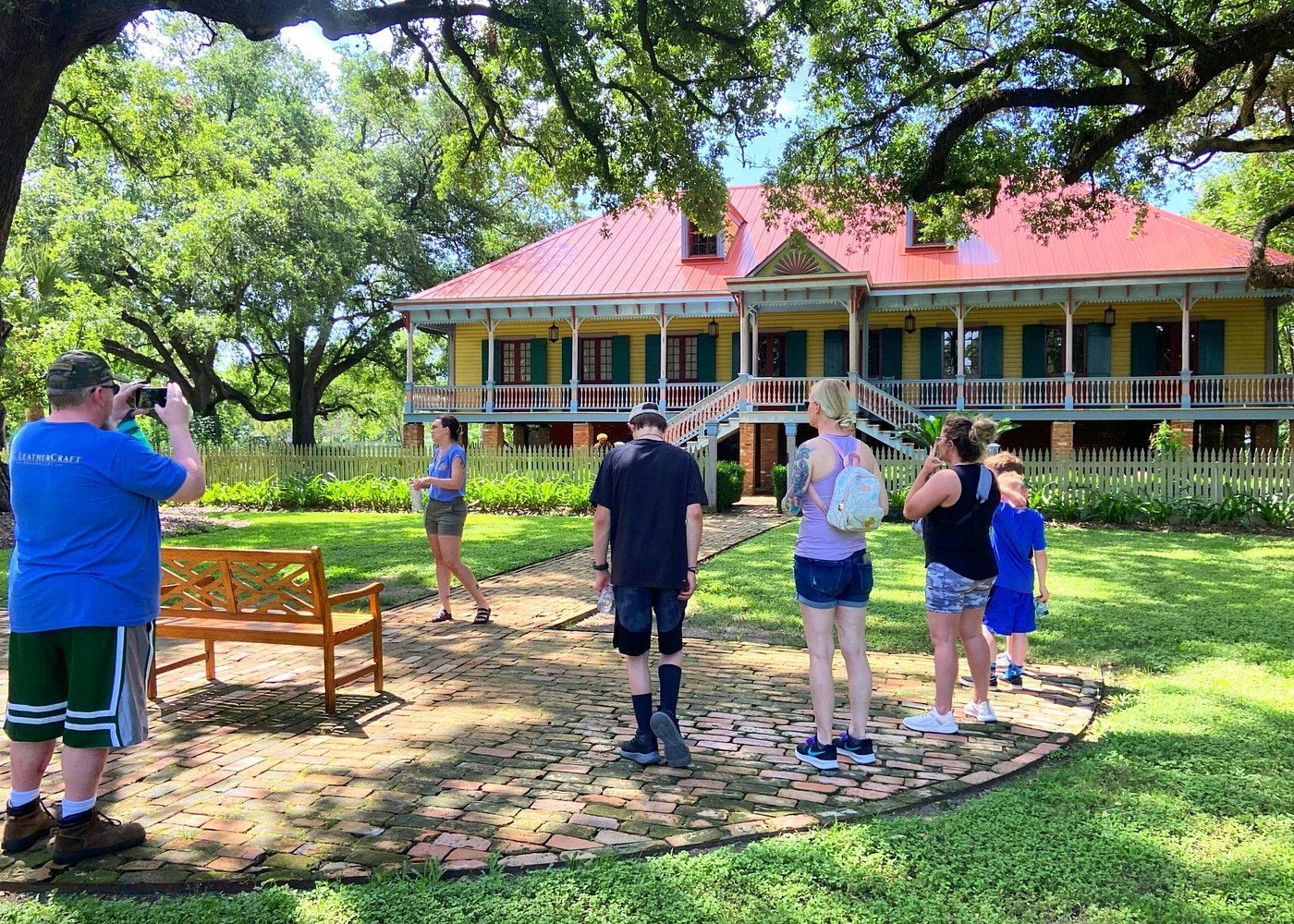
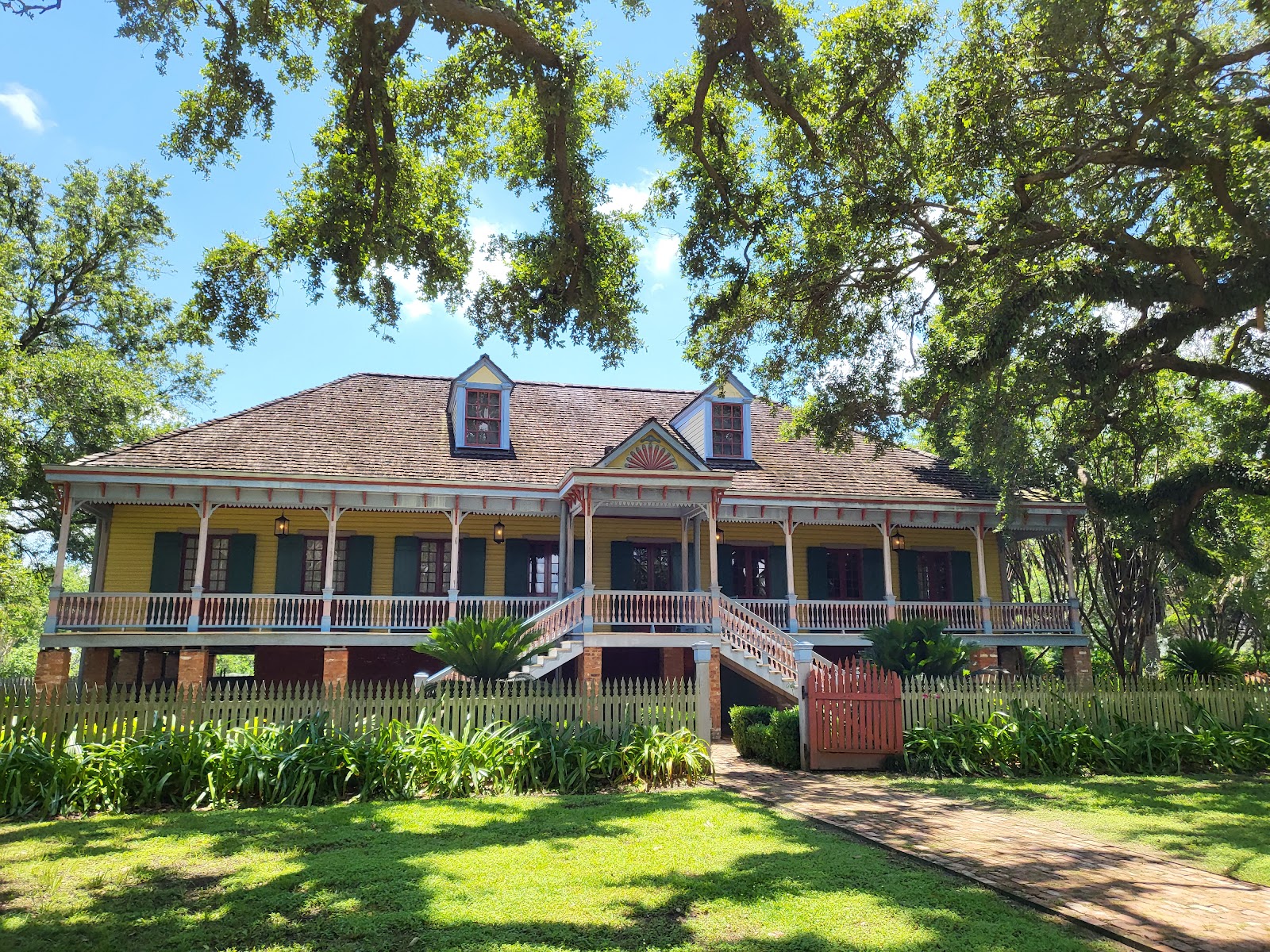
Laura is a Creole plantation house at Vacherie, built in the first years of the nineteenth century, and it is painted the way houses of its type and period actually were: strong ochres, reds, greens and greys rather than the uniform white of the Greek Revival houses further along the road. The form is Creole too — a raised main floor over a brick ground level, a broad hipped roof, a deep front gallery, and rooms that open onto that gallery rather than onto an internal corridor.
That is a different building from its neighbours in almost every respect that matters to a camera, and the colour is the largest difference. A brightly painted building is a coloured light source in sunlight, and it will put its colour onto the skin of anyone standing near it. That is the single most consequential technical fact about this venue and the last section of this guide deals with it properly.
The history has to be stated before anything else, and at this site it is unusually well documented, which cuts both ways.
This was a sugar plantation, and a sugar plantation was a forced-labour camp. Sugar was among the most lethal agricultural industries in North America, and the people who built and ran this place were enslaved. What distinguishes Laura is that a large body of records survives — family papers, inventories, a memoir — so the enslaved community here is documented by name and circumstance rather than as an anonymous mass, and the site’s public interpretation is known for putting that documentation at the centre of what a visitor is told rather than at the edge of it.
That is genuinely better practice than some comparable properties manage, and it does not resolve the underlying tension. A site that tells that story carefully all week also hosts weddings, and a couple should decide about that deliberately. A good number of people, photographers included, decline plantation venues outright for this reason, which is a coherent position. Others book them having thought it through. Booking without having thought about it is the option that tends to be regretted.
Assuming the decision is made, this venue divides couples sharply — more sharply than most — and not on budget. It divides them on whether they want a building with character or a building with grandeur.
So: what it suits, what it does not, and then the colour problem and the Louisiana year.
The Laura Plantation at a glance
| Where | A Creole plantation house at Vacherie, LA, in strong period colours |
| Suits | Character over grandeur; small numbers; photographers who like colour |
| Does not suit | Anyone wanting white columns; large parties; a neutral palette |
| The technical catch | Brightly painted walls throw their colour onto skin in sunlight |
| Understand first | A forced-labour sugar plantation; the site documents that unusually well |
What it suits
It suits a couple who want a building with character rather than a monument, and that is the whole division.
A Creole house in ochre and red is idiosyncratic, specific and a little strange. It does not look like the mental image of a Southern plantation and it does not try to. Photographs made here are immediately identifiable as this place rather than as a type, which is worth a great deal if a couple cares about their pictures not looking like everybody else’s.
It suits photographers who actually like colour. A saturated painted wall is a compositional element in its own right — a large flat field of one strong hue — and a large flat field of one strong hue is the most useful exterior background there is. It separates a subject cleanly, it holds no distracting detail, and it gives a set variety without moving location. Working with that well is a real pleasure and it is specific to this venue among the River Road houses.
It suits the gallery-based day. A Creole house has a deep front gallery running the width of the building, and a gallery is an outdoor room with a roof — the single best portrait light on any property of this type, at every hour. The roof removes the overhead sky, which is the part that puts shadows in eye sockets at this latitude, and what arrives comes in horizontally from a large bright area. That is exactly what a face wants, and it works at one in the afternoon in July when nothing else outdoors here does.
Because the rooms open directly onto the gallery rather than off a corridor, the gallery is also the circulation space, which means people naturally spend time there and candid coverage happens where the light is best. That is a structural advantage over a house with an internal hall.
It suits small numbers. A raised Creole house has domestic-scale rooms on one main floor, with no ballroom and no large hall, so thirty or fifty people works beautifully and a hundred and fifty does not fit indoors at all. Establish the interior capacity of the specific rooms you have, as a number, early.
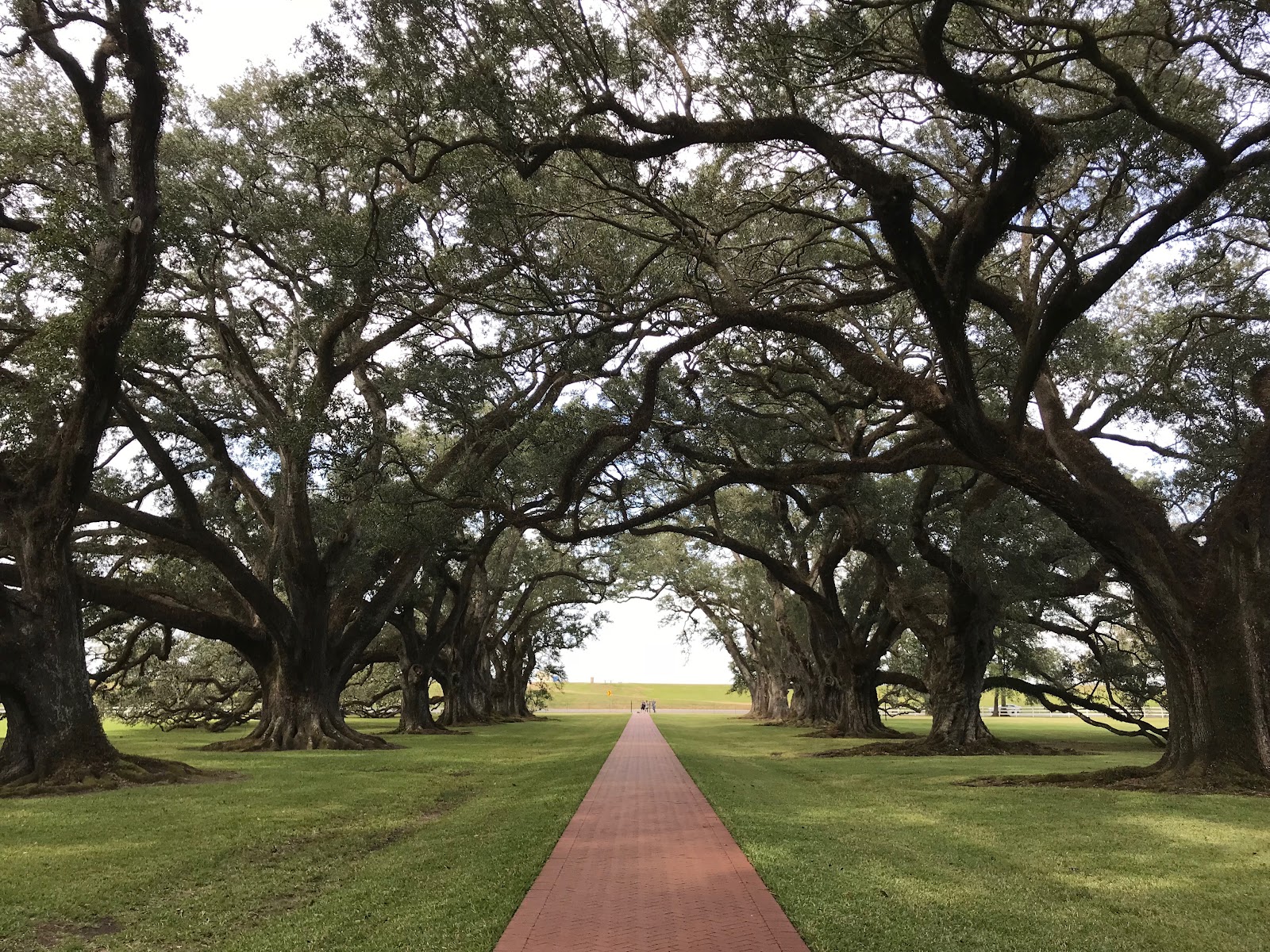
It suits a winter or early-spring date better than almost any venue in this library, for a reason specific to the region: the live oaks here are evergreen and the Spanish moss hangs year-round, so a January frame looks very much like an October one. Add a February noon sun near forty-five degrees, which models a face properly instead of flattening it, and mild dry air, and the off season here is the on season.
It suits a couple who want their venue to mean something and are prepared for that meaning to be uncomfortable. If they have read about the site, understood what it is, and chosen it because it tells the truth about itself rather than despite that, this is a venue that will reward them. That is a real kind of couple and they exist.
And it suits a photographer willing to work close. The building’s interest is in its details — the colour joints, the shutters, the brick ground floor, the gallery posts, the roof line — more than in a single grand view. A set built from eight considered details and three wide frames will serve this house better than the reverse.
One practical advantage worth naming. The site is comparatively compact, which means a wedding party is never far from the house, the gallery or a large oak. Compared with a three-thousand-acre estate, that saves twenty minutes of walking per location and it saves it repeatedly.
What it does not suit
It does not suit anybody whose reference images are white columns. That sounds obvious and it is the single most common mismatch at this venue, because couples browse River Road houses as a category and then book one without registering that they are not interchangeable. If the moodboard is all white porticoes and long avenues, a different house on the same road is the right answer and saying so early is a kindness.
It does not suit a large wedding. There is no ballroom, no hall and no large interior volume, and the practical consequence of that in this climate is severe: if the numbers do not fit indoors, they are outdoors, and outdoors on the River Road in summer means high-seventies dewpoints, ninety-plus temperatures, serious mosquitoes and near-daily afternoon lightning. A guest count that forces a tent in July is a plan with a welfare problem in it.
It does not suit a neutral or pale aesthetic. If the couple’s palette is ivory and sage and the photographs they like are all low-saturation, this building will fight them in every frame, because the walls are loud and there is no way to make an ochre wall quiet. You can shoot tight, you can shoot in shade, you can desaturate in post — and the building will still be the loudest thing in the set.
It does not suit a plan without a real rain answer. This is the wettest region in the collection, and at a house whose interior is small the covered alternative is the whole risk. Ask for its capacity as a number and compare it to the guest list before the deposit. An intention is not a plan.
It does not suit a couple who want the venue’s history kept quiet. This site’s interpretation puts the enslaved community at the centre of what visitors are told, and that material is present — in the buildings, in the signage, in what other visitors are being shown while your wedding is happening. A couple who would prefer not to think about it will find this venue uncomfortable in a way a more decorative property would not be, and that discomfort is by design rather than by oversight.
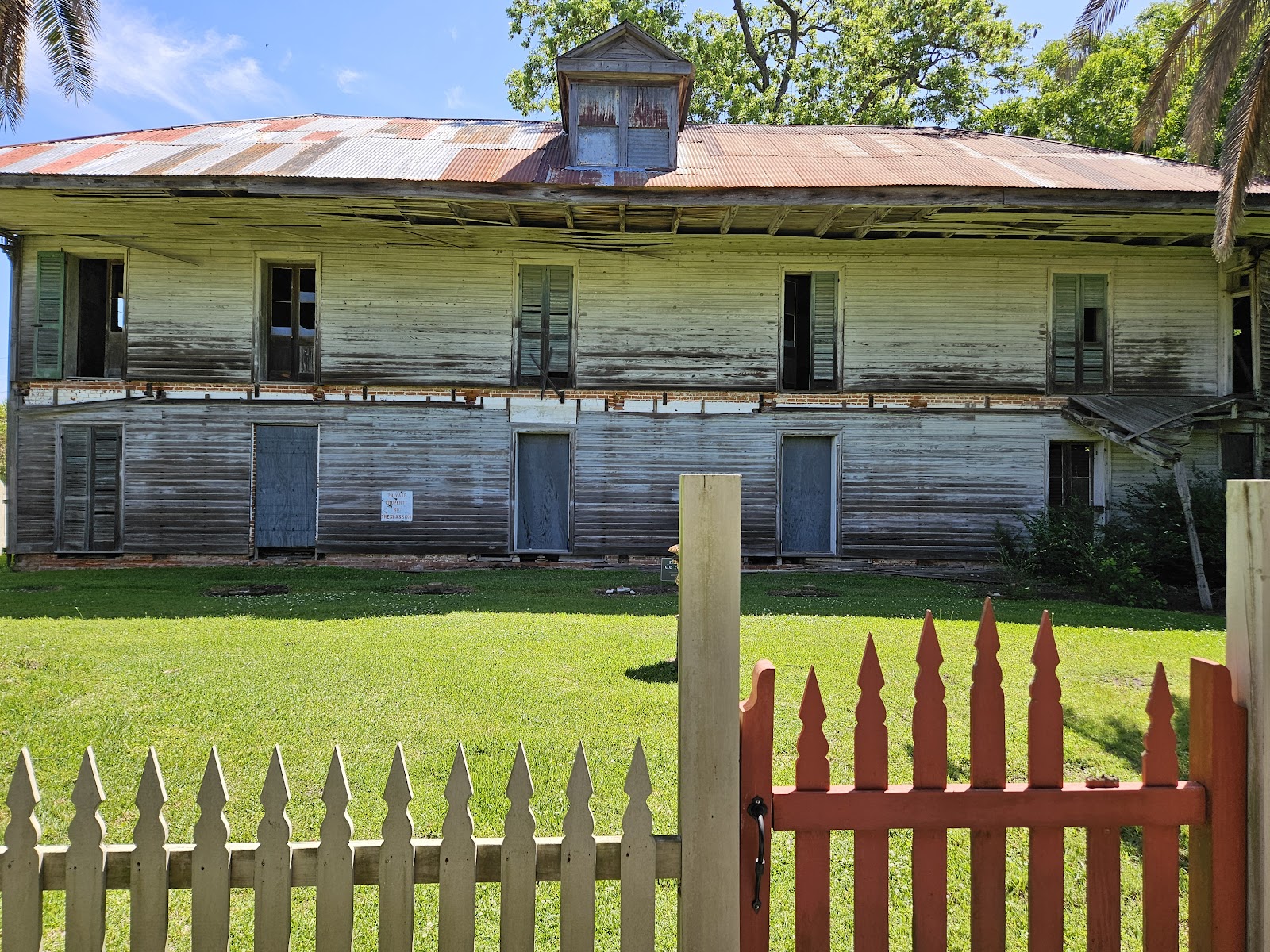
For the photographer that has a direct working consequence. Keep the wedding coverage to the house, the gallery, the oaks and the grounds, and leave the interpretive areas and any reconstructed quarters out of it entirely. Using those buildings as a picturesque backdrop is the specific failure that gets this genre of venue written about badly, and it happens by accident rather than intent, because weathered timber photographs well and nobody stopped to ask what building it was. Decide it with the couple in advance; it costs nothing.
It does not suit a long lens used lazily. The house is compact and the grounds are modest, so there is less room to back up than at a large estate, and a photographer who works exclusively at a hundred and thirty-five millimetres will run out of distance. Bring something in the thirty-five to fifty range and expect to use it.
It does not suit anyone expecting a river view. The Mississippi here runs between artificial levees at a level higher than the surrounding land, so a grass embankment blocks it completely and the strip beyond is wooded. There is no frame of this house with the river behind it and nobody should be promised one.
The honest summary: if the couple want character, colour and a house that is specifically itself, at modest numbers, and they have thought about what the place is, this is a good and unusual venue. If they want grandeur, scale, or a pale palette, it will be a mild fight from the engagement to the album. Knowing which you have at the enquiry stage is the most useful thing in this guide.
The colour problem, the River Road, and the year
Take the colour first, because it is the one technical thing that will damage files if it is not handled.
A painted surface in direct sunlight reflects light of its own colour, and it does so far more strongly than photographers expect. Stand someone a metre from a sunlit ochre wall and their skin has a yellow-orange cast on it. A metre from a sunlit red wall and the cast reads as sunburn. This is not a white-balance problem — the coloured light is genuinely falling on the face, so correcting it globally shifts everything else in frame and correcting it locally looks like a repair.
Distance is the only real control. Three or four metres between subject and a sunlit coloured wall removes almost all of it, because the wall then subtends a smaller angle and contributes proportionally less. If the room does not allow three metres, find the same wall in shade instead — a shaded coloured wall still reads as colour in the background while throwing almost nothing forward.
Diagnose it rather than guessing. One frame of a hand against the wall and one a metre away shows the difference immediately, and it is often a full correction step. That takes ten seconds and it will save an hour.
Then use the colour deliberately, which is the fun part. Get the camera square to a large continuous painted field so the plane reads as a plane, stop down to f/5.6 or f/8 so the surface is properly sharp, put the subject off centre and reasonably small, and expose the wall two thirds to one stop under where the meter puts it. Saturation reads highest slightly underexposed; a coloured wall metered correctly looks pale and washed, and at a stop under it gains body and looks the way the paint actually looks.
Now the region, which shapes a wedding day here more than at almost anywhere else in this collection.
Vacherie sits at about thirty degrees north, the lowest latitude of any mainland venue here, and two numbers follow. The midsummer noon sun reaches about eighty-three and a half degrees, within seven degrees of straight overhead, which dominates the middle of the day from May into September — no modelling, black eye sockets, and hard vertical light. And civil twilight runs about twenty-two minutes, among the shortest in this library, of which perhaps ten minutes is the usable balance point where the sky and the house lights match. The end of the day is brief and it has to be planned rather than discussed.
Humidity is the compensator and it is the strongest here outside Florida. Summer dewpoints in the mid to high seventies mean the air is saturated, and water vapour scatters light into shadows — a sunlit lawn in July carries about two and a half stops less shadow contrast than the same sun angle in Arizona. Shadow edges are soft, eye sockets hold detail, and midday open shade is genuinely workable. The costs are a pale washed sky, haze on long lenses, and a lens that fogs within seconds coming from air conditioning into this air, which on a day moving between a cooled room and a July gallery is a recurring event rather than a one-off.
The land is delta sediment and completely flat, with the highest ground being the natural levee beside the channel — which is why the houses are strung along the river. There is no relief at all: no elevated viewpoint, no slope to separate a subject from a background, and a level horizon in every direction, which makes any camera tilt immediately obvious.
The crop around the property is sugarcane, and it gives the year a shape found nowhere else in this collection. Cane grows through summer to two or three metres, turning the surrounding fields into a green wall that blocks the middle distance entirely. Grinding season runs from October into January, and afterwards the same fields are flat stubble with an open horizon. So the landscape context changes completely between September and December, and it is worth knowing which you will have.
January through April is the season and the reversal is emphatic. Mild, comparatively dry, sunny, with a February noon sun near forty-five degrees that models rather than flattens, azaleas through late February and March, and evergreen live oaks with year-round Spanish moss so that a January frame looks much like an October one. This is by a wide margin the best time to photograph here.
May through September is the constraint. Nineties with high-seventies dewpoints, in formal clothing, outdoors, is a welfare matter before a photographic one, and mosquitoes on the River Road in summer will affect how long anybody stands anywhere. Louisiana also receives among the highest lightning densities in the country, with near-daily afternoon convection in the wet season, so a covered alternative must genuinely exist and be reachable in minutes. Hurricane season runs June through November and peaks in August and September; a named storm in the Gulf a week out disrupts travel and suppliers whether or not it lands nearby.
The compensation is the half hour after a cell passes, and here it is worth more than at most venues because of the paint. Wet painted timber is glossy, and a glossy coloured surface picks up a specular sheen from the sky that a dry matte one never does — so the building is at its most saturated and most three-dimensional immediately after rain. Add wet gravel reflecting the sky, foliage at full colour, resurrection fern greened up on the oak limbs within hours of a shower, and a low sun under a broken ceiling. If a storm goes through at six, wait twenty minutes.
One closing note. The property is rural and genuinely dark after those twenty-two minutes are gone, with no ambient to work with at all. Everything after dusk is lit by you, and it is worth arriving knowing that rather than discovering it.
More frames from The Laura Plantation
The Laura Plantation wedding photography: common questions
How is this different from the other River Road houses?
It is Creole rather than Greek Revival: a raised main floor over a brick ground level, a broad hipped roof, a deep front gallery, rooms opening onto the gallery rather than off a corridor — and painted in strong period ochres, reds and greens rather than white. Couples browse these houses as a category and then book one without registering that they are not interchangeable. If the reference images are white columns and long avenues, a different house on the same road is the right answer.
What does the paint do to photographs?
A painted surface in sunlight reflects light of its own colour, strongly. A metre from a sunlit ochre wall and skin has a yellow-orange cast; a metre from red and it reads as sunburn. It is not a white-balance problem, because the coloured light is genuinely on the face. Distance is the only control — three or four metres removes almost all of it — or use the same wall in shade, which reads as colour in the background while throwing almost nothing forward.
How do you use the colour well?
Square to a large continuous painted field so the plane reads as a plane, stopped to f/5.6 or f/8 so the surface is sharp, subject off centre and reasonably small, and the wall exposed two thirds to one stop under the meter. Saturation reads highest slightly underexposed — metered correctly a coloured wall looks pale and washed, and a stop under it gains body and looks like the paint actually looks.
Who should not book this venue?
Anyone whose references are white columns, anyone with a guest count too large for domestic-scale rooms — which in this climate means being outdoors in high-seventies dewpoints and near-daily lightning — anyone whose palette is ivory and sage, since there is no way to make an ochre wall quiet, and anyone who would prefer the site’s history kept in the background. This site puts the enslaved community at the centre of its interpretation by design, and that is present while your wedding is happening.
What should we know about the history?
This was a sugar plantation, which is to say a forced-labour camp, and sugar was among the most lethal agricultural industries in North America. What distinguishes Laura is that an unusual body of records survives, so the enslaved community here is documented by name and circumstance rather than anonymously, and the site is known for putting that at the centre of its public interpretation. That is better practice than some comparable properties manage and it does not resolve the tension of hosting weddings. Decide deliberately either way.
When is the best time of year?
January through April, clearly. Mild, comparatively dry and sunny, with a February noon sun near forty-five degrees that models a face properly, azaleas in late February and March, and evergreen live oaks with year-round Spanish moss so a January frame looks much like an October one. Also note the cane: it grows to two or three metres and walls the middle distance in from summer until grinding season, then the same fields are open stubble from late autumn.
More Louisiana venue guides
We are writing a photographer’s guide to every venue we would happily shoot in Louisiana. Here are three more, plus the full index:
- The Oak Alley Plantation, Vacherie: One Frame, and How It Is Made
- The San Francisco Plantation, Garyville: The Problem, and Four Ways Out of It
- The Audubon Aquarium: Field Notes on Photographing Through Glass
Planning a wedding at The Laura Plantation?
Character, colour and modest numbers — or the wrong house. Tell us your date.