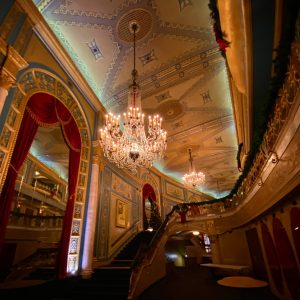
 The Westin Book Cadillac, Detroit: A Walk Up Through a Restored 1924 Hotel
The Henry Ford Museum, Dearborn: The Problem, and Four Ways Out of It
A room measured in acres. Normal lighting simply does not reach.
The problem here is scale, and it is larger than any other scale problem in this library.
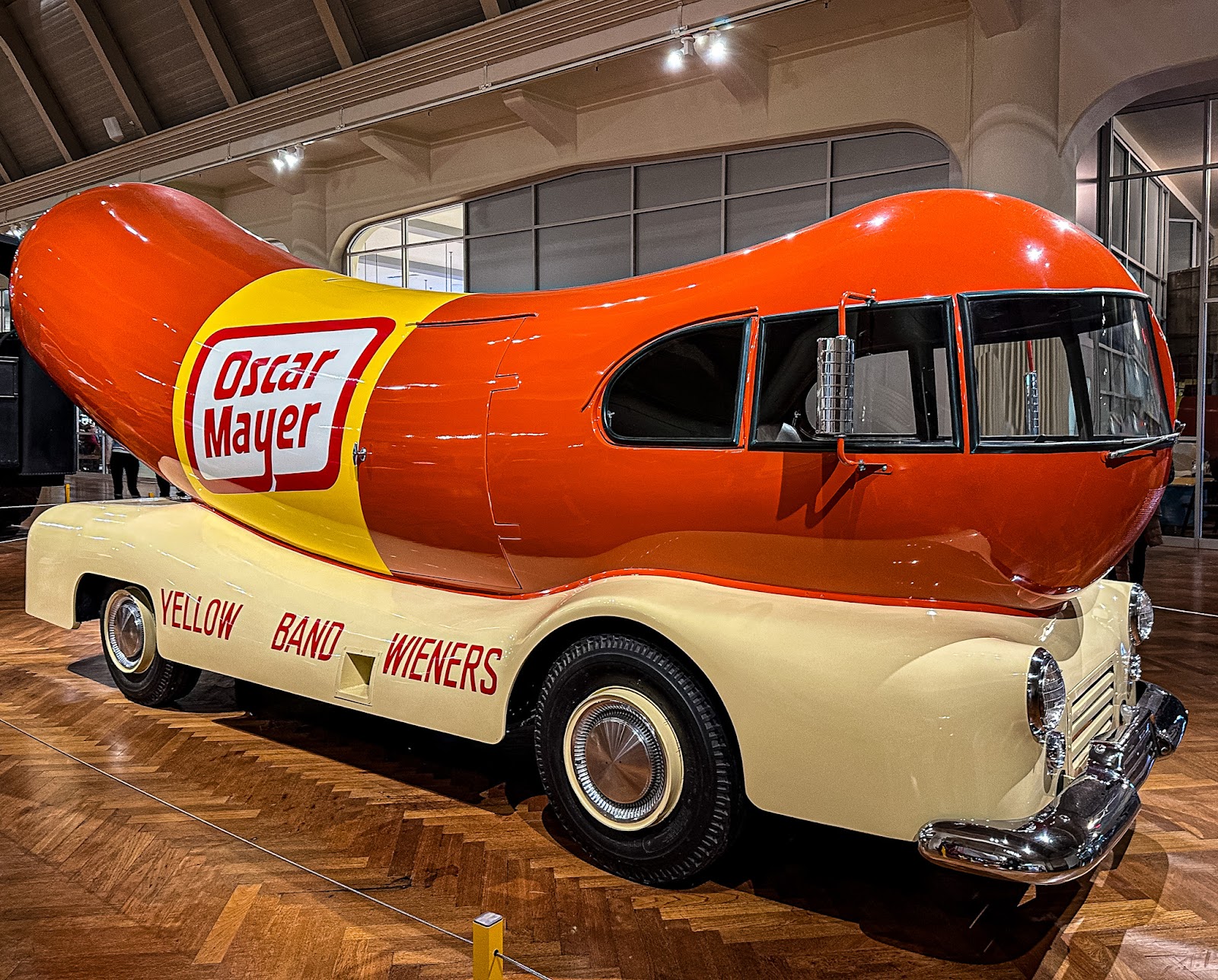
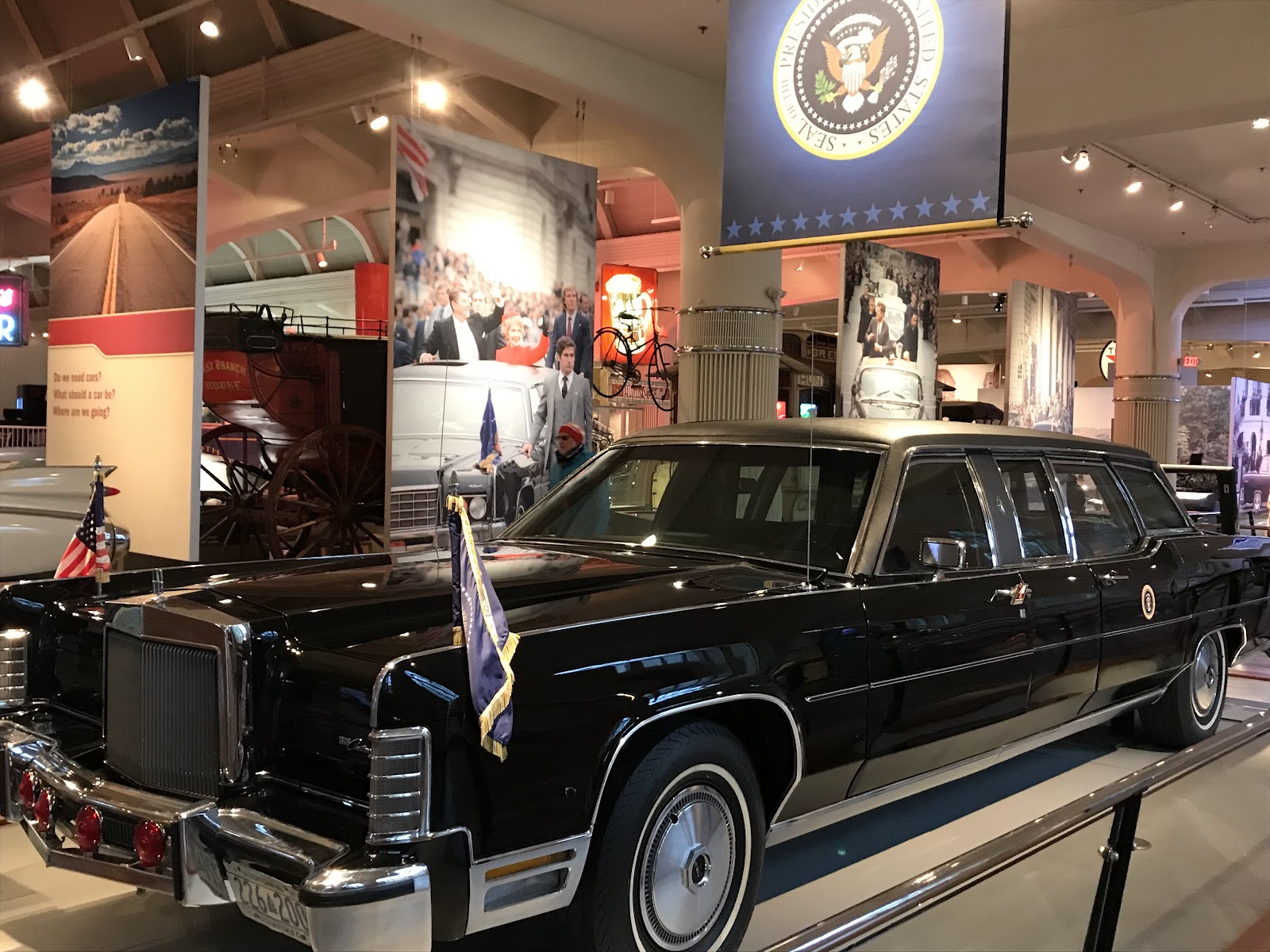
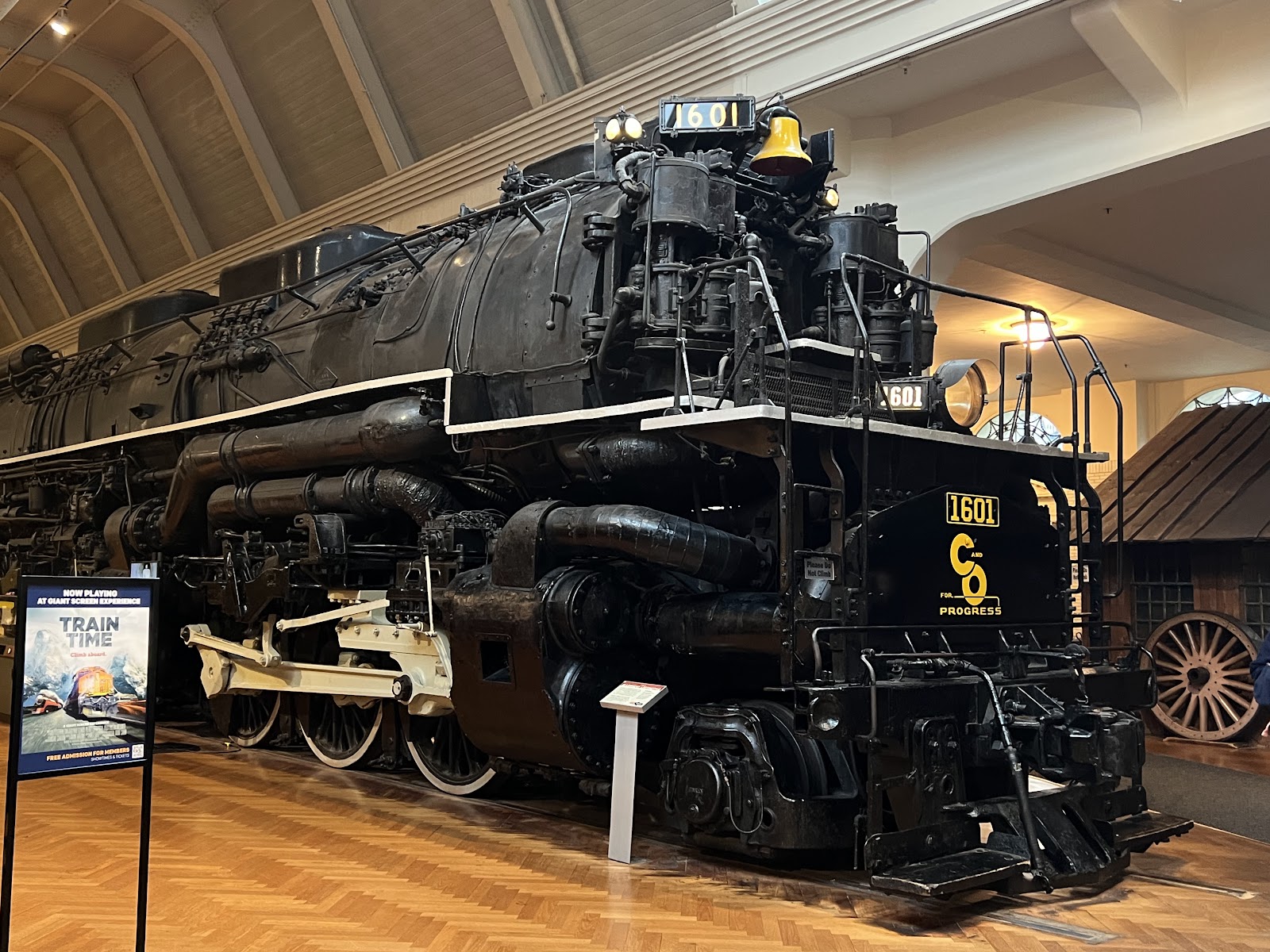
The main exhibition hall at a museum of this kind covers something in the order of twelve acres under a single roof, and it holds objects to match: locomotives, aircraft, buses, presidential limousines, industrial machinery. The ceiling is high, the sightlines run for well over a hundred metres, and the objects are the size of buildings.
That defeats normal wedding lighting completely, and the reason is the inverse-square law. A flash set correctly for a subject at three metres is two stops down at six and four stops down at twelve — so in a hall where the nearest interesting object may be twenty metres away, nothing a photographer carries will light the background at all.
The consequence is a specific and very common failure: a brightly lit couple standing in front of a dark indistinct cavern, in which the locomotive that was the whole reason for choosing the venue is invisible.
The second difficulty is the lighting that does exist. A hall like this is lit for wayfinding and for the exhibits, which means high-level fixtures, spot lighting on individual objects, and a mixture of colour temperatures across the space. It is bright enough to see by and nothing like bright enough to photograph a face by at a usable shutter speed.
The third is that the exhibits are extraordinary and they compete. A steam locomotive is a more interesting object than almost anyone’s wedding party, and a frame that contains both without a plan will be a photograph of a locomotive with people near it.
The compensation is that no other venue looks remotely like this. The pictures are unmistakable, and for a couple who want that, nothing else will do.
Dearborn sits at about forty-two and a quarter degrees north at roughly six hundred feet, in the Detroit metropolitan area. The June noon sun reaches around seventy-one degrees, the December noon sun about twenty-four and a half, and civil twilight is roughly thirty-one minutes — all of which matters only for the minutes spent outside.
What follows is that problem and four ways out of it. We have not photographed a wedding here; which halls are bookable, whether exhibit lighting stays on and the permitted hours are questions for their team.
The Henry Ford Museum at a glance
| Where | A vast indoor museum of American industry in Dearborn, Michigan |
| The problem | A twelve-acre hall. Nothing portable lights a background twenty metres away |
| The failure mode | A lit couple in front of a dark cavern, with the locomotive invisible |
| The compensation | No other venue looks remotely like this |
| Ask first | Whether exhibit lighting stays on during your event |
Way one: let the building light the building
The first and most important answer is to stop trying to light the hall and to use its own lighting as the background exposure.
The method is the one that works in any large dark interior: set the ambient exposure so the space reads properly, then add only enough light to bring the subject up within it. That means a slow shutter, a wide aperture and a high ISO — and it means the background is lit by the museum rather than by you.
In practice: a thirtieth to a fifteenth of a second, a wide aperture, and whatever ISO makes the exhibits read. That will render the locomotive, the aircraft and the roof structure exactly as the museum intends, because the museum has already lit them.
Then one source on the couple, through a modifier, at a level that puts them perhaps half a stop to a stop above the ambient. Not four stops above, which is the instinct and which produces the lit-couple-in-a-cavern failure — just enough that they are clearly the subject.
A slow shutter needs the couple still, which is a matter of telling them rather than hoping. At a fifteenth they must hold for a moment; the flash freezes them, but ambient ghosting will show if they move substantially. Ninety seconds of cooperation buys the frame.
A tripod makes this considerably easier and it is worth carrying one even if nothing else. At a fifteenth of a second hand-held with a wide lens the frame is usually acceptable; on a tripod it is reliably sharp and the ISO can come down two stops, which in a dim hall is a visible difference in quality.
The colour needs one decision. Museum hall lighting is mixed — often cool overhead fixtures with warmer spots on individual exhibits — and there is no white balance that serves all of it. The working answer is to gel the key to approximate the dominant ambient, set white balance on skin, and let the exhibit spots read warm or cool as they fall.
What fails is neutralising everything, which flattens the colour variation that makes a large industrial hall look like one.
One further point specific to enormous rooms: the falloff behind the subject is your friend rather than your enemy, once the ambient is doing the background. Because your own light dies within a few metres, it will not spill onto the exhibits and flatten them — so the couple can be lit hard and the hall remains as the museum lit it. In a small room that separation is impossible.
So the counterintuitive summary is that a twelve-acre hall gives more control over the relationship between subject and background than a normal room does, provided the background exposure is left to the building.
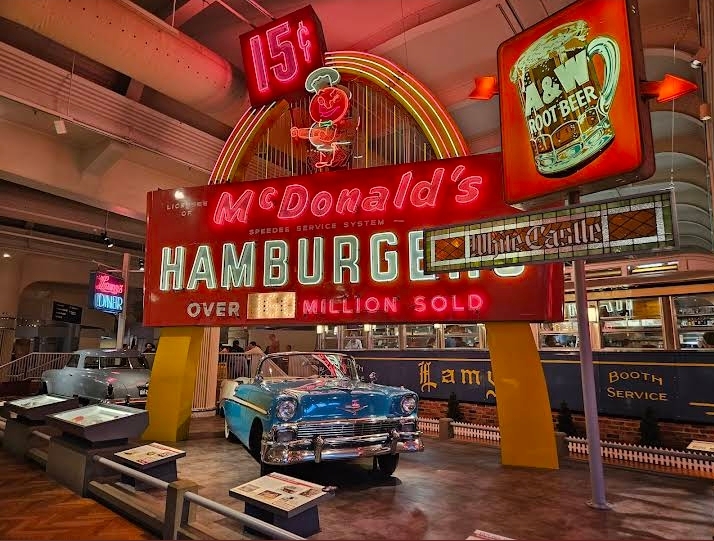
Ways two and three: get close, and use the geometry
The second answer is proximity, and it is the simplest.
If nothing you carry reaches twenty metres, then work at two. Stand the couple against a single object — a locomotive’s driving wheel, an aircraft’s fuselage, a radiator grille, a row of headlamps — close enough that one source lights both them and the surface behind.
That converts an impossible hall into a manageable set. An object the size of a locomotive provides several distinct backgrounds within a few metres of each other: the wheels, the boiler, the cab, the coupling rods — each a different texture and scale, all reachable with the same light.
Close work also solves the competition problem. A frame containing the whole locomotive and a couple is a photograph of a locomotive; a frame containing a couple and a metre of riveted boiler plate is a portrait with an unmistakable sense of place. The second is nearly always the better picture.
Texture is the reason it works. Industrial objects of this period are riveted, cast, painted and worn, and raking a light across such a surface at a shallow angle picks out every rivet and casting mark. Light thrown flat at it records colour; light raked across it records the object. The difference is a metre of stand position.
The third answer is geometry, which a hall like this has in abundance.
Enormous interior volumes are usually spanned by repetitive structure — steel trusses, roof lights, column grids — and repetition photographed with a moderate telephoto compresses into rhythm. A camera low on the axis of a column line, with a couple several bays down it, gives depth that no single object provides.
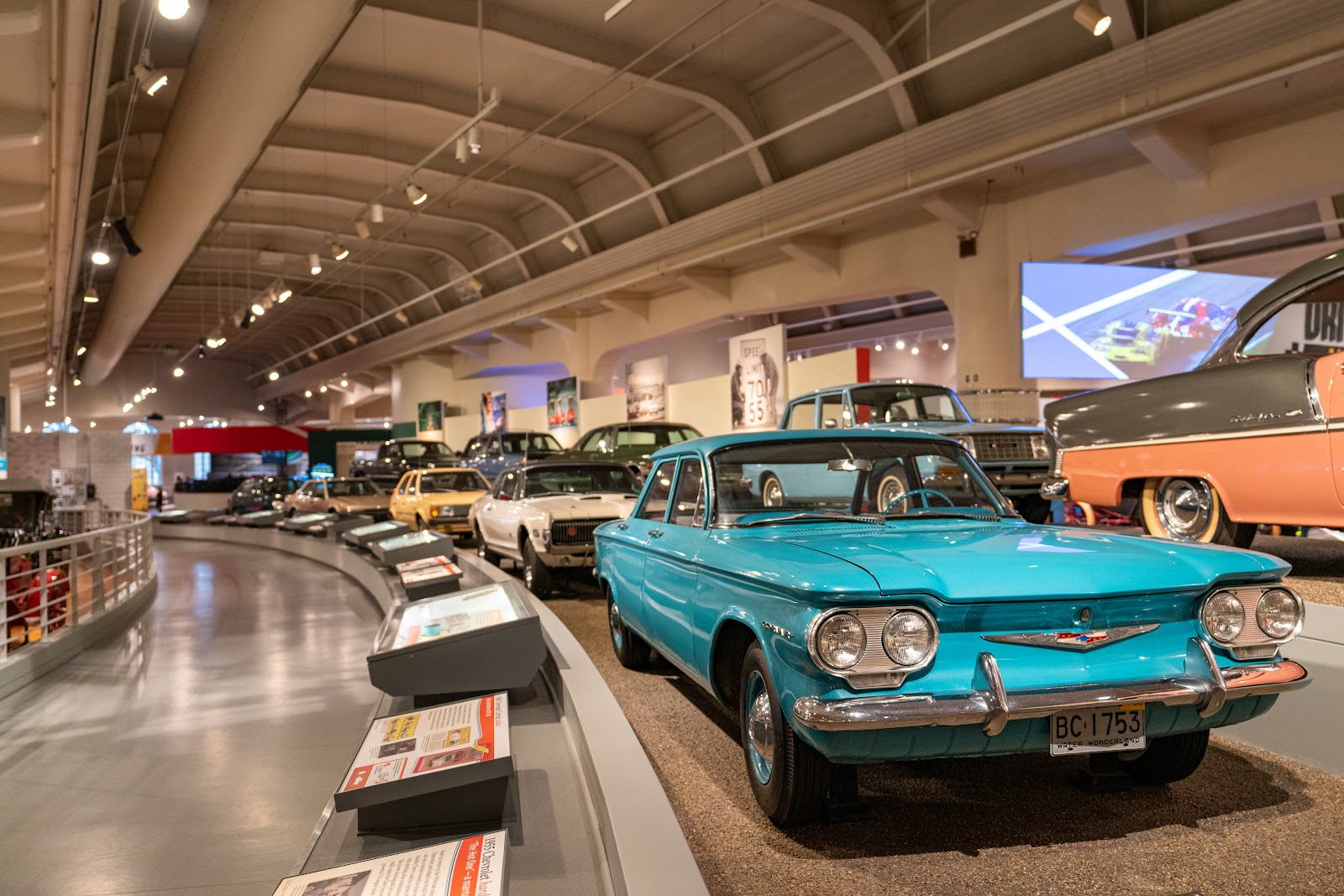
The exhibits themselves are frequently arranged in rows, and a row of aircraft or automobiles receding into the distance is the same compression frame with better content. It wants the camera low and centred on the row, and it wants a long lens.
Symmetry is available and worth using once. A large industrial object photographed square on its centre line — a locomotive head-on, an aircraft nose-on — with the couple centred beneath it is a formal frame with real power, and it suits the subject. One of those per wedding is enough.
Scale needs a reference and the couple provide it. This is the one situation in which small figures are actively good: a couple rendered small beneath a locomotive’s front end communicates the size of the machine in a way no empty frame can. So the wide frames should keep them small deliberately rather than treating that as a compromise.
The floors are worth a note. A hall of this kind typically has a hard polished or sealed floor, which is more reflective than it looks and which returns a usable amount of light upward — filling under the chin and lifting eye sockets slightly. It also shows reflections of the exhibits and the lighting, and a low camera can use that: a locomotive reflected in a polished floor doubles the object.
- Set the ambient so the museum lights the museum, then add just a stop on the couple
- A tripod buys two stops of ISO and reliable sharpness at a fifteenth
- Work at two metres against one object rather than twenty against the hall
- Rake the light across riveted and cast surfaces, never flat at them
- Keep the couple small in wide frames — they are the scale reference
Way four: the village, the outdoors and the year
The fourth answer is to leave the hall, because a museum of this kind usually has more than one kind of space and the others are easier.
An adjacent historic village — a collection of relocated period buildings arranged as a settlement — is a completely different photographic proposition from a twelve-acre shed. The buildings are domestic in scale, they have windows, and they sit in open ground with trees and lawns.
That means normal technique returns. A period house with tall sash windows gives strong side light with a gentle vertical falloff; a covered porch is a large soft source with a hard mask, controlled by depth from the open edge; a village street gives a receding rhythm of facades.
It also means the pictures look nothing like the hall’s, which is the point of using both. A day split between a vast industrial interior and a nineteenth-century village street produces far more range than either alone.
The outdoor half is worth planning around the season, because south-east Michigan gives four genuinely different conditions.
Summer is humid, and that has a measurable photographic effect: water vapour scatters light and fills shadows, so a sunlit street in July carries perhaps two stops less contrast than the same sun angle in a dry climate. Shadow edges are softer, eye sockets less black, and a midday portrait outdoors is workable in a way it is not in the desert.
Michigan hardwoods do the shade properly. Sugar maple and oak have dense rounded crowns of broad leaves and cast clean solid cover with no dapple to manage, so a midday portrait under one is straightforward. American beech is the background worth hunting — smooth pale grey bark, almost unmarked, so a mature trunk is effectively a natural studio backdrop.
Mid to late October is the best fortnight, with sugar and red maple turning scarlet and orange and oak and hickory going bronze. In this part of Michigan the colour runs a little later than the north of the state, and a warm dry autumn delays and dulls it while a cool wet one intensifies it — so plan a fortnight either side of the third week rather than a specific weekend.
Winter is short on daylight — about nine hours in December — and frequently overcast, with genuine snow. For a village street that flat light is soft and even and kind to faces, and it gives the architecture nothing, because timber and brick without shadow lose their modelling.
Snow, though, is a real asset on a period village, reducing the ground to clean tone and making the buildings read more clearly than grass does. And the enormous interior hall is entirely immune to any of it, which is the practical argument for a venue of this kind in a Michigan winter: the weather can take away the outdoor half and leave the distinctive half untouched.
Civil twilight here runs about thirty-one minutes, a workable blue hour. In December it lands around half past five, which puts a lit exterior frame before the reception; in June, near ten in the evening, which puts it comfortably after dinner.
One practical closing note. A large museum is a public institution with real constraints — what may be touched, where food and drink go, which exhibits are off limits, and a firm finish time because the building must be secured and reset for opening. Those are absolute, and a photographer who has scouted knows which of the good positions are actually available and which merely look available.
More frames from The Henry Ford Museum
The Henry Ford Museum wedding photography: common questions
Why doesn't normal lighting work here?
The inverse-square law. A flash correct at three metres is four stops down at twelve, so nothing portable lights a background twenty metres away in a twelve-acre hall.
So how do I photograph the hall?
Let the museum light it. Set a slow shutter and high ISO so the exhibits read as lit, then add only a stop of light on the couple — not four.
What is the more reliable approach?
Proximity. Work at two metres against one object — a driving wheel, a fuselage, a grille — close enough that one source covers subject and background.
How do I make industrial surfaces look good?
Rake the light across them at a shallow angle. Flat light records colour; raking light records every rivet and casting mark.
Should the couple be small or large?
Both, deliberately. Small in wide frames so they give scale to a locomotive; close in portraits so the frame is about them with a metre of boiler plate behind.
What else does the site offer?
An adjacent historic village, where normal technique returns — sash windows, porches, street rhythm — and which looks nothing like the hall.
More Michigan venue guides
We are writing a photographer’s guide to every venue we would happily shoot in Michigan. Here are three more, plus the full index:
- The Lake Bluff Inn & Suites, Mackinaw City: The One Decision That Governs Everything
- The Pinnacle Center, Hudsonville: What It Suits, and What It Does Not
- The Castle in the Country, Allegan: The Venue’s Own Logic
Planning a wedding at The Henry Ford Museum?
A twelve-acre room, worked properly. Tell us your date.