 Woodwinds, Branford: The Problem, and Four Ways Out
Branford House, Groton: A Walk Through the Site
Granite absorbs and water reflects. The whole site is the argument between those two.
This is a walk through the site in the order a wedding day tends to use it, and the reason to walk it rather than list it is that the building and the water work against each other.
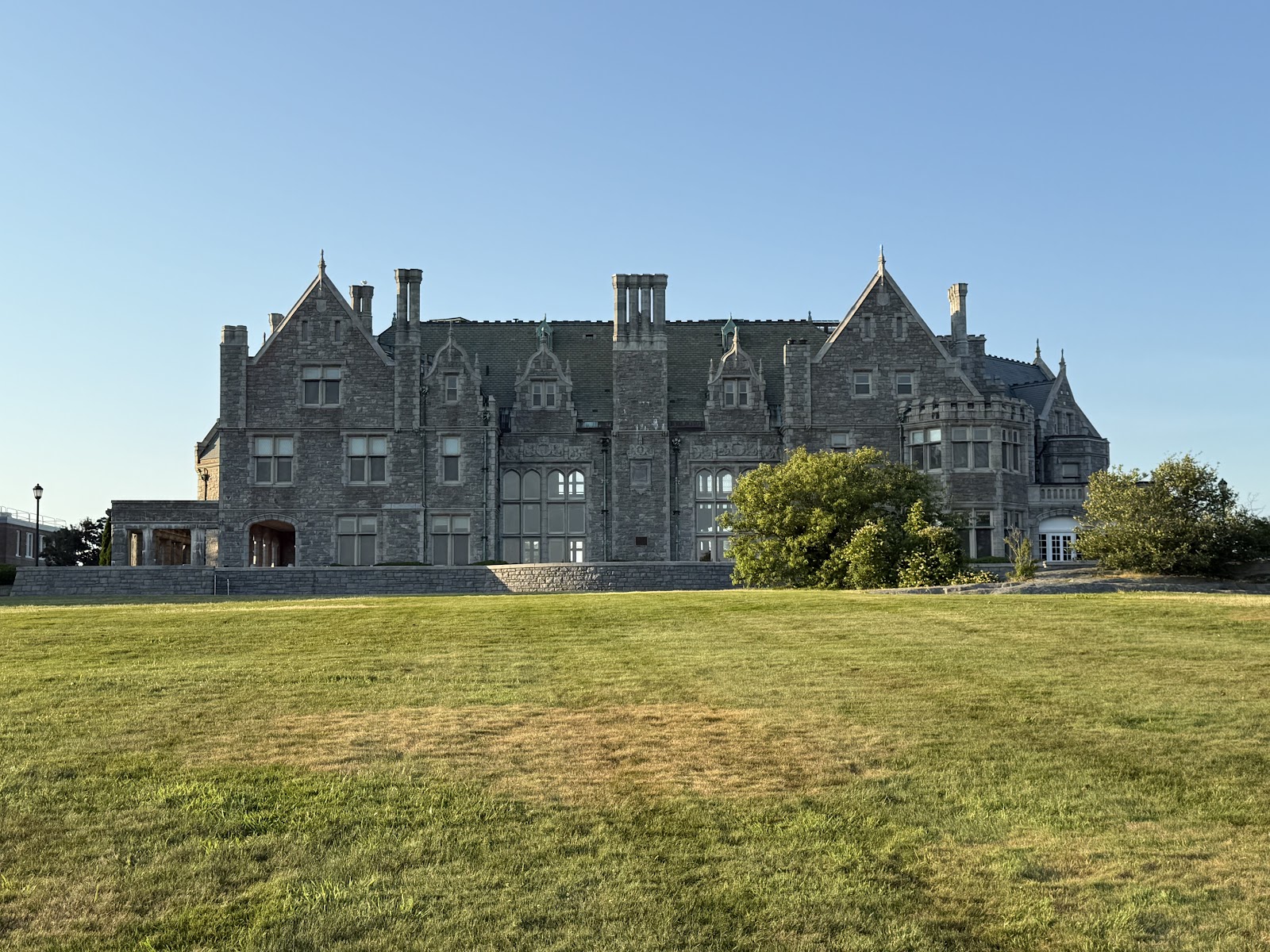
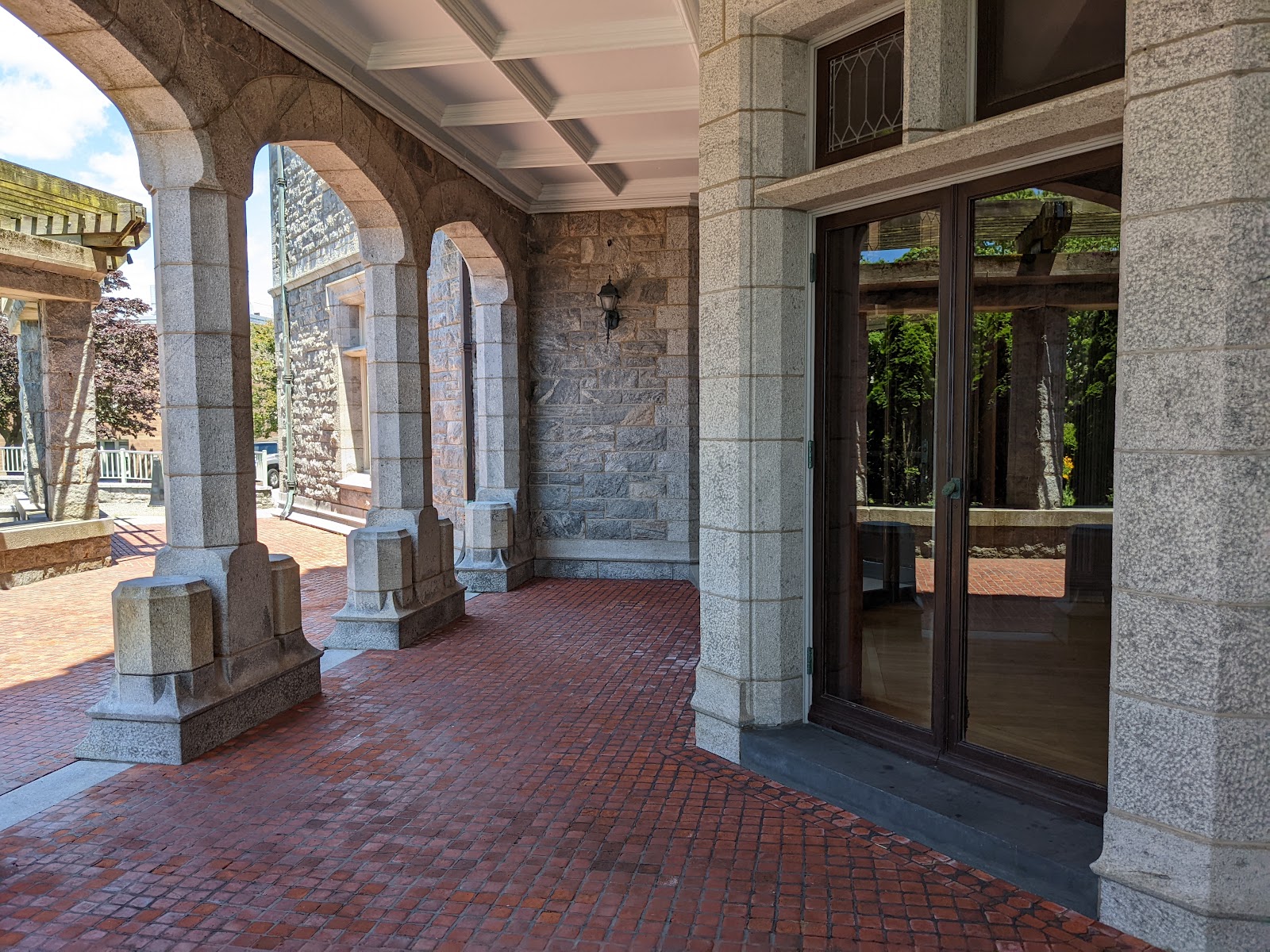
The stone is the first thing. A mansion of this period built in local granite is made of a material that absorbs — grey, hard, fine-grained and not at all reflective — which means the building’s interiors are darker than their windows suggest, its shaded walls read genuinely dark, and it gives separation behind a subject for nothing. In a guide full of pale stucco and white clapboard, granite behaves the opposite way.
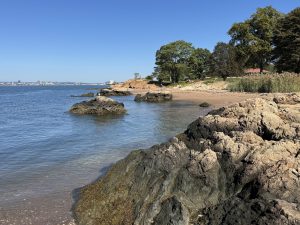
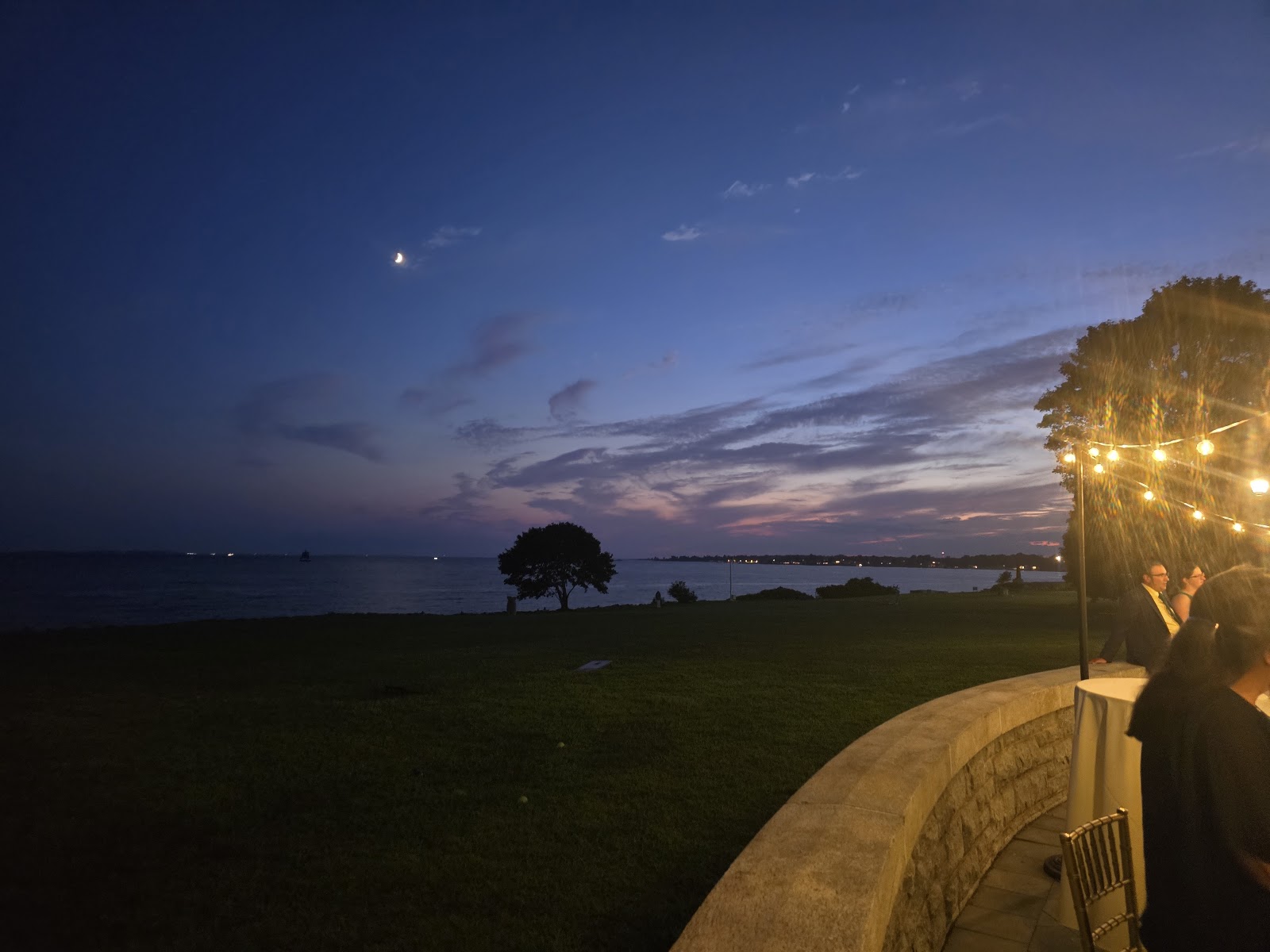
The water is the second, and it is the exact reverse. A point of land with the Sound on three sides has a large horizontal reflector all around it, which doubles the sky, throws light upward into faces, and makes the open ground several stops brighter than the building’s shade.
Those two conditions exist within a few paces of each other at every position on the property, which is the site’s central technical fact: the exposure and the white balance both change on crossing from stone to water, and resetting at each transition rather than once at the start is the discipline of the day.
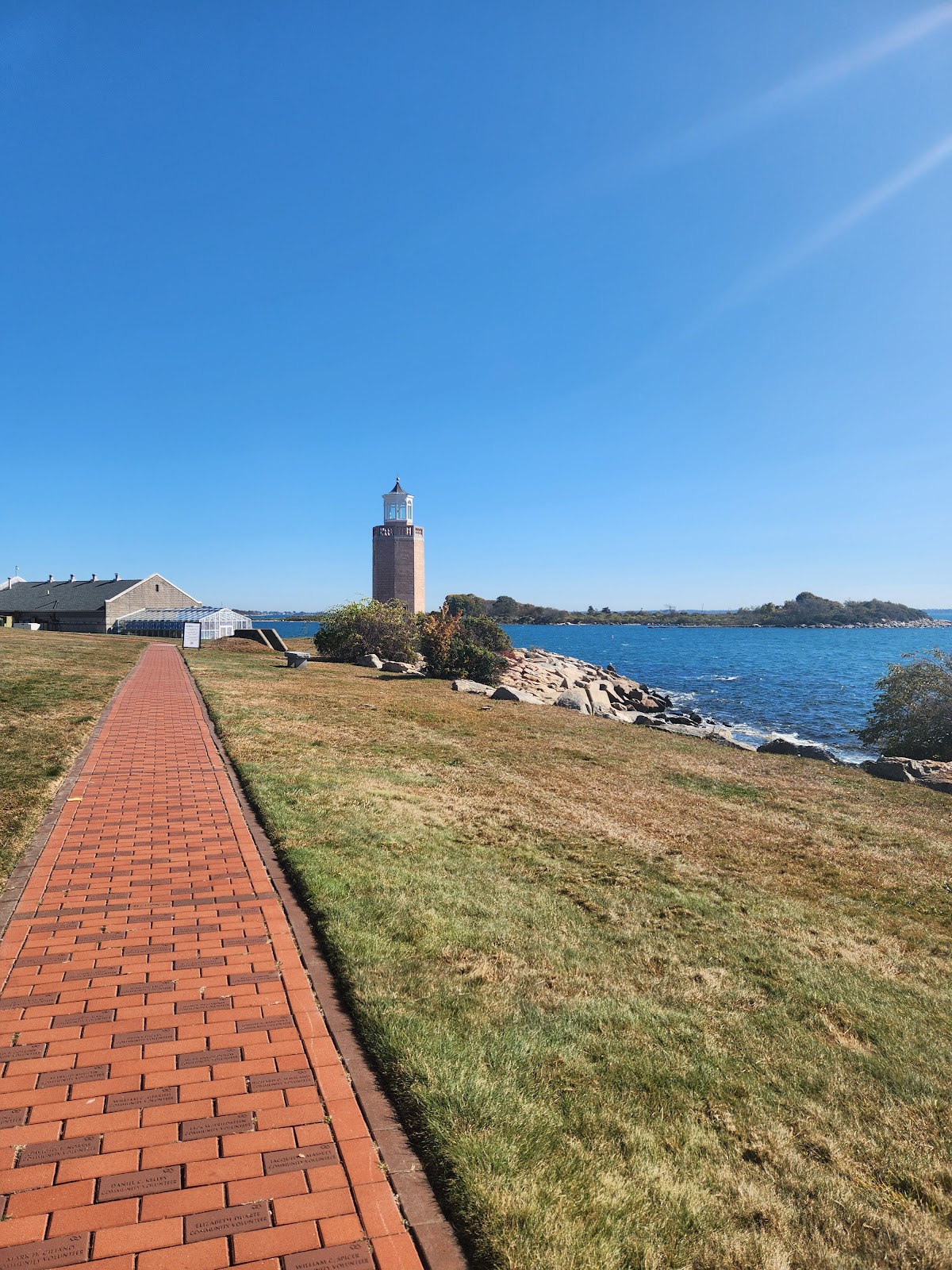
The third element is Long Island Sound itself, which behaves unlike open ocean. It is relatively shallow and sheltered by Long Island to the south, so there is little surf, the water is often calm enough to mirror properly, and the shoreline faces south rather than west — which means the sun crosses the water rather than setting into it.
We have not photographed a wedding at the Branford House; stone waterfront mansions on this coast behave consistently. Which rooms and grounds are available, what permits and guest limits apply, the covered alternative, whether interiors may be used and under what conditions, and what the equipment and access rules are are questions for the site’s administrators.
Branford House at a glance
| Where | A point at the eastern end of Long Island Sound, Groton |
| The stone | Granite absorbs — dark backgrounds and darker interiors than expected |
| The water | On three sides, reflecting upward and doubling the sky |
| The orientation | The shore faces south, so the sun crosses rather than sets into it |
| Ask first | Rooms and grounds available, permits, guest limits, equipment rules |
The house: granite, windows, and openings
Start indoors, because the interiors are the least weather-dependent part of the site and because their behaviour is consistent all year.
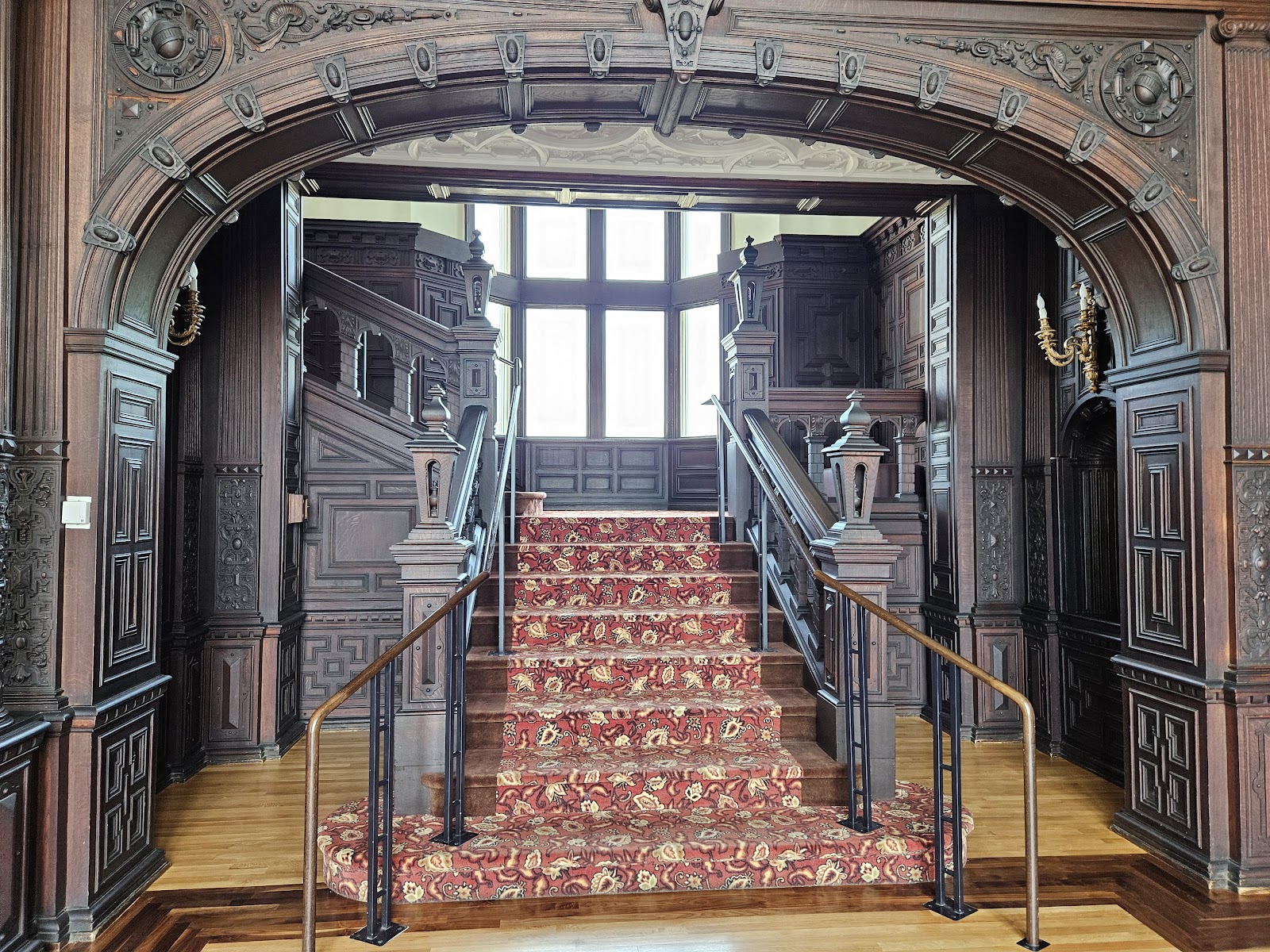
A stone mansion of this period has tall windows in deep reveals, high ceilings and substantial panelled or stone-lined rooms — because it was built before artificial light was any use, and because heavy materials were the style. That combination gives the best portrait light any historic building offers: horizontal light entering at head height and falling off steeply into a dark room.
The working position is a metre from the glass with the subject turned about forty-five degrees to it. That gives a lit side, a shadowed side and a gradient between — real modelling — with a background three or four metres further back sitting two or three stops down for nothing. The catchlight is the diagnostic: broad and low on the window side of each eye means the geometry is right.
Two free rules. Turn the room lights off, because warm bulbs mixing with cool daylight put two colours on one face and no single white balance renders both. And set a custom white balance on a face in position, because window light is the colour of whatever is outside — and here that is either open sky, which is cool, or water, which is cooler still.
Water-facing windows are worth singling out. A room looking at the Sound gets light that has bounced off water, which is both cool and slightly mobile — the brightness changes with the state of the surface, so a flat calm morning and a choppy afternoon are not the same exposure. Metering rather than assuming is the habit.
The metering correction indoors runs the way all dark interiors do: a meter looking at a dark stone or panelled room tries to lift it toward mid-grey, which overexposes the face by a couple of stops. So metering on skin, in manual, with the room allowed to stay dark. That near-black is the picture rather than an error.
Where a source is needed, one warm-gelled light at about a stop above the ambient, white balance set to the gel, does more than three. High ceilings mean the ceiling is not a usable bounce surface; a nearby pale wall, where one exists, is.
Openings in stone are the property’s most dependable positions. A doorway, arch or loggia in a thick granite wall restricts daylight to a horizontal band that models a face the way a window does, and unlike any tree it cannot dapple — which means it works at any hour of any day in any weather. Two or three metres in from the opening is the working distance.
Terraces and courtyards immediately against the house are the transitional ground, and they are where the site catches people out. Those spaces are in the building’s shade for part of the day, and granite shade is genuinely dark — while ten paces away, open ground beside water is three or four stops brighter and a different colour. Crossing that line without resetting is the commonest error at a waterfront stone house.
One more interior note specific to a granite building: the stone is cold, and in a New England winter it stays cold. Whether the house is properly heated for a winter event is a practical question with a definite answer, and it decides comfort more than any photographic consideration.
The grounds, the water, and the hour
Outside, the grounds of a waterfront mansion are open by design, because the point of them is the view. That means very little overhead cover: lawns have nothing above them, formal planting is at chest height or below, and the shade available is the building’s own or whatever mature trees have survived on an exposed point.
Trees on a coastal point are worth checking rather than assuming. Salt wind prunes and shapes them, so crowns are often one-sided and lower on the seaward face — which means a tree that looks like shade from one direction gives none from the other. Where there is hemlock, spruce or pine, that is the fuller shade; deciduous canopy here filters and dapples.
The lawn’s own behaviour changes with the hour. At midday it is flat and green with no modelling anywhere; in the last hour low sun rakes across it and puts texture in every blade. That difference is larger than people expect and it is free.
Water is the ground’s most useful feature and it does three separate things.
It reflects upward. A subject standing near the water’s edge is lit from below as well as above, which fills the shadows a high sun carves under eyes and chins — helpful, at the cost of uplight under the chin, which something solid on one side corrects. The diagnosis is to look at the chin in the first frame.
It mirrors. Long Island Sound is sheltered enough to go genuinely flat, and a calm surface doubles the sky, the far shore and anything standing at the margin. A reflection runs about a stop darker than what it reflects, which matters when metering a frame that contains both.
And it changes the exposure from hour to hour and day to day. Sunlit water is specular and clips easily; water under cloud is dark and matte; choppy water scatters and reads darker than calm water in the same light. The frame metered yesterday is not the frame today, which again argues for metering rather than assuming.
The orientation is the thing to understand about the light here and it is unusual in this guide. The Connecticut shore faces south across the Sound, which means the sun crosses the water through the day rather than setting into it — so there is no straightforward backlit-over-the-water sunset frame of the kind a west-facing coast gives.
What there is instead is better in some ways: side light across the water for most of the day, which gives texture on the surface rather than glare, and a long slanting path of broken reflection in the afternoon rather than a single blinding one. And at the ends of the day the sun is off to one side, which means a subject can be front-lit, side-lit or rim-lit simply by turning them — a flexibility a west-facing site does not have.
On a point with water on three sides, that flexibility is the whole advantage: whatever the light is doing, there is a side of the building that suits it, and walking round the house is faster than solving anything.
Wind is the constant practical fact on a coastal point and it comes off the water most afternoons in summer as a sea breeze. A lightstand is a liability, a held modifier is a sail and a veil is unpredictable — so handheld or bracketed is the configuration, planned from the start. The lee side of a granite building is substantial shelter and it is worth walking to.
Sound carries poorly into wind, which makes amplification a more important question outdoors here than the setting suggests. And salt air gets onto front elements and into equipment, which makes lens changes in shelter and a cloth in a pocket the whole of the answer.
The last hour is still the best light of the day, as everywhere. What is specific here is that because the sun is to the side rather than ahead, the frame does not have to be exposed for a bright sky — which means a single exposure frequently holds the whole scene, and the close gelled source that a west-facing site requires is often not needed at all. That is a genuine simplification.
- Reset exposure and white balance crossing from granite shade to open water
- Meter on skin indoors and let the stone go dark; that near-black is the frame
- Stone openings cannot dapple — the most dependable positions on site
- A south-facing shore gives side light all day and flexibility on three sides
- Handheld sources on a point; a granite wall is real shelter
The Connecticut shore year
The eastern end of Long Island Sound has a maritime version of a New England climate: the water moderates it, so the summers are cooler and the winters milder than inland Connecticut, and the seasons arrive a little later on the shore than twenty miles up the valley.
Winter is cold, with real freezing weather and snow in most years, and the Sound itself keeps the extremes off. A stone house on an exposed point is a cold place in a January wind, and whether it is properly heated is the question that decides a winter date.
What winter gives photographically is considerable. Snow is the best natural fill available outdoors, and against dark granite it is the widest brightness range on the property — expose for the snow, let the stone go black, and the frame builds itself. Snow also fools a meter by about two stops toward underexposure, so deliberate overexposure relative to the camera is the rule.
The December sun at this latitude reaches only about twenty-five degrees above the horizon, so the whole short day rakes rather than floods. Outdoors that removes any hard-light problem and models every course of stone; indoors it is decisive, because a low sun enters a tall window almost horizontally and travels three or four metres into a deep room rather than one. For a granite house, winter light is the best of the year.
Winter is also the clearest air of the year on this coast, which matters for long views across the Sound — and the water at its most dramatic, with nor’easters producing the heaviest weather the site sees.
Spring is late and slow on the shore, because the water keeps the land cool: bare trees into April, and a genuine chance of raw wet weather into May. When it arrives, fresh green transmitted light under new leaves is one of the most flattering conditions of the year, and the grounds of a mansion garden are at their fullest in late spring.
Summer is the season the site was built for and it is comfortable rather than hot: the Sound keeps the shore several degrees cooler than inland, and the afternoon sea breeze is reliable. Temperatures in the low eighties Fahrenheit with high humidity are typical, and afternoon thunderstorms are a real feature from June into August — which for a site with almost no outdoor cover makes a named covered alternative a requirement rather than a courtesy.
Humidity is the summer photographic factor. It softens contrast and reduces clarity at distance, which means long-lens frames across the Sound are hazier in July than in October — and it makes the light in the last hour warmer and more diffuse, which flatters skin.
The honest seasonal note for this coast is the hurricane and tropical storm season, which runs from roughly August into October. Direct hits are uncommon and the effects of a passing system are not: heavy rain, strong onshore wind, and a Sound that stops being calm. It cannot be planned for, only acknowledged, and it is a reason a covered alternative with real capacity matters for a September date.
Autumn is the best season and it is not close. Foliage on the Connecticut shore peaks a little later than inland — typically from the middle of October into early November — and because the region’s trees turn at different rates by species, sugar maple scarlet, red maple crimson, birch and hickory yellow and oak russet arrive over two or three weeks rather than one.
Against grey granite that colour is exceptional, for the same reason it works against barn timber: the stone is dark and neutral enough to hold it without competing. And autumn brings the clearest air, the calmest water, the most stable weather and the most comfortable temperatures of the year, which makes October the most reliable month on the property as well as the most beautiful.
More frames from Branford House
Branford House wedding photography: common questions
What does granite do to the light?
It absorbs. Interiors are darker than the windows suggest, shaded walls read genuinely dark, and a stone wall behind a subject gives separation for nothing.
What catches people out here?
The transition. Granite shade and open water are three or four stops and a colour apart, ten paces from each other, and both need resetting rather than averaging.
How does a south-facing shore differ from a west-facing one?
The sun crosses the water rather than setting into it. There is no simple backlit sunset frame, but there is side light all day and flexibility on three sides.
What is the most dependable position on site?
A doorway or arch in the stone. It restricts the light to a horizontal band, gives a dark surround, and unlike a tree it cannot dapple.
Do we need added light at the end of the day?
Often not, which is unusual. Because the sun is to the side rather than ahead, a single exposure frequently holds the whole scene.
When is the site at its best?
Mid-October into early November, when foliage against grey granite is exceptional and the air, the water and the weather are all at their most settled.
More Connecticut venue guides
We are writing a photographer’s guide to every venue we would happily shoot in Connecticut. Here are three more, plus the full index:
- Delamar Hotel, Greenwich: One Frame, and How It Is Made
- Eolia Mansion, Waterford: The Light Through the Day
- Fox Hill Inn, Brookfield: What It Suits and What It Does Not
Planning a wedding at Branford House?
Stone on one side, water on three. Tell us your date and we will walk it.