 Woodwinds, Branford: The Problem, and Four Ways Out
Barns at Wesleyan Hills, Middletown: The Building’s Own Logic
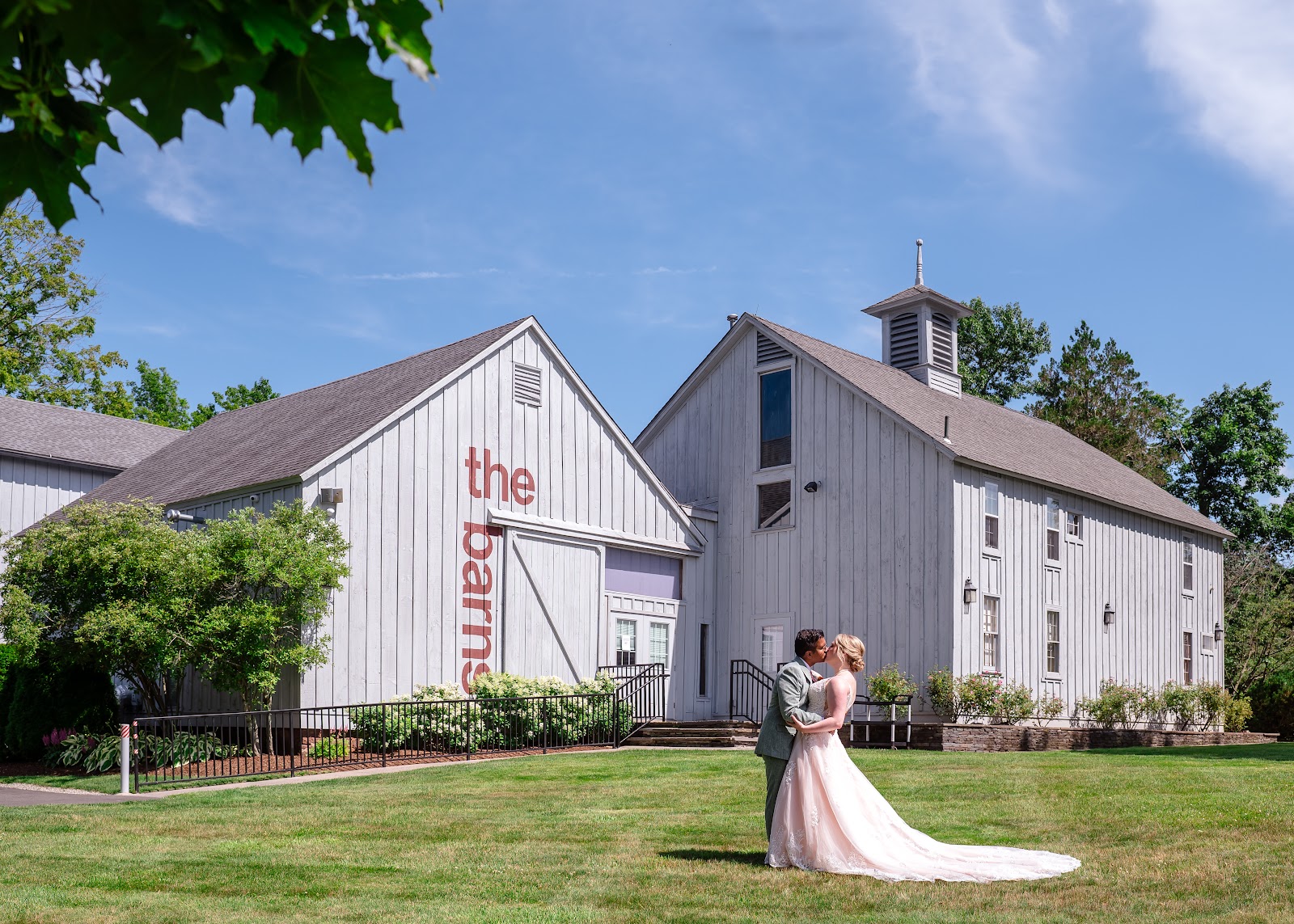
A barn was built to keep weather out, which is why it does the one thing a photographer wants most.
A New England post-and-beam barn was built for a purpose that had nothing to do with how anyone would look inside it, and the photographic logic of the building comes entirely from that purpose.
It was built to keep weather out and hay dry, which meant as few openings as possible. It was built from local timber, left rough and unpainted, which weathered to a dark grey-brown that absorbs almost all the light falling on it. And it needed one very large door so a loaded wagon could get in.
Those three facts produce the one thing a portrait photographer wants more than anything and rarely gets: a dark room with a single large opening in it. A subject standing inside that opening is lit horizontally from one direction and surrounded by a surface that reflects almost nothing — which means the light falls off roughly a stop per pace as you walk back into the building, and a background three metres behind a subject is simply gone.
Nothing has to be brought to make that work. The building does it, and it does it identically in any weather and at any hour of any season, which makes it the most reliable frame in this guide.
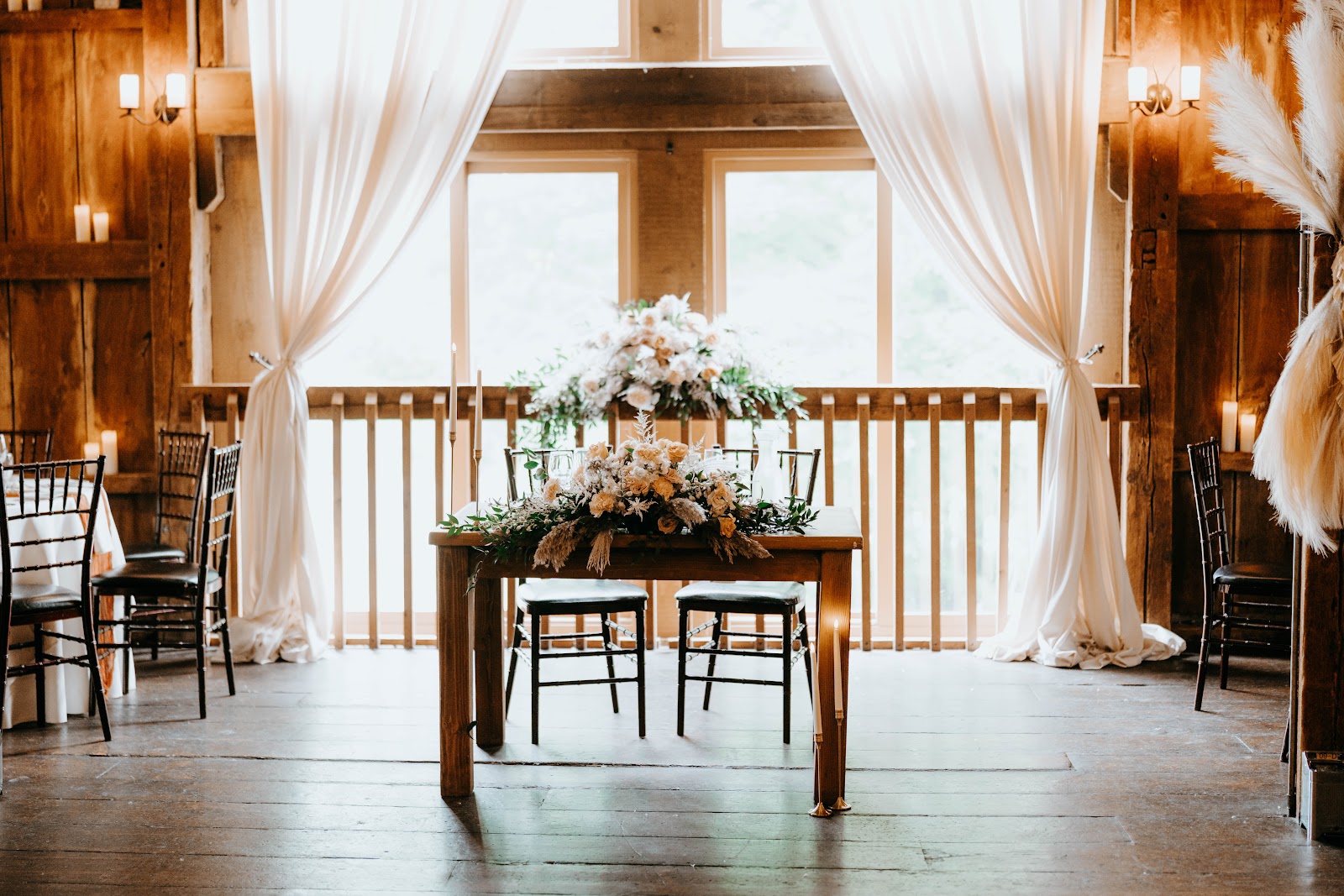
The fourth part of the logic is the frame itself: post-and-beam construction means the structure is visible — posts, tie beams, braces, rafters — which gives strong repeating lines and a sense of volume that a plastered room does not have.
We have not photographed a wedding at the Barns at Wesleyan Hills; New England post-and-beam barns behave consistently. Which buildings and outdoor areas are included, whether the interior lighting can be dimmed, what the covered alternative is for a ceremony, and whether there is usable power at the outdoor positions are questions for their team.
Barns at Wesleyan Hills at a glance
| Where | A converted post-and-beam barn at Middletown, central Connecticut |
| The logic | Few openings, dark unfinished wood, and one very large door |
| The frame | A subject in the big doorway: horizontal light, and nothing behind |
| The fall-off | Roughly a stop per pace walking back into the building |
| Ask first | Buildings included, lighting control, covered alternative, outdoor power |
The doorway, and the wood
The big door is the building’s best feature and the whole technique is knowing where to stand in it.
Two or three metres inside the opening is the working position, and it is a compromise between two failures. Too far in and there is not enough light on the face to hold it against the exterior, so the frame becomes a silhouette — a legitimate picture, but a different one. Too close to the edge and the overhead sky reaches the face again, which reintroduces the top light that the doorway exists to remove and flattens the modelling.
The catchlight tells you which. A low broad catchlight on the doorway side of each eye means the opening is doing the work. A catchlight high in the eye means the sky is still reaching and the position should move back.
The turn matters as much as the distance. Facing the door squarely gives flat even light; turning about forty-five degrees so the light crosses the face gives a lit side, a shadowed side and a gradient between them, which is what makes a face read as three-dimensional.
The wood is the other half of it and it is worth understanding what unpainted weathered timber does. It absorbs across the whole spectrum, which means two things. First, a barn interior is a stop or two darker than the eye estimates, because the eye adapts and the wood gives nothing back — so measure rather than guess, particularly if the last venue had white walls.
Second, it gives separation for free. There is no bounce, which is why the fall-off is so steep, and steep fall-off is exactly what puts a lit subject against a dark background without any lighting decision at all.
The exposure discipline follows. A meter looking at a large area of dark barn wood tries to lift it toward mid-grey, which overexposes the face by two stops or more — and the correct frame has a great deal of near-black in it, because that is the building. Metering on skin and working in manual is the whole of it, and it matters doubly at a barn because the exterior through the door will fool the same meter hard the other way a moment later.
There is also a colour characteristic. Old barn wood is warm-toned brown-grey, and light bouncing off it — what little does — is warm, while light coming in through the door from an open sky is cool. That means a face can be lit cool from the front and filled warm from the side, and a custom white balance set on a face in position renders it properly where a daylight preset does not.
Where added light is needed, the barn makes two demands. It must be close, because nothing bounces: the light reaching a face is only the light aimed at it, and it falls off with the square of distance, so a source at two metres needs roughly a quarter of the output of the same source at four. And it must be gelled warm to sit in the room’s own colour, with the white balance set to the gel.
Aiming a flash at the ceiling is the instinct to resist. A barn roof is high, dark and pitched, which means almost nothing comes back — and what does return is coloured by the timber. Direct through a modifier, or bounced off something brought for the purpose, is the working approach.
The frame, the reception, and the ground outside
Post-and-beam structure is the building’s compositional gift and it rewards being used deliberately rather than as a backdrop.
The posts and beams are strong repeating lines, which means a frame built along them reads as intended and a frame built across them reads as accidental. Standing square to a bay and letting the posts define the edges of the picture gives an architectural frame within the photograph; standing at a slight angle gives converging lines that fight each other.
The lines also make an out-of-level camera glaring. There is no forgiving texture in a barn — everything is straight — so square and level, checked rather than assumed.
Height is the other structural feature and it is usually underused. A barn is tall, and where there is a loft, a gallery or a stair, a position above the floor gives an entirely different picture: the volume of the building becomes legible, the people below read as small within it, and the roof structure frames the whole thing. It is the single most distinctive frame a barn offers and it takes nothing but climbing.
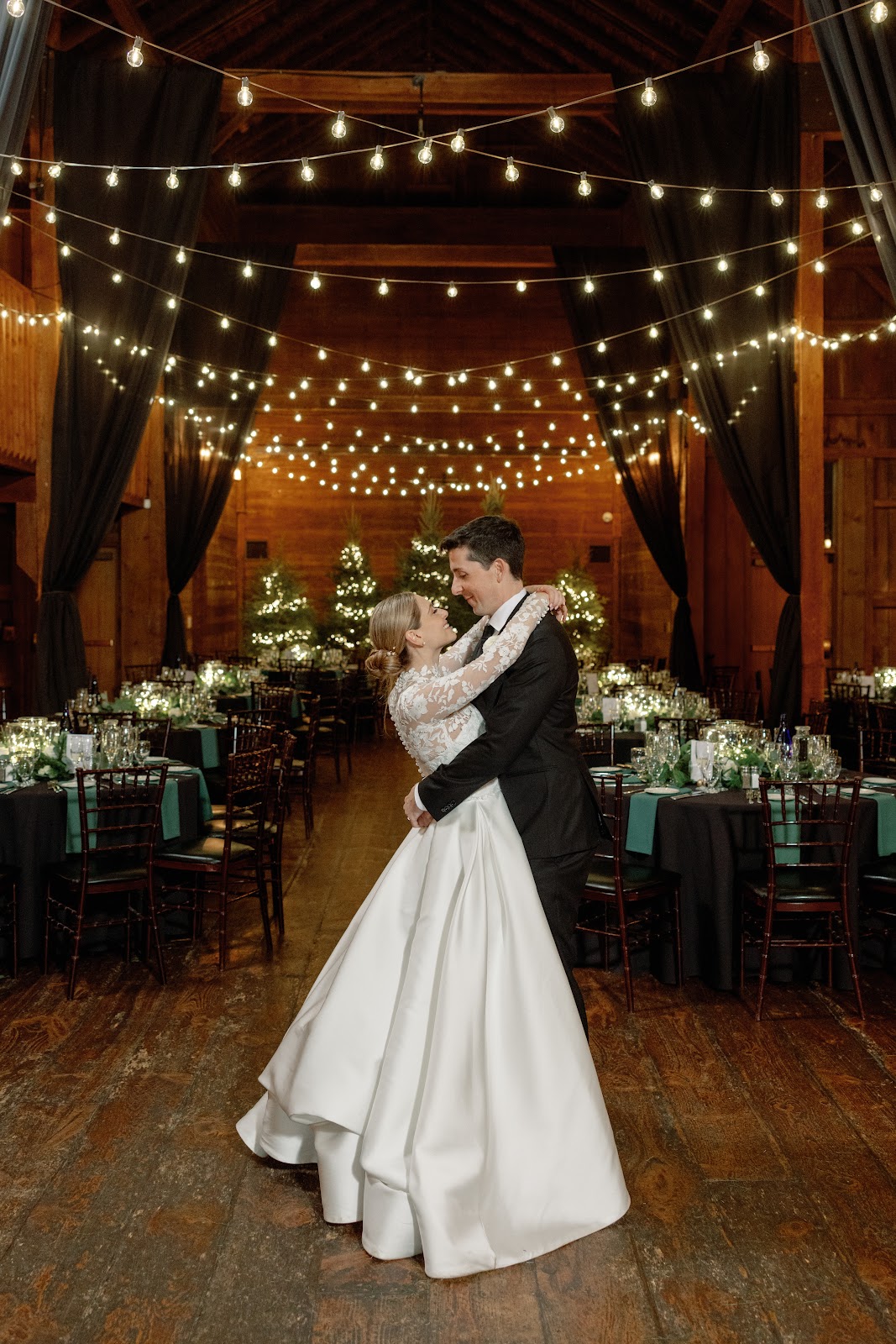
The reception in the evening is where the technical work concentrates, and a barn presents a specific version of the standard problem. String lights and festoon lighting are what such spaces are usually lit with, and they are decorative rather than functional: they read as bright points in the frame and they put almost nothing on a face, while the dark timber absorbs whatever they do give.
So the approach is the one that keeps the room and makes the faces readable. Expose the ambient for the room — deliberately about a stop or a stop and a half under what skin needs — so the lights keep their presence and the timber keeps its depth, then add one source for the faces, gelled warm to match the string lights, set just above what the ambient gives the skin, and diffused so it does not read as flash. The white balance goes to the gel.
The instinct to raise sensitivity until the room is bright is the thing to resist: it produces a flat orange picture of a space whose whole character is depth and shadow.
Whether the interior lighting can be dimmed is worth asking early, because a barn with adjustable lighting is a considerably easier room than one without.
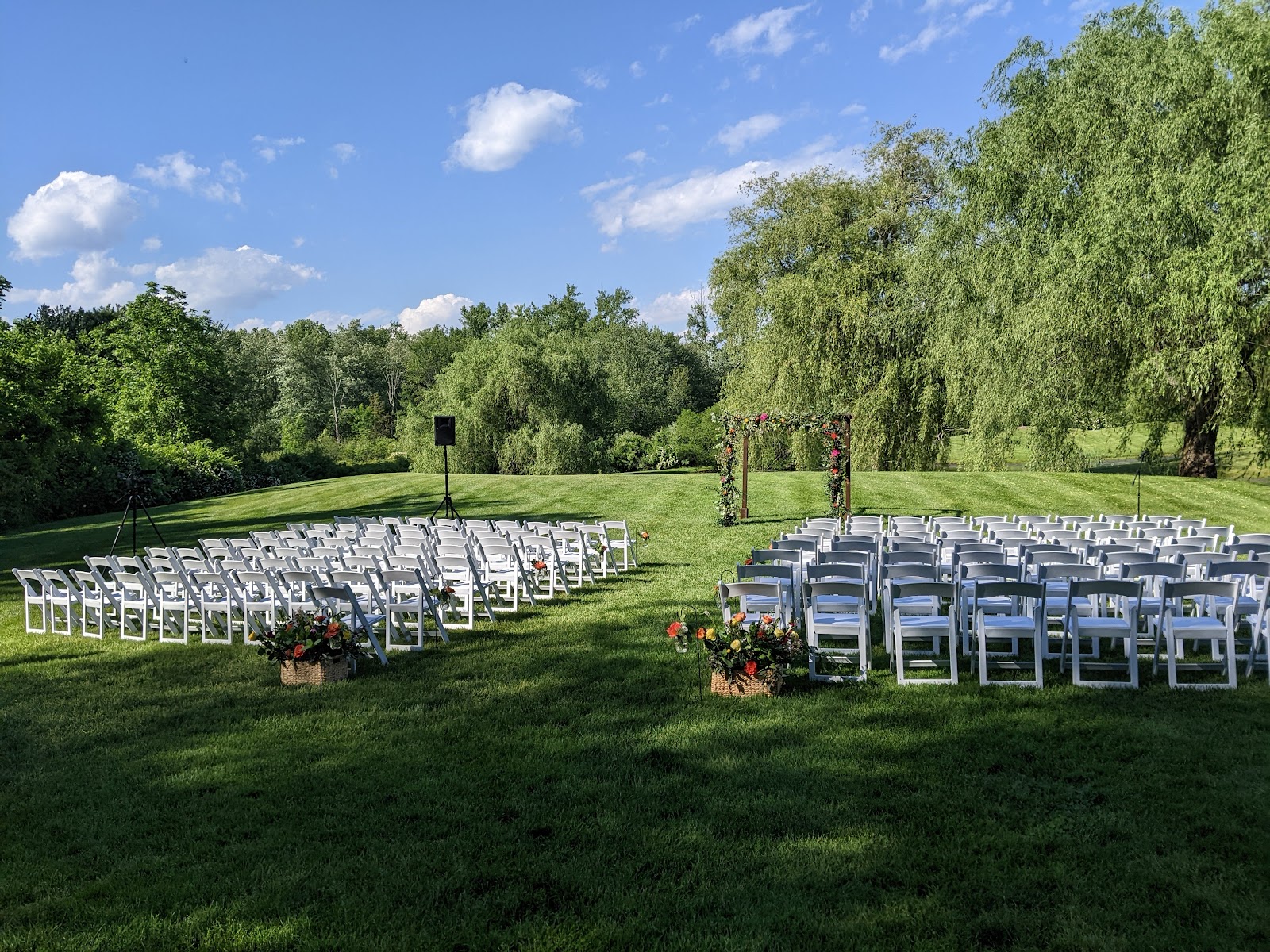
Outside, central Connecticut gives a New England landscape with real seasons and the ground has no shade on it beyond what the trees give. Summer sun here is high and, crucially, humid — which is different from the dry western sun in this guide: haze softens the edges of shadows a little and reduces long-lens clarity, but a face half in sun at midday is still unrecoverable.
The shade is deciduous canopy, and the region’s dominant trees — sugar and red maple, oak, birch — have broad flat leaves that filter as much as they block, which means they dapple. The test never changes: look at the face rather than the ground, and a bright patch on skin means move a metre. Where there is hemlock or white pine, that is denser and gives fuller shade.
What deciduous canopy gives instead is transmitted light, which is the best outdoor condition here. Broad thin leaves pass light through, so the light beneath a maple is soft, even and coloured by the leaves — green in summer, and in October the colour of whatever the canopy has turned.
The building’s own north side is the other free resource and it is the most dependable outdoor position. A large dark wall in shade is a soft directional source when it faces open sky, and it gives a dark background at the same time — which is the barn’s interior logic applied outdoors.
And stone walls are everywhere in this landscape, because they were built from the rocks cleared out of these fields two centuries ago. They are a genuine local element rather than decoration: a low dry-laid wall is a line that leads through a frame, and in low sun the texture in it is considerable.
- Two or three metres inside the big door, turned forty-five degrees to it
- Meter on skin and let the timber go black — that near-black is the building
- Measure the ambient; barn wood is a stop or two darker than it looks
- Get above the floor if there is a loft — it is the frame only a barn gives
- Reception: expose a stop under, then one close warm-gelled source
The Connecticut year
Central Connecticut has four genuine seasons, which makes the calendar matter more here than at almost any venue in the western half of this guide — and a barn is the rare building that works in all of them.
Winter is cold and snowy, with real accumulation in most years and temperatures well below freezing. A barn is an unheated building by origin, so whether the space is properly heated is a practical question with a definite answer and it decides whether a February wedding is comfortable.
Photographically, snow transforms the site. It is the best natural fill available outdoors, turning the ground into an enormous reflector that lifts every shadow and throws light upward into faces — and it brightens the big doorway frame dramatically, because the light arriving through the door has bounced off snow before it got there. A snowy day makes the barn’s signature frame better rather than worse.
Snow fools a meter by about two stops toward underexposure, so a snow frame needs deliberate overexposure relative to what the camera suggests. And snow against dark barn timber is the widest natural brightness range on the property: expose for the snow and let the wood go black, which is exactly what the building wants anyway.
The December sun at this latitude reaches only about twenty-five degrees above the horizon, so the whole short day rakes rather than floods — which means the light comes through the big door almost horizontally and reaches much further into the building than a summer sun does. For a barn, winter light is the best of the year, and it lasts most of the short day rather than an hour.
The cost is a short day, cold hands, batteries draining faster in the cold, and a cold camera fogging when carried into a heated space. Spares in an inside pocket and bodies bagged until they warm.
Spring is late here and it is the least reliable season: mud, bare trees into April, and a genuine chance of raw wet weather well into May. The compensation is that when it comes, it comes fast — and late spring, with fresh green transmitted light under new maple leaves, is one of the most flattering conditions of the year.
Summer is warm and humid, commonly in the mid to upper eighties Fahrenheit with high humidity, and afternoon thunderstorms are a real feature from June into August. A barn is an excellent answer to a thunderstorm and a poor answer to heat if it is unventilated, which is worth asking about.
The humidity has two photographic consequences worth knowing. It softens contrast and reduces clarity at distance, so long-lens frames across fields are hazier here than in dry country. And it means the light in the last hour is warmer and more diffuse than a dry climate’s, which flatters skin and suits the transmitted light under maples.
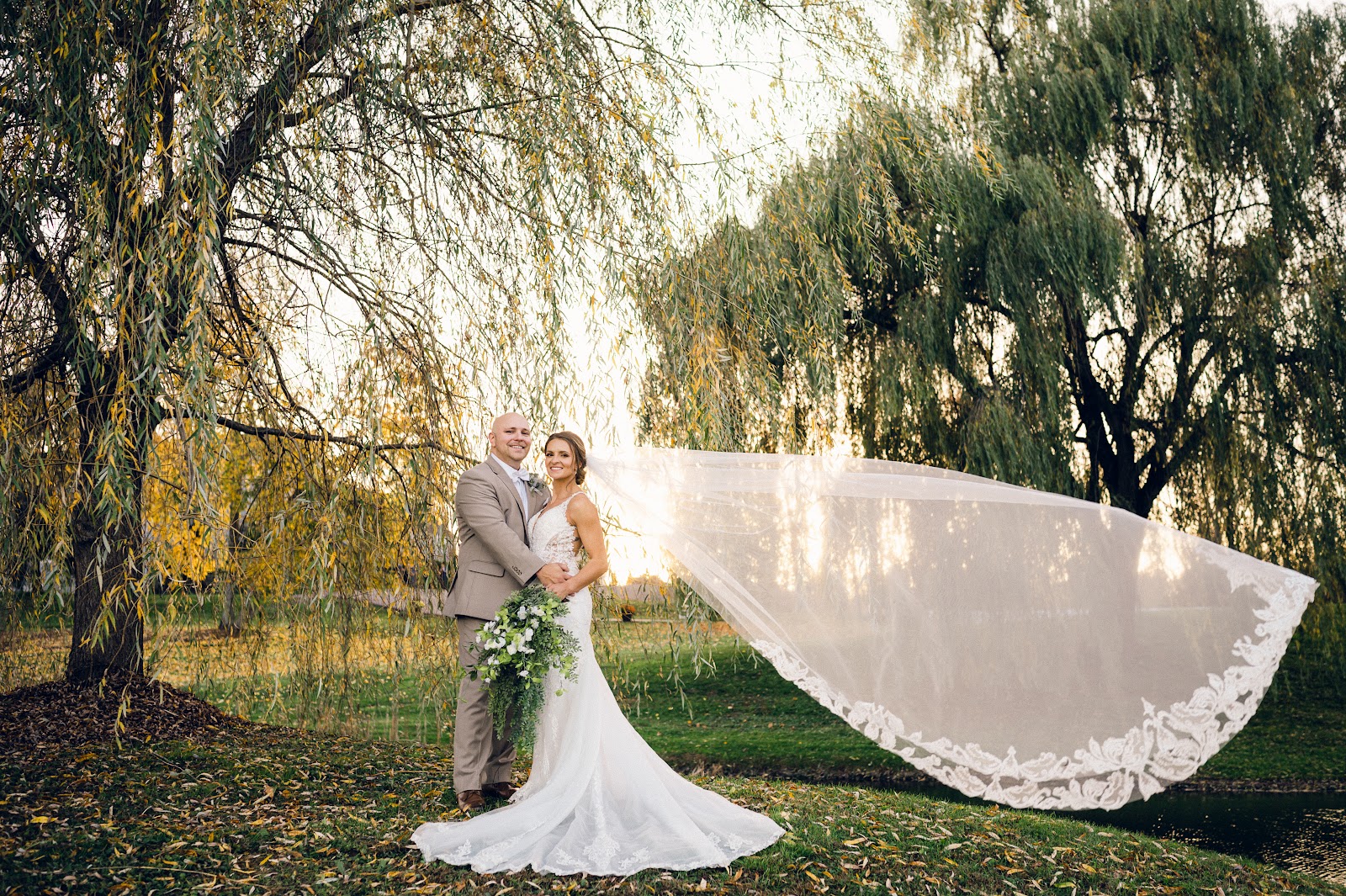
Autumn is the season and there is no argument about it. New England foliage peaks in central Connecticut in the second half of October in most years, and the colour here is genuinely different from the west’s: sugar maple turns scarlet and orange, red maple crimson, birch and hickory yellow, and oak a deep russet that holds long after the rest has fallen.
For a barn specifically, that is the best combination available anywhere — a mass of scarlet and gold against dark weathered timber, which is a contrast no other pairing produces. And because the trees turn at different rates by species, the window is two or three weeks rather than the single week a stand of one species gives.
Autumn is also the clearest air of the year, the most stable weather, and the most comfortable temperatures. If a date is movable and the couple want the landscape, October is the answer — and it is the reason barn venues in this region book their autumn dates first.
More frames from Barns at Wesleyan Hills
Barns at Wesleyan Hills wedding photography: common questions
Why is a barn good for portraits?
Dark unpainted timber reflects almost nothing, so the light from the one big door falls off about a stop per pace. A background three metres back is simply gone.
Where exactly should we stand?
Two or three metres inside the big doorway, turned about forty-five degrees to it. A catchlight high in the eye means step back.
Why work in manual?
Dark barn timber makes a meter overexpose a face by two stops or more, and the bright exterior through the door fools it the other way a moment later.
Does bouncing a flash off the roof work?
No. A barn roof is high, dark and pitched, so almost nothing returns and what does is coloured by the timber. Direct through a modifier instead.
How should the evening reception be lit?
Expose the ambient about a stop under what faces need so the string lights and the timber keep their depth, then add one close warm-gelled source.
When is the barn at its best?
October, for scarlet and gold against dark timber — and any snowy day, because snow brightens the doorway frame and the building wants a black background anyway.
More Connecticut venue guides
We are writing a photographer’s guide to every venue we would happily shoot in Connecticut. Here are three more, plus the full index:
- Branford House, Groton: A Walk Through the Site
- Delamar Hotel, Greenwich: One Frame, and How It Is Made
- Eolia Mansion, Waterford: The Light Through the Day
Planning a wedding at Barns at Wesleyan Hills?
A building that does the work for you. Tell us your date.