 Woodwinds, Branford: The Problem, and Four Ways Out
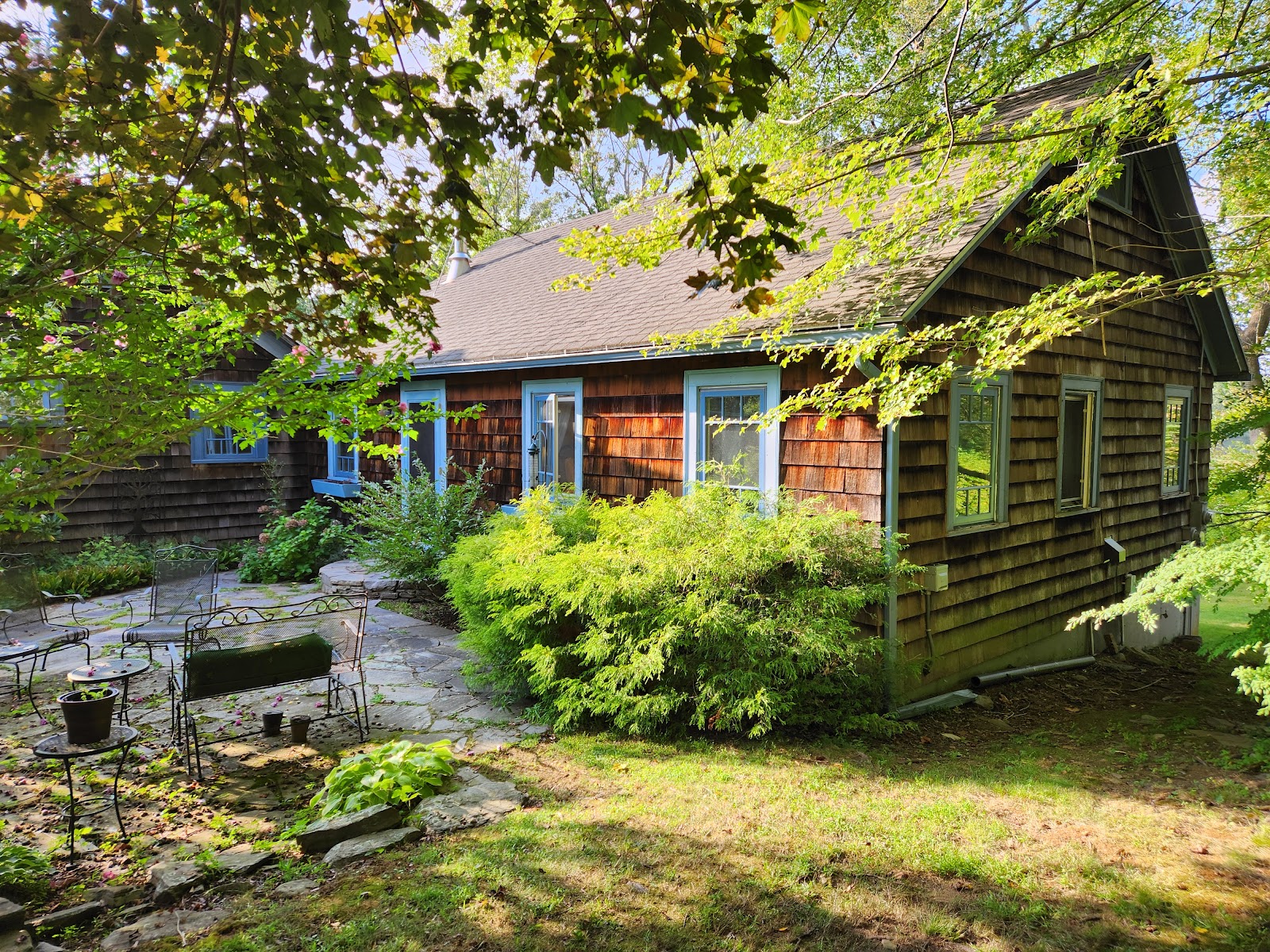
Fox Hill Inn, Brookfield: What It Suits and What It Does Not
A wooded hilltop in New England has a view for four months of the year and shade for six.
A hilltop venue in the wooded hills of western Connecticut is a particular photographic proposition, and the honest way to describe it is by what it suits rather than by praising it.
Three facts govern it. It is elevated, which means long views out over rolling wooded country rather than a close horizon — and views that appear at gaps rather than everywhere, because the trees are at the top of the hill too.
It is wooded, and the woodland here is New England deciduous: sugar and red maple, oak, birch, hickory, with hemlock and white pine in the damper hollows. That mix is the single most consequential fact on the property, because it means the shade, the colour and the view all change completely between May and November.
And it is inland, twenty-five miles or more from the Sound, which means a genuine four-season climate with hot humid summers, cold snowy winters, and none of the maritime moderation that keeps the shore mild.
Those three produce a site whose character is entirely seasonal. The same hilltop in July is a green enclosure with hazy views; in October it is the best thing in this guide; in January it is a bare open hill with the longest sightlines of the year. That is a strength for a couple who choose their date around it and a problem for one who does not.
We have not photographed a wedding at the Fox Hill Inn; wooded hilltop venues in this region behave consistently. Which rooms and outdoor areas are included, the covered alternative and its capacity, whether the function-room lighting can be adjusted, and what the access and parking arrangements are on a hill in winter are questions for their team.
Fox Hill Inn at a glance
| Where | A hilltop in the wooded hills of western Connecticut |
| Suits | Autumn colour, transmitted summer light, and weather-resilient plans |
| Does not suit | Reliable wide views, midday open-lawn ceremonies, or mud season |
| The trees | New England deciduous — the shade and the view change with the month |
| Ask first | Areas included, covered alternative and capacity, lighting, winter access |
What it suits
It suits autumn better than any other kind of site in this guide, and that is the clearest thing about it.
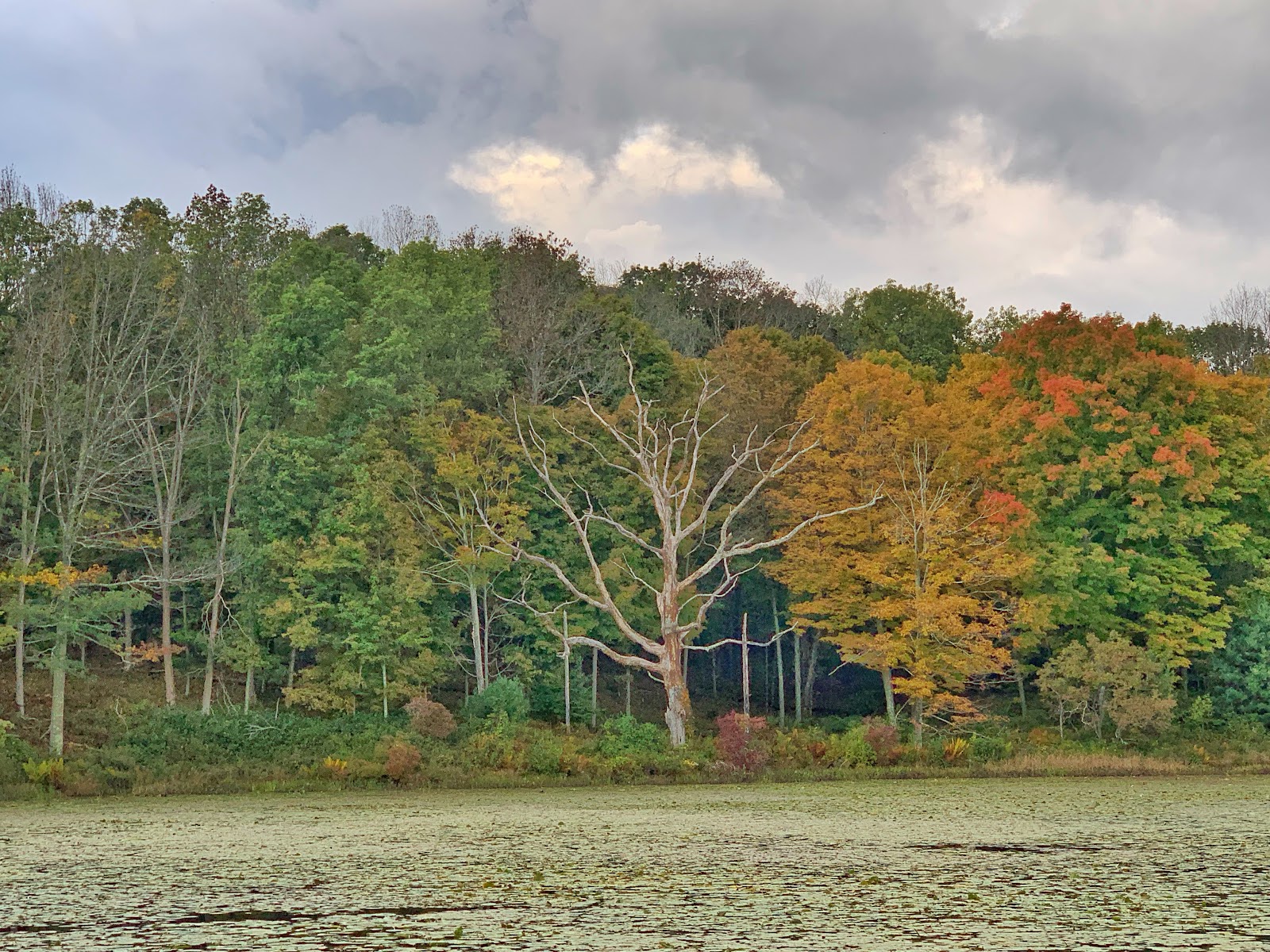
New England foliage in western Connecticut peaks in the second half of October in most years, and the reason it is so much stronger here than in the west of the country is species diversity. Sugar maple turns scarlet and orange, red maple crimson, birch and hickory yellow, oak a deep russet that holds long after the rest has fallen — and because each species turns at a different rate, the colour arrives over two or three weeks rather than a single week.
For an elevated site that produces the frame that nothing else gives: looking down and across rolling wooded country in full colour, on a longer lens that compresses the ridges into stacked bands of scarlet, gold and russet. In clear autumn air that compression holds detail rather than hazing, which is precisely why the frame works in October and not in July.
A hilltop also gains at both ends of the day in autumn, because an elevated position sees the sun slightly earlier and later than the valley below — and the low autumn sun rakes across a colour canopy rather than falling onto it, which makes the leaves translucent. A backlit maple in October is the single most beautiful light available at any venue in this guide, and it costs nothing.
It suits transmitted summer light, which is the underrated version of the same property. Broad thin deciduous leaves pass light through as well as blocking it, so the light beneath a maple canopy in June is soft, even and green-tinged — flattering, directionless in a good way, and available all day.
The requirement there is a custom white balance set on a face in position, because green transmitted light renders skin badly on a daylight preset and the correction afterwards is never as clean. Reset it when the position changes, because ten paces into a gap the light is neutral again.
It suits a weather-resilient plan, which matters more in inland New England than most couples expect. Afternoon thunderstorms are a genuine feature from June into August and they arrive quickly over hills; and spring and autumn both carry real rain. A property with a substantial indoor function space and a named covered alternative is worth more here than any view, and a hilltop with nowhere to go is a poor bet in July.
The compensation is that rain suits this landscape. Wet bark, saturated foliage, low cloud moving across a wooded hill, and soft even light with no dappling anywhere — a New England wood in rain is at its best rather than its worst, and the site’s central technical problem disappears entirely.
And it suits winter, which surprises people. When the leaves are down, a wooded hilltop has the longest sightlines of its year: the views that appear only at gaps in summer are available in every direction, the structure of the woods becomes visible, and snow turns the whole hill into a reflector that lifts every shadow.
The December sun at this latitude reaches only about twenty-five degrees above the horizon, so the whole short day rakes rather than floods — and in leafless woodland it comes in almost horizontally through the trunks, which is the most beautiful light a New England wood receives and lasts most of the short day rather than an hour.
What it does not suit
It does not suit a couple who want a reliable wide view, and that is the honest limitation of a wooded hilltop.
For roughly half the year the trees are in leaf, which means the view exists at gaps rather than as a panorama — and where a gap does open, summer haze in inland New England reduces clarity at distance considerably. A July view from a Connecticut hilltop is a soft blue-grey suggestion of ridges rather than the layered scene an October view gives.
That is not a fault, but it is a mismatch if the couple booked the hill for the view and the date is in July. The honest framing is that this site’s view is a seasonal feature: excellent from October through April, and modest in between.
It does not suit a midday open-lawn ceremony in summer. Inland Connecticut summers are hot and humid — commonly the mid to upper eighties Fahrenheit with high humidity — and a lawn on a hilltop has nothing overhead. High sun gives vertical shadows, dark eye sockets, a hard line under every chin and squinting from anyone facing it, and there is no technique that fixes it.
The shade is the woodland, and the woodland dapples. Deciduous canopy filters as much as it blocks, which means light comes through in hard bright patches — and a single patch on a cheek in summer sun is unrecoverable. The test is universal and it is the only one that matters: look at the face rather than the ground, and a bright patch on skin means move a metre.
Where there is hemlock or white pine, that is the real shade: dense evergreen that blocks properly and gives a background three or four stops down. It carries the standard trap — a meter looking at dark conifer overexposes the face by a couple of stops — so manual exposure metered on skin, particularly because a bright lawn frame a minute later fools the same meter the other way.
It does not suit the first half of spring, and this deserves saying plainly because nobody puts it in a brochure. Inland New England has a mud season: the ground thaws from the top down, the snow melt has nowhere to go, and a wooded hillside in late March and April is wet, brown and bare, with trees that have not leafed out and grass that has not greened.
A hilltop makes it worse rather than better, because the access and parking on an unpaved or steep approach are affected by the same conditions. The photographic consequence is a landscape with no colour in it — not the graphic bare-branch beauty of January, but a transitional brown — and the honest advice is that early May is a considerably better bet than early April.
Two further limits. A hilltop is exposed, which means wind: a lightstand outdoors is a liability, a held modifier is a sail, and a veil is unpredictable, so handheld or bracketed sources are the working configuration and the lee of the building is worth walking to.
And distances and gradients on a hill are longer in time than in metres. A wedding party in formal shoes moves slowly on a slope, which means three positions close together produces more than six spread across the property — and the portrait window has to be placed where the light is rather than where a timeline says.
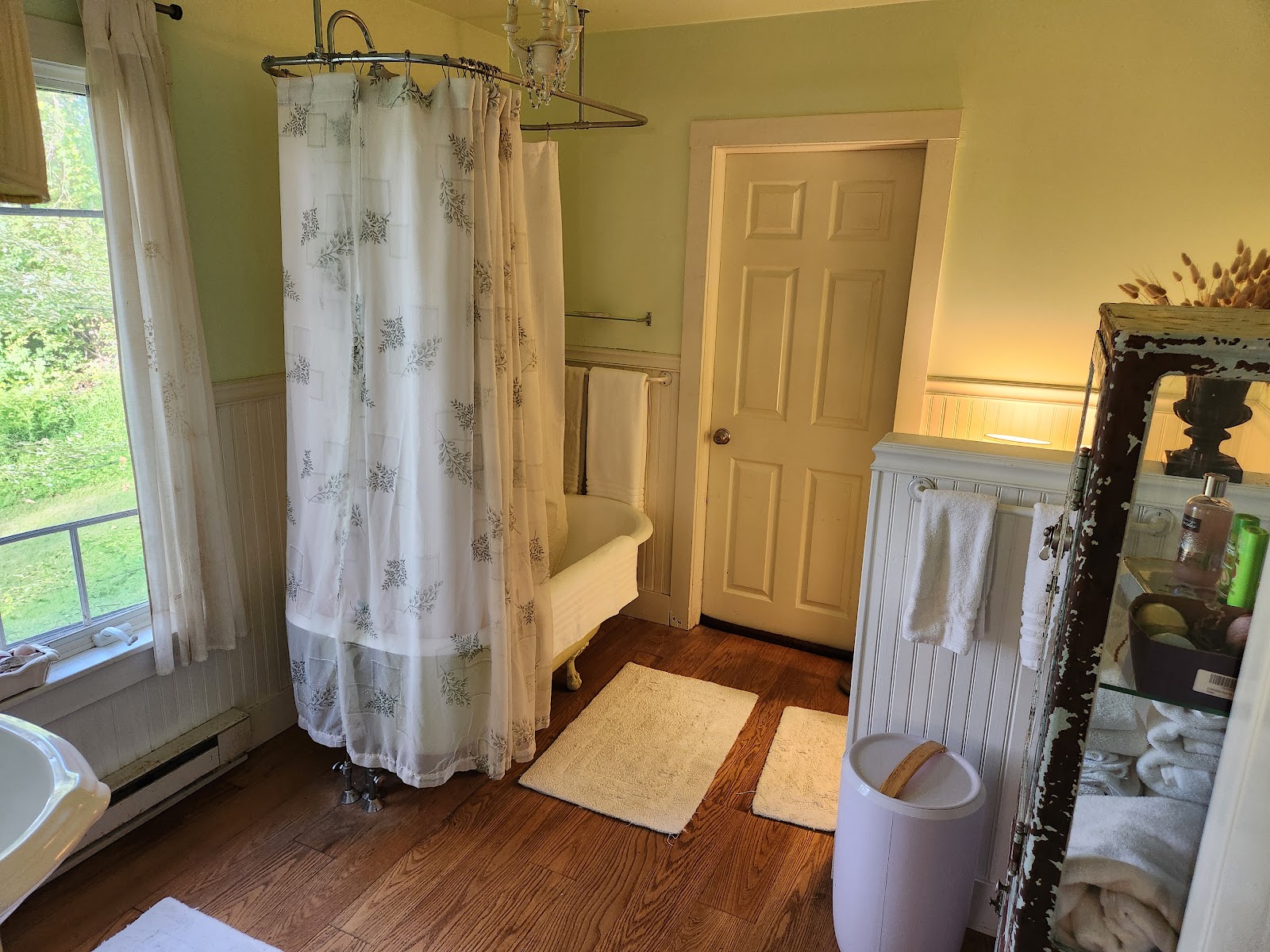
Indoors, the standard approach applies. If the function room is a pale modern space the problem is separation rather than light: find something dark to put behind the subject, use a window as a directional source with the subject a metre from it and turned forty-five degrees, or add a source at a stop above the ambient to create the contrast the room’s own bounce has filled in. If it is a darker space, the correction reverses — meter on skin and let the room go dark.
For the evening: expose the ambient about a stop under what faces need so the room keeps its character, then add one warm-gelled source just above skin level with the white balance set to the gel. A lower modern ceiling is a usable bounce surface, which is a real advantage.
- Suits October above everything: compressed ridges of colour on a long lens
- Does not suit a summer view — haze and leaves both reduce it
- Custom white balance under green canopy; reset it ten paces into a gap
- Deciduous canopy dapples; hemlock and pine are the real shade
- Avoid late March and April: mud season has no colour in it at all
The inland Connecticut year
Inland western Connecticut has four genuine seasons with none of the maritime moderation the shore gets, which makes the calendar the single biggest variable at a site like this.
Winter is cold and snowy, with real accumulation in most years and temperatures well below freezing. On a hill, access is the practical question: an approach road and parking on a slope in ice and snow is a real consideration rather than a theoretical one, and it is worth asking about rather than assuming.
Photographically winter is excellent and underbooked. Snow is the best natural fill outdoors, turning the hill into a reflector that lifts every shadow and throws light upward into faces. Snow against dark bare trunks and dark hemlock is the widest range on the property — expose for the snow and let the trees go black — and it fools a meter by about two stops toward underexposure, so deliberate overexposure is the rule.
The low winter sun rakes horizontally through leafless woodland all through the short day, which is the best light a New England wood receives. And the views are at their longest and clearest of the year, because the leaves are down and winter air is the driest.
The costs are cold hands, batteries draining faster, a cold camera fogging when carried into a heated room, and a short day. Spares in an inside pocket and bodies bagged until they warm.
Early spring is mud season and it is the weakest part of the year: bare trees, brown ground, wet footing and no colour. Late April into May is when it turns, and it turns fast — the leaf-out here takes about two weeks, which means a date in the middle of May can be bare or fully green depending on the year.
Late spring and early summer are genuinely good and undervalued. New foliage is a pale fresh green that transmits light beautifully, the woods are at their most luminous, and the temperatures are comfortable. The light under a new maple canopy in late May is among the most flattering conditions of the year.
Summer is hot and humid. Mid to upper eighties Fahrenheit with high humidity is typical, afternoon thunderstorms are a real feature from June into August and they build quickly over hills, and the haze reduces distance clarity substantially. The day splits: a soft morning, a middle that belongs to conifer shade and interiors, and a good last hour.
The humidity has one compensating effect worth knowing: it warms and diffuses the light in the last hour more than dry air does, which flatters skin and suits the transmitted light under maples.
Autumn is the season and everything else is a preamble to it. Colour peaks in the second half of October in most years in this part of the state, the air reaches its clearest, the weather is at its most settled, the temperatures are the most comfortable of the year, and the low sun rakes through a canopy that is translucent.
For a hilltop, the specific gift is the compressed view: ridges of scarlet, gold and russet stacked on a long lens, which is a frame that exists for two or three weeks and nowhere else in this guide. It is why autumn dates at venues like this are the first to go, and if a date is movable it is the only answer worth giving.
Late autumn after the leaves fall is spare and graphic rather than empty: bare structure, long sightlines, russet oak still holding, and the first snow on dark trunks. It is the most underrated fortnight of the year here.
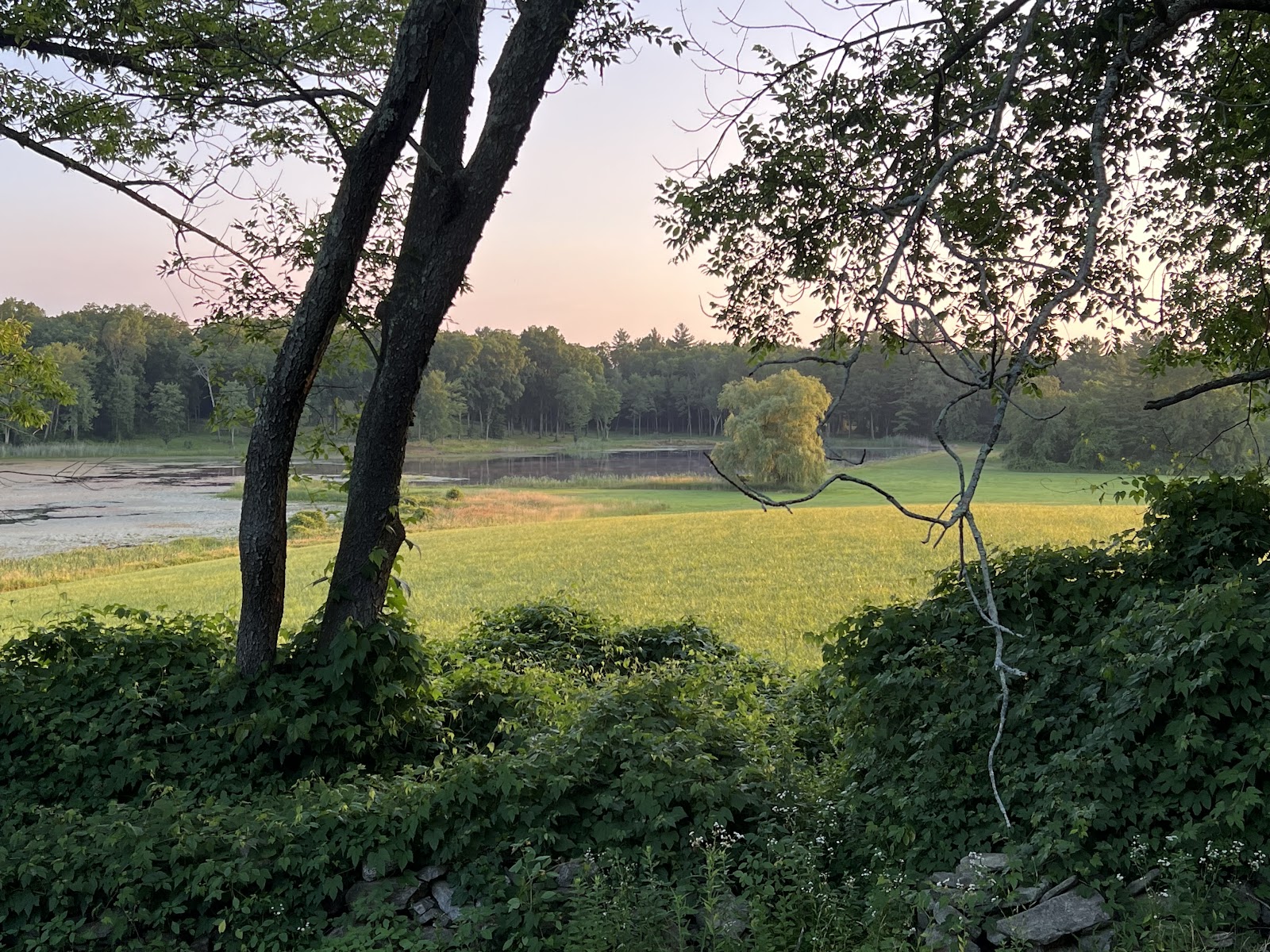
More frames from Fox Hill Inn
Fox Hill Inn wedding photography: common questions
What does this site suit best?
October. An elevated position over New England deciduous woodland gives compressed ridges of scarlet, gold and russet that exist nowhere else in this guide.
Why is the summer view weaker?
The leaves are in and inland summer haze reduces clarity at distance, so a July view is a soft suggestion of ridges rather than a layered scene.
Where is the shade?
Hemlock and white pine, which block properly. Deciduous canopy filters and dapples, and a lawn on a hilltop has nothing overhead at all.
Why a custom white balance in the woods?
Light transmitted through green leaves renders skin badly on a daylight preset, and ten paces into a gap the light is neutral again.
Which part of the year should we avoid?
Late March and April — mud season, with bare trees, brown ground and wet footing. Early May is a much better bet.
Is winter worth considering?
Genuinely. Leaves down gives the longest views of the year, snow lifts every shadow, and a low sun rakes horizontally through the trunks all day.
More Connecticut venue guides
We are writing a photographer’s guide to every venue we would happily shoot in Connecticut. Here are three more, plus the full index:
- Foxwoods Resort, Mashantucket: The Problem, and Four Ways Out
- Inn at Mystic: Field Notes
- Italian Center, Stamford: The One Decision That Governs Everything
Planning a wedding at Fox Hill Inn?
A site that changes with the month. Tell us your date and we will tell you what it gives.