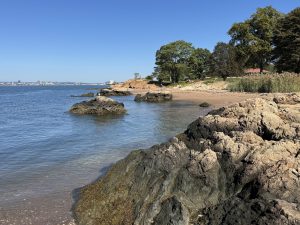
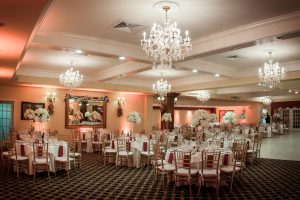
 Woodwinds, Branford: The Problem, and Four Ways Out
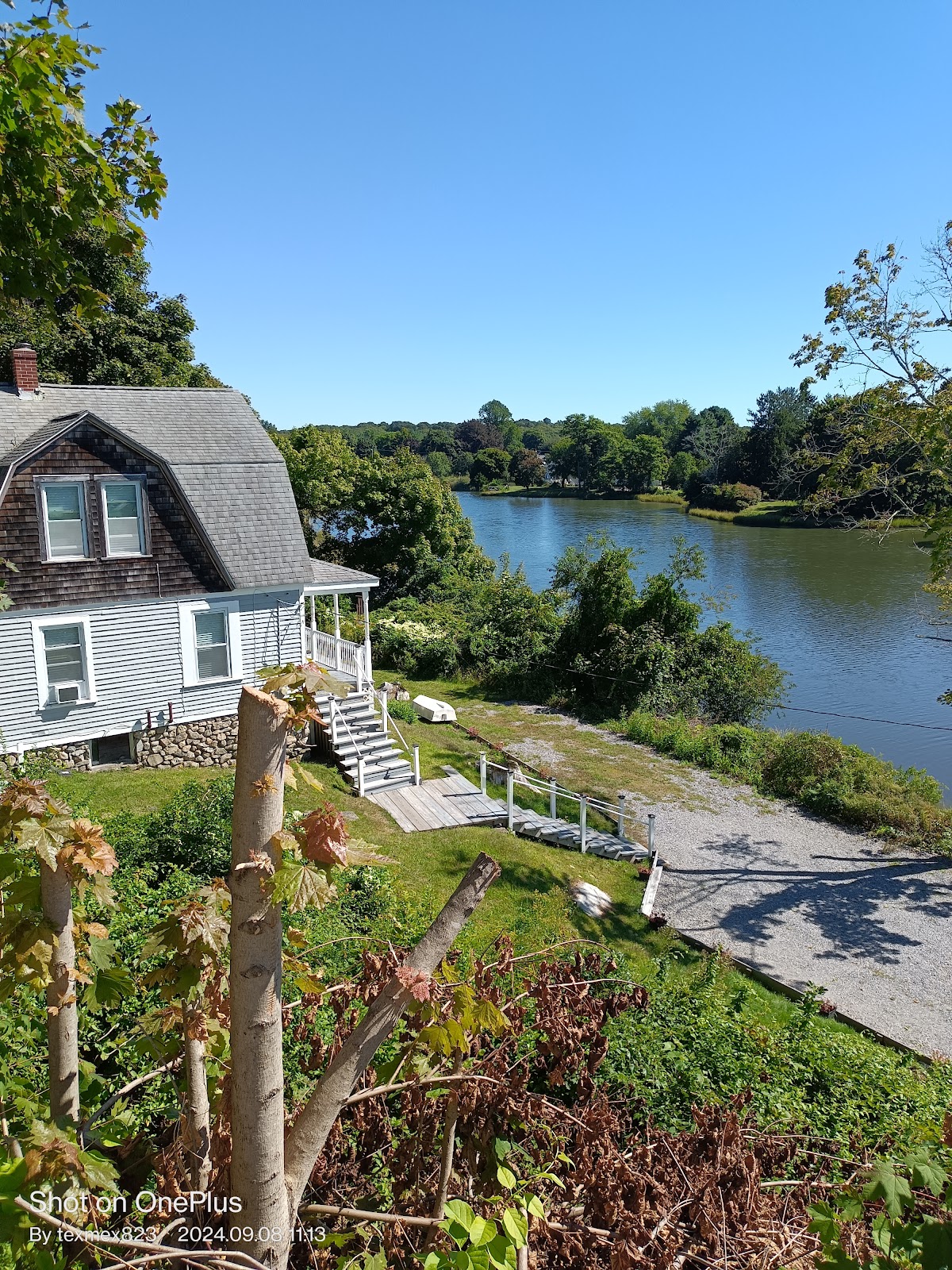
Inn at Mystic: Field Notes
A tidal river is not a lake and not the sea. Its level and its colour both change while you work.
These are field notes on an inn above a tidal river, and the first note is the one that surprises people: the water here changes level while a wedding is happening.
A tidal river on this coast has a range of two or three feet between high and low water, and the whole cycle runs in about six hours. Which means the water is visibly higher at four than it was at noon, boats sit at a different height relative to a dock, mud or marsh margins are exposed or covered, and a frame composed in the morning does not exist in the afternoon.
That is knowable in advance, which makes it a planning fact rather than a hazard. Checking the tide for the date takes a minute and it decides which of two quite different sites the day will use.
The second note is about colour, and it is the one that catches photographers used to ocean venues. A tidal river carries sediment and organic material, which means it is brown or olive-green rather than blue — it does not go the colour of the sky the way open water does, it reflects it in a darker, muddier way, and a white balance set for a bright blue seascape renders it badly.
The third note is the geography. Mystic sits at the eastern end of Long Island Sound where a river meets the Sound, which means a sheltered, shallow, tidal, boat-filled landscape rather than an exposed coast. There is very little surf, the water is calm far more often than not, and the whole place has structure in it rather than a horizon.
We have not photographed a wedding at the Inn at Mystic; inns above tidal rivers on this coast behave consistently. Which rooms, lawns and waterfront areas are included, what dock access is available, the covered alternative, and whether the function-room lighting can be adjusted are questions for their team.
Inn at Mystic at a glance
| Where | A rise above a tidal river at Mystic, eastern Connecticut |
| The tide | Two or three feet, on a six-hour cycle — the frame changes while you work |
| The colour | Brown or olive rather than blue, because the river carries sediment |
| The shade | Mature trees and the building’s own walls; the lawn has none |
| Ask first | Areas included, dock access, covered alternative, lighting control |
The tide and the water: the problem, and the solution
The problem the tide creates is that two frames exist at the same position and only one of them is available on a given afternoon.
At high water the river is full, the margins are covered, the surface comes close to the dock or the bank, and the water reads as a broad clean plane. That is the picturesque version: reflections work, boats sit high, and a couple on a dock has water immediately beneath them.
At low water the level drops, mud flats and marsh grass margins are exposed, rocks appear, boats sit low in their berths, and the shoreline is further away and messier. That reads as a working estuary rather than a pretty river — which is honest and can be the better picture, but it is not the one a brochure shows.
The solution is simply to know which one the date gives, and to plan the water frames for the part of the day that suits. If the portraits can move by an hour or two, moving them toward high water is usually the right call — and if they cannot, knowing in advance that the margins will be exposed means composing to exclude them rather than discovering them in the viewfinder.
The colour problem needs its own handling and it is the note most often missed. Sediment-carrying water is brown-green and it is darker than the sky it reflects, which has two consequences.
It does not brighten a frame the way an ocean does, which means the exposure gap between the water and a lit sky is wider here than at a blue-water venue — a frame containing both a bright sky and the river surface spans more range than one at a clear coastal site.
And it colours anything it reflects into. A subject standing close to the water’s edge with the river below them is filled from beneath by brown-green light, which on a daylight preset renders skin slightly muddy. A custom white balance set on a face in that position fixes it in thirty seconds, and it has to be reset when the subject moves away from the water.
What the river gives in return is structure and calm. A sheltered tidal river goes genuinely flat, and flat water mirrors properly — masts, buildings, trees and sky doubled, with a reflection that runs about a stop darker than what it reflects. That is the best frame on the property and it depends on wind rather than tide, which means morning and evening are likelier than the middle of the day.
And it gives boats, which is what makes a river frame better than a lake frame. Masts are strong verticals, rigging gives fine lines, hulls repeat — so a longer lens that compresses those elements into a dense background behind a couple produces a picture with real structure in it. A wide lens spreads them out and empties the frame, which is the standard mistake.
Marsh grass is the other local element and it is worth using deliberately rather than avoiding. The margins of a tidal river here are cordgrass and reed, which in low sun goes gold and translucent — thin blades transmit light, so a backlit marsh edge glows. Composed low, with the grass as a foreground layer, it places the frame precisely in this landscape.
Salt air is the maintenance note and it applies at any distance from the water on this coast: front elements pick it up, so lens changes happen in shelter and a cloth stays in a pocket.
The grounds and the building: the problem, and the solution
The problem on the grounds is the ordinary one for a New England waterfront inn: the lawn has the view and nothing else, and the shade is elsewhere.
A lawn sloping to the water is open by design. At midday it is flat and green with no modelling anywhere, and a subject standing on it in summer sun has vertical shadows under the brows, a hard line under the chin, and nothing overhead to help. There is no technique for that, which makes the middle of a clear summer day a matter of finding the alternatives rather than solving the lawn.
The solution is threefold and it is all positional.
Mature trees are the first, and this landscape’s mix matters. Sugar and red maple, oak, birch and hickory are broad-leaved and filter as much as they block, which means they dapple — so the test is the universal one: look at the face rather than the ground, and a bright patch on skin means move a metre. Where there is hemlock, spruce or white pine, that is the real shade, dense enough to block properly and dark enough to give three or four stops of free separation behind a subject.
That dark background carries the standard trap. A meter looking at conifer overexposes the face by a couple of stops, while the bright river frame five minutes later fools the same meter the other way — which is exactly why a day here is worked in manual, metered on skin, and reset at every transition.
Coastal trees are worth checking rather than assuming, because salt wind prunes them: crowns are frequently one-sided and lower on the seaward face, so a tree that gives shade from one direction gives none from the other.
The building’s own walls are the second solution and the most dependable. A wall in shade facing open sky is a soft directional source, and a shaded wall behind a subject is a dark background — which is the physics of a window in a dark room, applied outdoors, and it works at any hour in any weather. A porch, veranda or covered entrance is better still: a solid roof blocks the overhead component, restricts the light to a horizontal band, bounces off the decking to fill, and cannot dapple.
Two or three metres in from the open edge is the working position, and the catchlight confirms it — low and broad means the roof is doing the work, high in the eye means step back.
The third solution is the hour, and a rise above a river gives slightly more of it than a flat site. Low sun rakes across a lawn rather than falling onto it, which puts texture in every blade, and a slope means the light comes across the ground at an even shallower angle than the sun’s own.
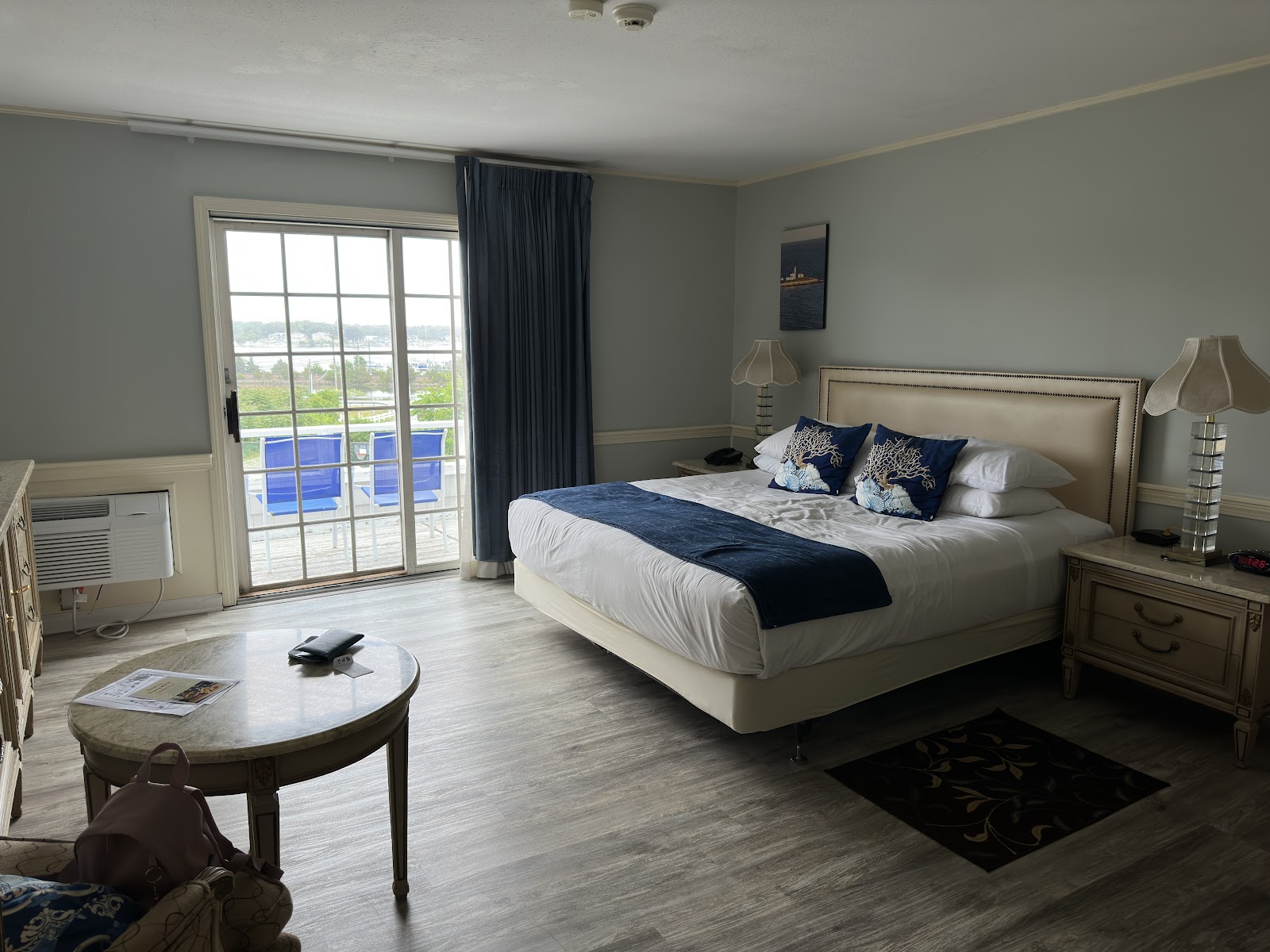
Indoors, a New England inn of this kind has sash windows with small panes in relatively low rooms, which is a specific condition worth knowing. The window band is lower and narrower than in a grand hotel, so the light arrives at a lower angle and reaches less far into the room — a metre from the glass is the working distance and drifting to two loses more here than in a building with tall windows.
The glazing bars also cut the light into small hard-edged patches when the sun is direct on the window, which on a wall is charming and on a face is not. A sheer curtain turns the window into a diffuser; a north-facing or shaded window avoids it.
The standard rules apply and both are free: turn the room lights off, because warm bulbs mixing with cool daylight put two colours on one face; and set the white balance on a face in position, because a window facing the river delivers a cool, slightly green-brown light that a daylight preset gets wrong.
For the evening, expose the ambient about a stop under what faces need so the room keeps its character, then add one warm-gelled source just above skin level with the white balance set to the gel. A low inn ceiling is a genuine advantage — it is a usable bounce surface, which a tall function room’s is not.
- Check the tide for the date; it decides which version of the site you get
- Set white balance near the water — sediment light renders skin muddy
- Longer lens for the boats: compress the masts, don’t spread them out
- Conifer is the shade, deciduous canopy dapples, and the lawn has nothing
- A metre from a small-paned sash window, and a curtain if the sun is on it
The eastern Connecticut shore year
This coast keeps a maritime New England calendar: the Sound moderates the extremes, so summers are cooler and winters milder than inland, and both spring and autumn arrive later on the water than they do up the valley.
Winter is cold with snow in most years, and a tidal river in January is a different subject entirely — boats hauled out, empty berths, ice at the margins on the coldest days, and bare structure everywhere. That is a spare graphic version of the site rather than an absent one.
Snow is the best natural fill available outdoors and against dark brown water it is the widest brightness range on the property: expose for the snow and let the river go black. Snow fools a meter by about two stops toward underexposure, so deliberate overexposure relative to the camera is the rule.
The December sun at this latitude reaches only about twenty-five degrees above the horizon, so the whole short day rakes rather than floods — which removes the lawn’s midday problem entirely, models the building, and puts a long broken path of reflection across the water for most of the afternoon rather than for twenty minutes.
Winter is also the clearest air of the year on this coast, which matters for any frame with distance in it, and the water is at its calmest on cold still mornings. The honest winter caveat is that the boats are mostly out of the water between roughly November and April, which removes the frame the river is best at — a question for the marina rather than a guess.
Spring is late and slow because the water keeps the land cool: bare trees into April and a real chance of raw wet weather into May. The boats return progressively. Late spring is the first reliably good season, and fresh green transmitted light under new maple leaves is among the most flattering conditions of the year.
Summer is comfortable rather than hot — the Sound keeps the shore several degrees below inland, and an afternoon sea breeze is reliable, which is the reason the flat-water frames belong to the morning and evening. Low eighties Fahrenheit with high humidity is typical, and afternoon thunderstorms are a genuine feature from June into August, which makes a named covered alternative a requirement rather than a courtesy.
Humidity is the summer photographic factor and it is stronger on the shore than inland: haze softens contrast and reduces clarity at distance, and it makes the last hour warmer and more diffuse, which flatters skin.
Tropical storm season runs from roughly August into October on this coast. Direct hits are uncommon and the effects of a passing system are not — heavy rain and strong onshore wind remove every outdoor option at once, and a storm surge on a tidal river changes the water level well beyond the normal range. It cannot be planned for, only acknowledged.
Autumn is the best season and by a clear margin. The heat and humidity break, the air reaches its clearest, the water is at its calmest, the weather is at its most settled, the boats are still in, and the foliage turns — typically from the middle of October into early November on this coast.
Autumn colour reflected in a calm tidal river is the strongest thing this site produces, and it works for a specific reason: brown-green water is dark enough to hold a warm reflection without competing with it, where blue water would fight it. Scarlet and gold doubled in a still river, with masts and hulls in front, is a frame that exists for two or three weeks and nowhere else in this guide.
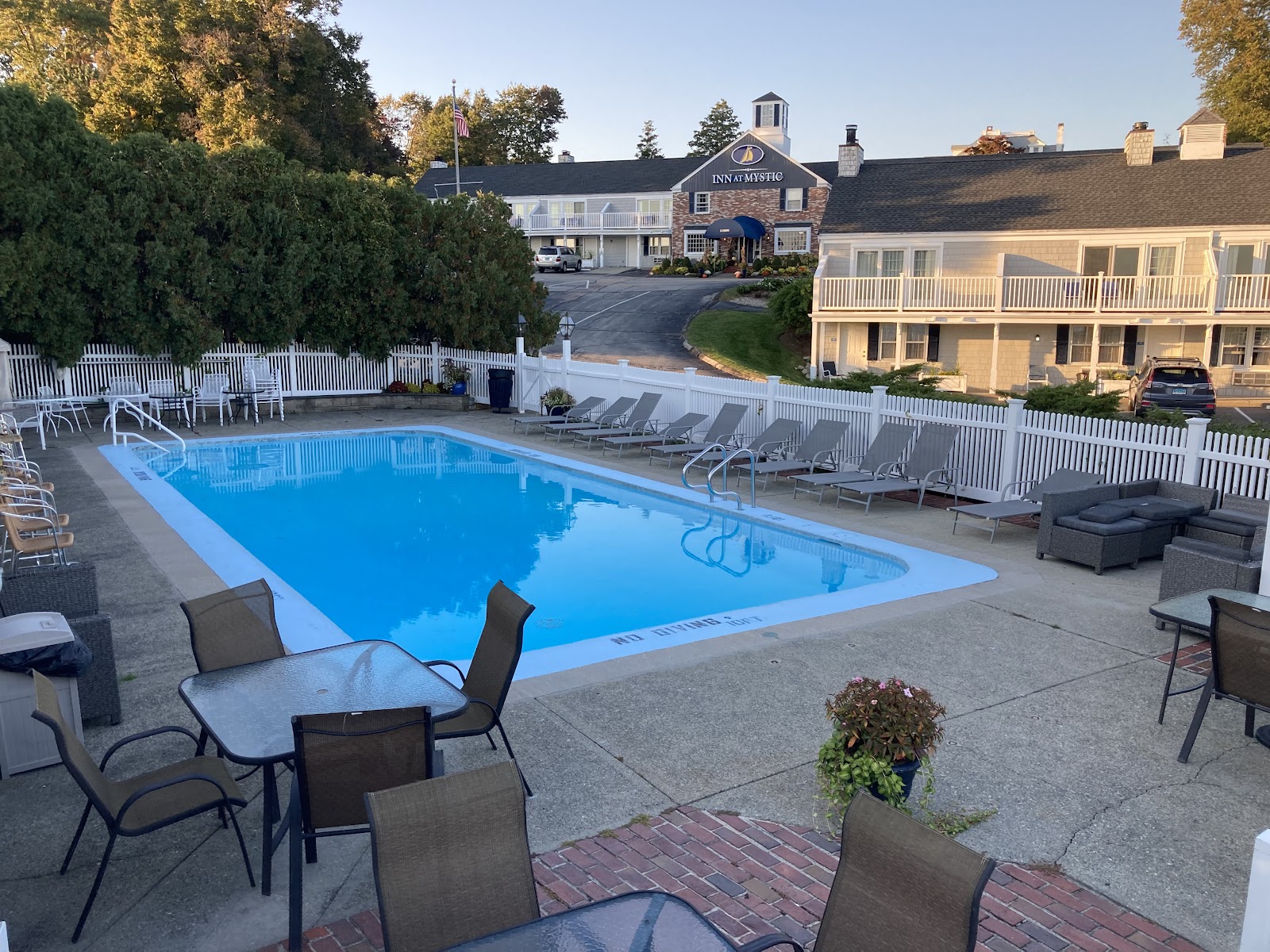
More frames from Inn at Mystic
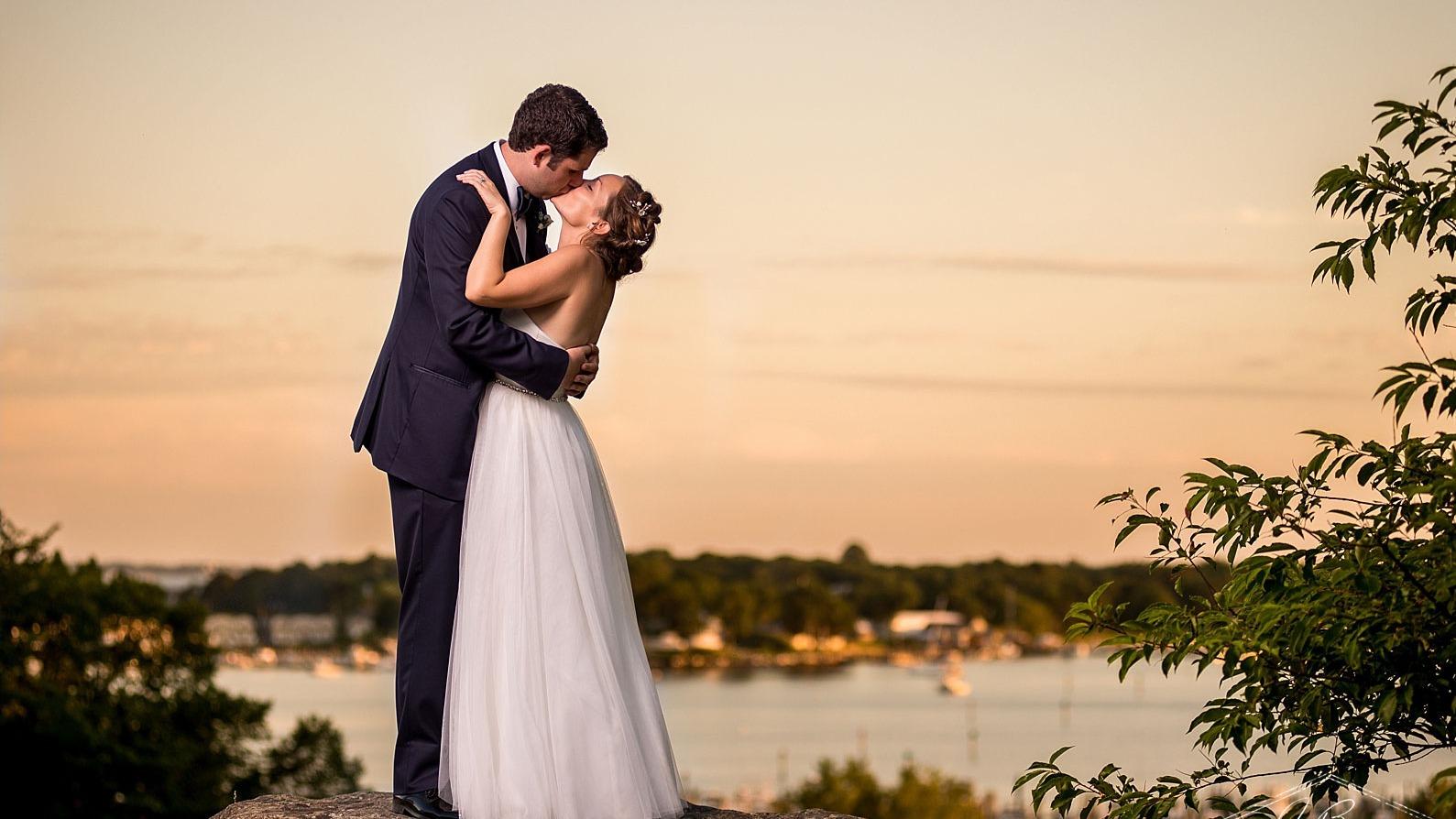
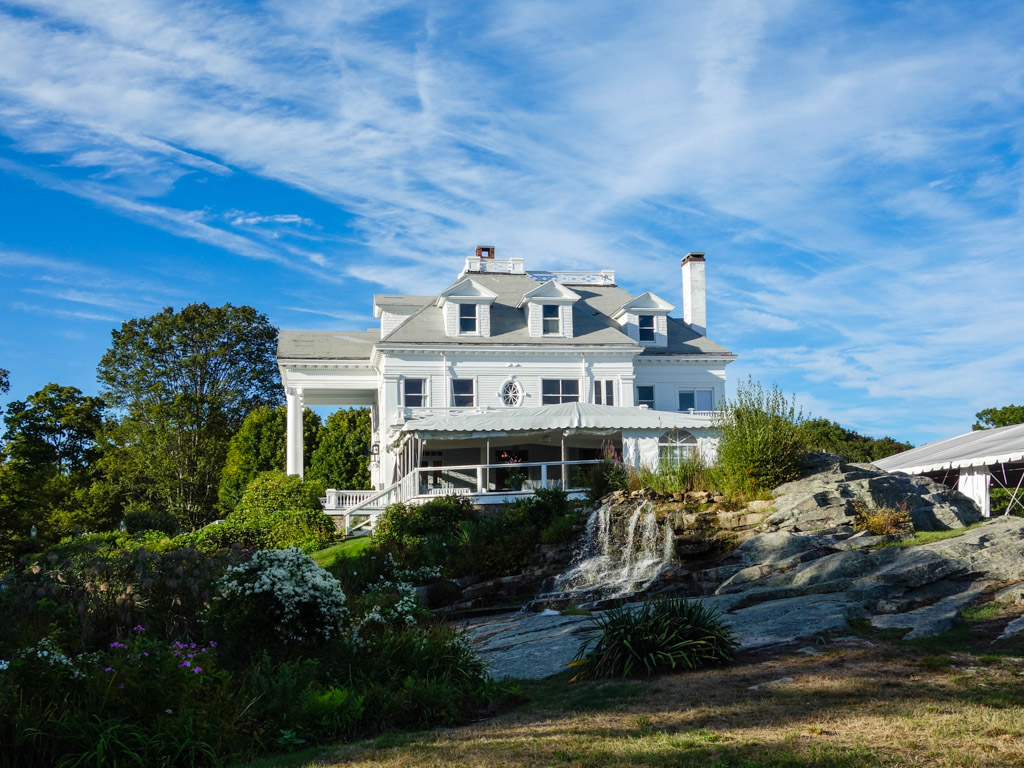
Inn at Mystic wedding photography: common questions
Does the tide really matter?
Yes. Two or three feet on a six-hour cycle changes the water level, the exposed margins and the height of the boats, so a frame from noon may not exist at four.
Why is the water brown?
A tidal river carries sediment and organic material, so it does not go the colour of the sky. It also fills faces near the water with a muddy-coloured light.
What do I do about that?
Set a custom white balance on a face in the position it will occupy, and reset it when the subject moves away from the water.
Where is the shade?
Conifer where there is any, and the building’s own shaded walls, porches and verandas. Deciduous canopy dapples and the lawn has nothing overhead.
How should the boats be photographed?
On a longer lens from further back, which compresses the masts into a dense background. A wide lens spreads them out and empties the frame.
When is the site at its best?
Mid-October into early November, with autumn colour doubled in calm water — brown-green water is dark enough to hold a warm reflection without fighting it.
More Connecticut venue guides
We are writing a photographer’s guide to every venue we would happily shoot in Connecticut. Here are three more, plus the full index:
- Italian Center, Stamford: The One Decision That Governs Everything
- Lake of Isles, North Stonington: The Light Through the Day
- Lighthouse Point Marina, New Haven: The Problem, and Four Ways Out
Planning a wedding at Inn at Mystic?
A river that moves and a lawn that doesn’t. Tell us your date and we will check the tide.