 Venue at Willow Creek, Huntsville: The Problem, and Four Ways Out
Barn at Shady Lane, Cullman: Field Notes
A southern barn is built to shed heat, not hold it. That changes what it gives you.
These are field notes on a barn venue in the north Alabama hill country, and the first note is that a southern barn is not the same building as a New England one.
A northern barn is built to keep weather out and heat in: tight, dark, with few openings. A southern barn is built to shed heat — which means more ventilation, wider openings, frequently open gable ends and sometimes an open central passage running right through.
That difference is entirely in a photographer’s favour. More openings means more places where the same useful condition occurs: a dark interior with light entering horizontally from one side, which gives steep fall-off and free separation. A southern barn typically has several of those rather than one.
The second note is the material. Unpainted weathered timber absorbs almost everything, which means the interior is a stop or two below what the eye estimates and the background behind a subject drops away for nothing. Where the barn is painted — and red is common in this region as elsewhere — the paint is a saturated mid-tone that reflects rather than absorbs, which lightens the interior, tints anything standing near a lit wall, and clips before anything else in the frame.
The third note is the climate. North Alabama is humid subtropical with hot summers, mild winters and a genuine severe-weather season — and the humidity softens contrast, reduces clarity at distance, and warms the light at the ends of the day.
And the fourth is what surrounds it. This is the southern edge of the Appalachian foothills: mixed hardwood and pine, red clay soil, rolling ground and long views over wooded ridges.
We have not photographed a wedding at the Barn at Shady Lane; southern barn venues behave consistently. Which buildings and areas are included, whether the interior lighting can be dimmed, the covered alternative and its capacity, whether the barn is air-conditioned, and what power is available outdoors are questions for their team — and the cooling question is a real one in an Alabama July.
Barn at Shady Lane at a glance
| Where | A barn venue in the north Alabama hill country at Cullman |
| The building | Built to shed heat: more openings than a northern barn, and better for it |
| The timber | Unpainted absorbs and gives free separation; paint bounces and tints |
| The surroundings | Appalachian foothills — mixed hardwood, pine and red clay |
| Ask first | Buildings included, cooling, lighting control, covered alternative, power |
The barn: the problem, and the solutions
The problem inside any barn is that the eye adapts and the meter does not. A timber interior reads as comfortable and well lit and is frequently a stop or two below what a pale room of the same apparent brightness would be — which means the settings that worked at the last venue are wrong here.
The solution is to measure rather than estimate, and then to use the darkness rather than fight it. A subject lit by an opening with timber three metres behind them has a background two or three stops down with no lighting decision involved, which is free separation and the barn’s main gift.
The exposure discipline follows and it is absolute: metering on skin, in manual, with the timber allowed to go dark. A meter looking at a large area of weathered wood tries to lift it toward mid-grey, which overexposes a face by two stops or more — and the correct frame has a great deal of near-black in it, because that is what the building is.
The big opening is the barn’s best feature and the technique is standing in it properly. Two or three metres inside is the working position: too far in and there is not enough light to hold the face, too close to the edge and the overhead sky reaches it again and flattens the modelling.
The catchlight settles it — low and broad on the opening side of each eye means the doorway is doing the work, and a catchlight high in the eye means step back. And turning about forty-five degrees to the opening rather than facing it squarely gives a lit side, a shadowed side and a gradient between them.
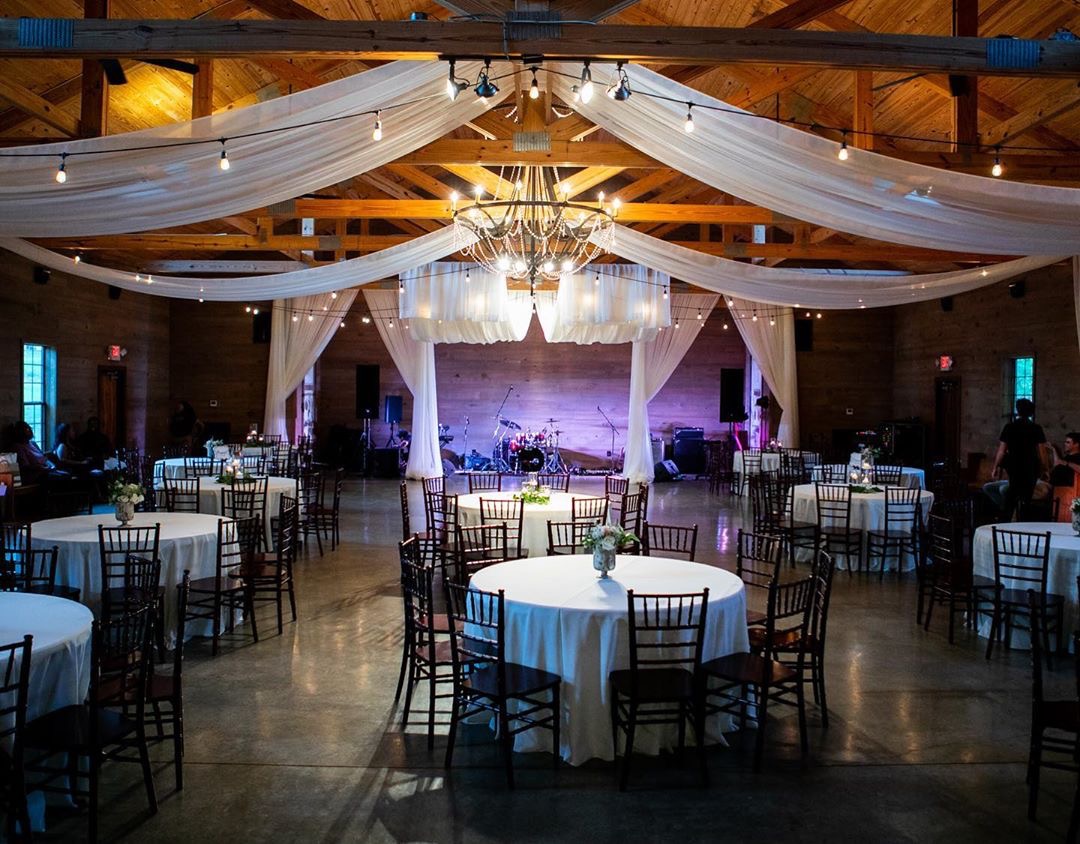
A southern barn’s advantage is that there are usually several such positions, because the building is ventilated. An open gable end, a central passage with doors at both ends, a side opening, a loft door — each of them is the same condition at a different angle, which means a position can be chosen for what is behind the subject as well as for the light.
The central passage is the distinctive one. A breezeway with openings at both ends gives light from two directions and a dark middle, which means a subject standing in the passage is lit from front and back with darkness at the sides — a rim-lit frame that a single-opening barn cannot produce. It is also the coolest place on the property, which in an Alabama summer matters.
Where the barn is painted, the rules shift. Red paint is a saturated mid-tone that reflects, which means the interior is lighter and the background does not go black on its own — so a dark background has to be found rather than assumed. And anything standing in a red barn’s shade with a sunlit red wall opposite is filled with warm red-tinted light, which a custom white balance set on a face in position handles and a daylight preset does not.
Exposing for the red is the other rule: a saturated red clips in one channel while the rest of the frame still looks correct, and that is not recoverable. If the paint holds texture the frame works, and skin can be lifted afterwards.
Where added light is needed, it must be close, because nothing in a timber barn bounces: the light reaching a face is only the light aimed at it, falling off with the square of distance, so a source at two metres needs roughly a quarter of the output of the same source at four. And aiming a flash at a barn roof returns almost nothing — a dark pitched ceiling absorbs it and colours what little comes back.
For the evening reception the approach is the standard one. Expose the ambient about a stop or a stop and a half under what skin needs, so the string lights keep their presence and the timber keeps its depth, then add one source for the faces gelled warm to match, set just above what the ambient gives the skin, and diffused so it does not read as flash.
The grounds, the ridges, and the Alabama summer
Outside, the problem is the opposite of the barn’s and it is the season that decides how severe it is.
Open farm ground has nothing overhead, and Alabama summer sun is high and strong — which means vertical shadows under the brows, a hard line under every chin and squinting from anyone facing it. The humidity softens that slightly compared with dry country, but it does not fix a face.
The solutions are positional. The building’s own shaded wall is the most dependable: a large wall in shade facing open sky is a soft directional source, and a shaded timber wall behind a subject is a dark background, which is the barn’s interior physics applied outdoors and available at any hour in any weather.
The trees are the other shade and the north Alabama mix is mixed hardwood with pine: oak, hickory, maple, sweetgum and tulip poplar, with loblolly and shortleaf pine through it. Deciduous canopy filters as much as it blocks, so it dapples — look at the face rather than the ground, and a bright patch on skin means move a metre.
Pine is denser and gives fuller shade, and where there is magnolia that is the best blocker of all: large thick glossy evergreen leaves that stop the light entirely and give a very dark background, with the caution that glossy leaves throw hard specular highlights in direct sun.
The canopy edge is the reliable position: a metre or two inside at the margin of an opening gives soft directional light in front and darkness behind, three or four stops of free separation. The metering correction reverses from the open ground’s — dark canopy makes a meter overexpose a face where bright open ground makes it underexpose — so manual and metered on skin throughout.
The red clay is the region’s own colour and it is worth handling rather than ignoring. North Alabama soil is strongly red-orange, which means bare ground, tracks and banks bounce warm light onto anything near them — and a custom white balance set on a face is what turns that from an orange cast into warm skin in warm light.
It also reads as a strong colour in a frame, which against green foliage is the region’s characteristic contrast and against white or grey timber is stronger still.
The ridges are the wide subject. This is the southern end of the Appalachians, which means rolling wooded ground with long views over successive ridgelines — and those want a longer lens, because compression stacks them into layers of decreasing tone while a wide lens reduces them to a low band above a lot of field.
The humidity is the limit on that frame: at this latitude in summer the haze at distance is considerable, which means a ridge view in July is a pale blue-grey suggestion and the same view in January is sharp. Autumn and winter are when the long frames work.
The hour matters as much as the position. A field at midday is flat and green with no modelling anywhere; in the last hour low sun rakes across it, putting texture in every blade — and any planted line, track or fence becomes a graphic element that leads into a frame or cuts across it.
The humid evening is a genuine asset: it warms and diffuses the light at the end of the day more than dry air does, which flatters skin and stretches the golden period into something long and soft rather than brief and hard.
And the practical notes are heat, weather and insects. Summer in north Alabama is hot and humid enough that an outdoor ceremony between June and September is a welfare matter first, and whether the barn is cooled is a question with a definite answer that decides the reception’s comfort. Afternoon thunderstorms are near-daily in July and August. Spring is the state’s severe-weather peak. And mosquitoes and chiggers are real considerations on humid summer ground, worth raising with a couple rather than discovering.
- Measure the ambient — barn timber is a stop or two darker than it looks
- Meter on skin and let the timber go black; that near-black is the building
- A southern barn has several openings; choose the one with the right background
- If the barn is painted, expose for the red and set white balance on a face
- Longer lens for the ridges, and only in autumn or winter when the haze drops
The north Alabama year
North Alabama has a humid subtropical climate with a genuine four-season feel — cooler winters than the Gulf coast, hot humid summers, and a real autumn.
Winter is mild but not warm: hard freezes occur, snow is occasional and rarely lies, and the deciduous canopy is down — which opens the long ridge views that summer foliage hides, and which is the season they work best because the humidity is lowest and the air clearest.
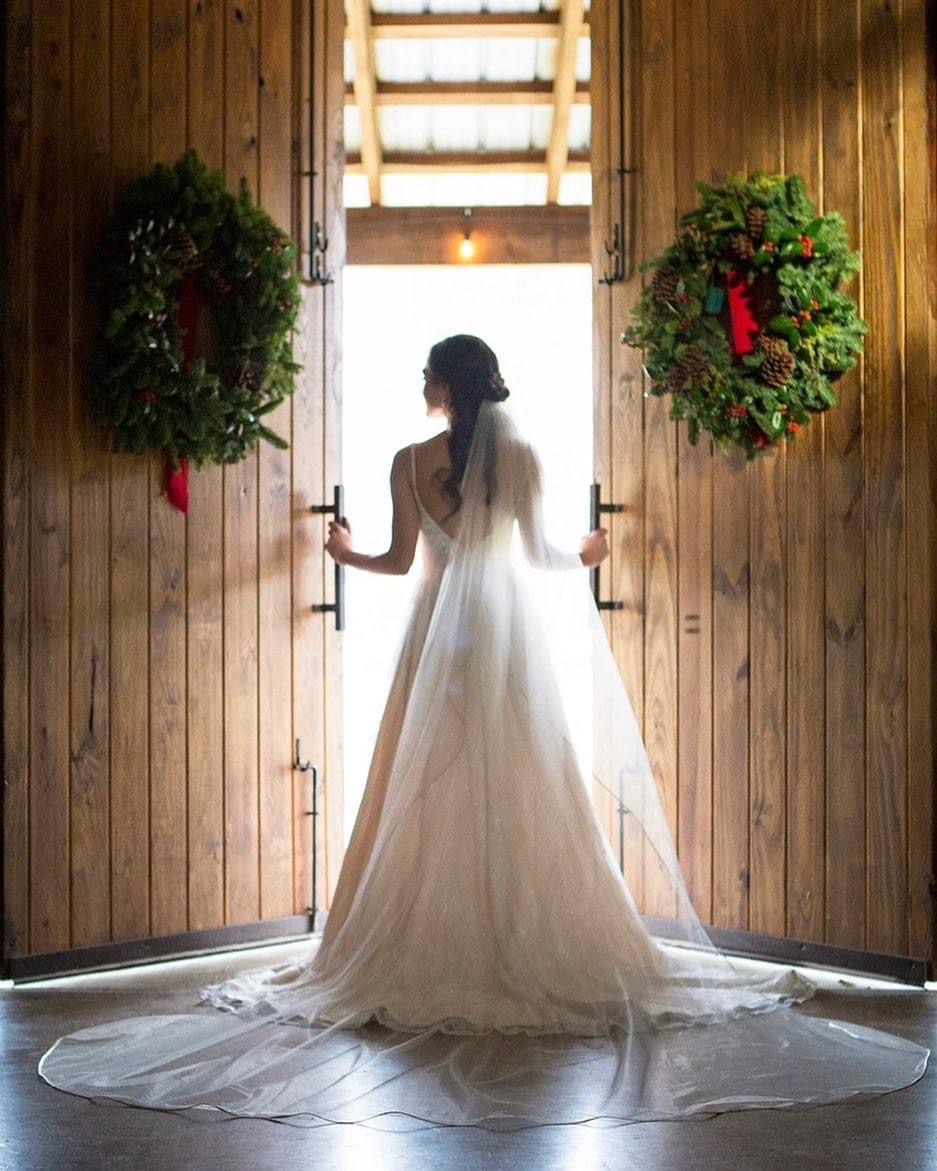
The December sun at this latitude reaches about thirty-four degrees above the horizon, which is low enough that the whole short day rakes rather than floods. For a barn that is decisive: the light comes through the big openings almost horizontally and reaches much further into the building than a summer sun does, which widens the usable band inside considerably. A barn is better lit in January than in June.
Snow, when it comes, is the best natural fill available outdoors and against dark weathered timber it gives the widest brightness range the property offers — expose for the snow and let the wood go black, overexposing deliberately relative to the meter, which snow fools by about two stops. Against red paint it is the strongest colour contrast on the site.
Frost on red clay and on bare hardwood is the more common winter condition, and morning fog in the valleys is frequent — which with a barn rising out of it is the most atmospheric frame of the year.
Late winter into spring brings the region’s flowering: redbud and dogwood through March and April, azaleas in the planted ground, and wisteria on anything it can reach. Against dark timber that saturated colour reads at full strength.
The honest spring caveat is severe weather. Alabama sits in one of the most tornado-prone regions in the country, with a pronounced spring peak from March through May, and severe thunderstorms are a real feature of that period. A named covered alternative with real capacity is a requirement rather than a courtesy — and at a barn venue that is usually the barn itself, which is a genuine argument for this kind of property in the spring.
Spring proper is the most comfortable season: warm, green, long-lit, and with the hardwoods leafing out through April.
Summer is hot and humid and it is the hardest season here. Commonly the low nineties Fahrenheit with high humidity pushes the heat index considerably higher, and a party in formal clothes on open ground at three in the afternoon is uncomfortable in a way that shows in the photographs.
The answers are scheduling and shade — early morning, the last two hours, the barn’s own openings and the canopy edges — and the practical question of whether the barn is cooled. Afternoon thunderstorms are near-daily in July and August, and kudzu, which blankets roadside and field edges through the summer, is a genuine visual feature of this landscape rather than a curiosity.
Autumn is the best season by a clear margin. The heat breaks in October, the humidity drops, the air clears — which brings back the ridge views — and the hardwood colour arrives late: typically from the last week of October into mid-November in north Alabama, weeks later than New England.
Oak russet, maple scarlet, hickory and tulip poplar yellow and sweetgum’s mixture of red and purple arrive over two or three weeks, and against dark weathered timber that colour reads at full saturation. Against red paint the gold and russet end works better than the scarlet, which merges.
Late October and early November are the easiest and most beautiful dates of the year here, with the caveat that November is the state’s second severe-weather peak.
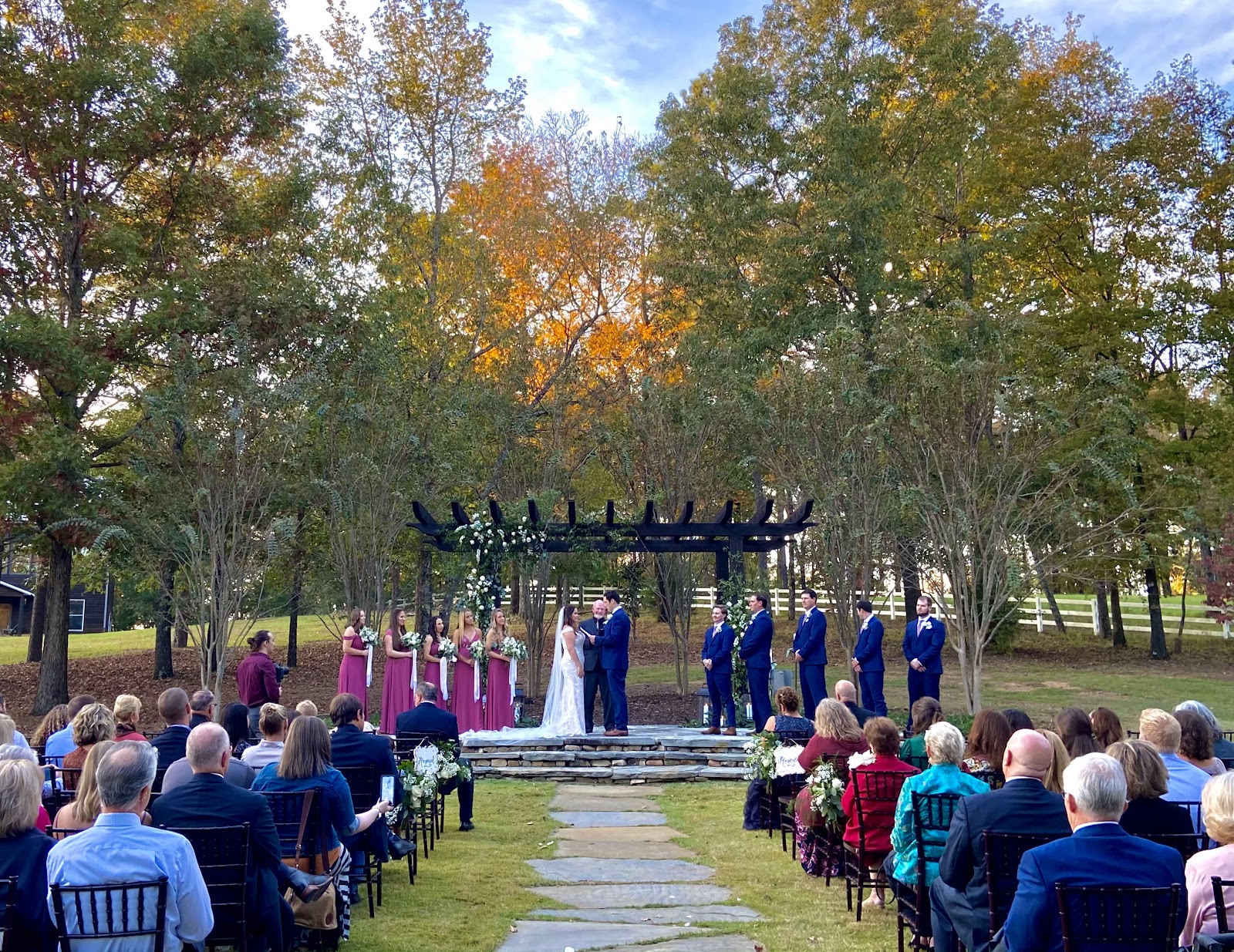
More frames from Barn at Shady Lane
Barn at Shady Lane wedding photography: common questions
How does a southern barn differ from a northern one?
It is built to shed heat rather than hold it, so it has more openings — which means several positions with the same useful light rather than one.
What is the breezeway good for?
Light from two directions with a dark middle, which gives a rim-lit frame a single-opening barn cannot — and it is the coolest place on the property.
Why work in manual?
Weathered timber makes a meter overexpose a face by two stops or more, and the bright exterior through an opening fools it the other way.
What changes if the barn is painted?
Red paint reflects rather than absorbs, so the interior is lighter and the background does not go black on its own — and it tints anything near a lit wall.
What about the red clay outside?
It bounces warm light onto anything near it. A custom white balance on a face turns that from an orange cast into warm skin in warm light.
When is the site at its best?
Late October into mid-November for hardwood colour and clear air — and January, when a low sun reaches far into the barn and the ridge views open up.
More Alabama venue guides
We are writing a photographer’s guide to every venue we would happily shoot in Alabama. Here are three more, plus the full index:
- Barn at Woodland Trail, Cherokee: The One Decision That Governs Everything
- Bellingrath Gardens, Theodore: A Walk Through the Site
- Boathouse at Lake Martin, Alexander City: The Light Through the Day
Planning a wedding at Barn at Shady Lane?
A building made for the heat. Tell us your date and we will use the openings.