 The Redd on Salmon Street: Building the Shot List
The McMenamins Edgefield, Troutdale: Field Notes, Problem and Solution
Almost every surface is painted. That is the condition to plan for.
These are field notes, because this property is a set of very specific conditions rather than one governing idea, and the first of them is that there are almost no plain walls in it.
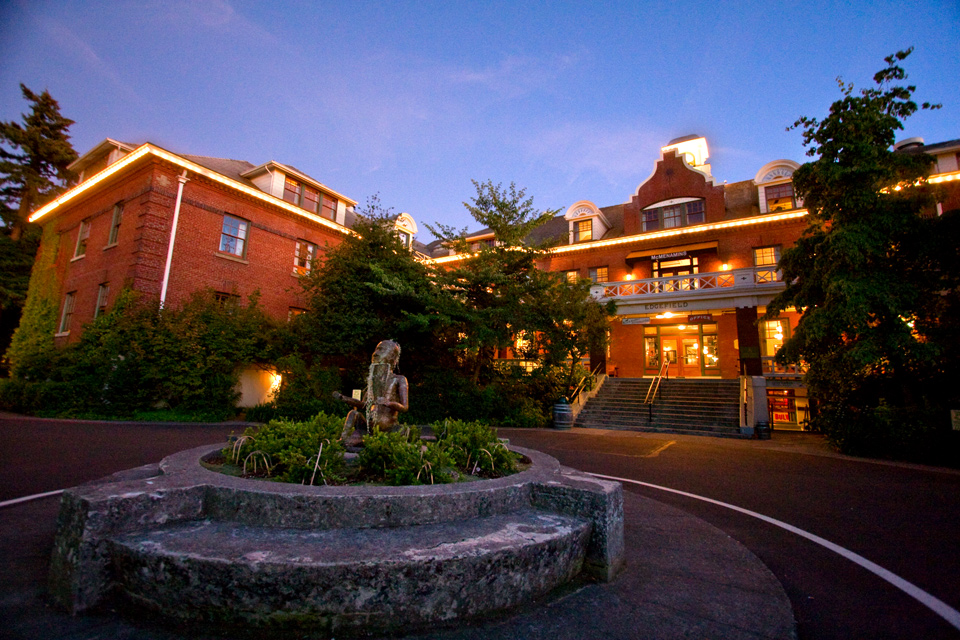
Edgefield occupies a large brick building of nineteen eleven at Troutdale, near the western mouth of the Columbia River Gorge and some distance east of Portland. It was built as a county institution — a poor farm — and it stood empty and derelict before being restored from around nineteen ninety into a hotel with restaurants, a brewery, a winery, a distillery, gardens, a small golf course and event spaces, on something in the region of seventy-odd acres.
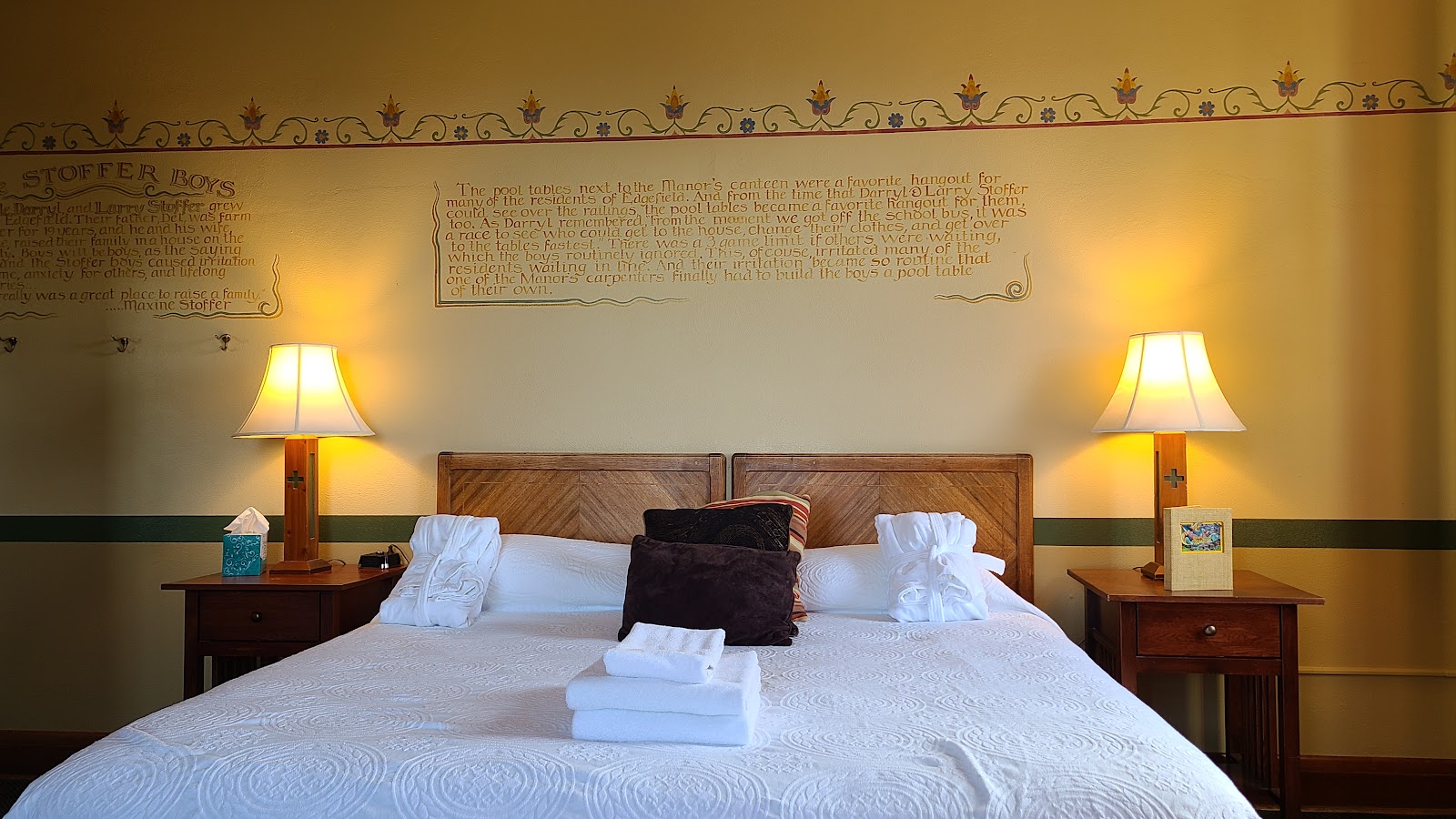
The restoration came with a house style, and it is the thing that decides how the building photographs. Almost every interior surface — walls, ceilings, door frames, stair landings, window reveals, corridors — carries hand-painted murals and decorative work by a stable of resident artists. Not wallpaper, not applied prints: painted directly onto the fabric, room by room, in a great many different hands and subjects.
That is a genuinely unusual environment and it produces four connected problems.
There are no neutral backgrounds. In most buildings a photographer looking for a clean wall finds one within twenty seconds; here, a plain surface is rare and has to be hunted for. Every frame has something painted in it unless you have specifically found the exception.
The colour is strong and it is everywhere. Painted surfaces in any decent light behave as coloured sources, which means skin picks up whatever is nearby — and with different rooms painted in different palettes, the cast changes as you move through the building.
The backgrounds compete. A mural is a picture, and a picture behind a face is competing for attention in a way a plain wall never does. At a middle distance with a mural half-cropped behind somebody’s head, the frame reads as busy rather than as characterful.
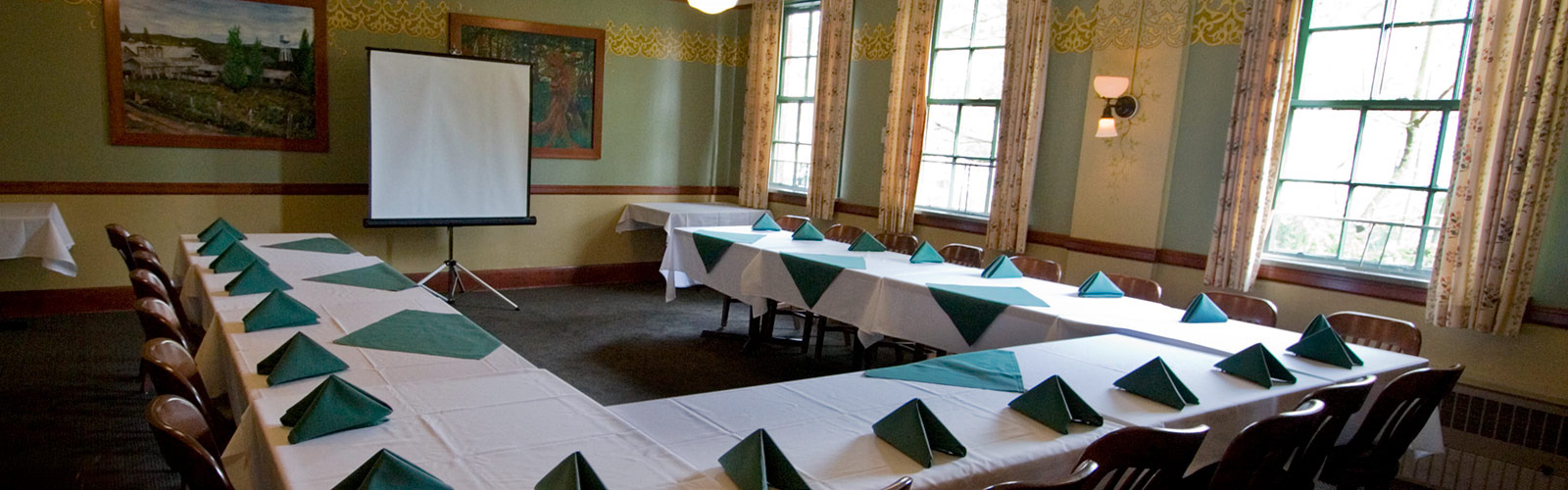
And the building is institutional in plan, which means long corridors, repeated doorways, and a great many medium rooms rather than a few large ones. That is variety, and it is also a lot of walking and a lot of similar-but-different spaces.
Against all of that, the building has two genuine gifts: tall sash windows in thick masonry walls, which give the best natural light on the property; and seventy acres of grounds, which are the plain background the interiors deny you.
Notes follow, grouped by where you are standing: the painted rooms, the corridors, the windows, the grounds, and the brewery and outbuildings. Then the year — which in western Oregon is the opposite of what a photographer from the east side of the state expects.
The McMenamins Edgefield at a glance
| Where | A 1911 institutional brick building near the Columbia Gorge mouth, Troutdale, Oregon |
| The condition | Hand-painted murals on almost every interior surface — no neutral backgrounds |
| The consequences | Colour casts everywhere, competing backgrounds, and a lot of similar rooms |
| The gifts | Tall sash windows in thick walls, and seventy-odd acres of grounds |
| Ask first | Which rooms you have, whether stands are permitted, and what the rain plan holds |
What you meet, and what each one needs
A painted room, generally. Problem: the background is a picture and it competes with the face in front of it. Solution: commit in one direction or the other. Either go long and wide open so the mural dissolves into a soft field of colour with no readable content — a hundred and thirty-five millimetres at f/2 turns any painted wall into an abstract wash — or go square and stopped down and make the mural a deliberate flat field with the subject small and off centre, so the room is the subject and the couple are the figures in it. The middle distance at a middle aperture is the failure, because the mural is legible enough to demand attention and cropped enough to look accidental.
A painted room, second note. Problem: colour cast, and it is genuinely on the skin rather than in the file. A saturated painted wall in any decent light throws its colour forward, and a face half a metre from a strongly painted surface carries that colour in a way no white balance corrects, because correcting globally shifts the whole room. Solution: distance. Two metres removes most of it and three or four removes it entirely. Diagnose it with one frame of a hand against the wall and one a metre away; the difference is often a full correction step.
A painted room, third note. Problem: the palette changes room to room, so a set made across six rooms drifts in colour without anybody noticing until the frames are side by side. Solution: set a white balance deliberately per room rather than carrying one value through the building, and check frames against each other rather than judging them individually. Consistency of decision matters more than any single frame.
A painted room, fourth note. Problem: painted ceilings, which mean bouncing does not behave. A light aimed at a strongly painted ceiling comes back tinted with whatever is up there, and in a room painted in deep colours it comes back weak as well. Solution: look up before deciding the lighting plan for each room. Where the ceiling is pale, bounce works normally and is the cleanest option; where it is dark or strongly coloured, light directly with a modifier close and feathered and let the room fall away behind.
The plain surfaces. Problem: photographers assume a heavily painted building has none. Solution: it always has some, and finding them is a twenty-minute job on arrival. Service corridors, stairwells, the backs of doors, plant rooms, lift lobbies, laundry areas, the underside of a canopy — a building’s unphotographed edges are almost always plain, painted one colour, and lit by something honest. Two of those, found in advance, will carry every formal portrait the day needs and will look nothing like the rest of the set, which is exactly why they are valuable.
The corridors. Problem: an institutional building has long corridors, and here they are painted too — floor to ceiling, often with continuous decorative schemes. Solution: use them as tunnels, which is what they are. One light on the floor at the far end aimed back, the subject on ambient plus a small fill, camera low and central, and the perspective and the repeated doorways do all the composing. A painted corridor is a better tunnel than a plain one, because the decoration converges with the perspective.
The corridors, second note. Problem: they are narrow, and an institutional building’s circulation was not built for a wedding party. Solution: work with two or three people rather than a group, and expect to be in the way if anybody is moving. Corridor frames are for the couple alone.
The windows. Problem: none, they are the best thing about the building. Solution: use them constantly. A nineteen-eleven institutional building has tall sash windows set in thick masonry walls, and that thickness collimates the light into a defined directional beam with a fast falloff — a snoot built into the architecture and the best portrait light on the property. Step the positions out, because a metre and a half inside a deep reveal is superb and three metres in is not.
The windows, second note. Problem: the reveal itself is probably painted. Solution: that is usually a bonus rather than a fault, because a painted reveal becomes a decorative frame around a subject standing in it — and because the light is coming past it rather than reflecting off it, the cast is much weaker than on a facing wall. Sit or stand somebody in the reveal and shoot from inside the room.
The windows, third note. Problem: which way the room faces determines everything, and in western Oregon the default sky is overcast. Solution: ask which rooms you have. Under overcast — which is most of the year here — aspect matters much less and every window is a large soft source, which is a real convenience. On a clear day a south or west window in the afternoon will take direct sun and become a hard beam, at which point close whatever coverings exist and use the softened surface instead.
Everything indoors, one general note. Problem: a building of this age and use has low ceilings in places, dark corners, mixed lighting from decades of different fittings, and a great deal of visual information. Solution: light small and work tight more than instinct suggests. A subject lit by one close modifier with a busy room falling away into shadow behind them is a frame that uses the building’s character without letting it take over, and it repeats anywhere.
The grounds, the brewery and the outbuildings
The grounds are the answer to everything the interiors make difficult, and there are a lot of them.
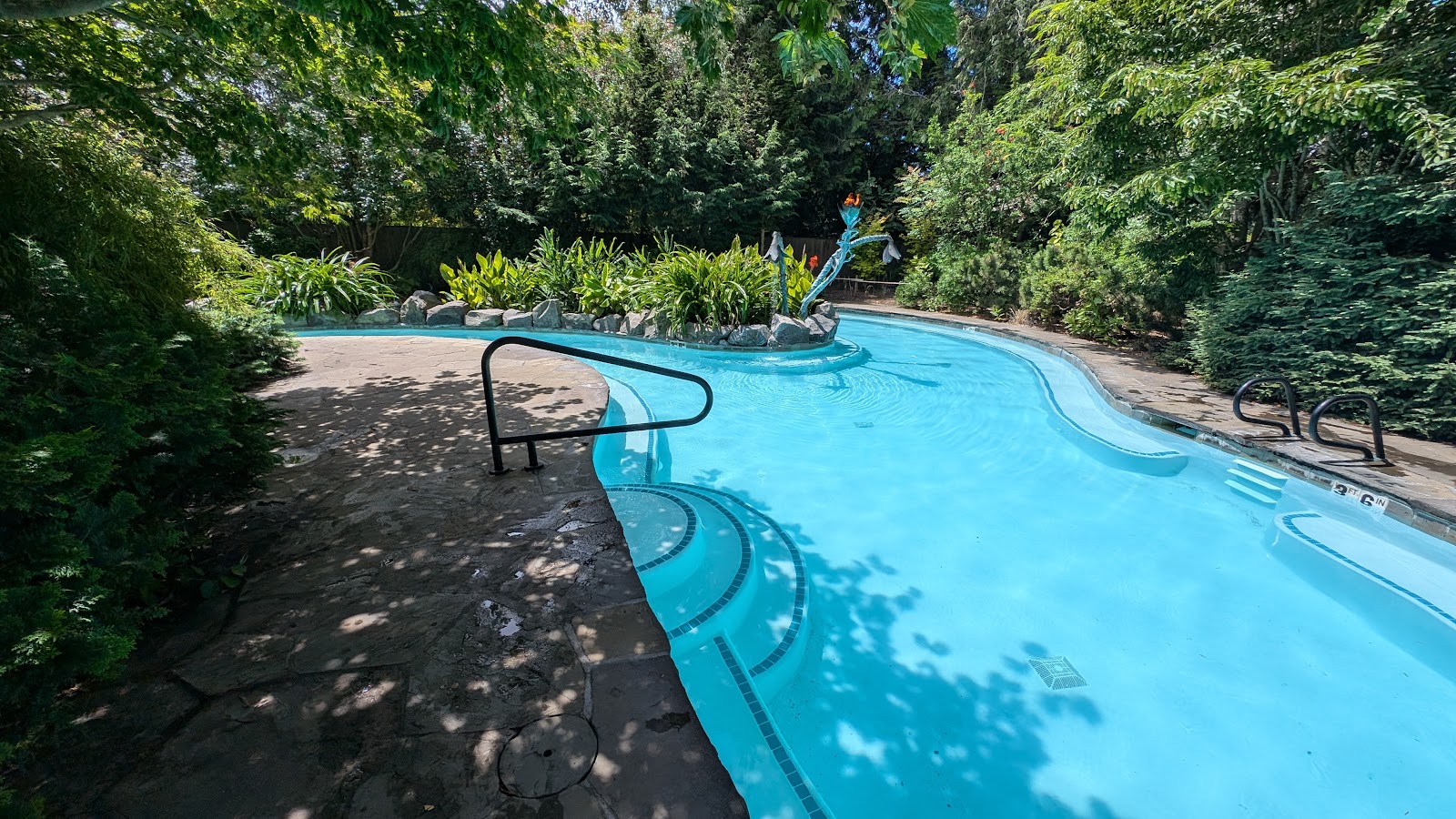
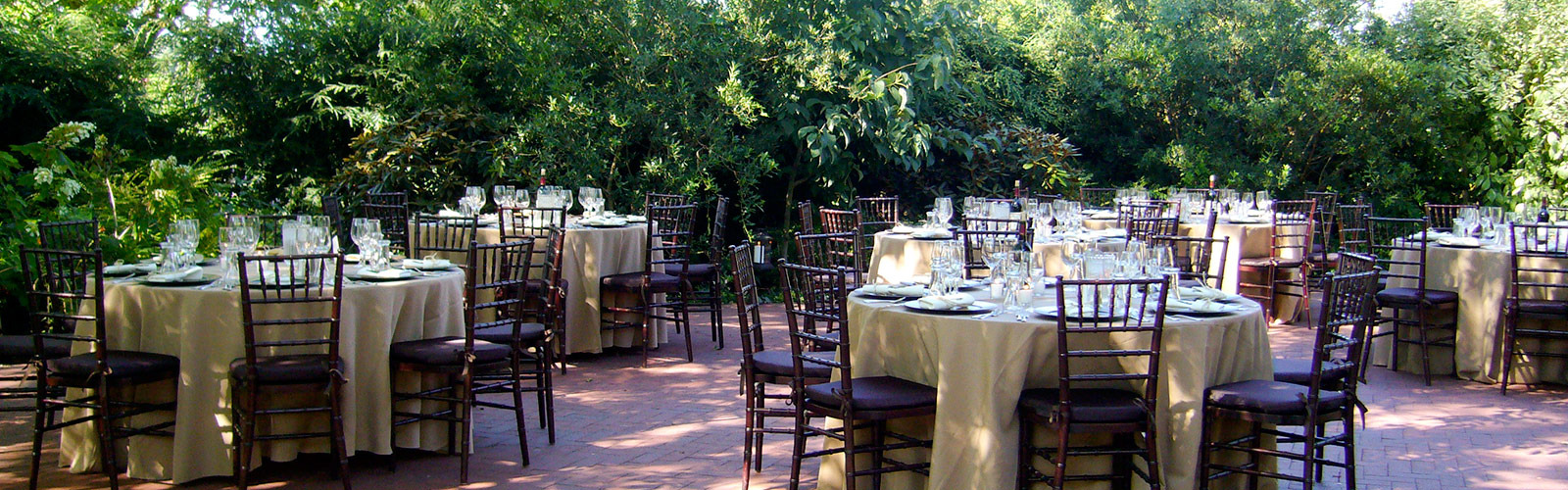
Seventy-odd acres on a property of this age means mature trees, lawns, gardens, orchards and outbuildings, and the single most valuable thing about all of it is that none of it is painted. Green is a plain background. After two hours inside a building where every surface has a picture on it, a subject against a hedge or a lawn or a line of trees is a relief for the photographer and a genuine change of register in the set.
The mature trees are the first asset. A property landscaped in the early twentieth century has trees that are now a century old, and in western Oregon that means large deciduous specimens as well as conifer. A broad-crowned deciduous tree is a natural room that shades a group and frames a ceremony with no structure at all, and it is the midday answer on the rare clear summer day.
Two canopy rules as always: position for open sky arriving from the side rather than light filtered through leaves, which is genuinely green, and avoid dappled shade entirely, because hard bright patches several stops above the surrounding skin cannot be recovered. The canopy edge is a two-metre walk and it solves both.
The gardens and orchards are the second, and they run on a calendar worth asking about. An orchard in blossom in spring is a completely different background from the same orchard in full leaf in July or bare in November, and productive planting — vegetable rows, herbs, fruit on trees — is a far more interesting close background than turf. A long lens two metres from a bed compresses it into texture.
The building’s own exterior is the third and it is the best architectural frame on the property. A large nineteen-eleven institutional building in brick is symmetrical, repetitive and substantial: rows of identical sash windows, a defined entrance, string courses, a roofline. Photograph it either dead on the centre line or firmly off axis, never two or three degrees off, and use scale — two small figures at the base of a long brick elevation is a stronger frame than a tight portrait against the wall.
Brick is also the friendliest material available here. Warm, matte, finely textured, holding its colour in shade rather than going blue, and taking low raking light extremely well so every joint and irregularity registers. Light it from the side; frontal light flattens the bond pattern entirely. And on the overcast days that dominate this climate, brick still reads warm when everything else has gone grey.
The brewery, winery and distillery spaces are the fourth asset and they need a question asked. Working production spaces are photographically interesting — tanks, barrels, copper, pipework, concrete floors — and they are also working spaces with their own access rules and, in the case of anything involving alcohol vapour, potentially restrictions on equipment. Ask which are accessible, when, and whether lights are permitted.
Where they are accessible, treat them as industrial interiors: light directly rather than bouncing, use repetition down a line of tanks or barrels as the composition, and control what any polished metal is reflecting rather than lighting the metal itself, because a large pale surface nearby gives a broad soft highlight along a curve while a hard light gives a bright dot and a lot of black.
The outbuildings and the small golf course are the fifth, and their value is plainness and openness. A par-three course is mown turf with specimen trees standing alone in it, which is the same gift a larger course gives: an isolated mature tree in open grass, which is a room, a silhouette and a background at once. And the mowing lines across turf give a flat surface a rhythm in raking light.
Two practical notes about the grounds. Seventy acres is a walk, and a wedding party in formal shoes moves at perhaps fifty metres a minute with stops — so establish which positions are close to the building and which require a genuine trek, and ask whether anything can carry people. And in western Oregon the grass is wet for most of the year, including on mornings in the dry season, so a long dress on a lawn before mid-morning is a real problem. Establish what is paved.
And one thing to ask about specifically: whether the mountain is visible from anywhere on the property. Western Oregon has a large glaciated volcano to the east, visible from open ground on clear days, and a long lens compressing a distant white peak behind a foreground is a frame that nothing on the property itself can provide. It is visible perhaps a third of days and it cannot be promised, but it is worth knowing where to stand if it appears.
Western Oregon, and the year
This is the wet side of the state and the seasonal pattern is the exact reverse of the high desert east of the Cascades, which is worth stating because photographers coming from one side get the other wrong.
The dominant condition here for most of the year is a high, even overcast. Western Oregon receives the great majority of its rain between October and May, and much of it as prolonged light rain rather than heavy downpours, under continuous grey cloud.
For a photographer that is a softbox the size of the sky, and it is genuinely the most forgiving portrait light there is: shadows soft to non-existent, even illumination at any hour, no bad time of day, and skin tones that need almost no work. On a property whose interiors are difficult, an overcast day outside is a gift.
What it costs is sky. A flat white overcast contributes nothing to a wide frame, so exclude it — fill the frame with the brick elevation, the trees or the gardens, put the horizon high, and let colour and texture carry the picture rather than tone. A frame composed for an interesting sky on an overcast Oregon day will always disappoint; one composed for saturated green and wet brick will not.
Wet is the other thing to use rather than wait out. Light rain saturates brick, stone, timber, paving and foliage, and wet surfaces are considerably darker and more three-dimensional than dry ones, with reflections giving a free second image. A brick building in light rain photographs better than the same building dry. Carry a cloth for the front element and work.
July, August and early September are the dry season and they surprise visitors: reliably sunny, warm rather than hot, and essentially rainless. Those are the most dependable outdoor conditions of the year and the reason the region’s wedding season is compressed into a narrow window — which means those dates book first.
Two honest cautions about late summer. Since the late twenty-tens, August and September have brought wildfire smoke to the region with some regularity, which can fill a valley for days, turn the light orange, flatten all contrast and produce air quality that makes an outdoor event genuinely inadvisable. It cannot be forecast far ahead, so a late-summer outdoor plan needs an air-quality contingency as well as a rain one — and at this venue that contingency is the building, which is large and entirely indoors.
That is worth saying as a genuine argument for this kind of property. A wedding whose ceremony and reception can both be inside a substantial building loses seventy acres of grounds on a bad day rather than losing the event, and in a climate this wet that resilience is the strongest practical point in its favour.
The second caution is local and specific: the Columbia River Gorge. This property sits near the western mouth of a deep gap cut through the Cascade range, and that gap funnels wind — pressure differences between the interior and the coast drive air through it, west in summer and east in winter, sometimes strongly and for days at a time. In winter an east wind out of the Gorge brings cold dry air and, in the right conditions, freezing rain, which is the region’s genuinely difficult weather and a travel problem for guests and suppliers.
For a photographer the practical consequence is that this is a windier location than its inland-looking setting suggests: a veil on an open lawn may be unmanageable, lightstands need sandbagging, and an unamplified officiant may struggle. Ask the venue about it, because anyone operating here knows exactly what the Gorge does.
At about forty-five and a half degrees north the latitude gives a large seasonal swing and one very useful number: civil twilight runs close to thirty-four minutes in midsummer, among the longest in this library, with a genuinely usable balance point of sixteen to nineteen minutes. That is enough for two positions rather than one, which on a property this size is worth having.
In late June the sun sets after nine and there are around fifteen and a half hours of daylight; in late December it sets before half past four and there are under nine. The midsummer noon sun reaches about sixty-eight degrees, meaningfully lower than the South’s, so even a clear midday has direction in it and open shade works properly. The midwinter noon sun sits near twenty-one degrees and rakes brick all day, which is excellent light in short supply.
Season by season: July into early September is the reliable window with the caveats above. Late May into June is lovely — gardens filling, long evenings, and the rain easing — and it is the better choice if a couple wants green rather than guaranteed sun.
Late September into October brings the region’s autumn: colour on the deciduous trees through the second half of October, the air clearing, and the rain returning. It is a beautiful and unreliable window.
October through May is the soft season and it is better than its reputation for a regional reason. This is evergreen country, so conifer holds dark green mass through the winter, and moss grows on trunks, walls, roofs and paving and is at its most vivid in the wet months. A February frame here has more colour in it than a February frame almost anywhere else in this library, and the building’s brick reads warm against all of it.
Winter’s real constraint is darkness rather than cold — it is mild here and rarely freezes hard except in a Gorge east wind. Under nine hours of daylight, mostly overcast, puts the usable outdoor window on a December day between about nine and half past three, with the balance point before five. A winter wedding here is an interiors wedding with one short outdoor window, and at a venue with this much interior that is a perfectly good proposition.
One closing instruction for any season. Find the two plain walls in the first twenty minutes. At a building where almost every surface has a picture on it, those two positions are what make a coherent set possible, and nobody finds them in a hurry at six in the evening.
More frames from The McMenamins Edgefield
The McMenamins Edgefield wedding photography: common questions
What is the defining condition here?
Almost every interior surface is hand-painted — walls, ceilings, door frames, stair landings, window reveals, corridors — in a great many different hands and subjects. So there are no neutral backgrounds: a plain wall is rare and has to be hunted for. That produces three problems at once: strong colour casts that change room to room, backgrounds that compete with faces because a mural is a picture, and an institutional plan full of similar-but-different medium rooms.
How do you photograph a painted room?
Commit in one direction. Either go long and wide open, so a hundred and thirty-five millimetres at f/2 turns the mural into an abstract wash with no readable content; or go square and stopped down and make the mural a deliberate flat field with the subject small and off centre, so the room is the subject and the couple are the figures in it. The middle distance at a middle aperture is the failure, because the mural is legible enough to demand attention and cropped enough to look accidental.
What about the colour casts?
They are genuinely on the skin rather than in the file, so white balance will not fix them — correcting globally just shifts the whole room. Distance is the control: two metres removes most of it and three or four removes it entirely. Diagnose with one frame of a hand against the wall and one a metre away, which is often a full correction step. And set a white balance deliberately per room rather than carrying one value through the building, because the palette changes as you move and a set drifts without anybody noticing.
Where do the plain frames come from?
Two places. The building’s unphotographed edges — service corridors, stairwells, plant rooms, lift lobbies, the backs of doors — which are almost always plain, painted one colour and lit by something honest; finding two of those is a twenty-minute job on arrival and they will carry every formal portrait the day needs. And the grounds, because seventy-odd acres of lawn, trees, gardens and orchards are the plain background the interiors deny you. Green is a plain background.
What is the best light in the building?
The windows, and they are genuinely good. A 1911 institutional building has tall sash windows set in thick masonry walls, and that thickness collimates the light into a directional beam with fast falloff — step the positions out, because a metre and a half inside a deep reveal is superb and three metres in is not. The reveal is probably painted too, which is a bonus: it becomes a decorative frame around the subject, and because the light passes it rather than reflecting off it the cast is much weaker than on a facing wall.
When is the best time of year?
July into early September is the dry season and the most dependable, which is why it books first — with two cautions: late-summer wildfire smoke has become a recurring regional risk needing an air-quality contingency, and the Columbia Gorge funnels wind through this location more than its setting suggests. But the overcast that dominates October to May is genuinely forgiving light rather than a problem, and wet brick photographs better than dry brick. And a large indoor building in a wet climate means a bad day loses the grounds rather than the wedding, which is this property’s strongest practical argument.
More Oregon venue guides
We are writing a photographer’s guide to every venue we would happily shoot in Oregon. Here are three more, plus the full index:
- The Smith Rock State Park, Terrebonne: The Problem, and Four Ways Out of It
- Ainsworth House: Who This Venue Suits, and Who It Doesn’t
- Shooting a Wedding at the Crystal Ballroom: The Technical Side
Planning a wedding at The McMenamins Edgefield?
Find the two plain walls first. Tell us your date.