 The Venue, Asheville: A Season-by-Season Guide
The Farm at Swan’s Crossing, Waynesville: One Frame, and How It Is Made
The haze is not a problem. It is the photograph.
This guide is about a single photograph, and it depends on a property of the air rather than of the venue.
The Farm at Swan’s Crossing is near Waynesville in the mountains of far western North Carolina, in a high valley between two ranges at something above eight hundred metres — a good deal higher and cooler than Asheville, and surrounded by ridge lines in every direction.
The frame is the ridges. Not the farm, not the barn, not a portrait against a fence: a long-lens composition of three, four or five ridge lines receding one behind another, each one paler and bluer than the one in front of it, with the couple small on open ground in the foreground.
That layering is the signature of the southern Appalachians and it exists because of something the forest does. The trees here release volatile organic compounds — isoprene and related chemicals — in very large quantities, and those scatter short wavelengths in the air above the ridges. The result is a natural blue haze that increases with distance, which is literally why this range is called the Blue Ridge.
For a photographer that is a gift rather than a defect, and it is worth being explicit about, because the instinct of anybody trained on dehazing sliders is to remove it. Do not. Atmospheric perspective is what turns a view of some hills into a composition with five distinct planes of depth in it, and it is the one thing this landscape does that almost nowhere else in the country does at this scale.
So the frame is built by finding a position where the ridges stack cleanly, compressing them with a long lens so the layers separate, and placing two small figures where they read against the nearest band.
Three things make or break it: the position, which has to be high enough to see over the nearest ridge; the focal length, which has to be long; and the condition of the air, which varies enormously through the day and through the year and which is the part most people get wrong.
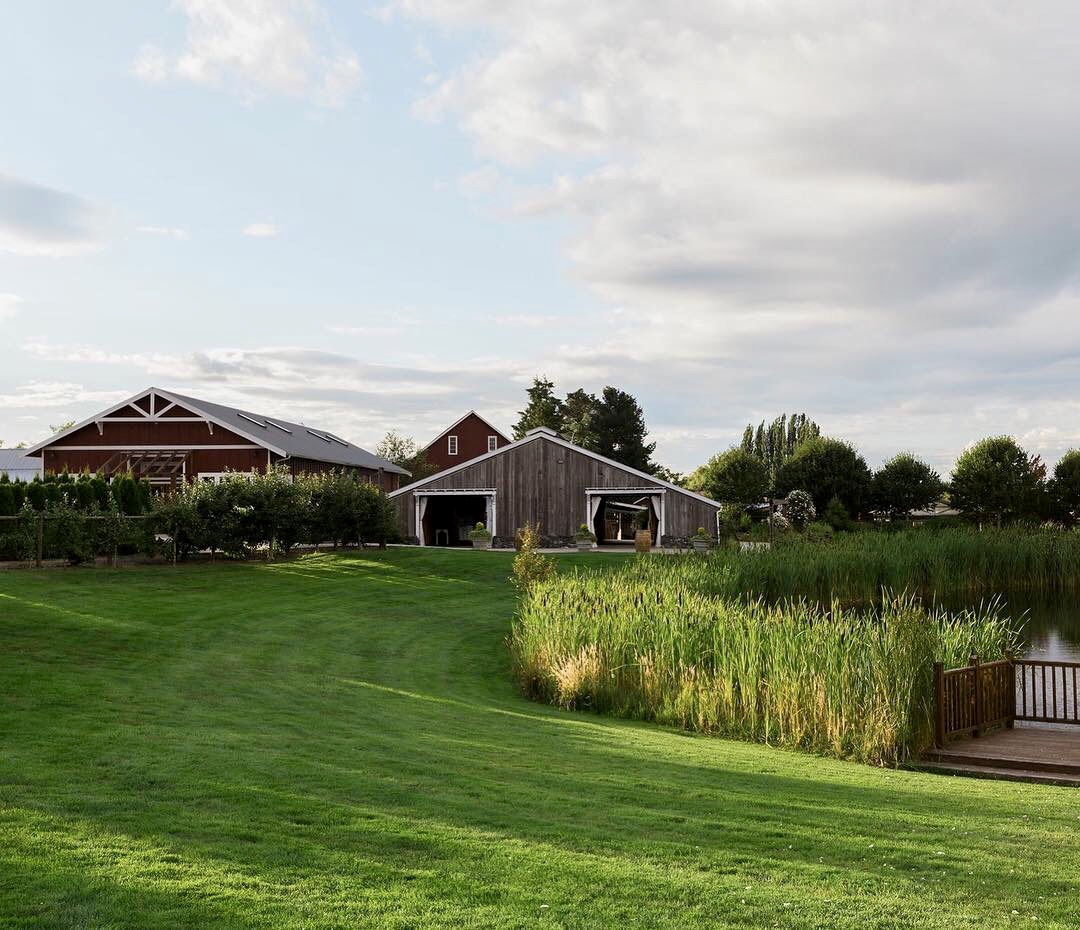
The rest of the property is a working farm in a mountain valley, which gives you fence lines, fields, outbuildings and a barn — all useful, all covered in the second section, and none of it the reason to come here.
What follows is how to build the frame, what else the farm gives, and the southern Appalachian year — which has the longest autumn in this library and a great deal of rain in it.
The Farm at Swan's Crossing at a glance
| Where | A farm in a high mountain valley near Waynesville, western North Carolina, above 800 m |
| The frame | Ridges receding in stacked bands of blue, compressed long, with the couple small |
| Why it works | The forest’s own emissions scatter blue light, so distance separates into planes |
| The instruction | Do not dehaze it. The haze is the subject. |
| Best conditions | Early morning, and the half hour after rain clears |
Building the frame
First, find the position, and it needs elevation rather than distance.
The layering only reads if you can see over the nearest ridge to the ones behind it, which means a position at or near the top of whatever rise the property has. On a farm in a valley that is usually the highest field, a shoulder of pasture, or a track that climbs out of the bottom — and it may well be a ten-minute walk uphill from the buildings.
So walk the property on a scout, find the highest accessible open ground, and check from there how many ridge lines are visible. Three is good, five is excellent. Then check what is between you and them: a single utility pole, a roofline or a near tree crossing the ridge lines will spoil the composition, and none of it is moveable.
Second, the focal length, and it is the technical crux. This frame needs a long lens — a hundred and thirty-five millimetres at minimum and often two hundred or more — because compression is what separates the layers. At twenty-four millimetres, four ridge lines a few kilometres apart collapse into a single low band along the bottom of the frame and the picture is of a sky. At two hundred they stack as distinct horizontal planes filling the frame, each one paler than the last.
That has a consequence for the couple: at that focal length they have to be a long way from the camera to be in frame with the ridges at all, which means they will be small. That is correct — the frame is about where they are — but it needs briefing, because two people standing a hundred metres from a photographer will have no idea what is happening.
Place them against the nearest ridge rather than against sky, and against the darker part of it, so their outline reads. Two small light figures against the palest distant band disappear; the same figures against the dark near ridge are unmistakable.
Third, the air, which is the part that decides whether the frame works at all.
The haze that produces the layering varies through the day. It is strongest and most defined in the early morning, when the air is still and moisture has not yet been stirred by thermal activity, and the layers are at their most cleanly separated then. Through the middle of the day convection mixes the air, contrast flattens and the bands blur together. In the late afternoon the low sun raking across the ridges restores some of the separation, and adds warmth to the nearest planes while the distant ones stay blue — which is arguably the best version, because you get the depth and a colour gradient at the same time.
So there are two good windows: the first two hours after sunrise, and the last two before sunset. Morning gives cleaner separation and a cooler palette; evening gives warmth on the near ridges and a coloured sky above. Make both if you can.
Fourth, the exposure. Stacked ridge lines are a low-contrast subject — that is the point — which means frames come back flat and need contrast added rather than removed. Expose slightly to the right, keep the highlights off the clip, and build the contrast afterwards. And when you build it, be careful: too much contrast or too much clarity collapses the layering back into a single dark mass, which undoes the whole picture.
Do not dehaze. That instruction bears repeating because the temptation is strong and the result is always worse: a dehazed southern Appalachian ridge frame is a flat green view of some hills with no depth in it.
Fifth, the aperture. Stop down to f/8 or so, because the layers have to be sharp for the separation to read, and at that distance depth of field is not the issue — the issue is that a long lens wide open will be softer than it needs to be.
And use a tripod if the light is low, because a two-hundred-millimetre frame at dawn is a slower shutter than it feels.
Total time to make it once the position is known: six minutes, plus however long it takes to walk the couple up there. Time to find the position and count the ridges: half an hour on a scout, uphill, in daylight.
One variant worth having, and it is the best thing in the region when it happens. On a still morning after a clear night, fog pools in the valleys below the ridge tops — and from a high position you are then looking at ridge lines rising out of white, with the layering exaggerated because each band is separated by cloud rather than merely by haze. That is the frame the southern Appalachians are famous for. It cannot be arranged, it happens more often here than almost anywhere in the eastern United States, and if you arrive and it is there you photograph it before anything else, because it lifts.
What else the farm gives
The rest of the property is a working mountain farm, and it offers four things.
The fence lines are the strongest element, as they are on any farm. A fence is a straight line drawn across a landscape by somebody who needed a boundary, and photographed along its length from low down it gives a leading line with a rhythm and a vanishing point. In mountain country a fence running up or across a slope also describes the topography, which a flat farm’s fence cannot.
The fields are the portrait ground. Mountain pasture is steeper, rougher and more tussocky than lowland grass, which in raking light is an advantage — a low sun across an uneven field picks out every clump and throws long shadows, so the ground has texture rather than being a green plane. And a sloping field means you can put a subject above the camera and separate them from the background by geometry alone, with no aperture required. On a property with real gradient, that is worth walking for.
If there is hay, ask when it is cut. Standing hay backlights into a glowing screen because the heads are translucent; windrows are a graphic pattern across a slope; stubble is open and plain. Three different backgrounds within a few weeks of each other.
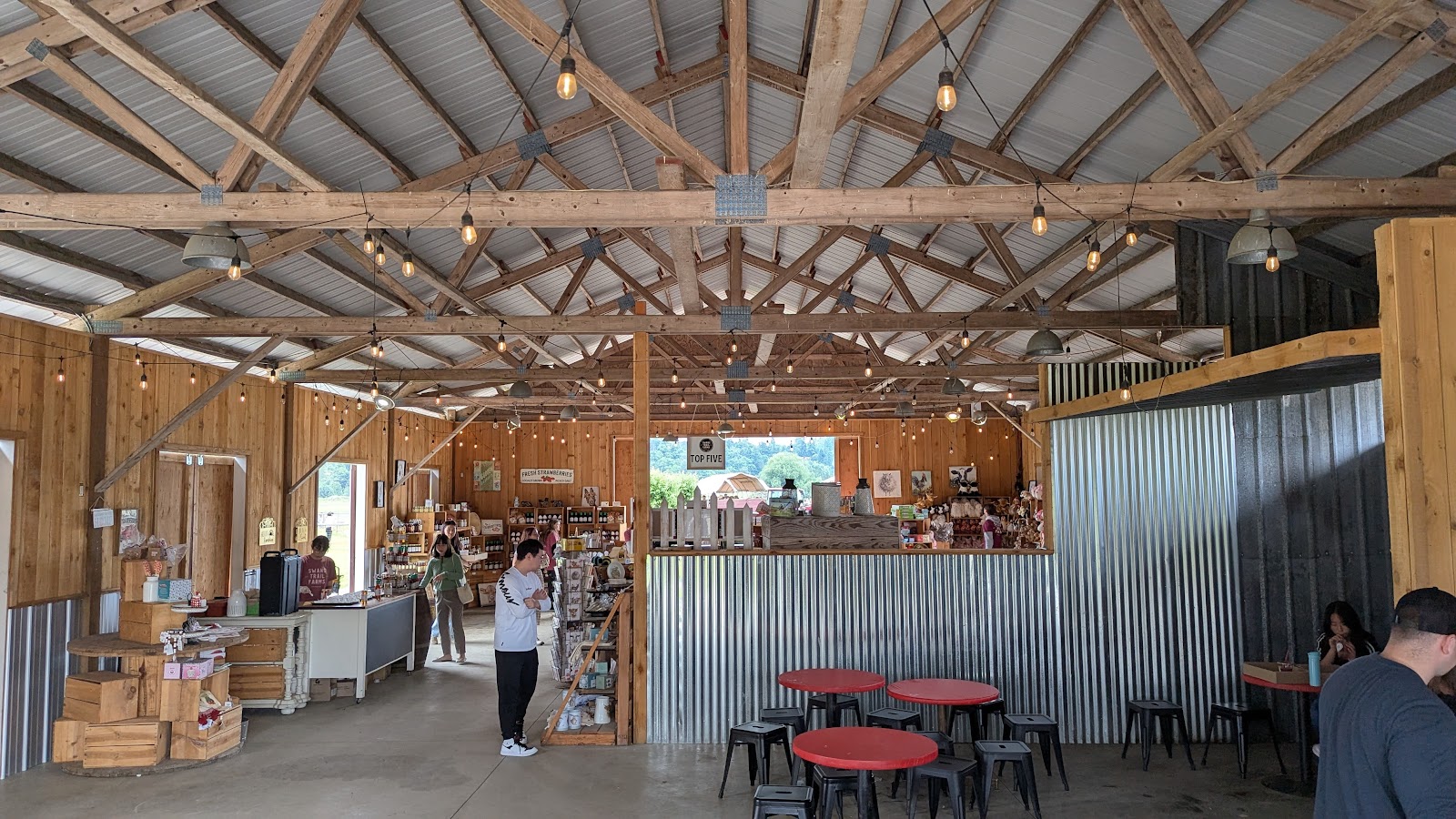
The buildings are the third element and they are textural. Weathered timber and corrugated metal both reward raking light — a source almost parallel to the surface throws every split, ridge and nail head into its own small shadow, and the material reads as material rather than as a brown or grey plane. Light from the side, never frontally.
And the barn, if there is one in use, is a light problem with the standard answers. Timber absorbs rather than reflects, so bouncing fails; the doorway is the best light source on the property, giving directional light with a very fast falloff so that a subject a metre inside is modelled with a genuinely dark side; and the interior is a black studio, where one modifier close and feathered separates a subject completely because the background sits four or five stops down. Warm whatever you bring, because a festoon-lit barn is very warm.
The fourth element is the forest, and in this region it is worth a paragraph because it is exceptional rather than incidental. The southern Appalachians hold the most botanically diverse temperate forest in North America, and a mountain farm’s boundaries run into cove hardwood forest with an understorey of rhododendron and mountain laurel.
Rhododendron and laurel grow in dense thickets with glossy evergreen leaves, which makes them a solid dark green background year-round — the most reliable background on the property in winter, when the deciduous canopy has gone. And they flower: laurel through May and June, rhododendron through June and into July at this elevation, in banks of white and pink that photograph as masses rather than as individual blooms. Ask what is out in the week of the date, because the sequence moves upward with elevation.
Two canopy rules in any forest here, and they matter because cove hardwood is dense: position for open sky arriving from the side rather than light filtered through leaves, which is genuinely green, and avoid dappled shade entirely, because hard bright patches several stops above the surrounding skin cannot be recovered. Work at the forest edge rather than inside it.
Two practical notes about a mountain farm. The gradient means distances are longer and slower than a map suggests, and a wedding party of a dozen in formal shoes walking uphill to the ridge position is fifteen minutes each way rather than five — ask whether a vehicle can get up there. And mountain pasture is wet: dew sits until the sun has been on it for an hour, and after rain it stays soft for considerably longer than lowland grass. Establish what is mown, what is grazed and what is paved.
And ask the one question that matters most in this region: what the covered capacity is, as a number.
The high mountains, and the year
Two regional facts shape a wedding here more than the venue does, and the first is the rain.
The southern Appalachians are among the wettest places in the eastern United States, because moist air is forced up over the ranges and drops its load on the way, and at this elevation the totals are higher still. Summer afternoon thundershowers are frequent, they build quickly over the ridges, and on a mountain farm there is limited shelter.
So the rain plan is the largest risk in any booking here, and the number is what matters. Ask what the covered capacity is as a figure, compare it to the guest list, and establish how long it takes to move everybody under cover from the furthest ceremony position — because on a slope, in formal shoes, that is longer than anybody estimates.
The compensation is genuine and it is the best light in the region. The half hour after a shower clears in these mountains is exceptional: the air washes clear so the ridge layering is at its most defined, wet timber and wet foliage go several tones darker and far more saturated, mist rises off warm ground and hangs in the hollows so that the valleys below fill with cloud, and a low sun coming under a broken ceiling into humid forest produces visible shafts. If a cell goes through at six, wait rather than pack — and get back to the high position, because that is when the frame in the first section is at its very best.
The second regional fact is elevation, and this property is high enough for it to matter. Above eight hundred metres the air is cooler by several degrees than the valleys, which affects three things.
Temperature: summer afternoons here are comfortable where the lowlands are not, and a July wedding at this elevation is a considerably more pleasant proposition than one an hour east. Evenings are genuinely cool, though — a summer day in the mid twenties can be in the low teens by ten at night, so an outdoor reception needs heating and a bride in a summer dress will be cold.
Season timing: everything happens later in spring and earlier in autumn at elevation. Leaf-out is a week or two behind the valleys, the flowering sequence runs upward through May, June and July, and autumn colour arrives at this height before it reaches the lowlands.
And weather: cloud sits on ridge tops frequently, which means the ridge frame may simply not be available. A high valley in low cloud has no distant view at all, and on those days the photography is the farm, the forest and the barn rather than the landscape. Have that plan.
Now the seasons, and this region has the longest autumn in this library.
Because colour runs down the elevation gradient, the southern Appalachian autumn lasts four or five weeks rather than a fortnight — the highest ridges turn in early October and the valley floors not until early November. At this elevation the peak is usually the middle two weeks of October, and from a high position you can have colour on the near ridges and green still on the distant lowland ones, which makes the layered frame a colour composition as well as a tonal one. That is the best fortnight of the year here and it is the most heavily booked in the region.
Late April into early June is the other strong window. It is the wettest and greenest part of the year, with a saturated dripping forest and the flowering sequence coming through — laurel in May and June, rhododendron in June and into July at this height. Leaf-out is late up here, so early May may be earlier than a couple expects.
Summer is comfortable at this elevation and workable at the two ends of the day, with the afternoon thundershower risk at its highest and the ridge frame often obscured by convective cloud. Humidity fills shadows by roughly two stops, which helps faces, at the cost of a washed sky and a lens that fogs coming out of air conditioning.
Winter is the season almost nobody considers and it has real merit for the frame in this guide, because the air is at its clearest of the year and the ridges are at their most sharply layered. With the leaves off, the topography reads: every hollow, rock face and ridge line legible in a way the summer canopy hides. A low midwinter sun near thirty-five degrees rakes the slopes through the whole middle of the day. And at this elevation rime ice and snow on the ridge tops are common, which puts white on the near bands and blue on the far ones.
Against winter: sunset before half past five, and at a venue ringed by ridges the effective end of the day is earlier still, so the outdoor work belongs in the early afternoon. Mountain roads in an ice event are a genuine travel problem for guests and suppliers rather than a photographic one, and at this elevation that risk is higher than in the valleys. A January date deserves a contingency that assumes some people cannot drive.
And the closing instruction is the opening one restated, because it is the only part of this venue that cannot be improvised. Walk uphill on the scout, count the ridge lines, check nothing crosses them, and mark the position. Then bring a long lens, brief the couple that they will be small and far away, and make the frame in the first two hours or the last two. Everything else here is a good farm; that one photograph is the reason to come.
More frames from The Farm at Swan's Crossing
The Farm at Swan's Crossing wedding photography: common questions
What is the one frame?
Three, four or five ridge lines receding one behind another, each paler and bluer than the one in front, with the couple small on open ground in the foreground. That layering is the signature of the southern Appalachians and it exists because the forest releases volatile organic compounds that scatter short wavelengths in the air above the ridges — which is literally why the Blue Ridge is blue.
Should you remove the haze?
No, and this bears repeating because the temptation is strong. Atmospheric perspective is what turns a view of some hills into a composition with five distinct planes of depth in it, and it is the one thing this landscape does that almost nowhere else in the country does at this scale. A dehazed southern Appalachian ridge frame is a flat green view of hills with no depth. The haze is the subject.
What equipment does it need?
A long lens — a hundred and thirty-five millimetres at minimum, often two hundred or more — because compression is what separates the layers. At twenty-four millimetres four ridge lines collapse into a single band along the bottom of the frame and the picture is of a sky. Stop down to about f/8 so the layers are sharp, and use a tripod if the light is low, because a two-hundred-millimetre frame at dawn is a slower shutter than it feels.
Where do you stand?
High, and it usually means a walk. The layering only reads if you can see over the nearest ridge to the ones behind it, so you need the highest accessible open ground on the property — often a ten-minute climb from the buildings, and fifteen minutes each way for a party in formal shoes. Check on the scout how many ridge lines are visible and whether anything crosses them, because a single utility pole or roofline will spoil the composition and none of it is moveable. Ask whether a vehicle can get up there.
When is the air best?
Two windows. The first two hours after sunrise, when the air is still and the layers are at their most cleanly separated, with a cooler palette. And the last two before sunset, when a low sun adds warmth to the near ridges while the distant ones stay blue — arguably the better version, because you get depth and a colour gradient at once. Through the middle of the day convection mixes the air and the bands blur together. And the very best version is a still morning after a clear night, when fog pools in the valleys and the ridges rise out of white.
How much does the rain matter?
It is the largest risk in any booking here. The southern Appalachians are among the wettest places in the eastern United States and at this elevation the totals are higher still, with summer thundershowers that build quickly over the ridges. Get the covered capacity as a number and establish how long it takes to move everybody from the furthest position, which on a slope in formal shoes is longer than anybody estimates. The compensation is that the half hour after a shower clears is the best light in the region — and it is exactly when the ridge frame is at its finest.
More North Carolina venue guides
We are writing a photographer’s guide to every venue we would happily shoot in North Carolina. Here are three more, plus the full index:
- The Duke Energy Center: How the Glass Lobby Frame Is Made
- Haywood Hall: What an Eighteenth-Century House Can and Cannot Do
- The JC Raulston Arboretum: Four Ways Out of the No-Shelter Problem
Planning a wedding at The Farm at Swan's Crossing?
Walk uphill, count the ridges, bring a long lens. Tell us your date.