 The Redd on Salmon Street: Building the Shot List
May 31, 2026
Portland Art Museum: Planning the Shot List
Museums are built to light artwork, not faces. Work out which spaces give you architecture rather than galleries, and the shot list falls into place.
The Portland Art Museum was founded in 1892, making it the oldest art museum in the Pacific Northwest, and its main buildings on the South Park Blocks include work by the architect Pietro Belluschi. It is a serious institution with serious collections, which shapes everything about photographing a wedding inside it.
The central photographic fact about any art museum is that its lighting is designed for objects on walls. Gallery lighting is typically low-level, warm, and delivered as tight pools from track fixtures — brilliant for a painting, actively hostile to a human face, which ends up with a bright forehead and dark eyes. Add the near-universal restrictions on flash near artwork and you have a venue that requires planning rather than improvisation.
So this guide is built as a shot list by location type, which is how we would actually approach the day. We have not photographed a wedding here, and we make no claims about which galleries are available, what the museum permits or how its event spaces are configured — those are questions for their events team, and the answers vary by exhibition.
Portland Art Museum at a glance
| Where | South Park Blocks, downtown Portland, Oregon |
| Founded | 1892 — the oldest art museum in the Pacific Northwest |
| Architecture | Includes buildings by Pietro Belluschi |
| Lighting | Gallery track lighting: low, warm, tightly pooled — designed for artwork, not faces |
| Plan around | Flash restrictions near artwork, and choosing architecture over galleries |
First: separate the architectural spaces from the galleries
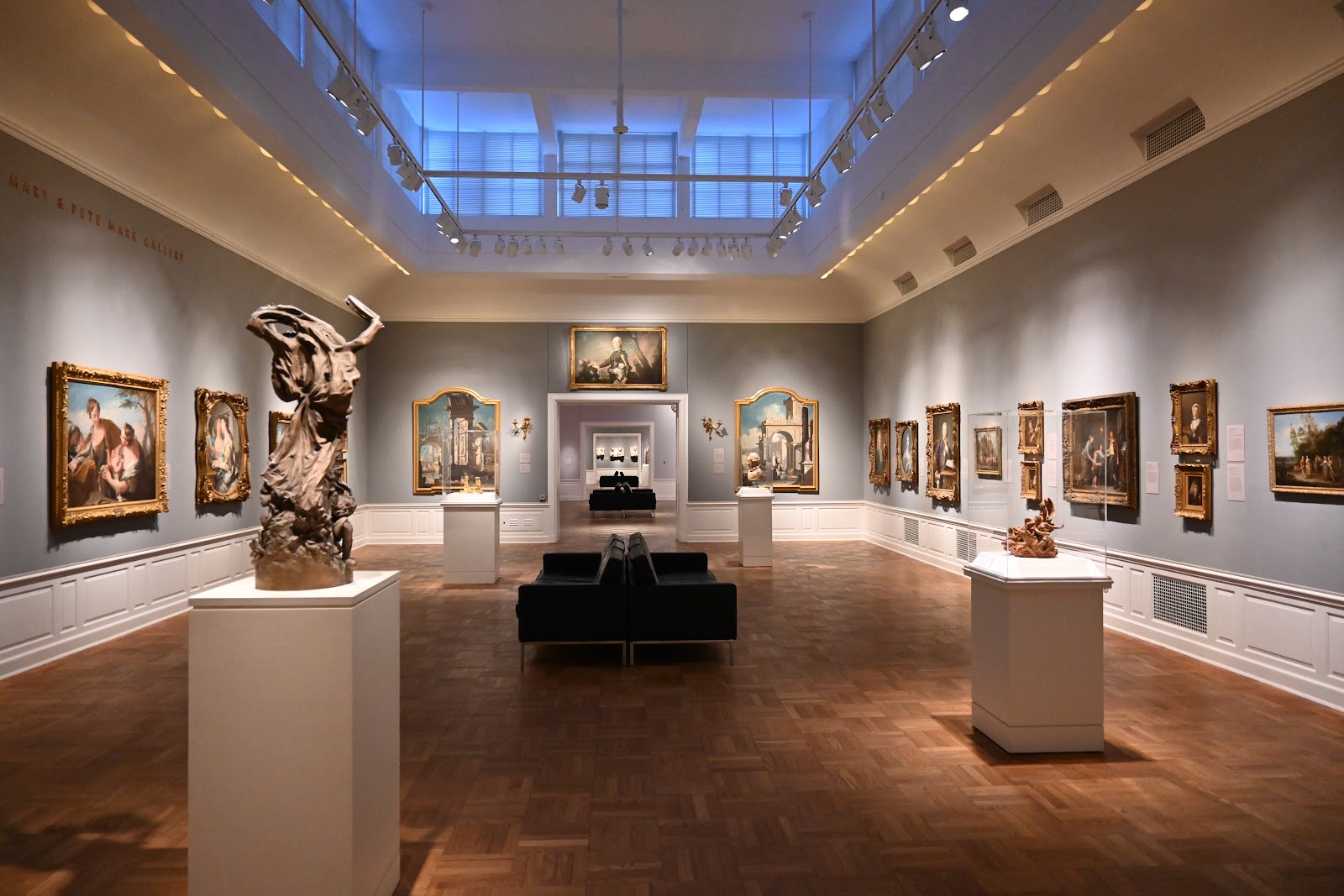
This is the decision that determines the entire shot list. Galleries are where the art is, where the lighting is worst for portraits and where restrictions are tightest. Architectural spaces — lobbies, stairwells, halls, corridors, exterior colonnades — are where a museum gives a photographer clean lines, higher ceilings, more even light and far fewer rules.
Couples tend to imagine portraits among the paintings. In practice the strongest museum wedding photographs are usually architectural: a figure against a long clean wall, a staircase used for its geometry, the scale of a hall making two people look small in a deliberate way. Those frames also age better, because they are not tied to whichever exhibition happened to be installed.
Ask the museum early which spaces are actually included on your date, and whether the answer changes with the exhibition schedule. Build the shot list around the confirmed architectural spaces, and treat gallery access as a bonus.
The shot list: what we would plan, location by location
Six frames, each tied to a kind of space rather than a specific room, so the list survives whatever the museum confirms.
- The scale frame. Wide, in the largest volume available, with the couple small in it. This is the shot that says museum rather than hotel, and it needs height in the frame — include the ceiling.
- The clean-wall portrait. A long uninterrupted wall, the couple close to it, a longer lens compressing the background. Modern museum architecture supplies these generously and they are the most flattering frames in the building.
- The stairwell geometry. Stairs give you diagonals and levels, which is the easiest way to make a two-person portrait dynamic rather than static. Shoot from above and below.
- The colonnade or exterior. Architectural shade outdoors is the best light on any museum property — soft, directional and free of the colour problems inside. If there is a covered exterior space, it is likely your best portrait location.
- The gallery frame, if permitted. One considered image, not a series. Position so a lit artwork is background rather than competing light source, and keep your subjects out of the track-light pools.
- The South Park Blocks. Mature street trees outside give open shade and seasonal colour, and cost nothing in museum permissions. Budget ten minutes for it.
Solving gallery light without flash
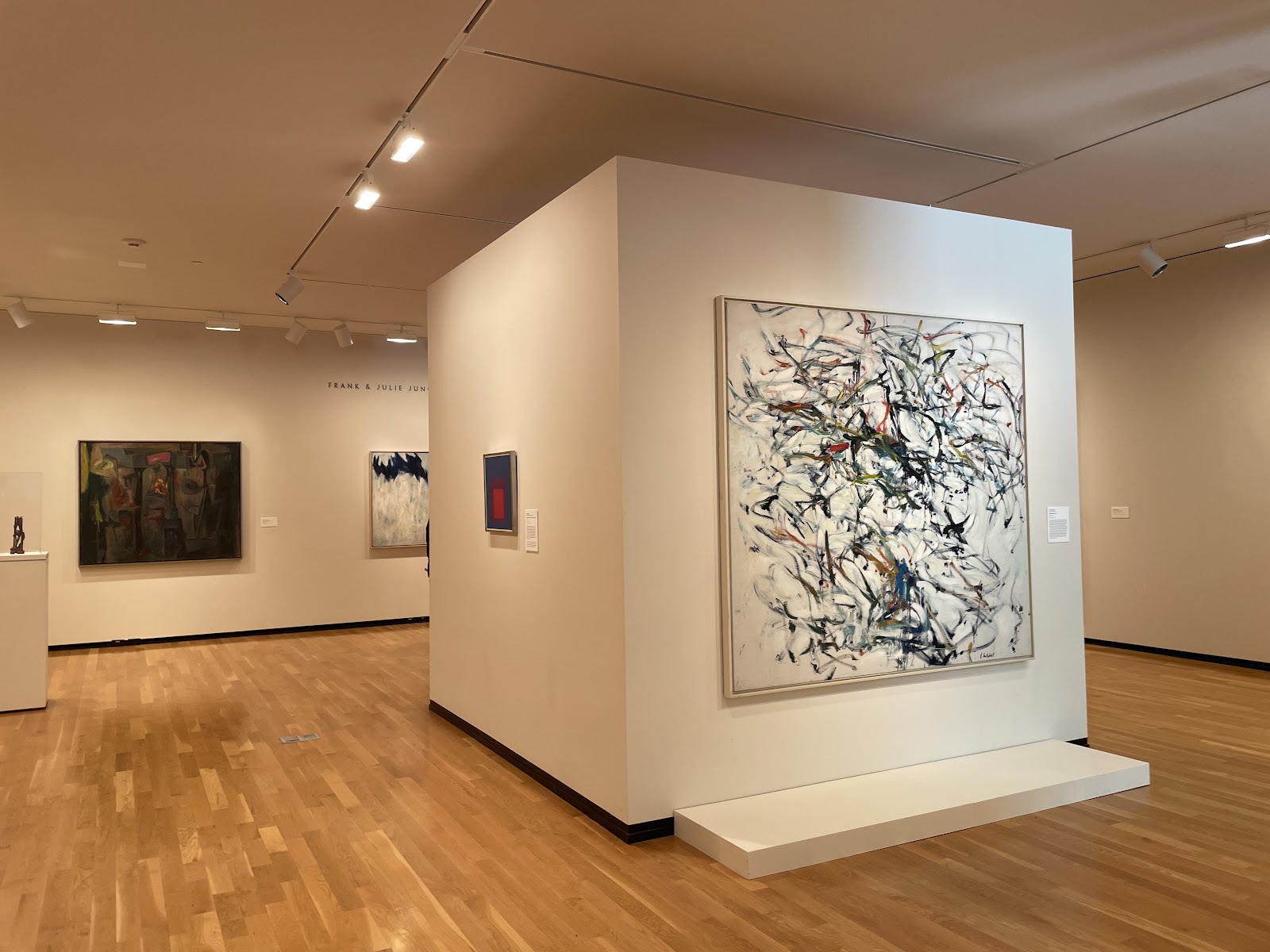
Assume you cannot use flash near artwork until told otherwise — it is the standard museum position and it is not negotiable when it applies. That leaves you working with what is there, and what is there is tight warm pools with deep falloff.
The technique is placement rather than illumination. Find where two pools overlap and the light becomes broader, or stand your subjects at the edge of a pool so the light rakes across the face rather than dropping straight onto the forehead. Turn faces up into the light very slightly. Avoid standing anyone directly beneath a fixture, which is the single most common mistake and produces the deep eye sockets that make gallery portraits look grim.
Technically: fast primes wide open, ISO high enough that you stop worrying about it, manual white balance set in the specific room because gallery fixtures are warm and rarely match each other. And accept a shallower depth of field than you would normally choose — in this light it is the price of a clean frame.
Timeline: museums have hard edges
A working museum has public hours, installation schedules and security requirements, and those produce firmer constraints than most wedding venues. Access to a given space may be available only after closing, or only within a set window, and the hours you assumed may not be the hours you get.
The planning consequence is to confirm access times before the ceremony time is fixed, not afterwards. If gallery portraits are only possible after the museum closes to the public, that has to sit in the schedule deliberately, with the light-independent nature of interior spaces working in your favour — an advantage of an artificially lit venue is that nine in the evening looks the same as two in the afternoon.
Leave a buffer for movement. Museums are large, corridors are long, and security escorts between spaces take time. Ten minutes of slack between locations prevents the whole list collapsing into the last one.
What works in your favour
- Serious architecture that photographs as a subject, and ages better than exhibition-dependent frames
- Interior spaces are weather-independent and time-of-day independent
- Clean modern walls and stairwells give some of the most flattering portrait backgrounds in the city
- Mature street trees on the South Park Blocks provide free open shade outside
- Downtown location with additional architectural options within a short walk
What to plan around
- Gallery lighting is tightly pooled and warm — hostile to faces without careful placement
- Assume flash is restricted near artwork; plan a natural-light method
- Available spaces may change with the exhibition schedule, so confirm late and confirm specifically
- Access windows are set by public hours and security, not by your preferred timeline
- Large building with real distances between spaces; movement time must be budgeted
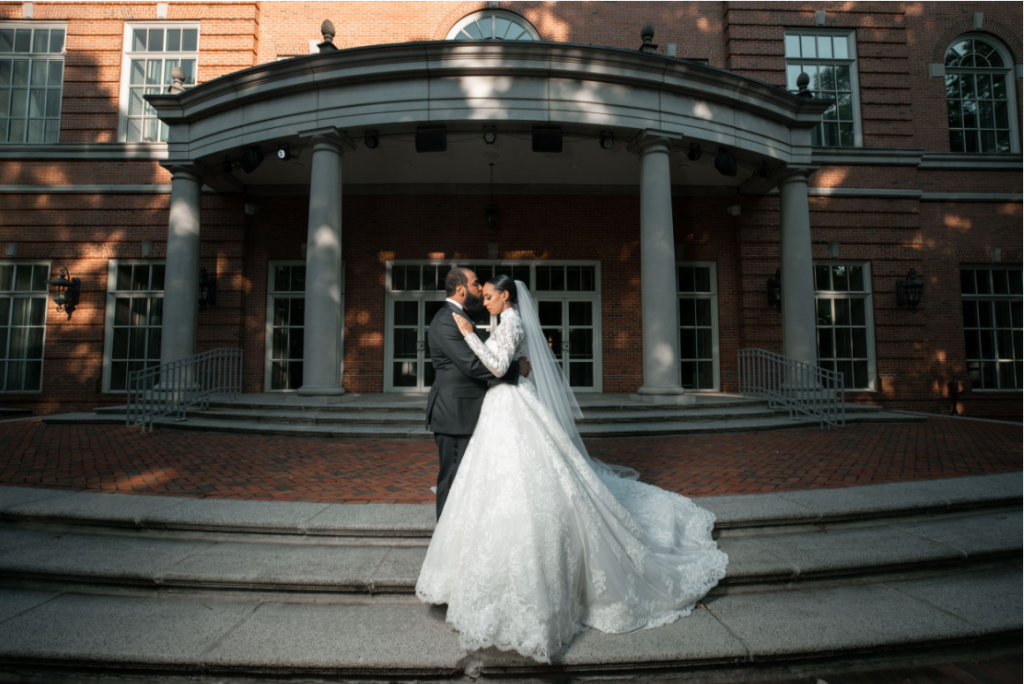
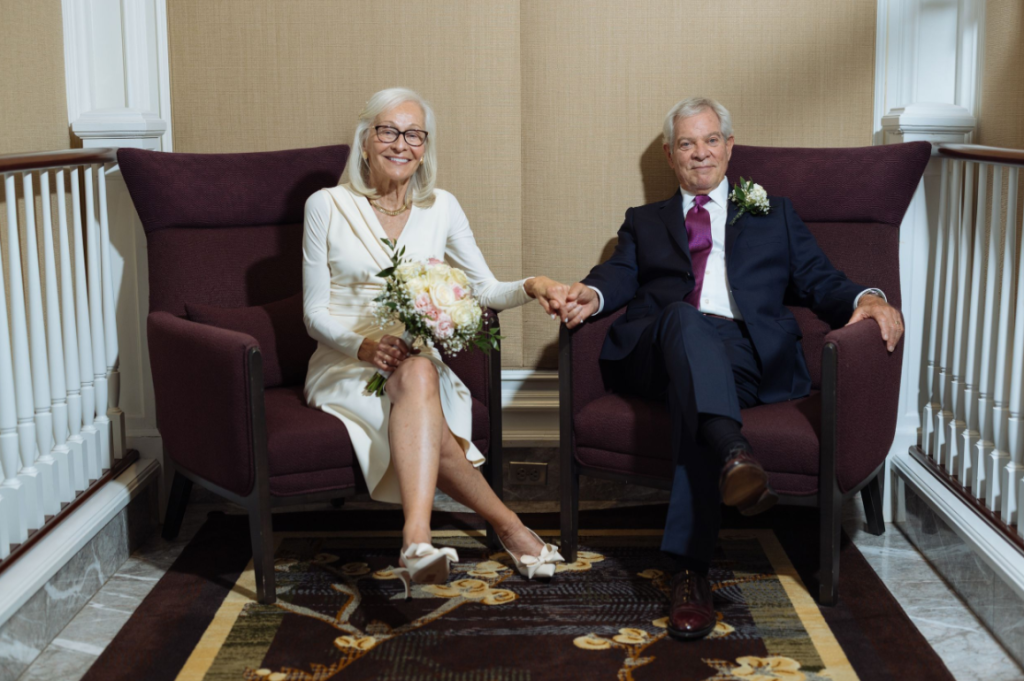
More frames from Portland Art Museum
Portland Art Museum wedding photography: common questions
Can you use flash for wedding photos in the galleries?
Assume not unless the museum explicitly says otherwise — restricting flash near artwork is standard practice. Plan a natural-light approach for any gallery frames: fast primes, high ISO, and careful placement at the edge of light pools rather than directly under a fixture.
Are gallery portraits or architectural portraits better?
Architectural, in almost every case. Galleries have the worst lighting in the building and the tightest rules, while lobbies, stairwells, halls and exterior colonnades give you clean lines, more even light and far fewer restrictions. Architectural frames also age better because they are not tied to a particular exhibition.
Why do museum portraits often look harsh?
Because gallery track lighting drops tight pools from above. Stand someone directly beneath a fixture and you get a bright forehead and dark eye sockets. The fix is placement: work at the edge of a pool so the light rakes across the face, or find where two pools overlap and the light broadens.
Will all the spaces be available on our date?
Not necessarily, and it depends on the exhibition schedule and public hours. Confirm the specific spaces and the access window with the museum before you fix your ceremony time, because a space that is only available after closing changes the whole timeline.
Is there anywhere good outside?
Yes — the South Park Blocks have mature street trees that give open shade and seasonal colour, and using them costs nothing in museum permissions. Any covered exterior space at the museum is also likely to be the most flattering light on the property.
More Portland, OR venue guides
We are writing a photographer’s guide to every venue we would happily shoot in Portland, OR. Here are three more, plus the full index:
- Photographing a Wedding at the Portland Japanese Garden
- The Redd on Salmon Street: Building the Shot List
- Rose Test Garden Weddings: A Photographer Answers the Real Questions
All Portland, OR Wedding Venues →
Planning a wedding at Portland Art Museum?
Museum weddings reward planning more than almost any other venue, because access and lighting are decided long before the day. Send us your date and we will help you ask the museum the right questions and build the shot list around the answers.