 The Riverside Hotel, Boise: The Light Through a Day
The Lakeview Lodge, Coeur d’Alene: Suits and Does Not Suit
Timber and a view. Both are commitments.
A lodge divides couples on one thing and it is not price. It is whether they want warmth or light.
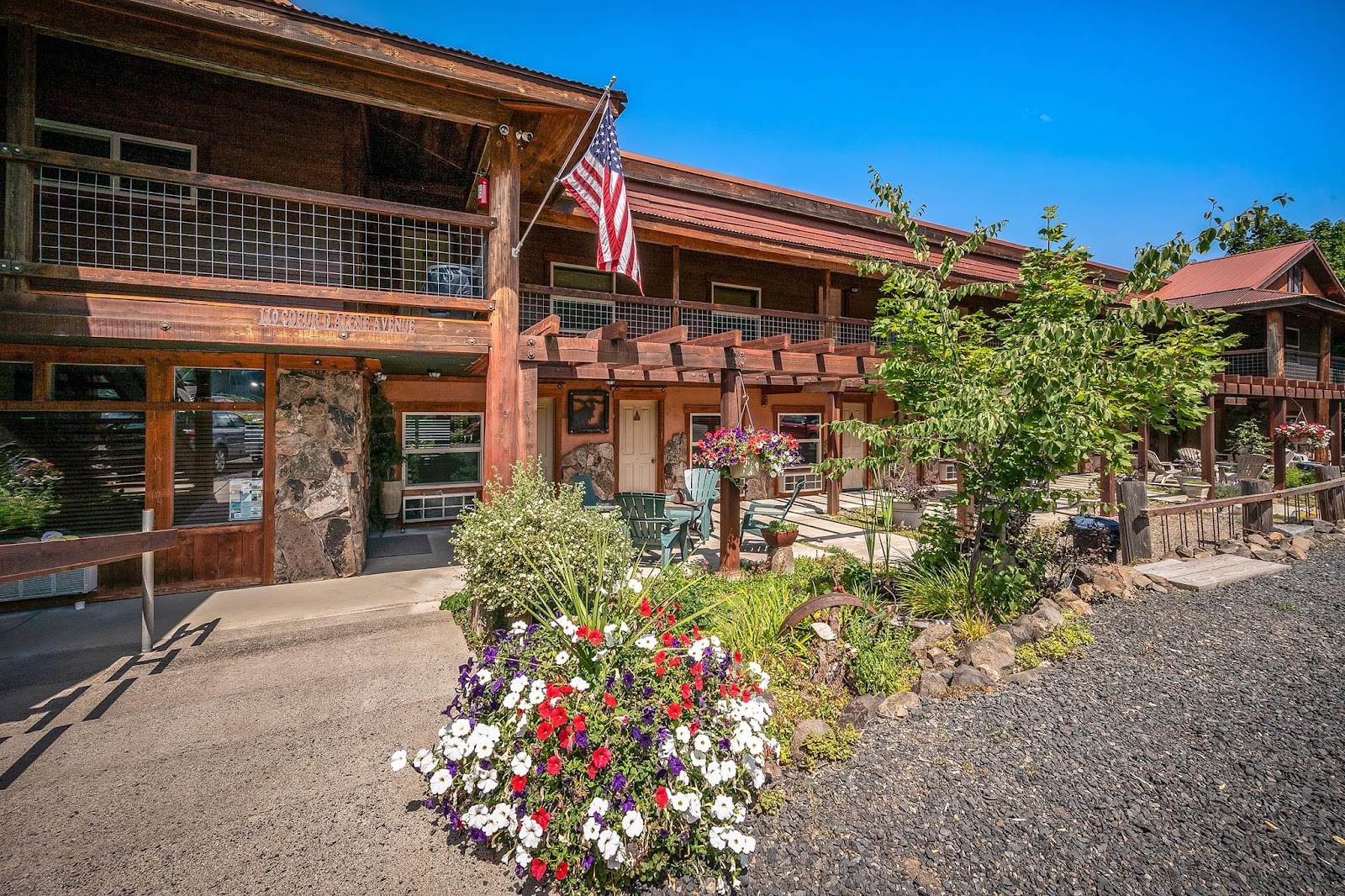
The Lakeview Lodge sits above Lake Coeur d’Alene in the Idaho Panhandle, and it is what a lodge is: a timber building, with timber inside as well as out, positioned for a view over the water and the forested hills around it.
That produces an unusually clear photographic profile, and the two halves of it are in tension.
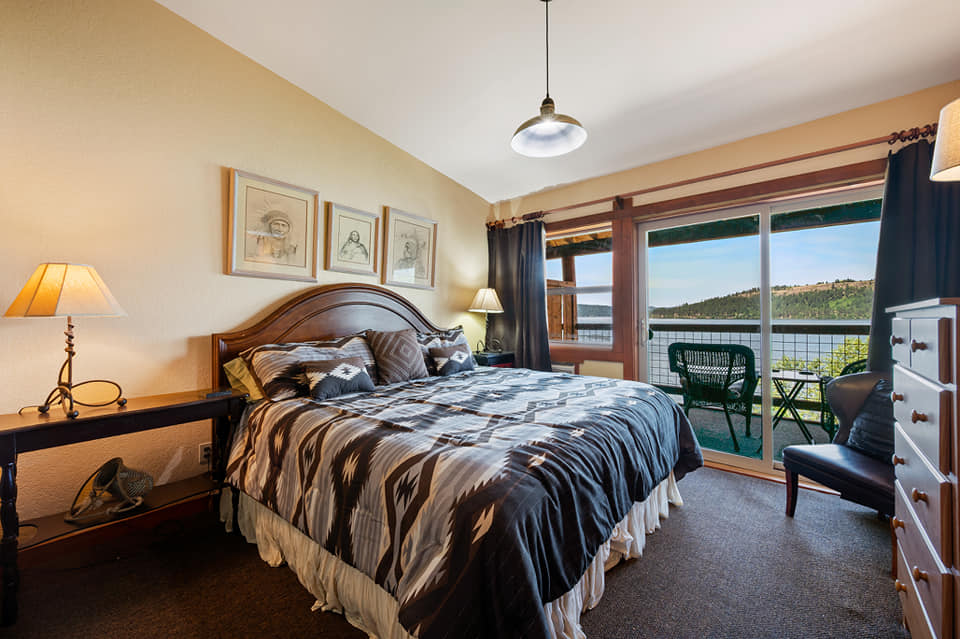
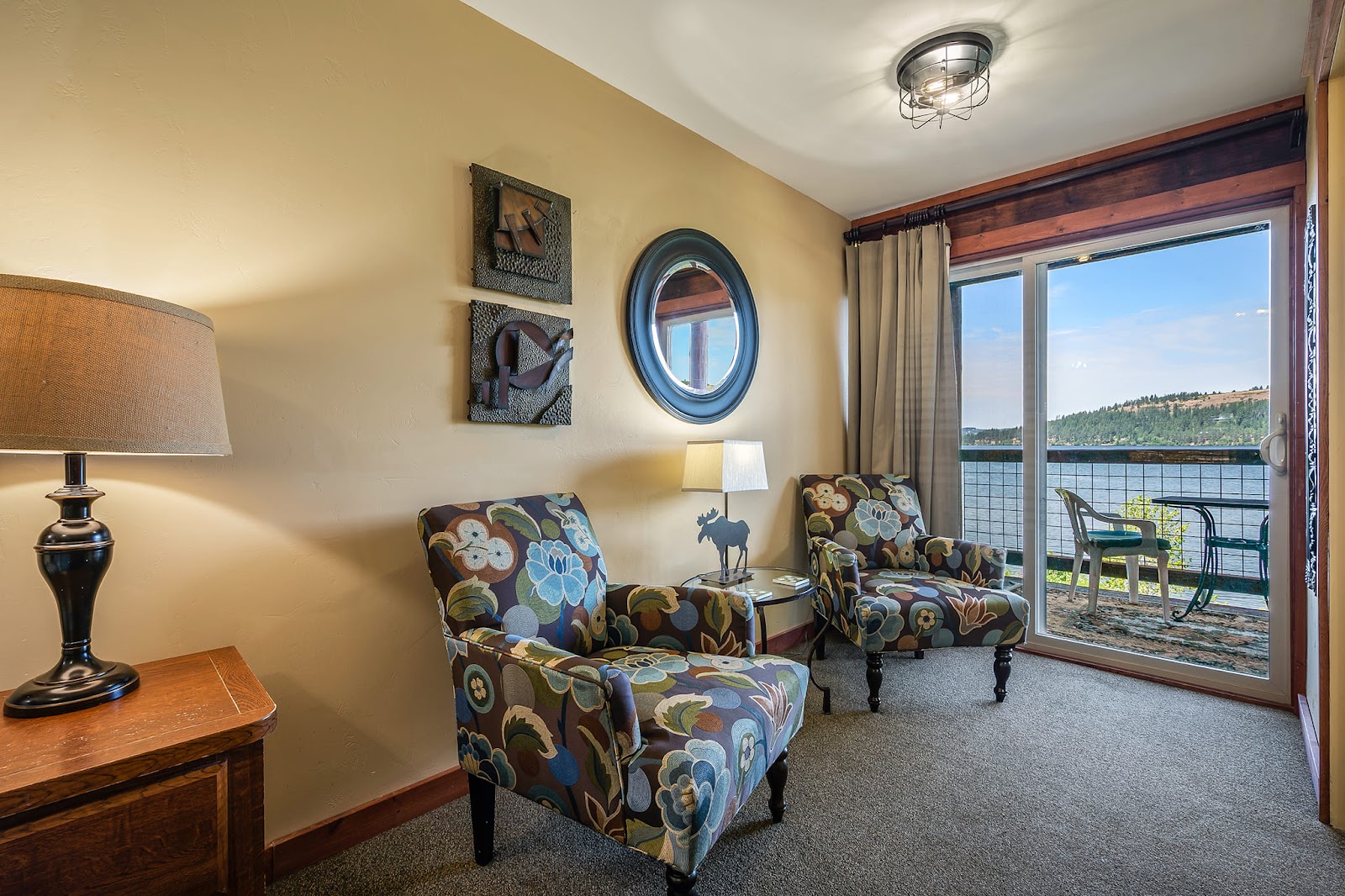
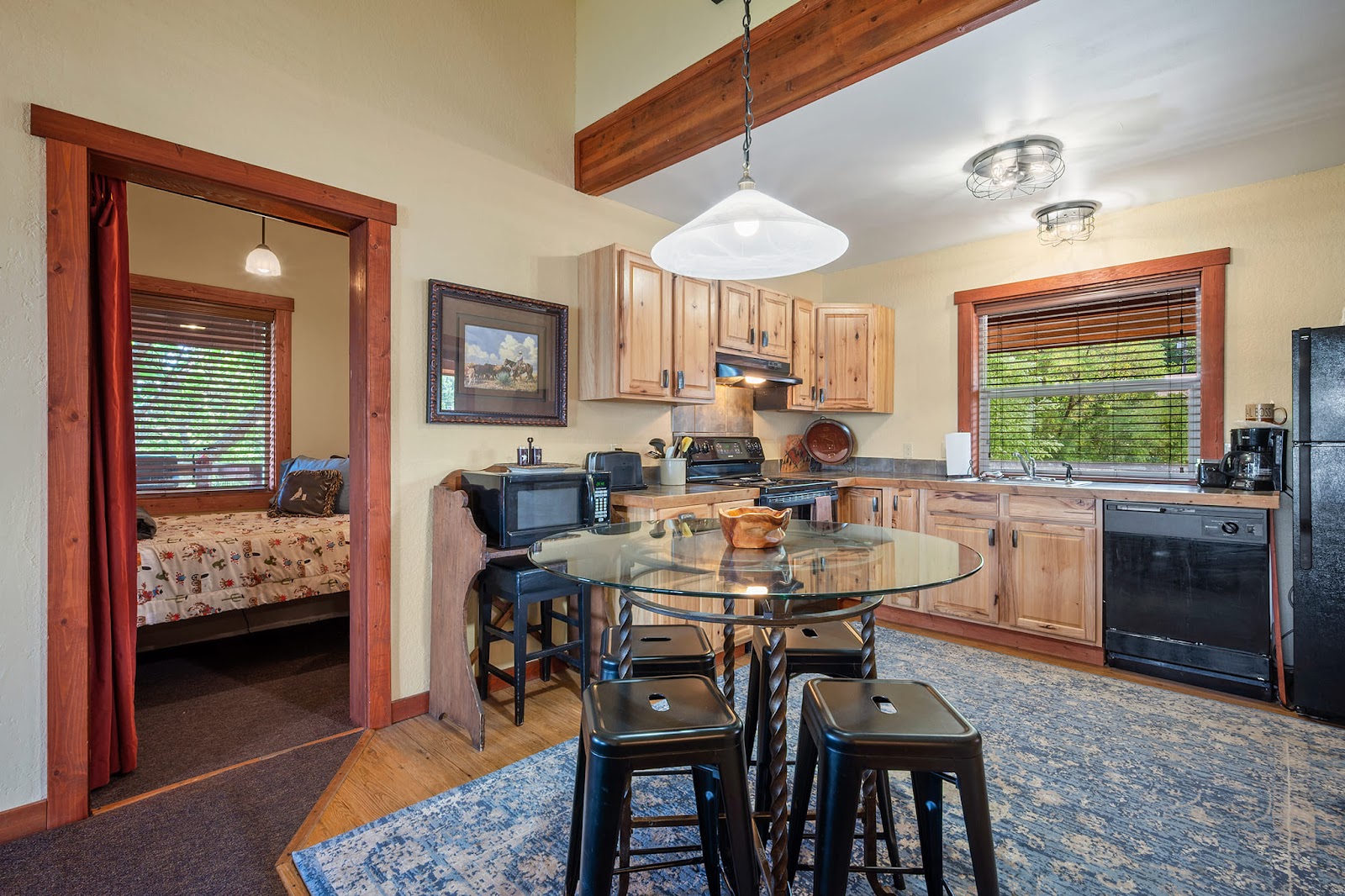
The interiors are warm, enclosed and dark. Timber is a matte, dark, warm-toned material that reflects perhaps ten or fifteen per cent of the light falling on it, where a plastered wall reflects eighty — so a room lined in it absorbs light rather than returning it. The rooms will feel wonderful and photograph low, warm and contrasty, and every frame in them is made with light you brought rather than found.
The exteriors are the opposite: a large open view over water with forested ridges beyond, at a latitude that gives the longest twilight in this collection.
So a lodge day runs between a dark interior and a bright exterior, and the distance between them in exposure terms is larger than at any hotel. A frame taken inside with a window in it has a five-stop range across it, and that is the technical fact underneath everything below.
One further orientation fact, because it governs the evening. Lake Coeur d’Alene sits in a glacially deepened trough with forested hills dropping steeply to the water on most sides, which means the sun goes behind a ridge well before it reaches the horizon. At lake level the effective sunset can be twenty to forty minutes earlier than the printed time. A lodge positioned above the water may keep the sun a little longer than the shoreline does, which is worth establishing — but the ridge is the thing that ends the evening, not the almanac.
And the latitude: about forty-seven and three-quarter degrees north, the same as Seattle, giving sunset after nine in late June with civil twilight close to thirty-seven minutes, and sunset before four in late December with barely eight and a half hours of daylight. Those are two completely different venues.
So: what it suits, what it does not, and then the lake, the forest and the year.
The Lakeview Lodge at a glance
| Where | A timber lodge above Lake Coeur d’Alene, Idaho Panhandle |
| Suits | Couples who want warmth and enclosure; small numbers; autumn and winter dates |
| Does not suit | Anyone wanting bright airy interiors, a pale palette, or a large guest count |
| The technical fact | Timber absorbs, so interiors are dark and every frame is lit by you |
| Ask first | Whether stands are permitted, capacity as a number, and which way rooms face |
What it suits
It suits a couple who want their photographs to be warm, and that is a genuine aesthetic rather than a vague preference.
Timber interiors, filament lighting and a fire produce a set that is amber and enclosed, with deep shadows and pools of warm light. Handled deliberately that is a coherent and rather beautiful look, and it is the opposite of the pale, airy, even-toned set a modern hotel produces. A couple whose reference images are all candlelight and wood will get exactly what they came for.
It suits a photographer who likes to light, because there is no alternative. A dark timber room is effectively a black studio: one modifier close to a subject separates them completely from a background that sits four or five stops down and records as almost nothing. That is separation for free, with no long lens and no wide aperture, and it repeats anywhere in the building. It also takes about ninety seconds per position.
Warm the light you bring. The ambient here is very warm, and a neutral flash in a timber room reads distinctly cold and looks inserted. A warming gel closes the gap.
It suits small numbers. A lodge is built around a great room rather than a ballroom, which means thirty or fifty people sit comfortably in a space that feels generous, and a hundred and fifty do not fit at all. Establish the interior capacity as a number early, because at a venue this size that figure is the booking.
It suits an autumn or winter date more than a summer one, which is unusual enough to say plainly. Two reasons. The interiors do not care what season it is — a timber room lit by you in February is identical to the same room in July — so the short winter day costs far less here than at a venue whose material is all outdoors. And the surrounding landscape is at its best in the cold half of the year, for reasons the last section covers.
It suits a couple who want to be somewhere quiet. A lodge above a lake in the Panhandle is genuinely rural: the sound is wind in conifer and water, the evening is dark, and there is no town in the frame. If that is the appeal it is completely the appeal.
It suits a wedding built around one long view. A lodge is positioned for its outlook, which means there is a single best exterior composition — water, forested ridges, mountains beyond — and it is available from the building rather than after a walk. That is worth a great deal at the end of a day, because the fifteen or twenty minutes that matter are not spent travelling.
It suits a photographer prepared to be up early. An enclosed lake is frequently calm in the first hours after first light, and a calm enclosed lake genuinely mirrors — forested hills doubled in still water is the best photograph available anywhere on this lake, and by the afternoon a valley breeze will usually have broken the surface. If a couple is staying on site, twenty minutes before breakfast is worth more than an hour at noon.
And it suits close work. Timber at close range is one of the best textural surfaces there is — grain, splits, saw marks, knots, the silvering of an exposed board — and it rewards raking light absolutely. A whole register of detail frames is available with one small light held almost parallel to a surface, at any hour, regardless of what the weather is doing.
One practical advantage worth naming: a lodge with accommodation means the getting-ready, the ceremony, the reception and the best exterior frames are all within a few dozen metres of each other. At a venue whose evening is shortened by a ridge, not having to travel is the thing that makes the good light usable.
What it does not suit
It does not suit a couple who want bright, airy interiors. This is the central mismatch and it happens because a lodge looks warm and inviting to the eye in a way that does not translate to a camera’s exposure. If the reference images are white walls, big windows and pale floors, a timber lodge will disappoint them in every interior frame no matter what is done, and a different venue will serve them better.
It does not suit a pale palette. Ivory, sage and soft grey against orange-brown timber is a colour relationship that fights, and there is no way to make timber neutral. You can shoot tight, work in the doorways, and cool the whole set in post, and the building will still be warm and dark.
It does not suit a large wedding. A great room is not a ballroom, and a guest count that does not fit indoors is a guest count outdoors — which at this latitude and in this landscape means exposure to mountain weather, and in the cold half of the year is not viable at all. Get the interior capacity as a number and compare it before the deposit.
It does not suit a plan without a real covered answer. In this region, spring and autumn bring genuine weather and summer brings mountain thunderstorms, and at a venue where the covered alternative is the same room as the reception, capacity is the whole risk. Ask for the figure.
It does not suit a photographer who relies on bouncing light. The technique that lights a hotel ballroom — two lights into a pale ceiling, lifting the room invisibly — fails completely here. Light aimed at timber comes back weak and strongly orange, and most of it does not come back at all. A photographer who has not worked in a dark timber building before should expect to light every single frame and should bring enough to do it.
It does not suit a frame that includes a window and a face at the same time, without work. The range from a dark timber interior to a bright exterior is around five stops, which no single exposure holds. Either expose for the room and let the window blow to white, which reads perfectly well as a room with light coming in, or light the subject hard enough to balance the view, which needs real output from a modifier close to them. The middle — a dim face and a grey window — is what an unplanned attempt produces.
It does not suit a summer date if the couple wants dependable conditions, and that is worth an honest note. July and August are the reliable weather here, but they are also when wildfire smoke has become a serious recurring feature across the Inland Northwest: smoke from fires in Idaho, eastern Washington, Montana and British Columbia can fill this valley for days, turning the light orange, flattening all contrast and producing air quality that makes an outdoor event genuinely inadvisable. It cannot be forecast far ahead. A lodge is unusually resilient to that, since everything can be indoors, but the long view that the venue was chosen for may simply not be there.
It does not suit anyone relying on a long lake view in the middle of a summer day. Haze, and in late summer smoke, soften the far shore and the mountains, and the view that looks so clear in an October photograph on a website may be a pale suggestion in August.
And it does not suit a tight schedule that ignores the ridge. The evening ends twenty to forty minutes earlier than the printed sunset here, and a photographer who has not checked the western skyline from the actual position will lose the best light while walking to it.
The honest summary: if the couple want warmth, enclosure, small numbers and an autumn or winter date, this is a very good and rather under-appreciated venue. If they want light, space, a pale palette or a large party, the qualities that make it appealing in person will work against them in every photograph.
The lake, the forest and the year
Two features of this landscape do most of the photographic work and both are worth understanding.
The lake is large, deep and enclosed — a glacially deepened trough with forested hills dropping steeply to the water. Enclosure is the operative word. Unlike an open lake exposed to a prevailing wind, this one is frequently calm in the mornings, which means it genuinely mirrors: forested slopes doubled, symmetrical about the waterline, sharp. That is the single best photograph available on this lake and it is a morning phenomenon, because a valley breeze usually sets in through the day and breaks the surface.
Get the camera low for it. From standing height the water is a band across the bottom of the frame; from near its own level the reflection occupies half the picture and the composition becomes symmetrical. Kneel, and take the mirror when you see it rather than saving it.
When the surface has broken up, the frame changes rather than disappears: ripples scatter rather than reflect, so a lit hillside or a light becomes a shimmering column, and from a low camera that column runs the full depth of the frame.
Enclosure also produces the evening’s shape. Once the water is in shadow, the hills on the far side stay lit for a quarter of an hour, glowing warm above dark water — and if the surface is still, that lit slope is doubled in it. A frame with the couple in cool shade, a gold hillside behind and the whole thing reflected is specific to an enclosed mountain lake and it is worth positioning for deliberately.
The forest is the second feature, and one tree in it changes the year completely. North Idaho’s woods are western white pine, ponderosa, Douglas fir — and western larch, which is a deciduous conifer. It turns brilliant gold in the second half of October and then drops its needles.
So the hillsides here change colour in autumn in a way conifer forests generally do not: bands and patches of gold through dark evergreen, on steep slopes above a blue lake, for about a fortnight. It is one of the most distinctive seasonal effects in this entire collection, almost nobody plans for it, and at a venue chosen for its view it colours the whole composition.
The conifers themselves are useful the rest of the year. They are tall, straight, widely spaced and dark, with reddish plated bark on the pines, which makes them excellent verticals — a run of straight trunks behind a subject at a moderate focal length is a strong graphic background — and poor shade, because the crowns are high and narrow. They are not a midday canopy the way a broad deciduous tree is.
The latitude gives the numbers. Late June: sunset after nine, about sixteen hours of daylight, civil twilight close to thirty-seven minutes, noon sun near sixty-six degrees. Late December: sunset before four, around eight and a half hours of daylight, noon sun never above about nineteen degrees.
Thirty-seven minutes is the longest dusk in this library and the genuinely usable balance point inside it runs eighteen to twenty minutes — enough for two positions rather than one, which is generous. At a lodge the two to have are the exterior long view with the couple lit, and a frame from outside looking in at the lit timber interior through a window or a door, with the sky still holding colour above the roofline. That second one is the photograph a lodge should end with and it needs a tripod and ten minutes of setup.
Minus the ridge shadow, that window still arrives comfortably before full dark in summer and before five in winter — which in December means it falls during cocktails and must be a named item on the timeline.
July and August are the reliable season: warm dry days, cool nights, calm mornings, dependable sun. The two late-summer hazards are mountain thunderstorms — localised, quick, with real lightning risk on any exposed ground — and wildfire smoke, discussed above, which needs an air-quality contingency as well as a weather one.
Mid to late October is the best-looking window of the year, for the larch, with clear air, thin crowds and calm cold mornings. Sunset around six puts the balance point at a civil hour. The risk is early snow.
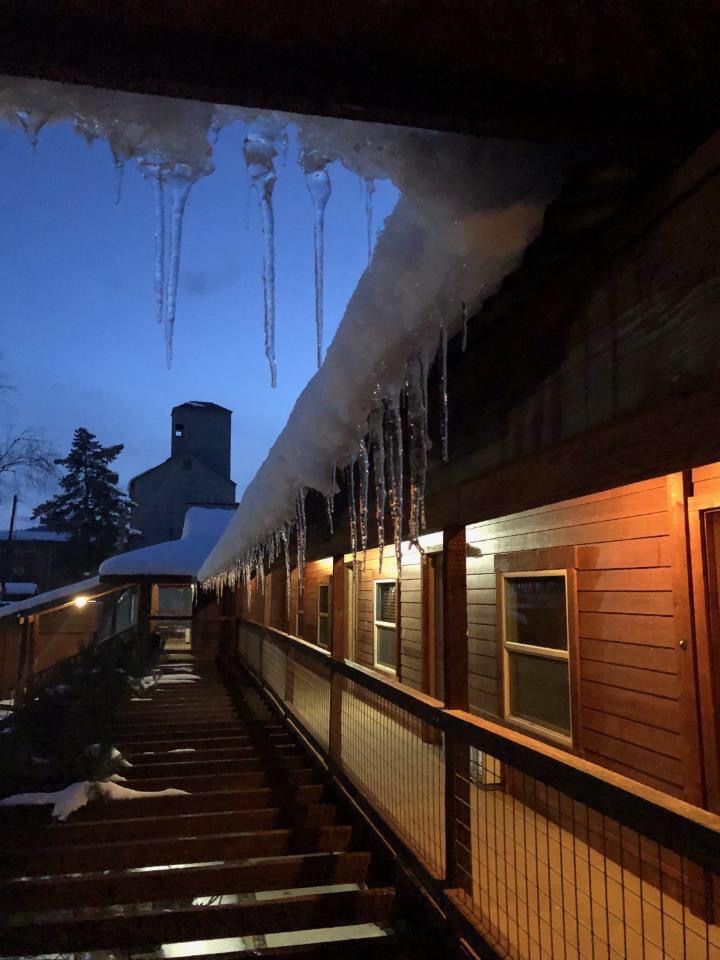
Winter is a real winter: substantial snow, temperatures well below freezing, and a lake that ices at the margins without usually freezing over. That produces superb material — snow on dark conifer above blue-black water is maximum tonal separation, and a lit timber lodge against snow and early darkness is exactly what the building is for — and it makes outdoor sessions brief and planned. It is also, for the reasons in the first section, the season this particular venue handles best.
One winter phenomenon peculiar to mountain valleys: cold air pools on the valley floor under high pressure and forms an inversion, so the lake sits under grey fog or low cloud while the ridges above are in clear sun. If that happens, work with the fog — it is atmospheric and flattering, and it simplifies a busy forested backdrop into layers — rather than waiting for sun that is visible on the hilltops and not coming to you.
And the compensation in any season is the half hour after a storm clears: washed air so the far shore and the mountains resolve, wet timber several tones darker and far more saturated than dry, the wind usually dropping so the lake flattens, and a low sun coming under a broken ceiling onto a lit hillside. Wet timber is a considerably better material than dry timber. If a cell goes through at six, wait rather than pack.
More frames from The Lakeview Lodge
The Lakeview Lodge wedding photography: common questions
Who is this venue right for?
Couples who want warmth and enclosure rather than light and space. Timber interiors, filament lighting and a fire produce an amber, shadowed, intimate set — a coherent and rather beautiful look, and the opposite of the pale even-toned set a modern hotel gives. It also suits small numbers, photographers who like to light, and — unusually — autumn and winter dates, because the interiors do not care what season it is and the landscape here is at its best in the cold half of the year.
Who should look elsewhere?
Anyone whose references are bright airy interiors, because a lodge looks warm and inviting to the eye in a way that does not translate to a camera: timber reflects perhaps ten or fifteen per cent of the light falling on it against eighty for a plastered wall, so the rooms photograph low, warm and contrasty. Also anyone with a pale palette, since ivory and sage against orange-brown timber is a relationship that fights, and anyone with a guest count that will not fit in a great room.
Does bouncing light work here?
No, and a photographer who has not worked in dark timber before should know that in advance. The hotel technique of two lights into a pale ceiling fails completely — light aimed at timber comes back weak and strongly orange, and most of it does not come back at all. Light directly instead: one modifier, close and feathered, with a good depth of dark room behind, which separates the subject completely because the background is four or five stops down. And warm your light with a gel, because a neutral flash in a timber room reads cold and inserted.
How do you handle a window in frame?
Choose. The range from a dark timber interior to a bright exterior is about five stops, which no single exposure holds — so either expose for the room and let the window blow to white, which reads perfectly well as a room with light coming in, or light the subject hard enough to balance the view, which needs real output from a modifier close to them. The middle, a dim face against a grey window, is what an unplanned attempt produces.
Why does the evening end early?
The lake sits in a glacially deepened trough with forested hills dropping steeply to the water, so the sun goes behind a ridge well before it reaches the horizon — at lake level the effective sunset can be twenty to forty minutes earlier than the printed time. A lodge positioned above the water may hold the sun slightly longer, which is worth establishing, but the ridge ends the evening rather than the almanac. Check the western skyline from the actual position.
When is the best time of year?
Mid to late October, for a tree most people have not heard of. The forests here include western larch, a deciduous conifer that turns brilliant gold in the second half of October before dropping its needles — so the slopes above the lake carry bands of gold through dark evergreen for about a fortnight, which at a venue chosen for its view colours the entire composition. Winter is the season this venue handles best, since the interiors are season-proof and snow on dark conifer above blue-black water is maximum tonal separation. Late summer needs a wildfire-smoke contingency.
More Coeur d'Alene, ID venue guides
We are writing a photographer’s guide to every venue we would happily shoot in Coeur d'Alene, ID. Here are three more, plus the full index:
- The Barn at Stillwater, Coeur d’Alene: The Problem, and Four Ways Out of It
- The Coeur d’Alene Resort, Coeur d’Alene: A Walk Through the Building
Planning a wedding at The Lakeview Lodge?
Warmth and enclosure, and eighteen minutes at the end. Tell us your date.