 Overhills Mansion: Who This Venue Suits, and Who It Doesn’t
The Elkridge Furnace Inn, Elkridge: Field Notes, Problem and Solution
Small rooms, a river valley, and an iron furnace somewhere underneath.
These are field notes, because this venue is a collection of specific conditions rather than one governing idea.
The Elkridge Furnace Inn sits in Elkridge, Maryland, in the valley of the Patapsco River between Baltimore and Washington, on a site that began as an iron-making settlement in the colonial period. The buildings that survive are domestic in scale — an eighteenth-century structure and an early nineteenth-century house, with gardens around them — and they now operate as a restaurant and event venue.
That produces a venue with a split character, and a photographer should know which half they are working in at any moment.
One half is a small historic house: domestic room sizes, window openings sized for the heating technology of their time, and a capacity that is measured in dozens rather than hundreds. Every constraint that applies to a country house of that period applies here.
The other half is an industrial site, and it is mostly invisible. An iron furnace settlement was a working landscape of furnace, race, charcoal, ore and workers’ housing, and what remains of that is fragmentary — earthworks, stone, changes in ground level, remnants in the woods. It is not a picturesque ruin and it should not be sold as one. But the site’s character comes from it, and knowing it is there changes how you read the ground.
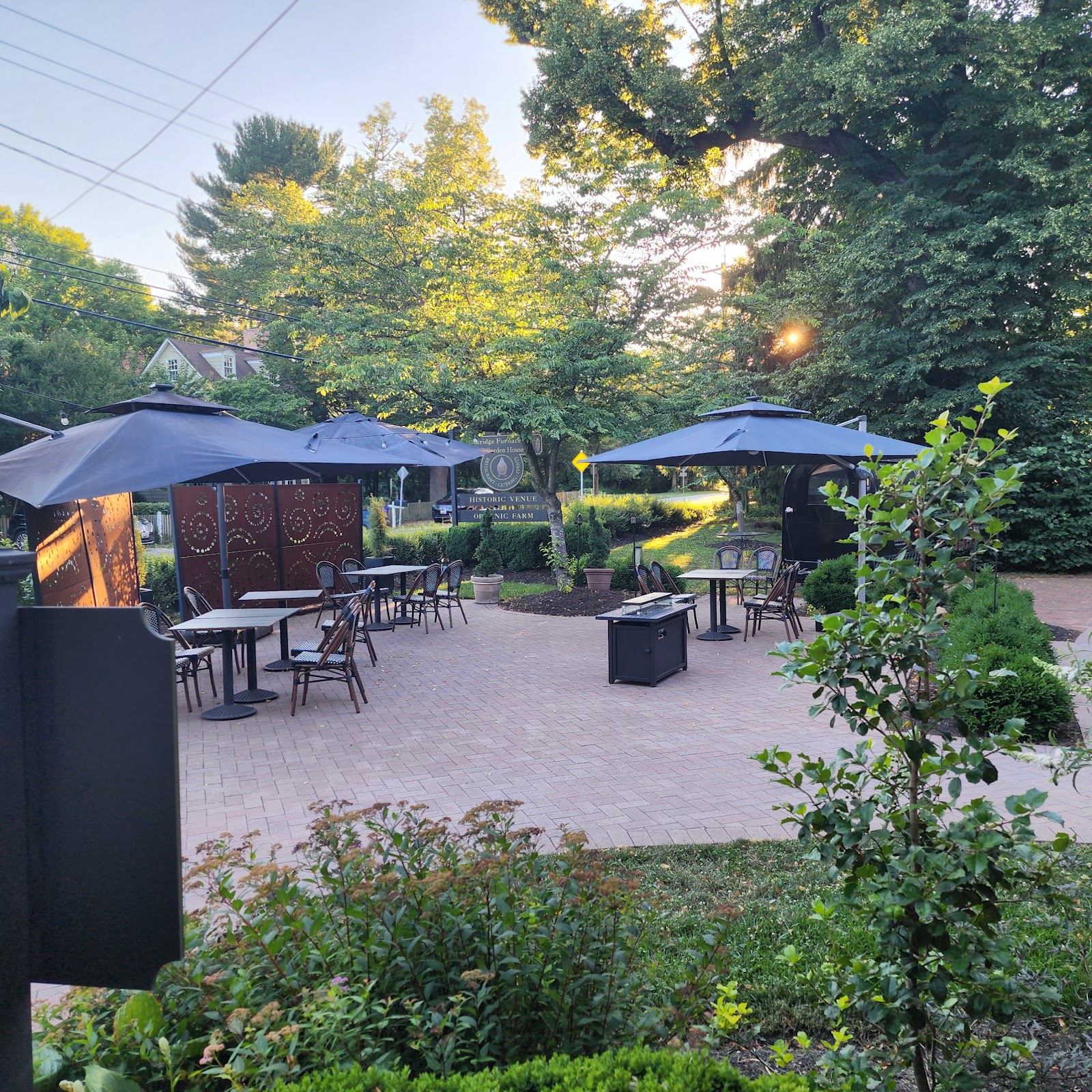
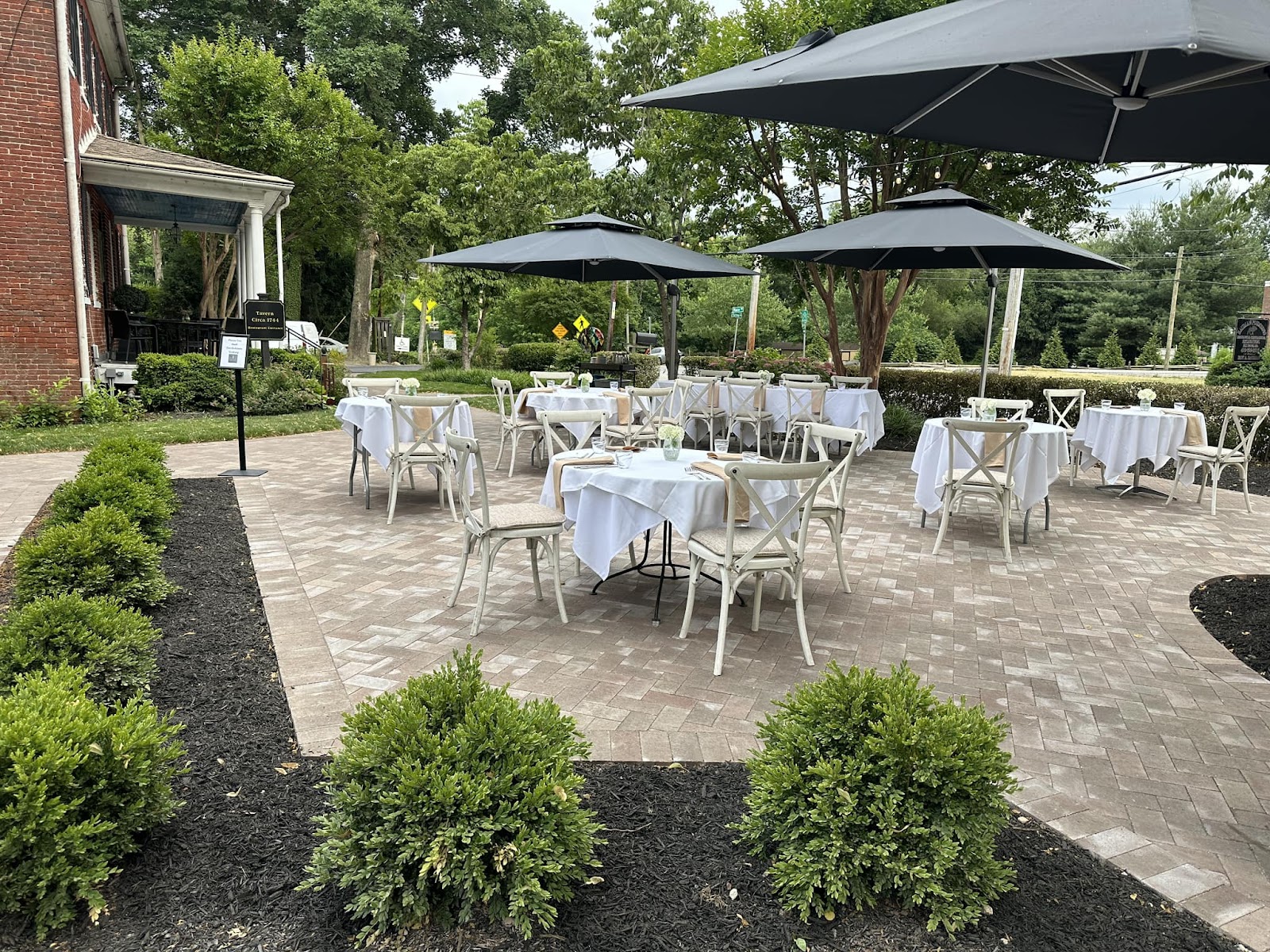
Between the two are the gardens, which is where most of a wedding day here will actually happen, and the river valley, which supplies the light.
So the notes below are grouped by where you are standing: the rooms, the gardens, the industrial ground, and the valley. Then the year.
One thing to establish before anything else, because it governs the whole plan: the interior capacity as a number, and what the covered alternative is with its capacity also as a number. At a small historic property with gardens, the rain plan is the single largest risk in the booking, and an interior that seats sixty comfortably cannot absorb a hundred and twenty off a lawn. Ask for figures rather than assurances, and compare them to the guest list before the deposit.
And one number for the schedule. This part of Maryland sits at about thirty-nine degrees north, giving civil twilight of about twenty-nine minutes in midsummer, a midsummer noon sun near seventy-four and a half degrees, and a midwinter noon sun near twenty-seven and a half. The usable balance point runs twelve to fifteen minutes.
But the valley shortens the evening, and that is the first note in the last section.
The Elkridge Furnace Inn at a glance
| Where | A colonial ironworks site in the Patapsco valley at Elkridge, Maryland |
| Two halves | A small historic house, and a largely invisible industrial landscape |
| Where the day happens | The gardens, with the valley supplying the light |
| The largest risk | Interior capacity versus the guest list. Ask for both as numbers. |
| The valley effect | Wooded sides take the sun early; subtract from the printed sunset |
What you meet, and what each one needs
The historic rooms. Problem: they are domestic in scale — a room is perhaps five metres by six, furnished, with one or two windows — so twenty people fill one and a hundred cannot be in it, and there is nowhere to stand with a camera that is not in somebody’s way. Solution: find the one best window and use it eight times rather than photographing eight rooms once each. Look for the largest opening in the thickest wall, facing away from direct sun for the hours you need it, with something pale opposite. That is where the rings, the dress, the parents and any portrait that needs to look considered belong.
The historic rooms, second note. Problem: not enough fill. A small room with a modest window and warm-toned or papered walls returns much less bounce than the window size suggests, so the shadow side of a face goes darker than expected. Solution: bring something pale to hold opposite the glass. A reflector, a white card, a sheet — this is the most useful accessory at any small historic venue and it costs nothing.
The historic rooms, third note. Problem: furniture. Historic houses are furnished, and furniture in frame reads as clutter rather than as period detail nine times out of ten. Solution: move what can be moved, ask before touching anything that looks fragile, and put it back. Shooting slightly wider and lower with the camera at chest height also keeps the lower half of a cluttered room out of frame.
The historic rooms, fourth note. Problem: the walls are thick and the reveals are deep, which is a gift rather than a fault but it needs recognising. Solution: use the collimation. A window at the bottom of a thick masonry wall produces a defined directional beam with fast falloff — a snoot built into the architecture. Falloff is roughly a stop per step, so step the positions out rather than estimating: a metre and a half in is superb, three metres in is not.
The gardens. Problem: this is where the wedding happens and it is open to the sky, so the middle of a summer day is flat and top-lit with a near-overhead sun. Solution: ceremony early or late, portraits in the last ninety minutes, and if a midday ceremony is unavoidable, orient it so guests have their backs to the sun and the couple are side-lit rather than front-lit.
The gardens, second note. Problem: a working restaurant garden is a planted, productive, partly functional space rather than a manicured lawn, which means frames will contain beds, supports, paths, service items and the honest apparatus of a place that grows things. Solution: treat that as character and work it deliberately. Productive planting at close range — herbs, espaliered fruit, vegetable rows — is a far more interesting background than turf, and a long lens two metres from a bed compresses it into texture. But look at the frame edges before pressing, because a hose or a crate will be there.
The gardens, third note. Problem: the wind and the veil, in an open valley bottom. Solution: find the enclosed corner. Any walled, hedged or built-against position is a courtyard in effect, lit by sky above and bounce off its boundary, and it is both the calmest and the most controllable light on the property. Stand a subject three or four metres out from a sunlit wall rather than against it, because further out the wall wraps the light around the face.
The industrial ground. Problem: it is not picturesque and there is not much of it visible. Solution: use it as texture and as fact rather than as a set. Where there is stone, earthwork or a change in level, photograph it close and raking — masonry and stonework read as material in low side light and as grey nothing under a frontal sun. And treat it as a set of details for the album rather than as a location for portraits.
The industrial ground, second note. Problem: people will want to climb on things. Solution: do not let them. Archaeological remains and unstabilised masonry are both fragile and hazardous, and a wedding party on a ruin is a risk to the fabric and to themselves. Ask the venue which areas are accessible and keep to them.
The woods. Problem: a wooded river valley gives you canopy, which is the midday answer, and canopy light is green and dappled. Solution: the standard rule without exception — position for open sky arriving from the side, at a path, a clearing or a canopy edge, rather than filtered light from above, because light that has passed through leaves is genuinely green and no white balance fixes it. And avoid dappled shade entirely: hard bright patches several stops above the surrounding skin cannot be recovered. Full shade or full sun, never the edge.
The whole property. Problem: it is compact, which means less room to back up than at an estate. Solution: carry something in the thirty-five to fifty range and expect to use it. A photographer working exclusively at a hundred and thirty-five millimetres will run out of distance here.
The valley, the river and the light it gives
The Patapsco valley is the reason the ironworks was here and it is the main influence on the light.
An iron furnace needed three things in one place: ore, charcoal from a great deal of woodland, and water power to drive the blast. A river valley with wooded sides supplied all three, which is why colonial ironworks in this region are found in exactly this kind of setting rather than out in open country.
For a photographer that produces two consequences and the first is a scheduling one.
The valley has wooded sides, and the sun goes behind them before it reaches the horizon. On the valley floor, the effective sunset can be fifteen to twenty-five minutes earlier than the printed time, depending on where you stand and the time of year, and the last direct light leaves the low ground while the upper slopes are still lit.
That is invisible until it happens and it will catch out any photographer working from a sunset time on a schedule. Go and look at the western skyline from the position you intend to use, judge the height of the trees and the slope above the horizon, and subtract accordingly. Then bring the whole evening forward.
The compensation is a good one. Because the upper slopes stay lit after the floor is in shade, the wooded valley sides glow warm above a shaded foreground for a quarter of an hour — a light that a flat site never produces. A frame with a couple in cool shade and the hillside behind them lit gold is specific to a valley and it is worth positioning for.
The second consequence is cold-air drainage. On a still clear night, cold air is heavier and flows downhill, pooling on the valley floor — which means the low ground is colder than the slopes and, in the right conditions, holds mist along the river at dawn. River mist in a wooded valley at first light is the best photograph the setting can offer, and it happens most often in autumn, after a mild day and a clear still night.
That requires a very early start and it is worth one in October. If a couple is getting ready on site, a twenty-minute walk before anyone else is up will produce frames that cannot be made at any other hour.
The river itself is a small to middling river rather than a broad one, running over rock and gravel with wooded banks. That makes it a texture and a foreground rather than a horizon: get the camera low at the water’s edge and the moving surface compresses into a broken specular path with a low sun behind it. It is also a sound, which matters for a ceremony held near it — pleasant to be beside, and a genuine competitor to an unamplified officiant.
Two practical notes about a river valley venue. Access to the water may be limited or may cross land the venue does not control, so ask rather than assume. And a valley floor beside a river is, by definition, the part of the landscape that floods; after heavy rain the low ground and any unpaved path will be soft or standing in water, which is a practical problem for a long dress. Establish what is paved.
The woods themselves are the region’s mid-Atlantic hardwood — oak, tulip poplar, beech, hickory, with dogwood and redbud in the understorey. Two seasonal notes follow from that. The spring understorey flowering in April is genuinely lovely and brief. And the autumn colour runs through the second half of October into early November, with the tulip poplars going yellow early and the oaks holding russet late, which extends the window at both ends.
The Patapsco valley year
This is a mid-Atlantic climate with a river-valley microclimate on top of it, and both matter.
Humidity first. July dewpoints here sit around seventy-two, which fills shadows by roughly two stops against a dry climate — genuinely helpful outdoors, softening shadow edges and keeping detail in eye sockets, so open shade in the middle of a summer day is workable rather than hopeless. In a wooded valley the effect is stronger still, because the trees add moisture and the air is stiller than on open ground.
The costs are a pale washed sky in wide frames, haze on distance, and a lens that fogs within seconds coming out of an air-conditioned interior into July air. On a day moving between small cooled rooms and a humid garden, that is a recurring event rather than a one-off. Keep the body warm rather than cool.
Still, humid air in a valley bottom also means mosquitoes and midges near the water at dusk in summer, which will affect how long anybody is content to stand anywhere. Mention it to the couple; it is a comfort matter that photographs as discomfort.
Late September into early November is the strongest window and the reasons are specific to this site. The humidity drops out so the valley resolves and the long views along it open up. Temperatures are comfortable in formal clothing outdoors. Sunset lands around six — which, minus the valley’s fifteen to twenty-five minutes, still leaves a civil-hour balance point. The hardwoods turn through that whole range. And the still clear nights that follow mild days are when the river mist forms at dawn.
Late April into May is the other good window: the understorey flowering, mild air, saturated fresh green and lengthening evenings. It is also the wetter half of the year, and in a valley that means soft ground — establish which paths are paved before routing a party across them.
Summer is workable with the middle of the day given to the canopy and the interiors, both of which this site has. The gift is the long evening, with sunset after eight in late June, which even minus the valley’s shadow leaves a generous end to the day. Thunderstorms move through this region quickly, and the half hour after a cell clears is the best light of the year: washed air so the valley opens up, wet stone and brick several tones darker and far more saturated than dry, wet paths reflecting the sky, planting at full colour, and a low sun coming under a broken ceiling onto lit hillside. If a storm goes through at six, wait rather than pack.
Two autumn hazards worth naming. Remnants of tropical systems reach this part of the mid-Atlantic in September and October and bring sustained rain and wind rather than a passing shower, and in a river valley sustained rain is a flooding consideration on the low ground. And nor’easters do the same in the colder months from the other direction.
Winter is short and quietly good at a small historic property, because the interiors do not depend on the season and one good window works in February exactly as in June. Sunset before half past four, minus the valley, effectively ends the outdoor day in the middle of the afternoon — so plan the exterior work there and give the evening to the rooms. In exchange: the clearest air of the year, a low sun raking masonry all afternoon, bare trees that reveal the shape of the valley and any industrial earthworks in it, and — on a cold day with the river running — genuine mist on the water. Snow on an eighteenth-century building is as good as this place gets.
Against winter: rural valley roads, freeze-thaw, and the region’s occasional ice events, which are travel problems for guests and suppliers rather than photographic ones. A January date deserves a contingency.
One closing instruction that applies in every season and is the most useful sentence here. Photograph the empty rooms in the first thirty minutes you are on site, before the bags and the dresses and the flowers arrive. A small furnished eighteenth-century room with nothing in it but light is a fine subject, and you will not see it again that day.
And walk the western skyline before the evening. Everything else at this venue is ordinary good practice; the valley’s early sunset is the one thing that will surprise a photographer who has not checked it.
More frames from The Elkridge Furnace Inn

The Elkridge Furnace Inn wedding photography: common questions
What should we establish before booking?
Two numbers: the interior capacity, and the capacity of the covered alternative. At a small historic property whose day happens in the gardens, the rain plan is the largest risk in the booking, and an interior that seats sixty comfortably cannot absorb a hundred and twenty off a lawn. Ask for figures rather than assurances and compare them to the guest list. Also ask which paths are paved, because a valley floor beside a river is the part of the landscape that gets soft after rain.
Why does the evening end early here?
The valley. The site sits on the floor of a wooded river valley — which is why the ironworks was here, since a furnace needed ore, charcoal and water power in one place — and the sun goes behind the wooded slopes before it reaches the horizon. The effective sunset on the low ground can be fifteen to twenty-five minutes earlier than the printed time. Go and look at the western skyline from the position you intend to use, and bring the whole evening forward.
Is there a compensation for that?
A good one. Because the upper slopes stay lit after the floor is in shade, the wooded valley sides glow warm above a shaded foreground for about a quarter of an hour — a light a flat site never produces. A couple in cool shade with a gold hillside behind them is specific to a valley and worth positioning for. Cold-air drainage also pools on the valley floor on still clear nights, which means river mist at dawn, most often in autumn. That is the best photograph the setting offers, and it needs a very early start.
How much of the ironworks can you actually see?
Not much, and it should not be sold as a picturesque ruin. What survives is fragmentary — stone, earthworks, changes in ground level, remnants in the woods — and it works as texture and as fact rather than as a location for portraits. Photograph it close and raking, because masonry reads as material in low side light and as grey nothing under a frontal sun. And do not let anybody climb on it: unstabilised masonry and archaeological remains are both fragile and hazardous.
How should the small rooms be handled?
Find the one best window and use it eight times rather than photographing eight rooms once each — the largest opening in the thickest wall, facing away from direct sun for the hours you need, with something pale opposite. The thick wall collimates the light into a directional beam with fast falloff, so step the positions out: a metre and a half in is superb, three metres in is not. And bring a reflector or a white card, because a small room with warm or papered walls returns far less fill than the window size suggests.
When is the best time of year?
Late September into early November. The humidity drops out so the valley resolves, temperatures are comfortable outdoors, sunset around six still leaves a civil-hour dusk even after the valley’s shadow, the hardwoods turn through the whole range, and the still clear nights are when dawn mist forms on the river. Late April and May are the other window, with the understorey in flower — but it is the wetter half of the year, and in a valley that means soft ground.
More Maryland venue guides
We are writing a photographer’s guide to every venue we would happily shoot in Maryland. Here are three more, plus the full index:
Planning a wedding at The Elkridge Furnace Inn?
Check the western skyline, then plan the evening earlier. Tell us your date.