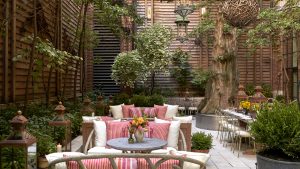
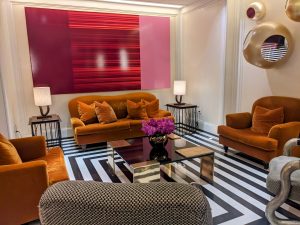
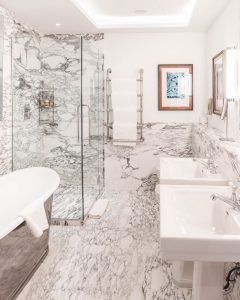
 The Whitby, New York: A Walk Through a Midtown Hotel
The Queens Museum, Queens: The One Decision That Governs Everything
At this scale, a person standing at the rail is two kilometres tall.
One decision governs a wedding day at this venue, and it is unlike the decision at any other venue in this library. It is about scale.
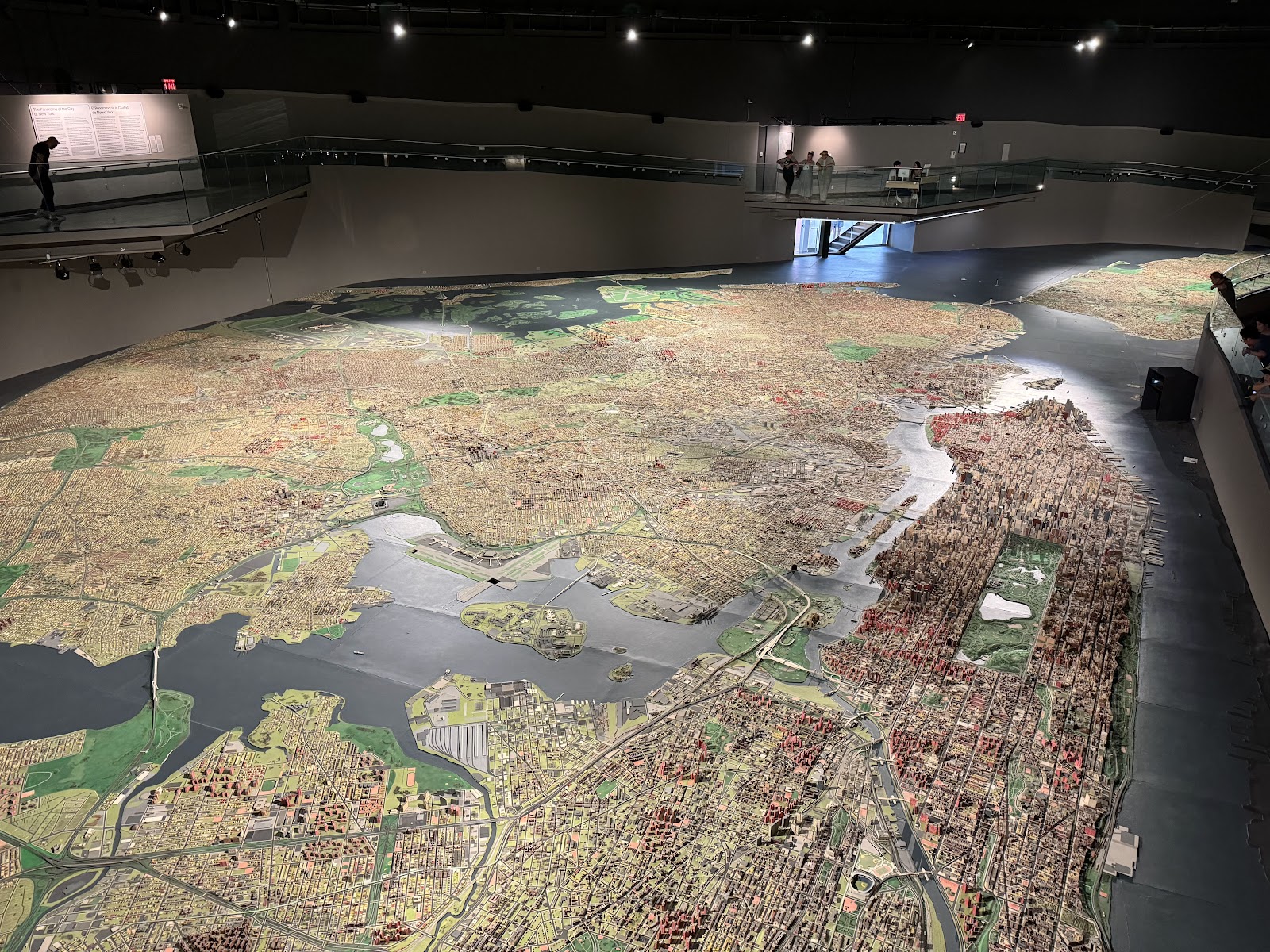
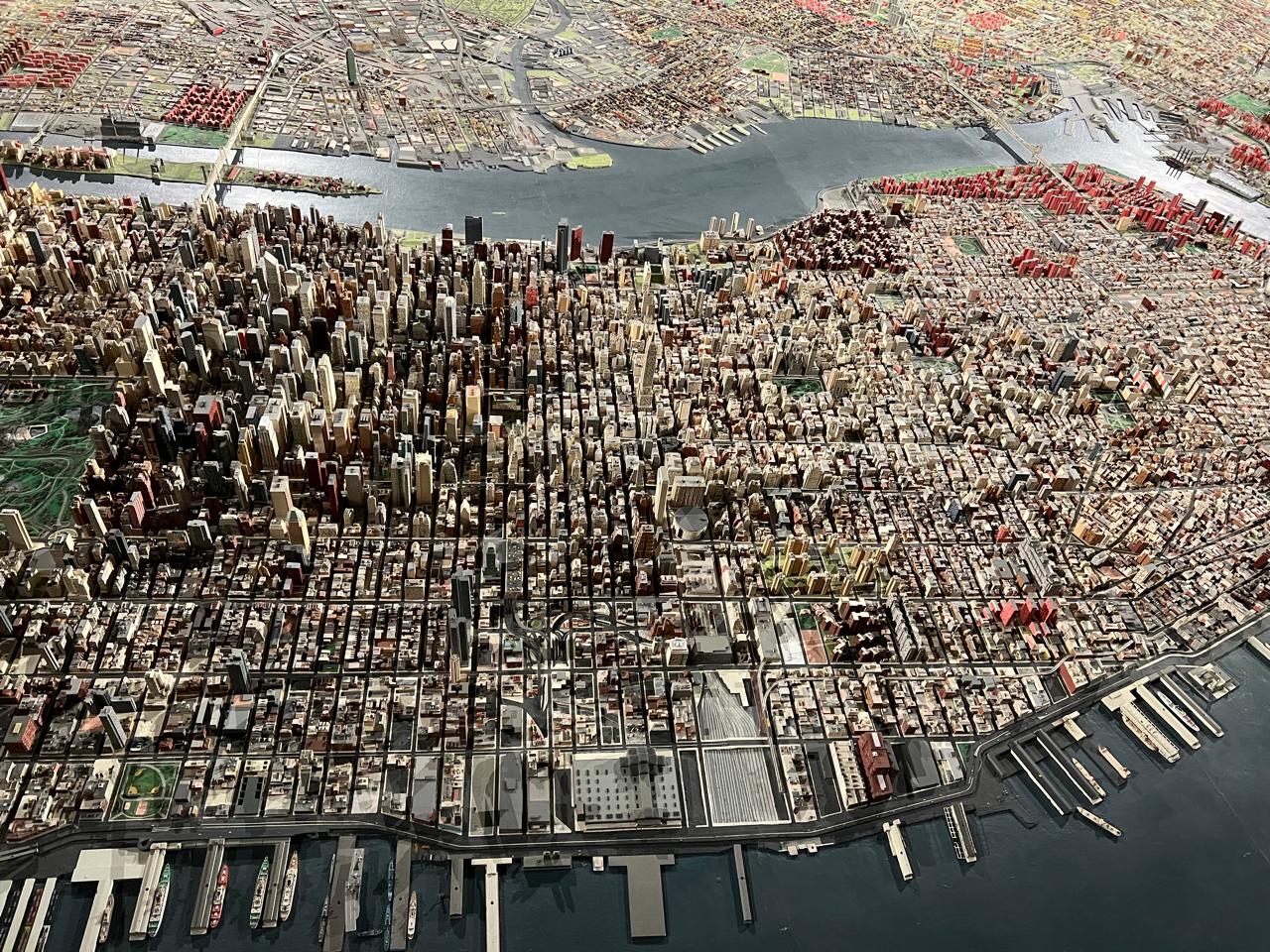
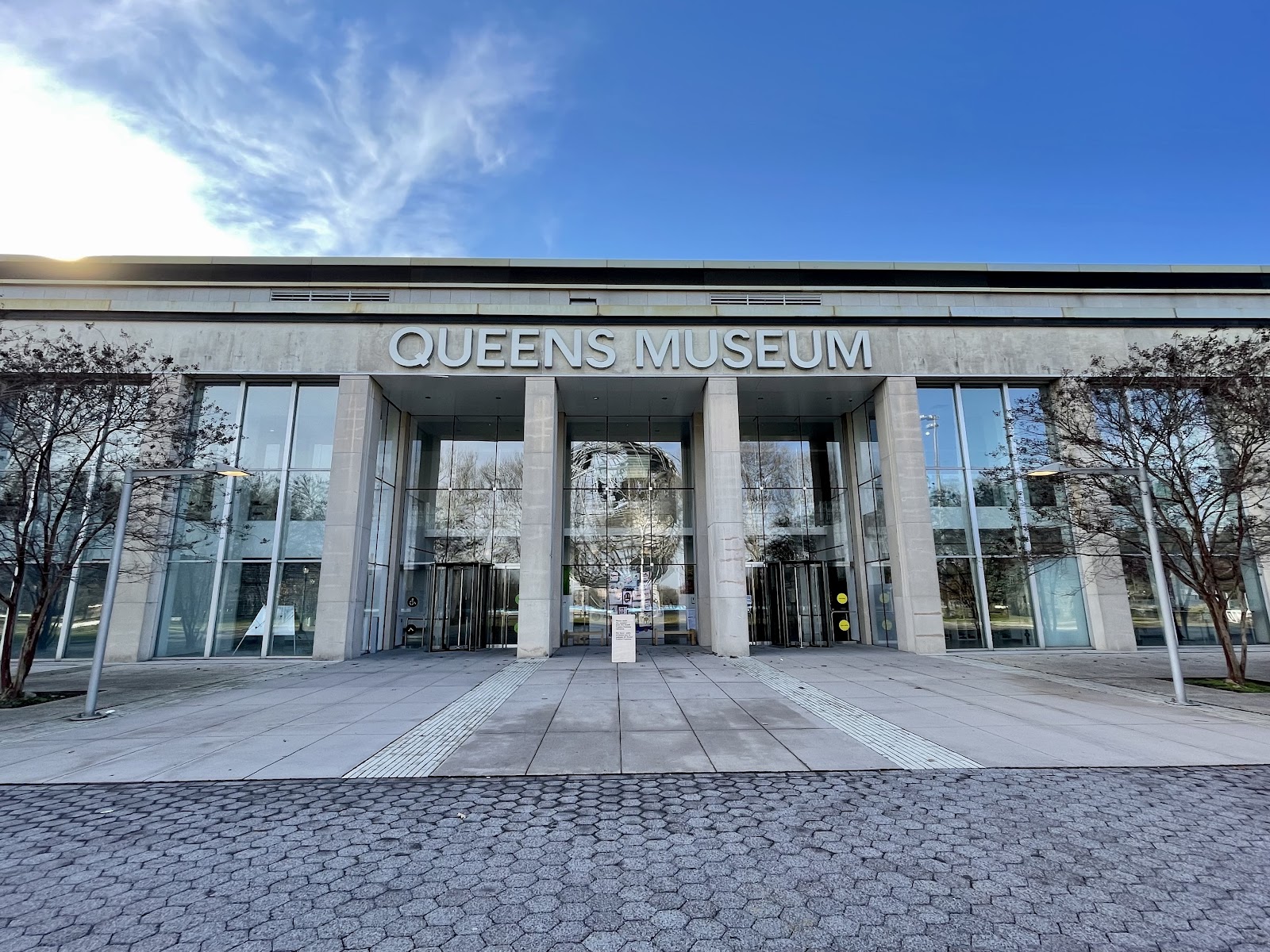
The Queens Museum occupies a building in Flushing Meadows that was put up for the nineteen-thirty-nine World’s Fair, reused for the fair of nineteen sixty-four, and which in between served for several years as the temporary home of the United Nations General Assembly. Inside it is the Panorama of the City of New York: a scale model of all five boroughs, built for the sixty-four fair, covering something over nine thousand square feet, with something approaching nine hundred thousand buildings on it, at a scale of about one to twelve hundred.
That last number is the interesting one, and it is the whole guide.
At one to twelve hundred, a person of average height standing beside the model is, in the model’s own terms, a little over two kilometres tall. The tallest building on it comes up to roughly their knee. A couple leaning on the rail are two figures the size of weather systems, looking down at a city that contains eight million people.
That is a photograph that cannot be made anywhere else, and it is the reason to book this venue rather than any other museum in the city.
So the decision is this: in each frame, are the couple people in a city, or giants above one?
Those are two entirely different photographs and they need opposite treatment. People in a city means shooting low, at the model’s own level, with the couple beyond it or reflected in it, so that the scale reads as plausible and the city rises around them. Giants above one means shooting from above and behind them, including their hands and the rail, with the city spread out below and the scale absurd and deliberate.
The middle — a standing couple photographed at chest height with a bit of model in the foreground — is the version that reads as a snapshot of a museum exhibit, and it is what most photographs from this room look like.
Commit to one or the other per frame and the room gives up something extraordinary.
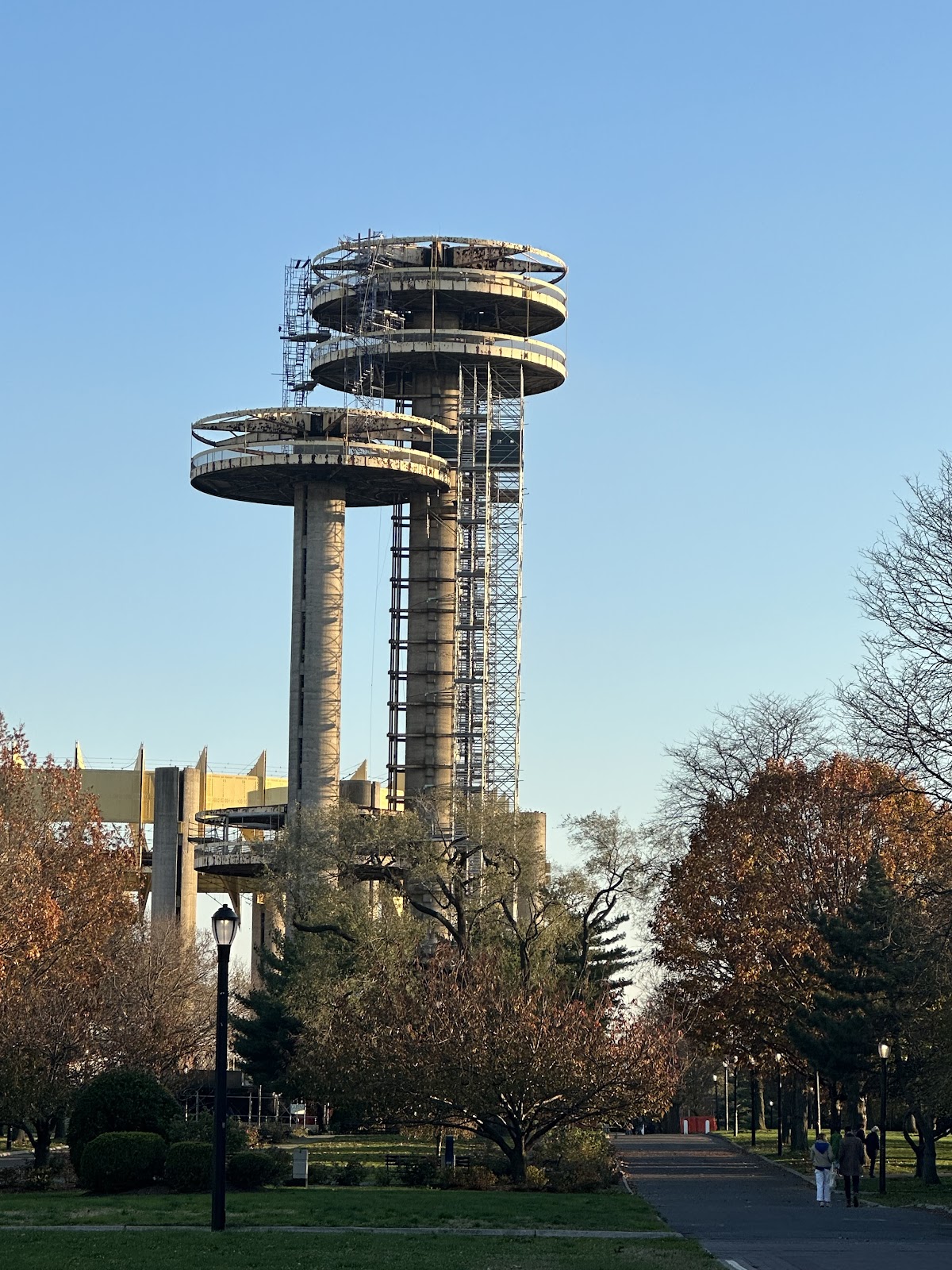
There is a second half to the venue and it matters at the end of the day. Outside, in the park, stand two structures from the sixty-four fair: a stainless steel globe some twelve storeys high, and the remains of a pavilion with observation towers. Both are photographically remarkable and both are outdoors, which means they want the last light and the dusk window while the Panorama, being indoors and artificially lit, is identical at any hour.
That resolves the scheduling cleanly. Panorama whenever convenient, park at the end of the day. What follows is how each part works.
The Queens Museum at a glance
| Where | A museum in Flushing Meadows, Queens, in a building from the 1939 World’s Fair |
| The decision | Per frame: are they people in a city, or giants above one? |
| The scale | About one to twelve hundred — a standing person is two kilometres tall |
| Outside | A twelve-storey steel globe and a ruined pavilion, both from the 1964 fair |
| Ask first | Flash and tripod rules in the Panorama, and which spaces are bookable |
Why scale governs, and how to shoot each version
Start with the practical constraints of the room, because they shape both versions.
A large architectural model is lit for viewing, which means the light is aimed down at the model rather than out at the people looking at it. So the model is bright and the surrounding room is dark, and anybody standing at the rail is lit from below and in front by reflected light off a city of pale buildings.
Uplight from below is an unusual and slightly theatrical condition. It fills under the chin and the brow in a way that top light never does, and it puts shadows upward, which reads as strange unless it is either subtle or clearly deliberate. It is also cool or neutral in colour depending on the lighting, so faces can look drained.
That gives you the first technical decision. Either use the model’s uplight as the only source and accept the theatricality, which suits the giants-above version — two faces lit from below by a glowing city is a strong and coherent image — or add a small warmed source from above and to one side so the faces are conventionally lit while the city glows beneath them. Both work. Half of each looks like an accident.
Ask about flash and tripods before the date and in writing. A large model is a conservation object and a museum may reasonably restrict both, and the answer changes the plan entirely. If flash is not permitted, you are on available light at a wide aperture and a high sensitivity, which is workable — the model is bright — but it must be known in advance.
Now the people-in-a-city version, which is the harder of the two and the more surprising.
Get the camera down to the model’s own level, as close to the surface as the rail and the museum allow, and use a long focal length. At the model’s scale, a camera at its surface is a camera in the streets, and a long lens compresses the model’s buildings into a plausible skyline. Place the couple beyond the model, standing behind it in the room, and at that angle and that compression they read as enormous figures on the horizon — or, framed carefully, as figures standing among the towers.
The trick that makes this work is depth of field. At a wide aperture with focus on the couple, the model’s near buildings go soft and stop being a model; they become foreground city. At f/8 everything is sharp and the illusion collapses, because a sharp model looks exactly like a model. So this version wants the lens wide open.
The other trick is to exclude the horizontals. A model’s edge, its rail, the floor and the gallery wall are all dead giveaways, and a frame that includes any of them reads as an exhibit. Fill the frame with model and people only.
Now the giants-above version, which is easier and more reliably good.
Stand behind the couple, above them, and shoot over their shoulders down onto the city. Include their hands on the rail, and include enough of their heads and shoulders to be recognisable without dominating. At a wide angle from slightly above, the model spreads out below them and the size relationship is unmistakable and slightly funny, which is exactly the point.
For this version, depth of field should be deep. Stop down so the city is sharp all the way out, because here you want the viewer to be able to read the model, find the landmarks, and understand what they are looking at. The absurdity of the scale is the subject and clarity serves it.
Look for the moment rather than the pose. The best frames in this room are of two people pointing — finding their street, their building, the place they met — because that is what everybody actually does at a model of their own city, and a photograph of genuine recognition beats a posed one at any scale.
Two composition notes for either version. The model is roughly the shape of the city, which means it has strong diagonals in it — rivers, the long axis of Manhattan, the airport runways — and those are the compositional lines to build on rather than shooting square to the rail. And the room is a ramped gallery around the model, which means there are multiple heights available: walk the whole circuit before placing anybody, because the difference between two positions ten metres apart is the difference between a good frame and an ordinary one.
One frame worth making that needs nothing from the couple: the model alone, lit, from a low angle with a long lens, exposed as a cityscape. It looks like an aerial photograph of New York at a strange hour, and it is a genuinely striking image to sit in a wedding set as a change of register.
What follows from it: the rest of the building, and the park
Away from the Panorama, the building and the park give you four things.
The first is the building’s own history as a fair pavilion and a temporary parliament, which shows in its proportions: large-volume public spaces with high ceilings, designed for crowds and for ceremony rather than for domestic use. Photographically that means generous height, hard surfaces and good acoustics, and it means a wide frame of a room with people in it reads as an event rather than as a party.
The second is the glass and the daylight, and this is worth establishing room by room. A building of that origin, altered and expanded since, will have some spaces with substantial glazing and some with none at all. Ask which spaces you have and whether they have exterior windows, because a daylit function room and a windowless one are two completely different photographic days and the difference should be known in February rather than on the morning.
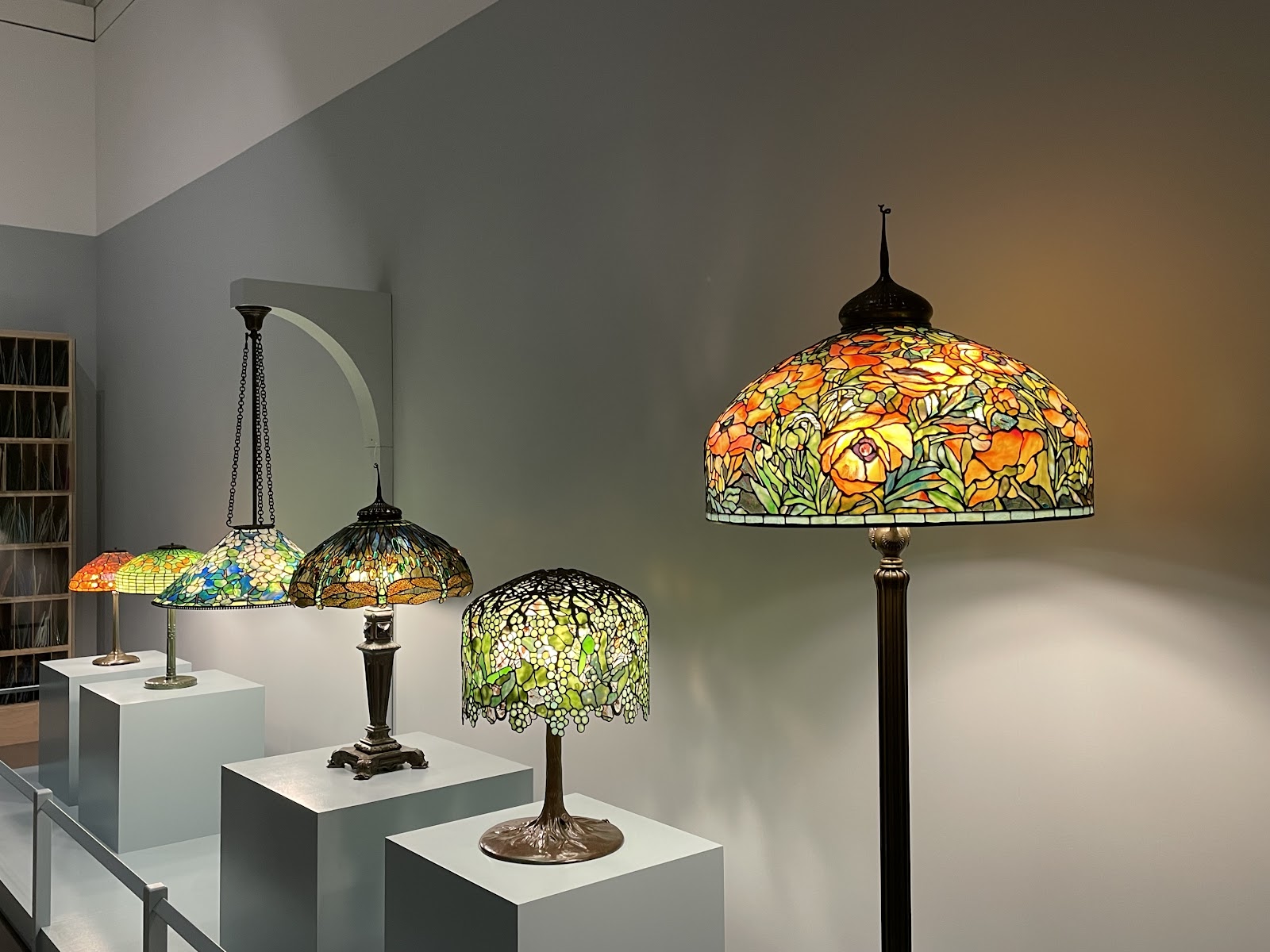
The third is the museum’s glass collection, if it is accessible. A collection of decorative leaded and stained glass is a coloured-light problem rather than an object: light through coloured glass takes that colour completely, and a face half in a coloured patch and half in neutral light reads as a mistake. Either place someone deliberately inside the colour and let the cast be the point, or keep faces entirely clear and photograph the glass as its own subject. There is no workable middle. Backlit glass photographed as pure pattern, filling the frame, is a strong image and takes a minute.
Also ask whether flash is permitted near it. The answer is usually no, and the reason is conservation rather than preference.
The fourth is the park, and it is the reason to protect the end of the day.
Flushing Meadows holds two structures from the nineteen sixty-four fair that are among the most photogenic objects in the city. One is a stainless steel globe about twelve storeys high — an open latticework sphere on a pedestal, with the continents raised on it — which is an extraordinary subject: symmetrical, enormous, made of thousands of thin members, and transparent, so it reads as a drawing in space rather than as a solid.
Photograph it either dead on a centre line or firmly off axis, never a couple of degrees off, because a symmetrical sphere shot slightly askew looks like an error. Get low and put sky through it. And treat it as a scale device, exactly as the Panorama is: two small figures at the base of something that size is the frame, not a tight portrait against a pedestal.
Backlit, it is at its best. A latticework structure against a bright sky becomes a dark graphic pattern, and at dusk with its own lighting on it against a graduated sky it is the single strongest exterior frame here. There are usually fountains around a structure of this kind, and moving water in the foreground with a lit sphere behind is worth the tripod.
The other structure is the remains of a pavilion with observation towers — a ring of tall concrete columns that once carried a roof, and a set of towers beside it. Decaying modernist structure is a specific and powerful subject: hard geometry, weathered concrete, rust, and sky where a roof used to be. It photographs best in low raking light, which picks out the texture of aged concrete, and it makes an unexpected and very contemporary counterpoint to a wedding set.
Establish the permit position for both. A city park will very often require a permit for commercial photography or for an event, that requirement is not waived by a wedding, and the park and the museum are not the same organisation. Ask the parks authority directly and ask early. Also ask whether the structures themselves are accessible or fenced, because the condition of a sixty-year-old pavilion changes and access arrangements change with it.
Walking times matter. Allow fifteen to twenty minutes each way to move a party of a dozen in formal clothing across open parkland, plus the time on location. That is most of an hour, and it competes with nothing else at the end of the day because the Panorama is available at any hour. Spend it outside.
Flushing Meadows, and the year
Three numbers from the latitude — about forty and three quarter degrees north — set the outdoor part of the day.
The midsummer noon sun reaches about seventy-three and a half degrees, which on open parkland with little shade is flat and hard through the middle of the day. The midwinter noon sun sits near twenty-six degrees, low enough to rake concrete and steel latticework from the south through the whole afternoon, which is the best light either exterior structure gets. And civil twilight runs about thirty minutes in midsummer, of which the usable balance point — where the structures’ own lighting and the remaining sky are within a stop of each other — runs twelve to fifteen minutes.
For a latticework sphere that balance point is worth planning the entire evening around, because it is the one condition where both the structure’s lighting and the sky read simultaneously. Earlier and the lighting does not register; later and the sphere floats against black with no context. Have the position marked, the tripod set and the couple standing there before the window opens.
One latitude note relevant to a symmetrical outdoor object: the sun’s setting azimuth swings something like sixty degrees across the year here, from well north of west in late June to well south of west in late December. That changes which face of a sphere or a colonnade catches the last light, and it changes it by a lot. Check the azimuth for the actual date rather than trusting a summer scout.
The park is flat, open and low — this is filled ground on former marshland beside a tidal creek, raised and landscaped for the nineteen-thirty-nine fair — which has two photographic consequences. There is no relief at all, so no elevated viewpoint and no slope to separate a subject from a background, and the horizon is level in every direction, which makes any camera tilt immediately obvious. Use a level outdoors here.
And it is exposed. Open flat parkland with water nearby and nothing to windward means a breeze crosses it unimpeded, which is a consideration for a veil, for a lightstand and for any outdoor ceremony with a microphone. Ask what the indoor fallback is and get its capacity as a number.
The park’s planting is mature and mostly deciduous, which sets the seasonal pattern. Late October into early November is the strongest window: the air dries out so the long flat views resolve rather than hazing, temperatures are comfortable in formal clothing on open ground, sunset lands around five so the balance point is early but civil, and the park’s colour arrives in that range — Long Island and the outer boroughs run later than inland New York, because the surrounding water keeps autumn warmer.
Late April into May is the other good window, with the park greening, mild air and lengthening evenings. Note that spring here also runs slightly later than inland for the same maritime reason, so a couple booking early May for full foliage should know it may not have arrived.
Summer is long and hazy. Sunset after eight in late June puts the balance point near half past eight, comfortably inside a reception, and the park is pleasant in the evening. The middle of a July day on open parkland is hot and top-lit with little shade, and metro-area humidity produces genuine haze — which matters less here than at a waterfront venue, because the subjects are close rather than distant, but it does soften a wide frame and wash the sky.
Thunderstorms move through this metro quickly in the warm months, and the half hour after a cell clears is the best light of the year: washed air, wet paving and plaza reflecting the sky, fountains and standing water everywhere, weathered concrete at full saturation, and a low sun under a broken ceiling. Wet concrete is a considerably better material than dry concrete. If a cell goes through at six, do not pack.
Winter is short and it suits the exteriors here unusually well. Sunset before half past four puts the balance point before five, during cocktails, which needs to be a named item on the timeline. But the air is the clearest of the year, a low sun rakes steel and concrete all afternoon, bare trees let the structures stand clear against open sky, and a latticework sphere against a cold blue sky is at its most graphic. Snow on a modernist plaza is superb. Against it: nor’easters bring wind and heavy wet snow to this coast and are a genuine travel problem for guests and suppliers rather than a photographic one, so a January date deserves a contingency.
The one advantage this venue has over almost every other in this library, in any season: its best interior frame does not care about the weather, the hour or the month. The Panorama is identical in a January blizzard and a July heatwave. That makes it the most weather-proof distinctive venue in this collection, and it means a rained-off day here loses the park and keeps the thing nobody else has.
So the plan, whatever the forecast: decide the scale question per frame, make the Panorama frames at leisure, and spend the last hour in the park if the weather allows it.
More frames from The Queens Museum
The Queens Museum wedding photography: common questions
What is the one decision?
Whether, in each frame, the couple are people in a city or giants above one. The model is at roughly one to twelve hundred, so a standing person is a little over two kilometres tall in its terms and the tallest building reaches their knee. Shooting low at the model’s level with a long lens wide open makes them figures among the towers; shooting from above and behind, including their hands on the rail, makes them giants over a spread-out city. The middle — chest height, a bit of model in the foreground — reads as a snapshot of an exhibit.
How do you make the people-in-a-city version work?
Camera down at the model’s own level, long focal length, and the lens wide open. A shallow aperture is essential: with focus on the couple beyond the model, the near buildings go soft and stop being a model, becoming foreground city instead. At f/8 everything is sharp and the illusion collapses, because a sharp model looks like a model. Also exclude every horizontal — the model’s edge, the rail, the floor, the gallery wall — because any of them turns the frame back into an exhibit.
And the giants version?
Stand behind and above the couple and shoot over their shoulders down onto the city, including their hands on the rail. Stop down here, because you want the viewer to read the model, find landmarks and understand the scale — clarity serves the absurdity. And look for the moment rather than the pose: the best frames in this room are of two people pointing at their own street, because that is what everybody actually does at a model of their city.
What is the light like in there?
Aimed down at the model rather than out at the people, so the model is bright and the room is dark, and anyone at the rail is lit from below by reflected light off a city of pale buildings. Uplight fills under the chin and throws shadows upward, which reads as strange unless it is either subtle or clearly deliberate. Either use it alone and accept the theatricality, or add a small warmed source from above and one side. Half of each looks accidental. Ask about flash and tripods in writing — a large model is a conservation object and both may reasonably be restricted.
What is outside worth photographing?
Two structures from the 1964 fair. A stainless steel globe about twelve storeys high — an open latticework sphere that reads as a drawing in space rather than a solid, best backlit or lit at dusk against a graduated sky, and best used as a scale device with two small figures at its base. And the remains of a pavilion with observation towers: weathered concrete, hard geometry and sky where a roof used to be, which photographs best in low raking light. Both need a permit check with the parks authority, since the park and the museum are not the same organisation.
Is this a good venue if the weather is bad?
It is the most weather-proof distinctive venue in this collection. The Panorama is identical in a January blizzard and a July heatwave — indoors, artificially lit, and unchanged by the hour or the month — so a rained-off day loses the park and keeps the thing nobody else has. That also resolves the scheduling: make the Panorama frames whenever is convenient and protect the last hour for the park if the weather allows.
More New York venue guides
We are writing a photographer’s guide to every venue we would happily shoot in New York. Here are three more, plus the full index:
- The Snug Harbor Cultural Center, Staten Island: The Light Through the Day
- The Wythe Hotel, Brooklyn: Field Notes, Problem and Solution
- The American Museum of Natural History: Making the Ocean Life Frame
Planning a wedding at The Queens Museum?
People in a city, or giants above one. Decide per frame. Tell us your date.