 The Henry Clay: Lighting a 1920s Lodge Building
The Buffalo Trace Distillery, Frankfort: A Walk Through the Site
Start at the water. The hills take the sun early here.
This site is large enough that the walk is the plan, and it is best described in the order you would cover it.
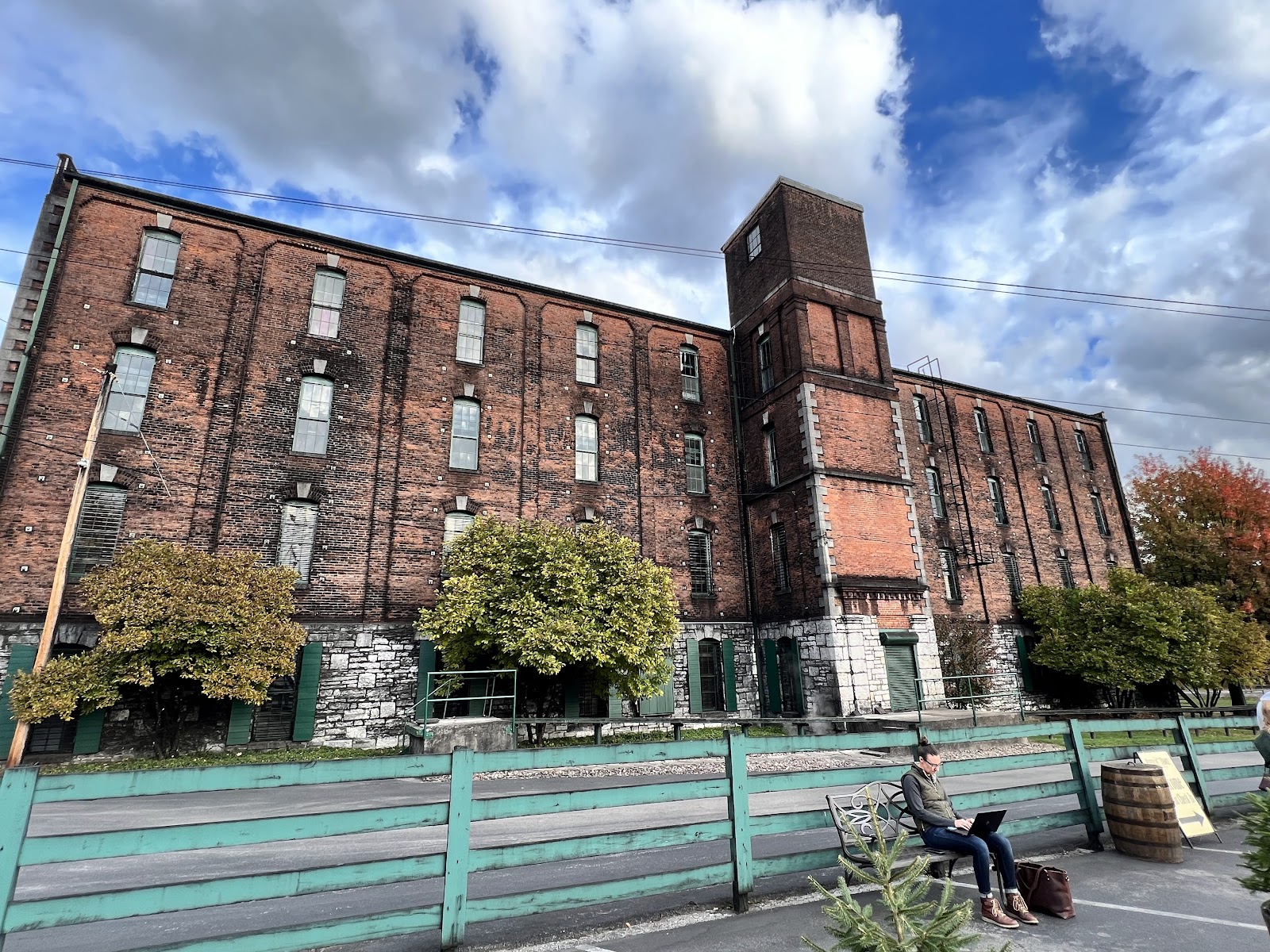
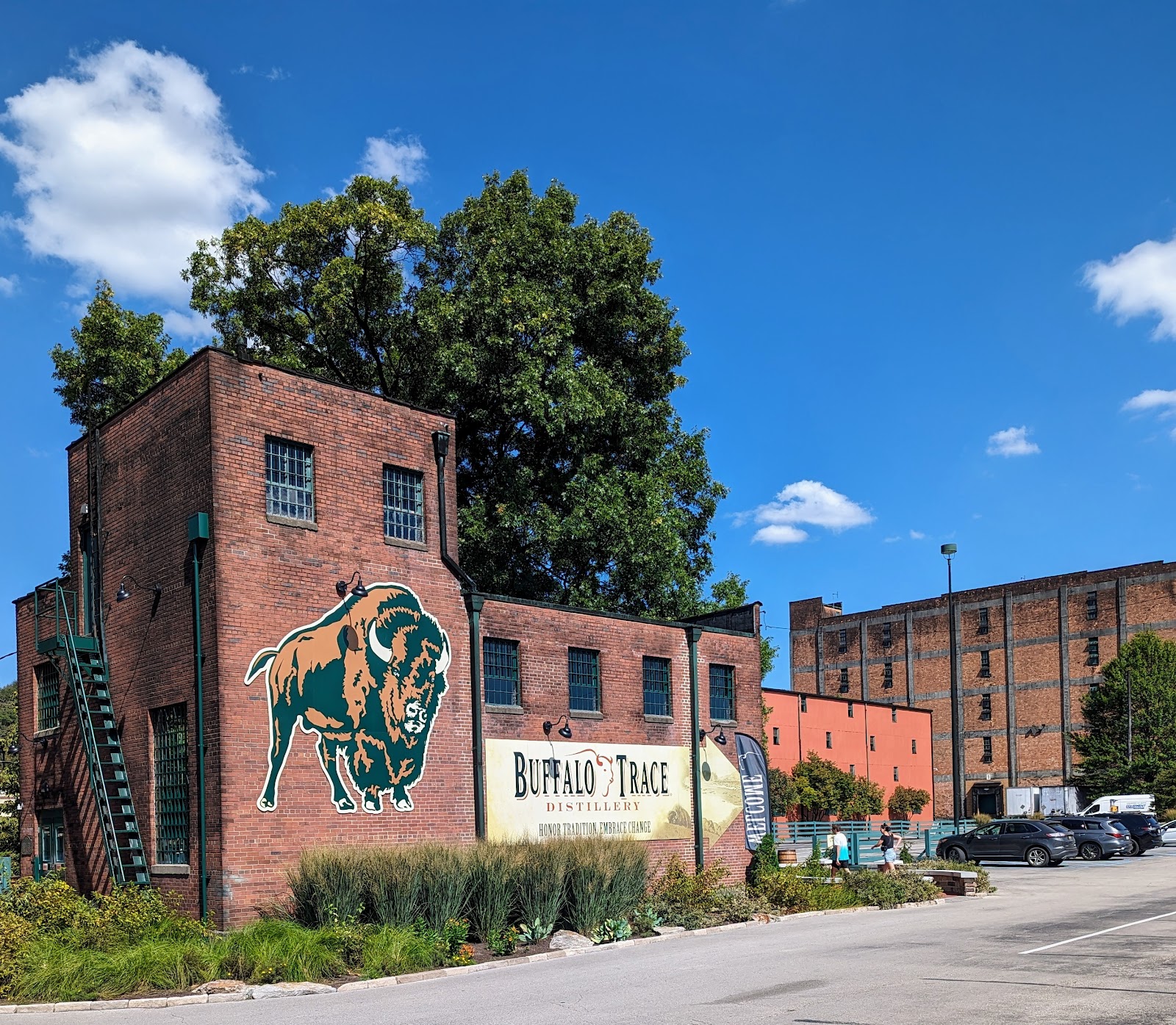
Buffalo Trace occupies a campus of brick and masonry buildings on the bank of the Kentucky River at Frankfort — a National Historic Landmark and one of the oldest continuously operating distilling sites in the country. It is not a single building with grounds. It is an industrial estate that grew over nearly two centuries, with warehouses, process buildings, offices, houses and roads, on ground that rises away from the water.
That scale is the first thing to plan for. A site measured in dozens of buildings across sloping ground means moving a wedding party between two positions is a transport question rather than a stroll, and a party of a dozen in formal clothing on gravel and tarmac uphill will take longer than anyone allows. Ask whether vehicles or carts are available, and plan two locations well rather than five badly.
The second thing is the valley, and it is the single most consequential fact about photographing here. Frankfort sits in a deep bend of the Kentucky River, which has cut down through limestone into a genuine gorge, so the town is in a bowl with steep wooded hills standing above it on most sides.
The consequence is that the sun goes behind a hill well before it goes behind the horizon. Depending on where exactly you are standing and the time of year, the effective sunset on the valley floor can be fifteen to twenty-five minutes earlier than the almanac says, and the last direct light of the day leaves the low ground while the hilltops are still lit.
That has to be planned for explicitly, because it is invisible until it happens. A photographer working from a sunset time printed on a schedule will find the golden hour ended early and will have spent it walking. Go and look at the western skyline from the position you intend to use, estimate the hill’s altitude above the horizon, and subtract accordingly.
There is a compensation and it is a good one. Because the high ground stays lit after the low ground is in shade, the hills and the upper buildings glow warm against a shaded foreground for a quarter of an hour — a light that a flat site never produces. And the river holds the sky long after both.
So: the water, then the campus, then the warehouses and the high ground, then the town and the year. Walk it uphill and finish at the river.
The Buffalo Trace Distillery at a glance
| Where | A large brick distillery campus on the Kentucky River at Frankfort, KY |
| The walk | River bank, process buildings, warehouses, then the high ground |
| The catch | Hills to the west steal fifteen to twenty-five minutes of sunset |
| The payoff | Lit hilltops above a shaded foreground, and a river that holds the sky |
| Ask first | Vehicle access, which buildings are bookable, and the flash policy |
The water, and the working campus
Start at the river, and start there early in the visit rather than saving it, because the light on water is good at both ends of the day and the walk back up takes time.
The Kentucky River here is a working navigable river in a limestone gorge — not wide, not fast, but substantial, with wooded banks and rock showing through where the cut is steep. It reads as a dark band with sky on it. Moving water scatters rather than mirrors, so it holds a soft luminous sheen instead of a reflection, and it stays visibly brighter than the land for a long time after the sun has gone.
Get the camera low at the water’s edge. A rippled surface from near its own level compresses into a specular path running the depth of the frame, which is a far stronger picture than the same river photographed from standing height. This is also the correct closing frame of the day here: the ground has gone dark, the hills have gone dark, and the river is still holding colour.
Ask about access to the bank and stay within what you are given. A working riverside industrial site has areas that are not for visitors, and the good positions are usually the ones the venue already knows about.
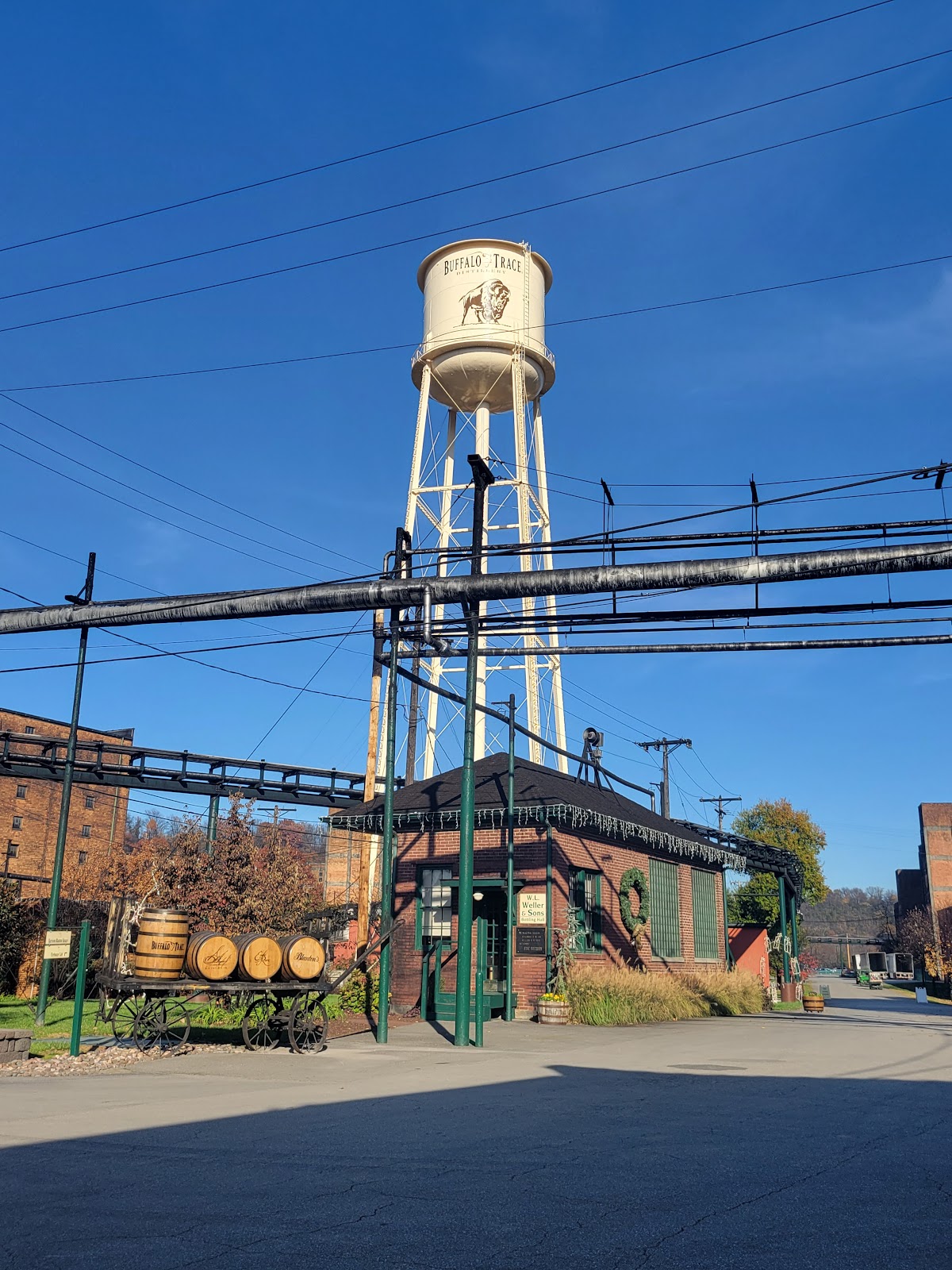
Now uphill into the campus. The character of this part is brick — large brick buildings of different periods standing close together, with roads between them, pipework, tanks, signage and the accumulated apparatus of a site that has been working continuously for a very long time.
That is a specific aesthetic and the way to photograph it is to commit to it. A brick industrial campus photographed as though it were a country house will look like a car park with a nice door. Photographed as industry — hard verticals, repetition, the pipework included rather than cropped out, a long lens compressing three buildings into layers — it looks like the thing it is, which is a far more distinctive photograph than another portico.
Brick is a warm material with a matte surface and a great deal of small-scale texture, which makes it the opposite of the cool limestone that dominates most of this region. It takes raking light extremely well and it holds colour in shade rather than going blue. A brick wall in the last hour is one of the most reliable backgrounds on the site, and in an overcast it still reads warm when everything else has gone grey.
The gradient is worth using deliberately rather than merely enduring. Ground that rises means you can put a camera below a subject and get sky behind them, or above and get roofs and buildings behind them, without moving more than a few metres. On a flat site both require a ladder or a compromise.
Two questions to have answered about the working campus before the day. Which buildings and roads a wedding party may actually be in, because a live industrial site has restricted areas that are not obvious from the map. And what the policy is on flash and electrical equipment, which at any distillery is a genuine safety matter rather than a preference — alcohol vapour makes certain areas classified environments, and the restrictions there are absolute. Get both in writing.
One more thing about a working site: it is loud in places and it smells strongly of fermenting grain and evaporating spirit in others. Neither photographs, but both affect how long a wedding party is content to stand somewhere, and a group that wants to leave is a group that does not look relaxed. Keep the industrial positions short and purposeful.
The warehouses, and the high ground
The barrel warehouses are the reason to be here and they are usually further up the slope, which is why they come second in the walk.
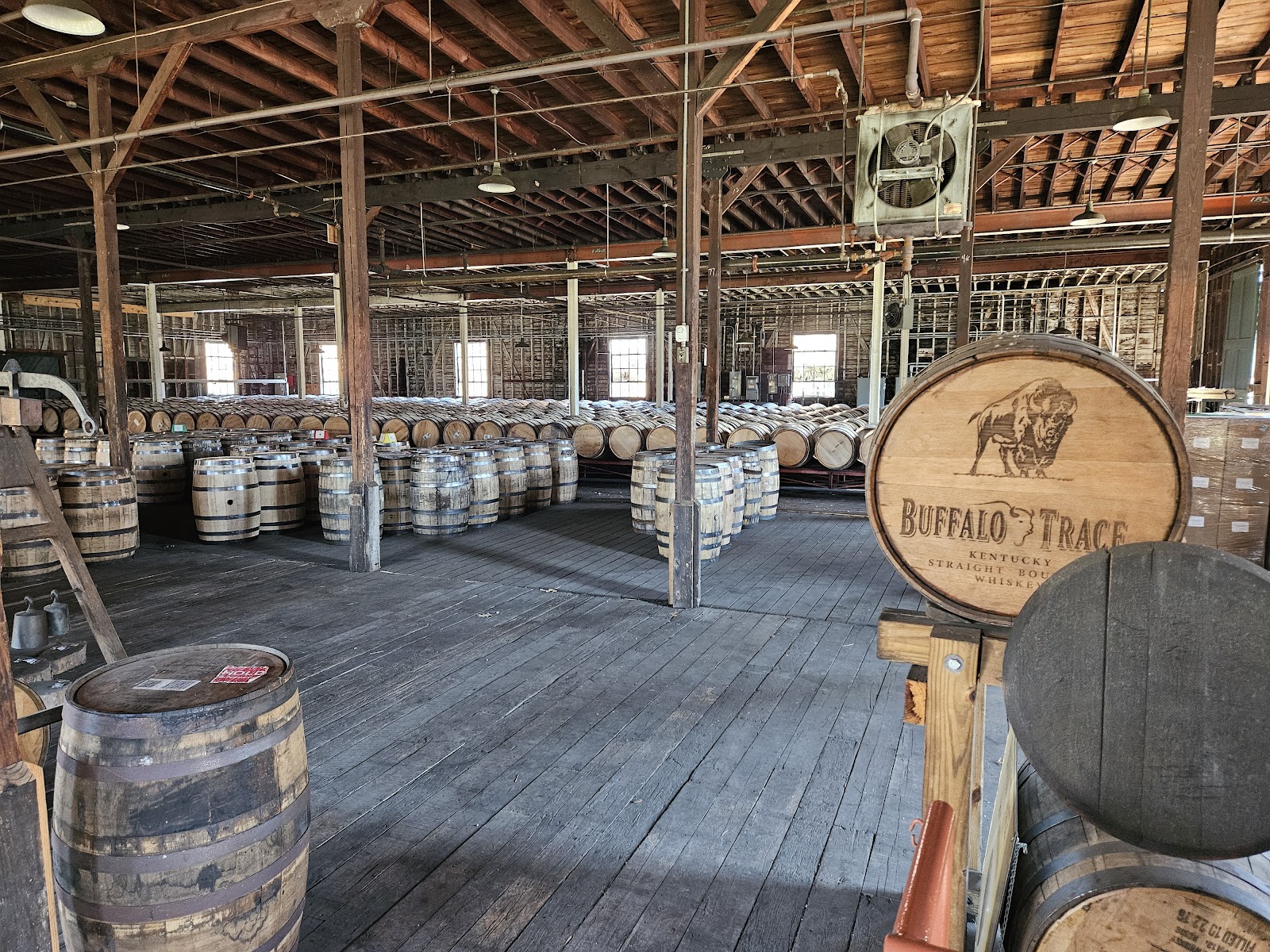
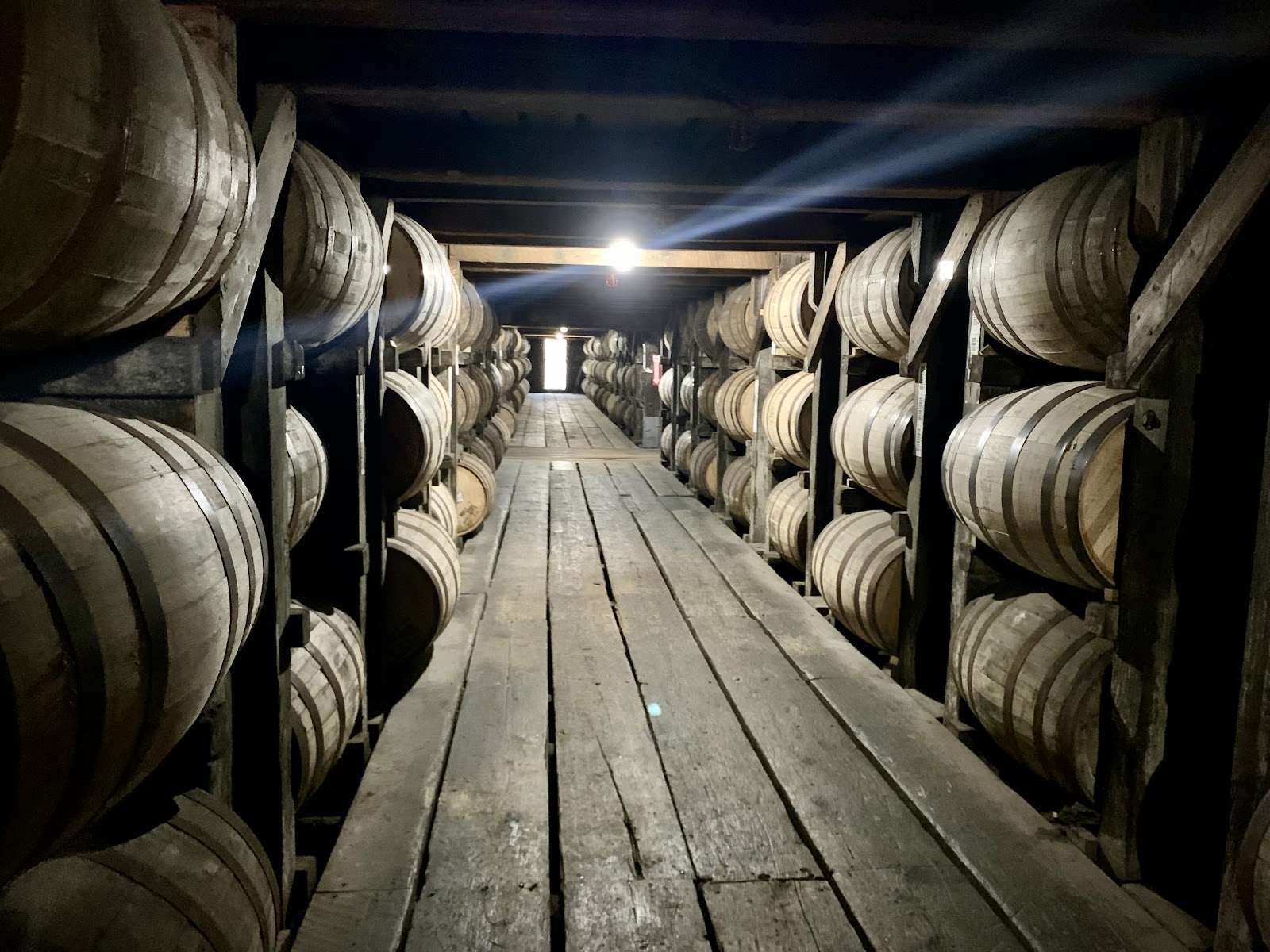
A masonry barrel warehouse is a tall building with small deep openings and a great many barrels inside it, racked on timber ricks in long aisles. The interior is dark, cool, still, and overwhelmingly repetitive, and repetition is the whole photographic opportunity.
The frame is a long lens down an aisle. At a hundred and thirty-five millimetres the barrel heads compress into a single continuous texture running to a vanishing point, and a figure placed in that aisle reads as very small inside an enormous pattern. That is the strongest graphic photograph available at any distillery and it takes thirty seconds once the position is found.
Light in there falls off very fast from the openings, which is a gift rather than a problem. Stand a subject two metres inside an opening and the light on them is directional, soft-edged and about four stops brighter than the aisle behind, so they separate without any lighting at all. Three metres in and they are gone. The positions are precise rather than approximate, which means stepping them out rather than guessing.
If the warehouse is timber-clad with louvred sides rather than masonry — and Kentucky has both, sometimes on the same site — the condition is entirely different. Louvres throw hard parallel bands of light across the interior, and those bands are the picture: place a face so a band crosses at an angle rather than straight across the eyes, expose for the lit band, and do not fill the shadows, because the contrast is the point. Ask which kind you have, because the two need opposite handling.
Two practical warehouse notes. They are hot in summer by design, since temperature cycling is part of how the whiskey matures, so a party in formal clothing has a short tolerance inside. And the exterior surfaces near warehouses are darker than they look: evaporating spirit in the air feeds a black fungus called Baudoinia that stains roofs, walls, fences and tree trunks downwind across this whole region. It is harmless, it is a signature of the industry, and it reads almost black in a frame. Meter for it rather than assuming a mid-grey.
Then keep going up, because the high ground is where the evening happens.
The upper part of a sloping site like this has two things the lower part does not: a view back down across the roofs of the campus to the river, and direct sun for fifteen or twenty minutes after the valley floor has gone into shade. Those two together make the top of the site the correct place to be at the end of the day, and it is a mistake that photographers make here repeatedly — spending the golden hour among the buildings and arriving up the hill after the light has gone.
So the order is: river early, campus in the middle, warehouses whenever the venue permits, high ground for the last half hour, and back down to the water for the final frames after the sun has gone. Written out like that it is obvious. Improvised on the day it does not happen.
If there is a period house on the grounds — large distillery estates frequently have one, built by an owner in the nineteenth or early twentieth century — it will be the one building on site with domestic-scale rooms and windows rather than industrial ones, and that makes it the preparation answer and the wet-weather answer at once. Ask whether it is bookable and what it holds. A house of that kind is usually small by wedding standards, and its capacity is the number that decides your rain plan.
Frankfort, and the year
Frankfort is a river town in a gorge and both halves of that matter.
The Kentucky River has cut several hundred feet down through Ordovician limestone here, and the same rock does two things that explain the whole region. It is unusually rich in phosphate, so the soil it makes grows mineral-rich grass and the animals that eat it build bone well, which is why the surrounding counties are horse country. And it filters groundwater, adding calcium and removing iron — iron ruins whiskey — which is why the distilleries are here rather than somewhere with better transport. One rock formation produced both industries.
The gorge also produces the town’s microclimate, and there are two effects worth knowing. Cold air is heavier than warm air, so on a still clear night it drains downhill and pools on the valley floor, which means the low ground is colder than the hills and, in the right conditions, holds mist along the river at dawn. River mist in a valley at first light, with the hills above it clear, is the best photograph the setting offers and it happens most often in autumn — a still clear night after a mild day. It is worth a very early start in October.
The second effect is the one from the lede: the western hills take the sun early. Add to that the fact that a gorge is narrow, so the sky visible from the valley floor is a strip rather than a dome, and both the morning and the evening are compressed at the bottom of the site.
The latitude is about thirty-eight degrees north. Civil twilight runs around twenty-nine minutes in midsummer, which is five minutes more than western Tennessee and amounts to a materially longer balance-point window — although in this valley part of that is spent in the hills’ shadow rather than in the sun’s. The midsummer noon sun reaches about seventy-five degrees, high enough to be hard on tarmac and gravel in the middle of the day; the midwinter noon sun sits near twenty-eight degrees and rakes brick beautifully all afternoon.
Humidity is Ohio Valley humidity, with July dewpoints around seventy, filling shadows by perhaps a stop and a half to two stops against a dry climate. Outdoors that is helpful. It also means haze on the long views down the valley in summer, and a lens that fogs within seconds coming out of an air-conditioned building — or out of a cool warehouse — into July air. On a site where you are repeatedly moving between cool interiors and hot exteriors, that is a recurring problem rather than a one-off. Keep the body warm.
Late September into October is the best window and for this site specifically: the haze lifts so the valley and the river actually resolve, the hardwoods on the gorge sides turn through the second half of the month and the wooded hills become the background rather than merely the horizon, temperatures are comfortable inside a warehouse, and the mornings are when the river mist happens.
Late April into May is the other good window, wetter and more storm-prone, with saturated green on the hillsides and long evenings. A site whose best rooms are indoors handles a spring storm far better than a marquee in a field does, which is a real advantage here.
Summer is workable at the two ends of the day. The middle is hot on open tarmac, the warehouses are hot by design, and a party in formal clothing will want to be somewhere else. The gift is a sunset after nine in late June and the half hour after an afternoon thunderstorm clears, which is the finest light the place gets: washed air, wet brick at full saturation, steam off the roads, and a low sun under a broken ceiling. Wet brick is a considerably better material than dry brick.
Winter is short and clear. Sunset near half past five in December, minus the hills, effectively ends the outdoor day in the middle of the afternoon, so the exterior work belongs there and the evening belongs indoors. In exchange: the clearest air of the year, a low sun raking brick all day, bare trees that reveal the shape of the gorge, and — on a cold day at a working distillery — visible steam in the air, which is a photograph July cannot give you. Against it, rural and river-valley roads, freeze-thaw, and the occasional Kentucky ice event, which is a travel problem for guests and suppliers rather than a photographic one.
One process question that changes the whole day, whatever the season: whether the distillery is actually running. A working still house is warm, loud, steaming and alive; the same room shut down is a museum with metal in it. Production may not run at weekends. Ask before anybody promises a photograph of it.
More frames from The Buffalo Trace Distillery
The Buffalo Trace Distillery wedding photography: common questions
Why do we lose the sunset early here?
Because Frankfort sits in a gorge the Kentucky River has cut several hundred feet down through limestone, so there are steep wooded hills to the west. The sun goes behind a hill well before it reaches the horizon, and on the valley floor the effective sunset can be fifteen to twenty-five minutes earlier than a printed sunset time. Go and look at the western skyline from the position you intend to use, and subtract accordingly.
What is the compensation for that?
The high ground stays lit after the low ground is in shade, so for a quarter of an hour the hills and the upper buildings glow warm above a shaded foreground — a light a flat site never produces. That makes the top of the slope the correct place to be at the end of the day. The river then holds the sky after both have gone dark, so the last frames belong at the water.
How should we plan the route?
River early, campus in the middle, warehouses whenever the venue permits, high ground for the last half hour, and back to the water for the final frames. The site is an industrial estate across sloping ground, so ask whether vehicles or carts are available and plan two locations properly rather than five in a hurry. A party of a dozen in formal clothing walking uphill on gravel takes longer than anybody allows for.
What is the best frame on the site?
A long lens down a warehouse aisle, with the barrel heads compressed into one continuous texture running to a vanishing point and a very small figure inside it. Light falls off fast from the small openings, which is useful: two metres inside an opening a subject is directional and roughly four stops brighter than the aisle behind, so they separate with no lighting at all. Three metres in and they have gone.
Can you use flash?
Only where the distillery says so, and the answer is not negotiable. Alcohol vapour makes parts of a working distillery classified environments with real restrictions on electrical equipment. Ask in writing which rooms permit what, and be ready for the room you most wanted to be ambient-only. Also ask which buildings and roads a wedding party may be in at all, because a live industrial site has restricted areas that are not obvious.
When is the best time of year?
Late September into October. The summer haze lifts so the valley and river resolve, the hardwoods on the gorge sides turn in the second half of the month, warehouse interiors are comfortable rather than hot, and the still clear autumn nights are when mist pools along the river at dawn — which, with the hills clear above it, is the best photograph the setting offers. It is worth a very early start.
More Kentucky venue guides
We are writing a photographer’s guide to every venue we would happily shoot in Kentucky. Here are three more, plus the full index:
- The Glendower Mansion, Paris: The Problem, and Four Ways Out of It
- The Kentucky Castle, Versailles: One Frame, and How It Is Made
- The Maker’s Mark Distillery, Loretto: The One Decision That Governs Everything
Planning a wedding at The Buffalo Trace Distillery?
River, campus, warehouse, high ground, river again. Tell us your date.