 The Memphis Zoo: The Problem, and Four Ways Out of It
The Peabody Memphis: The One Decision That Governs Everything
One hour decides the shape of the day.
This guide is about a single decision, and almost everything else in a Peabody wedding day follows from it: where you and the wedding party are at five o’clock in the afternoon.
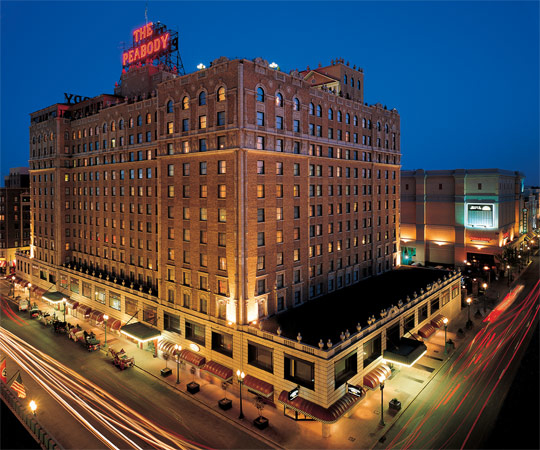
There has been a Peabody in Memphis since the nineteenth century. The building standing now opened in 1925 on Union Avenue, it is a member of Historic Hotels of America, and its ground floor is organised around a grand lobby with a carved travertine fountain at the centre under a high coffered ceiling. That lobby is the best interior room in the building and it is not close. It is tall, it is symmetrical, it has real material in it, and it has the kind of ambient warmth that photographs as generosity rather than as a colour problem.
It also has a standing appointment. Since the 1930s the hotel has kept mallards, and twice a day they travel between the roof and the fountain — down in the late morning, back up in the late afternoon — along a red carpet, to music, in front of a crowd. As of writing that is eleven in the morning and five in the afternoon, and you should confirm the current times directly with the hotel, because published schedules change and a wedding plan built on a stale one is a plan built on nothing.
Treat this as a logistical fact rather than a charming one. For roughly half an hour either side of five, the single best room in the building is a public event space with several rows of spectators along its main axis, staff working a rope line, and phones up. That is not a criticism of the hotel. It is one of the most durable pieces of hospitality theatre in the United States and people come specifically for it. But it means the room you most want is committed at an hour you may also want.
And five o’clock in Memphis is not a neutral hour. It sits in a completely different place in the day depending on the month. Around the equinoxes sunset is near a quarter past seven, so five is a comfortable ninety minutes ahead of the good light and you have room. In late June sunset is after eight, so five is still flatly mid-afternoon and nothing is lost. In December sunset is around ten to five, so the march happens at dusk and you have lost, potentially, the only usable outdoor light of the entire day.
So the decision is not whether to watch the ducks. The decision is whether the lobby is available to you between about half past four and a quarter past five, and if it is not, what you had intended to be doing in it.
There are two coherent answers and a bad muddle between them.
The first answer is to build the day around the event: be in the lobby deliberately, treat the crowd and the ceremony of it as content, and accept that your frames there will contain strangers. The second is to build the day away from it: have the lobby earlier or later, and put the five o’clock half hour somewhere else entirely — upstairs, on the roof, out on the street, in a room with a door.
The muddle is arriving at ten to five intending a quiet formal portrait at the fountain, discovering the rope line, and spending twenty-five minutes improvising in a corridor. That is a solved problem and the solution is a phone call.
What follows is how each of those two answers actually plays, what the rest of the building gives you once the decision is made, and how Memphis itself — a city on a bluff above a very wide river, at a latitude that hands you a short dusk — shapes everything around it.
The Peabody Memphis at a glance
| Where | A 1925 grand hotel on Union Avenue in downtown Memphis |
| The decision | Where you are between about 4.30 and 5.15 in the afternoon |
| Why it matters | The lobby has a scheduled public event; confirm current times |
| The compensation | A tall symmetrical room with real travertine and warm ambient light |
| Ask first | Lobby access windows, roof access and sightlines, ballroom hours |
The five o'clock hour, and the two ways to take it
Take the first answer first, because it is the braver one and it produces better photographs when it works.
If you go into the lobby at five deliberately, you are photographing an event rather than a portrait. That changes the equipment and it changes the posture. You want a shorter lens than instinct suggests, because the interesting thing is the relationship between your couple and a room full of delighted strangers, and a long lens compresses that into a blur behind two heads. Get in at a thirty-five, put the crowd in, and let the geometry of the red carpet do the composing for you.
You also want to be early. A rope line has a front row and the front row fills fifteen minutes ahead. If your couple are standing behind three rows of people, you have a photograph of the backs of three rows of people.
Ask the hotel, in advance and in writing, whether a wedding party can be positioned anywhere specific. Some venues will accommodate this and some will not, and the answer is theirs to give rather than yours to assume. If the answer is that you stand where everyone else stands, that is a workable answer and you plan for it.
The light in the lobby during the march is whatever the house lighting is, which is warm, layered and low by daylight standards. Expect to be working wide open at a sensitivity you would not choose, and expect mixed sources — incandescent-balanced fixtures, daylight leaking from any glazed frontage, and possibly a spotlight on the carpet. Set a white balance for the dominant source and let the rest fall where it falls. Chasing every cast in a room like that produces grey mush.
Flash during a scheduled public event is a question to ask rather than a decision to make, and the answer will often reasonably be no. Assume available light and set the camera up for it before you walk in.
Now the second answer, which is the one most couples will actually choose.
Building the day away from five o’clock means you want the lobby at a different hour, and the good news is that the different hours are genuinely better for a portrait. The room is quietest in the mid-morning before the first march, and again in the middle of the evening once the second is well past and the bar crowd has moved through.
Mid-morning is the strongest option in the shoulder seasons. The sun is high enough to put real light through any street-facing glazing without the hard low beam that makes a lobby look striped, the room is not yet busy, and your couple are fresh. If a first look is on the table at all, this is where to put it.
That leaves the five o’clock half hour needing somewhere to be, and the building has answers upstairs.
The practical instruction is to write the day out as a list of rooms with times against them, share it with the hotel, and let them tell you which rows are impossible. Venues with a fixed daily event are very used to this conversation and they are good at it. What they cannot do is fix it at four fifty.
One more scheduling note that is easy to miss. The late-morning march is at eleven, which in most wedding schedules is squarely inside hair and makeup, and therefore harmless. But if the day includes a morning ceremony — which happens more often in high summer here than elsewhere, for reasons of heat — then both marches are live and the lobby has two appointments rather than one. Check both.
And if the date is in December or early January, understand what you are trading. Sunset is around ten to five. The entire outdoor portion of that day is over by the time the ducks are back on the roof. A winter Peabody wedding is an interiors wedding with one short window in the early afternoon, and the honest plan is to use that window for everything outdoors and treat the rest of the day as a building.
None of this is difficult. It is simply a thing you have to know before the timeline is signed rather than after.
What follows from it: the rest of the building
Once the lobby question is settled, the Peabody is a straightforward grand hotel to work in, and its useful spaces stack vertically.
The top of the building is the part worth arranging first, because it is the part with the light. The hotel’s roof has been a social space since the 1930s — the top-floor room was used for big-band broadcasts, which is why the name attached to it has a period ring — and there is terrace space up there in some form. What exactly is available to a wedding, at what hours, with what furniture in place, is a question for the events team, and it will vary by date and by what else is booked. Ask specifically, and ask about sightlines rather than about the roof in general.
The reason sightlines matter is geography, and it is the next section’s subject, but the short version is this: the river is a few blocks west, downtown Memphis has built upward since 1925, and whether you can actually see the water from any given position on that roof is a question only someone standing there can answer. Do not sell a couple a sunset-over-the-Mississippi frame you have not personally confirmed. Ask the hotel to describe the western view, or go and look.
What a roof at this height reliably gives you, sightline or not, is open sky and an unobstructed low sun in the last hour. That is the best portrait light the building has and it is worth protecting a twenty-minute slot for.
The ballroom spaces are the reception answer and they are period rooms with period proportions: high ceilings, plaster detail, chandeliers, and enough floor that a band and a hundred and fifty people are not in each other’s way. Photographically the thing to establish is what the house lighting can and cannot do. Grand hotel ballrooms are frequently lit to a warm, even, low level that flatters a room and does nothing at all for a face, and the ceiling height that makes the room beautiful also puts the fixtures too far away to model anything.
That is a bounce problem and high plaster ceilings are usually the answer, if they are pale. Two lights in opposite corners aimed up will lift a room like this cleanly and invisibly. Check the ceiling colour before committing to that plan, because a dark or heavily gilded ceiling eats the light and you will be on direct flash instead, which in a room of this quality looks like a mistake.
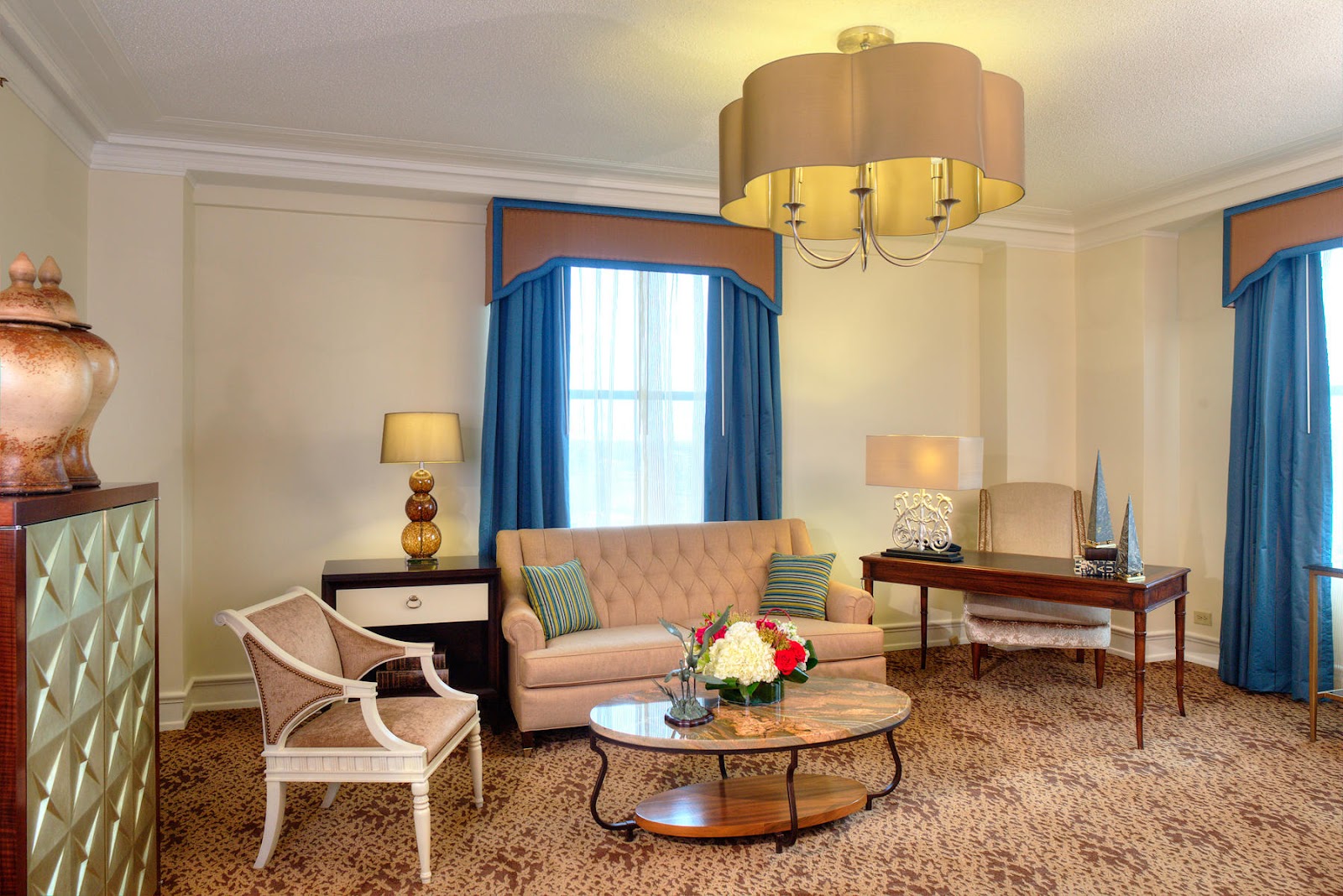
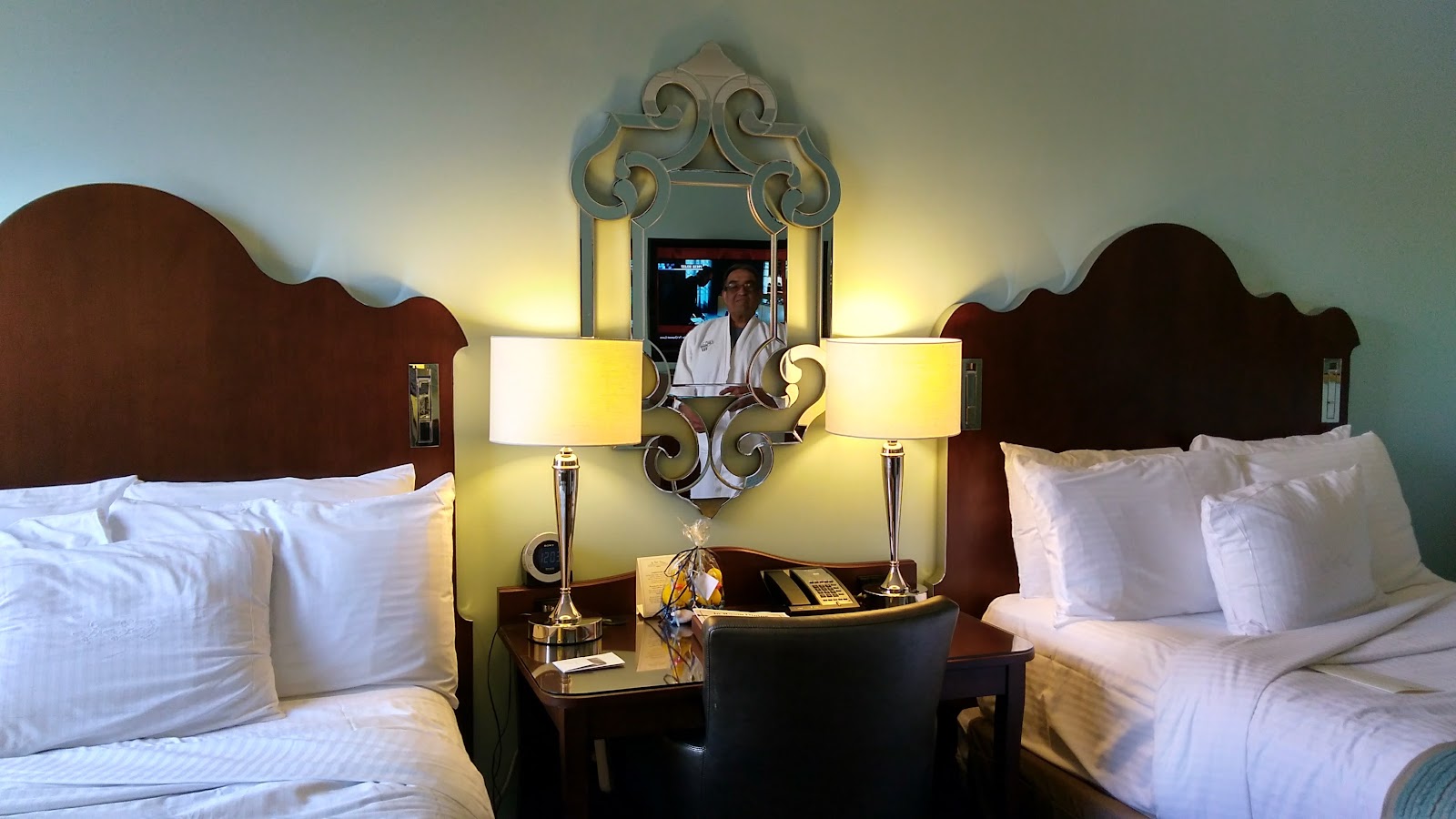
Guest rooms are the preparation answer and in a building of this period they come with deep-set windows and, often, heavy drapery. Strip the room, pull the sheers, and put your subject side-on to the window at about a metre and a half. The falloff in a room that depth is fast and flattering. If the window faces a light well or another wall rather than the street, the light will be weaker and cooler than you expect and you should test it the morning of rather than assuming.
Corridors in hotels of this era are long, symmetrical, carpeted and quite dark, and they make a strong graphic frame if you are willing to light them. One light behind the subject aimed back down the corridor, subject exposed on ambient plus a touch of fill, and the perspective does the rest.
The street outside is a working downtown street and it has its own value. Union Avenue at dusk, with the hotel’s frontage lit and traffic rendered as streaks at a fifteenth of a second, places the photograph in a city rather than in an interior. This needs about ten minutes and it needs those ten minutes to be the right ten.
Which brings the whole thing back to timing, because that is what this venue is really about. The Peabody does not present you with a difficult building. It presents you with a building that has one busy half hour in its best room, and a latitude that gives you a short dusk. Both of those are schedule problems and both are solvable on paper weeks before the day.
Write the schedule. Send it. Ask what is wrong with it. Then shoot it.
That is the whole method here, and it is worth more at this venue than any equipment decision you could make.
Memphis, the bluff, and the year
Memphis is where it is because of a piece of geology, and that geology is more useful to a photographer than it sounds.
The lower Mississippi runs through hundreds of miles of flat alluvial floodplain, and for most of its length both banks are low and prone to flooding. The exception on the east bank is a series of four rises called the Chickasaw Bluffs, and Memphis sits on the fourth and southernmost of them, roughly fifteen to thirty metres above the water. It is effectively the only high, dry, defensible ground on that side of the river between the Ohio confluence and Vicksburg, which is why a city grew here and not somewhere more convenient.
The bluffs are made of loess — fine windblown silt laid down at the end of the last glaciation — which is why they hold a steep face rather than slumping into a slope.
The photographic consequence is a good one and it is specific. You are standing on high ground on the east bank, looking west, across a river that is something like half a kilometre wide at this point, at an opposite bank which is the Arkansas floodplain and is flat for tens of kilometres. There is nothing to interrupt the western horizon. No opposite bluff, no ridge, no hills.
That is genuinely unusual in the interior of this country. Most river cities look across at an opposite bank that rises, which cuts the last twenty minutes off the sun and kills the reflection. Here the sun goes all the way down to a flat horizon over a very large body of moving water, and the water holds the colour for a long time afterwards.
So a Memphis sunset is a real asset rather than a generic one, and it is worth building a wedding day around if any position in the schedule faces west with a clear line to the river. From the Peabody that means the roof, and it means confirming the sightline first.
The river itself behaves like a horizontal mirror with a texture on it. It is wide, it is slow-looking and it is never actually still, so it does not reflect like a lake. Get the camera low and a rippled surface compresses into a specular path running straight back toward the sun, which is a far stronger picture than a flat reflection would be.
Now the latitude, which gives with one hand and takes with the other. Memphis is at about thirty-five degrees north. Midsummer noon sun is near seventy-eight degrees, which is close enough to overhead to be genuinely difficult on an open street between about half past eleven and half past two. Midwinter noon is near thirty-one degrees, which is low enough to model a face all day long.
Civil twilight runs about twenty-four minutes in midsummer and a little under that at the equinoxes. That is short. Plan the last frame of the evening rather than discussing it — know the position, walk to it, make two or three exposures, and be finished.
Humidity works in your favour more than most photographers expect. July dewpoints here sit in the low to mid seventies, which means the air is full of water vapour, and water vapour scatters light into shadows. A sunlit street in Memphis in July carries roughly two stops less contrast than the same sun angle in a dry climate. Shadow edges are soft, eye sockets keep detail, and a midday frame in open shade is workable rather than hopeless. The costs are a pale washed-out sky that contributes nothing to a wide frame, and visible haze on anything past about eighty-five millimetres.
There is also a condensation problem that is worse here than almost anywhere. A camera carried from an air-conditioned lobby into July air outside will fog in seconds and take minutes to clear. On a day that alternates between the two, that is a repeated event rather than a one-off. Keep the body warm — outside, in a bag on a chair by a door, anywhere but in the cold — and you avoid the whole thing.
The planting is southern and it has three members worth knowing. Southern magnolia is evergreen with large stiff glossy leaves, and glossy is the operative word: it throws hard specular highlights back at a low sun, so it reads as a mass of small bright points rather than as a dark mass, and it does that in February as in August. Crape myrtle flowers in mid and late summer, which is genuinely useful because it puts colour into August frames when every spring-flowering thing is long finished. And bald cypress, in any wet ground nearby, turns a rust orange in November and holds it for weeks.
Spring is the best season and the most dangerous one. Late March into April gives dogwood and redbud, mild air, long usable evenings and sun angles that model rather than flatten. It also puts Memphis on the eastern edge of the continent’s most active severe-weather corridor, and the storms that come through in that window are the organised kind that arrive fast with real wind. An April outdoor ceremony here needs a covered alternative that exists, is reachable in minutes, and has been looked at.
October and early November are the other strong window and they are the calmer one: dry air, cool mornings, clean light, and sun angles low enough that the whole afternoon works rather than only the last hour of it.
Summer is workable if the schedule respects the heat, which is a welfare matter before it is a photographic one — a party in formal clothing outdoors in Memphis in July at ninety-five degrees with a seventy-five degree dewpoint is not comfortable and will not look comfortable. Two ends of the day outdoors and the middle indoors. Winter is short-dayed and mild-to-cold, and the December sunset before five reshapes everything, as the first section said. But the winter light itself is excellent, the low sun models all day, and a bare-branched city photographs with a clarity the summer haze never allows.
More frames from The Peabody Memphis
The Peabody Memphis wedding photography: common questions
What is the five o'clock thing, exactly?
The hotel has kept mallards since the 1930s and they travel between the roof and the lobby fountain twice daily along a red carpet, to music, in front of a crowd. As of writing the times are eleven in the morning and five in the afternoon. Confirm the current schedule with the hotel — a wedding timeline built on a published time that has since changed is the one avoidable failure here.
Does it actually affect my photographs?
Yes, if you wanted the lobby at that hour. For roughly half an hour either side, the best interior room in the building is a public event space with a rope line and spectators. Either use that deliberately as content or be somewhere else. The bad outcome is arriving expecting a quiet portrait.
When is the best time to photograph the lobby?
Mid-morning before the first march, or mid-evening once the second is well past. Mid-morning is the strongest in spring and autumn: the room is quiet, the sun is high enough to light it without striping it, and the wedding party is fresh.
Is a December wedding here a bad idea?
Not bad, but different, and it needs to be understood in advance. Sunset is around ten to five, so the whole outdoor portion of the day finishes early and there is one usable window in the early afternoon. Plan an interiors day with one short outdoor slot rather than discovering that at four.
Can we get a sunset over the Mississippi from the roof?
Ask the hotel and confirm it, and do not let anyone promise it sight unseen. The geography is in your favour — the river is a few blocks west, it is wide, and the Arkansas bank opposite is flat, so there is no high ground to cut the sun off. But downtown has built upward since 1925 and whether a particular position has the sightline is a question only someone standing there can answer.
How long is the usable light after sunset?
About twenty-four minutes of civil twilight in midsummer and slightly less around the equinoxes, with the genuinely good balance point — sky and building lights roughly equal — lasting perhaps ten of those. Know the frame, walk to it, make two or three exposures, stop.
More Memphis, TN venue guides
We are writing a photographer’s guide to every venue we would happily shoot in Memphis, TN. Here are three more, plus the full index:
- The Memphis Botanic Garden: The Venue’s Own Logic
- The Memphis Zoo: The Problem, and Four Ways Out of It
Planning a wedding at The Peabody Memphis?
One decision, made six weeks early, and the rest of the day is easy. Tell us your date.