 The Hilton Garden Inn Fargo: Field Notes on a Standardised Hotel
The Fort Abraham Lincoln State Park, Mandan: What It Suits, and What It Does Not
Two reconstructed architectures, neither of them ordinary.
This site holds two reconstructed architectures that could not be less alike, and the honest way to describe it is by what each offers and what a reconstruction can and cannot give.
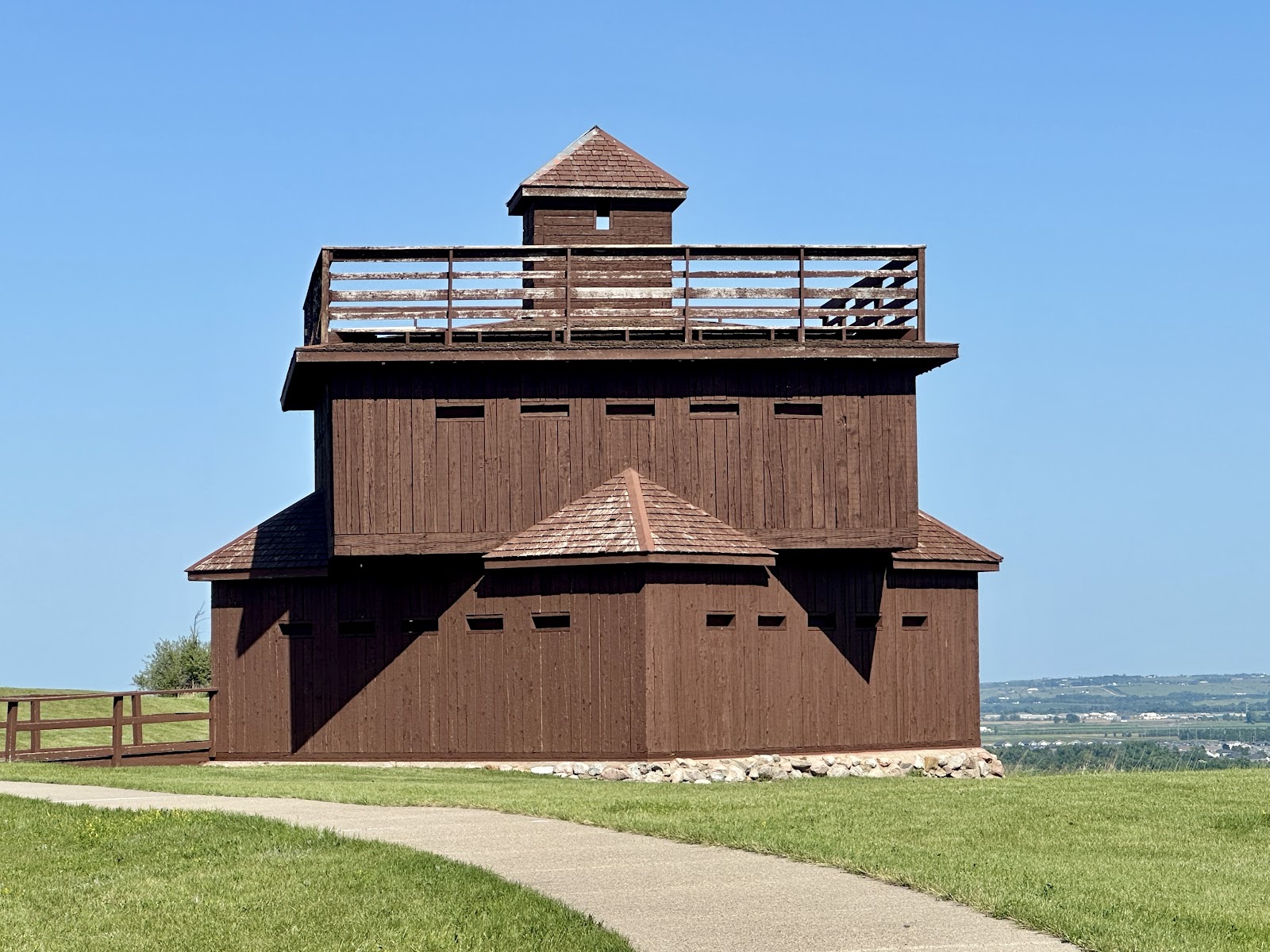
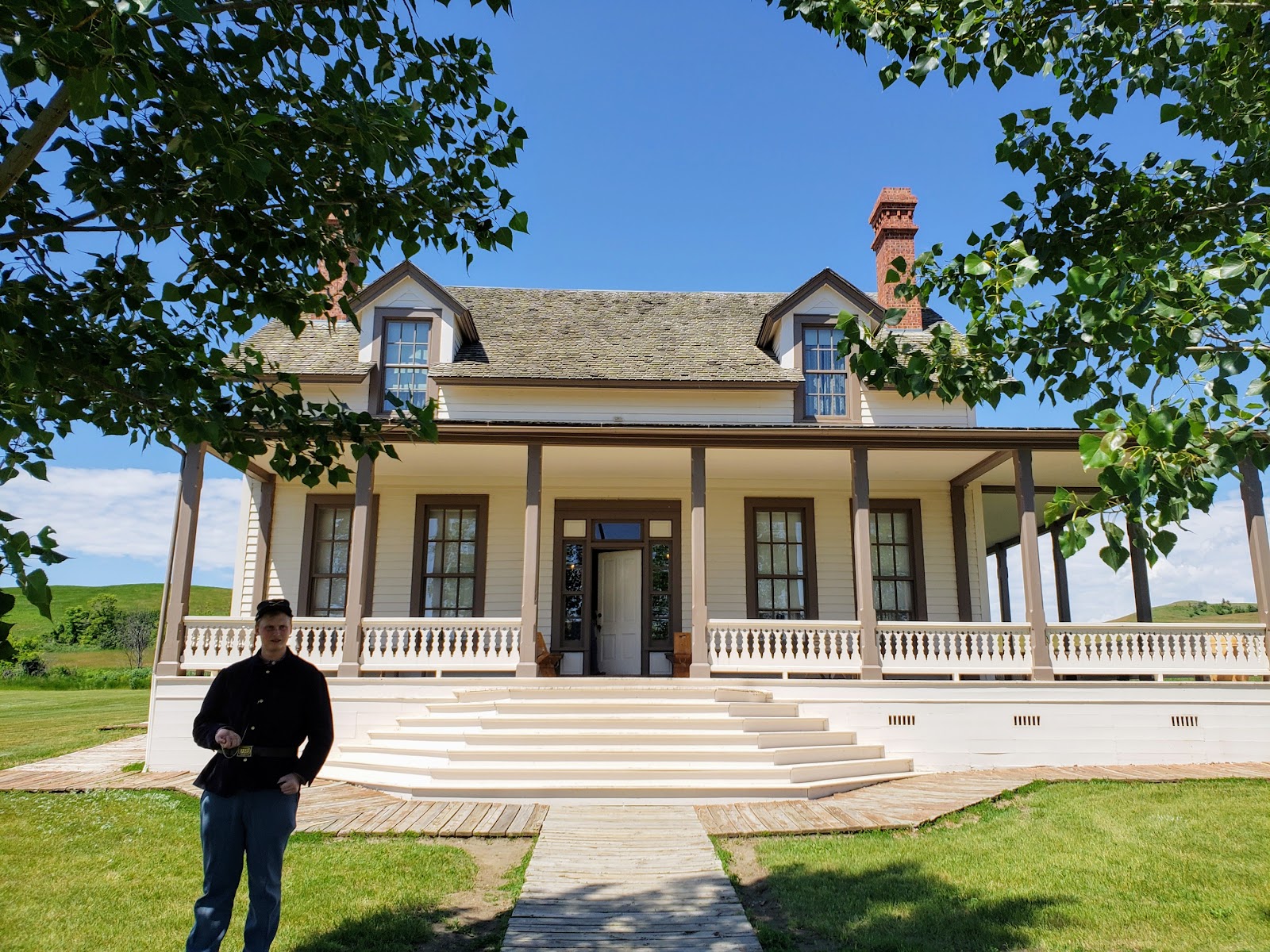
The first is a late nineteenth-century cavalry post: frame buildings in the standard army pattern of the period — a commanding officer’s house, barracks, stables — laid out around a parade ground on a bluff above the Missouri. It is the post Custer left in 1876.
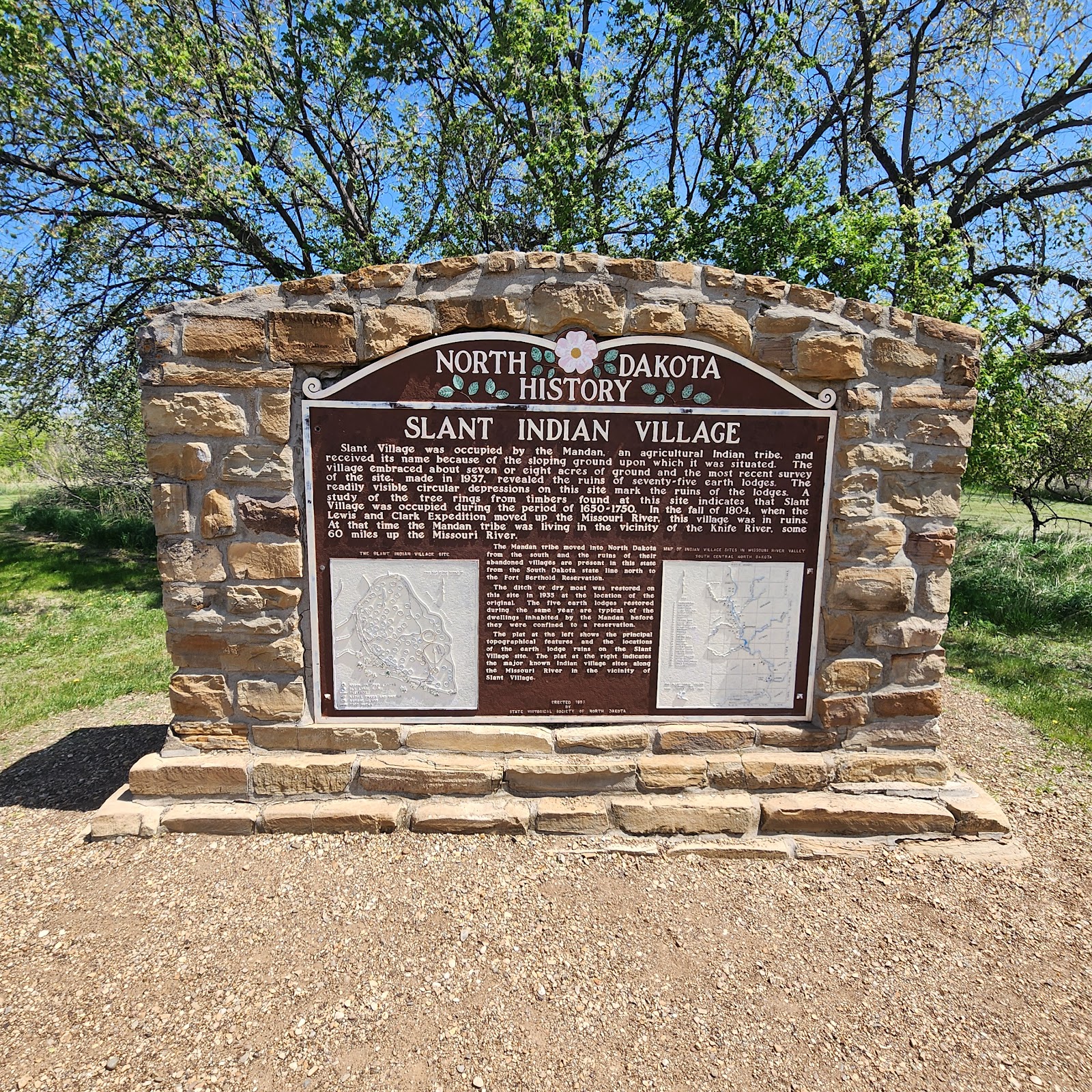
The second is older and far more interesting architecturally: reconstructed Mandan earthlodges from the village that stood on this ground for centuries before. An earthlodge is a circular domed structure — a timber frame of posts and rafters covered with willow, grass and earth — perhaps twelve metres across, with a central smoke hole and a covered entrance passage.
That is an extraordinary photographic subject and there is almost nothing like it in this library. A dome of packed earth with a hole in the top is optically a very particular space: a single overhead source in an otherwise enclosed dark volume, which is the closest thing to a natural studio that vernacular architecture produces.
The third element is the site itself. A bluff above the Missouri gives elevation, a river, long sightlines and the open country of the northern plains — which for a photographer is landscape rather than backdrop.
What a reconstruction can give is spatial truth: the dimensions, the proportions, the light and the way a building feels to stand in are all real, because they were built to the original pattern. What it cannot give is age. Reconstructed timber is new timber, and it photographs as new — clean, unweathered, without the patina that makes original fabric compelling at close range.
So the frames that work here are about space and light rather than about texture and surface, and knowing that in advance changes what a photographer looks for.
Mandan sits at about forty-six and three-quarter degrees north at roughly one thousand seven hundred feet on the Missouri. The June noon sun reaches around sixty-six and a half degrees, the December noon sun about nineteen and a half, days run from about eight hours twenty to fifteen hours fifty-five, and civil twilight is roughly thirty-eight minutes — long.
We have not photographed a wedding here. What a state park permits, whether the earthlodge interiors are accessible and the seasonal dates are questions for the park.
The Fort Abraham Lincoln State Park at a glance
| Where | A state park on a Missouri bluff near Mandan, North Dakota |
| Two architectures | A reconstructed cavalry post, and reconstructed Mandan earthlodges |
| The earthlodge | A domed earth structure with a central smoke hole — a natural studio |
| What reconstruction gives | Spatial truth. What it cannot give is age or patina |
| Ask first | Whether earthlodge interiors are accessible; seasonal dates; park rules |
What it suits
It suits the earthlodge above everything else, and that is the reason to book this site rather than any other.
An earthlodge interior is a domed enclosed volume lit by a single circular opening at the apex. That produces a light condition with almost no parallel: a defined overhead source, a rapid falloff toward the walls, and a floor beneath the opening that is brightly lit while everything around it goes to near-black.
The frame that follows is obvious once seen. A couple standing directly beneath the smoke hole is lit from above in a pool of daylight with the whole interior falling away around them — which is theatrical, entirely natural, and needs no equipment at all.
Overhead light has the usual problem of shadowed eye sockets, and here there is a specific fix: the floor. An earthlodge floor is packed earth, which is a mid-toned surface, and the bright patch of it beneath the opening returns a useful amount of light upward. Turning a subject so the brightest floor is in front of them rather than behind lifts the sockets noticeably.
A low reflector does the rest, and in a space this dark a modest amount goes a long way.
The structure is the other subject. The timber frame of an earthlodge — four central posts, radiating rafters, a ring of outer posts — is visible from inside, and a camera placed on the floor pointing up at the smoke hole renders that structure converging toward a bright circle. That is a strong graphic frame and it is symmetrical, so it needs the camera precisely centred.
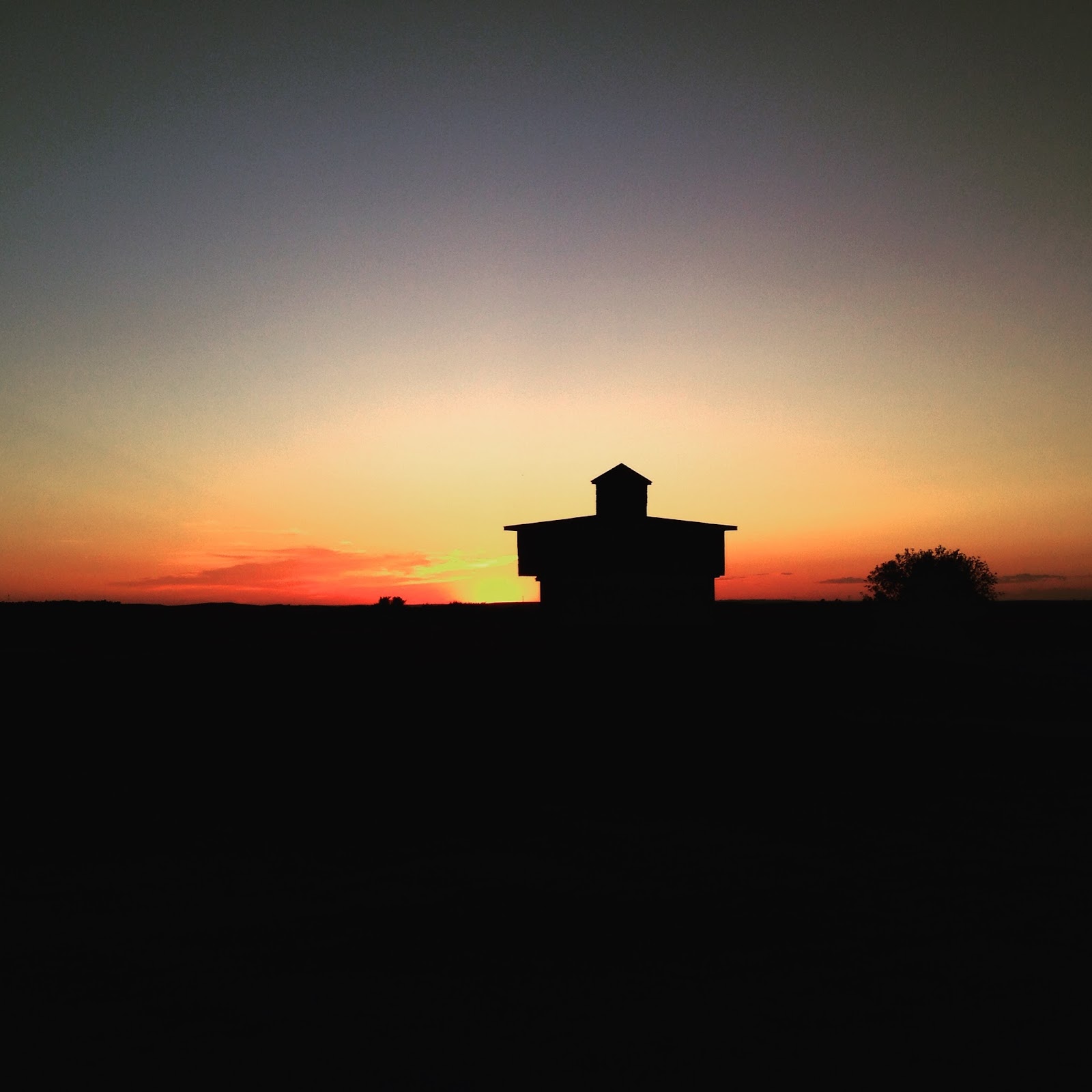
From outside, an earthlodge is a low earth dome with grass growing on it, which reads as landscape rather than as building — and a village of them is a cluster of mounds. That is genuinely unusual and it photographs best at low sun, when the raking light picks out the curvature and the entrance passages cast shadows.
It suits the cavalry post for a different reason: the parade ground. A rectangular open space surrounded by frame buildings facing inward is a designed composition, and it gives long clean sightlines that the rest of the site does not.
The frame buildings themselves are painted timber, which behaves as it does everywhere: white or pale paint reflects around eighty percent of incident light against skin’s thirty-five, so direct sun puts a wall two stops above a correct face exposure. Open shade or overcast is the condition these buildings want, and a northern plains sky supplies plenty of the latter.
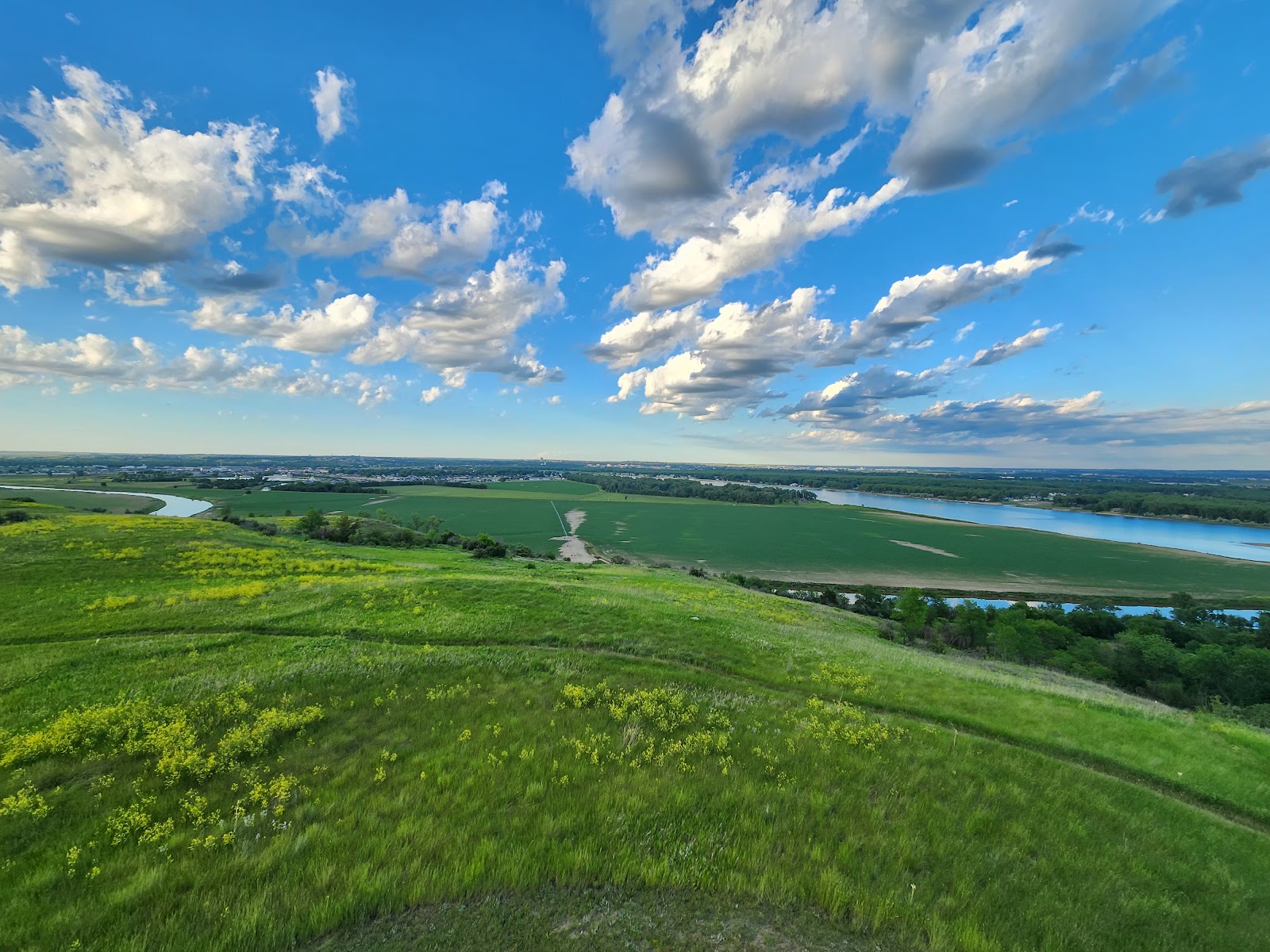
It suits the river and the bluff. Elevation is scarce on the northern plains and this site has it — which means a frame looking down over the Missouri with the far bank and the open country beyond is available from a standing position. That wants a moderate telephoto to compress the distance, because a wide lens renders a wide river valley as a flat band.
And it suits the shoulder seasons better than the summer. Late September gives the cottonwoods along the Missouri in clear yellow, the prairie grasses in russet, the clearest air of the year and a low sun that rakes the earthlodge domes and the parade ground for most of a shortening day.
What it does not suit
It does not suit a photographer looking for texture and patina. Reconstructed timber is new timber: clean, square, unweathered, without the checking, greying and wear that make original nineteenth-century fabric compelling at close range.
That is not a criticism of the reconstruction, which exists to show what the buildings were rather than to have aged. But it does mean the close detail frames that carry a genuine historic site are weaker here, and the compensating strength is spatial rather than surface.
It does not suit a party wanting comfort and infrastructure. A state park is a park: the facilities are modest, the buildings are interpretive rather than functional, and there is no catering kitchen, no bridal suite and no substantial indoor reception space unless the park has built one. That is worth establishing in specifics rather than adjectives.
It does not suit anyone needing a genuine rain plan. Reconstructed buildings are not usually usable as event spaces at scale — an earthlodge holds a small number of people and a barracks reconstruction may be interpretive rather than available — which means a wet day has nowhere obvious to go. Ask specifically what is covered and how many it takes.
It does not suit a large wedding. The earthlodge, which is the site’s best space, is small; the parade ground is large but exposed; and the park’s own provision is limited. A small or medium party moving between spaces is the natural shape.
It does not suit a summer midday. At about sixty-six and a half degrees of noon sun elevation the light is lower than the southern venues in this library, which helps — but a parade ground and an earthlodge village are open ground with almost no shade, and northern plains summers reach the nineties.
The shade is the cottonwoods along the river and the buildings’ own shadows. Cottonwood is the only substantial tree here, because it needs the water table, and it gives the river bottom a line of large broad-crowned trees through otherwise treeless country.
It does not suit anyone unprepared for wind. North Dakota is among the windiest states and a bluff above a river valley is exposed — which means a breeze is the normal state of the air, no modifier goes on an unweighted stand, and a five-hundredth of a second is the default for hair and fabric.
And it does not suit a winter date, which is worth saying plainly rather than diplomatically. This is among the coldest inhabited parts of the lower forty-eight, with temperatures reaching twenty or thirty below, genuine blizzards, and about eight hours twenty of December daylight. A state park with no substantial heated indoor space is not a winter venue, and much of it will be closed.
One further practical matter specific to state parks. There will be rules — on where a group may go, what may be touched, whether amplified sound or decoration is permitted, whether a permit is needed for a commercial photography session, and firm hours. Those are not negotiable and they are worth establishing in writing in advance rather than negotiating on the day.
- The earthlodge smoke hole is the best natural light on the site
- Turn subjects toward the brightest floor patch to fill eye sockets
- Shoot the earthlodge structure from the floor, precisely centred
- Painted frame buildings want open shade or overcast, never direct sun
- Ask in specifics what is covered and how many it holds
The Missouri, the plains and a northern year
The river and the latitude together set what each season offers, and the range is among the widest in this library.
The Missouri here is a large river in a broad valley, which gives three things: a reflective surface, a line of cottonwoods, and a horizon. On the northern plains all three are scarce.
Water reflects the sky, making it a large low-angle source that fills under the chin and lifts eye sockets — strongest at grazing angles, so the last hour. And from the bluff, a low camera cannot reach the water, so the river frames are compressed distant views rather than waterside ones: a moderate telephoto across the valley, with the far bank and the cottonwood line as layers.
The prairie is the other ground type. Mixed-grass prairie here — little bluestem, western wheatgrass, blue grama, needle-and-thread — turns russet and bronze through October and then holds that colour all winter, because the dead growth stands until spring.
That gives the landscape warm ground colour for five or six months rather than two weeks, which makes late autumn and winter far more photogenic here than in wooded country. It also means a March frame has the same russet ground as a November one.
Prairie in wind moves as travelling waves, and at a thirtieth of a second on a tripod that blurs into flowing bands while a still subject stays sharp. Against a line of earthlodge domes that is a genuinely distinctive photograph and it needs a briefed couple and several attempts.
Ranking the year: late September into early October is the best window and it is not close. Cottonwoods in clear yellow along the river, prairie in russet, the clearest air of the year, the heat broken, and a low sun raking the domes and the parade ground for most of a shortening day.
It is also when the park’s seasonal operation begins to wind down, and establishing what will actually be open and accessible on a date in that window is a real question.
Summer is the operating season, long-lit at almost sixteen hours at the solstice, with the advantage that a sixty-six-degree noon sun retains real angle — so midday is workable rather than lost. The costs are heat on open ground, haze softening the long views, and the site at its busiest.
Spring is the weakest season: cold into May, the prairie brown and dead before it greens, the cottonwoods bare, and melt making unpaved ground soft. There is no spring display here of the kind a woodland or a desert offers.
Winter is severe and the honest recommendation is to avoid it for an event, for the reasons given above. What it gives photographically is nonetheless remarkable: snow on earthlodge domes reduces them to pure curved form with no texture at all, which is arguably their clearest expression — and snow bounces light upward into faces, so a midday portrait on open snow is flattering rather than harsh.
Two things the latitude gives that are worth knowing.
Civil twilight runs about thirty-eight minutes, among the longest in this library, which makes the blue hour a genuine working session — three or four setups fit comfortably. In June it lands near ten in the evening, which puts it well after dinner; in December around half past four, before a reception.
And the night sky is exceptional. The northern plains are among the darkest inhabited regions in the continental United States, and at forty-six and three-quarter degrees north the aurora borealis is a genuine possibility several times a year, most likely near the equinoxes. The Milky Way is plainly visible on any clear moonless night.
An earthlodge village under a visible Milky Way — low earth domes against a sky full of stars — is a frame nothing else in this library can offer. A date near a new moon is worth more than any equipment.
More frames from The Fort Abraham Lincoln State Park
The Fort Abraham Lincoln State Park wedding photography: common questions
What is the site's best space?
The earthlodge interior. A domed enclosed volume lit by a single circular smoke hole gives a defined overhead pool with everything around it falling to near-black.
How do I fill eye sockets under overhead light?
Use the floor. Packed earth beneath the opening is a mid-toned reflector — turn the subject so the brightest floor is in front of them, and add a low reflector.
What can a reconstruction not give?
Age. New timber photographs as new, without the checking and greying that make original fabric compelling at close range. The strength here is spatial, not textural.
Where is the shade?
The cottonwoods along the Missouri, which need the water table, and the buildings’ own shadows. There is nothing else on open prairie.
Is it a winter venue?
No, honestly. Twenty or thirty below, real blizzards, eight hours twenty of December daylight and no substantial heated indoor space.
Is the night sky worth planning for?
Genuinely. The northern plains are among the darkest inhabited regions in the lower forty-eight, and at this latitude aurora is a real possibility several times a year.
More North Dakota venue guides
We are writing a photographer’s guide to every venue we would happily shoot in North Dakota. Here are three more, plus the full index:
- The International Peace Garden, Dunseith: Field Notes
- The Medora Musical: The Light Through the Day
- The Rough Riders Hotel, Medora: The Venue’s Own Logic
Planning a wedding at The Fort Abraham Lincoln State Park?
An earth dome with a hole in the roof. Tell us your date.