 The Hilton Burlington: The One Decision That Governs Everything
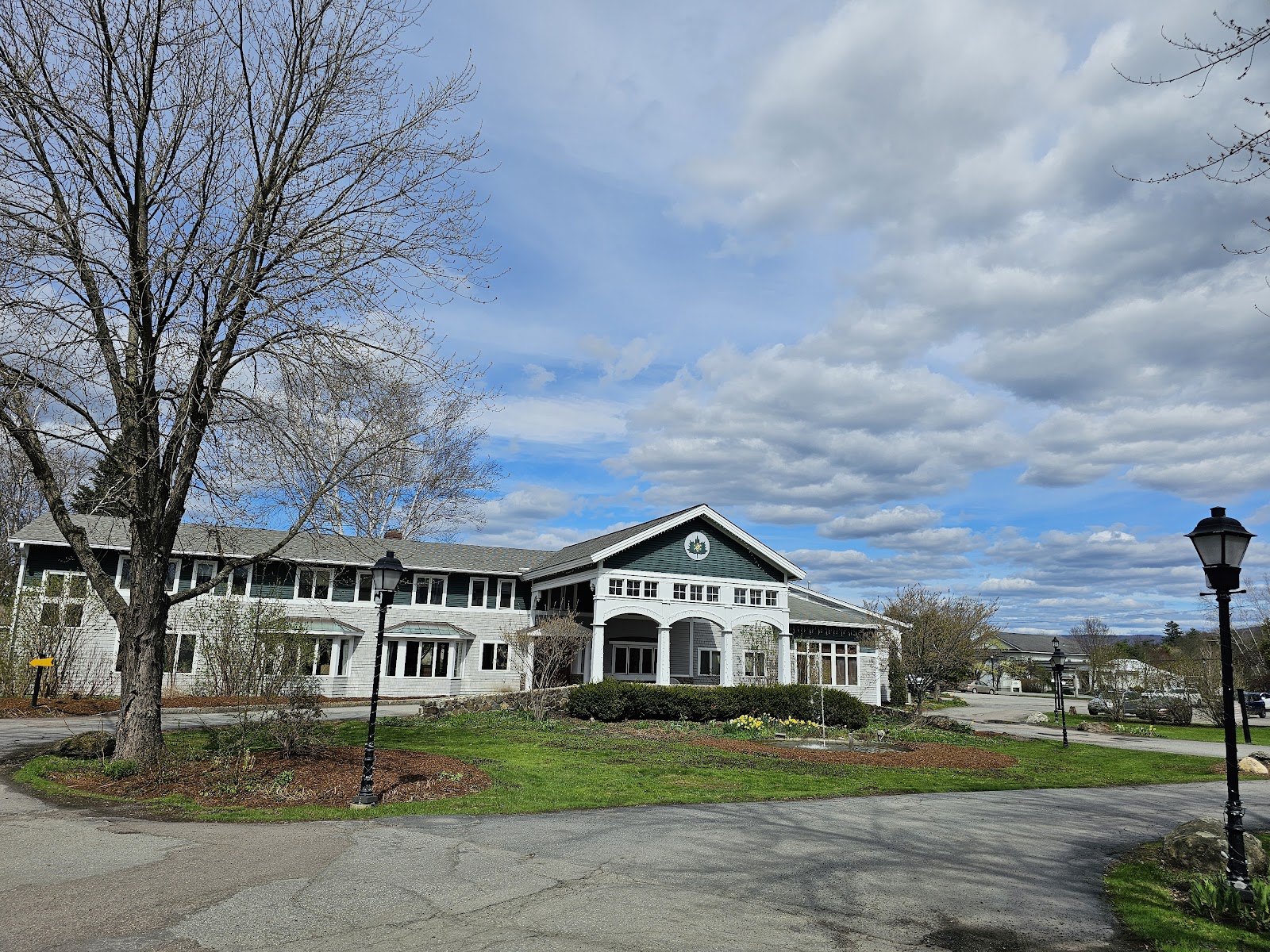
The Stoweflake Mountain Resort, Stowe: One Frame, and How It Is Made
One frame, under the highest mountain in Vermont.
This guide is about a single photograph, and it depends on the mountain that closes the valley.
Mount Mansfield is the highest point in Vermont at something over four thousand three hundred feet, and it rises directly west of the Stowe valley — a long asymmetric ridge, famously said to resemble a face in profile, with a steep eastern flank facing the town.
The frame is the couple in the valley with Mansfield behind them: the ridge reading as a ridge, the eastern flank catching light, and the people at a size where their faces are legible.
It is difficult for the reason every mountain frame is difficult, and the reason is scale. A range four thousand feet high and several miles long, seen from a valley floor, subtends a modest angle — so a lens wide enough to contain the ridge renders the couple tiny, and a lens that renders faces properly shows only a fragment of hillside.
There is no focal length that serves both. That is the fork, and a photographer who has not chosen ends up with a series of frames in which a vague green slope sits behind someone’s shoulder.
The second thing to understand is the aspect, because it decides the hours completely. Mansfield is west of the valley, which means its eastern flank — the side the resort sees — is lit in the morning and in shadow through the afternoon.
That is the reverse of most mountain venues in this library, where the peak catches the last light. Here the mountain is a morning subject and the valley is an evening one, and the schedule has to acknowledge it.
The third is that this is a ski valley, which means substantial built infrastructure, a seasonal economy, and a landscape that has been managed for winter recreation — cleared trails on the mountainside that read as pale vertical stripes in summer and as the point of the place in winter.
Stowe sits at about forty-four and a half degrees north at roughly seven hundred feet in the valley. The June noon sun reaches around sixty-nine degrees, the December noon sun about twenty-two, days run from about eight hours forty-five to fifteen hours thirty-five, and civil twilight is roughly thirty-six minutes — the longest in this library.
We have not photographed a wedding here. What the sightlines from the bookable spaces actually are, and the permitted hours, are questions for the resort.
The Stoweflake Mountain Resort at a glance
| Where | A resort in the Stowe valley below Mount Mansfield, Vermont |
| The frame | The couple in the valley with the ridge legible behind them |
| The difficulty | No focal length serves both a four-thousand-foot ridge and a face |
| The aspect | Mansfield is west, so its eastern flank is a morning subject |
| Ask first | What the sightlines from each bookable space actually are |
Building the frame
Five decisions, and the first two settle most of it.
**Choose the scale.** There are three workable treatments and the middle one is the trap.
The full ridge, wide, with the couple small in the foreground: that reads as a landscape with figures, and figures are what give a mountain scale. It works, and it needs them large enough to read as two people and small enough not to compete — perhaps a twentieth of the frame height.
The compressed flank, using a moderate to long telephoto from well back: that brings a section of the mountain forward so it fills the background with real mass, and at that focal length the couple can be at half or three-quarter length with faces properly legible. This is the frame most people actually want and the one that requires the most walking backwards.
Or a fragment: a shoulder of the ridge, a band of forest, the treeline, with the couple close. That reads as graphic rather than as landscape and it is the most reliable of the three, because it does not depend on the whole mountain being legible.
What fails is the couple at full length with the whole ridge behind, each occupying a third of the frame. The eye has nowhere to settle.
**Choose the hour, which the aspect dictates.** Mansfield’s eastern flank faces the valley, so it is front-lit in the morning and falls into its own shadow through the afternoon.
That means the mountain frame is a morning frame. In the first two or three hours the flank is lit, the ridgeline separates from the sky, the cleared trails and the forest cover read as texture, and the whole mass has modelling.
By mid-afternoon the flank is in shadow and the mountain reads as a flat dark silhouette — which is a perfectly good graphic frame and not the same picture at all.
**Anchor the exposure on the mountain.** It is the subject and the element that cannot be recovered. In morning light the lit flank will sit comfortably, and the couple in the valley may be in shade — so they become a lighting problem rather than an exposure one.
**Fill them.** One source through a modifier at about forty-five degrees, at a level that brings them within about a stop of the ambient on the mountain. At the distances involved that means a real source on a stand rather than anything on-camera.
Gel it warm by about a quarter. Valley shade is lit by sky, which at this latitude reads distinctly cool, while a sunlit flank in the morning reads warm — so a neutral flash puts a slightly green face in front of a warm mountain.
**Watch the haze.** This is the practical variable nobody plans for. A four-thousand-foot ridge several miles away is far enough that atmospheric contrast matters, and in a humid Vermont summer the flank reads noticeably softer than in October’s clear air.
That is not a fault to correct so much as a reason to choose a season. The compressed frame that is the point of this venue is dramatically better in autumn than in August, and the difference is entirely the air.
The valley, and the resort
The mountain frame is the one this guide is about; the valley is where the rest of the day happens.
Because Mansfield is to the west, the valley floor loses the sun earlier than a flat horizon would suggest — the ridge blocks it, which means the golden hour ends early and the afterglow begins sooner. That is worth establishing on site rather than from an app, because the margin can be half an hour or more depending on where in the valley you stand.
The compensation is that the eastern side of the valley stays lit after the floor has gone into shade, which gives the region’s most reliable good frame: a subject in soft even valley shadow with a warmly lit hillside behind them, and a ratio small enough that one modest source bridges it.
That lag is a recurring theme in every mountain guide in this library because it works every clear evening, and here it runs in the opposite direction from usual — the lit slope is east, not west.
The trees are the valley’s material and northern Vermont’s composition is specific. Sugar maple dominates the lower slopes and produces the scarlet and orange the state is famous for. Yellow birch and beech fill in with yellow and bronze. And above a certain elevation the hardwoods give way to spruce and fir, which are near-black in a photograph — so the mountainside in autumn shows a colour band below a dark band, with a visible transition between them.
That banding is worth composing for, because it reads at distance in a way individual trees do not. A compressed frame of the flank in early October shows the line where deciduous colour stops and conifer begins, and it is one of the most distinctive things about a northern New England mountain.
Paper birch is the tree to find at close range: white bark peeling in papery layers, which against dark conifer or a shaded slope is one of the best natural portrait backgrounds in the northeast.
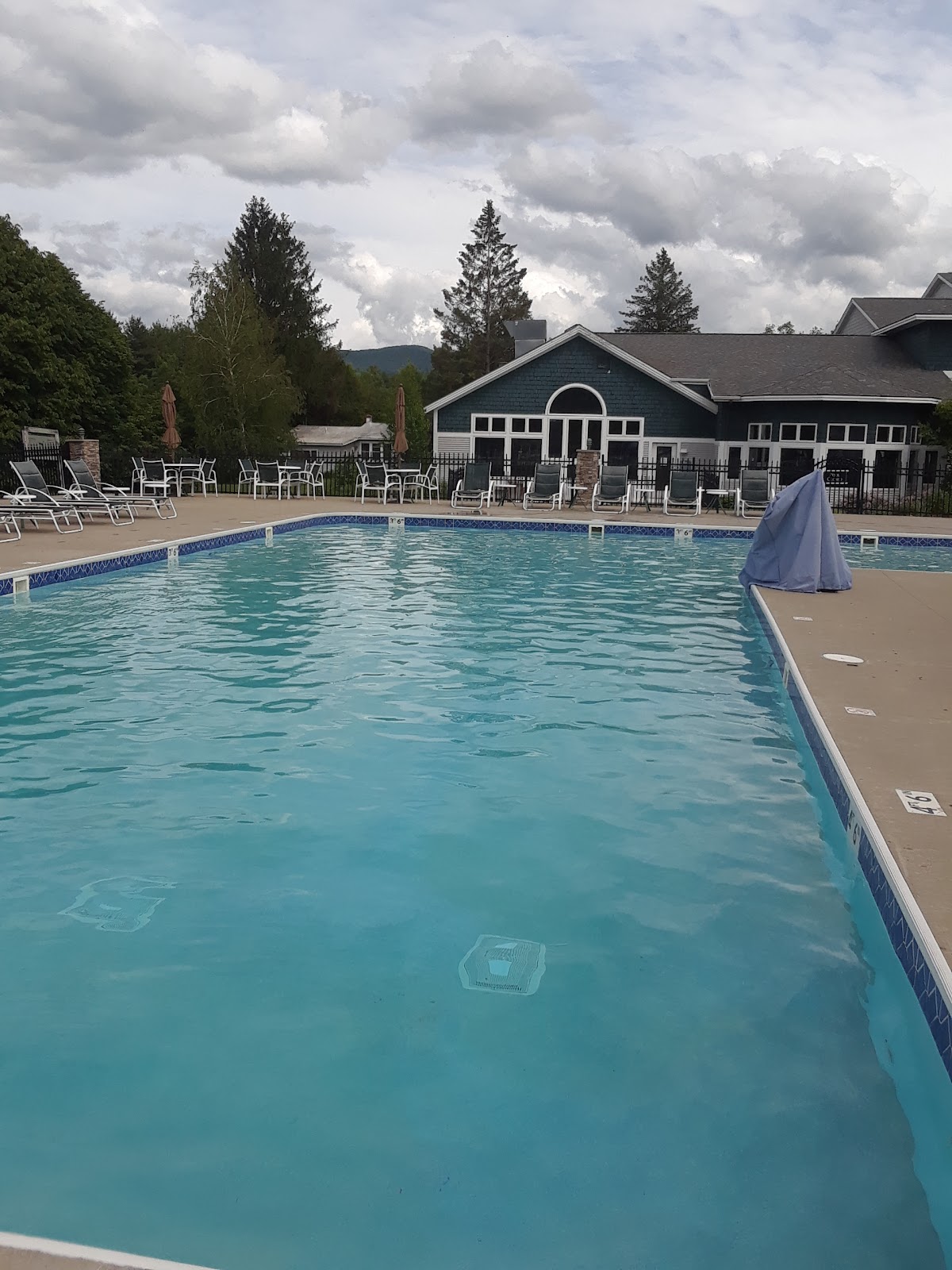
The resort’s own grounds are the practical working area and the usual resort rules apply. Whatever mature trees exist are the midday shade — Vermont hardwoods cast solid cover with no dapple, so a portrait under one is straightforward at any hour — and whatever built structures exist are the rain plan.
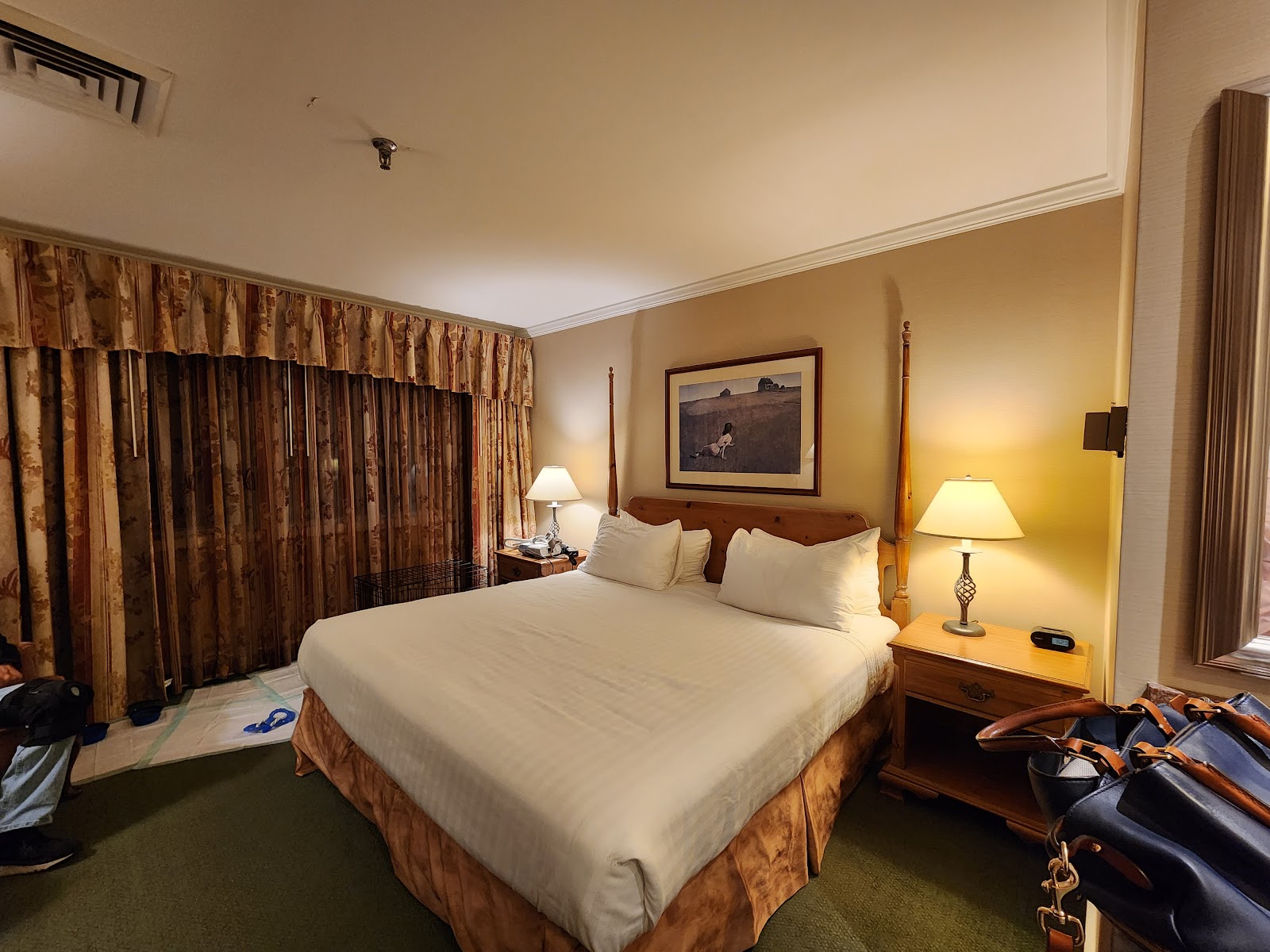
Indoors, a mountain resort’s function rooms are typically lit by recessed downlights on a dimmer, which gives top light with shadowed eye sockets. Never key from them: bounce a warm-gelled source off a pale wall or ceiling, drag the shutter to a thirtieth or sixtieth so the room’s own light registers, and add a rim because a frontally lit subject against a pale wall loses their edges.
Where there is glazing facing the mountain, that is the best light in the building and the best frame in it — three or four metres in from the glass, with groups arranged parallel to it rather than across the room.
One honest note about a ski valley in summer. The cleared trails that make the mountain work in winter read as pale vertical stripes up the flank in summer, and they are unavoidable in any wide frame. Some photographers find them a blemish; they are also simply what the place is, and composing to acknowledge them is better than pretending they are not there.
- Mansfield’s eastern flank is a morning subject; by afternoon it is a silhouette
- Compress from well back, or go small and wide — never both mid-size
- Warm-gel the fill: valley shade is cool, a sunlit flank is warm
- Wait for the lag — valley in shade, eastern hillside still lit
- October’s clear air makes the compressed frame dramatically better than August’s
The Vermont year, at altitude and latitude
Northern Vermont has the most emphatic calendar in this library, and a mountain valley amplifies all of it.
Late September into early October is the peak here, which is earlier than southern Vermont — because both latitude and elevation advance the colour. On Mansfield the turn begins near the summit and descends, which means over about two weeks the colour band moves down the flank.
That is a genuine advantage: a single date can catch peak somewhere on the mountain even if it has passed above or not arrived below. And the compressed frame of the flank in that window, with the colour band above the valley and the conifer band above that, is the best photograph this venue can produce.
October also gives the clearest air of the year, which matters here more than at most venues because the signature frame is a compressed distant view.
The honest cost is people. Northern Vermont in foliage season is extremely busy — accommodation fills months ahead, roads are slow, and every viewpoint has visitors. Booking far in advance and shooting early are the only answers.
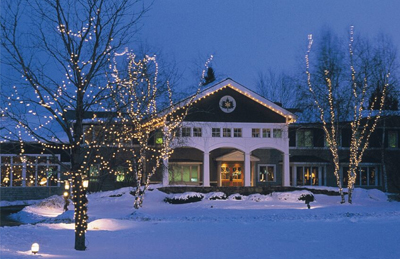
Winter is the valley’s principal season and it is worth taking seriously rather than treating as an off-season. Stowe is a ski town, which means the infrastructure is built for winter, the buildings are warm, the roads are cleared and plowed properly, and the landscape is at its most photogenic.
Snow on conifer is the classic northern frame, and a mountain flank under snow reads far more legibly than in summer — the cleared trails become the point rather than a blemish, the ridgeline separates cleanly, and the whole composition simplifies to white, dark green and sky.
Snow also fills every shadow. A snow-covered valley bounces light upward into faces, which means eye sockets fill for free and a midday portrait on open snow is genuinely good rather than harsh. That is the opposite of a summer midday and it is one of the real photographic arguments for a winter wedding here.
The constraints are cold and light. About eight hours forty-five of December daylight — the shortest in this library — with temperatures that limit standing outside to minutes, and a sun reaching only twenty-two degrees at noon, which means the valley floor may be in the mountain’s shadow for much of a short day.
That last point is worth checking specifically: a deep valley with a high ridge to the west can lose direct sun entirely in midwinter, and where the sun reaches at eleven in the morning on a December day is a question for the resort rather than for an app.
Late winter brings sugaring, which is the most specifically Vermont thing available. Sugar maple sap runs when nights freeze and days thaw — roughly late February into early April — and a sugarhouse boiling with steam pouring into cold air is a frame nothing else offers. It is weather-dependent and the run can be over in three weeks.
Mud season follows and Vermont’s is notorious: late March into April, when the ground thaws from the top while frozen beneath, meltwater cannot drain, and unpaved surfaces become genuinely impassable. In a mountain valley that affects access to anywhere off the main road.
Late April and early May are the least photogenic weeks of the year — snow gone, grass not greened, trees not leafed, and the mountain a uniform grey-brown.
Summer is long-lit at fifteen hours thirty-five and green, with the haze that softens the mountain and the cleared trails at their most visible. It is the easiest season logistically and the weakest for the signature frame.
Civil twilight here runs about thirty-six minutes, the longest in this library — a genuinely generous dusk with three or four setups fitting comfortably. But in a valley with a high western ridge, that dusk begins earlier than the numbers suggest and the mountain goes dark first. The last frames belong looking east, at the lit hillside, rather than west at the mountain.
More frames from The Stoweflake Mountain Resort
The Stoweflake Mountain Resort wedding photography: common questions
Why is the mountain frame hard?
Scale. No focal length serves both a four-thousand-foot ridge several miles off and a face at a legible size, so you must choose which the frame is about.
When is Mount Mansfield lit?
Mornings. It lies west of the valley, so its eastern flank — the side you see — is front-lit early and falls into its own shadow through the afternoon.
What is the most reliable evening frame?
The lag: the valley floor in shade with the eastern hillside still warmly lit. Here the lit slope is east, which is the reverse of most mountain venues.
Why does October matter so much?
The compressed frame is a distant view, and it reads sharply in October’s clear air and noticeably soft in humid August haze.
What about the ski trails in summer?
They read as pale vertical stripes up the flank and are unavoidable in a wide frame. Composing to acknowledge them beats pretending otherwise.
Is a winter date good?
Photographically, yes. Snow fills every shadow so midday is flattering, and the mountain reads far more legibly. The limits are cold and eight hours forty-five of daylight.
More Vermont venue guides
We are writing a photographer’s guide to every venue we would happily shoot in Vermont. Here are three more, plus the full index:
- The Woodstock Inn, Woodstock: The Venue’s Own Logic
- The Billings Farm, Woodstock: A Walk Through the Site
- The Burlington Waterfront: The Light Through the Day
Planning a wedding at The Stoweflake Mountain Resort?
The highest mountain in Vermont, and one frame of it. Tell us your date.