 The Stoweflake Mountain Resort, Stowe: One Frame, and How It Is Made
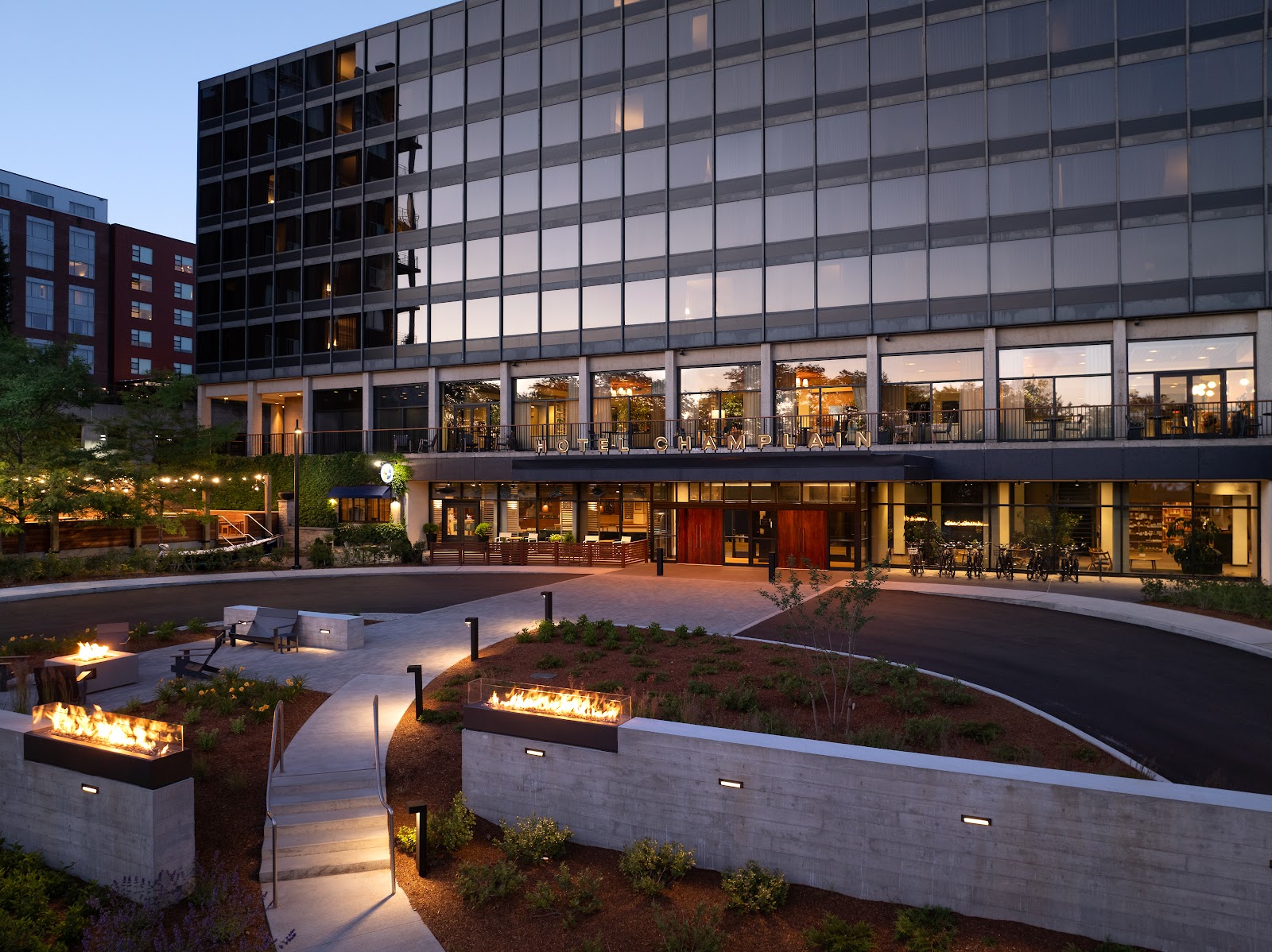
The Hilton Burlington: The One Decision That Governs Everything
Lake side or town side. One faces west; that settles it.
A hotel on the eastern shore of Lake Champlain has one decision and it is a compass decision: lake side or town side.
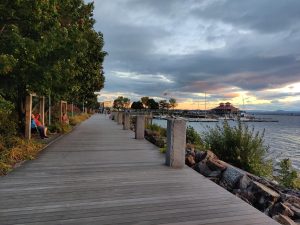
The lake side faces west across perhaps ten miles of water at the Adirondack High Peaks on the New York shore. The town side faces east into Burlington, which is a small city on a hill rising away from the water.
Those are not equivalent. The lake side has the water, the mountains and the sunset; the town side has a nineteenth-century brick and clapboard city and the sunrise. And because the building faces west, the decision effectively resolves itself for most of the day: the lake side is where the light and the view are, and the town side is where you go when it is not.
The important consequence is timing rather than preference. A west-facing lakefront has the sun behind the camera through the afternoon and in front of it at the end — so the front-lit portraits and the sunset frames happen on the same side, in sequence, in the last two hours.
That concentrates the good light into a narrow window and it means the schedule has to protect it. A reception that starts late costs the entire sequence, because at this latitude there is nothing after it.
The second thing to establish is which rooms face which way, because a hotel is not uniform. A ballroom with lake-facing glazing is a different venue from one in the building’s core, and a guest suite on the west side is a different getting-ready room from one on the east.
That is the question to ask, and the answer decides where the day happens.
Burlington sits at about forty-four and a half degrees north at roughly two hundred feet at the lakeshore — the furthest north of this library’s continental venues. The June noon sun reaches around sixty-nine degrees, the December noon sun about twenty-two, days run from about eight hours forty-five to fifteen hours thirty-five, and civil twilight is roughly thirty-six minutes, the longest figure here.
We have not photographed a wedding here. Which spaces face the lake, what the terrace or lawn access is and the permitted hours are questions for the hotel.
The Hilton Burlington at a glance
| Where | A lakefront hotel on Lake Champlain, Burlington, Vermont |
| The decision | Lake side or town side — and the building faces west, which settles it |
| The consequence | Front-lit portraits and sunset happen on the same side, in sequence |
| The risk | A late reception costs the whole sequence; there is nothing after it |
| Ask first | Which rooms face the lake, and what terrace access exists |
The lake side
The lake side is the reason to book the hotel and the sequence there is worth planning in detail.
Through the afternoon the water is front-lit, which means it reads as colour rather than as shimmer — and Champlain on a clear day is a genuine deep blue, being deep, cold and clean. A couple on the lake side in mid-afternoon has warm modelled faces, blue water behind them, and the Adirondacks catching light on their eastern slopes.
The mountains need a longer lens than instinct suggests. Ten miles of water renders the High Peaks at a modest angular size, and a wide lens puts them as a low ridge across the top of the frame while filling the rest with water and sky. A moderate telephoto compresses them forward into something with mass, which requires standing back from the shore rather than at it.
Then the sun descends toward the ridge, and there is a specific fact worth establishing on site: it sets behind the Adirondacks perhaps fifteen or twenty minutes before the published flat-horizon time. The golden hour therefore ends early, and an app will not tell you that.
What follows is the sequence the venue exists for. Once the sun is behind the ridge, the sky above and beyond the mountains holds colour while the lake picks it up — and the frame separates into three clean bands: colour sky, black ridgeline, colour water.
That lasts as long as the twilight, and here the twilight is the longest in this library at about thirty-six minutes. In practice that means three or four distinct setups fit comfortably rather than one being rushed — which is a genuine operational advantage of a northern latitude and the strongest reason to protect the schedule.
The water doubles everything if the breeze has dropped. A reflection sits about a stop darker than what it reflects, which keeps the whole frame inside a single exposure — and a mirror-calm Champlain with the ridgeline and the afterglow doubled is the best frame the site can produce.
Whether the breeze drops is luck. Champlain generates its own wind on any warm day and can produce a real blow in a front, so the mirror is not schedulable. Broken water works too: a low camera turns a rippled surface into a bright specular path running toward the lens, and at knee height that path stretches the full depth of the frame.
The wind governs equipment throughout. No unweighted light stands anywhere near the shore, and a five-hundredth of a second for anything with hair or fabric. A veil on a Champlain shoreline will be moving — read the direction and rotate the couple so it carries across or away rather than into their faces.
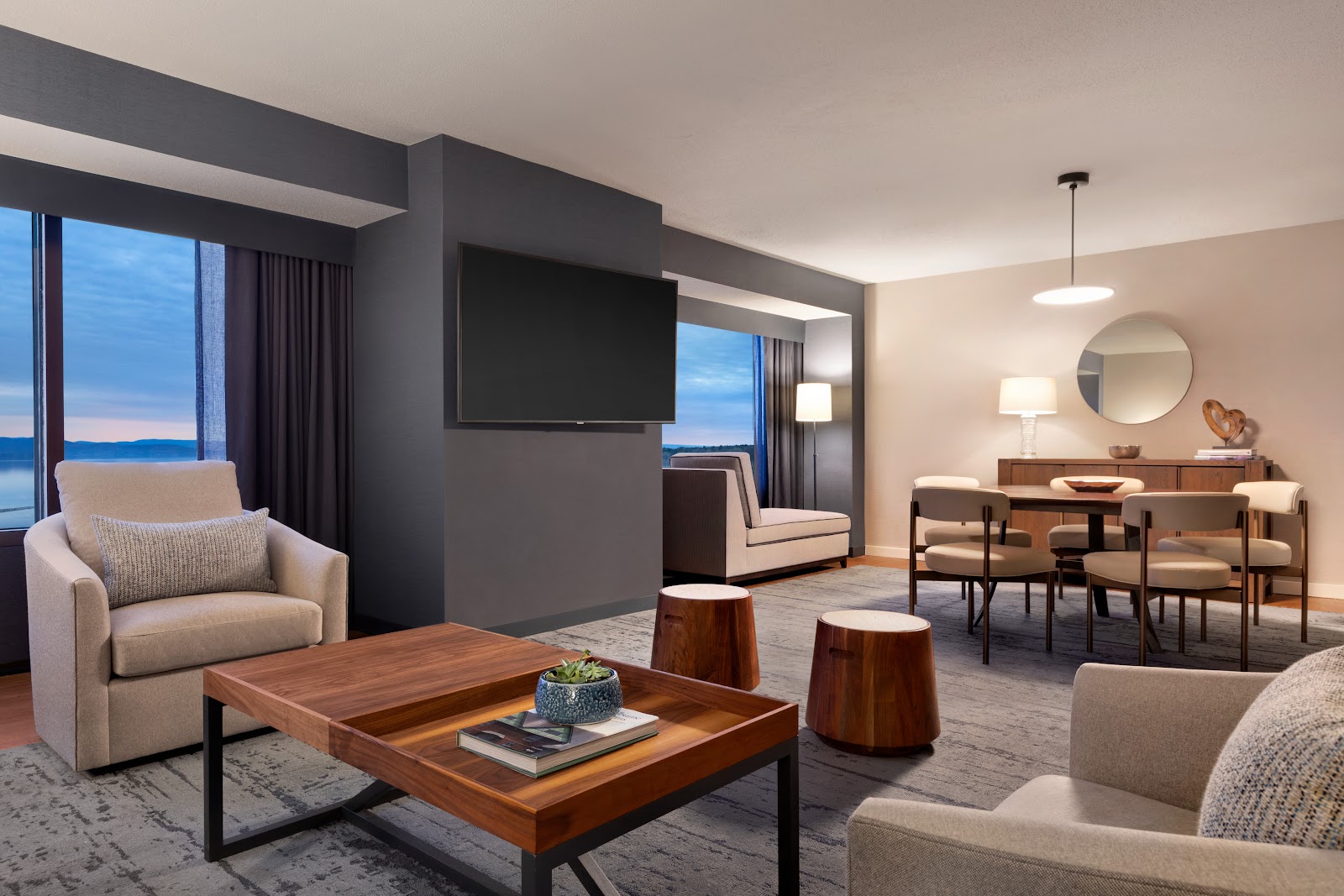
Where the hotel has lake-facing glazing, use it. A large glazed elevation facing west is a very large side source through the afternoon and a very large back-light at dusk, and three or four metres in from it gives strong directional light with no top-light problem.
Arrange groups parallel to that glazing rather than across the room, because perpendicular puts one end of a row three stops below the other. And the exposure trap is the view: metering an interior against a bright lake will either blow the windows or lose the room, so add light inside to within about a stop and a half of the exterior or let the glazing blow as a clean shape.
The town side, and indoors
The town side is where the day goes when the lake side is wrong, and it has more than people expect.
Burlington is a small nineteenth-century city on a hill, and the building stock is brick and painted clapboard at consistent scale — a New England downtown rather than a generic one. Brick wants raking light: frontal midday renders it as an even field, and a low sun brings out every joint and reveal.
Because the city rises away from the water, the streets running inland climb — which gives something a flat downtown cannot: a sightline down a street toward the lake, with water and mountains visible at the bottom of it. That is the town side’s best frame and it is genuinely specific to Burlington’s topography.
It also faces east, which means the town side is front-lit in the morning and in shade through the afternoon. Shade is useful: a shaded brick or clapboard street at three in the afternoon is soft even light with no contrast to manage, which is the easiest portrait condition there is and the right answer when the lake side is blazing.
White clapboard is the material problem and it recurs throughout Vermont. Painted timber reflects around eighty percent of incident light against skin’s thirty-five, so direct sun puts a white facade two stops or more above a correct face exposure. The answer is open shade or overcast, and the town side supplies the first through the afternoon.
Indoors, the hotel is a hotel and the standard approach applies with one qualification.
Ballrooms are lit by high-level recessed downlights on a dimmer, which gives strong top light with shadowed eye sockets and a chin shadow — the commonest failure in hotel coverage. Never key from them. Bounce a warm-gelled source off a pale wall or ceiling for a directional key, drag the shutter to a thirtieth or sixtieth so the room’s own light registers behind the subject, and use two or three sources for a large room because one set for three metres is four stops down at twelve.
A rim light matters in a neutral room because a frontally lit subject sits in the same tonal band as a pale wall and loses their edges.
The qualification is the glazing. A lakefront hotel’s function rooms may have west-facing windows, and if so they are both the best light in the building and a substantial exposure problem at dusk — because a room lit for a reception against a blazing afterglow is a six-stop frame.
The answer there is to work with it rather than against it: expose for the window, silhouette anyone in front of it deliberately, and light the rest of the room separately. A couple silhouetted against a Champlain sunset from inside a lit ballroom is a strong frame and an easy one.
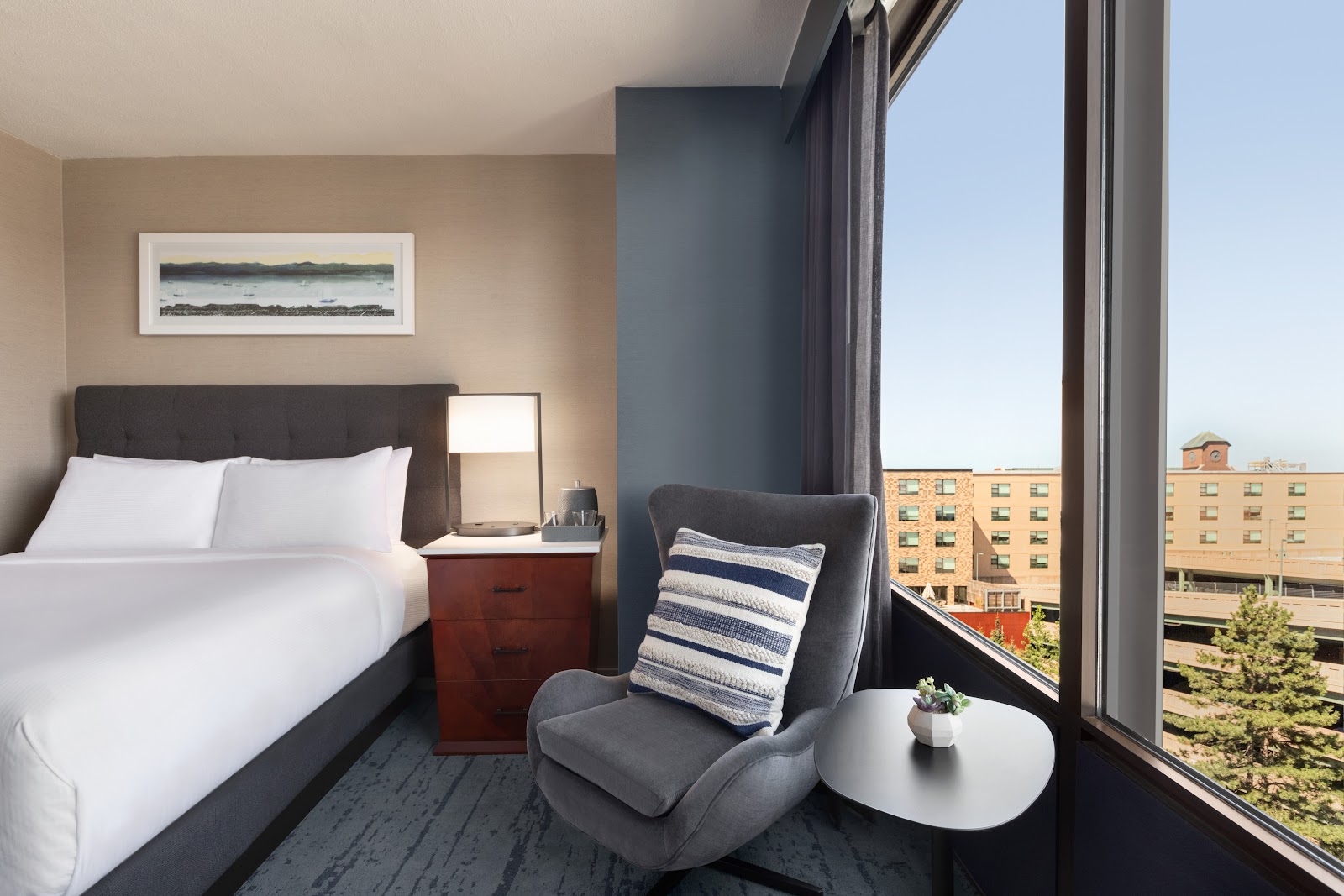
The getting-ready rooms are worth choosing deliberately if there is a choice. A west-facing suite has bright afternoon light and a lake view; an east-facing one has soft afternoon shade and a city view. For morning preparation the east side is better lit; for an afternoon start the west side is.
That is a small decision with a real effect on the first hour of coverage, and it costs nothing to ask.
- Compress the Adirondacks with a telephoto from well back, not a wide lens
- The sun sets behind the ridge fifteen to twenty minutes early — confirm on site
- Thirty-six minutes of twilight: three or four setups, and protect the schedule
- Shoot down a climbing street toward the water — Burlington’s specific frame
- Silhouette people against a west window deliberately rather than fighting it
The lake's year, and a northern latitude
Lake Champlain shapes the seasons of its shore, and at forty-four and a half degrees north the seasons are emphatic to begin with.
The lake lags. Spring is late and cold because the water stays near freezing into May, which delays leaf-out on the shore and produces fog when warm air moves over cold water — common through May and genuinely spectacular when it happens. Autumn is mild and extended because the water holds summer heat into November, which pushes the lakeshore colour later than inland at the same latitude.
Early October is the peak and it is the most famous autumn in America, because sugar maple dominates these hillsides and produces a scarlet and orange no other North American maple matches.
This site has a specific advantage in that window: the colour appears on both sides of the water. Ten miles west the Adirondack slopes turn at the same time, so a compressed telephoto frame of the far shore in October shows mountains in full colour across the lake — a frame this geography permits and very few places offer.
October also gives the clearest air of the year, which matters here more than at most venues because the signature frames are long compressed views. The Adirondacks read sharply in October and dissolve into haze in August.
Summer is the longest-lit season in this library: fifteen hours thirty-five at the solstice, with the blue hour landing near half past nine in the evening. That is a real operational advantage, because it puts the sunset sequence well after dinner rather than interrupting it — the party has relaxed, the formalities are done, and the best light of the day arrives with nothing competing for it.
The costs of summer are haze on the long views, the busiest waterfront, and boats in frame — which are either an asset or clutter depending on composition.
Spring is the weakest season and worth saying so. Vermont’s mud season runs late March into April inland, and on the shore late April and early May are the least photogenic weeks of the year: snow gone, grass not greened, trees not leafed, lake at its coldest and often fogged.
Winter is severe and photographically remarkable. About eight hours forty-five of December daylight — the shortest in this library — with real cold and deep snow, and Champlain freezes substantially in a hard winter.
A frozen lake with the Adirondacks beyond it is a flat white plane leading to a mountain range, and almost nobody photographs it at a wedding. Large-lake ice also produces pressure ridges where sheets buckle, shoves piled on the shore by wind, and spray frozen onto anything near the water — all striking, all genuinely hazardous, and the ice’s condition is never to be taken on trust.
Snow solves the white-clapboard problem by removing the contrast, and it bounces light upward into faces, which fills eye sockets for free.
The constraint is simply how long anyone can stand on an exposed northern lakeshore in January, which is minutes rather than hours. A winter date here is a series of short excursions from a warm building — and a hotel is well equipped for exactly that.
The compensation is that the twilight remains about thirty-six minutes long in winter and arrives around half past four, which puts the best light of the day comfortably before a reception rather than in the middle of it. That is the opposite of the summer situation and it is equally workable, just differently shaped.
More frames from The Hilton Burlington
The Hilton Burlington wedding photography: common questions
What is the one decision?
Lake side or town side. The building faces west, so the lake side has the light and the view through the afternoon and the town side is the shaded alternative.
Why protect the schedule so carefully?
The front-lit portraits and the sunset sequence happen on the same side in the last two hours. A late reception costs all of it, and at this latitude nothing follows.
What lens for the mountains?
A moderate telephoto from well back. Ten miles of water renders the High Peaks small, and a wide lens leaves them a low ridge across the top of the frame.
Does the sun set on time?
No — behind the Adirondack ridge, fifteen to twenty minutes before the published flat-horizon time. Confirm it on site rather than from an app.
What is the town side good for?
Shade through the afternoon, and one specific frame — down a climbing street toward the water, with the lake and mountains at the bottom of it.
How long is the twilight?
About thirty-six minutes, the longest in this library. In June it lands near half past nine, after dinner; in December around half past four, before the reception.
More Vermont venue guides
We are writing a photographer’s guide to every venue we would happily shoot in Vermont. Here are three more, plus the full index:
- The Marsh-Billings-Rockefeller Park, Woodstock: The Problem, and Four Ways Out of It
- The Stoweflake Mountain Resort, Stowe: One Frame, and How It Is Made
- The Woodstock Inn, Woodstock: The Venue’s Own Logic
Planning a wedding at The Hilton Burlington?
West-facing water and the longest dusk here. Tell us your date.