 The Stoweflake Mountain Resort, Stowe: One Frame, and How It Is Made
The Billings Farm, Woodstock: A Walk Through the Site
A working dairy that is also a museum. Both halves matter.
This is a working farm and a museum at the same time, and the combination decides what a photographer can and cannot do.
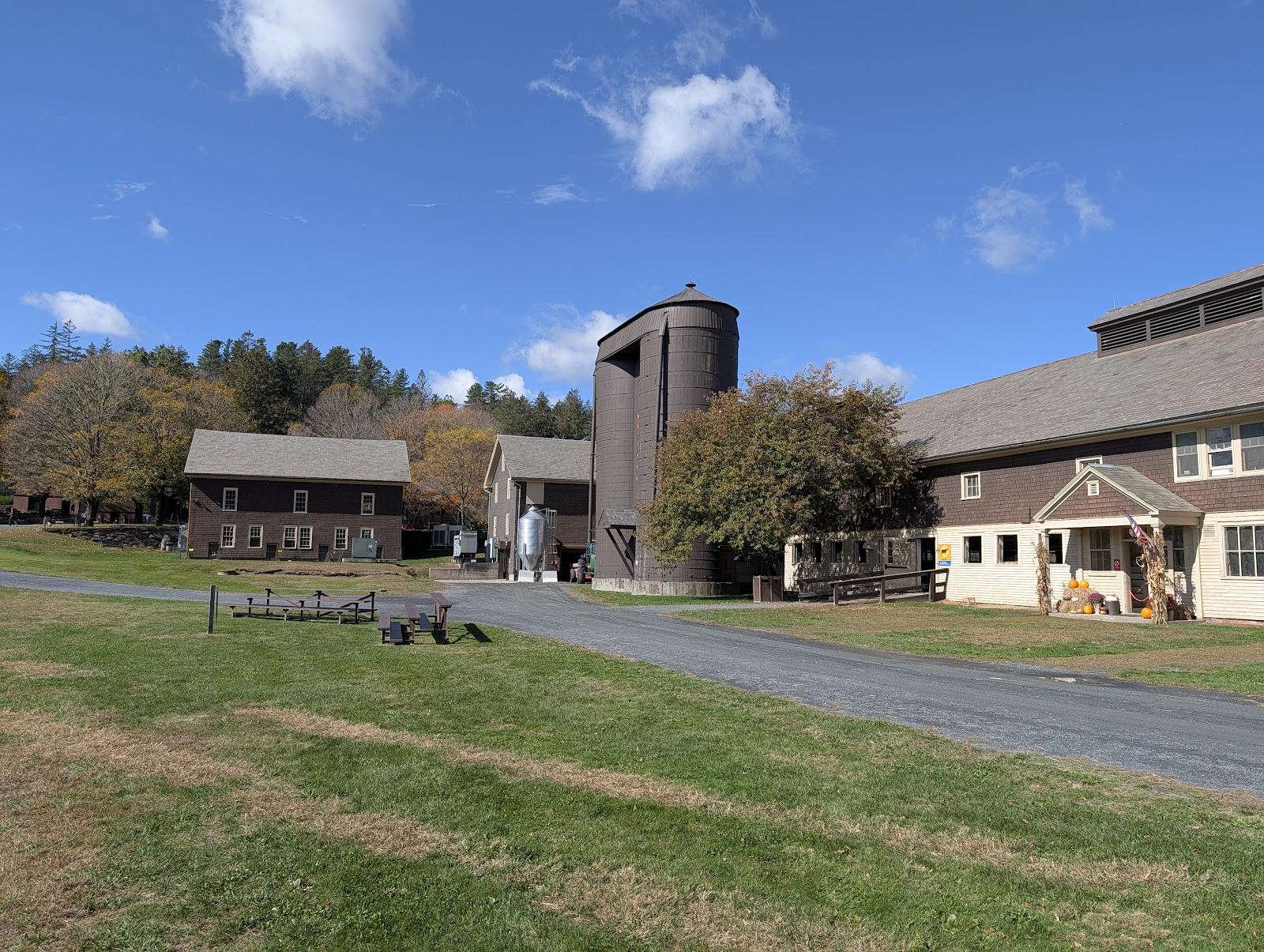
The farm was established in 1871 as a model dairy — part of Frederick Billings’s larger project of demonstrating that Vermont land stripped by a century of sheep farming could be restored and farmed well. It has operated continuously since, and it is now interpreted as a museum of Vermont agricultural history while still milking cows.
So there are animals, machinery, manure and a milking schedule, alongside restored buildings, interpretive displays and a visiting public. Neither half is decorative.
For a photographer that produces genuinely good material and a specific set of constraints. The good material is that everything is real: the barns are working barns, the Jersey cattle are a working herd, the farmhouse is furnished as it was. Nothing is a set, and frames taken here look like a farm rather than like a wedding venue styled as one.
The constraints are that a working dairy runs to its own timetable — cows are milked at fixed hours and moved between pasture and barn on a schedule that has nothing to do with a wedding — and that a museum has rules about what may be touched, where people may go and what the public will be doing.
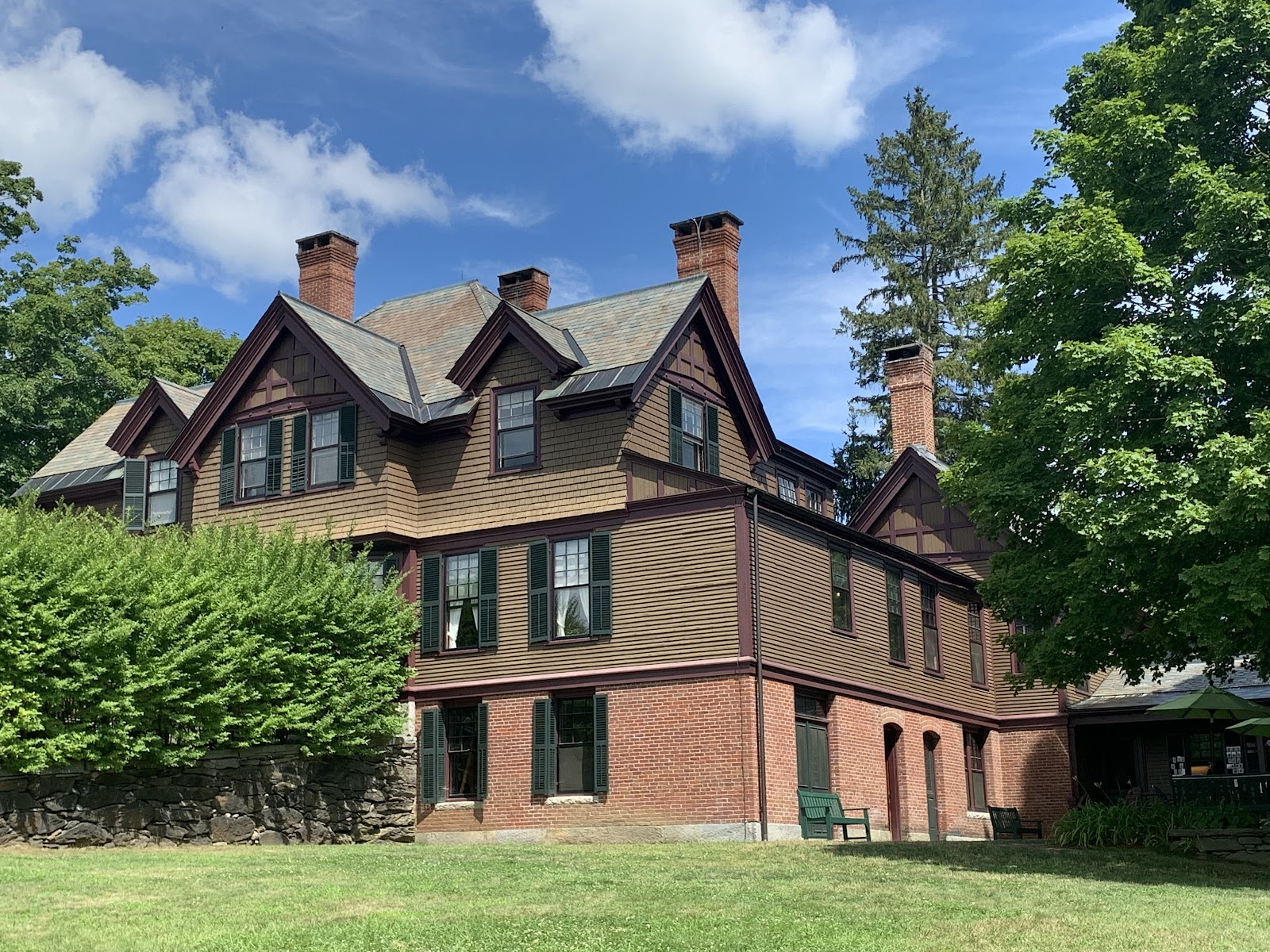
The second thing to understand is the Vermont vernacular, because the buildings are textbook examples. New England farm architecture uses timber frame with clapboard or vertical board siding, painted — traditionally red for barns and white for houses — with steep roofs for snow load and small windows for heat retention.
That gives painted surfaces, which behave very differently from masonry: white clapboard reflects around eighty percent of incident light and blows easily, while a red barn is a mid-toned warm surface that takes low sun beautifully and bounces a warm cast onto anything near it.
Woodstock sits at about forty-three and two-thirds degrees north at roughly seven hundred feet in the Ottauquechee valley, with Mount Tom above it. The June noon sun reaches around sixty-nine and a half degrees, the December noon sun about twenty-two and a half, days run from about eight hours fifty-five to fifteen hours thirty, and civil twilight is roughly thirty-four minutes — long.
What follows is a walk through the site in the order a wedding uses it. We have not photographed one here; what is permitted around the animals, the milking schedule and the visiting hours are questions for the farm.
The Billings Farm at a glance
| Where | An 1871 working dairy farm and museum in Woodstock, Vermont |
| Both halves are real | A working herd on a milking schedule, and a museum with rules |
| The material | Painted timber — white clapboard blows easily, red barn bounces warm |
| The advantage | Nothing here is a set. Frames look like a farm, not a styled venue |
| Ask first | The milking schedule, what is permitted around animals, visiting hours |
The barns
Start in the barns, because they are the best photographic spaces on the site and the least like anywhere else.
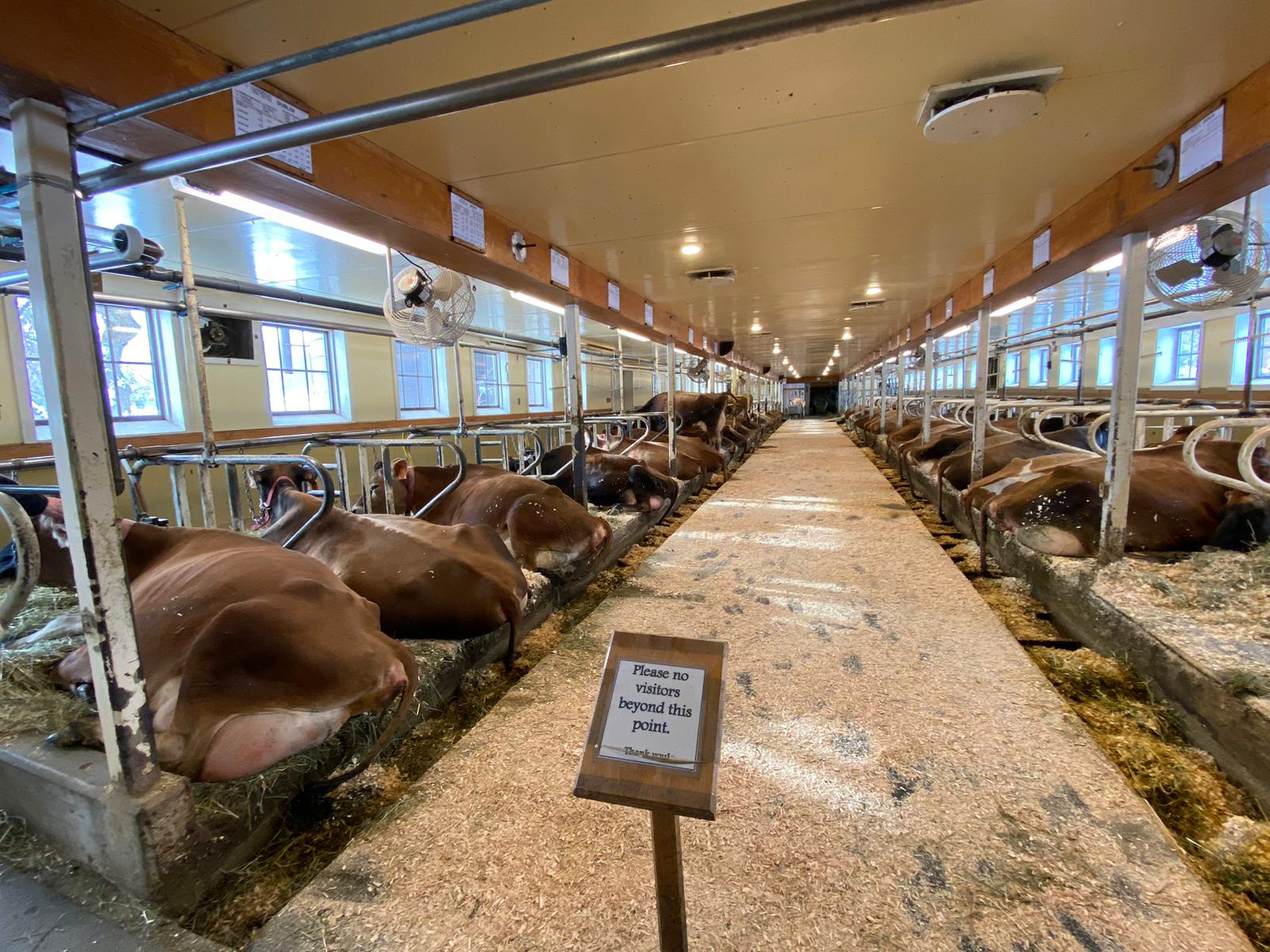
A nineteenth-century New England dairy barn is a large timber-framed volume with a specific light condition: a big opening at one or both ends, and small windows or none along the sides — because a barn was built to keep heat in and weather out, not to admit light.
That produces a steep gradient from the door inward. At the threshold the light is bright and nearly frontal; two or three metres in it has direction and an ideal ratio; ten metres in the subject is nearly unlit with a blazing rectangle behind them.
The doorway is therefore the most reliable portrait position on the farm, and in Vermont it has a particular advantage: the yard outside is often pale — gravel, concrete, or snow for four months of the year — which throws a substantial bounce up under the chin. Snow especially, which reflects most of what hits it and turns a barn doorway into a two-source setup for free.
Deep inside, with the opening behind the subject, there are two frames: expose for them and let the door blow, which reads as a bright figure in a dark volume; or expose for the opening and silhouette them, which against pale Vermont light is very clean.
The timber frame is the second thing to use. A hand-framed barn has posts, beams, braces and often a visible ridge — joined with pegs rather than bolts — and that structure is the building’s character. A wide lens from low on the centre line renders it converging, which says nineteenth-century timber frame more clearly than any wall.
Bounce is largely unavailable. Unpainted weathered barn timber returns perhaps fifteen percent, and a dark interior returns less, so a flash aimed at a wall or the roof gives back almost nothing. The method is direct through a modifier with a rim behind, and the rim matters because a subject lit only frontally against dark timber loses their edges.
Where a barn has been whitewashed inside — and dairy barns often were, for hygiene — everything changes and bounce works normally. That is worth checking on arrival rather than assuming.
The animals are the third element and they need thinking about rather than improvising.
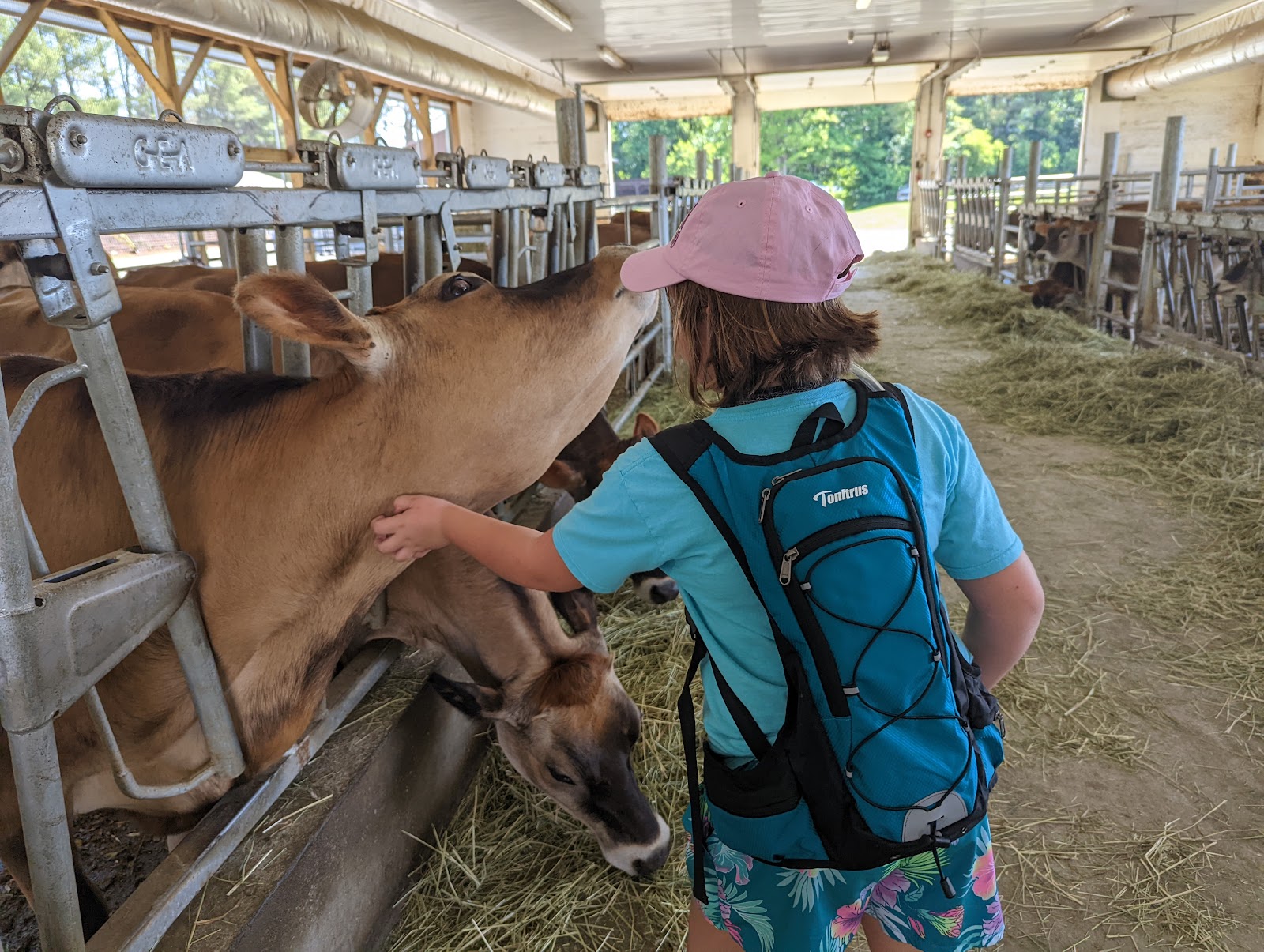
Jersey cattle are the herd here and they are worth knowing photographically: fawn to dark brown, with large dark eyes set on the side of the head, which catch light from a wide range of angles and read as highlights rather than as detail. That makes the eye easy. The coat is the difficulty — a brown animal in bright sun is a high-contrast subject with specular highlights along the muscles, so open shade or a low sun is what it wants.
They also move constantly and unpredictably, which means a fast shutter and continuous autofocus rather than a posed approach. And a herd near a group of unfamiliar people in unusual clothes is a live animal situation the farm staff lead on, not the photographer.
One practical note about barns and dresses. A working dairy barn has a working floor, and however well kept it is, that is a real consideration for anything long and pale. Worth raising in advance.
The farmhouse, the pastures and the village
The farmhouse is the second built space and it is a different proposition from the barns.
A restored nineteenth-century Vermont farmhouse has small windows in thick walls, low ceilings, and interiors furnished to period — which means dim rooms with warm surfaces and a great deal of character at close range.
The windows are the light, and a small window in a thick wall is optically a snoot: the reveal collimates the beam so it arrives defined and directional with rapid falloff. A subject placed in or immediately beside one has a strong key and a dark surround, which is the best light in the house and needs nothing added.
Respect the falloff, because it is steep. A step back from the window drops a stop; three steps back the subject is effectively unlit. Positions here are precise rather than approximate.
Interiors furnished as a museum bring the obvious constraint: the furniture and objects are collection items, and what may be moved, sat on or leaned against is restricted absolutely. Establishing that early avoids asking mid-wedding, and the person who unlocks the door will know exactly which chair is original.
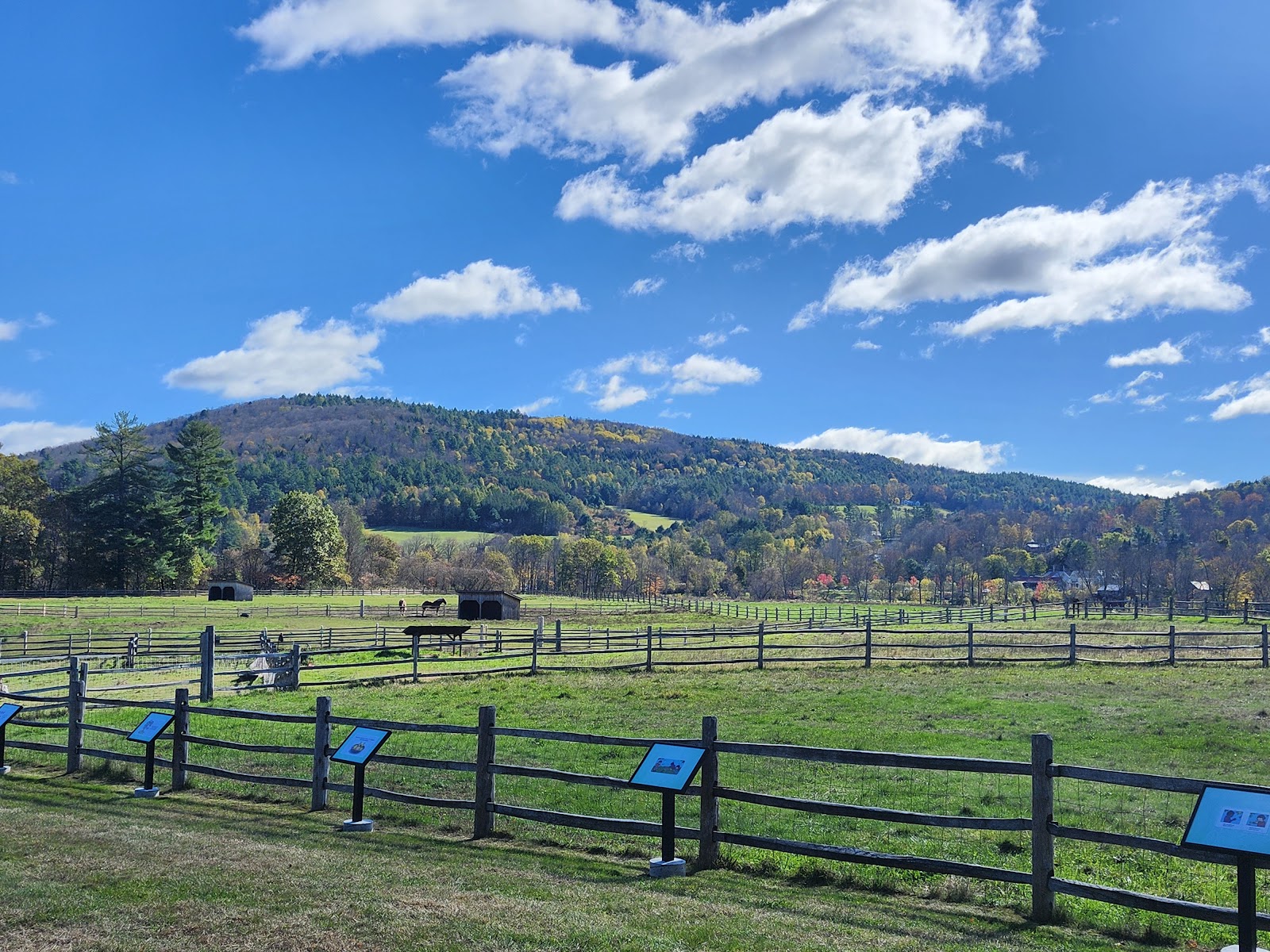
The pastures are the site’s open ground and Vermont’s topography makes them better than flat farmland would be. The Ottauquechee valley is steep-sided, so the fields are sloping — which gives elevation and sightlines that level pasture cannot.
Use the slope. From the top of a field the camera looks down over a subject with the valley beyond, which gives separation and a landscape background at once; from the bottom, a subject on the rise stands against sky, which is the cleanest background there is.
The stone walls are the New England signature and they are worth composing around. A drystone wall running across a sloping pasture is a strong horizontal line with real texture, and it is the visible remnant of the sheep-farming era that stripped these hills — the stones were cleared from the fields to make them farmable.
That is a genuine historical detail worth knowing: the walls are older than the forest above them, because the forest was replanted and the walls were built when the land was open.
The village is a short distance and it is one of the most intact in New England: a green surrounded by Federal and Greek Revival houses in white clapboard, with a covered bridge nearby.
White clapboard is the exposure problem and it is the same one everywhere in Vermont. Painted timber reflects around eighty percent of incident light against skin’s thirty-five, which in direct sun puts the wall two stops or more above a correct face exposure. The answer is open shade or overcast — and Vermont gives a great many overcast days, which for this building stock is a gift rather than a compromise.
In open shade the ratio collapses because both surfaces are lit by the same soft skylight, and a white Greek Revival facade holds its detail without any help.
Covered bridges are the other regional subject and they are optically identical to a barn: a long enclosed volume with an opening at each end, giving a steep gradient and a bright rectangle at the far end. Deep inside, expose for the subject and let the far opening blow, or silhouette them against it — the same two frames, and the timber lattice makes the interior more interesting than a barn’s.
- A metre or two inside the barn door is the most reliable portrait here
- Snow in the yard turns a barn doorway into a free two-source setup
- Small windows in thick walls are snoots — precise positions, steep falloff
- Use the sloping pastures for elevation; flat farmland cannot give it
- White clapboard wants open shade or overcast, never direct sun
The Vermont year
Vermont has the most emphatic calendar in this library and a working farm sits inside it completely.
Early October is the peak and it is the most famous autumn in America, for a specific botanical reason: sugar maple dominates these hillsides and it produces a scarlet and orange no other North American maple matches. Mixed with yellow birch, bronze beech and dark conifer, it gives the combination the state is known for.
The timing is predictable within a fortnight and it moves with elevation. In this valley the peak falls in the first half of October, with higher ground a week or so earlier — so on a site with Mount Tom above it, the colour descends the hillside over about ten days, which means a single date can catch peak somewhere on the slope.
The honest cost is other people. Foliage season brings very large visitor numbers to Woodstock specifically, because it is one of the most photographed villages in New England — accommodation fills months ahead and the village is busy. Early mornings are the answer, and booking far in advance.
Late winter and early spring bring the farm’s own event, and it is the most specifically Vermont thing available. Sugar maple sap runs when nights freeze and days thaw, which here means roughly late February into early April — and a sugarhouse boiling, with steam pouring out into cold air, is a frame nothing else in this library offers.
Whether the farm operates a sugarhouse and when it boils is worth asking, because the run is weather-dependent rather than calendrical and it can be over in three weeks.
Mud season is the other half of spring and Vermont’s version is notorious. From roughly late March into April the ground thaws from the top while remaining frozen beneath, so meltwater cannot drain and unpaved surfaces become genuinely impassable rather than merely soft.
On a working farm that means the yard and any field access may be unusable, and it is a real consideration rather than a fussy one. Late April and early May are also the least photogenic weeks of the year here: the snow has gone, the grass has not greened, and the trees have not leafed.
Summer is green, humid and long-lit, with fifteen hours thirty of daylight at the solstice — the most schedule room of any season. The pastures are at their best, the herd is out, and the hay is cut, which gives mown fields and round bales as a working-farm detail.
Winter is cold, deep and photographically excellent on a farm, which is worth saying because most venues lose their outdoor half entirely. Snow on a red barn is the classic New England frame and there is a reason for that: the colour contrast is strong, the white ground bounces light into every shadow, and the composition reduces to a few clean tones.
Snow also fills the barn doorway with reflected light and makes the interiors brighter than they are in summer, which is counterintuitive and genuinely useful.
The constraints are the cold and the light. About eight hours fifty-five of December daylight, temperatures that limit how long anyone stands outside, and roads that may be a real problem. A winter date here is a short excursion from a warm building, planned tightly.
Civil twilight runs about thirty-four minutes, among the longest figures in this library — a genuine working dusk rather than a scramble, with three or four setups fitting comfortably. In December it arrives around half past four, which puts a lit exterior frame well before a reception; in June near nine-thirty, after dinner.
The frame worth scheduling at that hour is a red barn with its interior lit against a deep blue sky, with snow or pasture in front of it. On a farm that is the best exterior frame available and it takes ten minutes.
More frames from The Billings Farm
The Billings Farm wedding photography: common questions
What does the working half mean in practice?
Cows are milked at fixed hours and moved on a schedule that has nothing to do with a wedding. Ask for the timetable before planning the day.
What is the most reliable portrait position?
A metre or two inside the main barn door. In Vermont the pale yard — or snow — throws a strong bounce up under the chin for free.
Can I bounce flash in the barn?
Only if it was whitewashed inside, which dairy barns often were. Unpainted weathered timber returns about fifteen percent and gives almost nothing.
How do I photograph white clapboard?
In open shade or under overcast. Painted timber reflects about eighty percent against skin’s thirty-five, so direct sun puts the wall two stops above a correct face.
Why are the stone walls interesting?
They are older than the forest above them. The stones were cleared to farm the land when these hills were open sheep pasture; the woods were replanted later.
When is sugaring?
Roughly late February into early April, when nights freeze and days thaw. It is weather-dependent rather than calendrical and can be over in three weeks.
More Vermont venue guides
We are writing a photographer’s guide to every venue we would happily shoot in Vermont. Here are three more, plus the full index:
- The Burlington Waterfront: The Light Through the Day
- The Hilton Burlington: The One Decision That Governs Everything
- The Marsh-Billings-Rockefeller Park, Woodstock: The Problem, and Four Ways Out of It
Planning a wedding at The Billings Farm?
A real farm that happens to be a museum. Tell us your date.