 The Iowa Events Center: Four Ways Out of the Blank-Hall Problem
The Kirkwood Civic Center, Cedar Rapids: Field Notes
A neutral room. Four problems, all of them solvable.
A purpose-built conference and event centre is the most honestly functional venue type in this library, and the photographic problems it sets are all of the same kind: the building will not help, so everything has to come from somewhere else.
That is worth saying without condescension. A converted barn or a historic house makes better pictures and worse events; a purpose-built centre does the reverse. Its dimensions were chosen for round tables and a dance floor, its ceiling for a clear span, its kitchen for volume service, its loading for trolleys and its parking for everyone. All of that protects a wedding day in ways that never appear in a photograph.
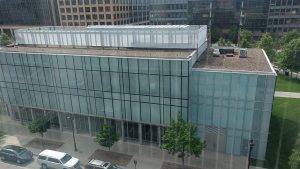
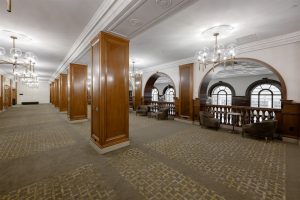
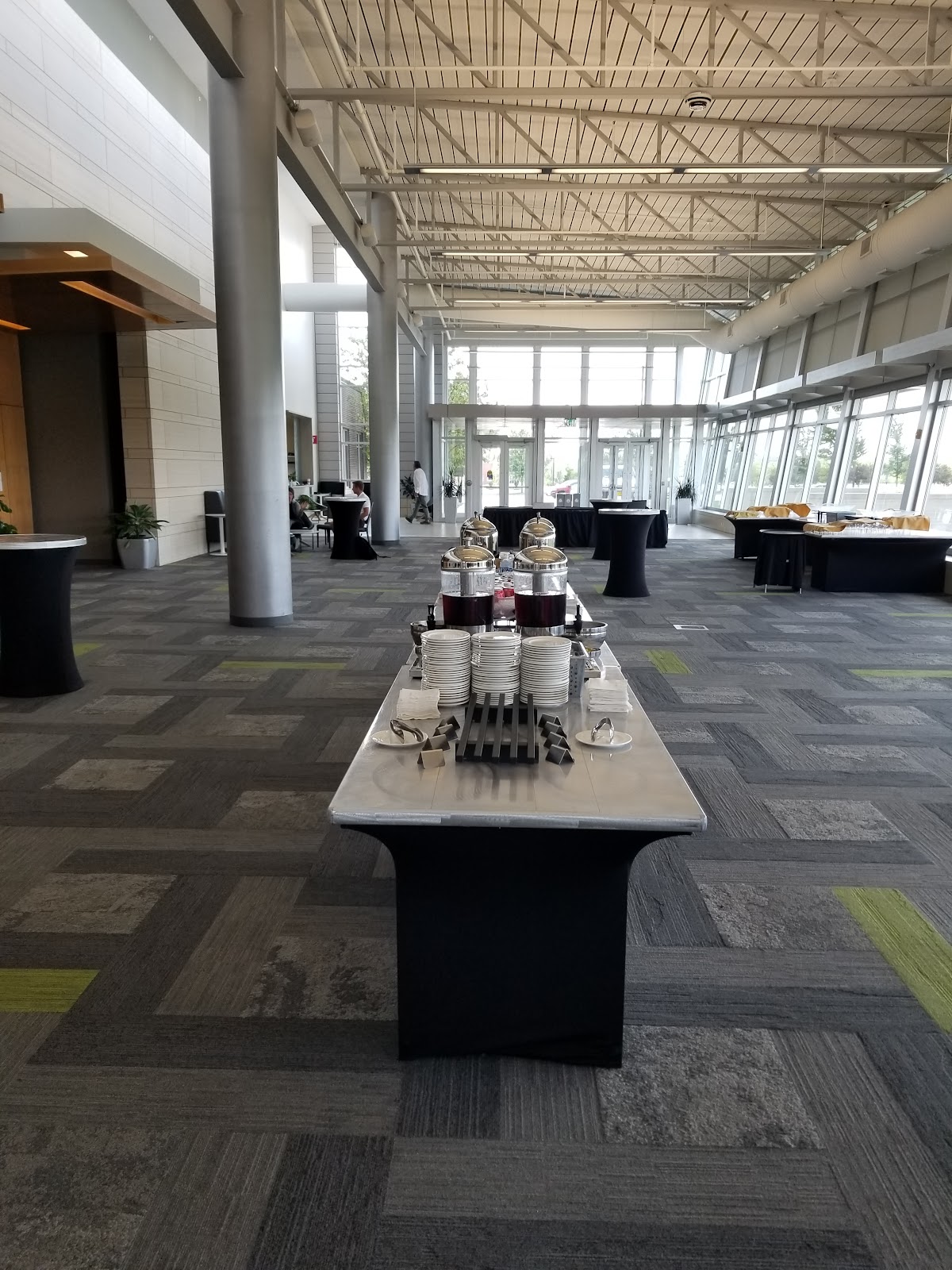
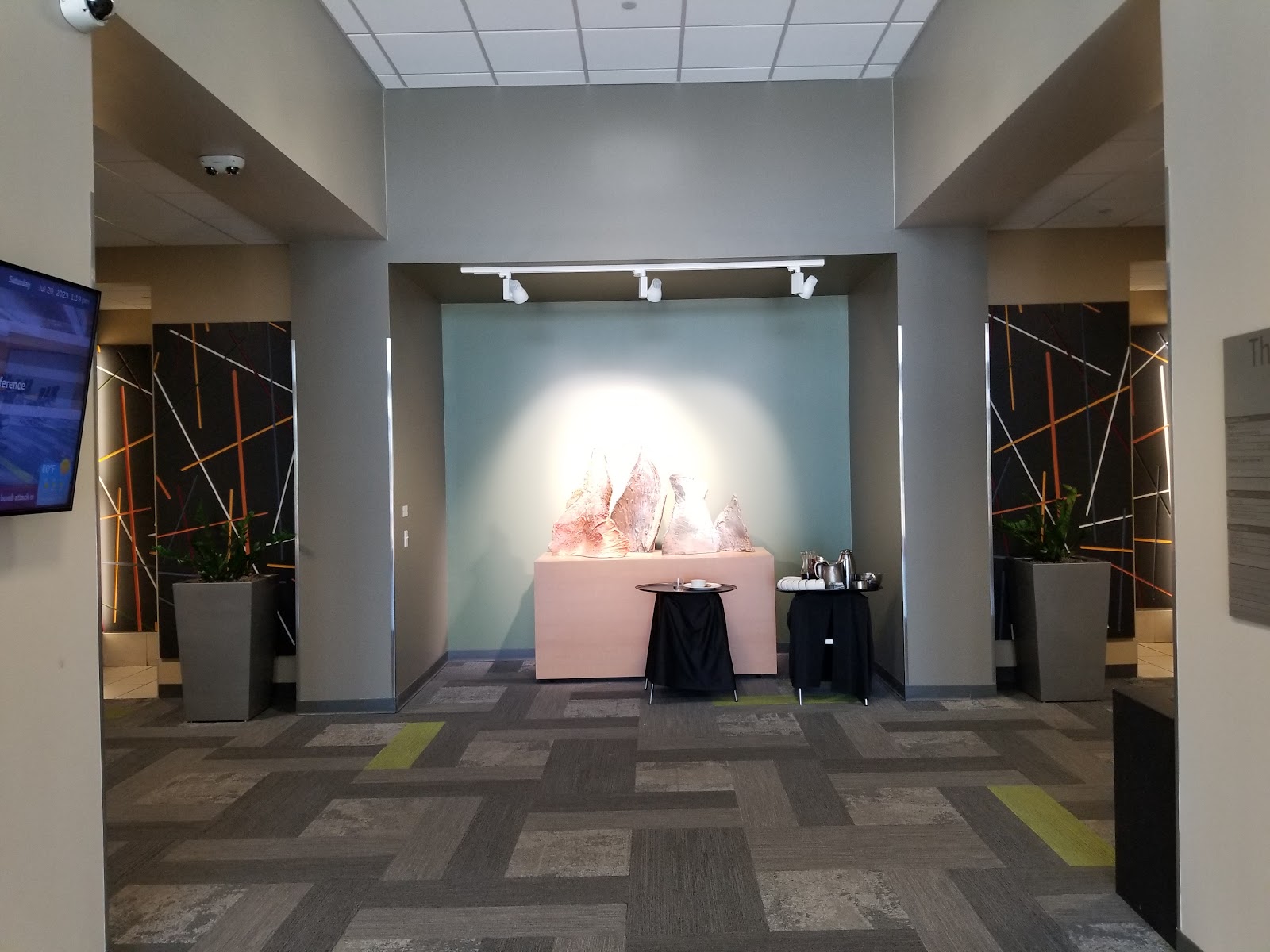
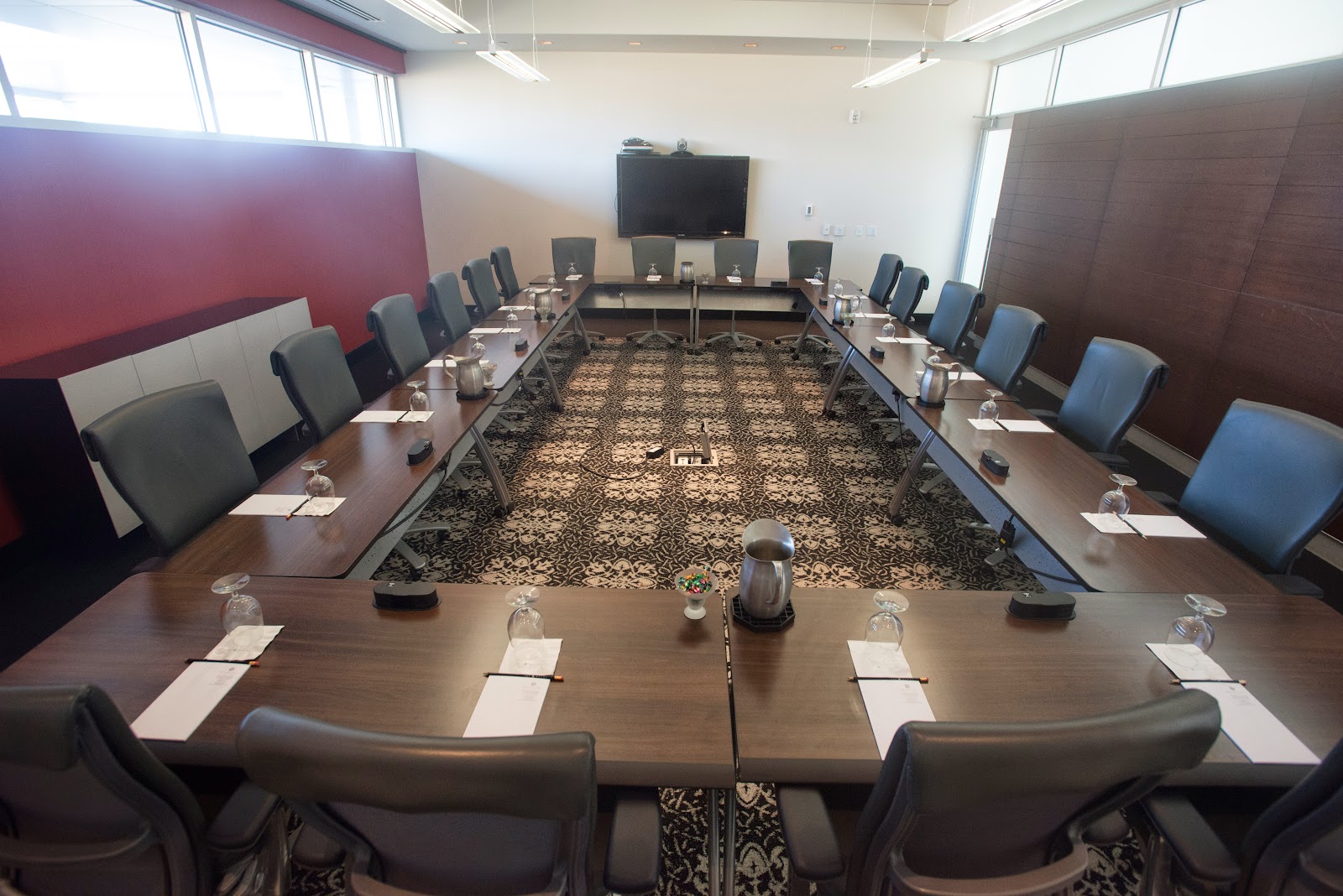
What does appear is the room, and the room is neutral: a large single volume with a level floor, pale walls, a suspended or open ceiling at moderate height, recessed downlights on dimmers, and glazing on one or two elevations if you are fortunate.
So there are four problems. The house lighting is actively unhelpful. The backgrounds are limited and repetitive across a long day. The scale is large enough that distances matter for lighting. And the outdoor space, if there is one, is likely to be young planting on a level site — the least interesting exterior condition available.
Each has a clean answer, and the good news is that this is the venue type where standard technique works best: pale walls bounce, the ceiling is within reach, the distances are moderate, and whatever daylight exists is usable. After the brick warehouses and windowless casinos elsewhere in this library, a neutral modern room is the simplest lighting job on offer.
Cedar Rapids sits at about forty-two degrees north at roughly seven hundred and thirty feet. The June noon sun reaches around seventy-one and a half degrees, the December noon sun about twenty-four and a half, days run from about nine hours five to fifteen hours twenty, and civil twilight is roughly thirty-two minutes — generous, which matters below.
What follows is four problems and what solves each. We have not photographed a wedding here; which rooms and outdoor areas are included, what the lighting control is and the permitted hours are questions for their team.
The Kirkwood Civic Center at a glance
| Where | A purpose-built conference and event centre in Cedar Rapids, Iowa |
| Problem one | Recessed downlights on a dimmer: strong top light, dark eye sockets |
| Problem two | Limited, repetitive backgrounds across a long day |
| Problem three | Real distances — one source will not cover a large room |
| The advantage | Pale walls bounce and the ceiling is reachable. Standard technique works |
Problems one and two: the house light, and repetition
The house lighting is the first problem and it is the one that ruins most coverage of modern venues.
Recessed downlights sit at high level and point straight down, which on a face gives a bright forehead, shadowed eye sockets, a hard line under the nose and a shadow on the neck. The dimmers being set low for atmosphere makes it worse rather than better, because the direction does not change — only the level.
So the first rule is: never use the house light as a key. It is background, and that is all it is.
The method is to bounce. Pale walls and a ceiling at moderate height return a great deal, which means a single source aimed at a side wall three or four metres away gives a large soft key with genuine direction — and in a room finished in cream or light grey that bounce is near-neutral, which is easier than the strongly tinted bounce brick or coloured plaster produces.
Gel it warm by a quarter to a half. House fixtures are warm tungsten or warm LED, and an ungelled flash against them puts blue-white faces in a warm room. That is the commonest colour error in modern venues and the easiest to avoid.
Then drag the shutter so the room’s own light and any uplighting register — a thirtieth to a sixtieth on a wide lens. Faster than a hundred and twenty-fifth kills the ambient entirely and the frame could be any room anywhere.
Add a rim. This matters more in a neutral room than in a busy one, because a subject lit only from the front sits in the same tonal band as the pale wall behind them and loses their edges. A rim at about a stop over the key on the far shoulder is the single biggest improvement available indoors here.
The second problem is repetition, and it is real across an eight or ten hour day. One large room, a foyer and a corridor is the usual extent, which means the backgrounds run out long before the day does.
The answer is to get variety from the light rather than the location, because the light can change while the room cannot. Window light in the afternoon, bounced key in the evening, uplighting as background, backlit silhouettes against the glazing at dusk, and after-dark frames with the room dropped two stops — those look like five different places and they are all the same wall.
The uplighting is worth leaning on, and it works better here than anywhere. Colour-changing wash fixtures on pale neutral walls take colour and return it; the same fixtures aimed at exposed brick or dark timber do almost nothing. So uplighting genuinely transforms a modern room, and if the couple are paying for it, it is worth telling them it will show.
Styling works for the same reason. A neutral box is a canvas — florals, linen and table design read clearly because nothing competes — where in a Victorian ballroom strong styling fights the wallpaper. That is a genuine argument for the type rather than a consolation.
Problems three and four: distance, and the grounds
The third problem is scale, and the inverse-square law is unforgiving about it.
A source set correctly for a subject at three metres is two stops down at six and four stops down at twelve. So a room twenty metres across cannot be lit by one light at one end, and a large group needs two or three sources spread along it rather than a single brighter one.
That is a practical equipment point rather than a subtle one: bring stands, and expect to use them. A modern room with a clear span has nowhere to hide a light, which means the stands will be in shot unless positioned outside the frame — and a wide establishing frame of the room will show them wherever they are.
The usual compromise is to light the tight and medium frames properly and to take the wide room frames on ambient with a dragged shutter, accepting more noise. That is the right trade, because a wide frame of a neutral room is documentation rather than a picture.
The dance floor is where the evening pictures are, and a purpose-built room gives room around it — which means a photographer can work from three sides and get expressions rather than backs. A rim light on a stand at the far edge, firing back toward the camera, separates dancers from the room and is the best single investment of the evening.
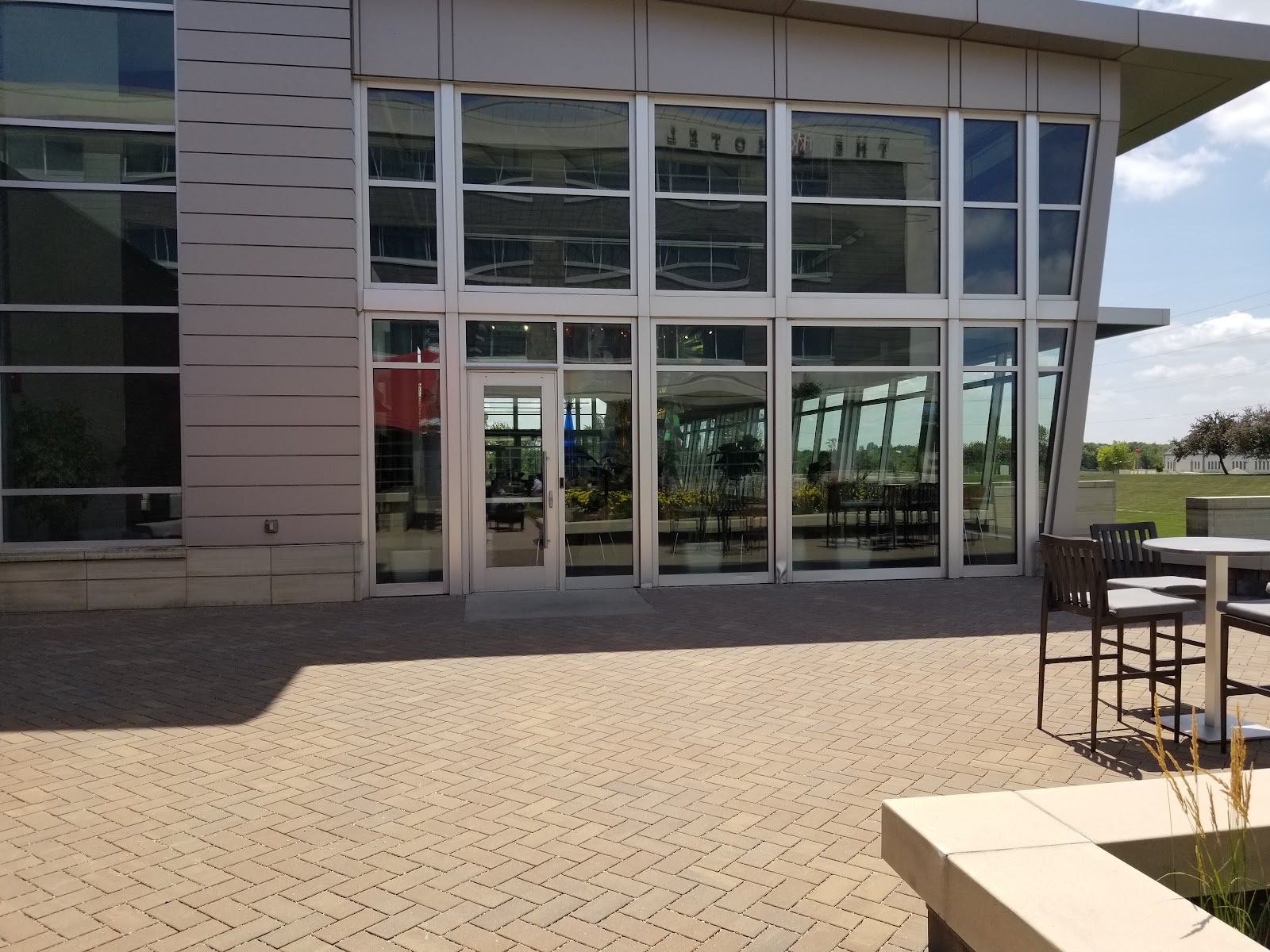
Find the daylight first, and use it while it exists. A glazed elevation is a very large soft side source, and three or four metres in from it is the best unassisted light in the building. Arrange groups parallel to the glass, never across the room — perpendicular puts one end of a row two or three stops below the other.
The exposure trap is the view. A camera metering an interior with a bright exterior beyond the glass will either hold the room and blow the windows or hold the view and lose the room. Holding both means adding light inside to within about a stop and a half of the exterior, or letting the glazing blow and composing so it reads as a clean shape rather than a hole.
The fourth problem is the grounds, and it is the thing to ask about most carefully.
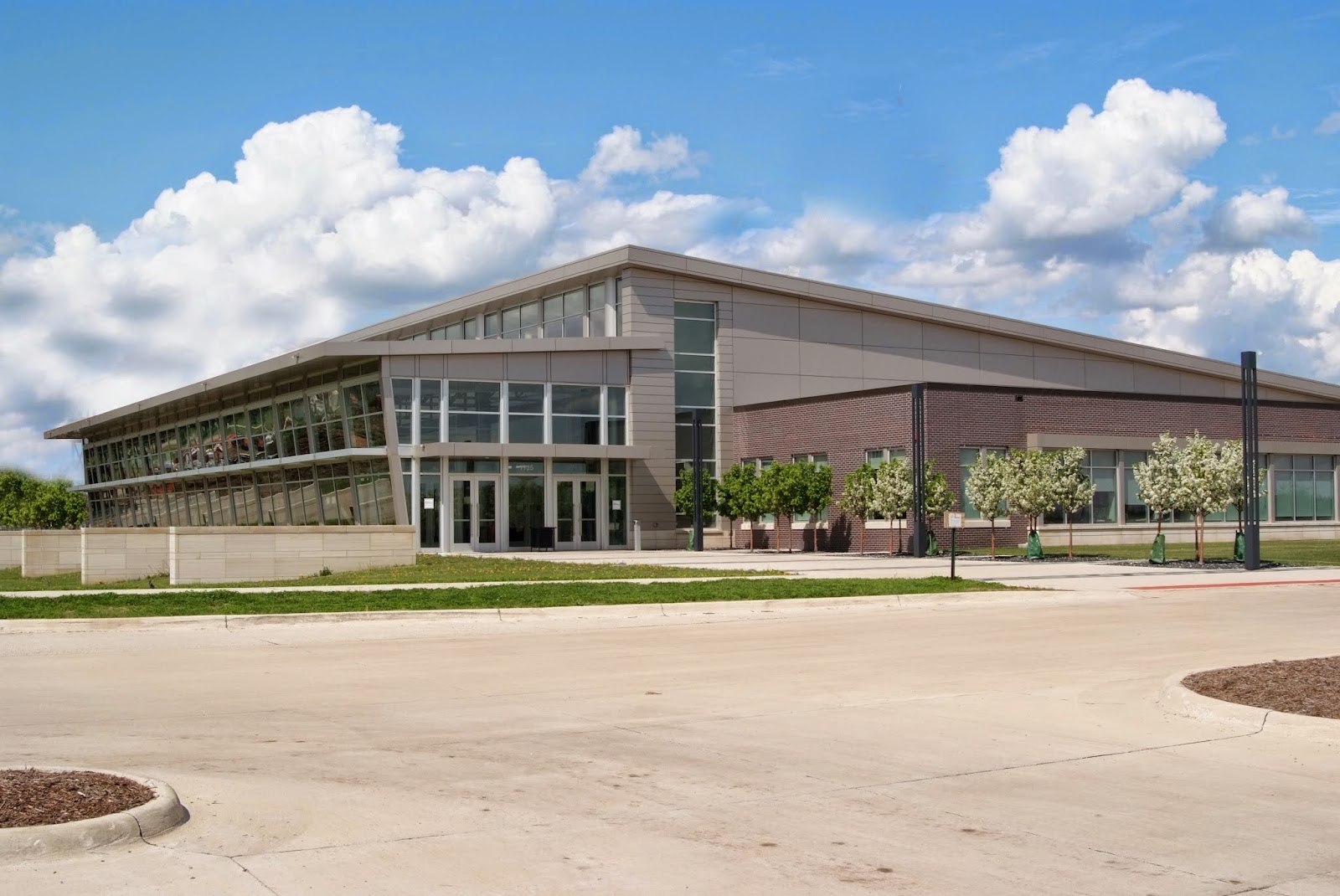
A purpose-built centre frequently sits on a level site with lawn, car parking and young planting — which is the least interesting outdoor condition available: no mature trees, no relief, no water, and a background of parked cars or a field. The difference between a venue with genuinely good outdoor space and one with a lawn is very large, and a website will not distinguish them. A site visit does immediately.
Where there are mature trees, they are the asset. Iowa hardwoods cast solid shade — sugar maple and bur oak have dense rounded crowns of broad leaves and give clean even cover with no dapple to manage — so any mature tree on the property makes a workable midday position, which an open lawn does not.
The canopy edge is the best of it: a metre or two inside a tree line, a subject gets soft directional light from the open ground in front and three or four stops of darkness behind, which is separation without equipment.
Where there are none, the building’s own shade is the fallback — a deep entrance canopy, a covered walk, the shaded side of the building — each of which is a large soft source with a hard mask, controlled by depth from the open edge.
- Never key from the downlights; bounce warm off a pale wall and drag the shutter
- A rim light matters more in a neutral room than in a busy one
- Two or three sources for a large room, not one brighter one
- Get variety from the light, not the location — the room will not change
- Ask specifically whether the outdoor space is good or merely a lawn
The Iowa year, and why the type suits it
Eastern Iowa has four emphatic seasons, and a fully indoor venue is a more rational choice here than the type usually gets credit for.
Winter is the case in point. December gives about nine hours of daylight, long stretches of flat grey overcast, and genuine snow and cold — conditions that gut a venue dependent on its grounds and that a purpose-built centre does not notice. The heating works, the parking is cleared, the loading is level, and the pictures were always going to be made indoors with light you brought.
Snow does give one good exterior frame, and it is worth ten minutes: a lit modern building with snow across the foreground, taken fifteen to twenty minutes after sunset while the sky still holds blue. That is the only genuinely good architectural frame this building type offers, and it exists only in winter.
Civil twilight here runs about thirty-two minutes, which is generous — half again what the southern venues in this library get. In December it arrives around five in the afternoon, which puts that exterior frame comfortably before the reception rather than in the middle of it; in June it is near nine-thirty, which puts it after dinner.
Spring is short and unreliable, and in this city it carries one specific local factor: the Cedar River rises with snowmelt and spring rain, and high water from March through June is normal rather than exceptional. For a venue away from the river that matters only for access, but it is worth knowing when planning a date.
Before the canopy closes in early May, any mature woodland on or near the site has its best fortnight — light reaches the floor and the spring ephemerals appear, Virginia bluebells and trillium in quantity. That is a two-week window and it is genuinely spectacular where it exists.
Summer is humid and green. Water vapour scatters light and fills shadows, so a sunlit lawn in July carries perhaps a stop and a half less contrast than the same sun angle in a dry climate — softer shadow edges, more detail in eye sockets, a paler sky. Midday outdoor portraits are workable, which in a dry climate they would not be.
It also gives the longest days of the year: fifteen hours twenty at the solstice, with the good light running well into the evening. That is the season when an outdoor component is easiest and when the schedule has the most room in it.
Mid to late October is the best fortnight for anything outside. Eastern Iowa’s hardwoods turn properly — sugar maple to scarlet and orange, hickory and oak to bronze and russet — and where the site has mature specimens, those turn as individual events rather than as a mass, which means a single maple can fill a background.
The timing moves with the year: a warm dry autumn delays and dulls it, a cool wet one brings it forward and intensifies it. Plan a fortnight either side of the third week rather than a specific weekend.
And the honest summary of the venue type is worth stating plainly. It suits large counts, smooth logistics, a tight budget, a styled wedding, and any date in the Iowa calendar without exception. It does not suit a couple who want the building in the photographs, because it will not be — and a photographer who understands that will produce better work here than one hoping the venue contributes.
The frames that carry a day at a venue like this are the human ones: reactions, hands, the register of the room during speeches, the dance floor. The architectural frames are filler, and there is no point pursuing them.
More frames from The Kirkwood Civic Center
The Kirkwood Civic Center wedding photography: common questions
What is the main problem?
The house downlights. They point straight down, giving shadowed eye sockets and a chin shadow, and dimming them changes the level but not the direction.
So how do I light it?
Bounce warm off a pale wall for a directional key, add a rim, and drag the shutter to a thirtieth or sixtieth so the room’s own light registers behind.
How do I avoid repetition over a long day?
Get variety from the light rather than the location. Window light, bounced key, uplighting, dusk silhouettes and after-dark frames look like five places.
Why does uplighting work better here?
Pale neutral walls take colour and return it. The same fixtures aimed at exposed brick or dark timber do almost nothing.
How many lights for a big room?
Two or three spread along it. One source set for three metres is four stops down at twelve, so a single brighter light does not solve the distance.
Does it suit an Iowa winter?
Better than almost any other type. Nine hours of grey daylight and snow are irrelevant to a heated building with cleared parking.
More Cedar Rapids, IA venue guides
We are writing a photographer’s guide to every venue we would happily shoot in Cedar Rapids, IA. Here are three more, plus the full index:
- The Brucemore Mansion, Cedar Rapids: A Walk Through the Building
- The National Czech & Slovak Museum: The Venue’s Own Logic
Planning a wedding at The Kirkwood Civic Center?
A building that runs the day. We bring the pictures. Tell us your date.