 The JW Marriott Austin: What It Suits, and What It Does Not
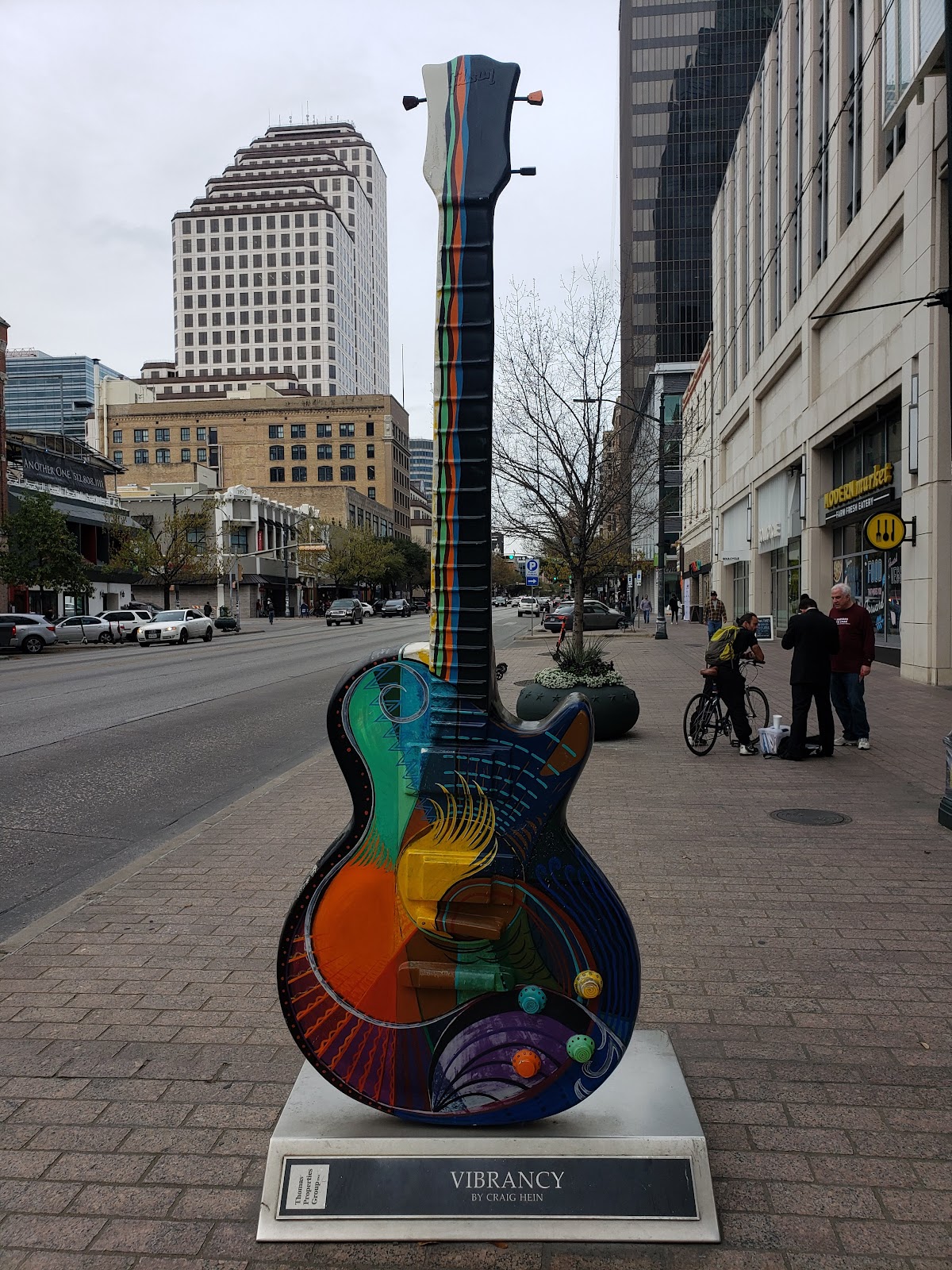
The Contemporary Austin: One Frame, and How It Is Made
One frame: a couple, a large sculpture, and light you chose.
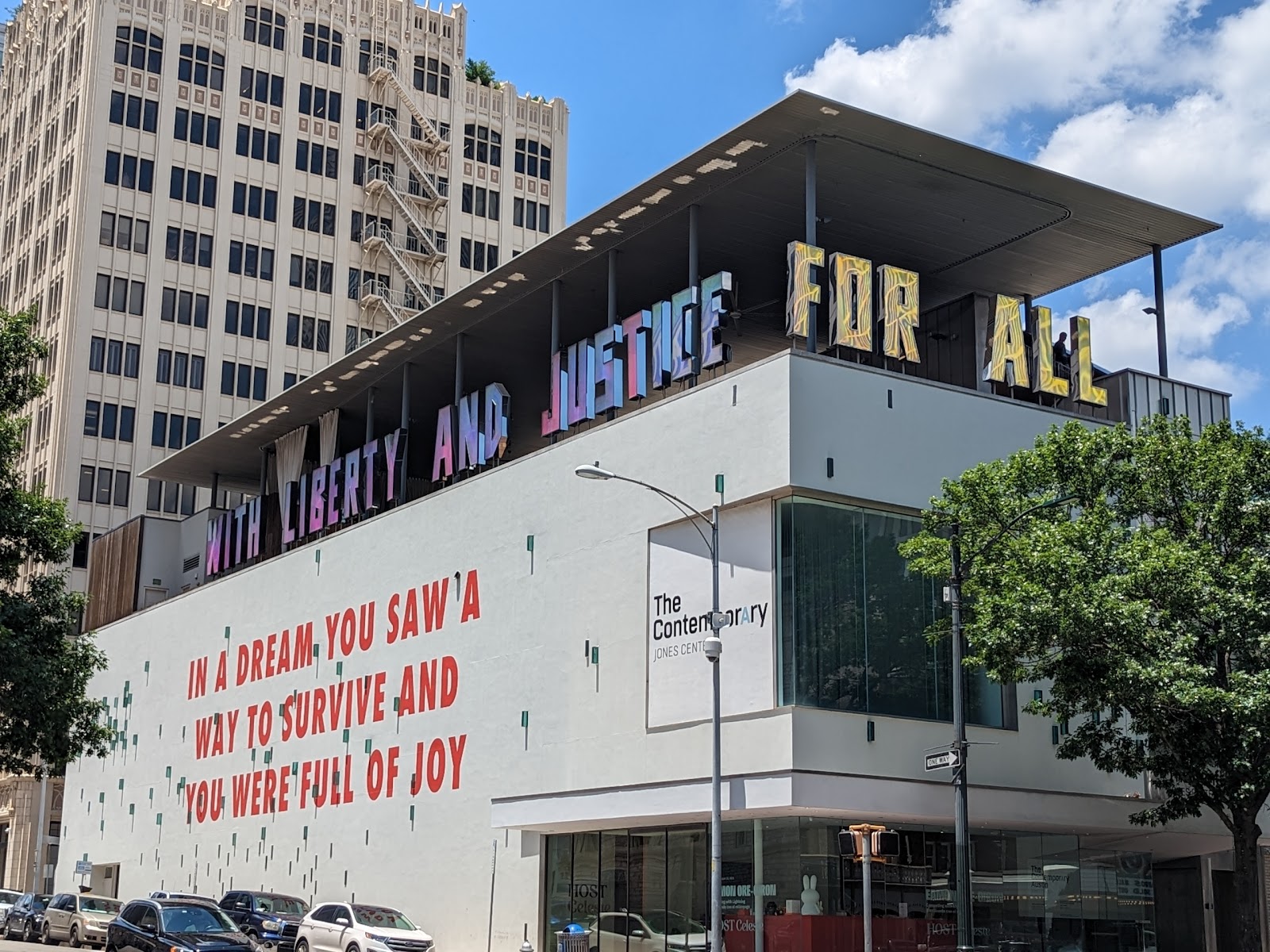
This guide is about a single photograph, and it depends on something most wedding venues do not have: large works of art standing outdoors in daylight.
An outdoor sculpture collection is a very particular resource. The works are full scale, they are sited deliberately in relation to the landscape and to each other, and — unlike everything in a gallery — they are lit by the sun rather than by a curator.
The frame is the couple with a single major work, composed so that both read clearly: the sculpture as a sculpture, at a scale that shows what it is, and the people as people rather than as scale markers.
It is harder than it sounds and the difficulty is a compositional one rather than technical. Large sculpture competes. A work that is interesting enough to be in a museum collection is, almost by definition, more visually arresting than two people standing near it — so the default outcome is a photograph of a sculpture with a couple somewhere in it.
That is not the frame. The frame requires the two elements to be balanced, and balance comes from three things: relative size in the frame, relative brightness, and the direction the sculpture’s own lines lead the eye.
The second thing to understand is the setting. A lakeside site in Austin gives water, mature trees and a horizon — which in a city otherwise short of all three is the reason this site is worth travelling to. And the trees here are specific: live oak, which is evergreen, broad and dense, and which casts genuine solid shade all year round.
That last fact is unusual and worth holding onto. Most of this library’s venues have deciduous canopies that vanish for half the year. A live oak is the same in January as in July.
Austin sits at about thirty degrees and a quarter north at roughly five hundred feet. The June noon sun reaches around eighty-three degrees, the December noon sun about thirty-six and a half, days run from about ten hours ten to fourteen hours five, and civil twilight is roughly twenty-three minutes — short.
We have not photographed a wedding here. Which grounds and buildings are bookable, how close a party may get to the works and the permitted hours are questions for the museum — and the second matters more than people expect.
The Contemporary Austin at a glance
| Where | A contemporary art museum in Austin with a lakeside sculpture park |
| The frame | A couple and one major outdoor work, balanced so both read clearly |
| The difficulty | Large sculpture competes. The default outcome is art with people in it |
| The setting | Water, a horizon, and live oaks that cast solid shade all year |
| Ask first | How close a party may get to the works; bookable grounds and hours |
Building the frame
Five decisions, and the first two do most of the work.
**Choose the work.** Not every sculpture makes this frame, and the ones that do share a property: they have a strong simple silhouette and a large uninterrupted surface. A monolithic form, a clean arc, a single plane, a tall vertical — these read instantly and they leave room beside them.
The works that defeat the frame are the intricate ones. A sculpture with complex internal detail demands the whole frame to be legible, and a couple placed beside it is competing with a hundred small forms rather than with one large one. Photograph those separately.
**Decide the relative scale.** There are two workable treatments and the middle fails.
The couple small and the work dominant: a wide or normal lens from distance, with the sculpture occupying most of the frame and the people reading as two figures at its base. That is a photograph about the work, with the couple giving it scale, and it is genuinely good — scale is what outdoor sculpture wants from a photograph.
Or the couple close and the work partial: a longer lens, the couple at half or three-quarter length, and only a portion of the sculpture behind them — a curve, a plane, an edge. That is a portrait with an unmistakable background, and it is the more useful of the two because it puts faces at a readable size.
What fails is both at mid-size: a couple at full length beside a whole sculpture, each occupying a third of the frame, neither dominant. The eye has nowhere to settle.
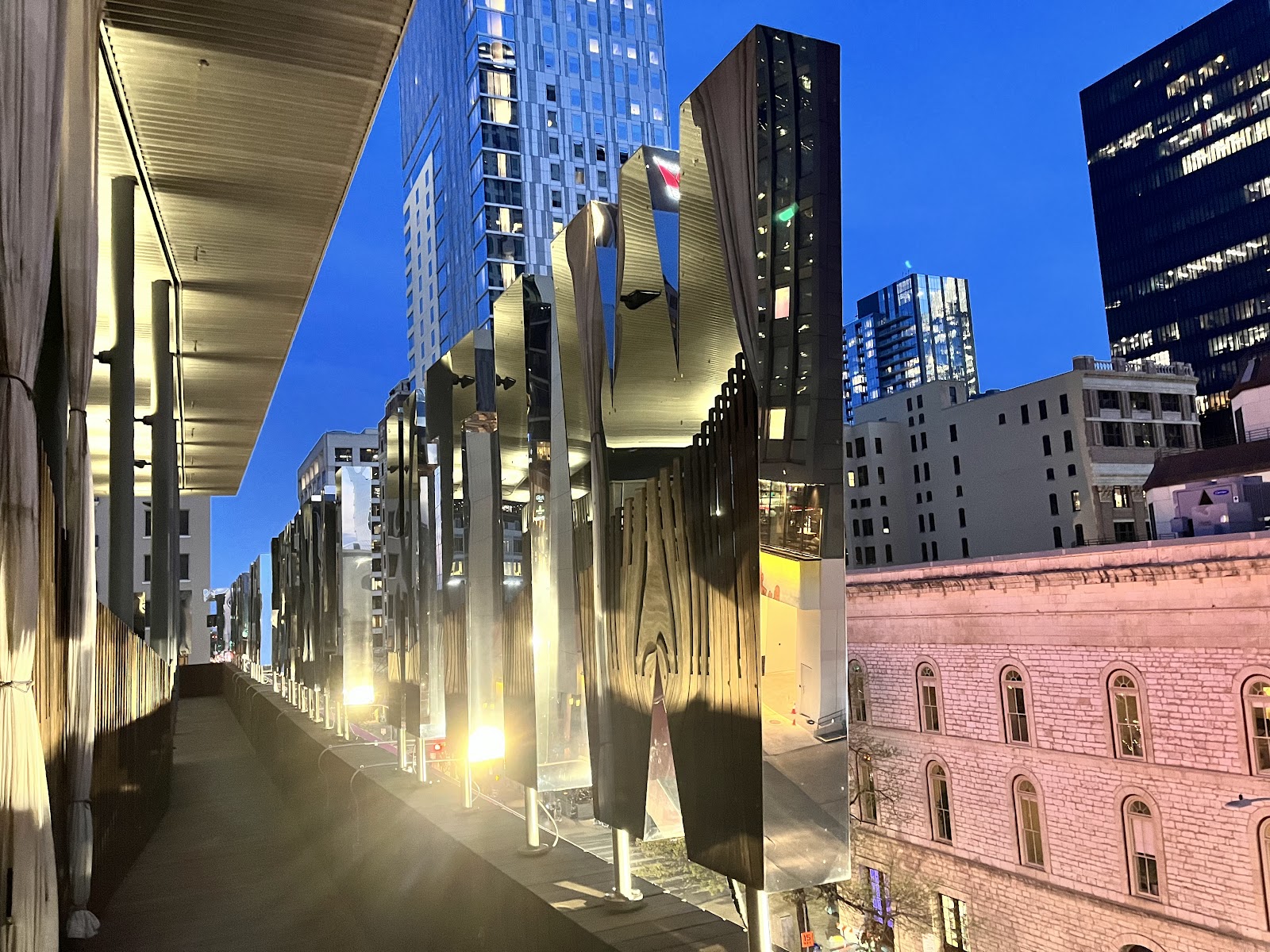
**Find the light on the work.** This is the decision people skip. A sculpture’s surface determines everything: polished steel is a mirror and will reflect the sky, the trees and the photographer; weathered steel is a matte warm-brown that takes raking light beautifully; painted surfaces are flat and read by shape alone; stone shows texture only at a low angle.
For a mirrored work, the sky in the reflection is the subject and a low sun gives it colour. For a matte or weathered work, raking light across the surface picks out its making — welds, tool marks, oxidation — where flat frontal light renders it as a coloured lump.
So the hour follows from the material, and walking the collection once to note which works want which light is worth more than any amount of technique on the day.
**Light the couple separately.** Because the work’s exposure is set by the sun and cannot be changed, the couple are a lighting problem. One source through a modifier at about forty-five degrees, at a level that puts them a touch brighter than the sculpture — not much, perhaps half a stop, because a couple markedly brighter than their surroundings reads as pasted in.
Gel it warm by about a quarter. Austin daylight in open shade is lit by a blue sky and reads cool; a neutral flash under those conditions gives faces that sit slightly green against warm weathered steel or limestone.
**Mind the ground.** Sculpture parks are mown grass or gravel, and a sunlit lawn fills the lower half of a subject’s surrounding hemisphere with green light — which shows under the chin and in the eye sockets as a faintly ill cast. Moving them onto gravel, paving or bare ground removes it entirely, and that is usually possible within a few metres.
One practical constraint that governs all of this: museums set a minimum distance from works, and it is frequently larger than a photographer would like. Establish it in advance, because a frame planned at two metres and permitted at six is a different picture.
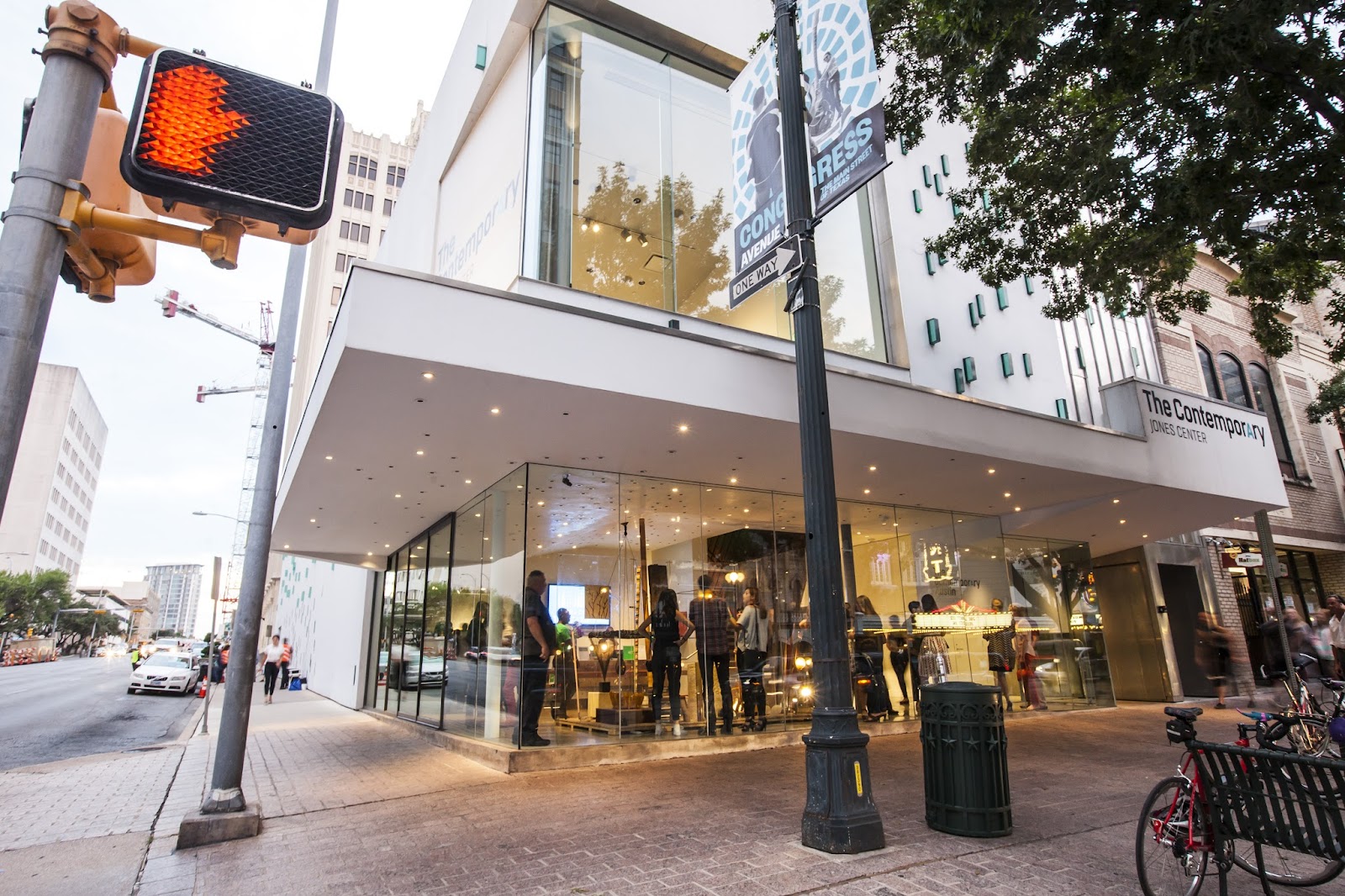
The lake, the oaks and the buildings
The rest of the site is more conventional and it has three distinct assets.
The water is the first and it does two things. It reflects the sky, which makes it a very large low-angle source — filling under the chin and lifting eye sockets, an effect that strengthens sharply at low sun angles because water’s reflectivity rises at grazing incidence. So a subject at the water’s edge in the last hour is lit from below as well as from the side, which flatters faces with no equipment.
And it provides a horizon. In a city, water is often the only place the eye can see a long distance, and a frame across a lake has depth that a frame across a lawn does not.
Whether the surface is still depends on wind, and in central Texas that is variable rather than diurnal — unlike the desert, where afternoons are reliably breezy. Broken water works: a low camera turns a rippled surface into a bright path of speculars running toward the lens.
The live oaks are the second asset and they deserve specific attention, because they behave unlike the canopies elsewhere in this library.
Live oak is an evergreen broadleaf — it holds its leaves year-round, exchanging them gradually in spring rather than dropping them in autumn — and it forms a dense, low, very broad spreading crown. A mature specimen can be far wider than it is tall, with heavy horizontal limbs that sometimes reach the ground.
Photographically that gives three things. Genuine solid shade with no dapple, available in January as in July, which makes a midday portrait straightforward at any time of year. A low canopy, which means the shaded space beneath is enclosed and intimate rather than lofty. And those horizontal limbs, which are a strong compositional element in their own right — a heavy oak limb running across a frame is a better background structure than most built architecture.
The trade is that a live oak canopy is dark. A dense evergreen crown at low height blocks a great deal of light, so the space beneath it is several stops down on the open lawn — which means the shade is good and the level is low, and a subject under an oak with sunlit grass beyond is a four-stop frame needing either a fill or a deliberate silhouette.
Spanish moss, where it occurs, hangs from the limbs in grey-green streamers and is worth backlighting: it is translucent and it glows against a low sun, which is one of the most distinctive details the Gulf South offers.
The buildings are the third asset and a contemporary art museum has two types. A historic villa, where a lakeside site has one, gives domestic-scale rooms with generous windows — and a tall window is the best portrait light in any building, giving strong horizontal direction with gentle vertical falloff.
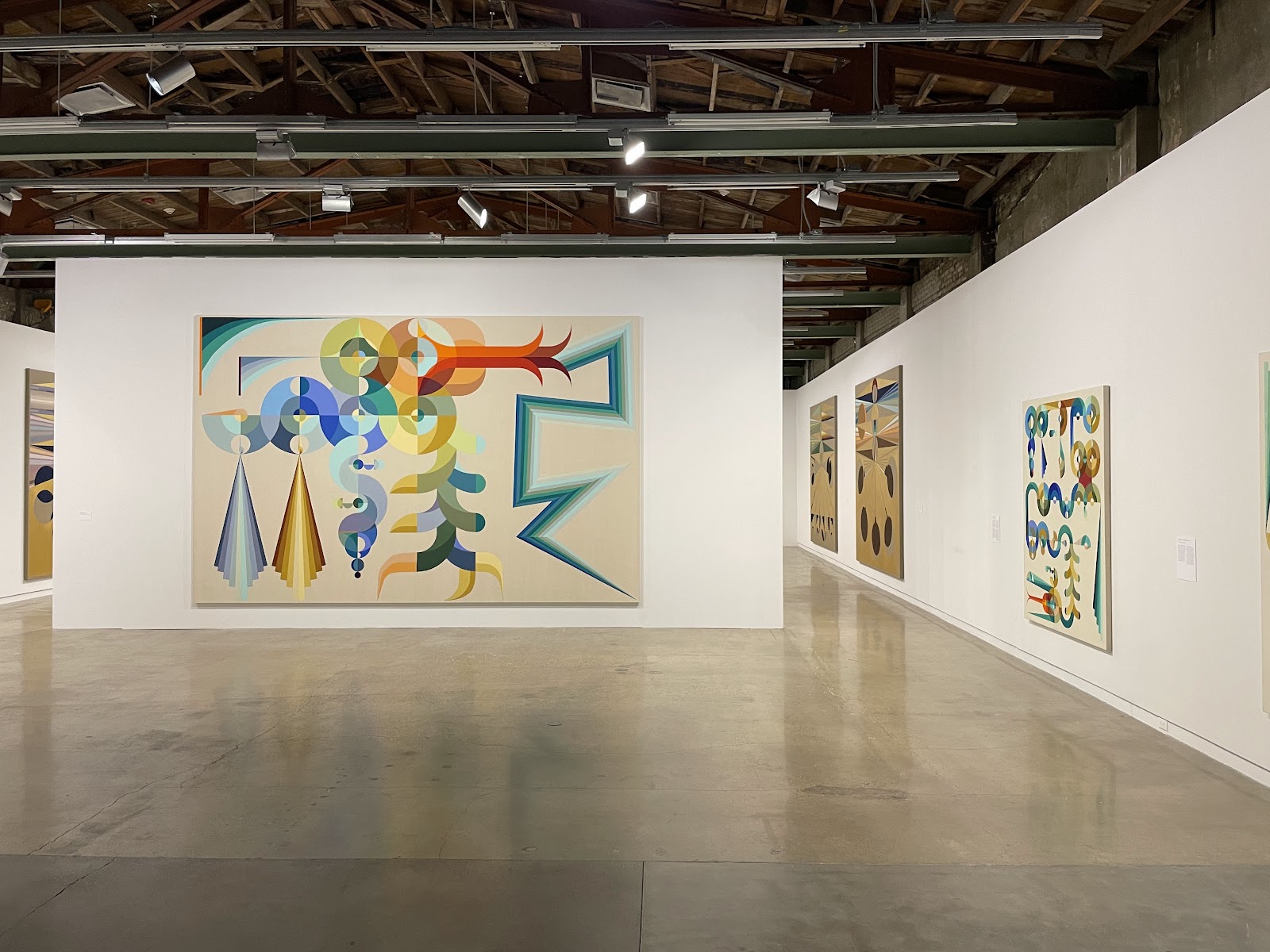
And a purpose-built gallery gives conservation light: diffuse, indirect, low-level, deliberately without direction. That is difficult for faces and the fix is positional — find the local brightest thing, a skylight or an uplit wall or a doorway to a brighter room, and put it on one side of the face.
The flash policy needs settling room by room. Contemporary art includes light-sensitive media — photography, works on paper, textiles, some pigments — and museums often prohibit flash entirely indoors while permitting it in the grounds. Establish it in writing, because it is the difference between a planned lit portrait and an improvised one.
- Choose works with a simple silhouette; photograph the intricate ones separately
- Couple small and work dominant, or couple close and work partial. Never both mid-size
- The work’s surface decides the hour — mirrored, weathered and stone each differ
- Move them off grass onto gravel or paving to kill the green fill
- Live oak gives solid shade all year, and it is several stops down on the lawn
The Austin year
Central Texas has a long comfortable season and one genuinely difficult one, and the split governs any outdoor plan.
October through April is the good half and it is unusually long. Austin winters are mild, the December noon sun at thirty-six and a half degrees models rather than flattens, the outdoor spaces are usable throughout, and the live oaks are in full leaf — so a January wedding here looks much like an October one, which is not true of anywhere north of it in this library.
That evergreen canopy is the reason. In a deciduous region a winter wedding means bare branches; here it means the same dense green shade as summer, with better light and no heat.
Late March into April is the best window in Texas and the reason is the bluebonnets. The state flower blooms in mass displays for perhaps three weeks, and in a good year the meadows and roadsides carry genuine sheets of blue. Whether any are on this particular site is worth asking — a managed sculpture park may or may not have naturalised areas — but the season is the state’s strongest.
Spring also brings storms. Late March through May is the active severe-weather season for central Texas, with real thunderstorm risk, and an outdoor plan in that window needs a covered alternative that genuinely exists rather than one listed on a website.
Summer is the honest constraint. June through September brings sustained heat with afternoon temperatures frequently above a hundred degrees, high humidity, and a sun reaching eighty-three degrees at midsummer noon. For a party in formal clothing outdoors that is a welfare matter rather than a comfort one.
The practical consequence is that a summer wedding here belongs at the ends of the day with the middle indoors, and that the sculpture park — which is the reason to choose this venue — is available for perhaps two hours of a July day rather than eight.
The humidity has a real photographic effect and it is worth naming. Water vapour scatters light and fills shadows, so a sunlit lawn in August carries perhaps two stops less contrast than the same sun angle in a dry climate: softer shadow edges, less black in the eye sockets, and a paler less saturated sky. That makes midday outdoor portraits more workable than they would be in the desert, and it makes long lenses hazy — a view across the lake will read with noticeably less contrast in August than in November.
Autumn is the underrated season. Central Texas has almost no deciduous colour worth the name — live oak stays green and the native species are mostly evergreen or drought-deciduous — so nothing in an October frame says autumn. What October does give is the year’s clearest air, the first comfortable temperatures after the summer, and a low sun that models everything.
The exception to the no-colour rule is bald cypress, which grows along central Texas watercourses and is a deciduous conifer. It turns a rust-orange in November and it is the only substantial autumn colour in the region — so if the site has cypress at the water’s edge, late November is worth knowing about.
Civil twilight here runs about twenty-three minutes, among the shortest figures in this library, which means the end of the day is brief and needs its frames known in advance. Two or three planned setups fit; improvisation does not.
What that short dusk gives in exchange is a reliable balance point. For roughly ten minutes the sky holds deep blue while any site lighting is on, and a sculpture lit from below against that sky — most outdoor collections are uplit — is the frame the venue closes on. It takes ten minutes and it is worth being in position for.
More frames from The Contemporary Austin
The Contemporary Austin wedding photography: common questions
Why is sculpture hard to photograph with people?
It competes. A work interesting enough to be in a collection is more arresting than two people beside it, so the default result is art with a couple somewhere in it.
What are the two working scales?
Couple small with the work dominant, so they give it scale; or couple close with only a portion of the work behind them. Both mid-size fails.
Does the material matter?
Entirely. Polished steel mirrors the sky, weathered steel wants raking light, painted work reads by shape alone, stone shows texture only at a low angle.
Why move them off the grass?
A sunlit lawn throws green light under the chin and into the eye sockets. Gravel or paving removes it, usually within a few metres.
What is unusual about the trees?
Live oak is evergreen, so it gives dense solid shade with no dapple in January as in July. The trade is that it is several stops darker than the lawn.
When is the best season?
Late March into April for bluebonnets, or October for the clearest air of the year. Summer afternoons above a hundred degrees are a welfare matter.
More Austin, TX venue guides
We are writing a photographer’s guide to every venue we would happily shoot in Austin, TX. Here are three more, plus the full index:
- The Fairmont Austin: What It Suits, and What It Does Not
- The Four Seasons Austin: The One Decision That Governs Everything
- The JW Marriott Austin: What It Suits, and What It Does Not
Planning a wedding at The Contemporary Austin?
Full-size art, outdoors, in real light. Tell us your date.